-
-
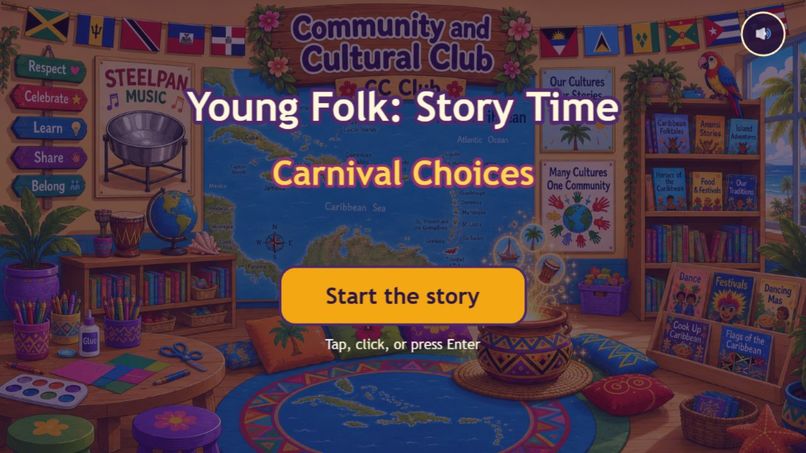
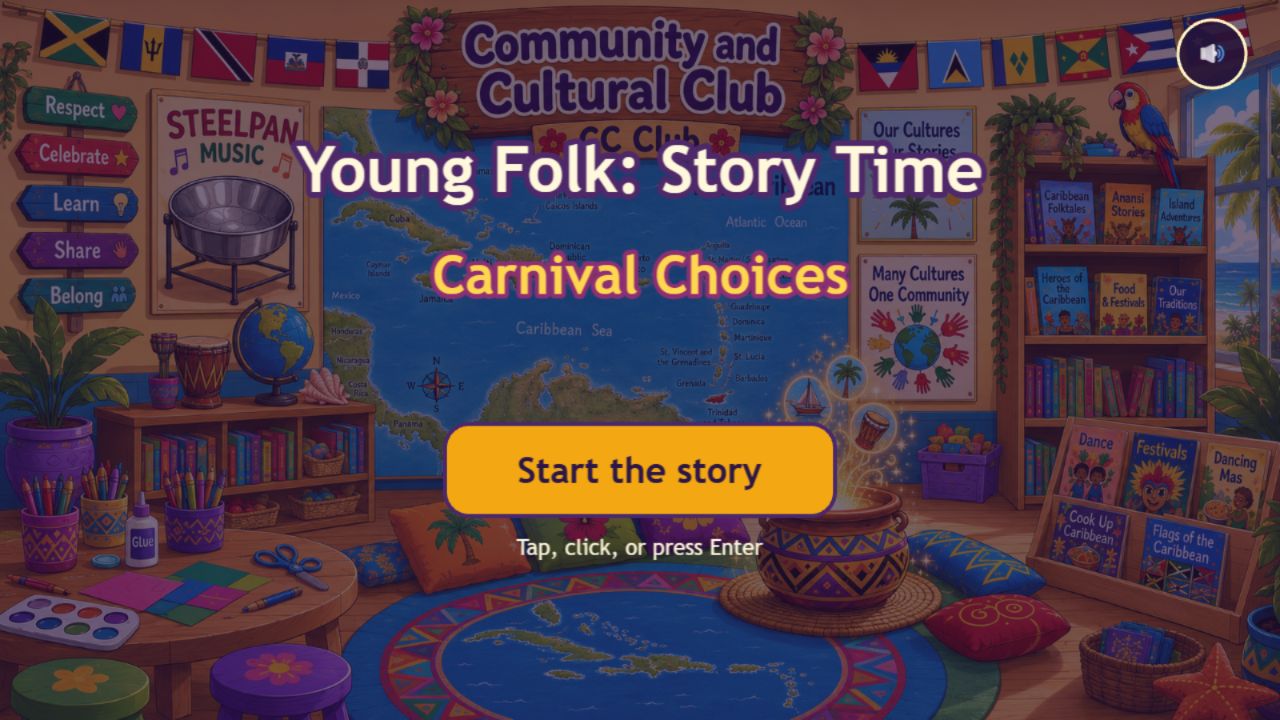
Young Folk Story Time: a Caribbean interactive Carnival adventure.
-
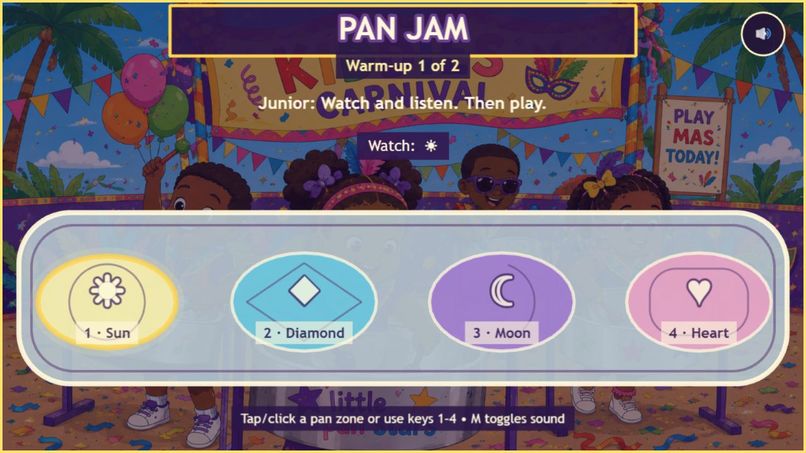
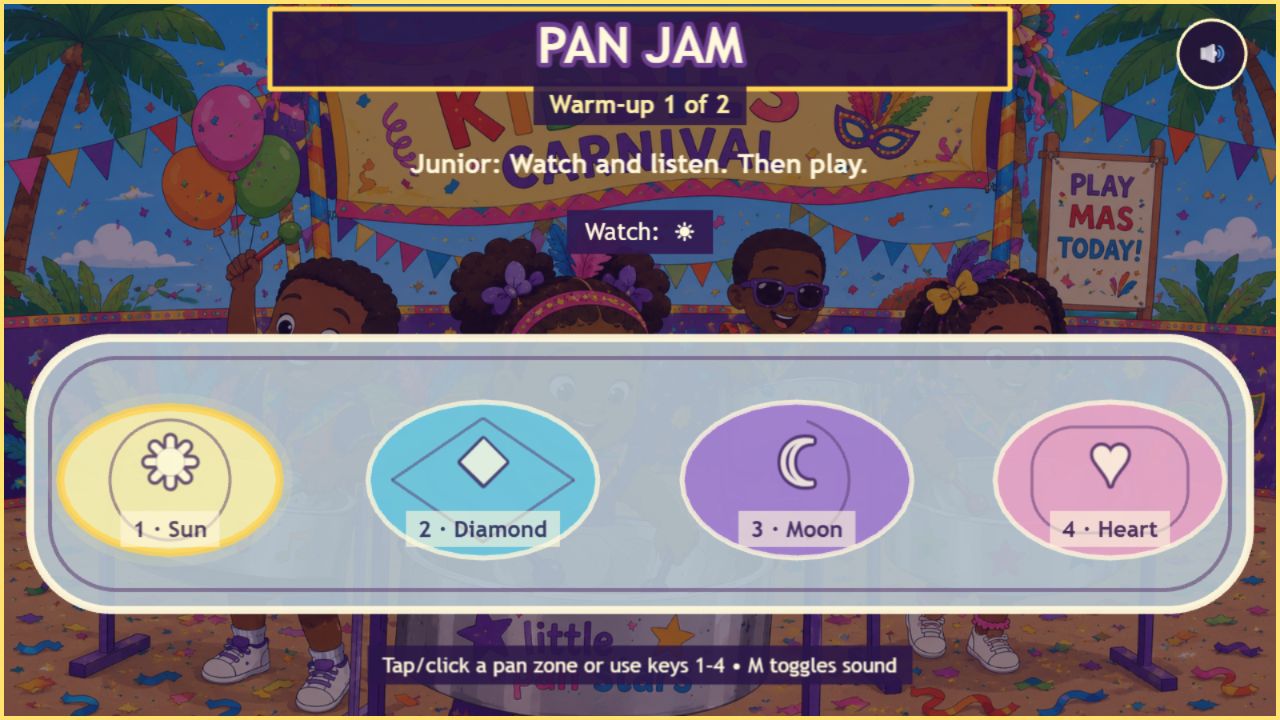
Pan Jam turns steelpan into a playful, interactive rhythm activity.
-
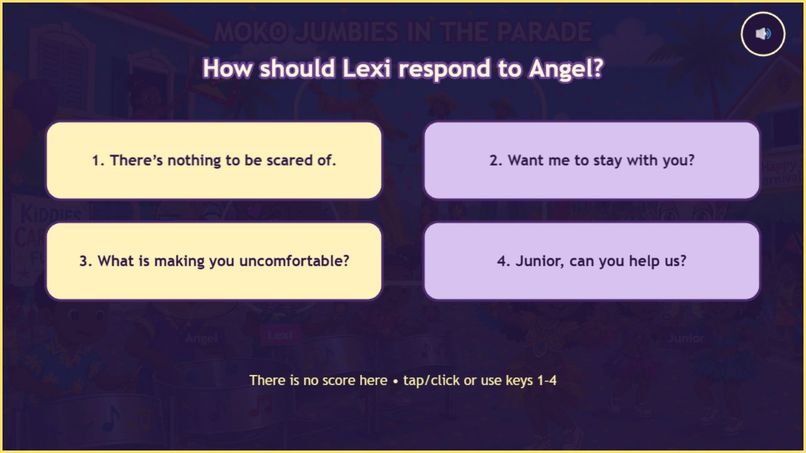
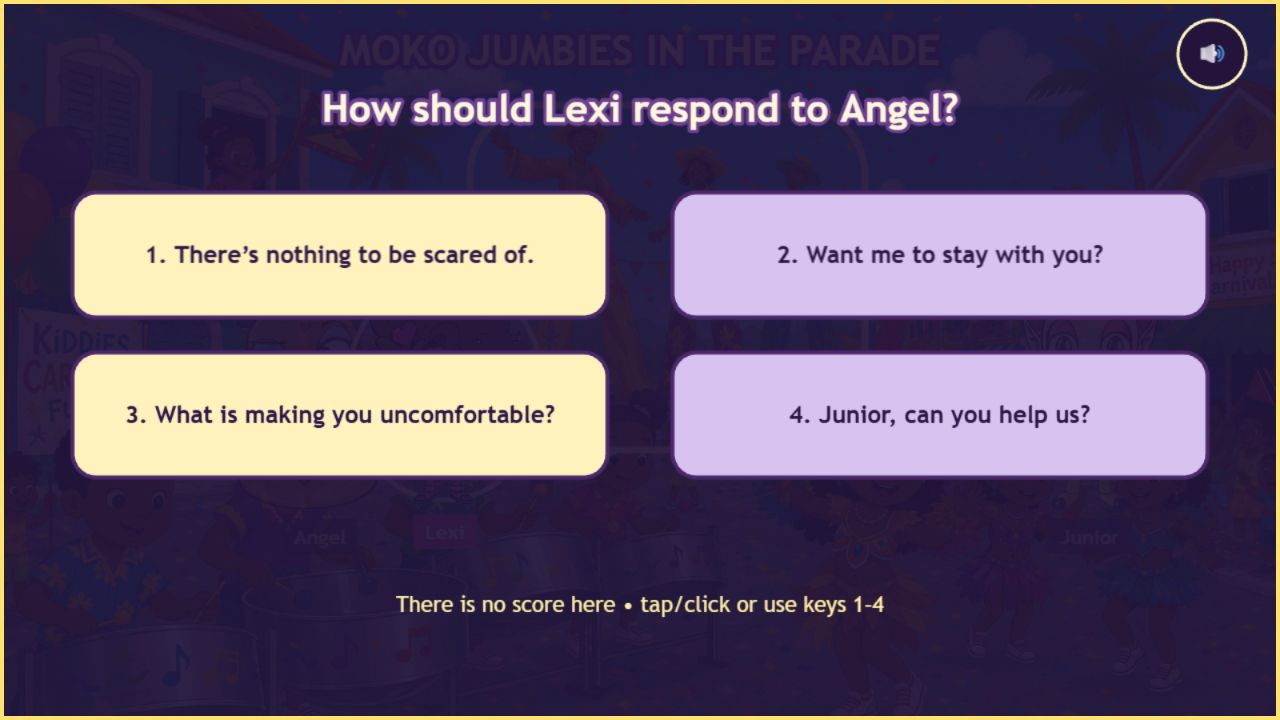
Players make choices that shape trust, relationships and how characters respond.
-
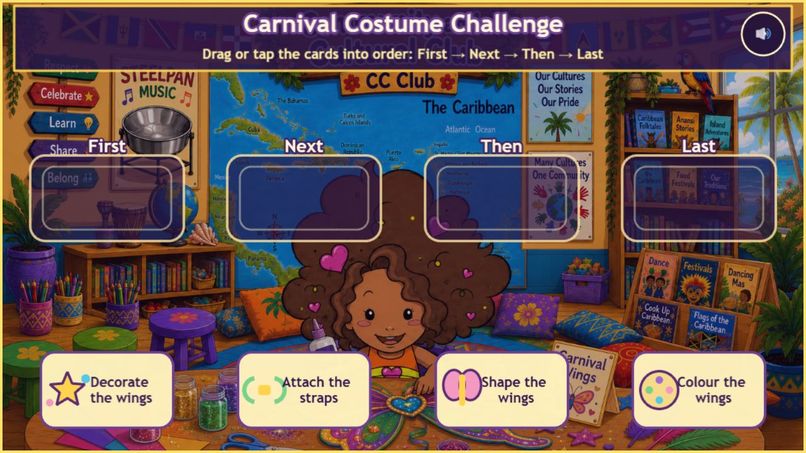
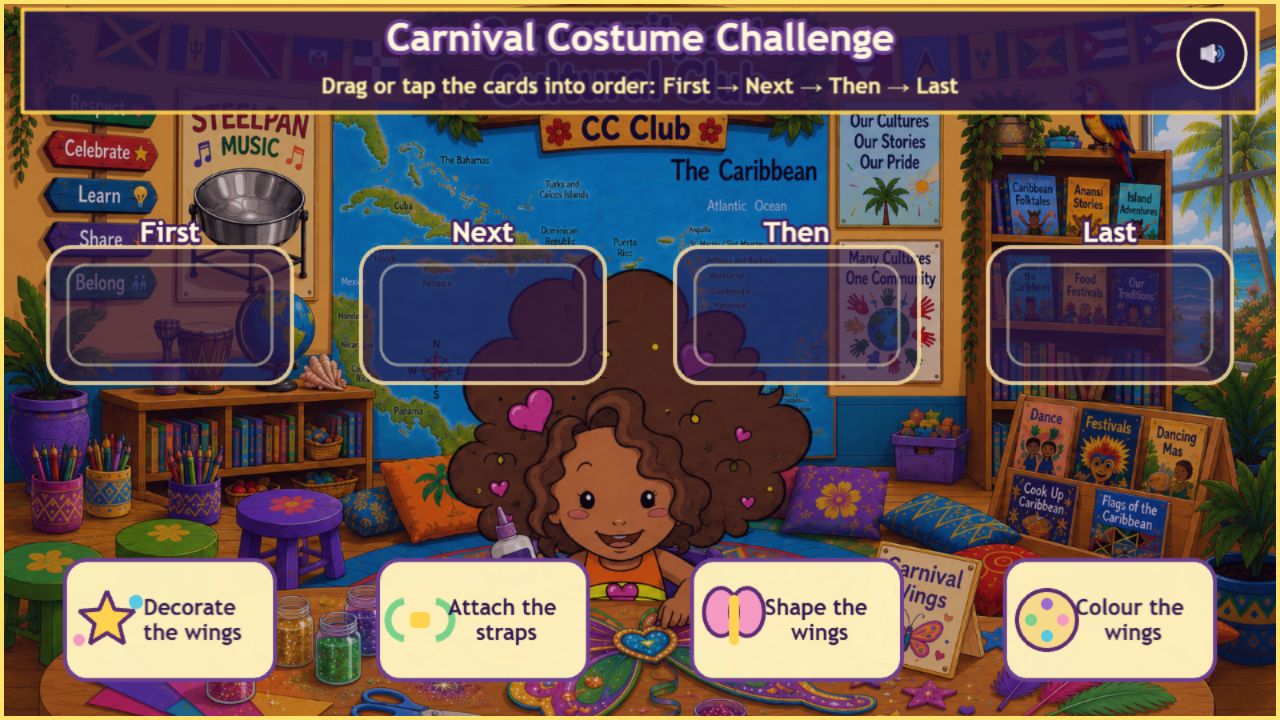
The Carnival Costume Challenge adds hands-on creative play to the story.
-
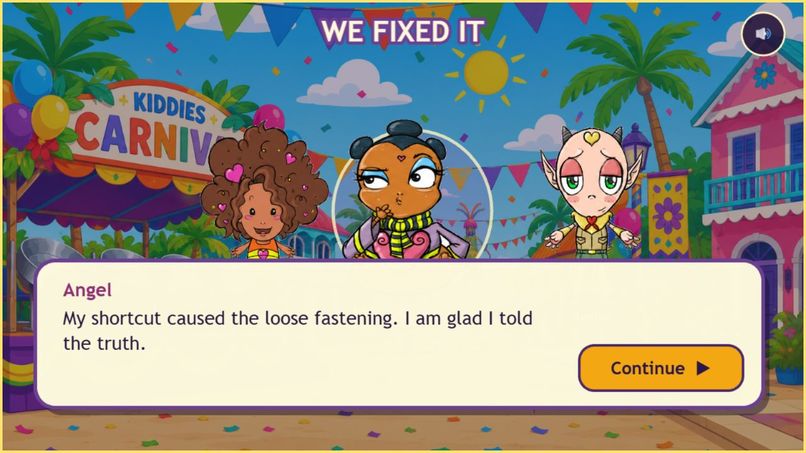
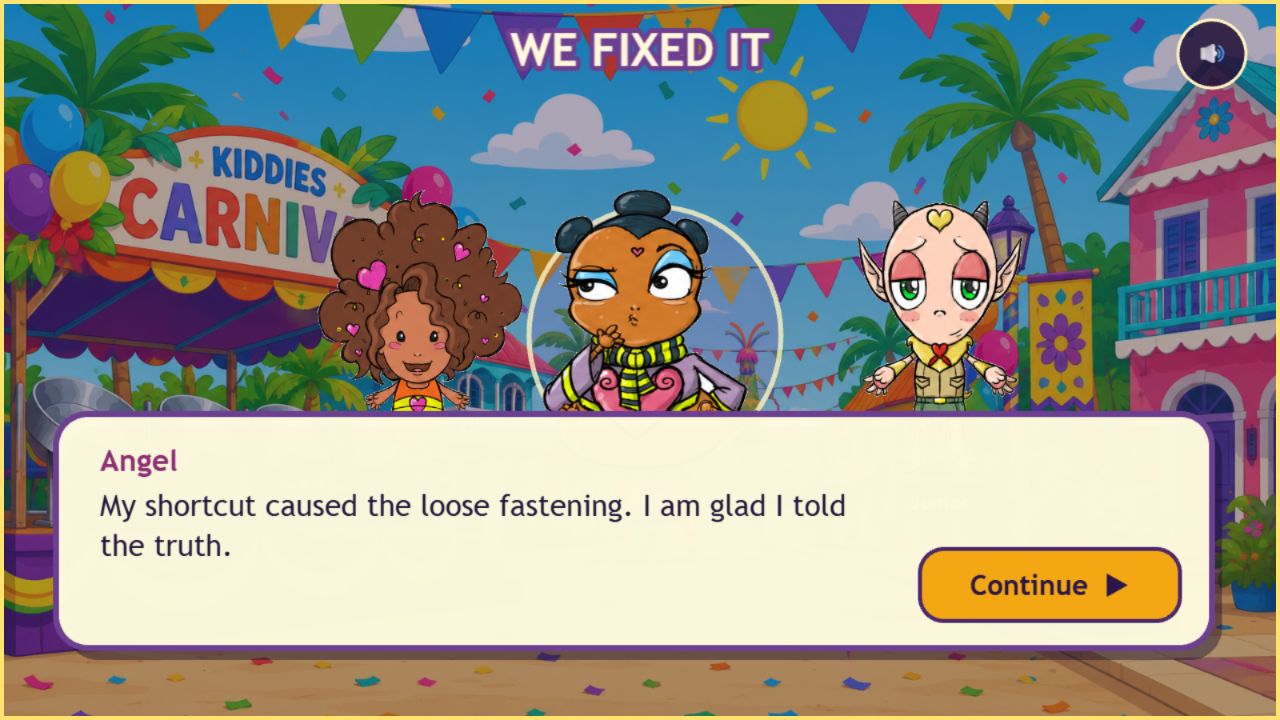
One of four endings, showing how choices, repair and cooperation shape the outcome.
-
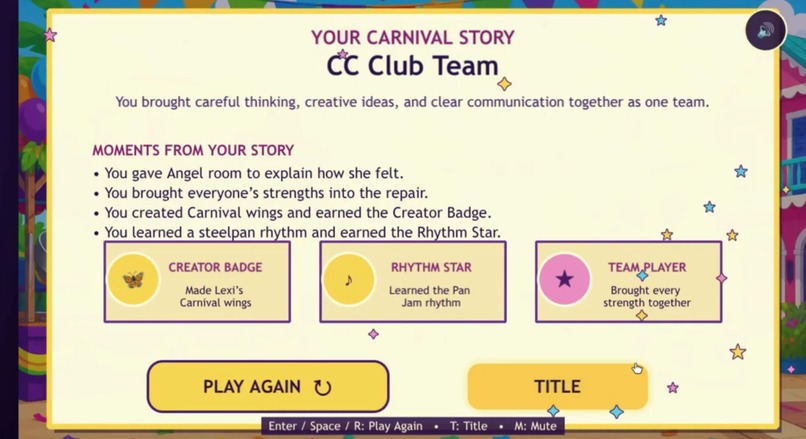
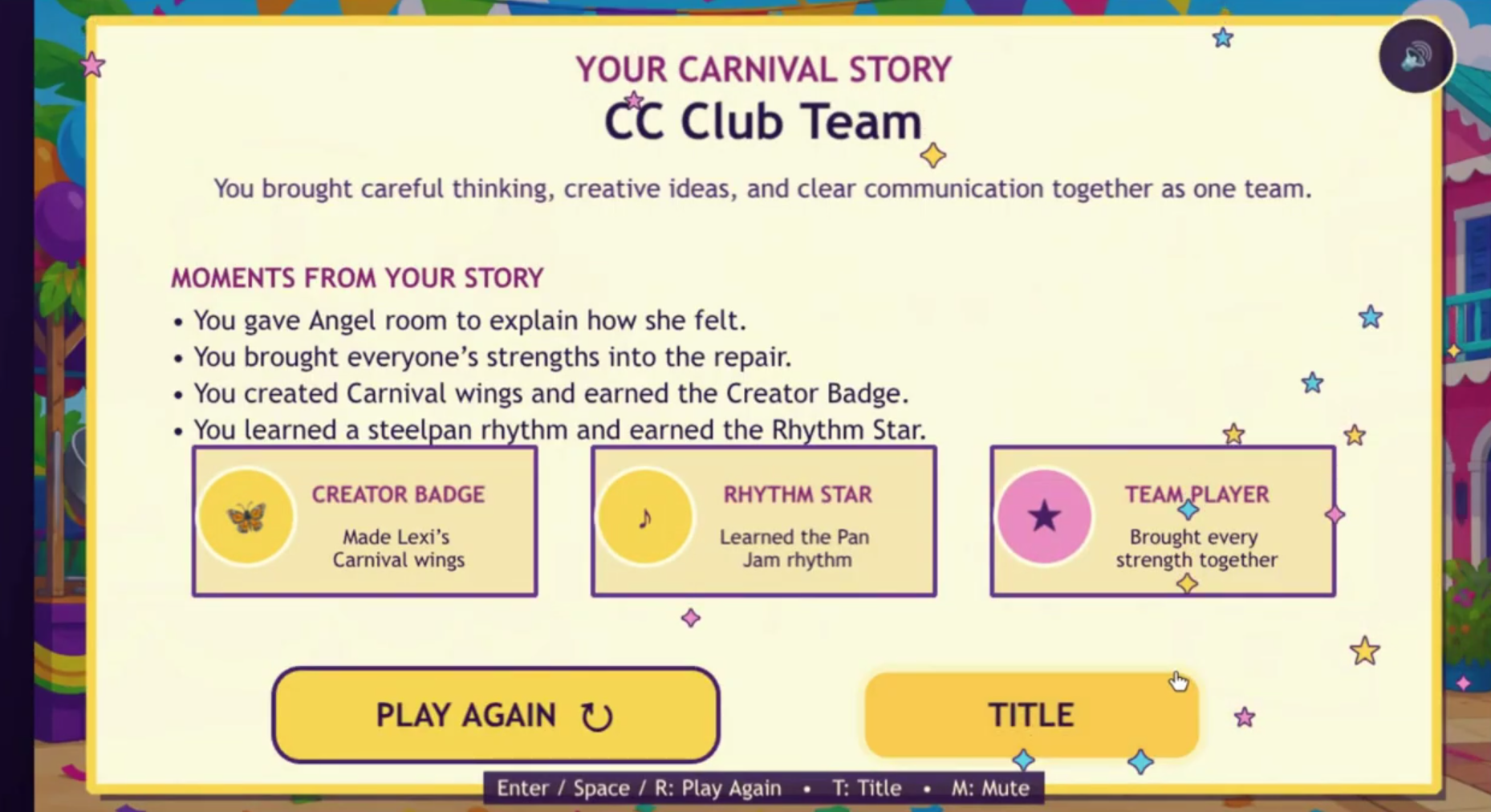
The final Story Card reflects the player’s choices, highlighting listening, teamwork, creativity and communication.
Inspiration
Young Folk Story Time grew from a simple question: what would an interactive experience for children look like if Caribbean culture was not an afterthought, but the world at the centre of the story?
Children increasingly learn, play and communicate through digital experiences, yet many of those experiences do not reflect Caribbean characters, traditions or ways of seeing the world. At the same time, emotional well-being is often approached through instruction rather than giving children a safe space to explore choices for themselves.
Young Folk Story Time combines these ideas. Using Carnival, steelpan, Moko Jumbie traditions and Caribbean characters, the game creates opportunities for children to think about friendship, trust, asking for help, taking responsibility, working together and recovering from mistakes.
The goal is not to diagnose, treat or score a child's mental health. It is to use culturally relevant storytelling and play to encourage reflection, communication and positive social-emotional decision-making.
What it does
Young Folk Story Time is a playable interactive Caribbean story following Lexi, Angel and Junior through a Carnival adventure.
Players make narrative choices that influence trust, cooperation and character responses. Along the way they take part in a Carnival Costume Challenge, play an interactive steelpan sequence called Pan Jam, encounter a Moko Jumbie experience and eventually face a Carnival crisis that requires them to decide how to respond.
When something goes wrong, the player can blame someone, work together, ask for help or seek more information. The story responds to decisions made earlier in the experience, including how the player treated Angel and whether shortcuts were taken.
A hands-on repair activity reinforces the idea that mistakes can be fixed and that asking for assistance is part of problem-solving.
The experience has four possible endings: Together on the Road, One Little Step, We Fixed It, and CC Club Team, followed by a personalised Story Card reflecting elements of the player's journey.
Rather than assigning children a good or bad score, Young Folk lets choices produce different outcomes. Players can replay the story and explore another path.
The game supports mouse, keyboard and touch input, responsive layouts, mute controls and reduced-motion preferences.
How we built it
Young Folk Story Time was built with Phaser, TypeScript and Vite.
The narrative uses typed state to track decisions such as trust, cooperation, shortcuts, crisis responses and achievements throughout the experience. Important gameplay and narrative logic was kept independent of Phaser wherever practical, allowing systems such as crisis repair, story progression, Story Card generation and ending resolution to be tested deterministically.
The four endings are resolved from the player's accumulated choices rather than randomly selected.
Pan Jam uses browser-based synthesized audio to create an interactive steelpan experience without relying on downloaded commercial music or third-party recordings.
Accessibility and responsive behaviour were built into the experience throughout development, including keyboard, pointer and touch interaction, reduced-motion support, large child-friendly controls and landscape-phone layouts.
The final release passed 95 automated tests, strict TypeScript checking, production-build validation and full gameplay QA.
The public game is deployed through Vercel and does not require an account, collect personal information, use analytics or track players.
Challenges we ran into
One of the biggest challenges was creating choices that felt meaningful without turning emotional behaviour into a score.
We did not want a child to be labelled as having made the "wrong" emotional decision. Instead, choices affect relationships, trust, cooperation and how later situations unfold. Even mistakes can lead to repair and learning.
Maintaining consistency across a branching narrative was another challenge. Decisions made early in the story needed to remain meaningful through mini-games, the Carnival crisis and four different endings.
Creating the Pan Jam interaction also required balancing immediate feedback with a recognizable metallic, ringing steelpan character while keeping the implementation lightweight.
Finally, the interface had to remain usable for children across mouse, keyboard and touch devices while supporting reduced motion and very different screen sizes.
Accomplishments that we're proud of
We are proud that Young Folk became a complete playable story rather than simply a prototype or concept.
The final experience includes meaningful branching choices, three central characters, interactive costume building, playable steelpan, a culturally grounded Moko Jumbie sequence, trust and cooperation systems, a crisis-and-repair interaction, four reachable narrative endings and a personalised Story Card.
We are especially proud that Caribbean culture is part of the actual gameplay rather than simply the visual theme.
The project also supports mouse, keyboard and touch interaction, reduced motion and responsive layouts while requiring no account or personal-data collection.
What we learned
We learned that culturally specific storytelling can address themes that are universal.
A Carnival setting, steelpan and Moko Jumbie traditions can coexist naturally with questions about fear, friendship, responsibility, trust and asking for help.
We also learned that meaningful choice does not require a points system. In some experiences, allowing the world and characters to respond to a player's decisions can be more powerful than telling the player whether they were right or wrong.
From a development perspective, separating narrative rules from presentation made a branching experience substantially easier to test and maintain.
What's next for Young Folk
Young Folk Story Time was designed so that this Carnival story can become the beginning of a larger collection of culturally grounded interactive experiences.
Future possibilities include additional Young Folk stories, more Caribbean cultural activities, richer character animation, professional voice performances, additional accessibility options and new story modules exploring different emotional and social situations.
The broader goal is to continue exploring how Caribbean storytelling, education and interactive technology can meet in experiences created for young audiences.
Built With
- api
- audio
- css3
- github
- html5
- javascript
- phaser.js
- typescript
- vite
- web

Log in or sign up for Devpost to join the conversation.