-
-
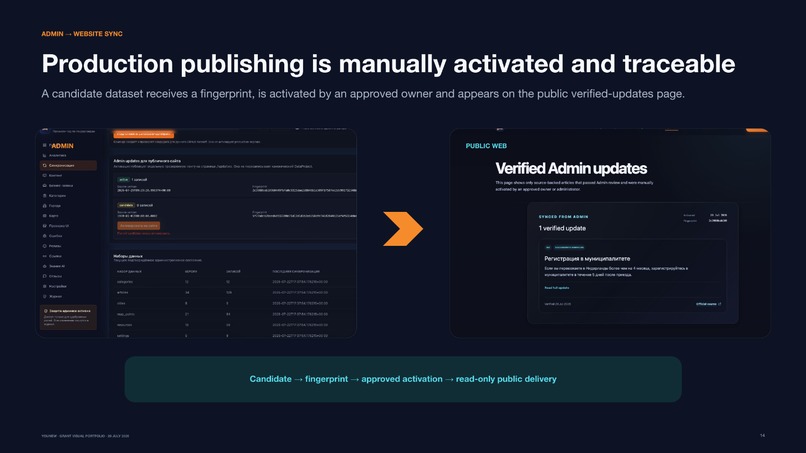
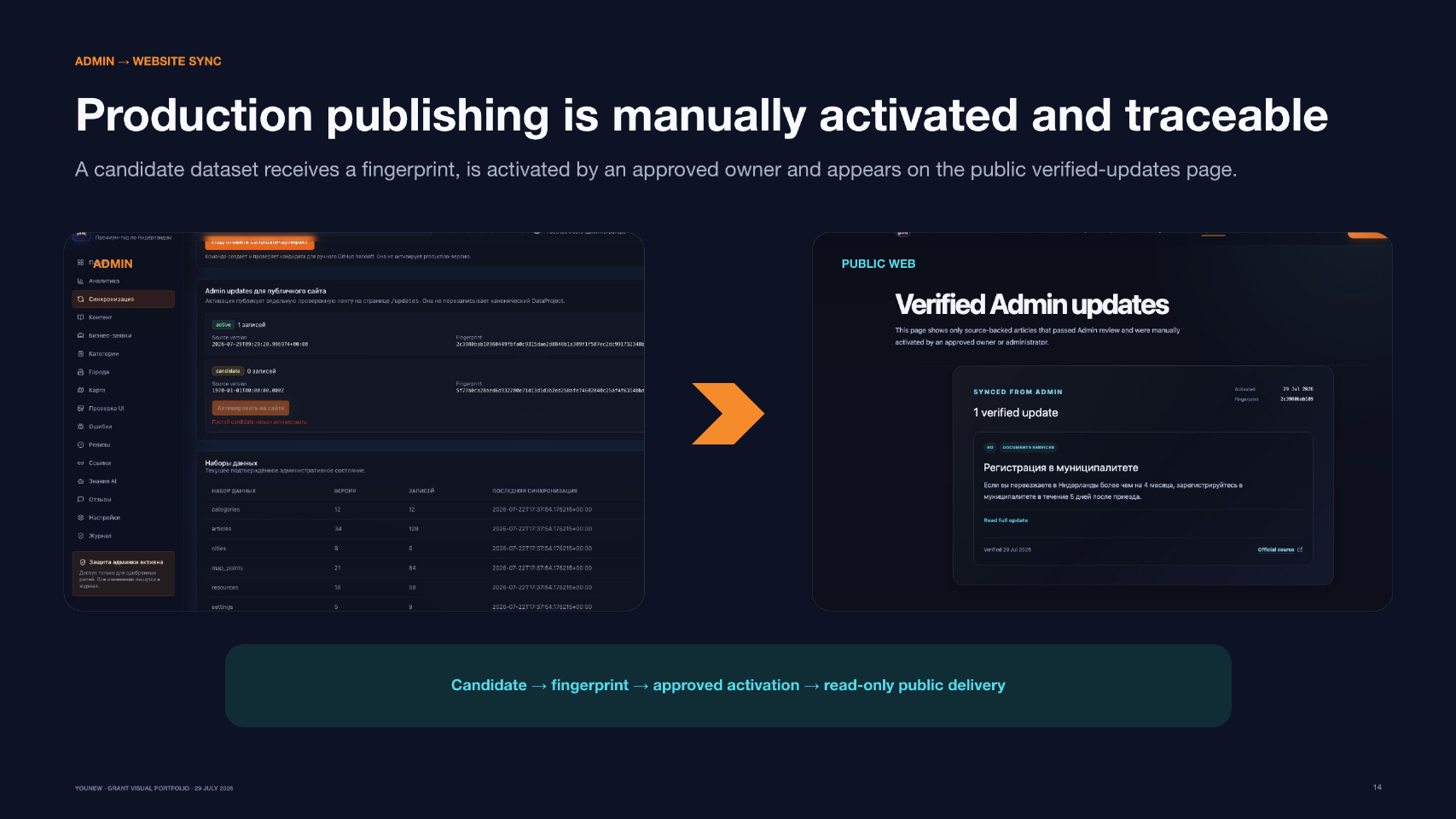
Production publishing uses an approved, fingerprinted and traceable activation path.
-
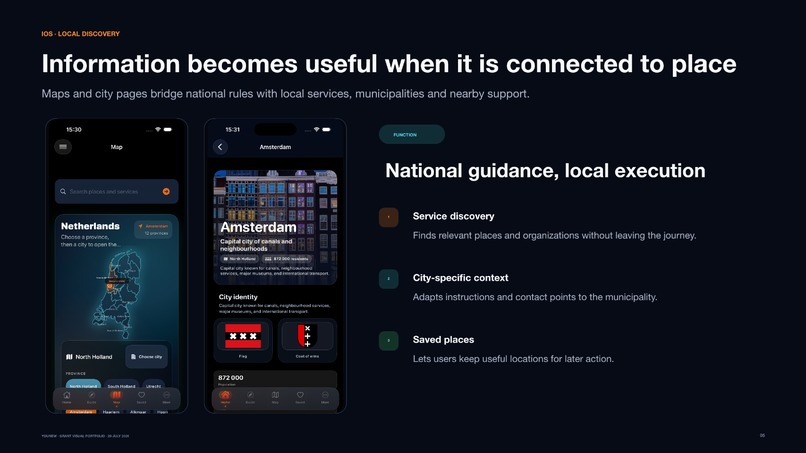
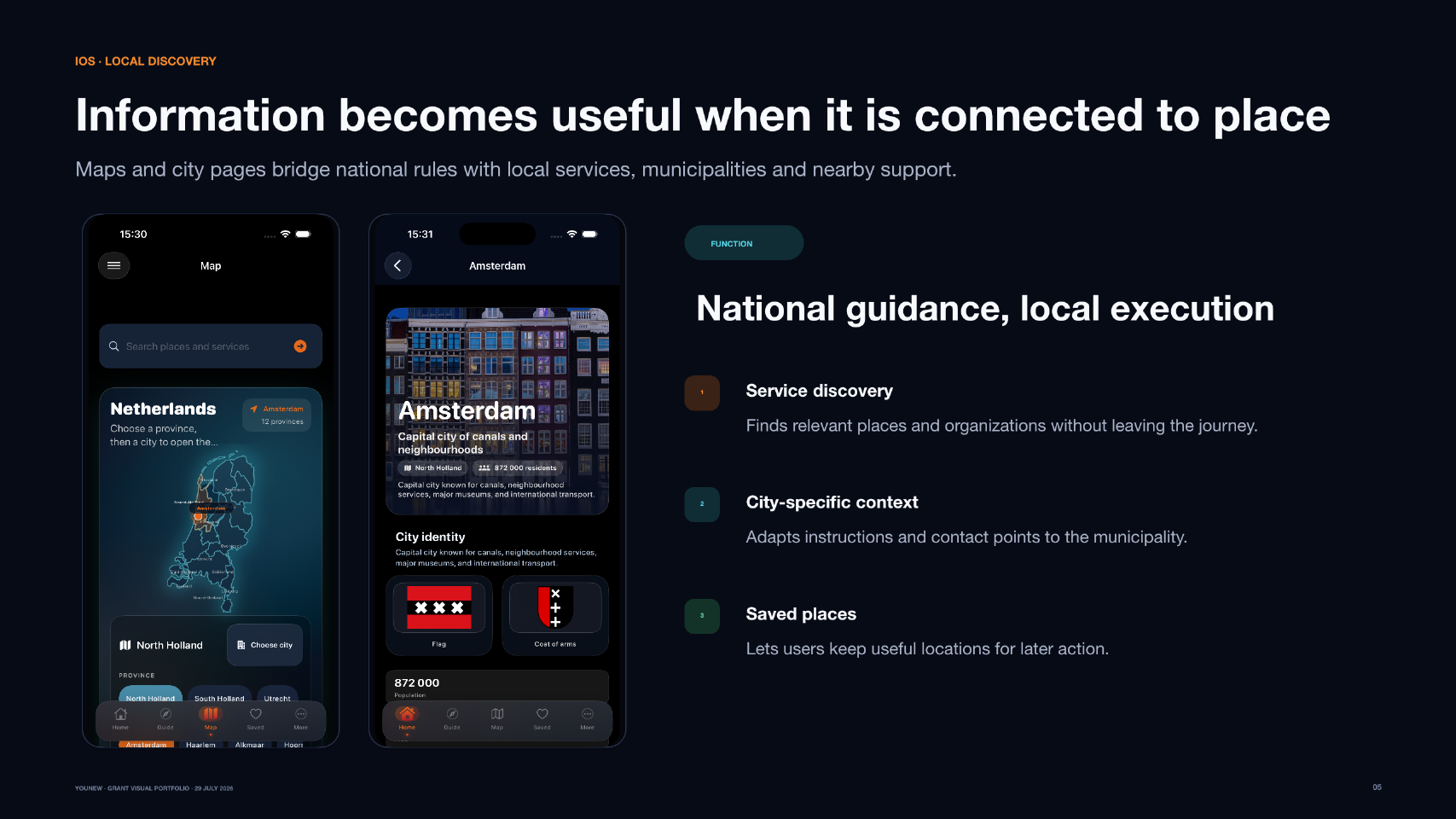
Maps and city pages connect national guidance to local execution.
-
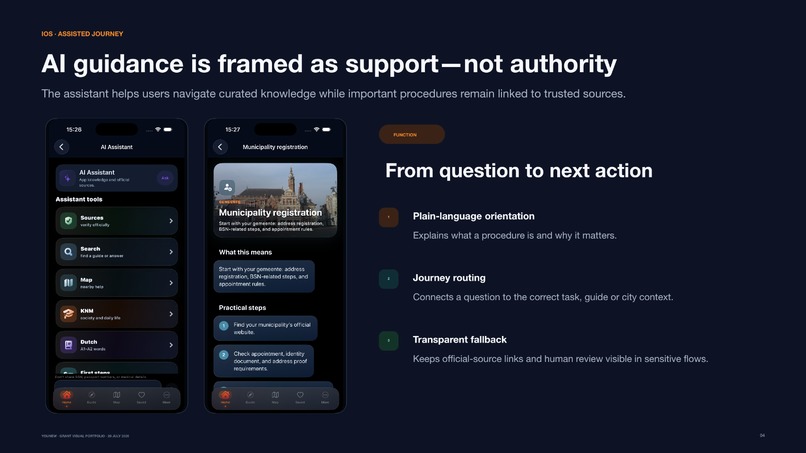
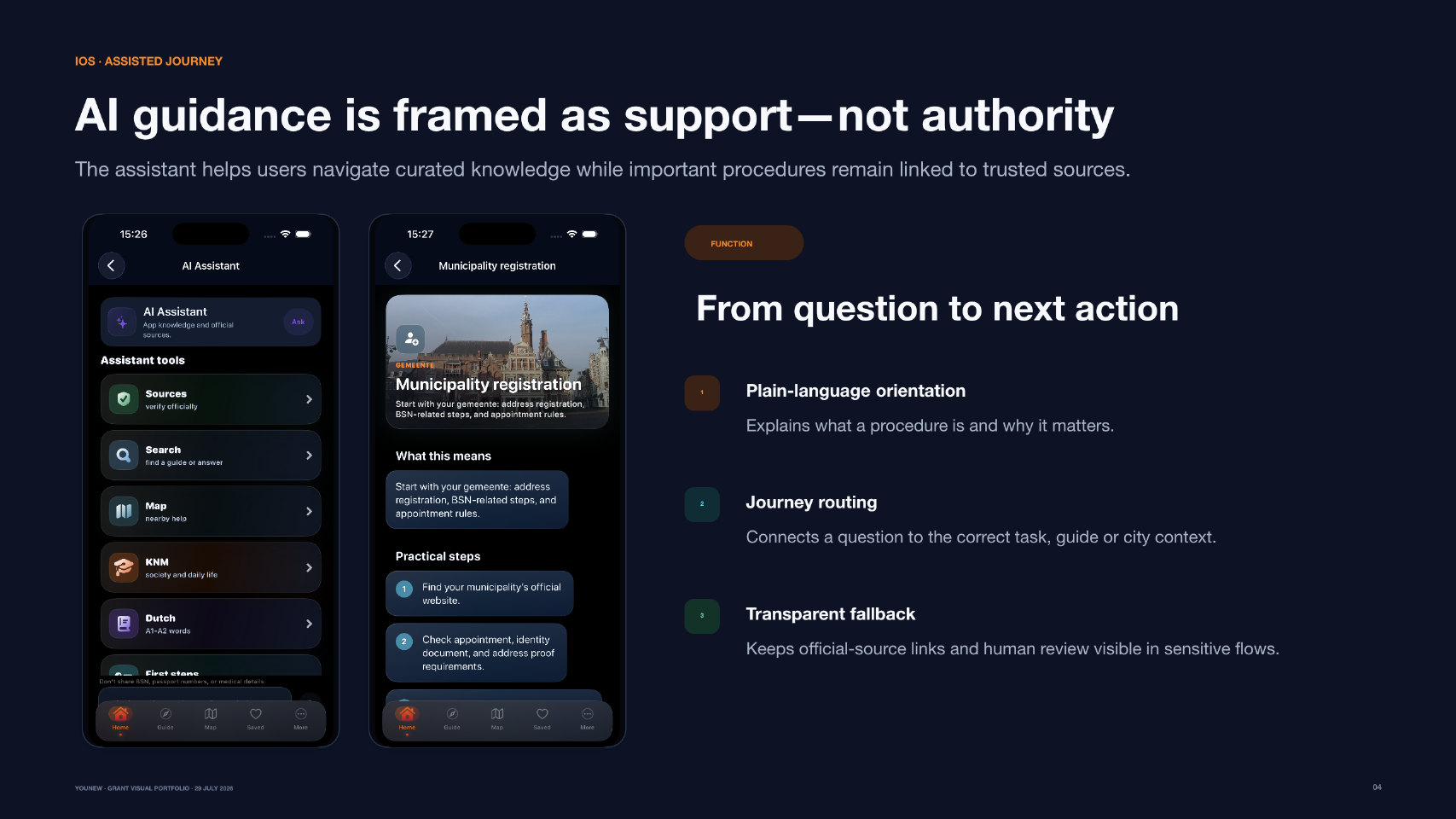
AI assistance routes a question to a practical next action while keeping sources and fallback visible.
-
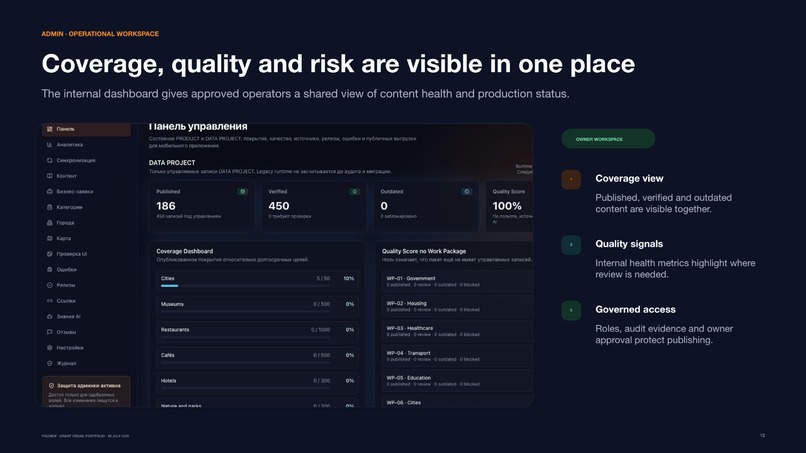
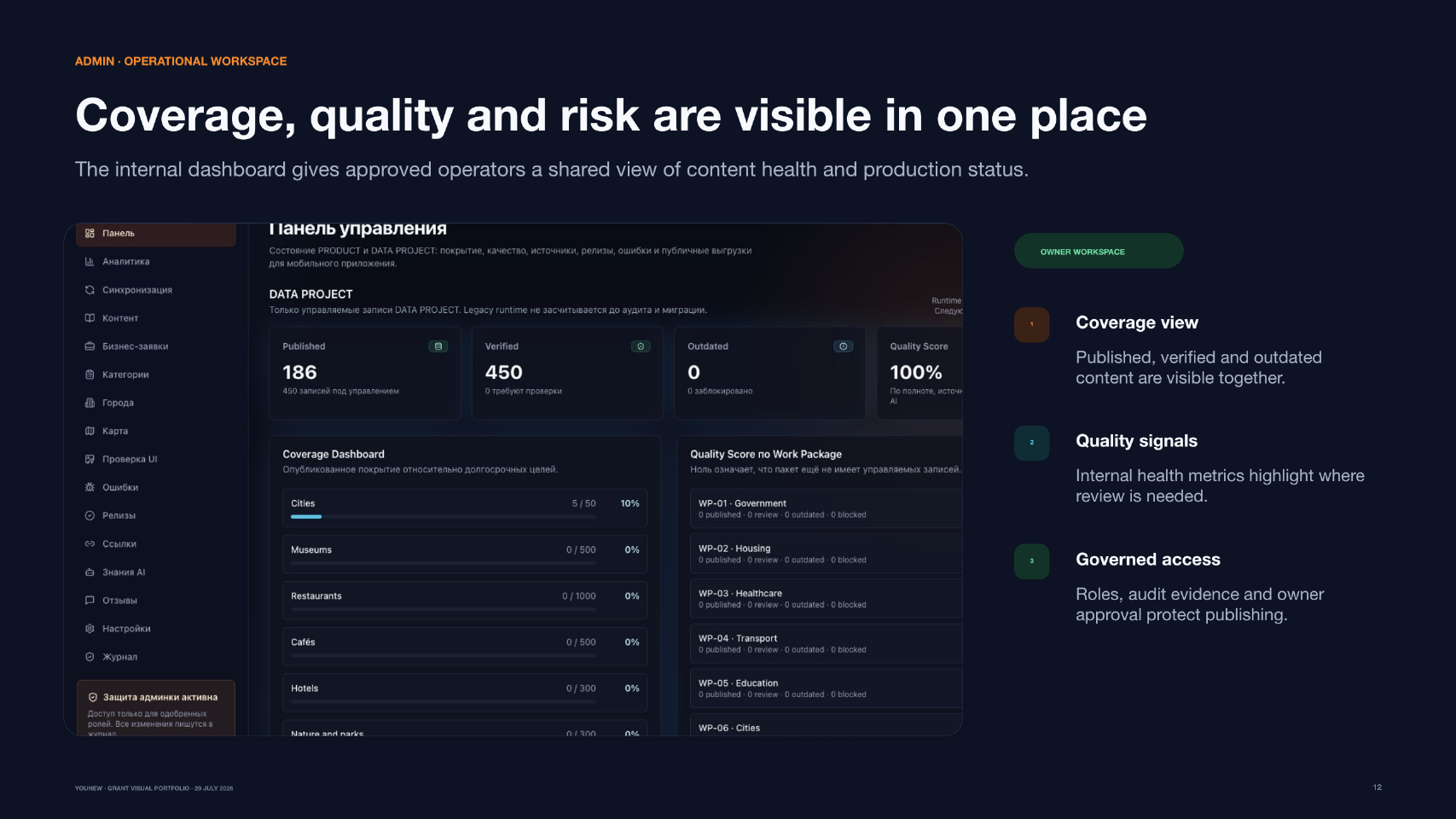
The admin workspace makes coverage, quality and risk inspectable.
-
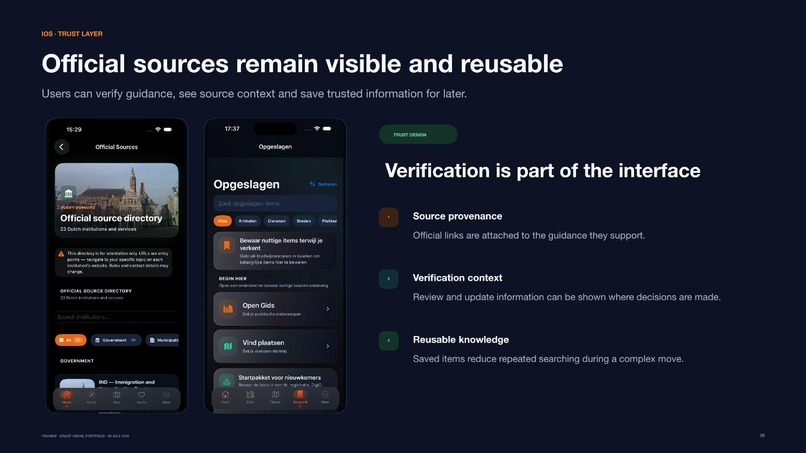
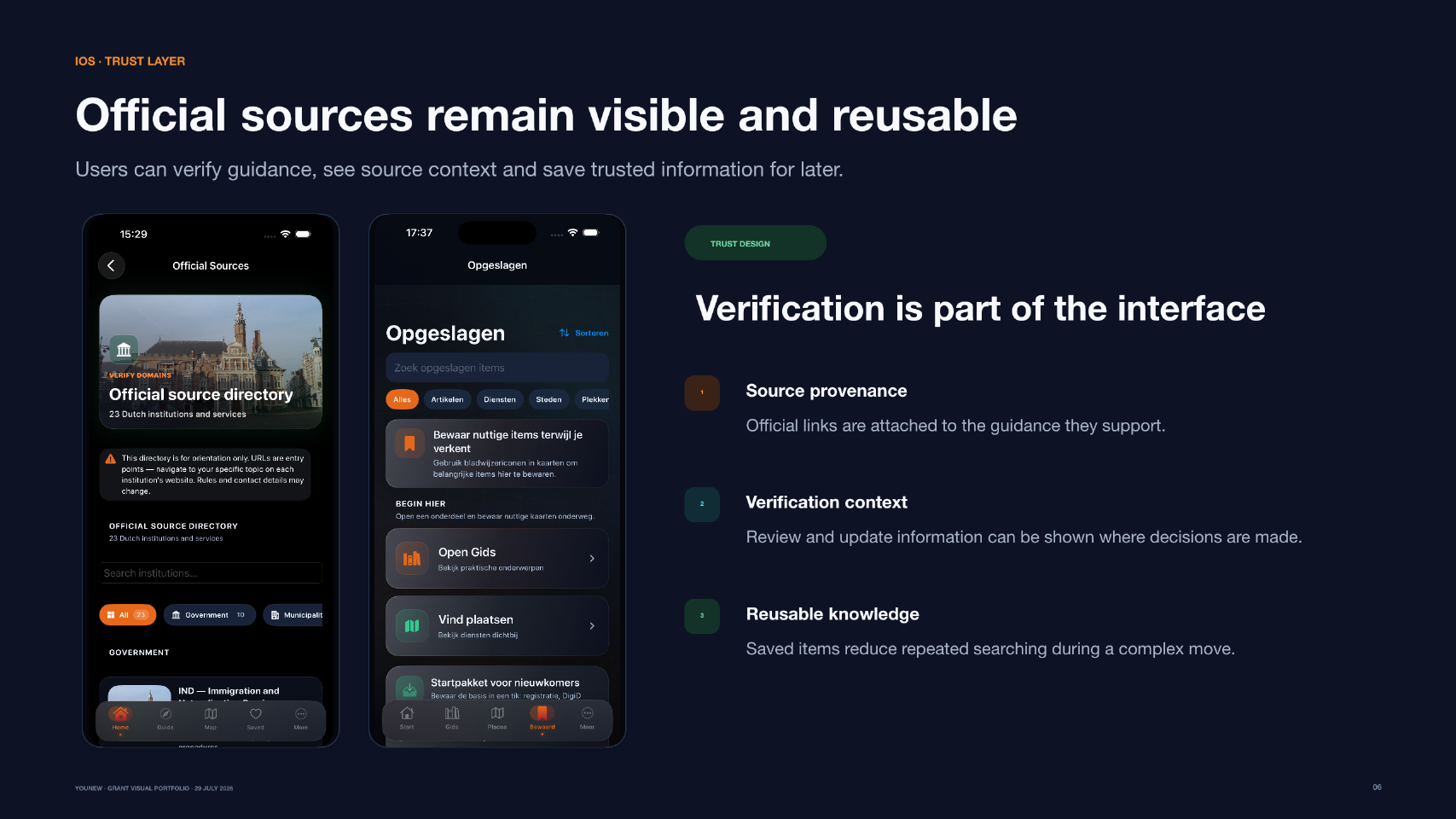
Official sources, verification context and saved guidance remain visible in the interface.
-
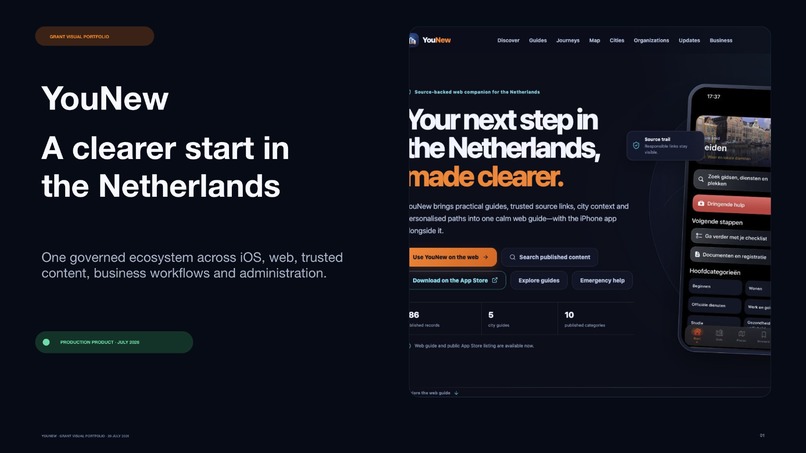
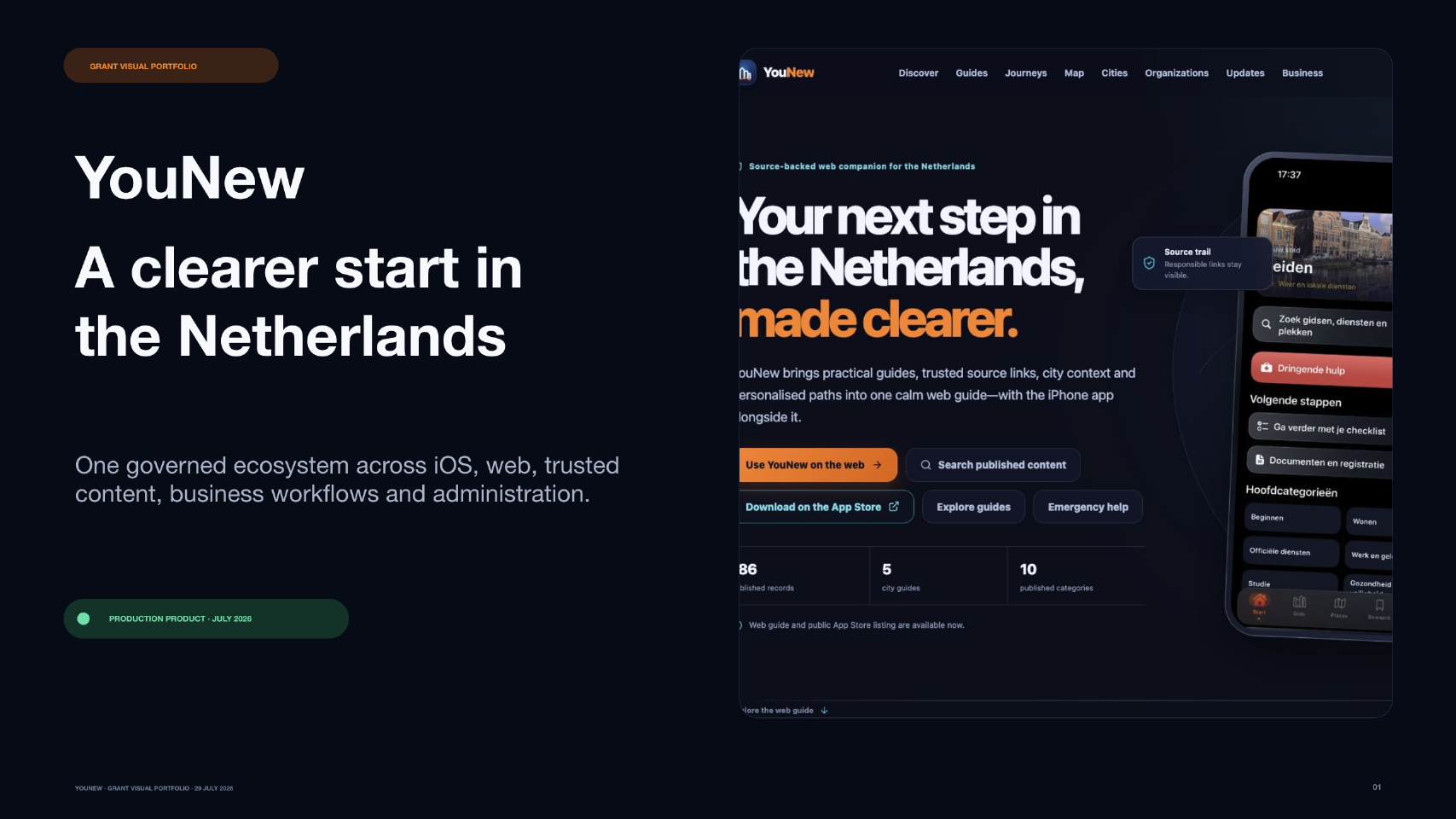
YouNew: one governed ecosystem across iOS, web, trusted content, business workflows and administration.
-
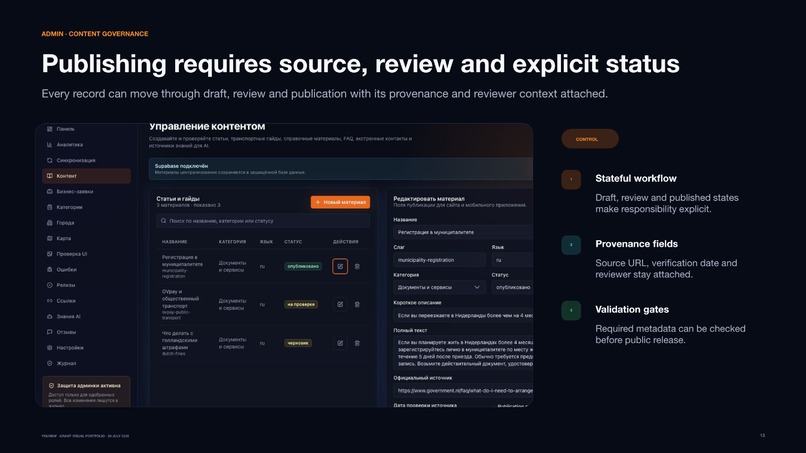
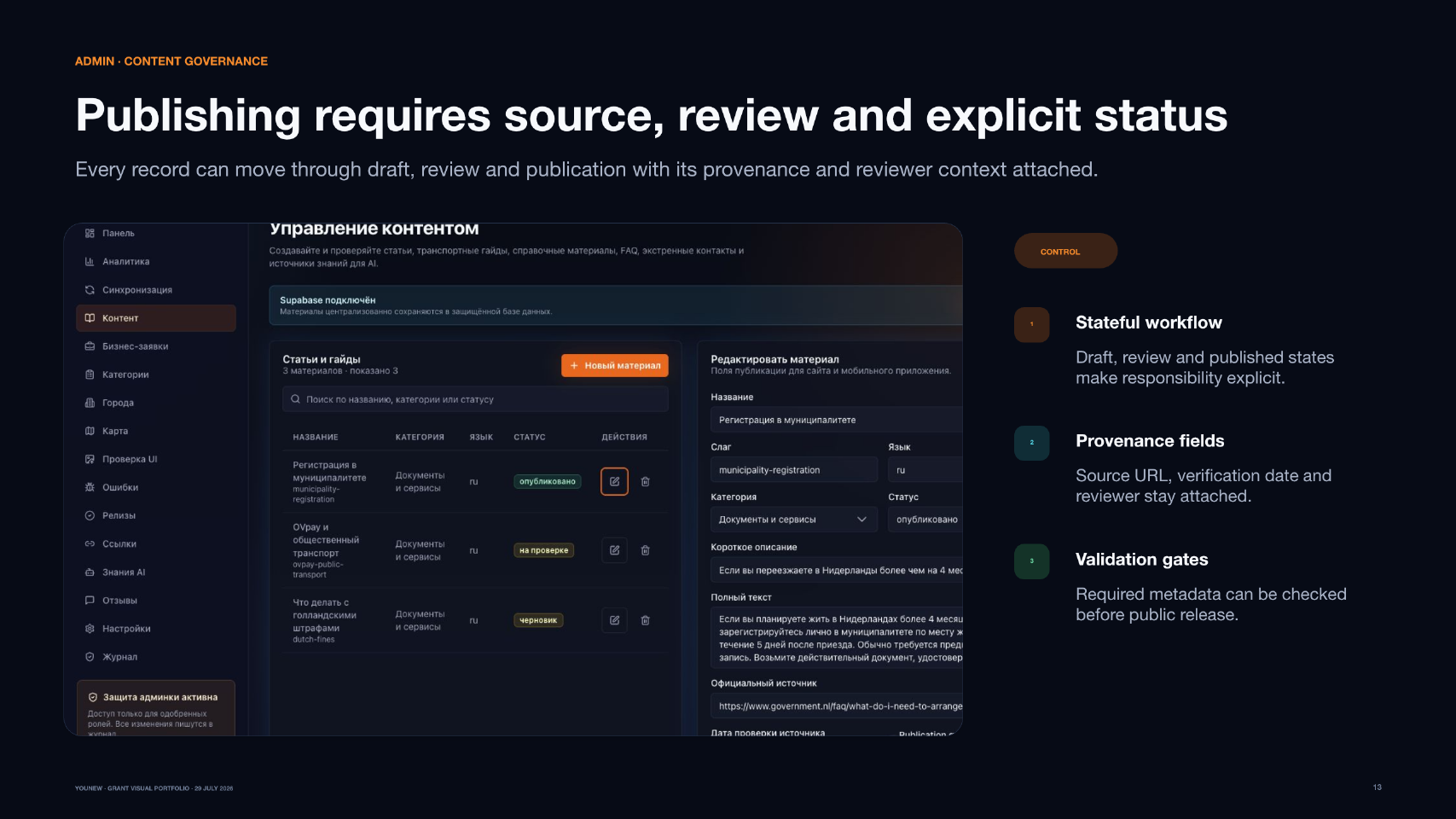
Content moves through explicit draft, review and publication states with provenance attached.
-
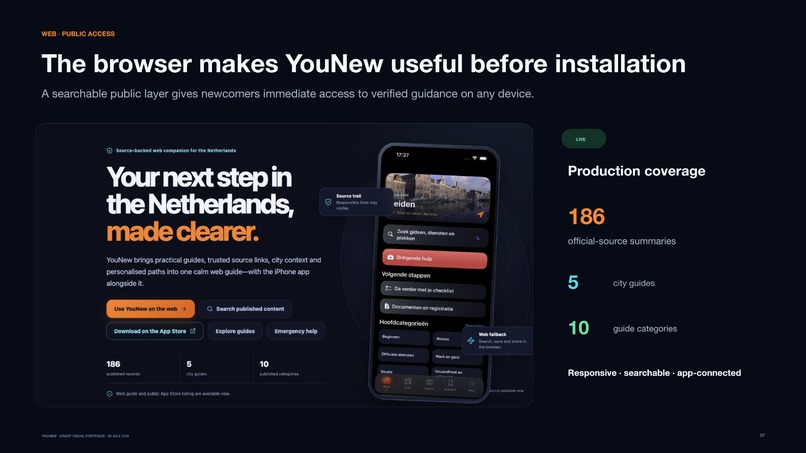
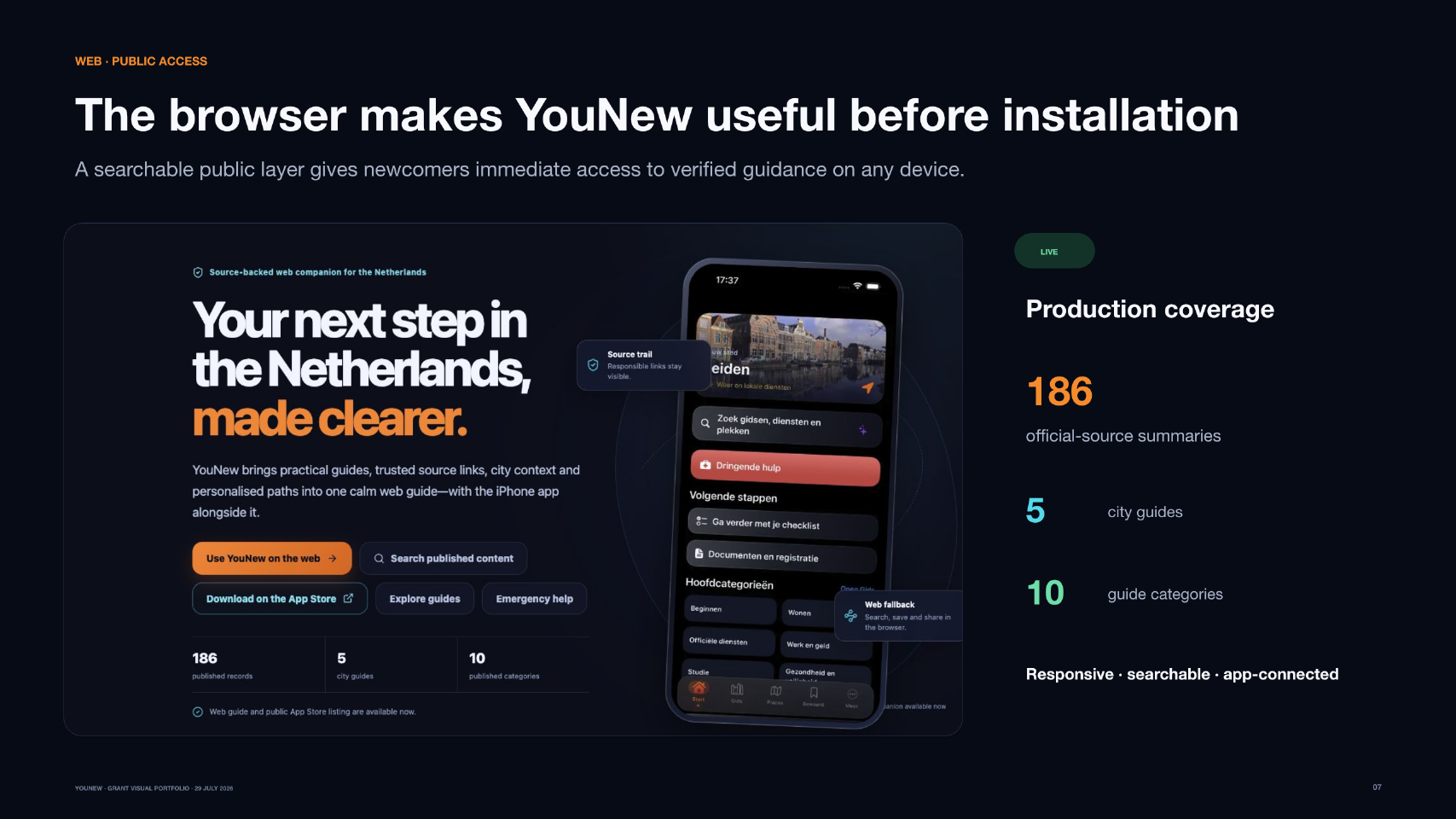
The live web product makes YouNew useful before an app is installed.
Inspiration
YouNew began with a problem I experienced after moving to the Netherlands: essential information about municipalities, healthcare, housing, transport, education and government services existed, but it was fragmented across many websites. The difficult part was not finding another page. It was understanding what applied to my situation, what to do first and which source to trust.
I wanted to build a calmer first step for newcomers — one place that connects practical guidance to official sources without pretending to replace the authorities.
What it does
YouNew turns a newcomer's situation and location into practical journeys, city-specific guidance and clear next actions.
The ecosystem now includes:
- a public web product at https://younew.nl;
- an iOS app with public distribution status and a localized, profile-aware home experience;
- source-backed guides, search, saved items, maps, cities and organizations;
- an AI-assisted guide that keeps source links and human-review boundaries visible;
- an internal admin workspace for content health, review, coverage and traceable publication;
- Supabase-backed operational data, privacy-conscious telemetry and protected business/feedback workflows.
The current public product exposes 86 published records across 5 city guides and 10 guide categories. The status page keeps product availability separate from governance readiness, so a live service is never presented as proof that every knowledge record has passed the newest governance contract.
How I built it
I defined the problem, user groups, product vision and release priorities, then used ChatGPT and Codex as product, research and engineering collaborators.
The implementation spans Swift and SwiftUI for Apple platforms, TypeScript and web components for the public experience and admin workspace, Supabase/PostgreSQL for operational state, GitHub for versioned delivery, and structured content with explicit source provenance.
Every important decision remains human-directed. AI can help draft, test and review work, but it does not independently approve official guidance or publish production content.
From prototype to governed platform
The Build Week version proved that practical newcomer guidance could be made understandable. The next phase turned that prototype into a connected product system:
- the public website is live and independently health-checked;
- the iOS public version is tracked separately from locally tested builds;
- public pages expose official sources and freshness context;
- admin workflows separate drafting, review and publication;
- production activation is explicit and traceable rather than automatic;
- privacy-minimized analytics separates production and staging traffic;
- a macOS YouNew Workspace provides evidence-backed operational oversight across the ecosystem.
Challenges
The hardest challenge was not generating features. It was keeping a broad real-world problem understandable, reliable and governable as the system grew.
Another challenge was preventing high scores or polished interfaces from hiding missing evidence. YouNew therefore keeps operational availability, content governance and user outcomes as separate gates. Unknown or incomplete evidence stays visible instead of becoming a false success state.
What I learned
AI is most useful as a collaborator, not as a substitute for human judgment. Clear contracts, reviewable evidence, small release gates and explicit ownership matter more than the amount of generated code.
I also learned that trustworthy information products need operational design: provenance, freshness, jurisdiction, review workflow, privacy and rollback are product features, not only backend concerns.
What's next
The immediate vertical is BRP/municipality registration: national rules plus an Amsterdam-specific variation, with source provenance, freshness, review workflow and deterministic explainability.
Next milestones include broader verified municipality coverage, a calibrated semantic-duplicate review system, a 1,000-case AI regression corpus, accessibility validation and a real newcomer outcome study. Full governed-platform release remains gated until the content, AI and user-outcome evidence passes together.
Built With
- accessibility
- chatgpt
- codex
- content-governance
- css
- git
- github
- html
- ios
- javascript
- json
- mapkit
- markdown
- openai
- postgresql
- privacy-by-design
- rest-apis
- supabase
- swift
- swiftui
- typescript

Log in or sign up for Devpost to join the conversation.