-
-
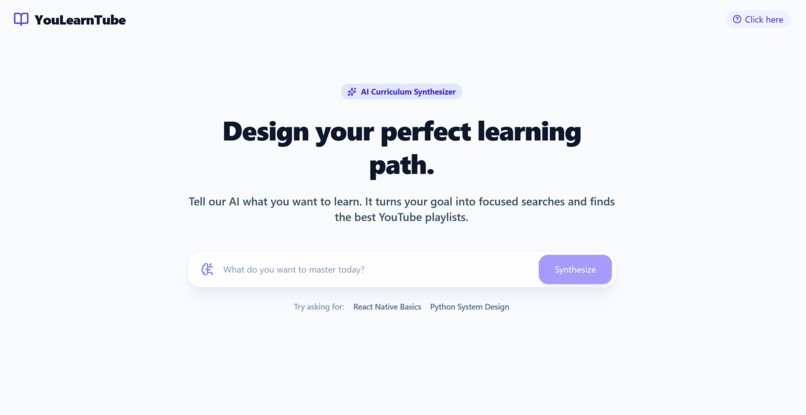
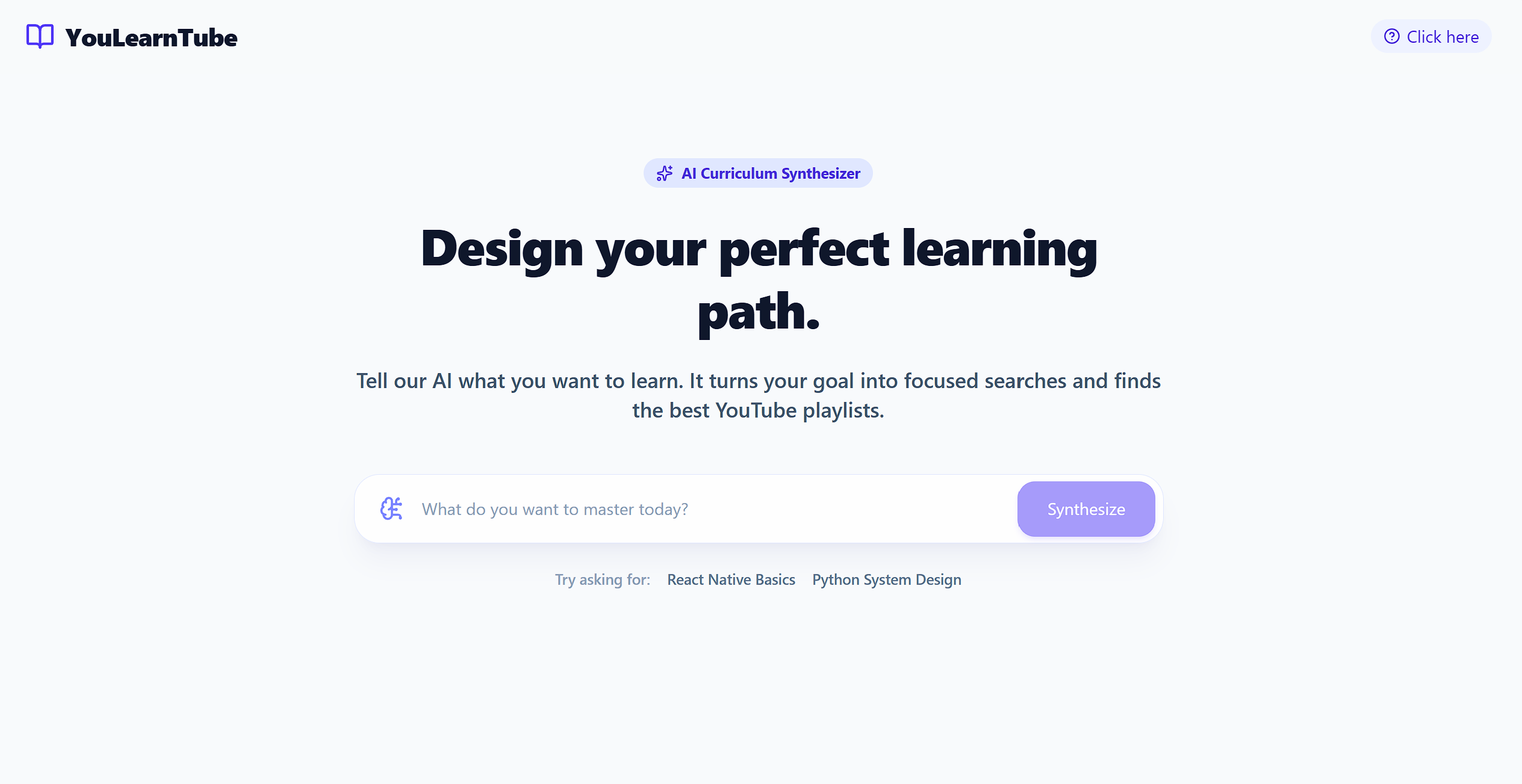
Home Page
-
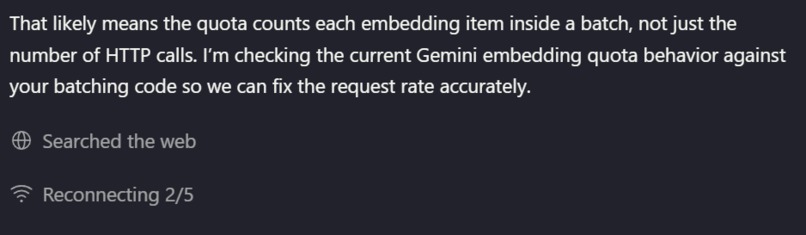
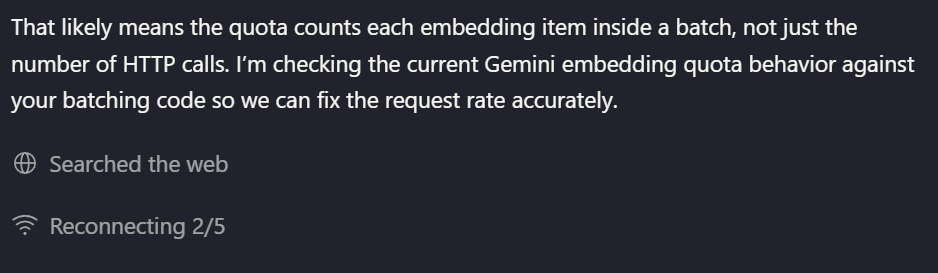
Reconnecting Issue when My net was 350mbps
-
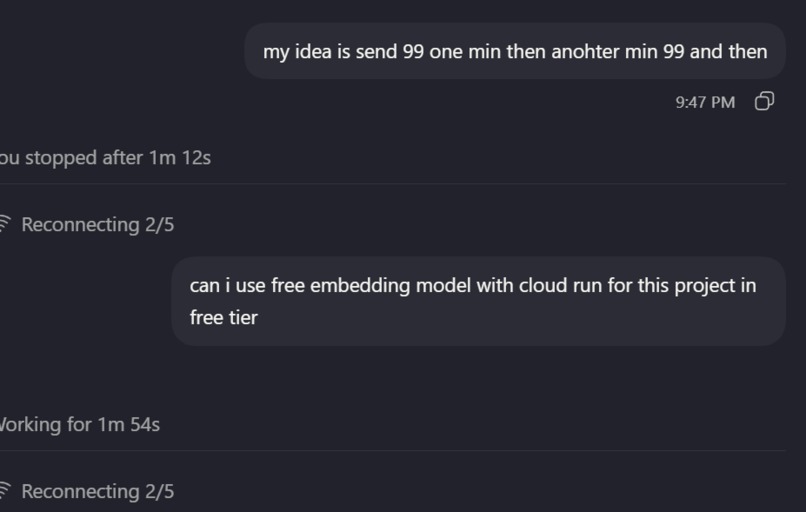
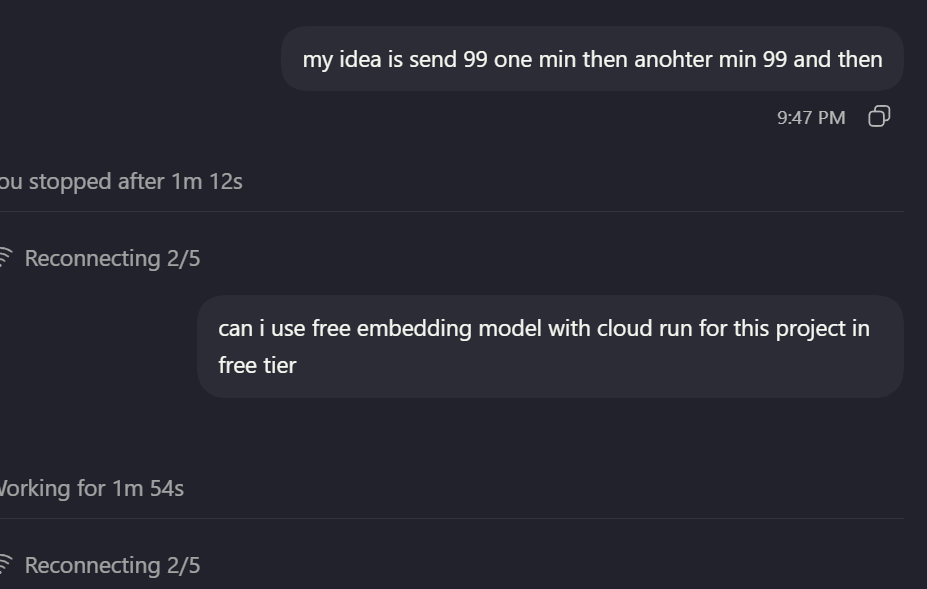
Old conversation deleted when reconnecting started
-
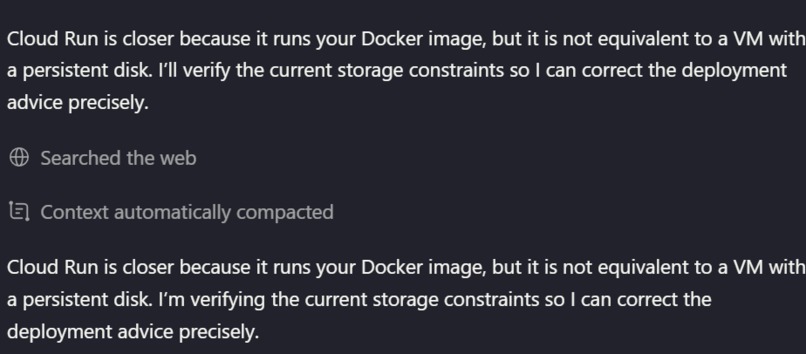
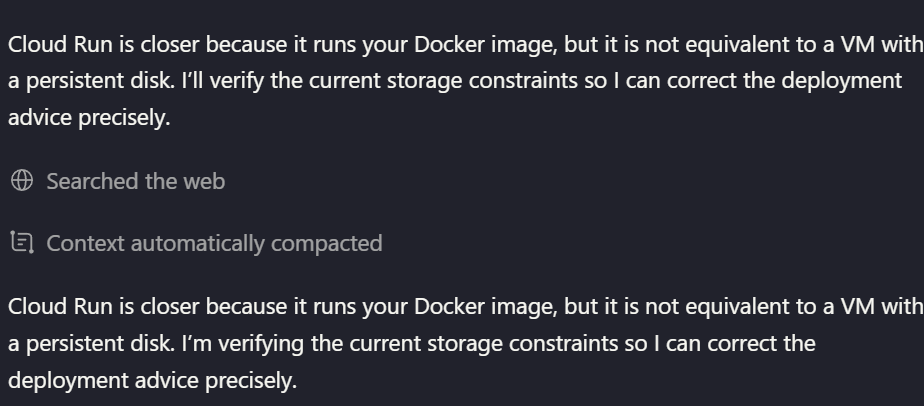
Repeated Conversation
Inspiration
Learning on YouTube is one of the most accessible ways to gain technical skills, but it is also one of the most fragmented. Learners often spend hours searching for quality playlists leading to tutorial hell, encounter repeated content across multiple creators, struggle to track their progress, and have no structured way to review or test what they have learned. While AI chatbots can answer questions about videos, they are not designed around the learning process. They can easily reveal concepts from future lessons, break the intended progression of a course, and rarely provide an experience similar to a structured educational platform. We wanted to transform YouTube from a collection of independent videos into an adaptive learning platform that provides a premium experience just like Udemy, Coursera etc. Instead of simply adding AI on top of YouTube, our goal was to build an experience that understands what a learner has already watched, generates learning resources only from that material, and guides them through a personalized learning journey. This led to YouLearnTube an AI-powered learning workspace that automatically merges playlists into a single course, removes duplicate content, generates AI enhanced tutoring, mind maps, quizzes, flashcards, and adaptive recommendations, allowing anyone to learn from YouTube as if they were taking a professionally designed online course.
What it does
YouLearnTube turns scattered YouTube tutorials into one guided course. A learner writes a goal in plain language, selects recommended playlists, which then turns them into a structured video path, and receives AI assistance that is based only in the material they have already watched thus avoiding questions or explanations that introduces concept that learner don't understand. The goal is to make free video learning feel like a focused learning product: a course with a sequence, watched-time awareness, source-linked explanations, progressive concepts, easing learners to note taking, checks for understanding, and a recommendation for what to do next.
How we built it
Codex was used as a build partner from planning through the final pitch. Its role was not limited to producing code. We continuously moved between product design, implementation, debugging, verification, documentation, and presentation polish. We decided to take divide the project in 7 days roadmap with the help of codex, where day 1-2 was used by us to generate a roadmap containing functions that helped us wrote the backend and frontend code and ensured that the code is disjointed. We asked codex to fix the code base using gpt 5.6 luna as planner and gpt 5.6 terra as editor. Day 3-4 was used to implement the ai tutor and other features, luna helped us by recommending direct and Socratic modes which was implemented by terra, here in order to check the code quality we did a hour to hour roadmap where each hour had 7 tasks, we saw that the code quality remains same even when doing hour to hour as when doing task to task, but saw a huge substantial token consumption when doing hour to hour. Day 5-6 was used to sprint run the features by just asking the features and codex implementing it, while bugs were nonexistent in the code throughout, we saw fewer extra details added and measured huge amount of time implementing a feature with us having to add smaller details that made the overall time spend much higher. We also used codex to generate demo video using screenshot video taken by us, generate docs etc. Most of the features implemented moved from being isolated to being boxes together to form the perfect union between wow-factor and useful cases.
Challenges we ran into
-Bugs in Codex -> One common issue was steering the conversation with our prompt where once it was thinking, when we wrote our idea to steer it and clicked steer the idea was removed. This made us write the whole conversation from scratch.
-Repeated Generation -> Sometimes, a statement was repeated twice before abruptly stopping and us needing to start it again.
-GPT 5.6 -> While it was great at introducing higher level designs the low-level designs that is necessary to improve user experience for the feature we were talking about was missing, this led to repeated conversations about adding a button, removing X adding Y.
-Missing Information regarding third party providers -> Luna/Terra both sometimes gave information about third party Api that was wrong with the best example being them sometimes telling that YouTube-transcript-retrieval works on google cloud but after deploying it I found that was not true leading me to look at other alternatives and changing a segment of code.
Accomplishments that we're proud of
Built an end-to-end AI learning platform that transforms scattered YouTube playlists into a structured, adaptive course instead of simply adding a chatbot on top of videos.
Designed a spoiler-safe retrieval system where the backend enforces learning boundaries, ensuring every tutor response, quiz, flashcard, and mind map is generated only from content the learner has already watched.
Implemented course formation using embeddings and similarity, automatically merging multiple playlists into a single high-quality learning path by removing similar videos and hosting it using local embedding model instead of paid model.
Developed lazy transcript ingestion that processes only the active lesson, significantly reducing startup latency and API costs while keeping the learning experience responsive. This was done by creating chunks of transcript.
Created a shared instructional-content filtering pipeline (basically a prompt) that removes introductions, sponsorships, and other non-learning content before generating quizzes, flashcards, mind maps, and tutor responses.
Built an explainable adaptive learning engine (pretty proud of) that combines quiz performance, concept understanding, tutor feedback, watch history, and focus sessions to recommend the learner's next step. It changes after every input from the user.
Designed the backend with clear service boundaries, separating language models from business logic, external APIs, retrieval, embeddings, and application state for improved reliability and maintainability.
Added deterministic mock providers for language models, embeddings, transcripts, and YouTube discovery, allowing the complete application to be demonstrated without external API credits. Used that in order to create a mock frontend where every ui change was seen and brought to main of it looked good.
Delivered a deployable full-stack application using React, FastAPI, ChromaDB, and Cloud Run architecture, supported by comprehensive documentation, deployment guides, and a presentation-ready demo workflow.
What we learned
Building YouLearnTube taught us that creating a great AI product is much more than integrating language models. We learned that AI performs best when it is given a clearly defined responsibility We also learned that the quality of an AI learning experience depends heavily on retrieval and context. Features such as spoiler-safe retrieval, filtering, transcript ingestion, and playlist similarity had a greater impact on the learner experience than simply using a more capable language model. Throughout development, Codex became much more than a code-generation tool. It acted as an engineering partner across the entire development lifecycle helping us refine the product vision, review architecture, implement backend services, debug complex issues, improve the frontend experience, optimize deployment, and produce comprehensive technical documentation. Codex helped us reason about system design, evaluate trade-offs, and iterate quickly while keeping the codebase organized. Most importantly, we learned that AI-assisted software development is not about replacing engineering decisions. It is about accelerating them. By combining Codex with careful architectural design and human review, we were able to build a significantly more polished, maintainable, and production-ready application within the limited timeframe of a hackathon.
What's next for YouLearnTube
- authentication and per-user/course authorisation;
- a shared database for course, progression, quiz, map, feedback, and focus state;
Had a pretty great experience with the discord community and stressing about managing credits as well as making it a 0 dollar build where I spend nothing on credit for anything.
Built With
- chromadb
- cloud-run
- docker
- fastapi
- fastembed
- javascript
- numpy
- pydantic
- python
- react
- tenacity
- vercel

Log in or sign up for Devpost to join the conversation.