IMPACT POTENTIAL
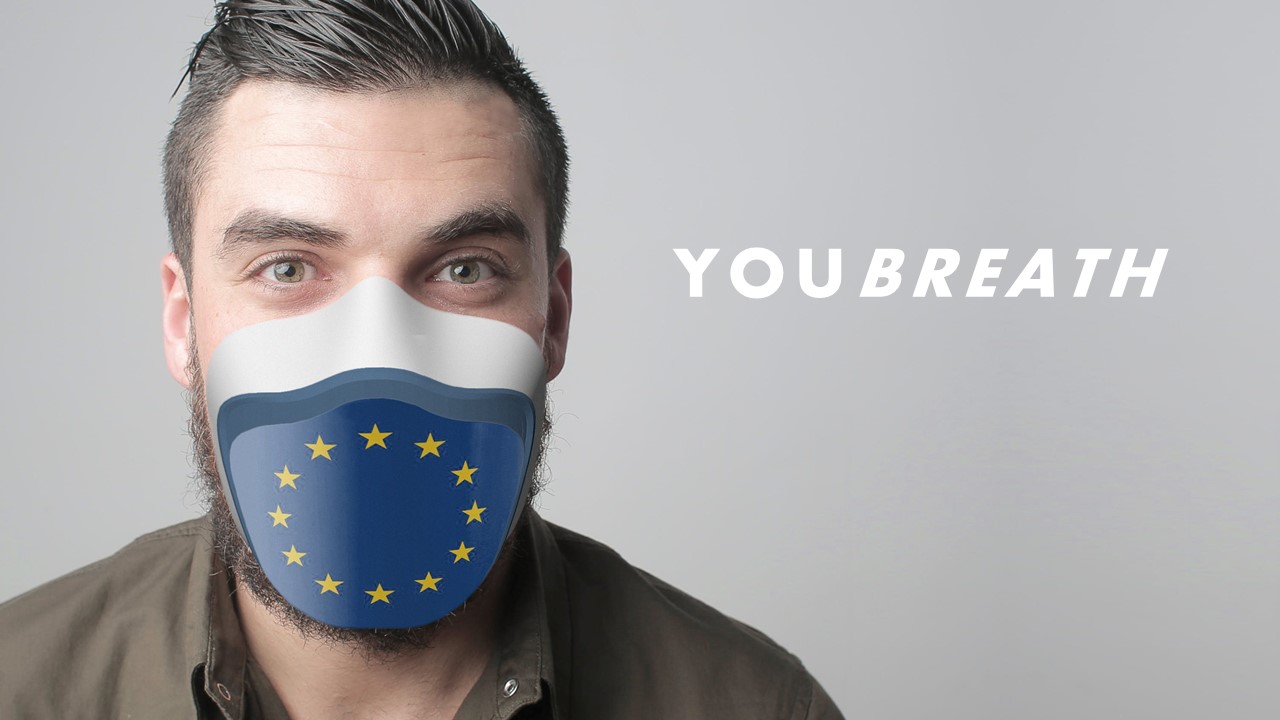
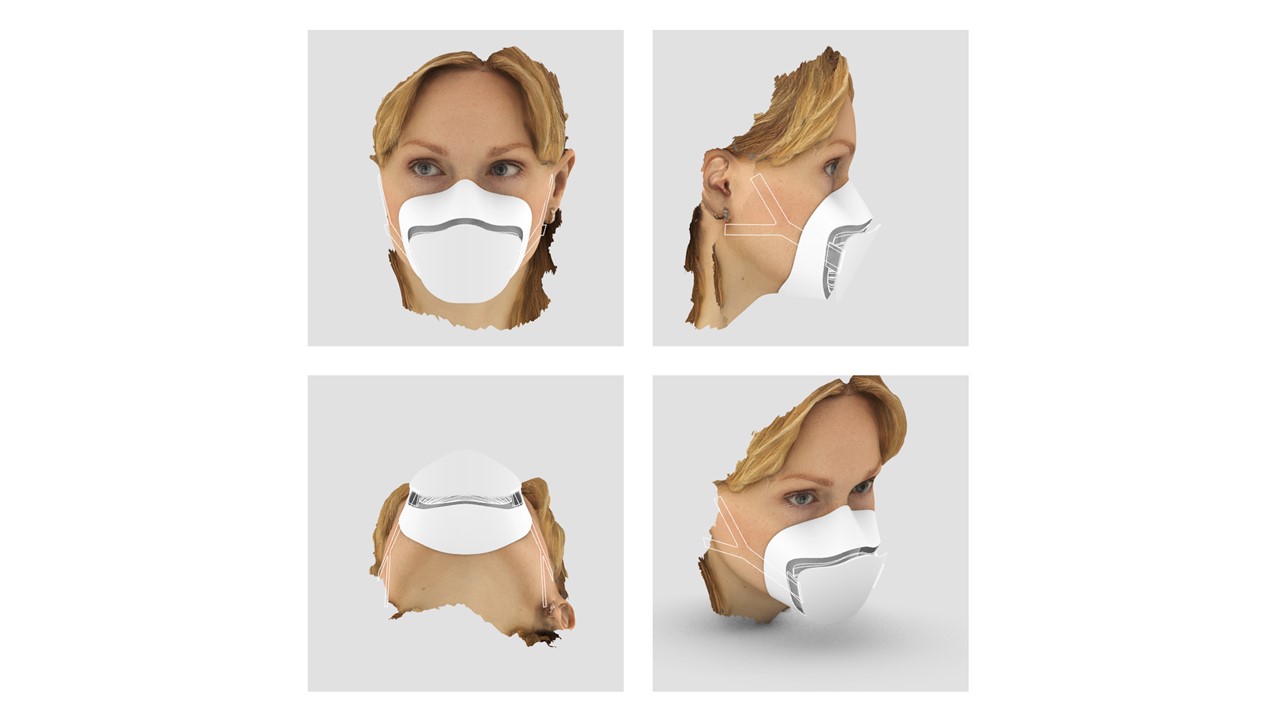
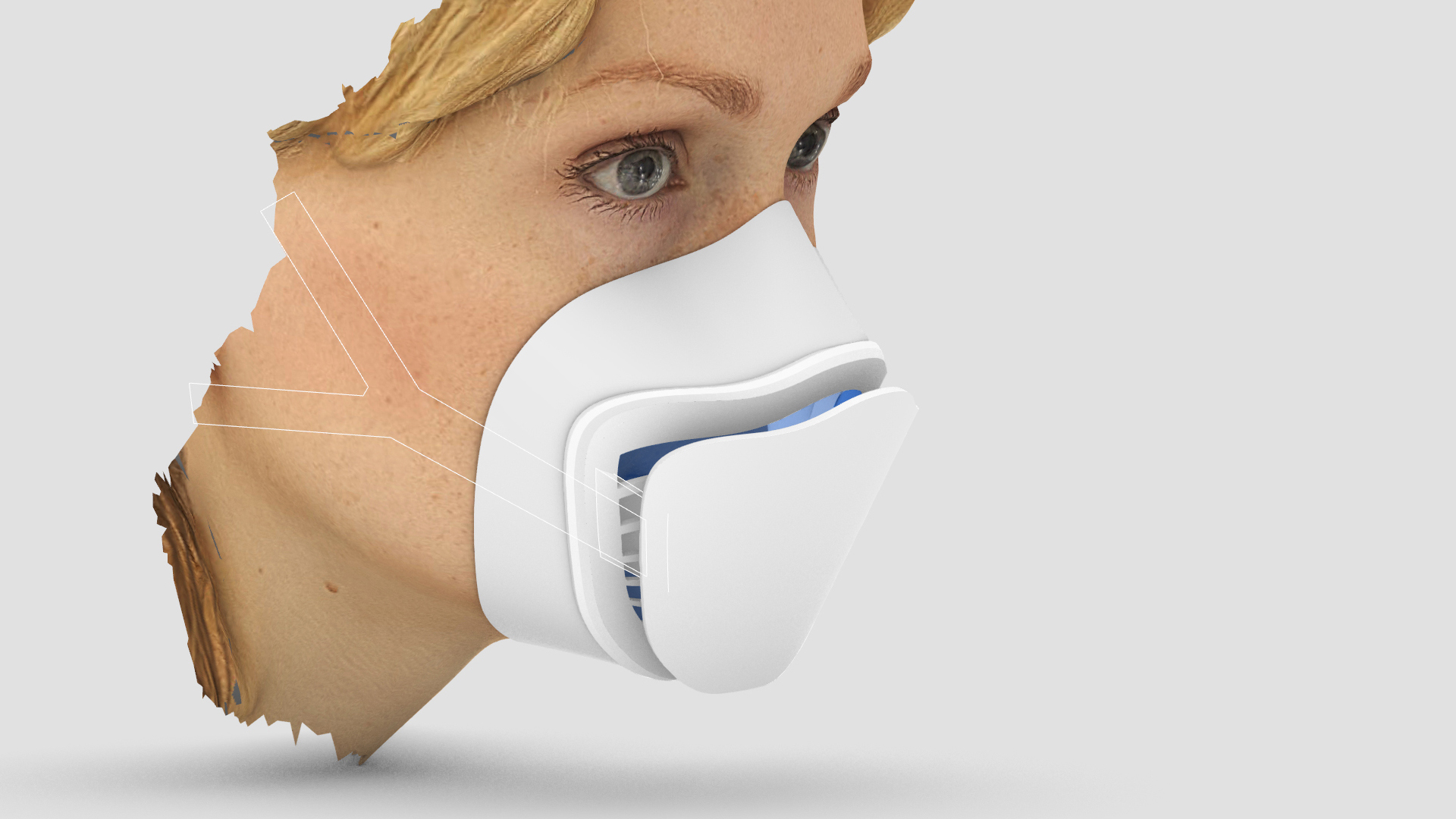
The importance of protecting the respiratory system, ensuring the perfect fit of the masks to the face, is a problem which has not yet been solved in the covid19 emergency. Youbreath is a project that proposes a new ergonomic and customized product, which can be achievable thanks to an innovative automated design method and a decentralized production system. Thanks to these assumptions, Youbreath can be scaled to quickly meet the requirements of millions of people.
TECHNICAL COMPLEXITY & NOVELTY
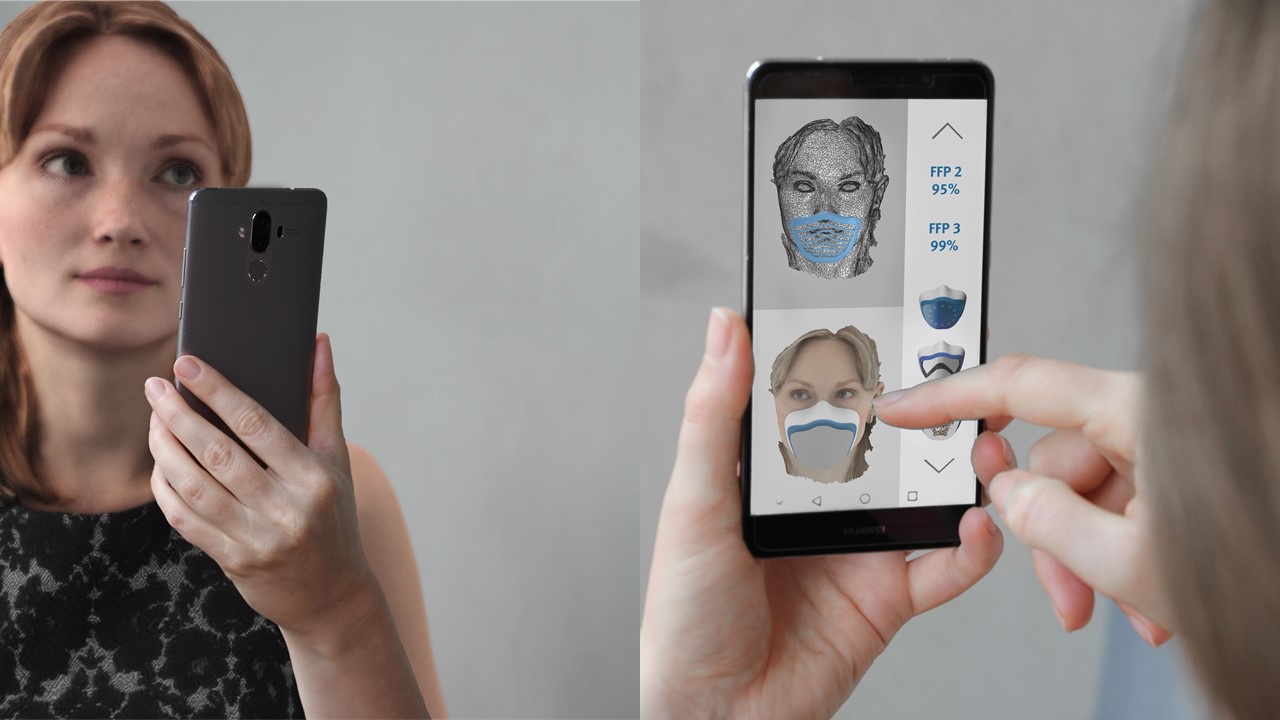
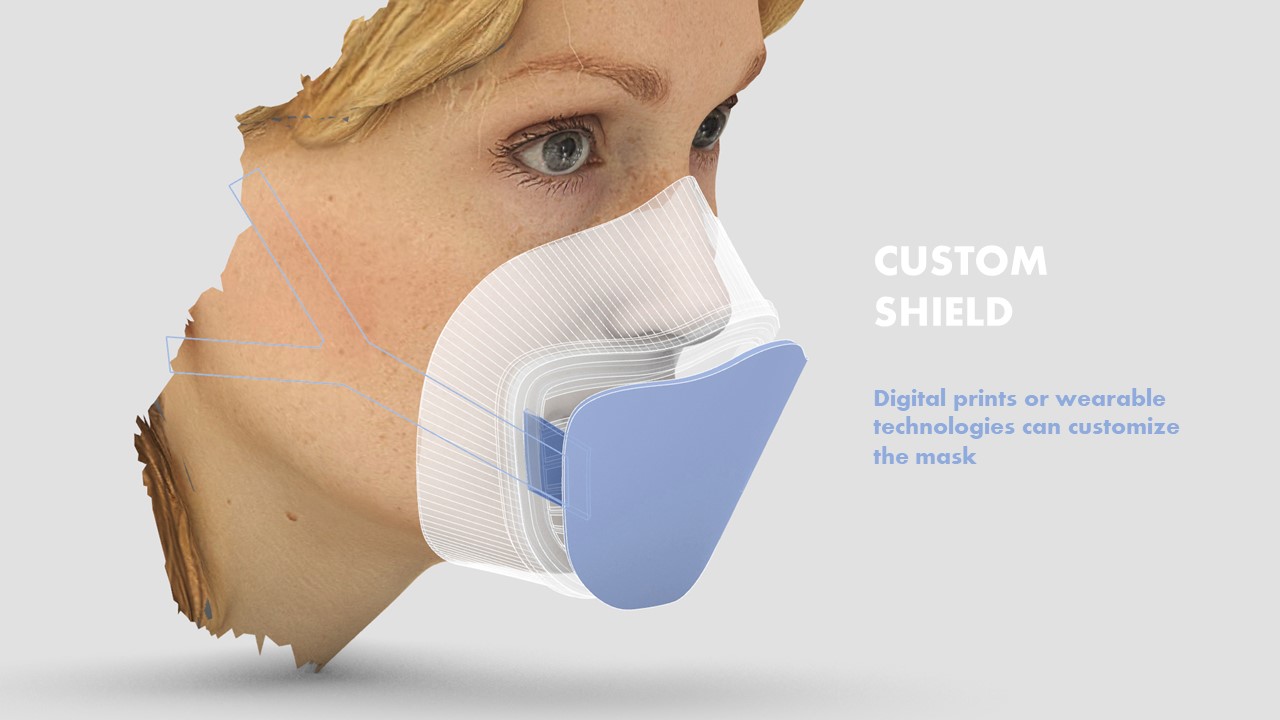
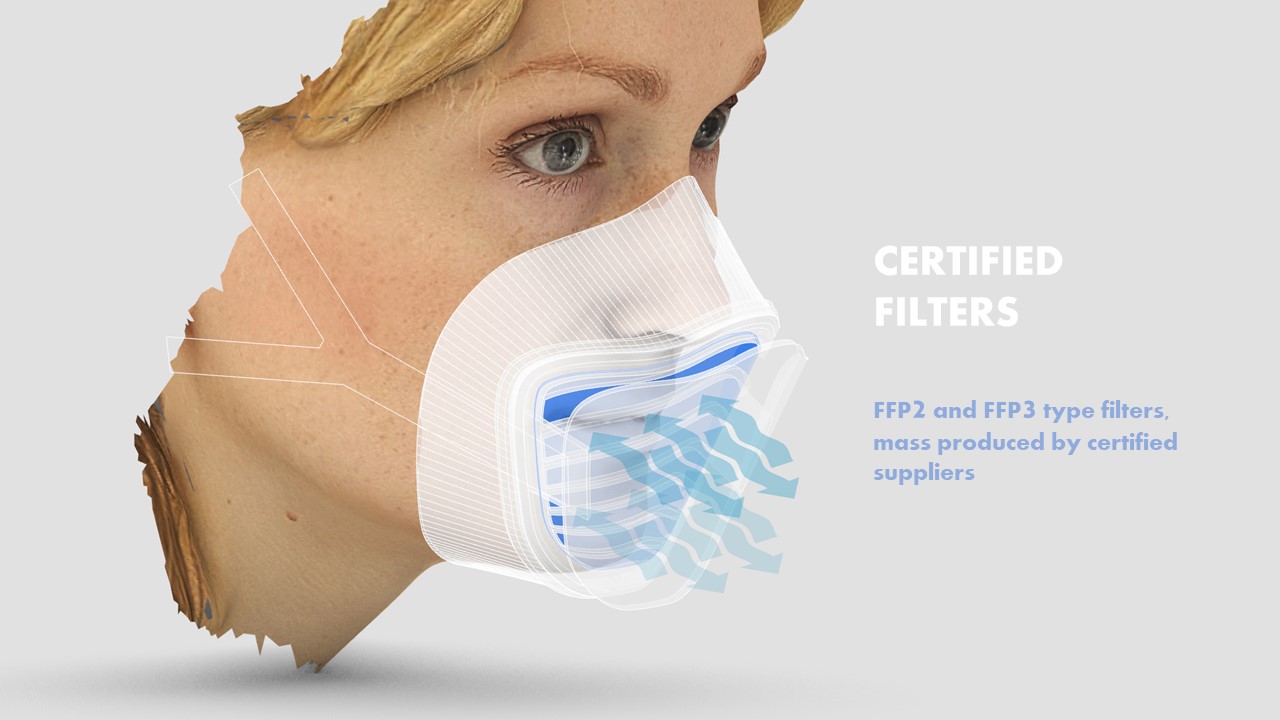
Youbreath meets the customization needs of the product by using cutting-edge technologies, combined and operated through an online platform. The user scans his or her face using a specific app, chooses the type of filter (FFP2 or FFP3) and customizes the visual appearance. The code that defines the geometry of the mask is automatically generated through artificial intelligence algorithms and parametric processes. The app directs the users to the printing centers closest to their location and manages the B2C relationship. The platform allows Makers, Fablabs, and specialized companies to receive all the technical information useful to streamline the manufacturing process.
PROTOTYPE COMPLETION
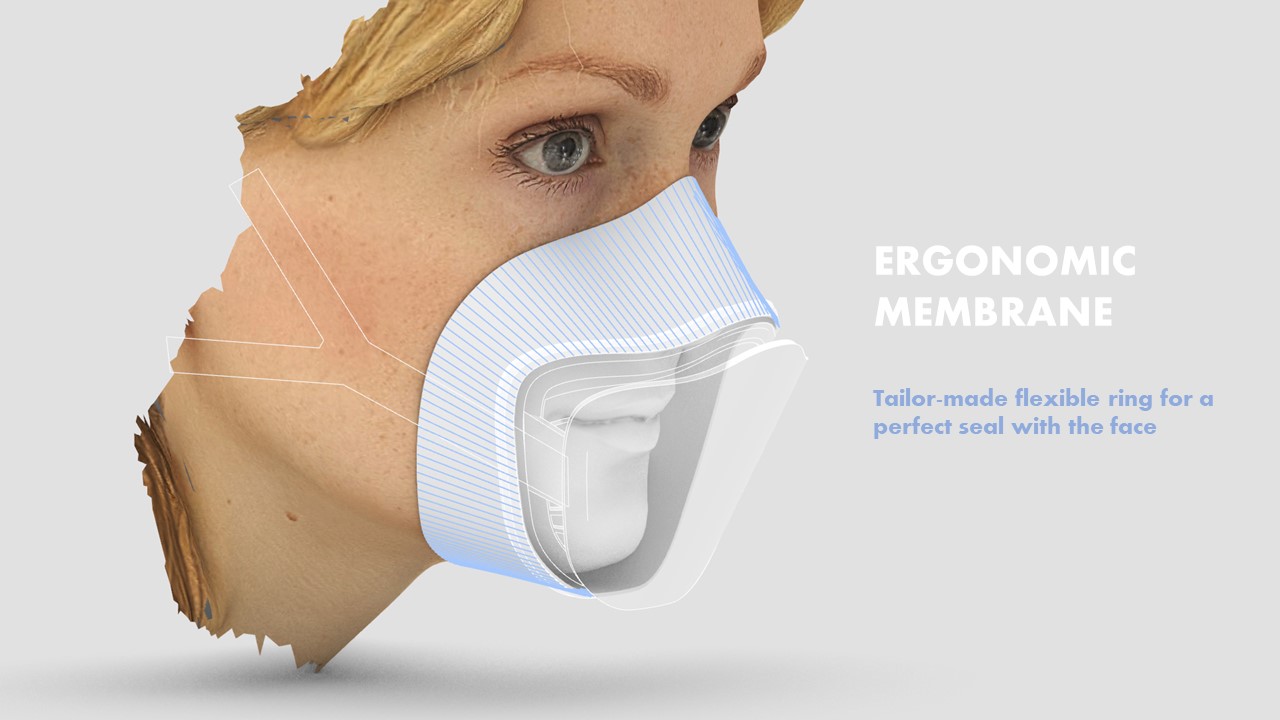
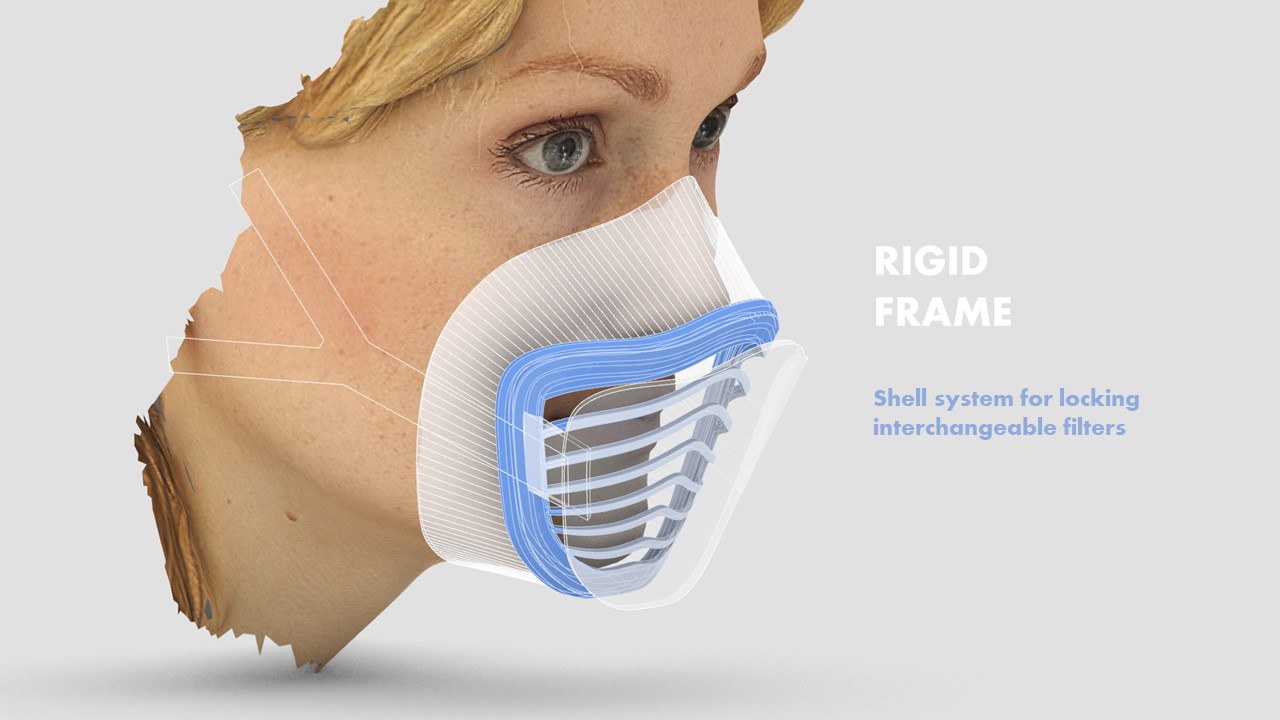
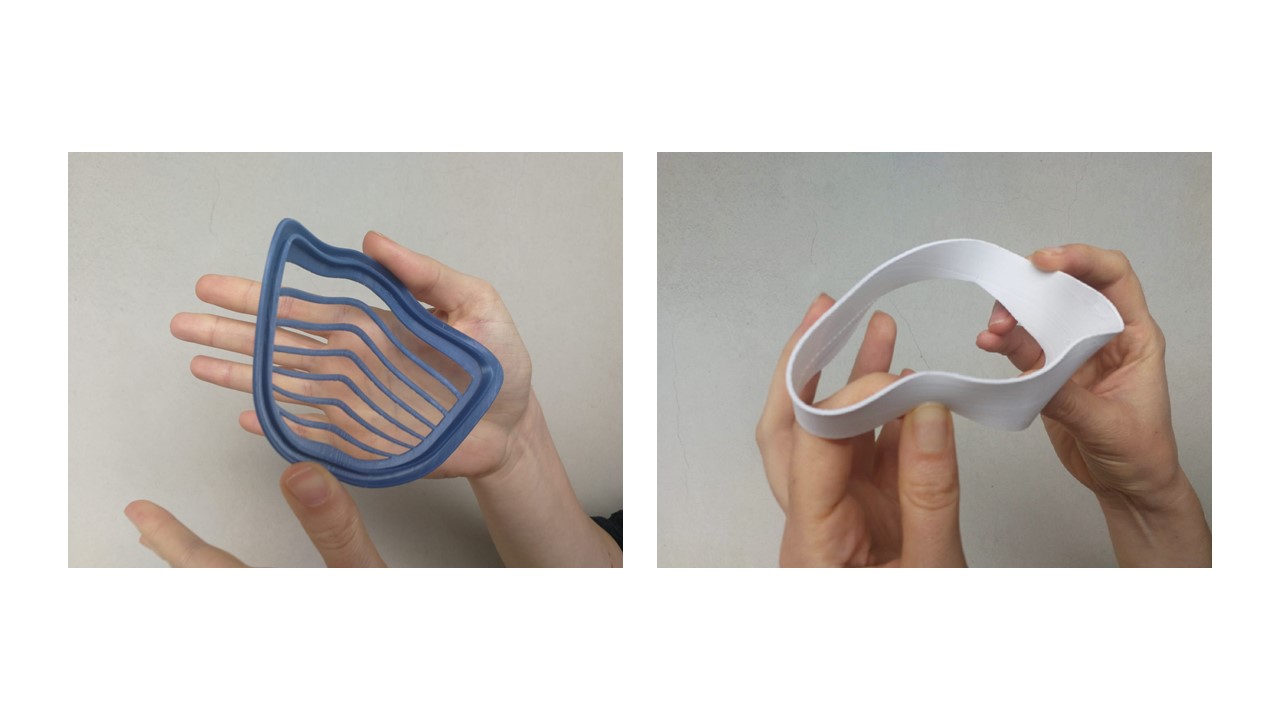
During the EUvsVIRUS hackathon, the prototype design was developed using computational algorithms and two of the most complex elements were 3D printed: the rigid frame and the elastic membrane. The rigid frame is coupled to the membrane by a snap-joint system. The elastic membrane was printed with FLEX filament and is ergonomically shaped and adheres well to the user’s face (approx. printing time 3 hours). The rigid frame was printed in PLA and ensures a perfect air-tight seal between the filter and the elastic membrane (approx. printing time: 4 hours). The scanning technology has been tested and the most relevant features of the app have been outlined. The algorithm that controls the product customization can be scaled to meet high production demands. Filter manufacturers have been consulted for the production of covid-19 certified filters and melt-blown tests were carried out successfully. Technologically advanced companies will be recommended to use robots equipped with multi-material extruders in order to speed up 3D printing processes. 3D printing machines capable of reducing production times by more than one order of magnitude are currently being tested.
BUSINESS PLAN
The web-based platform serves as a general contractor, allowing users to select their custom masks and choose the manufacturing location. The orders are placed and processed on the same platform, offering users the opportunity to review the quality of the services provided triggering a virtuous circle. The project technology is based on decentralized production and automated design which are widespread and available as well as economically and socially sustainable. The project team is made up of experts in the most advanced disciplines: algorithmic design, digital fabrication, design and manufacturing of machinery and materials, marketing and communication.
Built With
- algorithmic-design
- artificial-intelligence
- robotic-fabrication


Log in or sign up for Devpost to join the conversation.