
Inspiration
I started with a tower defense game for casual mobile players who enjoy games like Royal Match and Candy Crush. I wanted strategic choices about upgrades and defense placement, but with a mechanic that was fast and immediately familiar.
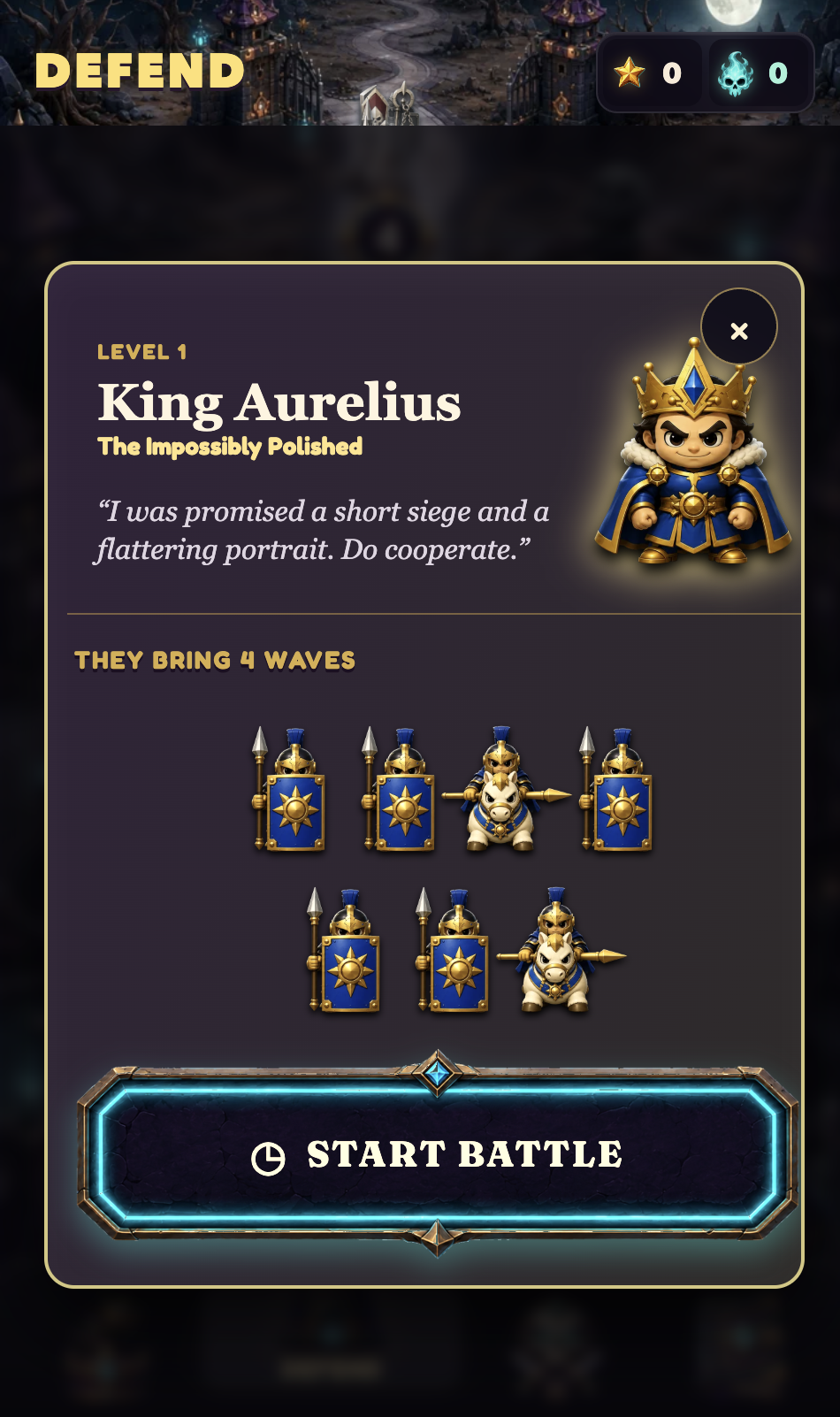
The story turns the usual fantasy setup around. The Lich King is not conquering the world—he just wants to live peacefully in his castle. Unfortunately, the neighboring royals think an undead neighbor is bad for their reputation, so they keep marching on his home. Naturally, he raises an undead army to defend it.
That became You’re No Match For Me: tower defense with Match-3 elements, where every puzzle move is also a battlefield decision.
What it does
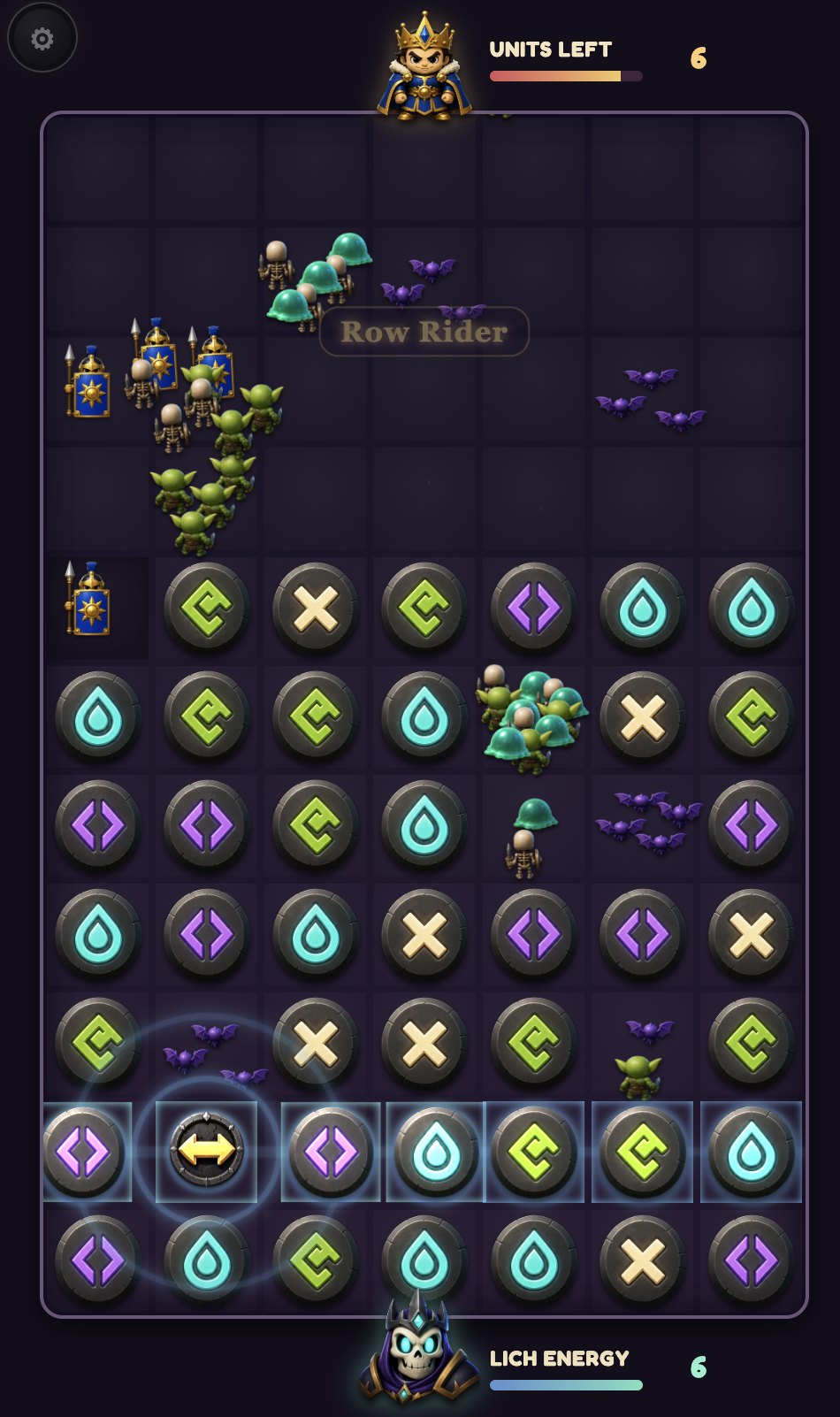
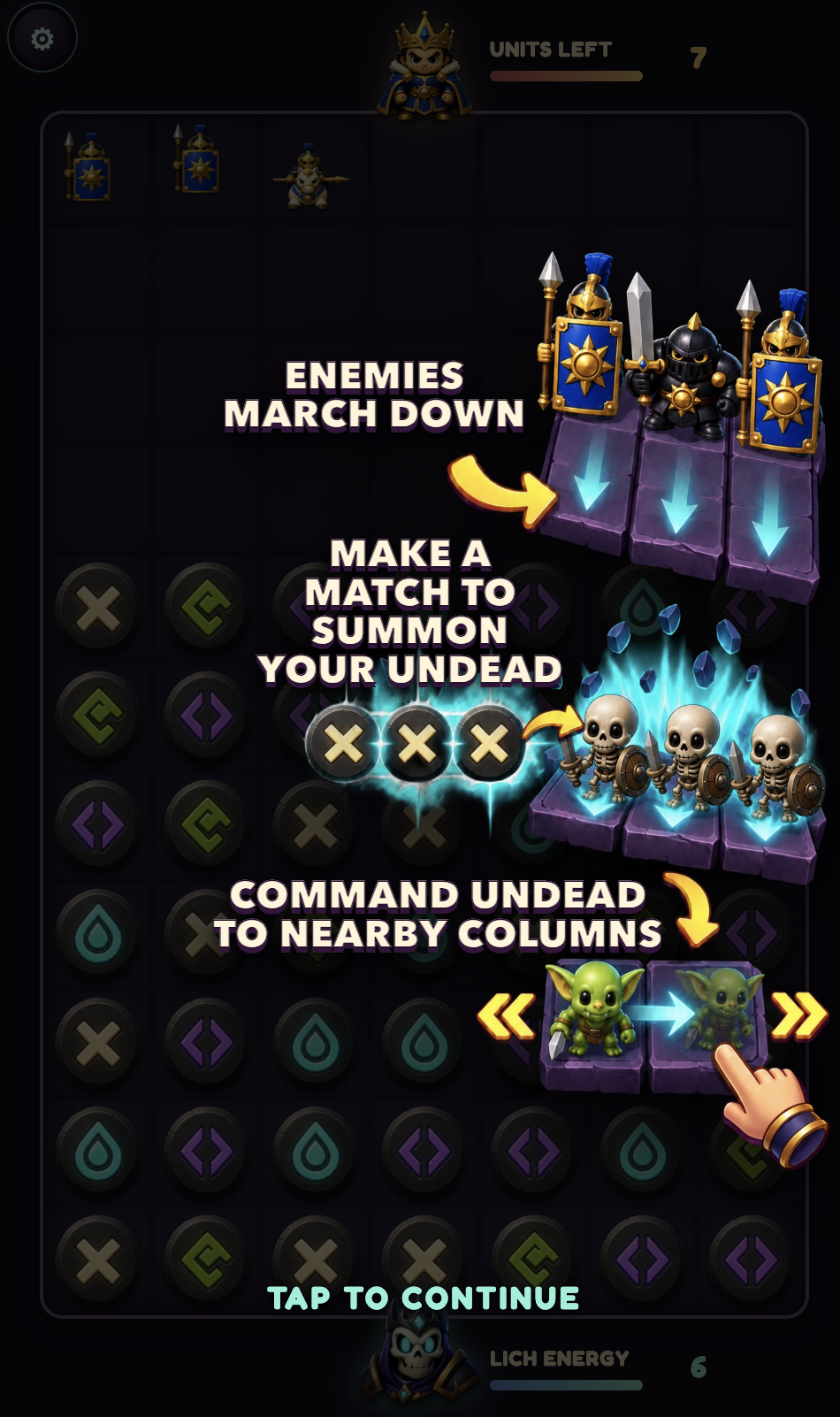
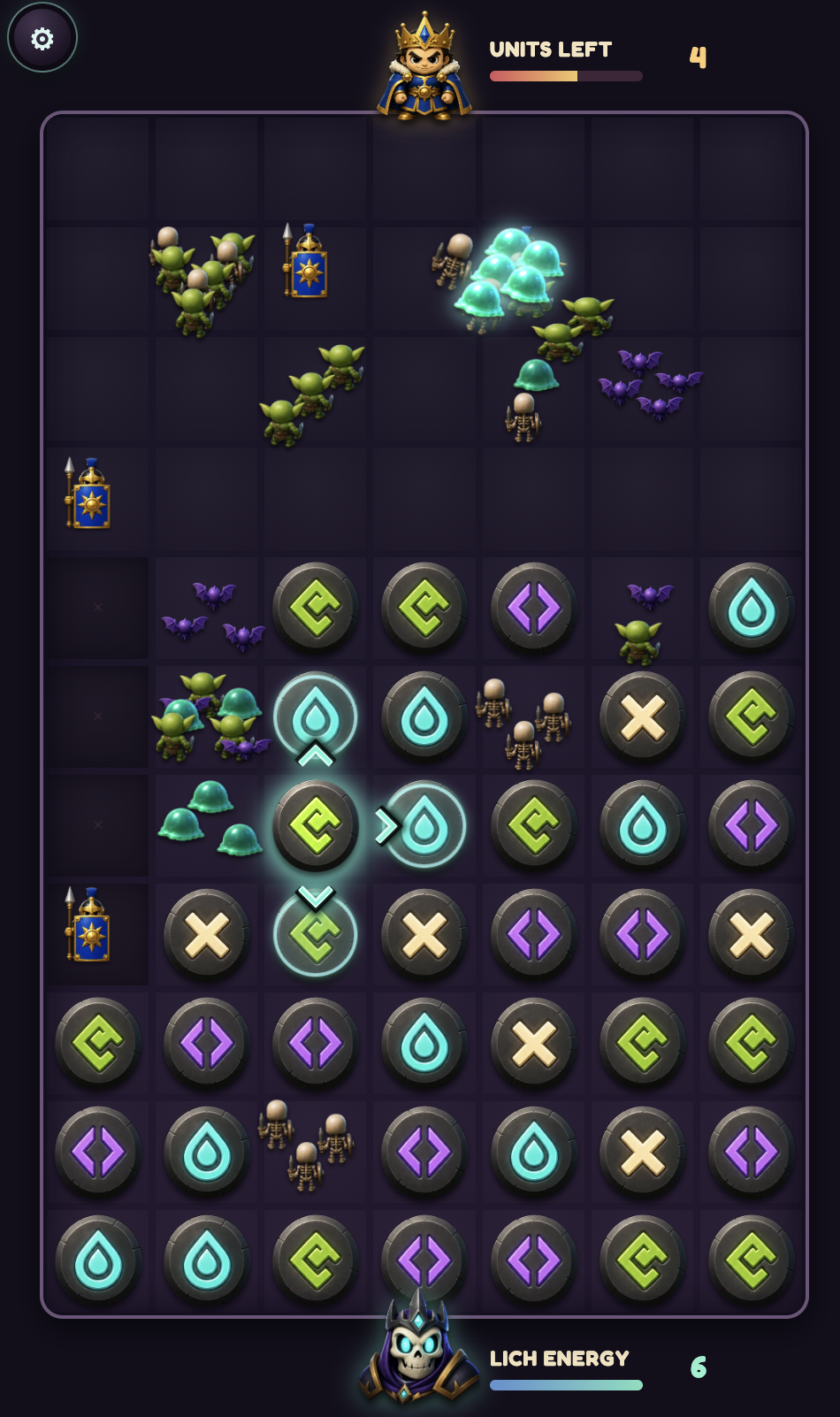
Royal armies march down toward your castle. You match runes to summon skeletons, goblins, slimes, and bats where the match happened. Your undead then march upward and fight automatically.
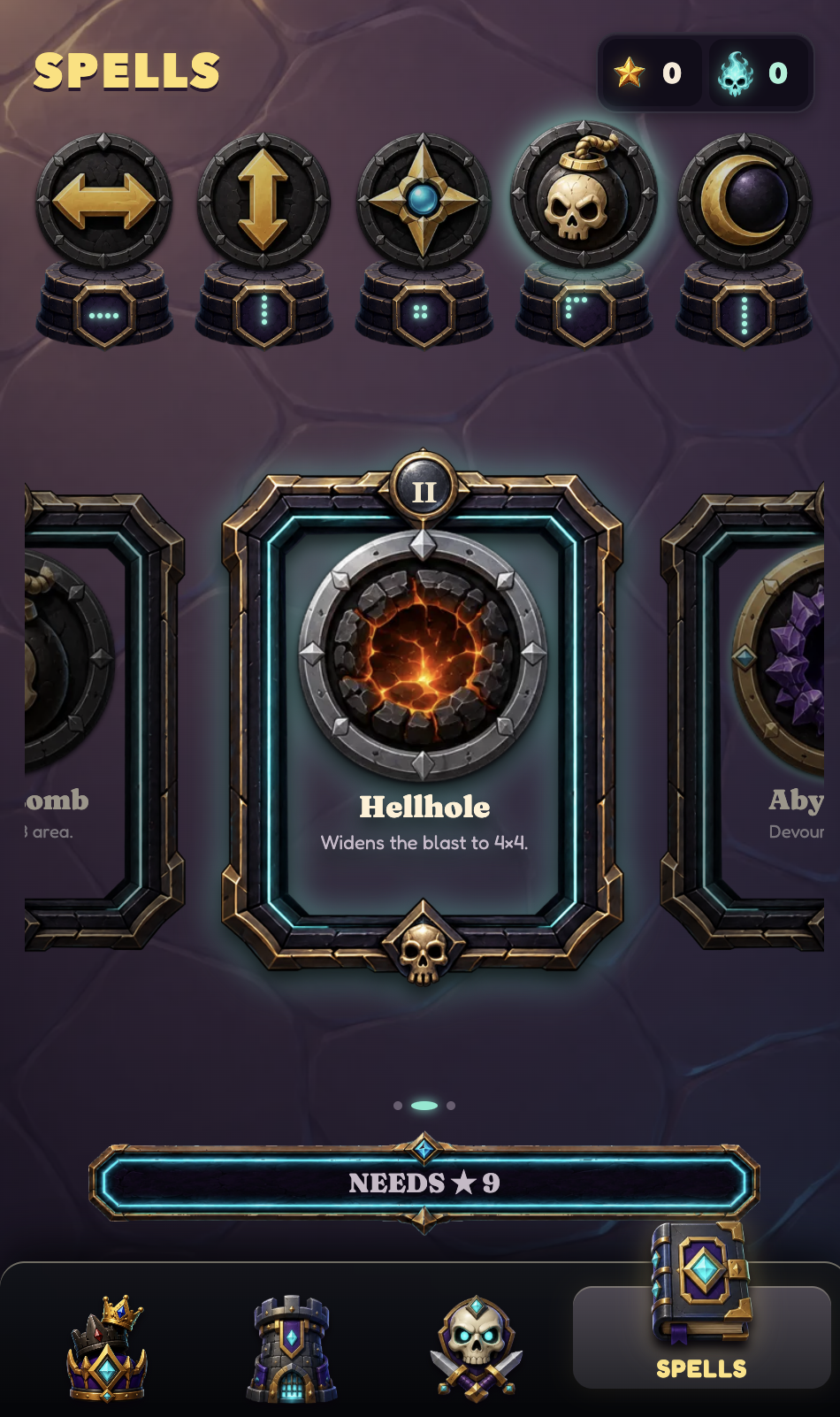
Where you match is important. If one column is under pressure, you need to summon help there, or spend a move shifting an existing legion left or right. Larger matches create power-ups including area attacks, hellholes, hunting spirits, and giant bone dragons.
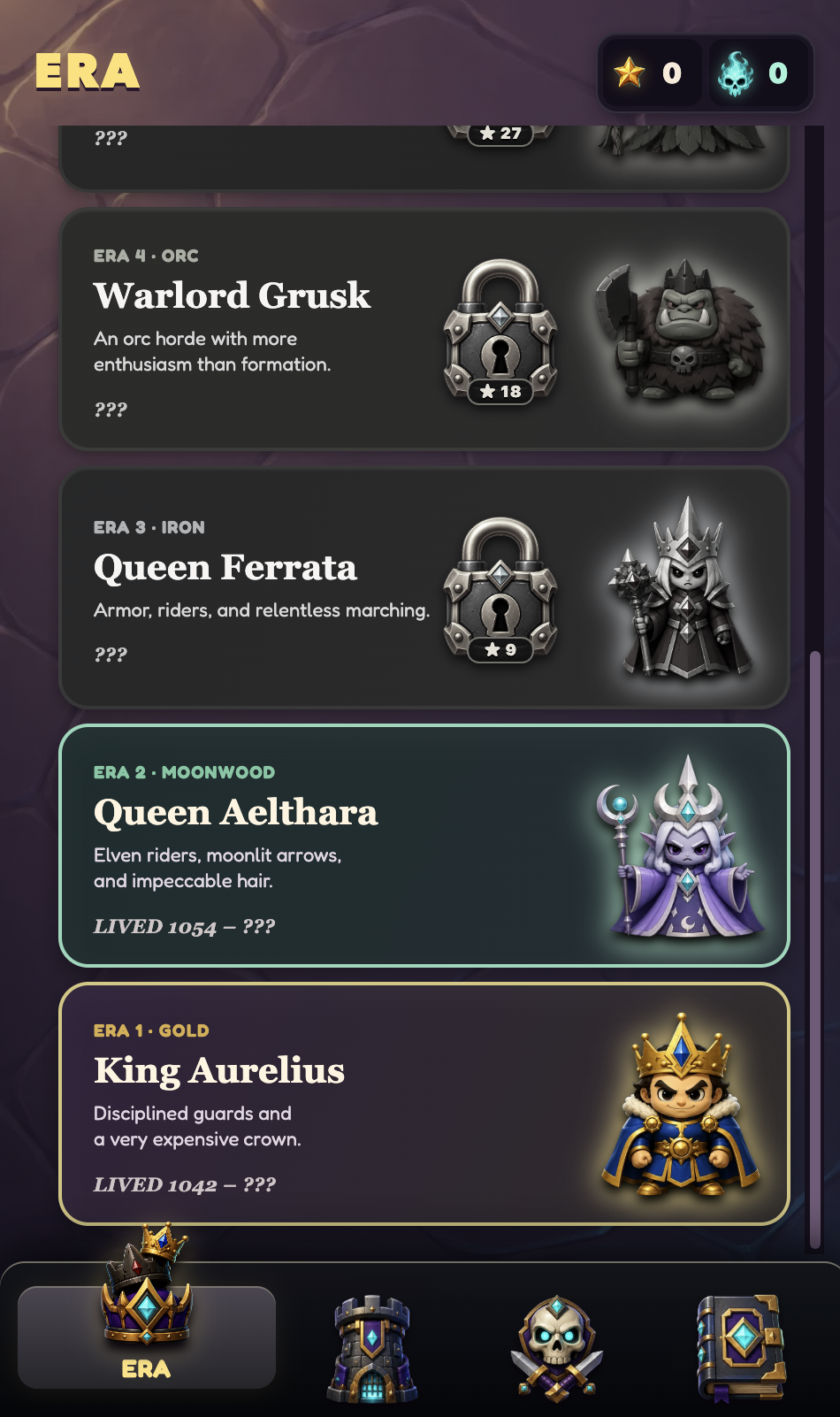
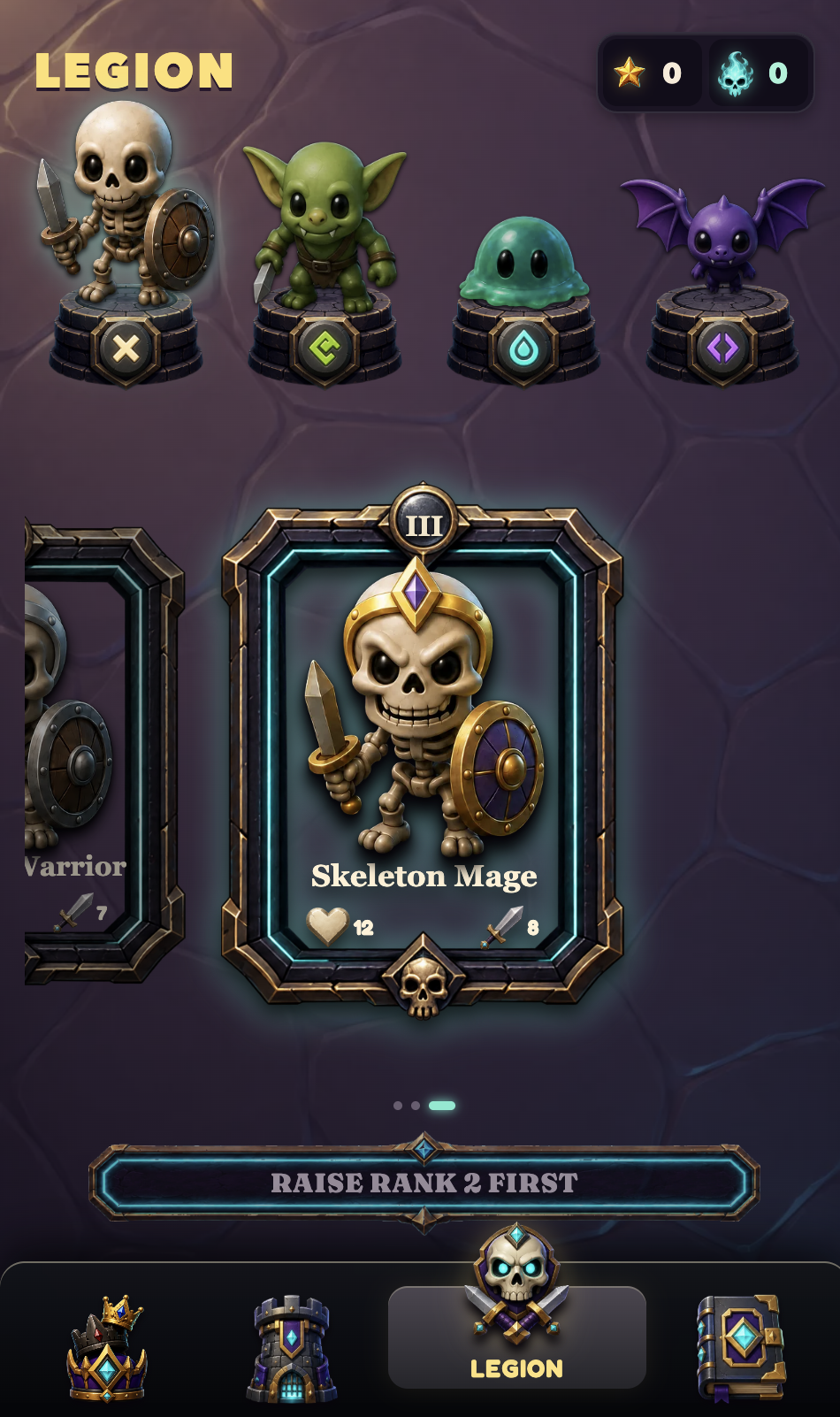
Defeat the enemy troops to win. If too many enemies reach the bottom, they drain the Lich’s energy and you have to retry the level. Battles award stars and souls for upgrading your legion and spells. The prototype contains 24 levels across eight royal courts, so you can play for a minute or do a longer campaign session (my daughter played through the entire thing in TWO HOURS).
How we built it
I built the game 100% with OpenAI Codex. Early versions explored conventional tower defense and lane defense. The breakthrough was making the Match-3 board itself the tower system: matching does not simply generate points, it actually summons your legion! This meant parts of the board were temporarily unusable (while our legions or enemy troops on it) which turned out to be super fun.
Early on, I separated the game rules from the visuals so that battles could be 100% simulated. This is a strategy I've used a couple of times for games made with AI, and it makes balancing a breeze, as long as the rules (what moves happen when) aren't too wrong, the AI can itself debug difficulty spikes and compare upgrades and basically balance the game.
The visual direction also changed through many AI-generated concepts and playtests. I wanted a superclean mobile look, that is a parody on the recent trend of high-polish mobile games where you upgrade your lair. One cool tool I used is fastcut.needle.tools for clean character cutouts (actually has WebMCP support so Codex can use it directly), then optimized everything into an offline mobile HTML5 build.
Challenges we ran into
The main design challenge was making Match-3 and tower defense feel like one game. Positional summoning was a good solution here, as it gives every match choice an immediate tactical meaning.
Overlapping UX design was another challenge. Runes, powers, our legions, and enemies share the same battlefield, and it still neads to be readable what's going on when hundreds of units battle it out.
I also had to keep crowded battles readable on phones and balance both thoughtful turn-based encounters and faster real-time levels. The simulation helped to reproduce rare bugs (by simply running the game hundreds of times with random combinations) and fix the underlying rules.
Accomplishments that we're proud of
The most encouraging result came from my nine-year-old daughter. She had never played Match-3 or tower defense before, but learned the combination quickly, completed the campaign twice, and kept asking for more enemies and mechanics!
The entire experience is playable: title screen, tutorials, campaign map, ruler briefings, battles, results, retries, rewards, upgrades, and saved progress.
There are 24 levels, eight distinct royal courts, four undead families with three ranks each, and five upgradeable power paths. I was very happy to get polished art, music, animation, and the complete campaign into the final build!
What we learned
Turns out familiar mechanics combined with a nice twist and cool design yields nice games! Matching three runes is simple, but making the match location control troop placement adds enough strategy without starting to feel complicated.
Also, while the low-fidelity loop already worked, my daughter asked for better graphics, so I ended up making expressive rulers, satisfying powers, readable upgrades, and smooth movements; all in all it became a way better game I think!
Fast human playtesting found interaction and pacing issues quickly, while simulation helped explain whether difficulty came from player decisions, a particular board, upgrades, or the battle rules.
What's next for "You're No Match For Me"
The full game could add unlockable unit loadouts, ranged attackers, strong tank-like units, more royal personalities, enemy behaviors, environments, events, and long-term progression (many match-3 games have hundreds of levels!), while keeping the simple “match to summon” foundation.
Harder levels could encourage players to experiment with different formations and upgrades, while optional purchasable helpers could support the game without changing its core experience.
Built With
- chatgpt
- css
- fastcut
- html
- imagen
- javascript
- svelte

Log in or sign up for Devpost to join the conversation.