-
-
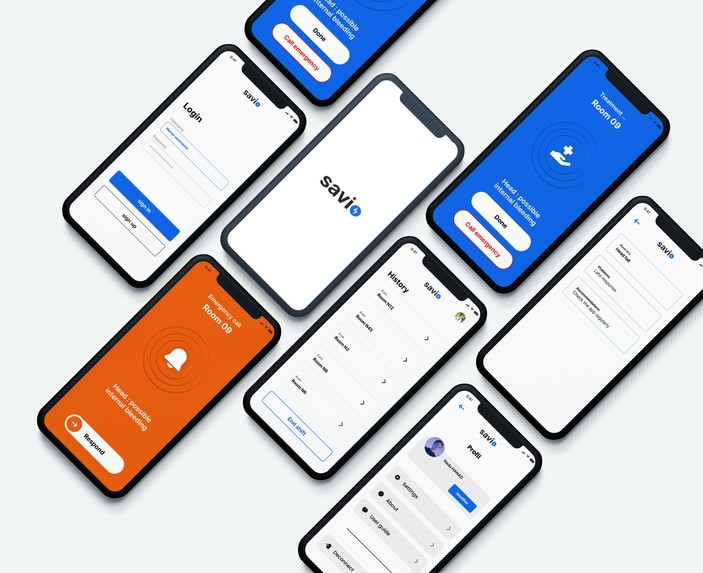
Savio prototype
Inspiration
People with mobility issues find it hard to maintain safe and independent mobility. The result is often a marked decrease in overall activity, which leads to preventable disuse weakness and deconditioning. This inactivity has many other consequences. These include muscle tightness and weakness; bowel problems; decreased heart and lung function; pressure sores; depression; and social isolation. According to studies done on the effects of mobility issues on people, even when not injured, 47% of them cannot manage themselves without assistance. In nursing houses, the periodic patrols of nurses have no effect in the case where we need immediate attention when the patient is in a life-threatening situation. For instance, in the case of a severe fall causing a serious injury, the intervention needs to be immediate.
What it does
Our solution is Saveio, a remote monitoring system that helps detecting harms that happen to patients in real time and send immediate alerts for nurses to respond; it is preliminary integrated into nursing homes. Our solution consists of a smart detection system that uses cameras to detect possible harms happening to patients, falls for example. Once it is detected an alert is sent to nurses, alongside with room number and possible injuries endured by the patient. the nurse can then respond or ask for intervention in case of emergencies. This system will provide the patients with the help they need in the shortest amount of time possible to increase their chances of survival. A research found that half of those who remained on the floor after a fall for an hour or longer passed away within 6 months. Taking for instance an example of an elderly person who fell and couldn’t get up on their own and haven’t been noticed by nurses until the time of their next patrol, but using our monitoring system, nurses will provide him with the immediate help they need.
In order to this system to work, we only need to install CCTV cameras on the nursing house rooms. These cameras have an average price of 100$, which makes them affoardable to aqcuire.
How we built it
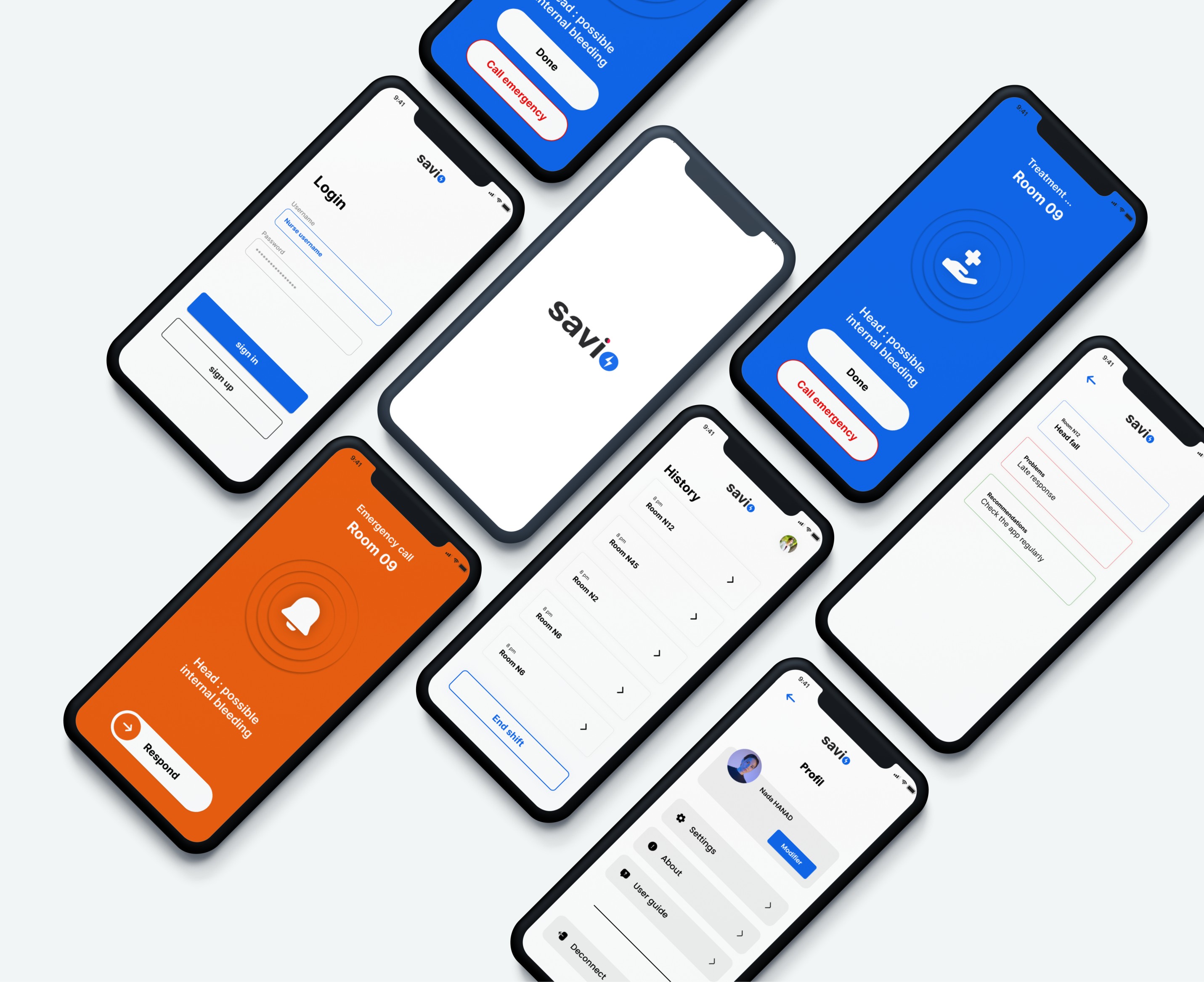
Our solution integrates a computer vision-based software that recognizes and understands the person’s position. It implicitly knows whether they are standing or lying. If the software sees that the person fell down, it sends an alert on the nurses’ mobile app to notify the caregivers. It also detects which part of the body hit the floor first to give the nurses an insight into the gravity of the fall, in order to take the adequate procedures. The model was built using the library mediapipe, which helped us in the first place to use pose detection and detect the body landmarks and recognize whether the person is standing, bending, sitting or lying. Given the speed of the transition between these positions, we can tell when the person falls. The second part of our solution is the mobile app used by caregivers and nurses. When a patient falls, they receive an immediate notification alert, informing them about the patient’s room number, the body part they hit first, and possible injuries. It was implemented using React Native.
Challenges we ran into
The conception and implementation of our solution was quite challenging. The choice of the right and most adequate model wasn’t obvious. The installation of its packages was quite challenges too given the poor internet. One other important challenge is the study UI/UX of our mobile app, since the UX needed to be the most user friendly in situations of emergency.
Accomplishments that we're proud of
After 40h of work, we were able to :
1- Fully implement an AI model that detects when a person falls down. 2- Prepare the mobile app prototype. 3- Fully implement the screens of the mobile app with React Native. 4- Prepare the business model of our solution. 5- Do a demonstration video of our model.
What we learned
From the brainstorming to the last step of the implementation of our solution, the journey was full of knowledge. We first had a deep dive into the world of smart cities and more specifically smart buildings. What they are, how they work, what’s been done, and what should be done in the future. Later on, we did our research on the functioning of nursing houses, and people with mobility issues and studied the markets and the available tech solutions. During the implementation of Savio, we learned how to study movement using computer vision with mediapipe.
What's next for You can change this at any time.
We aim not to only ensure our customers’ patients are at as much low risk as possible, but also ensure the wellbeing of every aspect we can. Taking for instance the integrating of an emotion detecting model, that can give us a perspective of their mental state to be able to assign then a specialist to improve their mental state.
Built With
- ai
- figma
- mediapipe
- python
- react-native


Log in or sign up for Devpost to join the conversation.