Inspiration
In many African communities, power instability isn't just an inconvenience; it is a financial hazard. Frequent brownouts, sudden voltage spikes, and rising electricity tariffs constantly threaten households and small businesses. Standard "smart" plugs on the market fail to address this because they become completely useless the moment the Wi-Fi drops—which often happens during a grid fluctuation. We wanted to build a resilient, climate-conscious power controller that tracks energy costs in local currency (GHS), prevents electrical fires, and remains 100% controllable even when the internet goes down.
What it does
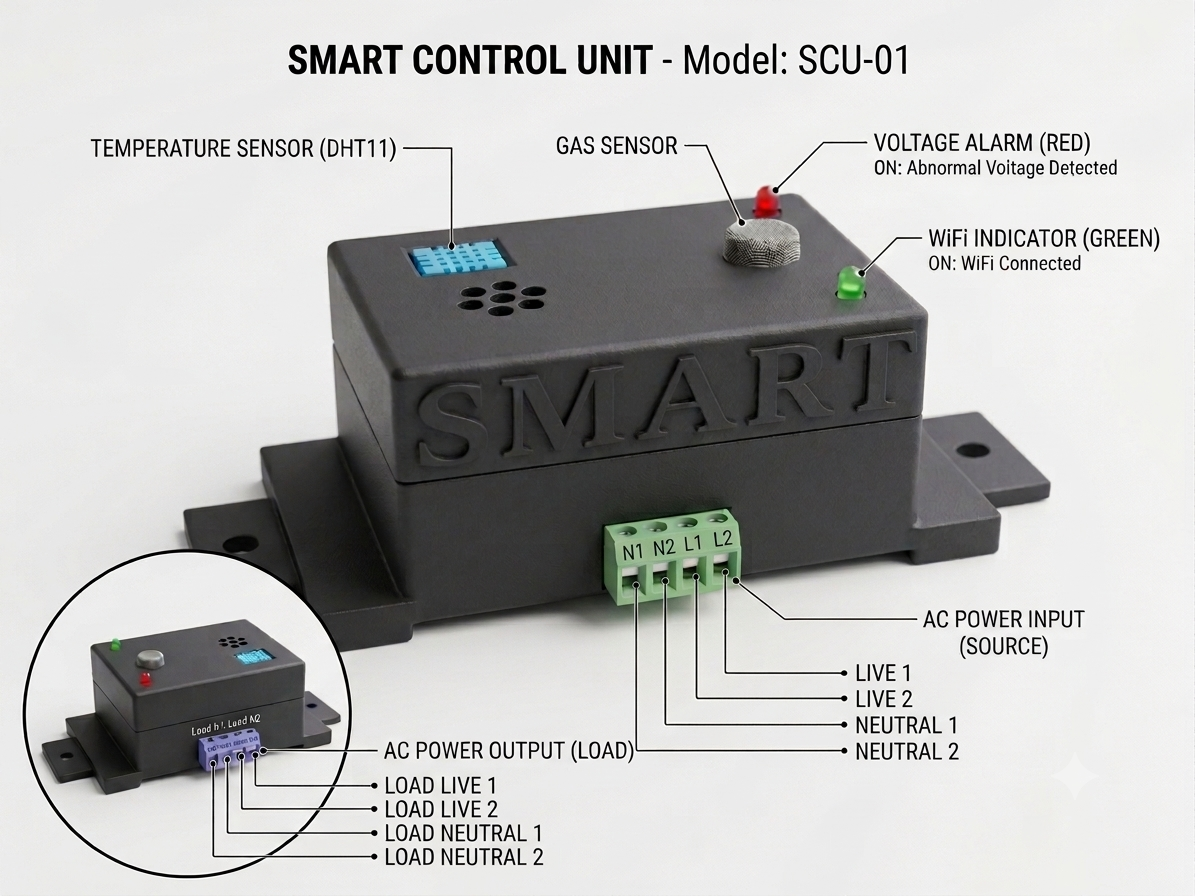
You Can Be Smart (SCU-01) is a universal, dual-mode IoT power controller.
- Real-Time Telemetry: It monitors AC voltage, current, active power, and cumulative energy (kWh), converting usage directly into local currency costs.
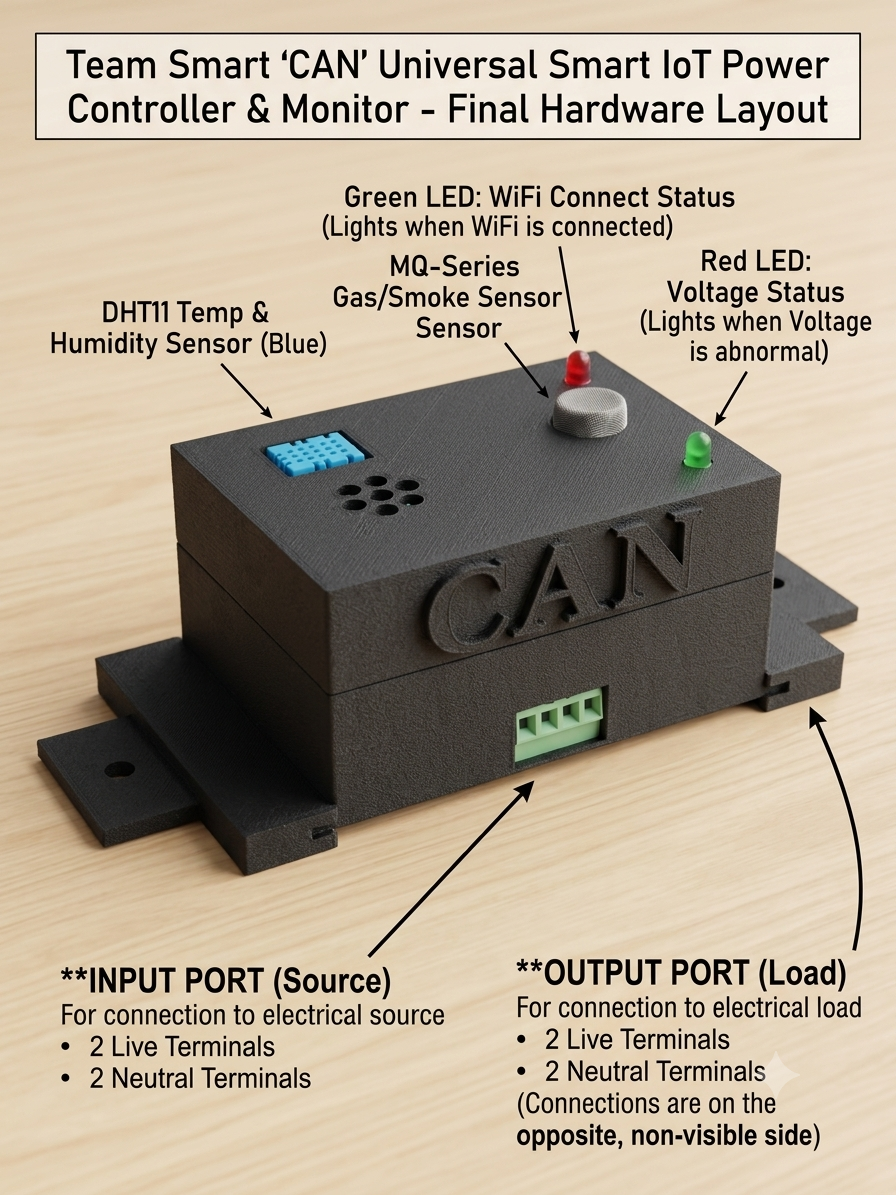
- Automated Safety: Using MQ gas/smoke sensors and voltage monitoring, the system automatically isolates connected load circuits if it detects a hazard or severe brownout.
- Climate Automation: Integrates a DHT11 temperature sensor to automatically control cooling fans based on ambient room temperature.
- Dual-Mode Connectivity: Operates on Arduino IoT Cloud when online, but seamlessly falls back to a custom Bluetooth Low Energy (BLE) mobile app for local control during internet outages.
How we built it
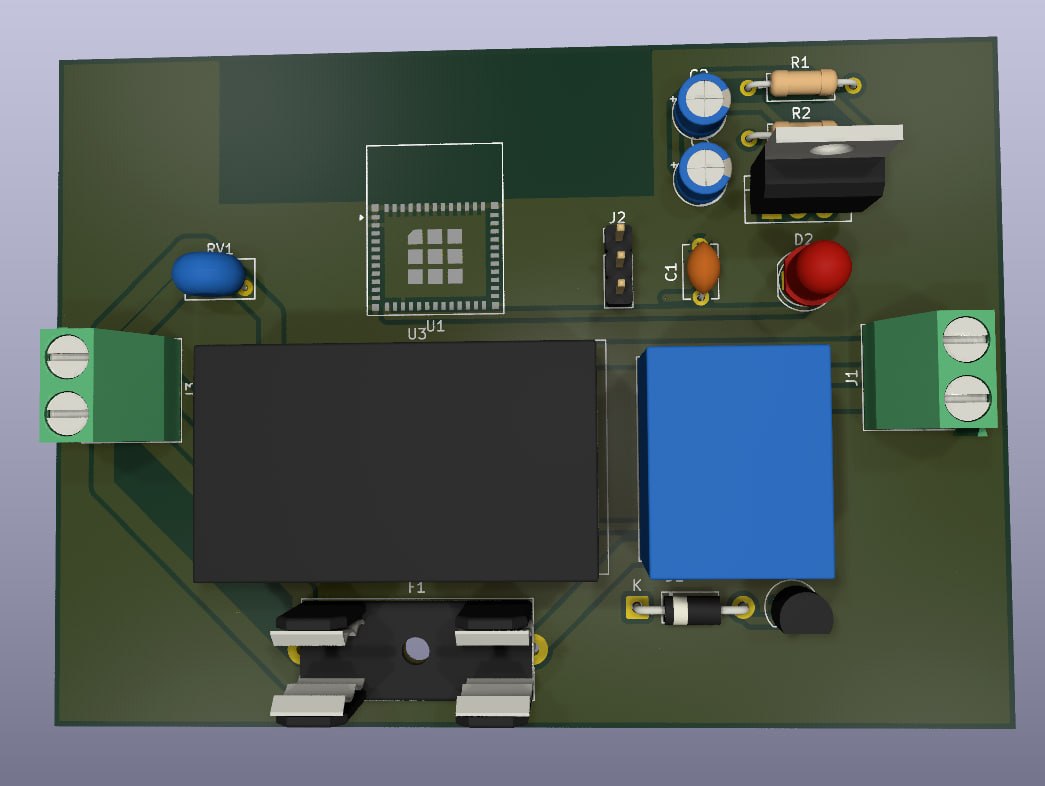
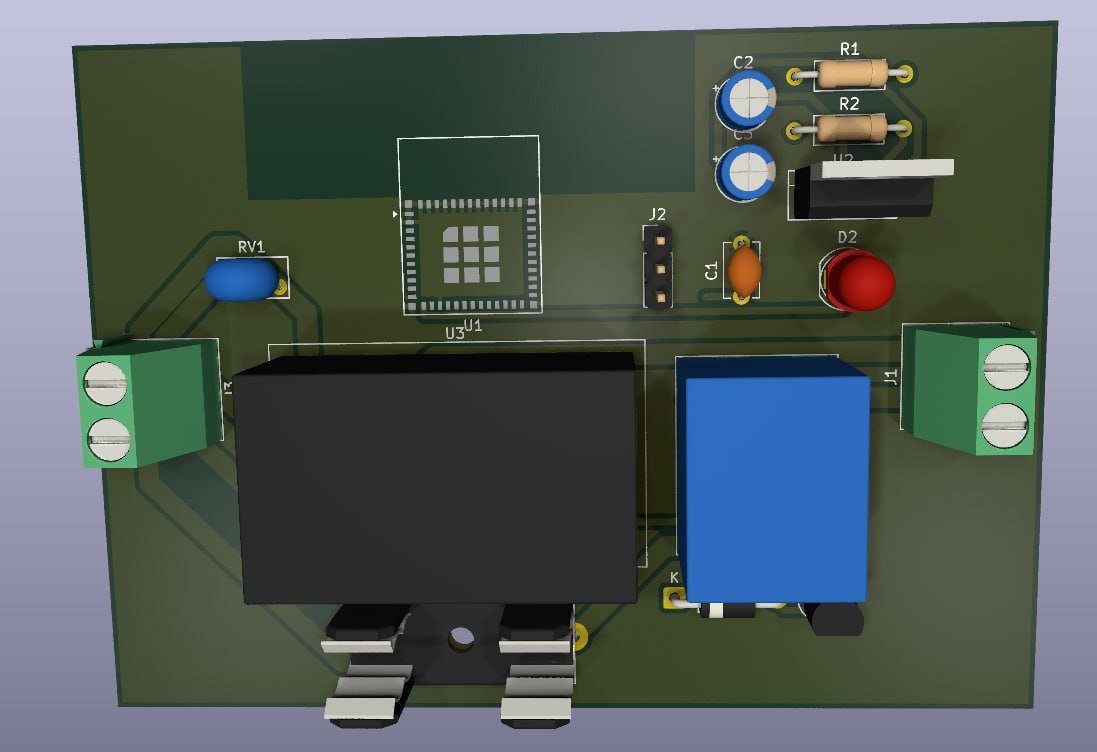
We engineered the system around the ESP32-C6 microcontroller to leverage its dual Wi-Fi and BLE capabilities. The firmware was written in C++ using the Arduino IDE. For the hardware, we integrated heavy-duty AC terminal blocks, relays, and custom sensor modules.
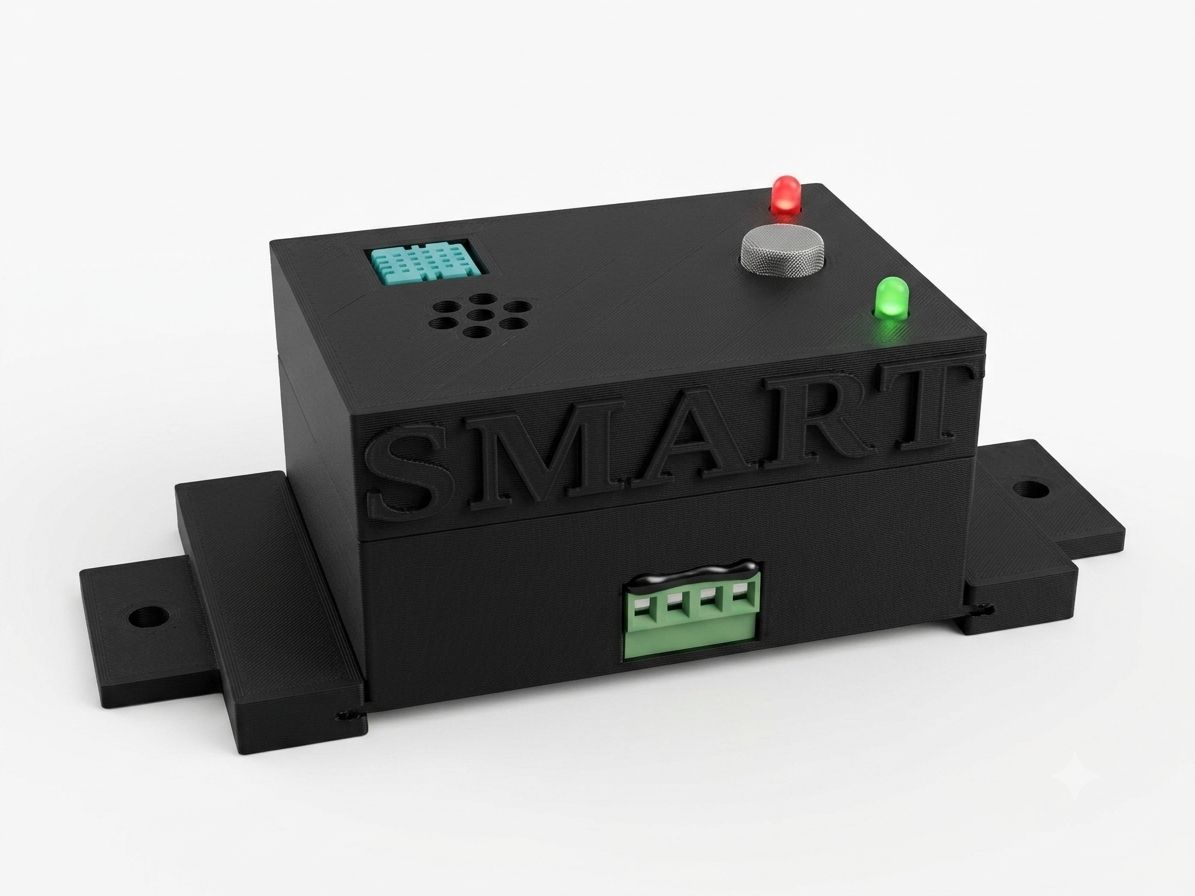
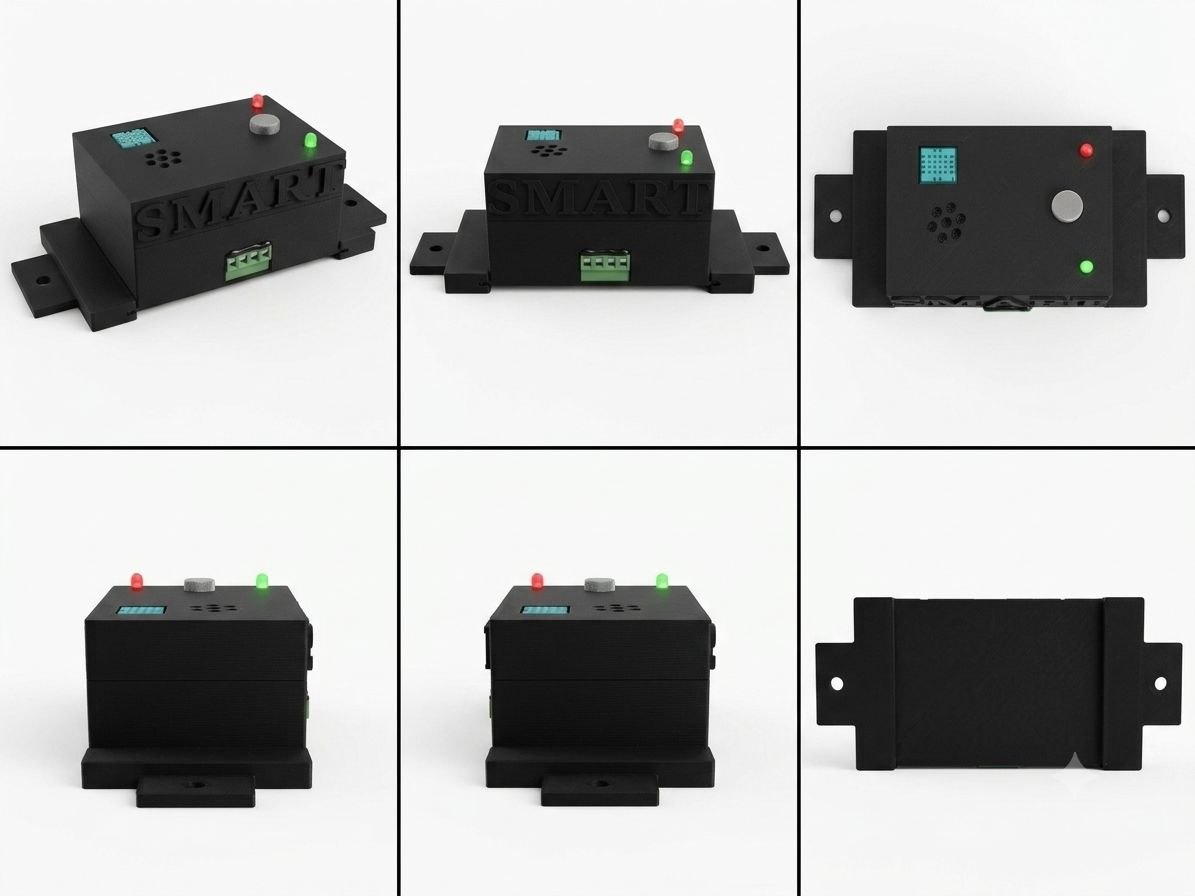
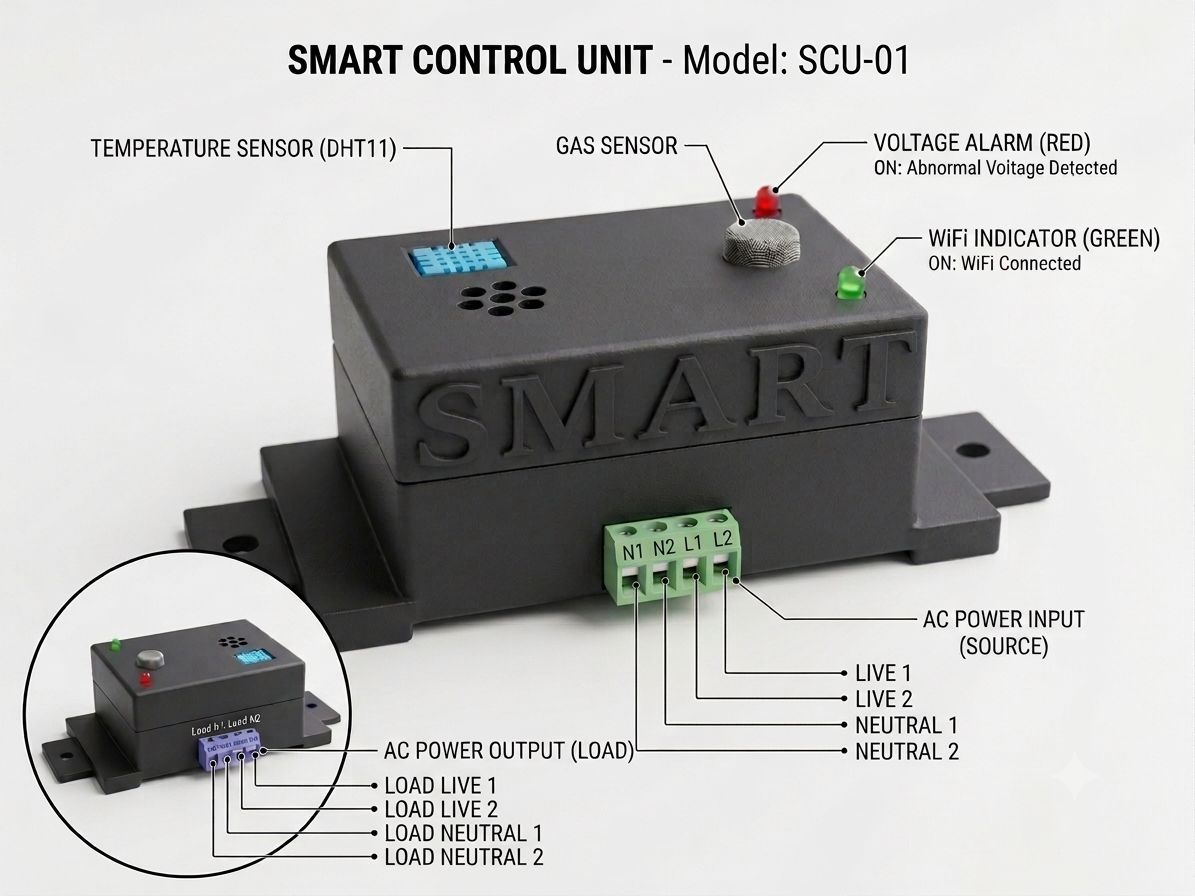
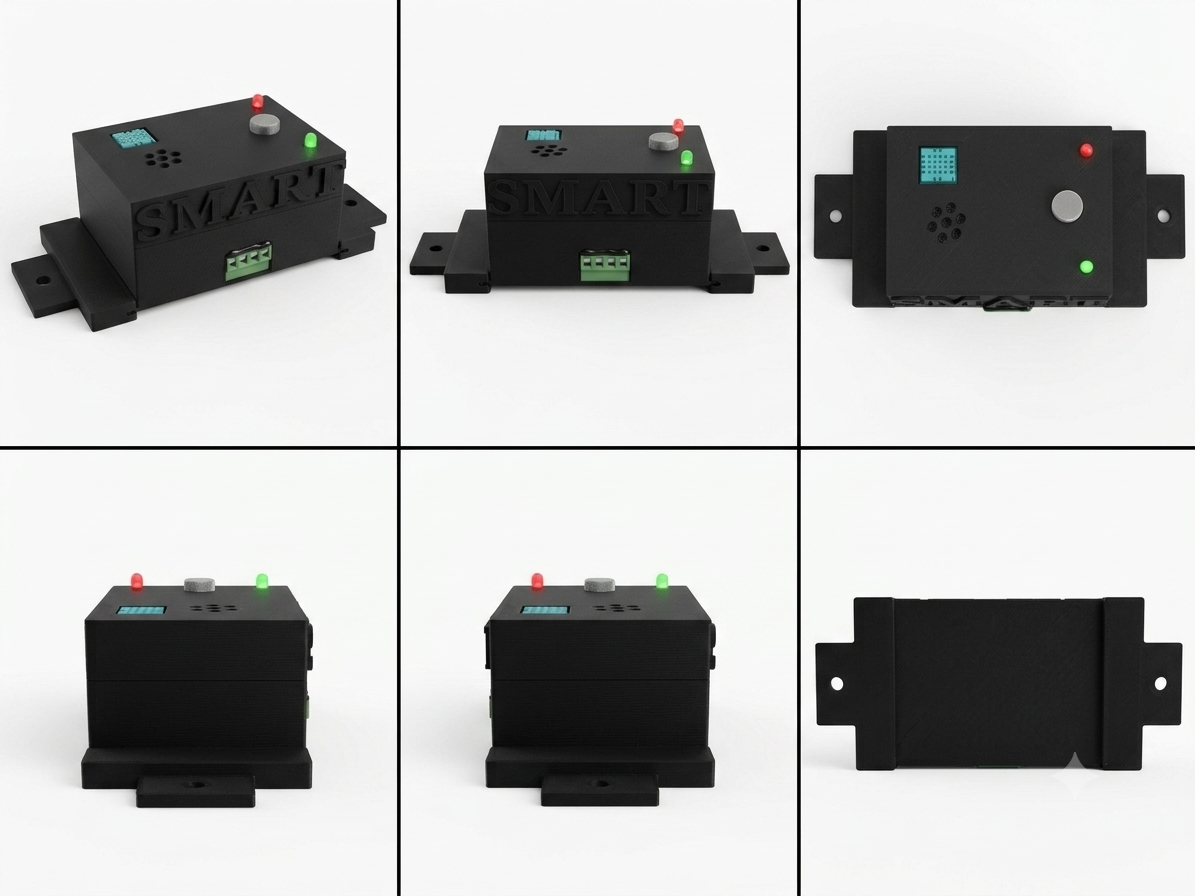
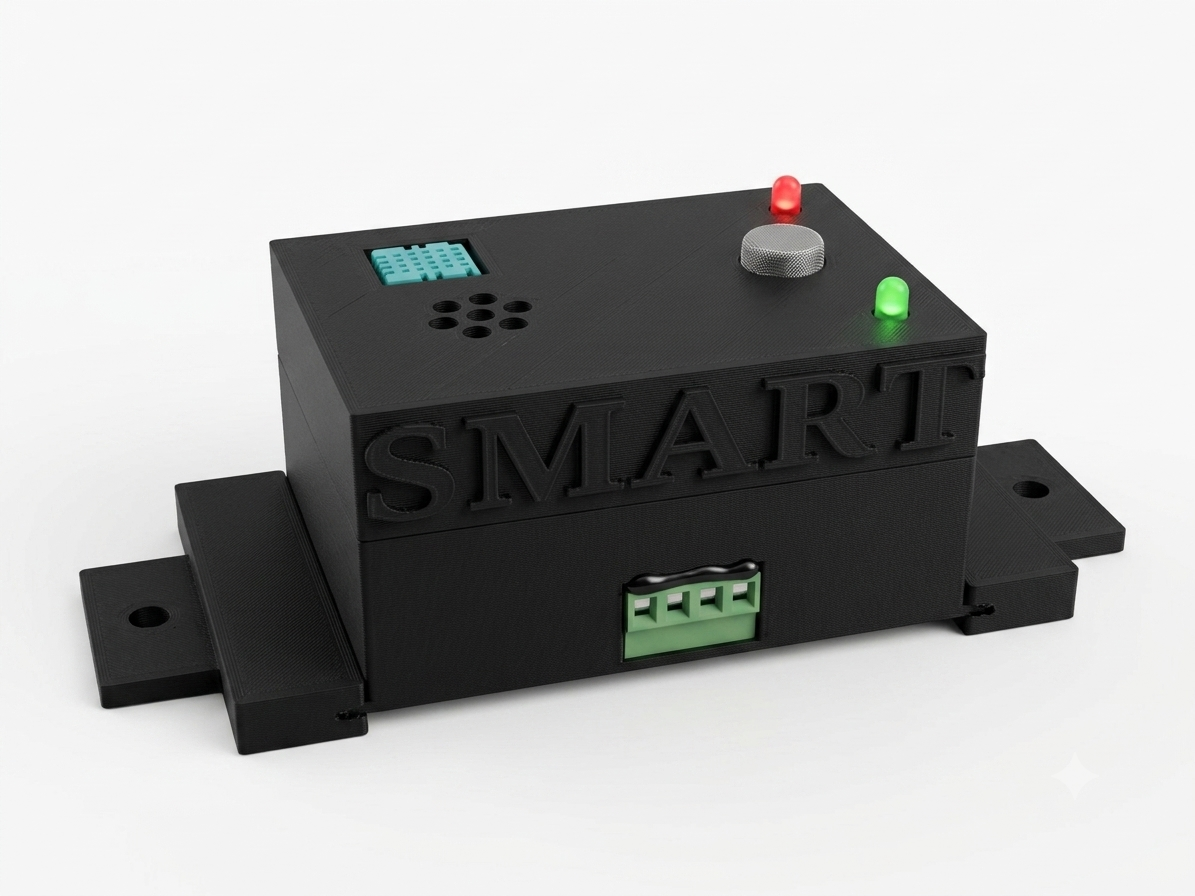
The physical housing is a custom 3D-printable enclosure we designed from scratch using Tinkercad, meticulously measuring screw standoffs and dummy cutouts to perfectly fit the AC lines, status LEDs, and sensors. On the software side, we routed live telemetry to the Arduino IoT Cloud for remote monitoring, and built an offline Android fallback app using MIT App Inventor.
Challenges we ran into
One of the hardest challenges was managing the ESP32's memory and execution state while seamlessly hot-swapping between the Wi-Fi cloud stack and the BLE local stack without freezing the microcontroller. Additionally, calibrating the AC current and voltage sensors to provide highly accurate, real-world financial cost projections required rigorous mathematical tuning and safe live-load testing.
Accomplishments that we're proud of
We successfully built a system that actively protects hardware from grid anomalies and empowers users to lower their carbon footprint by eliminating standby energy waste. We are incredibly proud that this architecture recently won 1st Place at the GhIE-UENR Engineering Grand Challenge.
What we learned
We vastly improved our embedded C++ skills, particularly in handling non-blocking sensor polling and asynchronous wireless communications. We also learned how to bridge the gap between raw hardware telemetry and user-friendly financial data that everyday consumers can understand.
What's next for You Can Be Smart
We plan to scale the SCU-01 into a 100-unit pilot batch for local field trials. On the software side, we are working on integrating predictive edge AI to analyze household power consumption patterns and forecast grid brownouts before they even happen.
Built With
- esp32
- iot


Log in or sign up for Devpost to join the conversation.