-
-
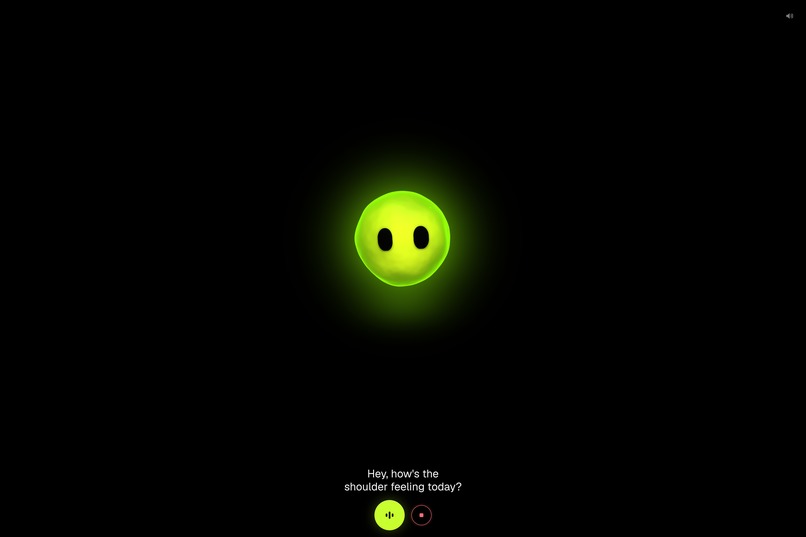
Yorio in Action.
-
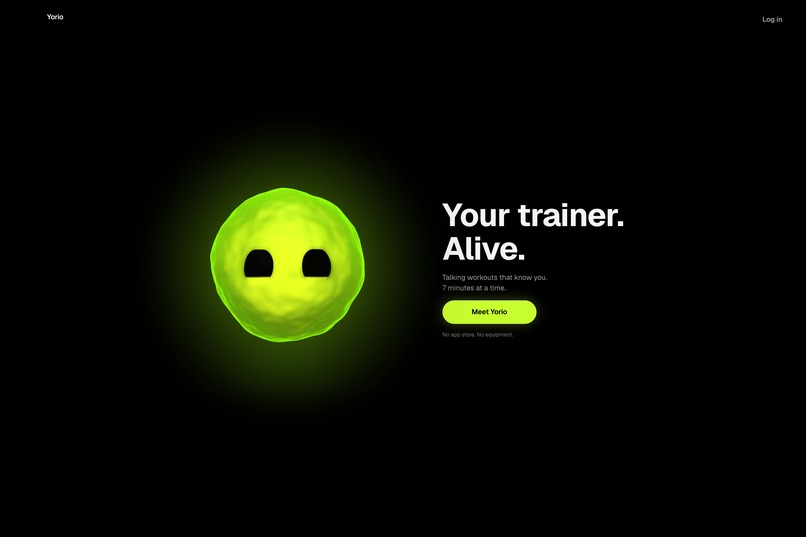
Your trainer. Alive.
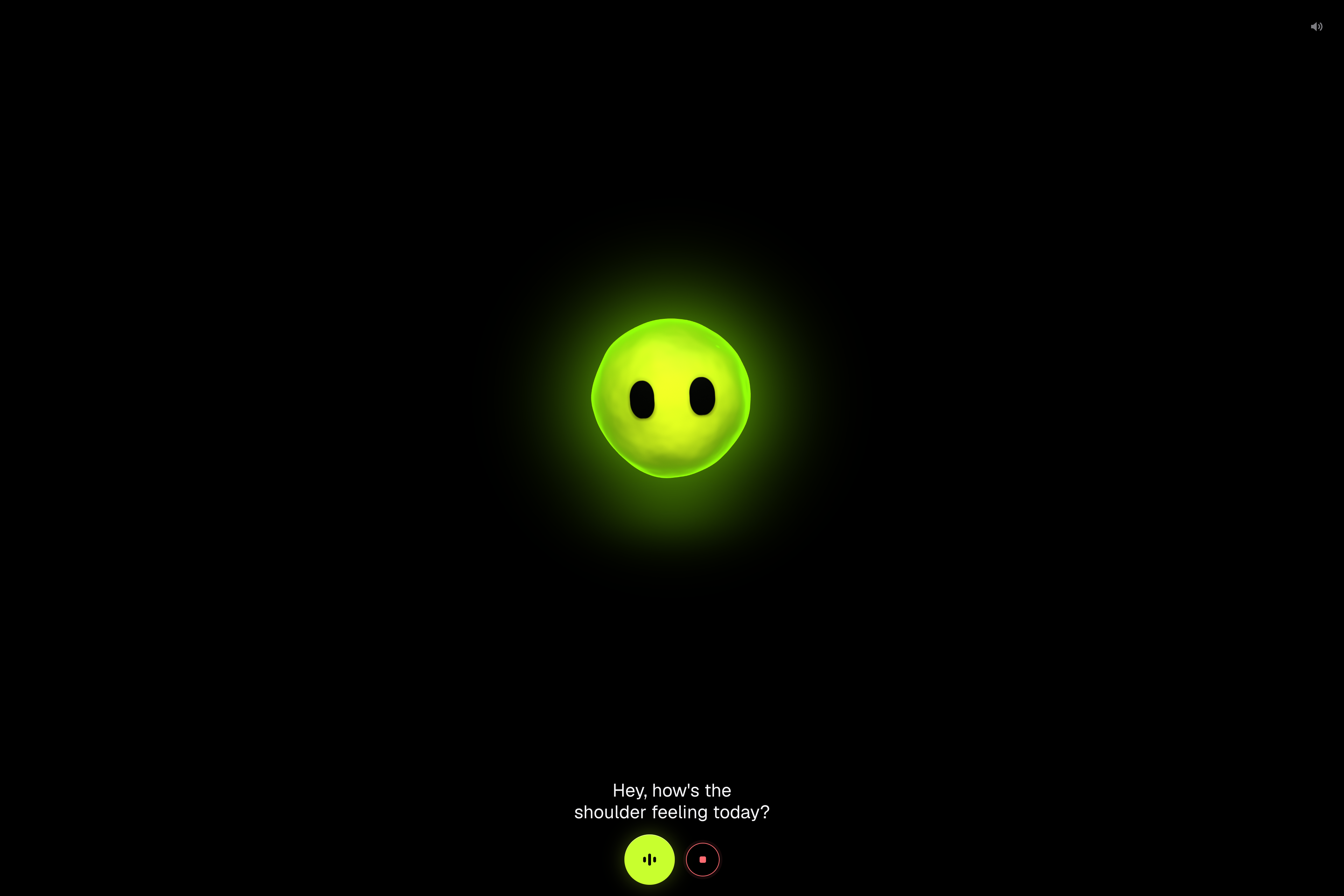
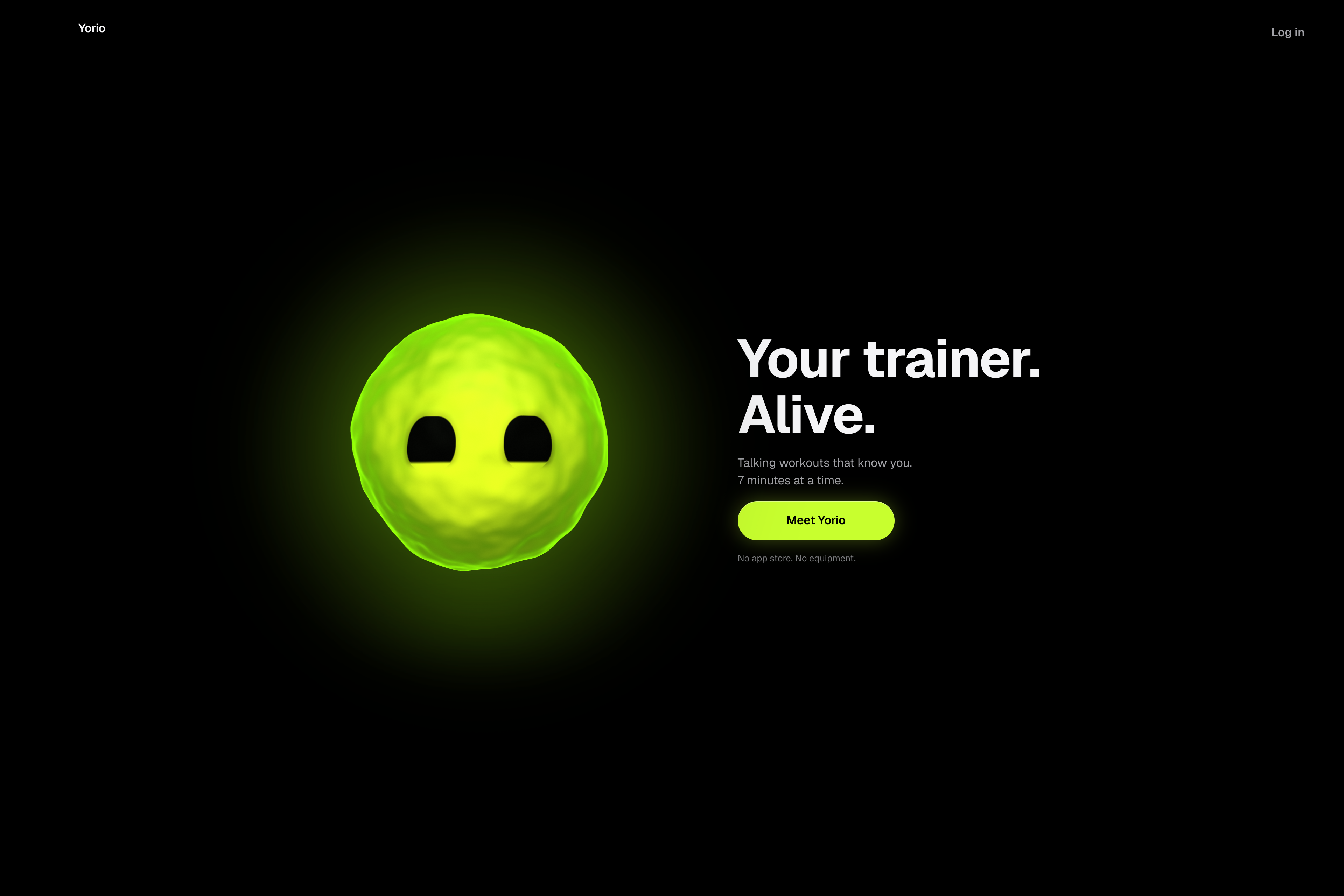
Open Yorio and a living green orb starts talking to you. Start squatting and it watches through your camera, counting each rep out loud, half-reps don't count. That closed loop with voice that talks, vision that judges and memory that persists, is what we set out to build: a trainer, not a video.
Inspiration
Most people never get the one thing that keeps them training: someone who watches them work. Trainers cost $50–100 an hour; gyms intimidate; workout videos can't see you, so skipping a rep or the whole session costs nothing. We wanted the browser tab itself to watch, talk, and coach.
What it does
Yorio is an AI personal trainer as a web app with nothing to install. A living green-orb avatar greets you by voice and runs your workout: a real-time AI coach on the Gemini Live API. When a countable exercise begins, your camera opens with a volt-green MediaPipe pose skeleton locked onto your body and reps count live, out loud. Between sets the coach reacts to what you actually did, drives you through to the finish, and next session it remembers your goals, history and constraints. Camera is optional; voice-only mode still can coach you. The demo is the shipping product running a scripted two-exercise session: squats, then jumping jacks.
How we built it
One human, directing an AI organization.
Yorio was built by a company of AI employees orchestrated on Jinn - an open-source orchestration platform built by me, so the engine that ran the org is public code any judge can read. The org: a lead orchestrator, developers, QA engineers, and adversarial code reviewers, with the engineering, QA, and review employees running OpenAI Codex (GPT-5.6). Employees worked in phases, delegated to each other, communicated across sessions, and every change passed review and verification gates before it shipped. The demo video shows this org running live in the Jinn gateway, the actual employees that built the app, on screen.
Core Codex build sessions, each maps to real commits in the README, and 019f5dc6 is the session submitted via /feedback:
| Codex session | What it built | How it was verified |
|---|---|---|
019f5dc6 |
Classical rep-counting engine: pose state machines for squats and jumping jacks, landmark math, test rigs (~241 file edits) | Repo's own test suite, then live-camera rep checks by QA |
019f5c4b |
Workout session UI + the living-avatar shader | Reviewed running in the browser |
019f6723 |
Rep-engine hardening + staging deploy | Verified on a real deployed URL |
019f74fe |
Gemini Live integration: wiring the voice coach into the workout loop | End-to-end session on the deployed build |
The gate that mattered most: QA employees verified on real deployed builds with a real camera, work that passed every test but miscounted live reps was rejected and sent back until the deployed demo counted correctly. Rep counting itself is a classical, explainable pose state-machine: when a rep is granted, the reason is readable in the code.
The human made every product, design, and engineering decision; the org did the building. Yorio runs on Gemini Live at runtime by design, the real-time voice-and-vision product collapses without it.
Challenges we ran into
- Agent code that looked right but behaved wrong. Agent-written work can pass every unit test and still fail reality. Rep counters that were green in the rig miscounted on a live camera, the org's QA and reviewer employees caught it, rejected it, and sent it back until the deployed demo counted correctly. "Verified on the deployed build with a real camera" became the org-enforced definition of done.
- Orchestrating an AI org without losing the plot. Many coordinated employees means phases, hand-offs, single-writer discipline per branch, and review gates that can't be skipped, the platform (Jinn) had to make delegation, cross-session communication, and escalation routine so one human could stay at the top of it all.
- Real-time everything in a browser tab. Live voice, camera pose tracking, and a shader-driven avatar all share one tab's budget. Getting MediaPipe's WASM worker to initialize reliably, keeping pose tracking smooth while audio streams, and surviving strict security headers on the session page took several verify-fix cycles on the real deployed URL.
What we learned
Running an AI organization shifts the human job from writing code to judgment: deciding what "good" means, and letting orchestrated Codex employees implement, review, and verify against deployed reality instead of anyone's say-so. Codex is genuinely fast at large, well-specified subsystems, the state machines, the UI scaffolding, the integration plumbing, and it's a capable adversarial reviewer of other agents' work. With review and QA gates run by the org itself, one person's time goes almost entirely to how the product should feel and whether it actually works.
What's next
More countable exercises, form feedback beyond counting (depth, tempo, symmetry from the same pose stream), and deeper memory-driven programs. A coach that plans your week, not just your set. The demo is free and login-free; the product it belongs to is built to earn real users.
Built With
- codex
- docker
- firebase-auth
- gemini-live-api
- google-cloud-run
- gpt-5.6
- mediapipe
- next.js
- posthog
- react
- react-three-fiber
- stripe
- tailwindcss
- three.js
- typescript
- web-audio-api
- webrtc
- websockets


Log in or sign up for Devpost to join the conversation.