-
-
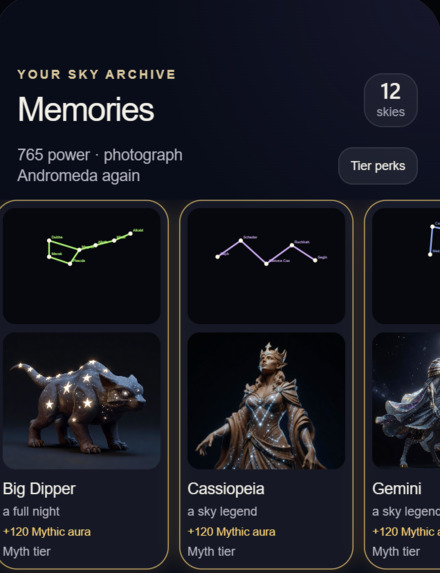
Image Generation using Grok
-
Our Star journal that keeps track of the date the image was taken
Inspiration
We take photos of the night sky because something makes us stop and look up. Then the photo disappears into our camera roll, and we still do not know what we were looking at.
We wanted to make that moment the beginning of learning. Yonder starts with something familiar—a phone and a photograph—and gives curious beginners a way to explore astronomy without first learning how to operate a telescope or navigate a specialist interface.
What it does
Yonder is a mobile web app for photographing, exploring, and remembering the night sky. Take or upload a photo, review its location and capture time, and send it to Grok for image interpretation. Yonder processes the returned candidates through catalog, geometry, and observing-context checks, then presents the available discoveries on the photograph.
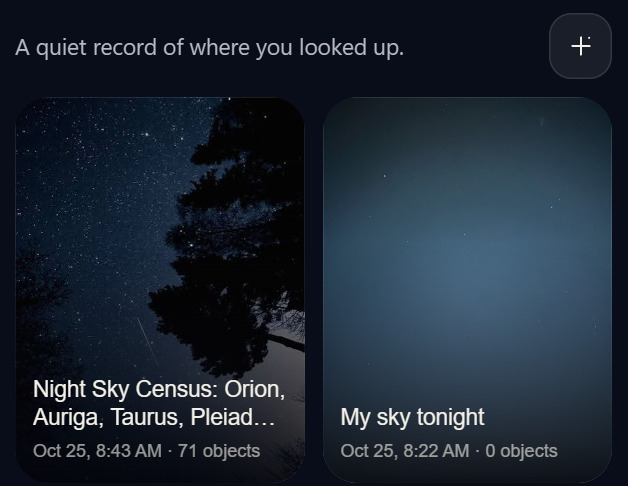
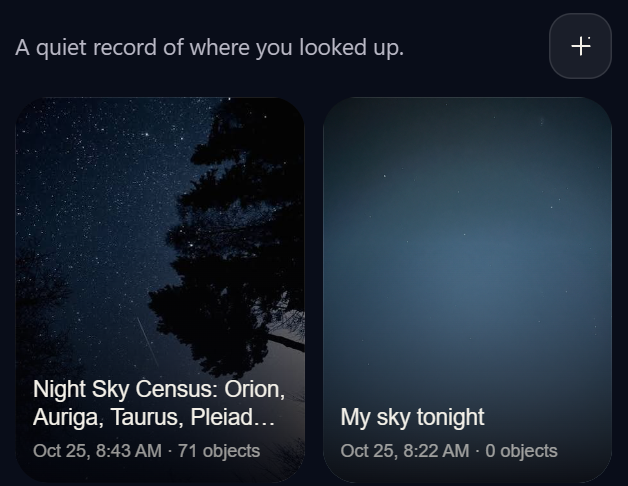
Open an object to read its explanation, or use Ask Grok for more to expand the explanation for that specific discovery. Save the original photo and analysis together in Memories and reopen them later. Memories currently stay on the device.
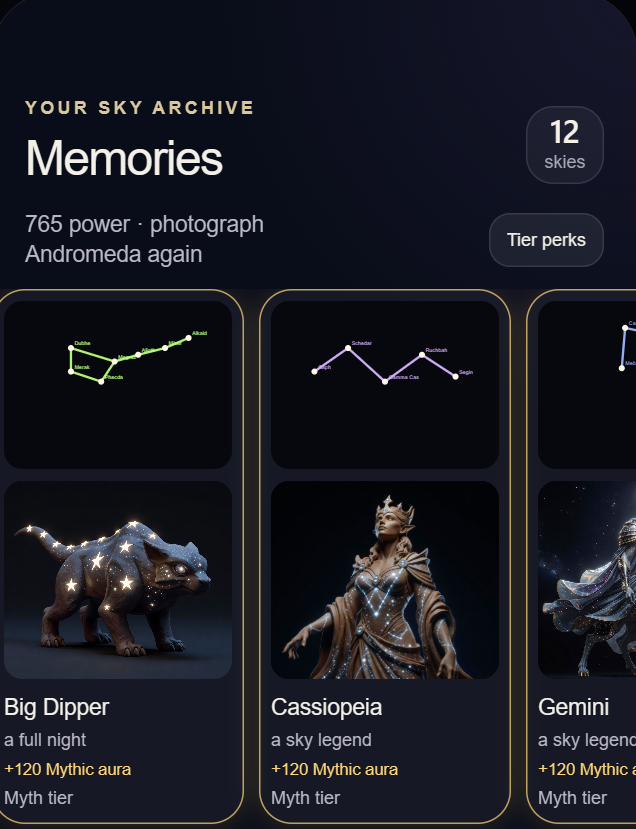
For supported constellation patterns, Yonder also includes a collectible creature flow with Grok Imagine portrait generation. That gives learning a personal reward: a collection connected to the skies you have explored.
How we built it
Cursor was our development environment throughout implementation, debugging, and iteration. We used Grok Bot for project planning, and the Grok API inside Yonder for sky-image interpretation and object-specific explanations. We also integrated Grok Imagine for constellation-inspired creature portraits. Together, these tools helped us build a complete experience around a real sky photograph: capture, explore, learn, and remember. Along the way we integrated:
- Grok AI image generation for visuals in the app like the Pet Generation when unlocking a constellation
- Voice recognition to generate the demo video and in the future for hands-free narration while you're out looking at the sky
- A photo journal that stores your sightings
- A rarity-based points system that scores each sighting
- Incorporated Hipparcos Catalogue with around 41,411 stars and 172 satellites
- Elastic to process data
- Figma for the UI/UX
- Bright Data to scrape information on the databases
- We also used Grok bot for planning the project and Debug when we ran into issues
- we also used noteability to document our thought process while we built
What we learned
- How to build a full project end to end in Cursor
- How to use Cursor's features, including Grok AI image generation and voice recognition
- How to turn a pitch into a working product and keep the scope focused on what makes us different
We also learned to focus the demo on one complete journey. The value of Yonder is easiest to understand when someone sees their own photograph turn into something they can explore and keep.
Challenges we faced
- Designing a fair way to measure and score rarity
- Making photo capture and storage feel smooth and simple, like BeReal
- Learning a new toolchain (Cursor and its AI features) while building under time pressure
- Balancing fun gameplay with the educational goal of teaching people about space
What's next for Yonder
We want to add friend leaderboards, real-time alerts for rare events like meteor showers and satellite passes, and more learning content for each sighting.
Built With
- brightdata
- cursor
- elastic
- figma
- grok
- grokbot
