-
-
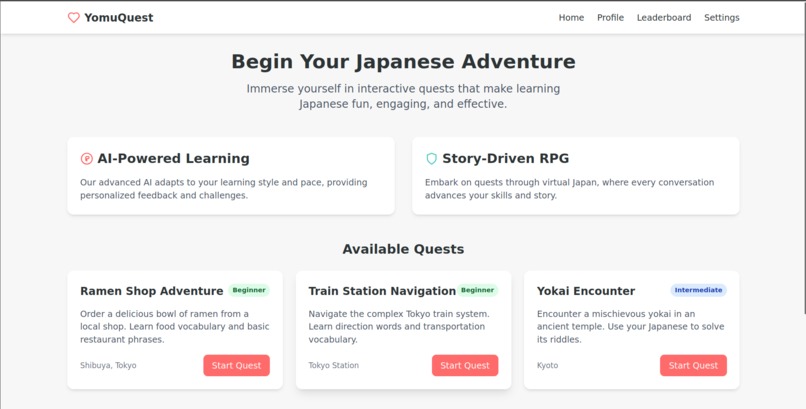
Home Page
-
Logo
Inspiration
We wanted to rethink how people learn Japanese—moving away from dull flashcards and toward a more immersive, game-like experience. The idea: what if learning Japanese felt like going on a quest? What it does
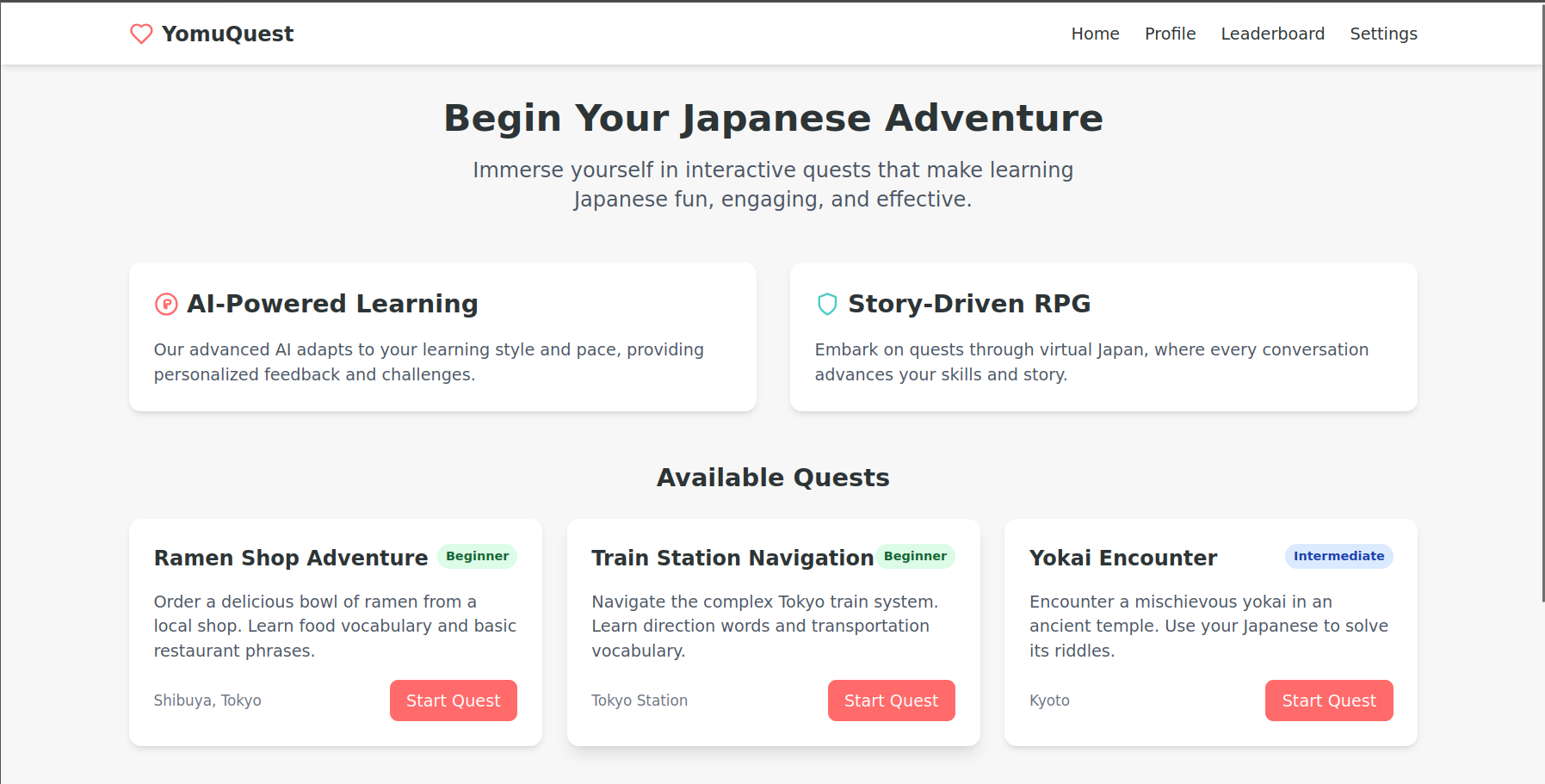
YomuQuest is currently a React.js web app that lays the foundation for an interactive, AI-powered language learning RPG. Right now, it features a concept landing page that previews the look and feel of the future experience, including visuals, branding, and interface structure.
How we built it
We used a modern React.js stack, deployed to Netlify for quick iteration. The UI uses Tailwind CSS, and we’ve built it with modular components that will support future integration with generative AI (e.g. Bolt.AI) for dynamic quests and real-time language feedback.
Challenges we ran into
Narrowing scope to something we could actually deploy during the initial phase.

Figuring out how to visually convey the concept before the AI components are ready.

Building a product that hints at future complexity while staying lightweight and maintainable.
Accomplishments that we're proud of
Deployed a clean, responsive React app that communicates the YomuQuest vision.

Established a clear design language and user experience path.

Created a strong branding identity that can scale with the project.
What we learned
Even a simple MVP can be powerful when the vision is clear and unique.

Branding and UX are just as critical as backend complexity—especially early on.

Hosting and deploying early builds keeps motivation high and feedback actionable.
What's next for YomuQuest
Integrate Bolt.AI to generate dynamic, interactive quests in Japanese.

Add natural language input (text and speech) with contextual feedback.

Build out the quest engine and dialogue system.

Start testing user interactions and learning outcomes.

Launch a playable alpha for real Japanese learners.

Log in or sign up for Devpost to join the conversation.