-
-
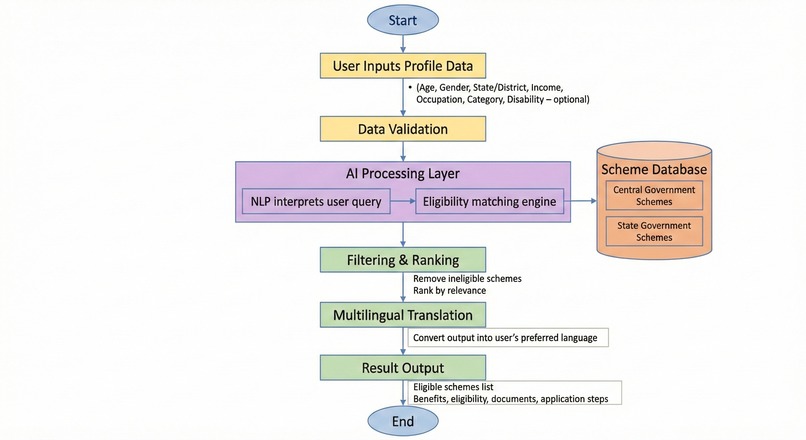
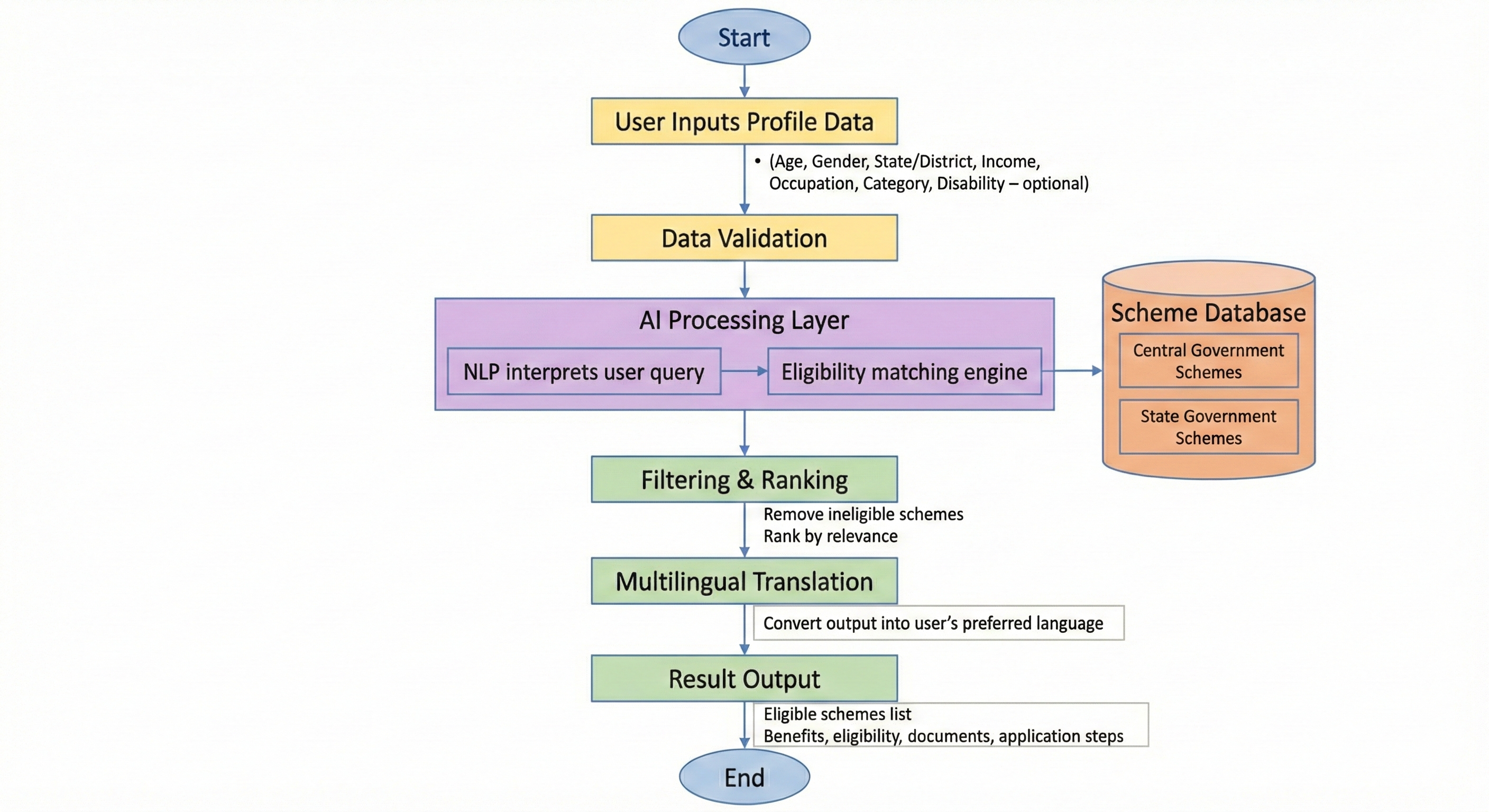
Process Flow Diagram
-
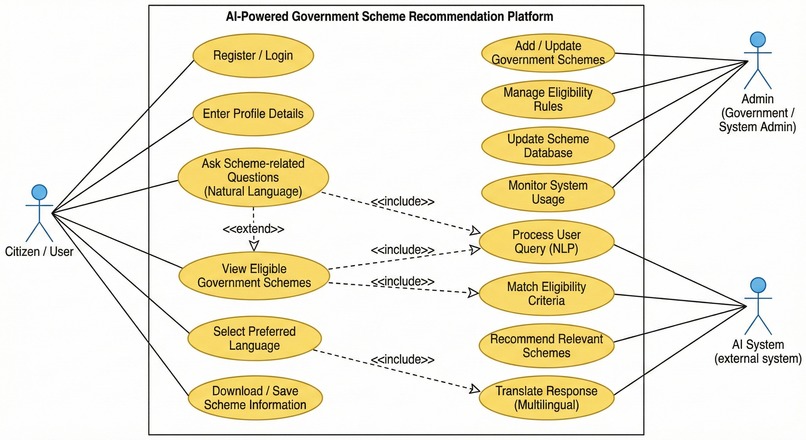
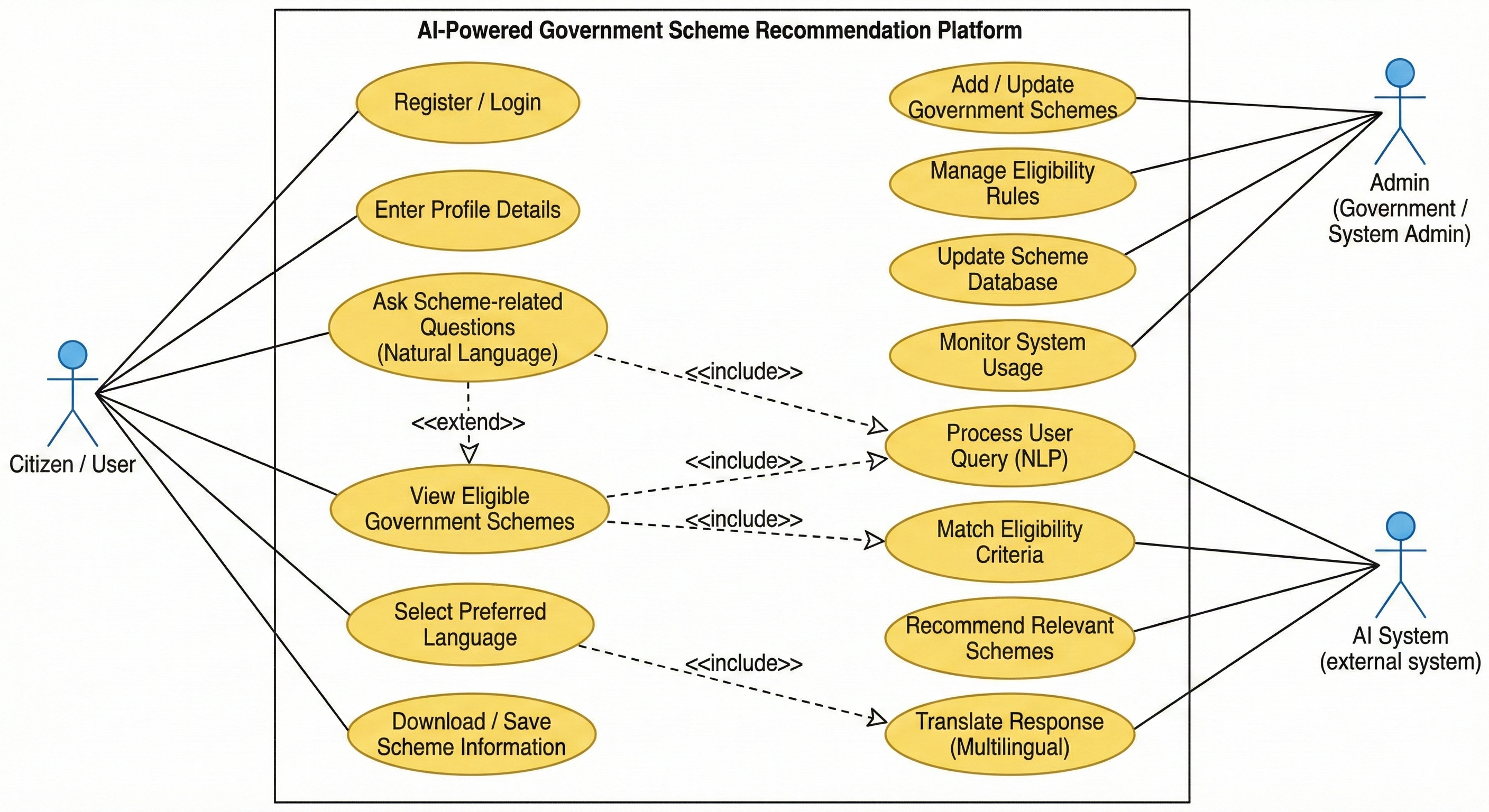
Use Case Diagram
-
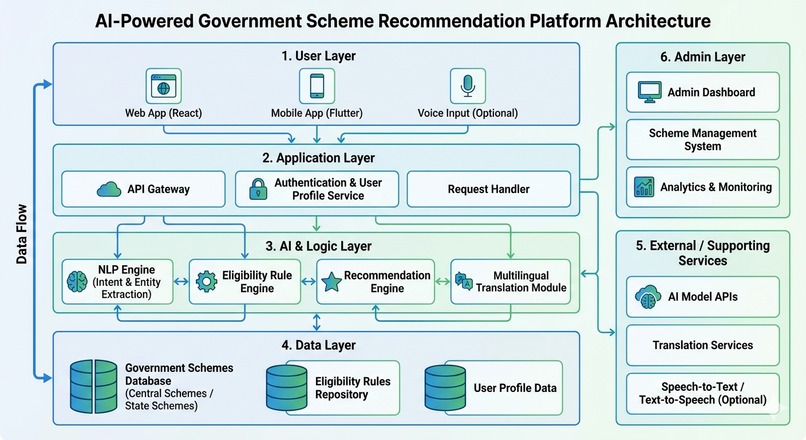
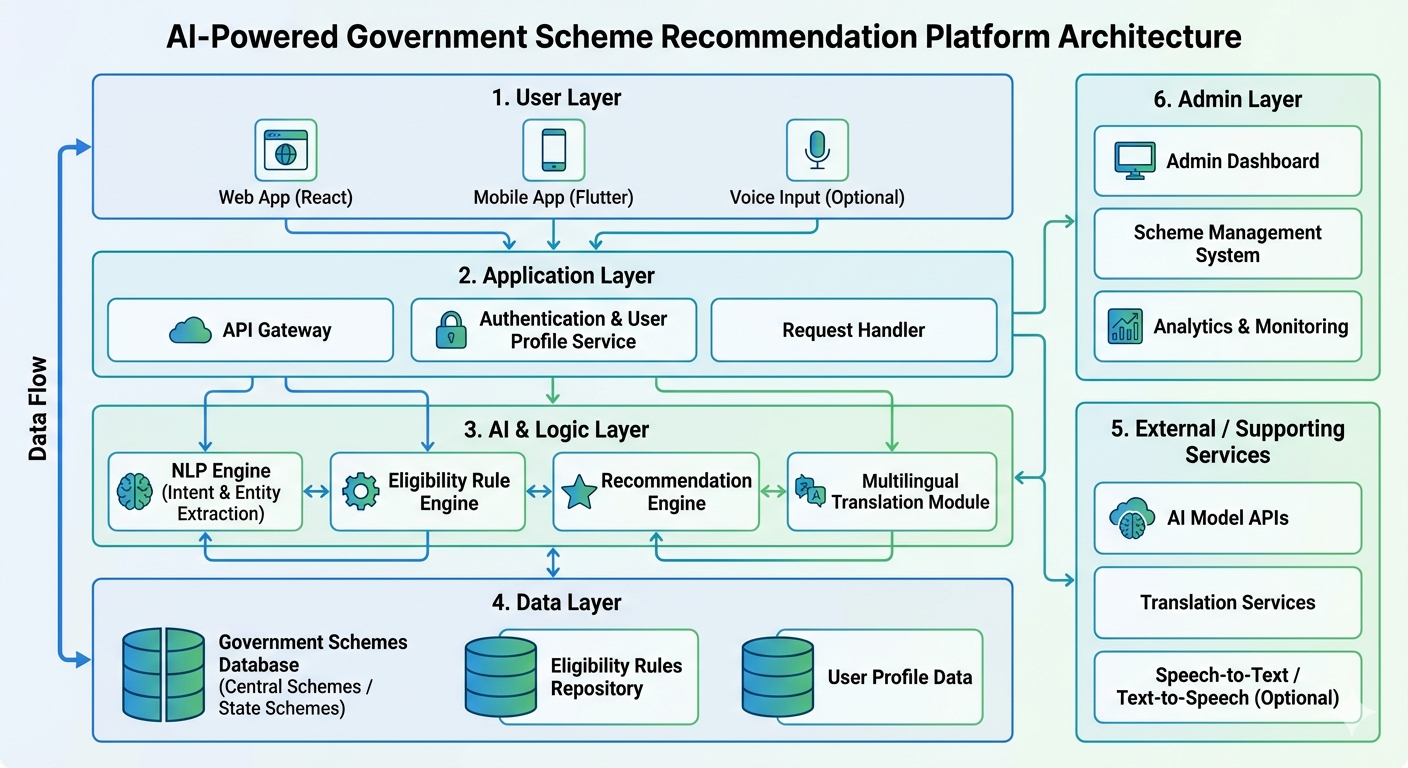
Architecture Diagram
🚀 About the Project – CiviTech
🌟 Inspiration
The idea for CiviTech came from a real-life incident.
One day, I visited an eMitra center. While I was there, an elderly man came in, hoping to apply for a government scheme. He looked confused but hopeful.
He requested help from the operator.
But the operator replied:
“I don’t have time right now, there’s too much work.”
The old man quietly left.
No help. No information. No benefit.
That moment made us realize:
Many people still depend on others to access schemes
Information is not easily understandable
Rural citizens often get ignored due to lack of time or awareness
We thought:
“What if everyone had their own assistant to guide them instantly?”
That’s how Yojana Sathi AI was born.
🤖 What is Yojana Sathi AI?
Yojana Sathi AI is like a personal guide for government schemes.
It helps users:
Find the right schemes
Understand them in simple language
Know how to apply step-by-step
No confusion. No dependency.
💡 Core Idea (Simple Explanation)
Instead of making users search through hundreds of schemes, Yojana Sathi AI does the work for them.
👉 User tells their details or asks a question 👉 AI understands it 👉 Shows only relevant schemes 👉 Explains everything clearly
In simple words:
“Don’t search for schemes — let the right schemes find you.”
🔑 Main Highlights
🧩 Core Features
✅ Personalized scheme recommendations
✅ AI-based eligibility matching
✅ Multilingual support (Hindi + regional languages)
✅ Natural language query (ask like chatting)
✅ Simplified explanations (no technical jargon)
✅ Step-by-step application guidance
✅ Voice support for accessibility
📥 Input
User can provide:
Age
Income
Location
Occupation
Category (if applicable)
OR simply ask:
“Mujhe kaun si yojana milegi?” “Which schemes can I apply for?”
🔍 Query Handling
Yojana Sathi AI:
Understands user question (NLP)
Extracts important details
Matches with scheme conditions
Filters only relevant schemes
📤 Output
User gets:
🎯 List of eligible schemes only
📄 Benefits explained in simple language
📋 Required documents
🪜 Step-by-step application process
🛠️ How We Built It
🧩 Tech Stack
Frontend:
React.js, Tailwind CSS
Backend:
Node.js + FastAPI
AI Engine (Yojana Sathi AI):
Natural Language Processing
Recommendation system
Multilingual translation
Database:
PostgreSQL (Supabase)
Cloud:
Docker, AWS
📚 What We Learned
Building AI for real-world problems
Importance of simplicity in design
Working with multilingual systems
Handling unstructured government data
Creating solutions for rural users
⚔️ Challenges We Faced
📊 Data Problems
Scheme data is scattered and not structured
🌐 Language Issues
Translating and simplifying accurately
🤖 AI Accuracy
Avoiding wrong recommendations
🧑🌾 Accessibility
Making it usable for elderly and rural users
🔗 Integration
Lack of real-time government APIs
🚀 Future Scope
Live government API integration
AI voice assistant
Smart recommendations based on life stages
Offline support for villages
Secure document verification
🎯 Conclusion
That one incident at the eMitra center represents a much bigger problem.
With Yojana Sathi AI, we aim to ensure:
No one is denied access to government schemes because someone else didn’t have time.
CiviTech is not just a project— it’s a step toward empowering every citizen with knowledge and independence.
Built With
- amazon-web-services
- ci/cd
- css3
- d3.js
- django
- docker
- fastapi
- grokapi
- html5
- kubernetes
- netlify
- node.js
- plotly.js
- python
- pytorch
- react.js
- render
- supabase
- tailwindcss
- tensorflow


Log in or sign up for Devpost to join the conversation.