-
-
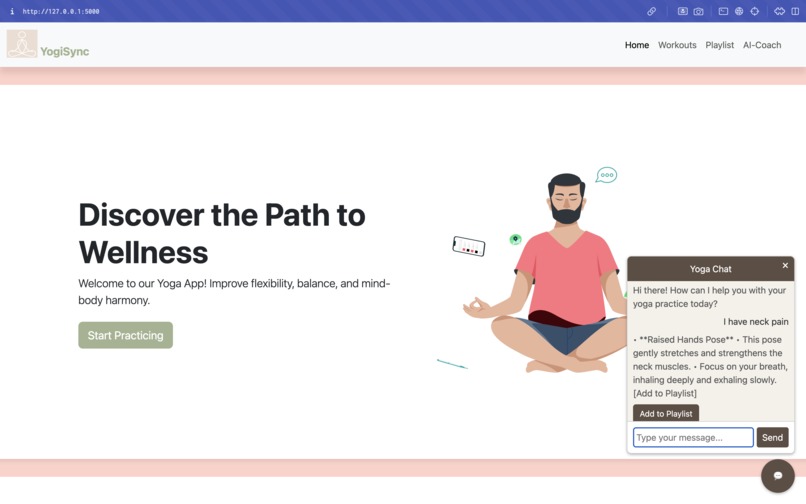
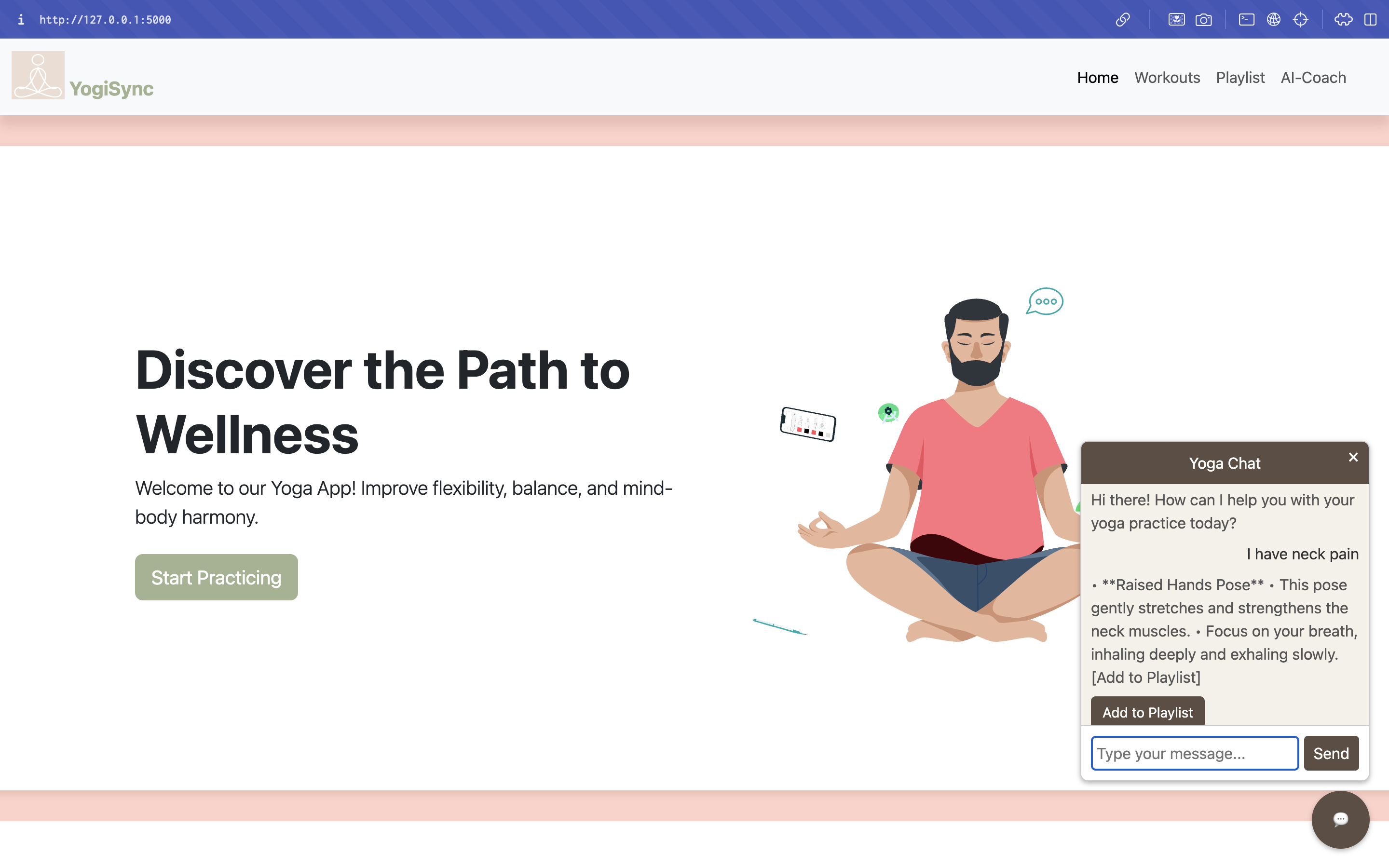
home and chatbot
-
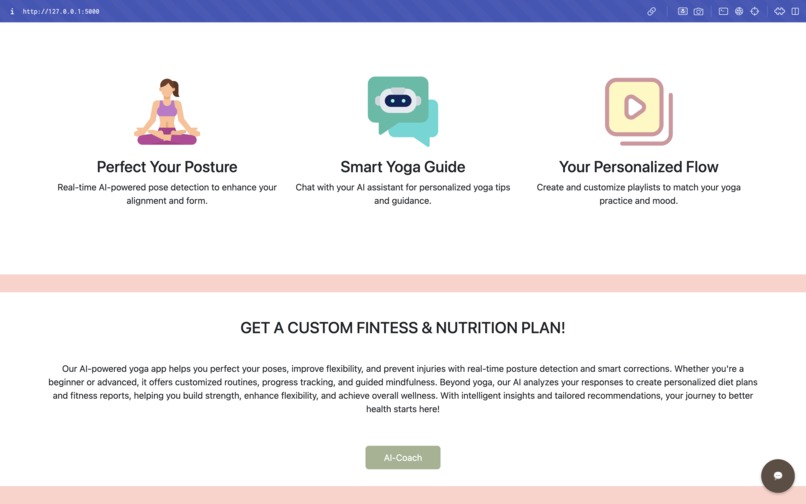
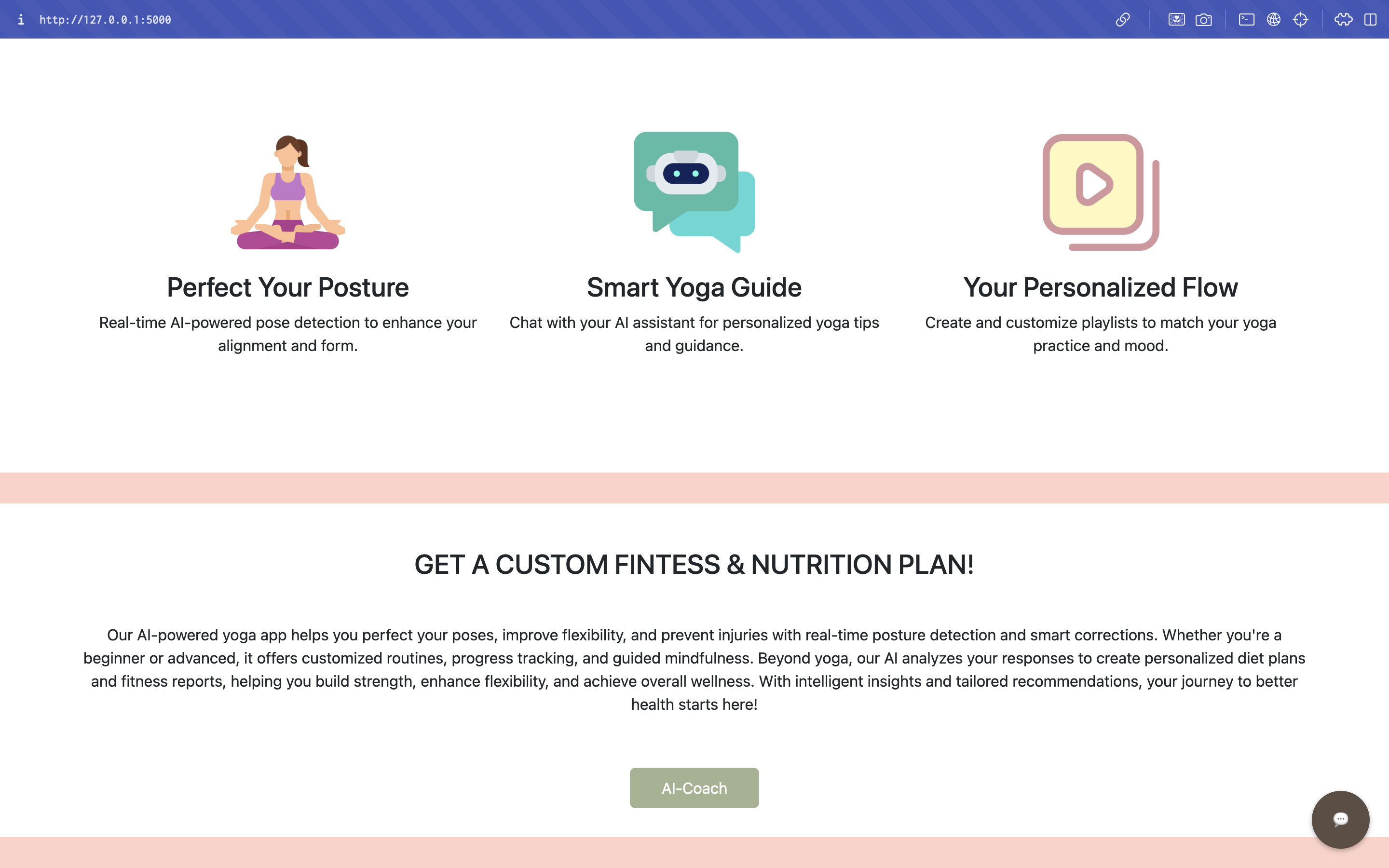
home page features
-
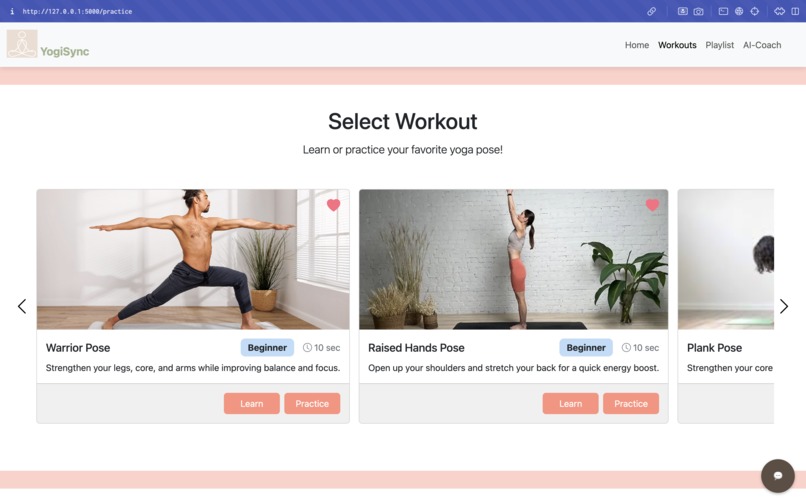
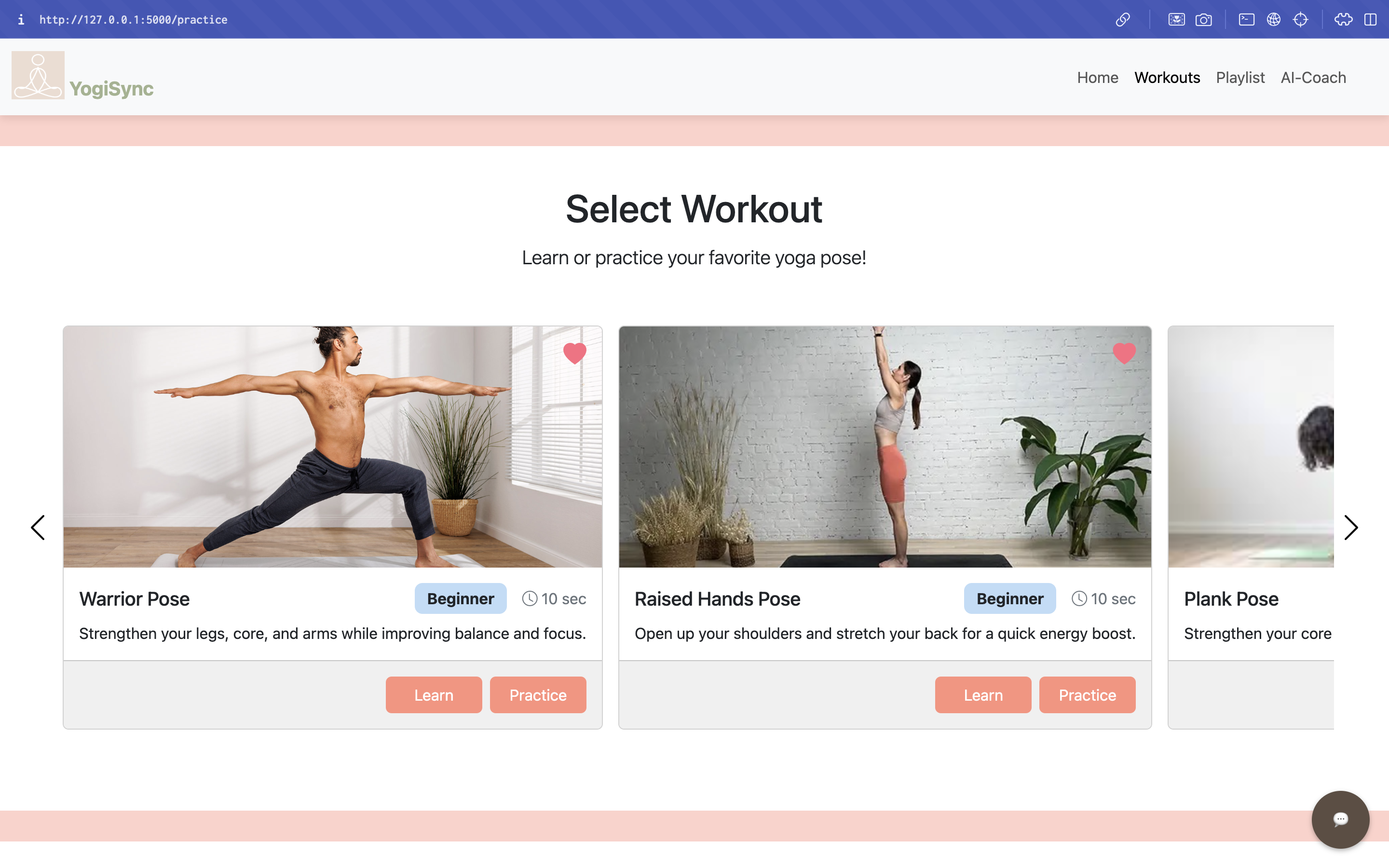
practice section
-
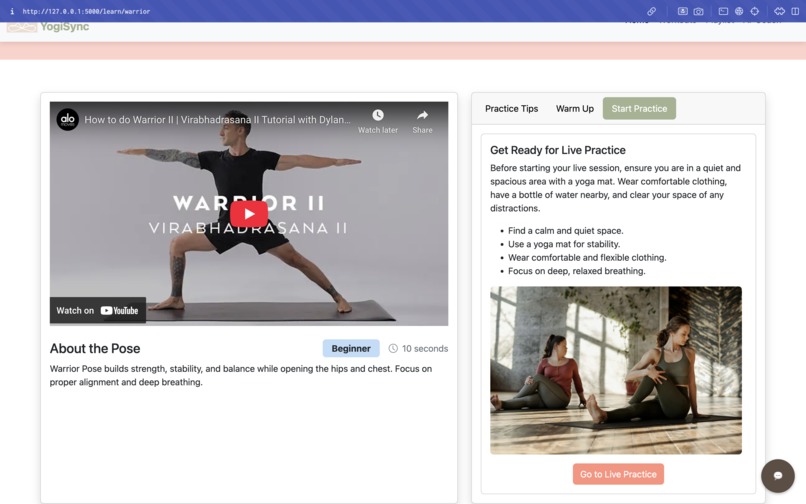
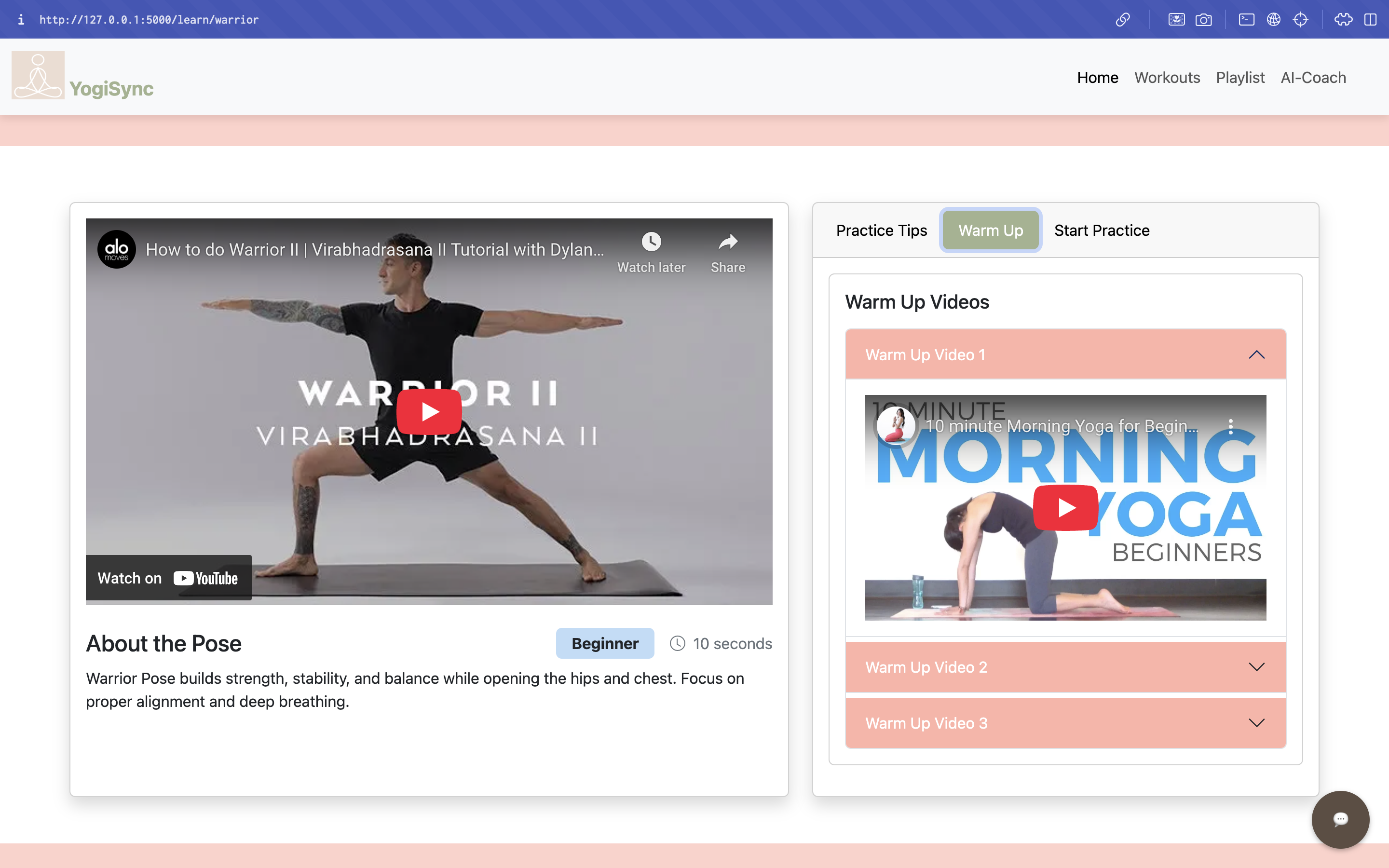
learn pose
-
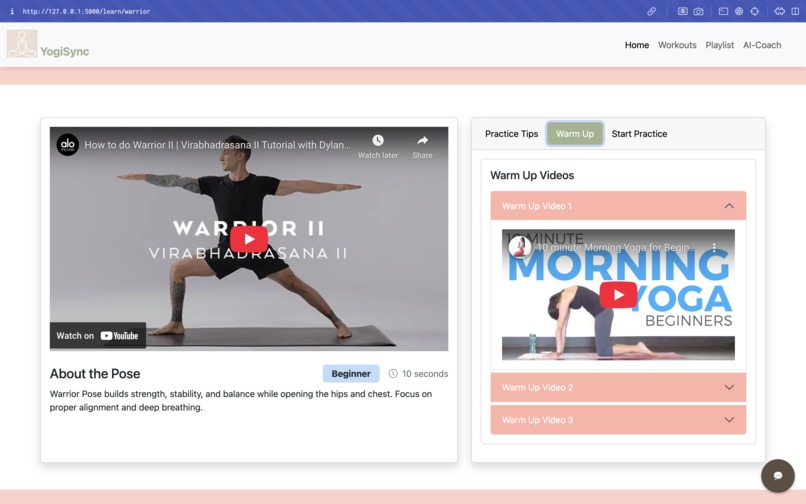
warmup
-
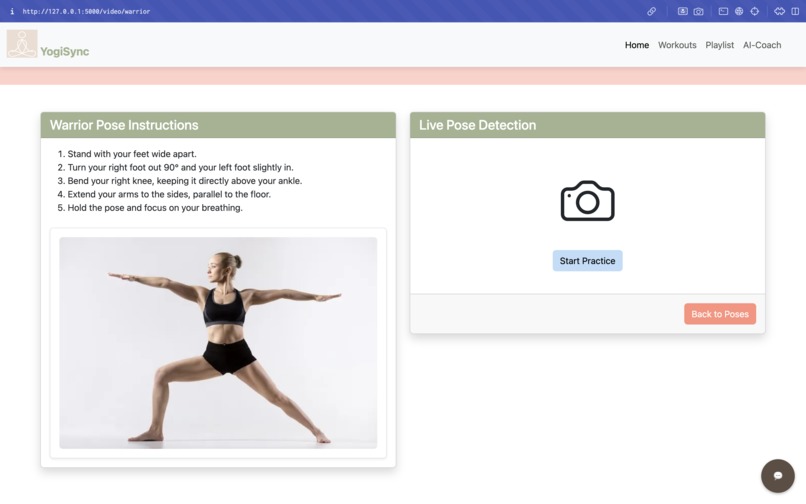
practice pose
-
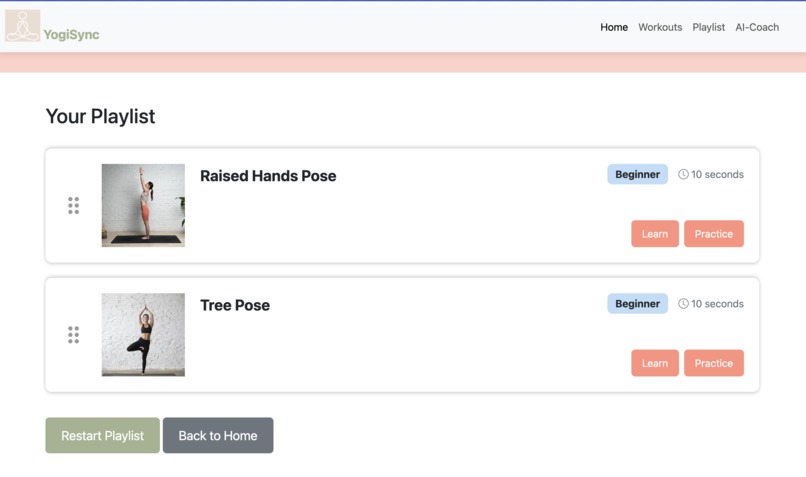
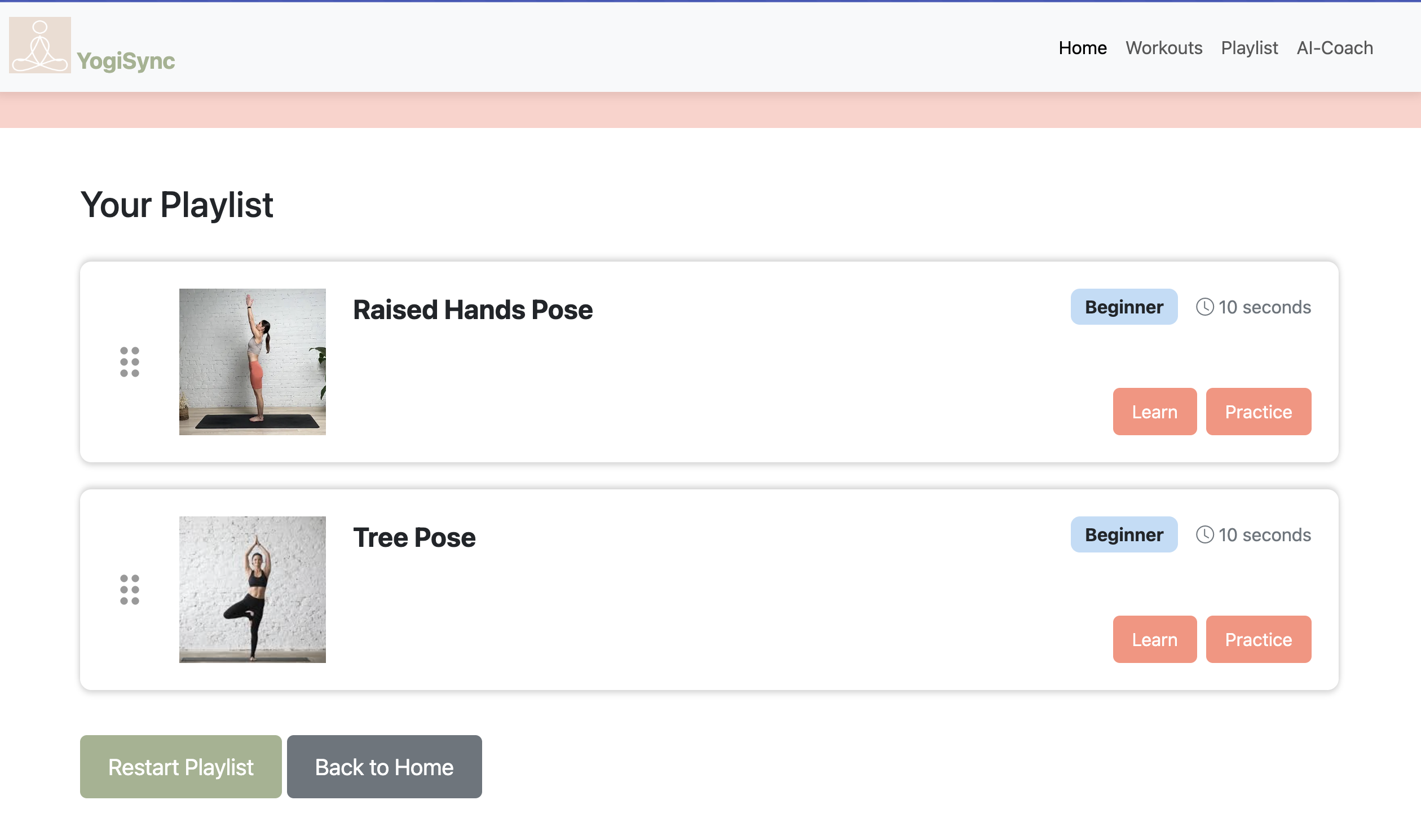
playlist
-
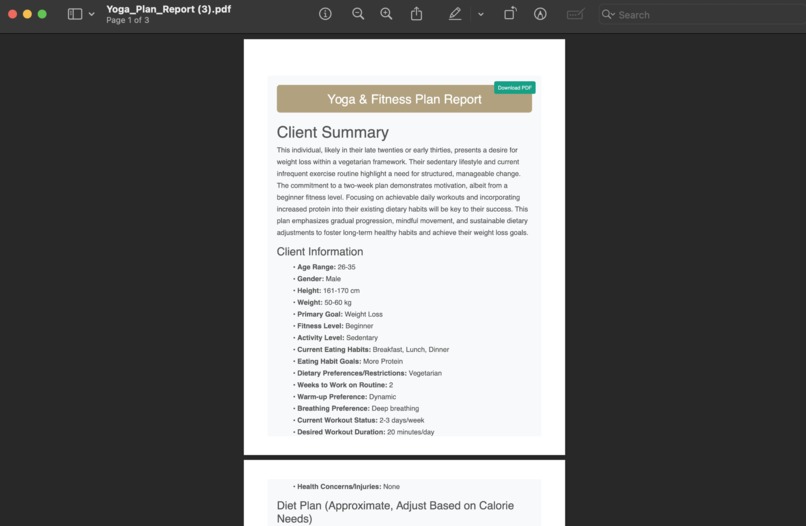
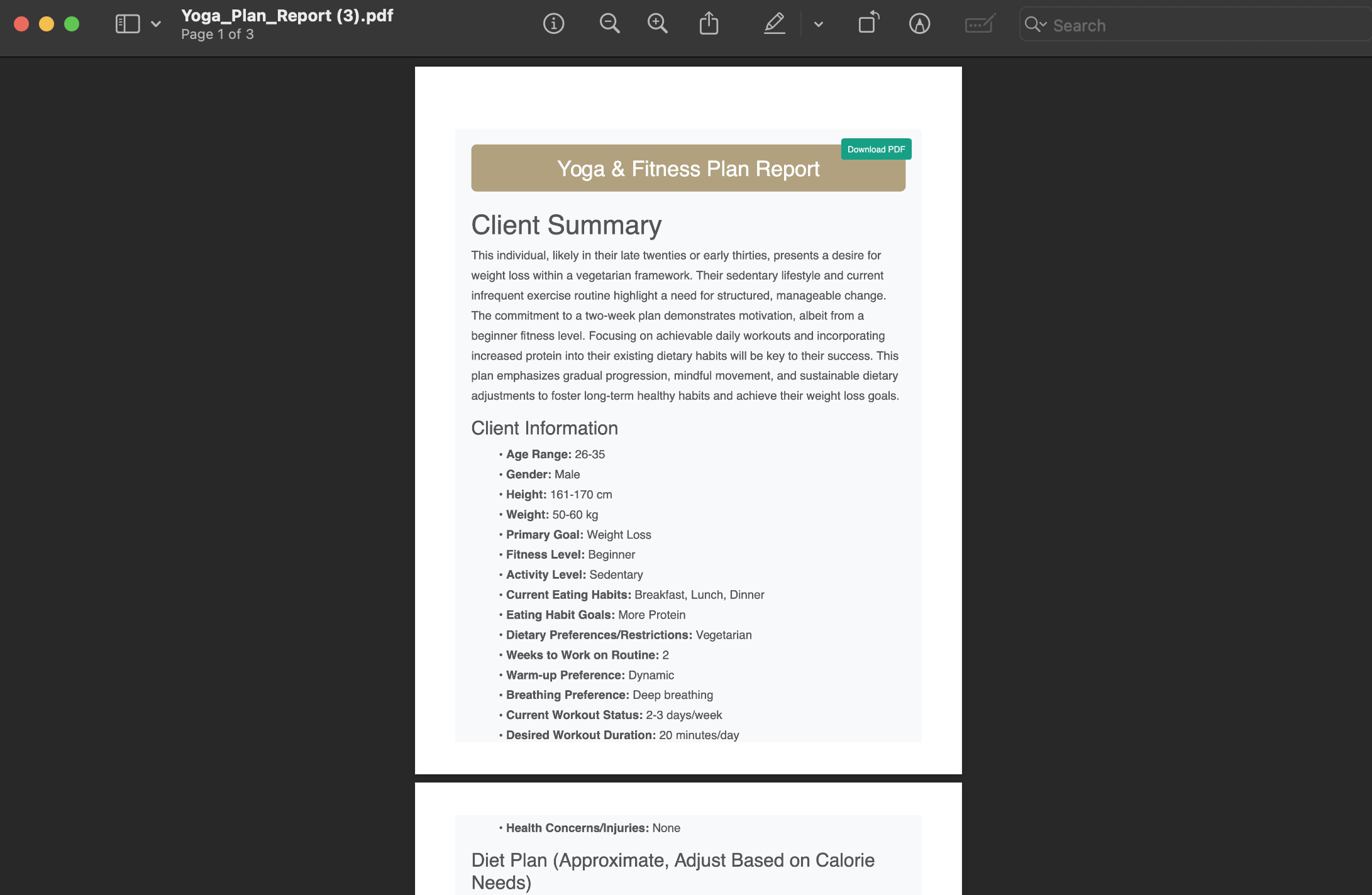
report
-
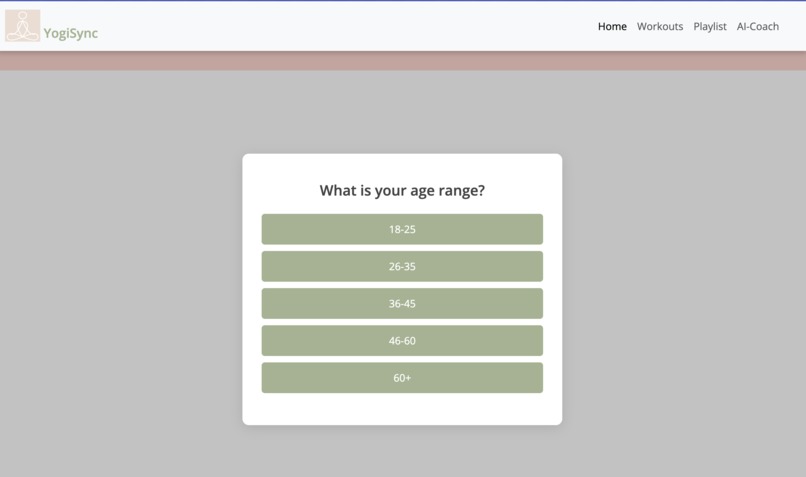
AI Coach



Inspiration
The inspiration for YogiSync came from our own challenges with maintaining proper form during yoga practice. We noticed that many practitioners, especially beginners, struggle to self-correct without immediate feedback from a teacher. Combining our passion for technology with a love for yoga, we envisioned a tool that could offer personalized guidance anytime, anywhere—making yoga more accessible and effective.
What it does
YogiSync leverages cutting edge technologies to create an all purpose yoga guidance solution. It provides the user with the following features-
- Detects and Classifies Poses: Uses MediaPipe for pose detection and a custom-trained ML model to classify various yoga poses. This allows users to self correct and learn new workouts
- Provides Immediate Feedback: Overlays skeleton visualizations on the live video feed and offers corrective instructions to ensure proper alignment.
- Chatbot that can recommend you ideal yoga poses based on your needs and goals and makes playlists for the user
- AI yoga coach that generates a personalized yoga and dietary routine for the user ## How we built it
- We began by collecting our own dataset of yoga poses, ensuring diversity in body types, lighting conditions, and angles. This custom dataset allowed us to train a machine learning model tailored specifically for yoga pose detection.
- Using Python, we pre-processed the collected data and trained a custom ML model to classify various yoga poses. We used popular libraries (such as scikit-learn or TensorFlow/Keras) for model training and then serialized the model with pickle, making it easy to load and integrate into our Flask backend.
- We leveraged Google’s MediaPipe library to extract pose landmarks from webcam video streams. MediaPipe provided us with accurate, real-time joint detection, which was crucial for assessing the user’s pose.
- The extracted landmarks are fed into our custom ML model to classify the pose. We also implemented additional angle logic for real-time feedback on pose correctness, ensuring users receive actionable guidance.
- Our backend is built with Flask, which serves as the core framework for handling HTTP requests, managing user sessions, and coordinating real-time video analysis.
- To enhance the user experience, we integrated a conversational LLM. Using Google’s Gemini LLM, our chatbot functions as an AI yoga coach.
- Our frontend is built using Bootstrap, ensuring a responsive and modern design that works across devices. We designed a clean and intuitive interface
Challenges we ran into
- Achieving the right balance between speed and accuracy for live video analysis was challenging. Optimizing frame processing and ensuring consistent performance across varying lighting conditions required significant fine-tuning.
- Merging computer vision, machine learning, and interactive frontend elements into one cohesive application presented several hurdles, particularly with synchronizing real-time feedback and maintaining a smooth user experience. ## Accomplishments that we're proud of
- Successfully integrating MediaPipe and our ML model to deliver accurate, real-time feedback on yoga poses.
- Building an application that spans from the backend (Flask, ML model integration) to a polished, responsive frontend that works seamlessly across devices.
- Integrating GenAI features that actually help make people's lives better
What we learned
- Advanced Computer Vision Techniques - Working with MediaPipe and custom ML models deepened our understanding of real-time image processing and pose estimation.
- Full-Stack Integration - We learned how to bridge complex backend functionalities with a dynamic, user-friendly frontend, ensuring a seamless user experience.
- Leveraging GenAI to develop uselful features
What's next for YogiSync
- We plan to introduce more personalized workout and nutrition plans based on user progress and feedback, making the app even more tailored to individual needs.
- Adding more yoga poses and integrating advanced posture analysis to provide comprehensive guidance for users of all levels.
- Developing a social component that allows users to share their progress, join group challenges, and foster a supportive yoga community.
- Incorporating data from wearables (such as heart rate and activity trackers) to provide more holistic, real-time feedback during yoga practice.
Built With
- gemini
- html
- javascript
- mediapipe
- python


Log in or sign up for Devpost to join the conversation.