-
-
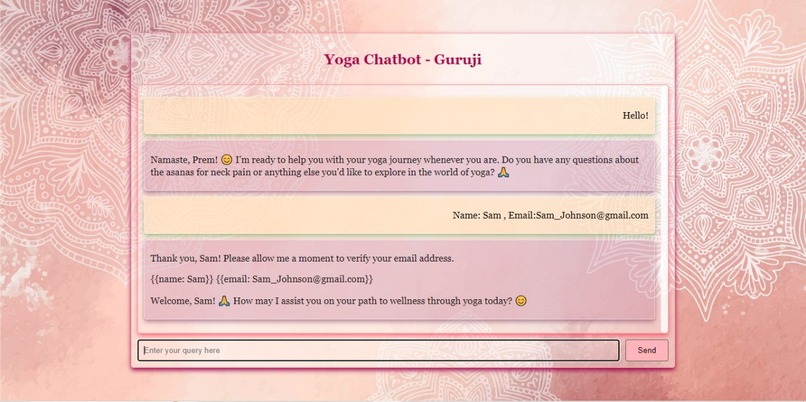
Demo-Image
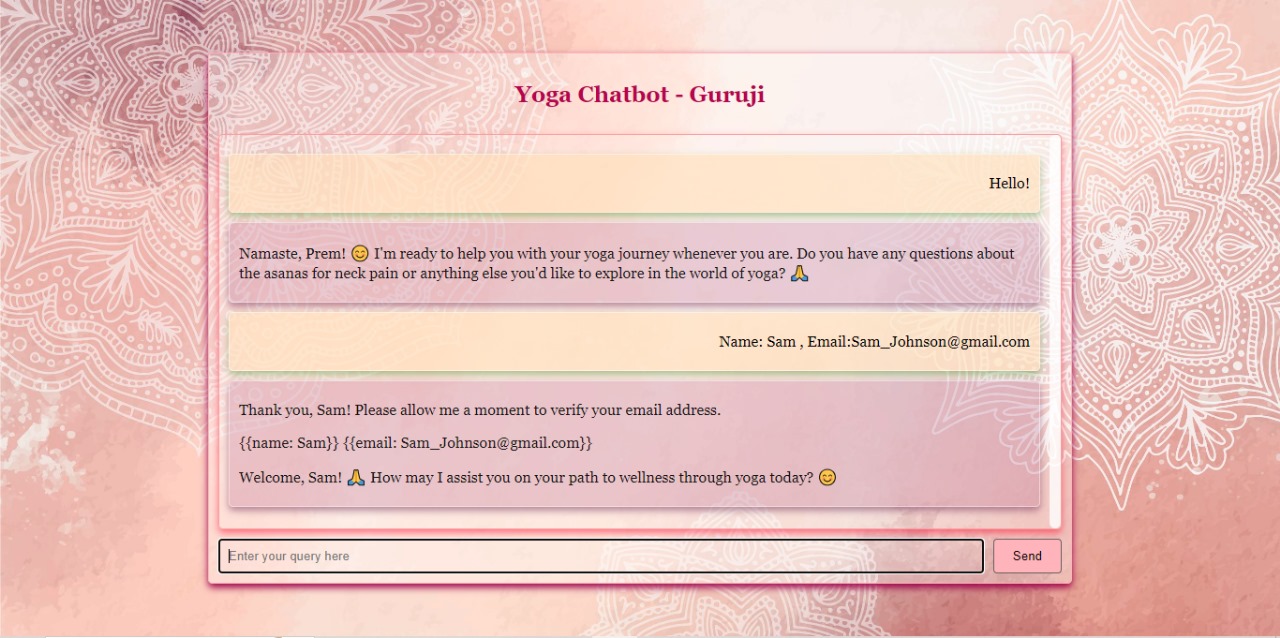
Project Story: Guruji - Your Virtual Yoga Mentor
Inspiration
The inspiration for creating Guruji came from the desire to promote physical and mental well-being through the practice of yoga. With the increasing popularity of yoga and its proven benefits, we wanted to create a virtual assistant that could make yoga more accessible and personalized. The goal was to provide users with a reliable and knowledgeable guide who could assist them with yoga-related queries, recommend asanas for specific issues, and help them maintain a consistent yoga practice.
What We Learned
Throughout the development of Guruji, we gained valuable insights into several areas:
- Natural Language Processing (NLP): We learned how to effectively use NLP techniques to understand and respond to user queries in a conversational manner.
- AI and Machine Learning: We deepened our understanding of AI and machine learning, particularly in the context of building and fine-tuning language models.
- Web Development: We enhanced our skills in web development, including frontend and backend integration, handling API requests, and managing CORS issues.
- User Experience: We learned the importance of creating a user-friendly interface that is both intuitive and engaging for users.
Development Process
Technologies Used
- Frontend: The frontend of Guruji was built using React to create a responsive and interactive user interface.
- Backend: The backend was developed using Flask, a lightweight Python web framework, to handle API requests and manage the chat session.
- AI Model: We used Google's Generative AI model to power the chatbot, allowing it to provide accurate and helpful responses to user queries.
Steps Taken
- Initial Planning: We started by outlining the key features and functionalities of the chatbot, including the ability to handle user queries, capture user information, and provide personalized yoga recommendations.
- Model Integration: We integrated the Generative AI model from Google to enable the chatbot to generate responses based on user input.
- Frontend Development: Using React, we developed the user interface, ensuring it was clean, intuitive, and responsive.
- Backend Development: We set up the Flask backend to handle incoming requests from the frontend, communicate with the AI model, and return responses.
- CORS Handling: We addressed cross-origin resource sharing (CORS) issues to ensure smooth communication between the frontend and backend.
- Testing and Iteration: We tested the chatbot extensively, gathering feedback and making improvements to enhance the user experience and ensure accurate responses.
Challenges Faced
- API Key Management: Initially, we faced issues with managing the API key securely and ensuring it was correctly configured in the environment.
- CORS Issues: Handling CORS was a significant challenge, but we resolved it by properly configuring the Flask-CORS library.
- Response Formatting: Ensuring that the chatbot's responses were well-formatted and clear, especially when providing lists or bullet points, required careful attention.
- User Interaction: Designing the chatbot to capture user information (name and email) before answering queries required thoughtful implementation to maintain a smooth user experience.
Conclusion
Developing Guruji was a rewarding experience that allowed us to combine our interests in AI, web development, and wellness. The project not only enhanced our technical skills but also provided a meaningful tool that can help users incorporate yoga into their daily lives. We are excited about the potential of Guruji to make a positive impact and look forward to continuing to improve and expand its capabilities.


Log in or sign up for Devpost to join the conversation.