-
-
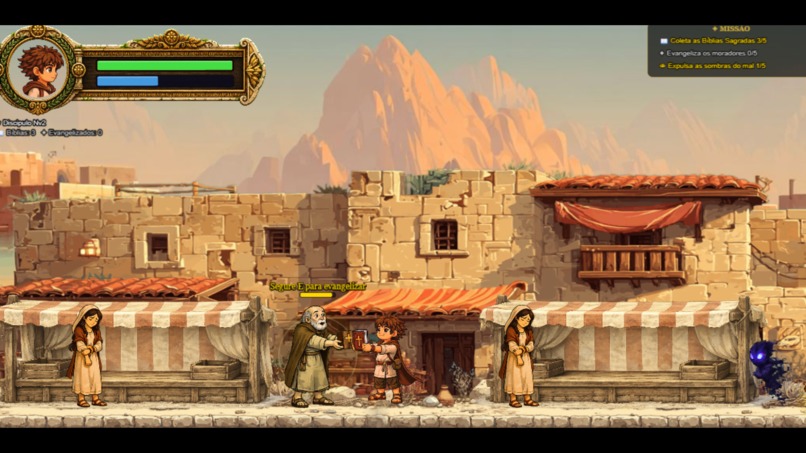
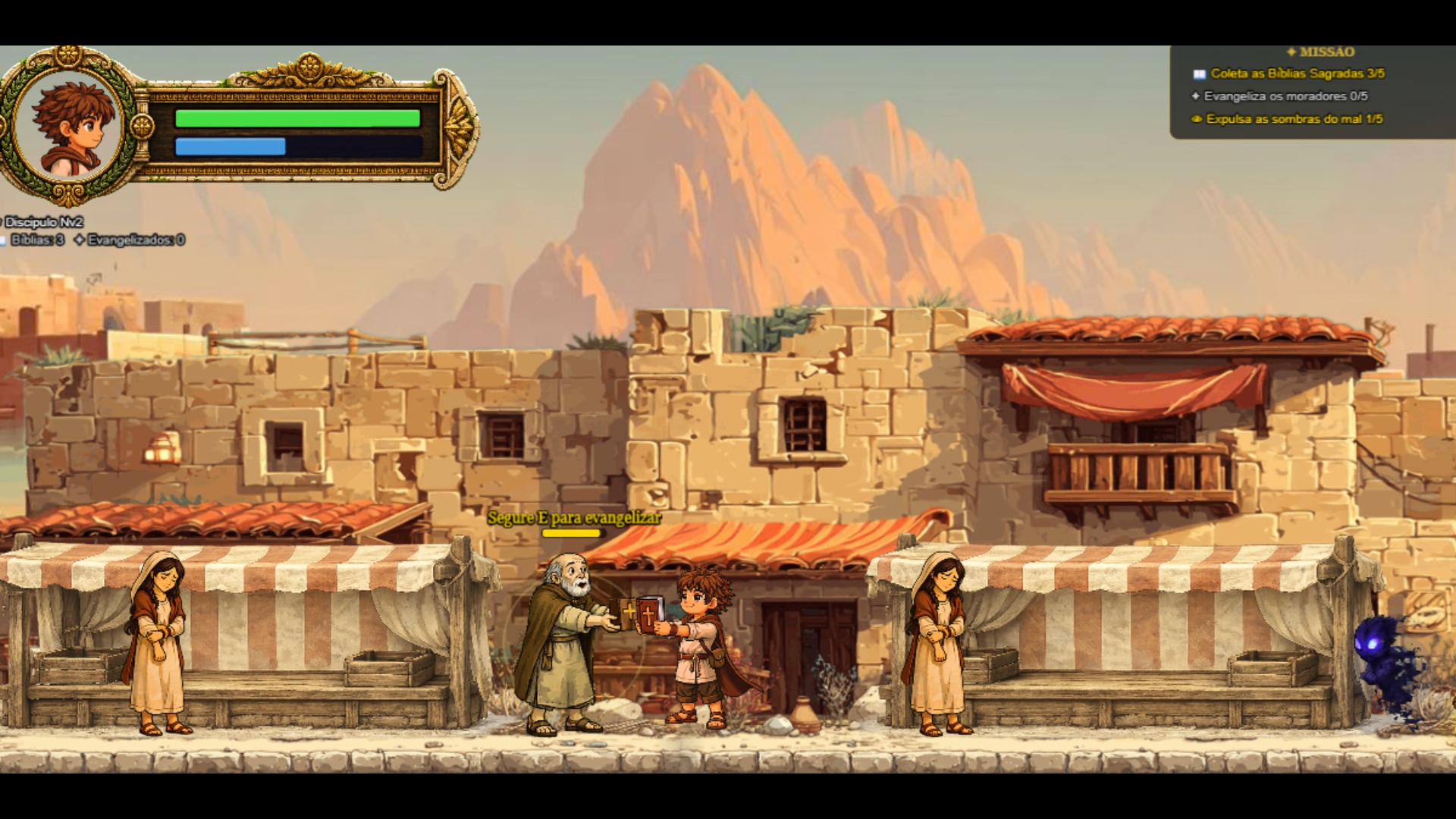
Jerusalem phase
-
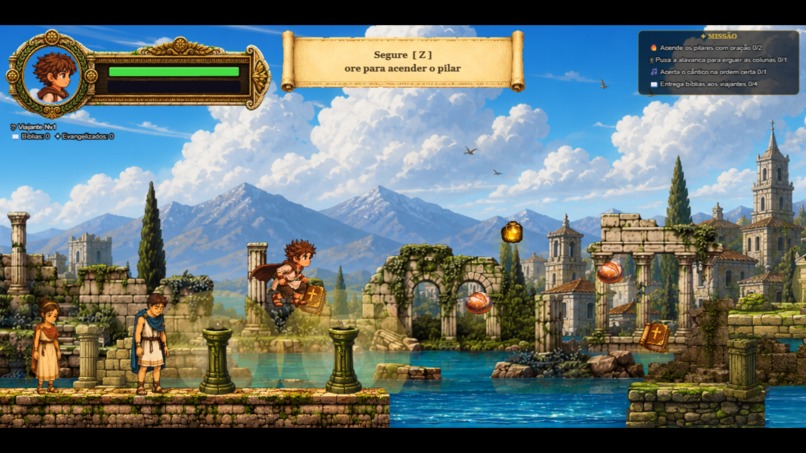
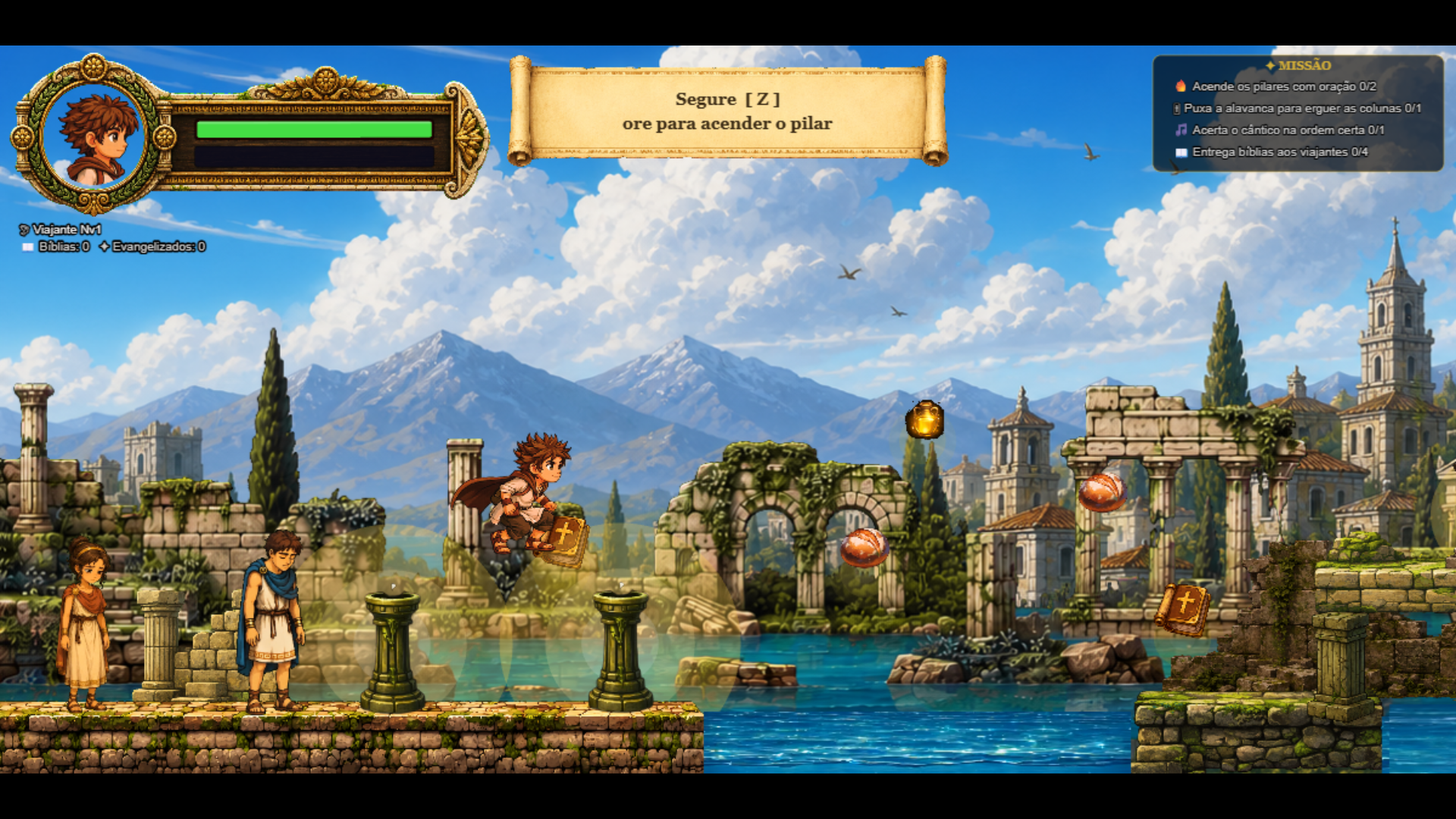
Filipo phase
Inspiration
The Book of Acts is one of the most cinematic stories ever told — a small group of people carrying a light across the ancient world, from Jerusalem to Rome, against every kind of resistance. We wanted to turn that journey into something you play, not just read. YLOH Journey casts you as Yloh, a runner who carries that light forward act by act: the blinding on the road to Damascus, Paul and Silas singing hymns in a Philippian jail, and the long road that ends in Rome.
What it does
YLOH Journey is a side-scrolling platformer that adapts the Acts of the Apostles into hand-authored levels:
- Act I — Damascus (Acts 9): Yloh follows Saul's trail as a light from heaven breaks across the road. Cutscenes set each scene with the actual scripture.
- Act II — Philippi (Acts 16 / Philippians 4): "The Faith That Sings." Paul and Silas worship in prison — the level's signature hymn-powered puzzles ask the player to play notes on pedestals to raise a bridge, echoing the earthquake that opened the prison doors.
- Act III — Rome: the final act, in preparation.
Across the journey the player grows a robe (five visual tiers), builds an unction meter, manages HP, and collects story items — so progression is tied to the narrative instead of a generic score counter.
How we built it
- Phaser 4.1 (the new WebGL-renderer rewrite) for the engine, with TypeScript and Vite for multi-entry bundling.
- A custom Scene Builder tool (Vue 3) lets us place props, NPCs and parallax layers visually and export them straight into the game's level data — every level is authored, not procedurally generated.
- Arcade physics with hand-tuned movement: coyote time, jump buffering, variable-height and double jumps for a responsive feel.
- Custom multi-layer parallax, one-way "jumpable" platforms, and per-phase cutscenes with video preludes and scripture panels.
Challenges we ran into
- Migrating the whole codebase from Phaser 3 to the Phaser 4 WebGL rewrite, and working around a v4.1 video-decoding bug used for cutscene clips.
- Designing puzzles (the Philippi hymn/bridge mechanic) that feel native to the story rather than bolted on.
- Keeping performance tight on mobile while running parallax, video preludes and physics together.
What we learned
- How much narrative weight a platformer can carry when level design, cutscenes and mechanics all serve the same story beat.
- The realities of a major engine migration (Phaser 3 → 4) on a real, content-heavy project.
What's next
- Finishing Act III — Rome and the closing arc.
- Porting the experience to Reddit's Devvit Web so it can run as an Interactive Post with returning hooks: daily run leaderboards, community-submitted puzzle notes, and shared progress.
- More accessibility and a polished mobile control scheme.
Built With
- html5
- javascript
- phaser.js
- sharp
- typescript
- vite
- vue.js
- webgl

Log in or sign up for Devpost to join the conversation.