CogNote
What it does
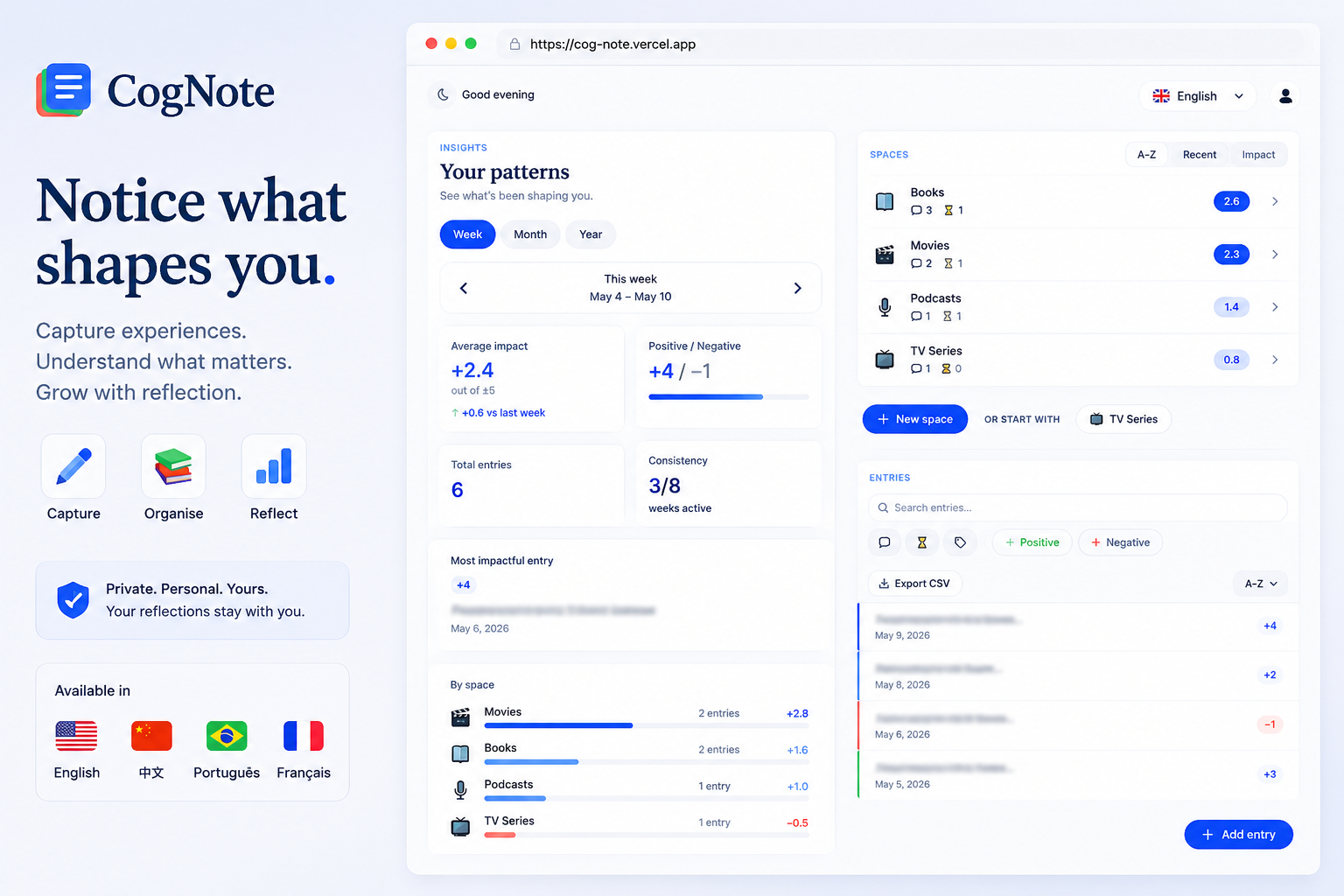
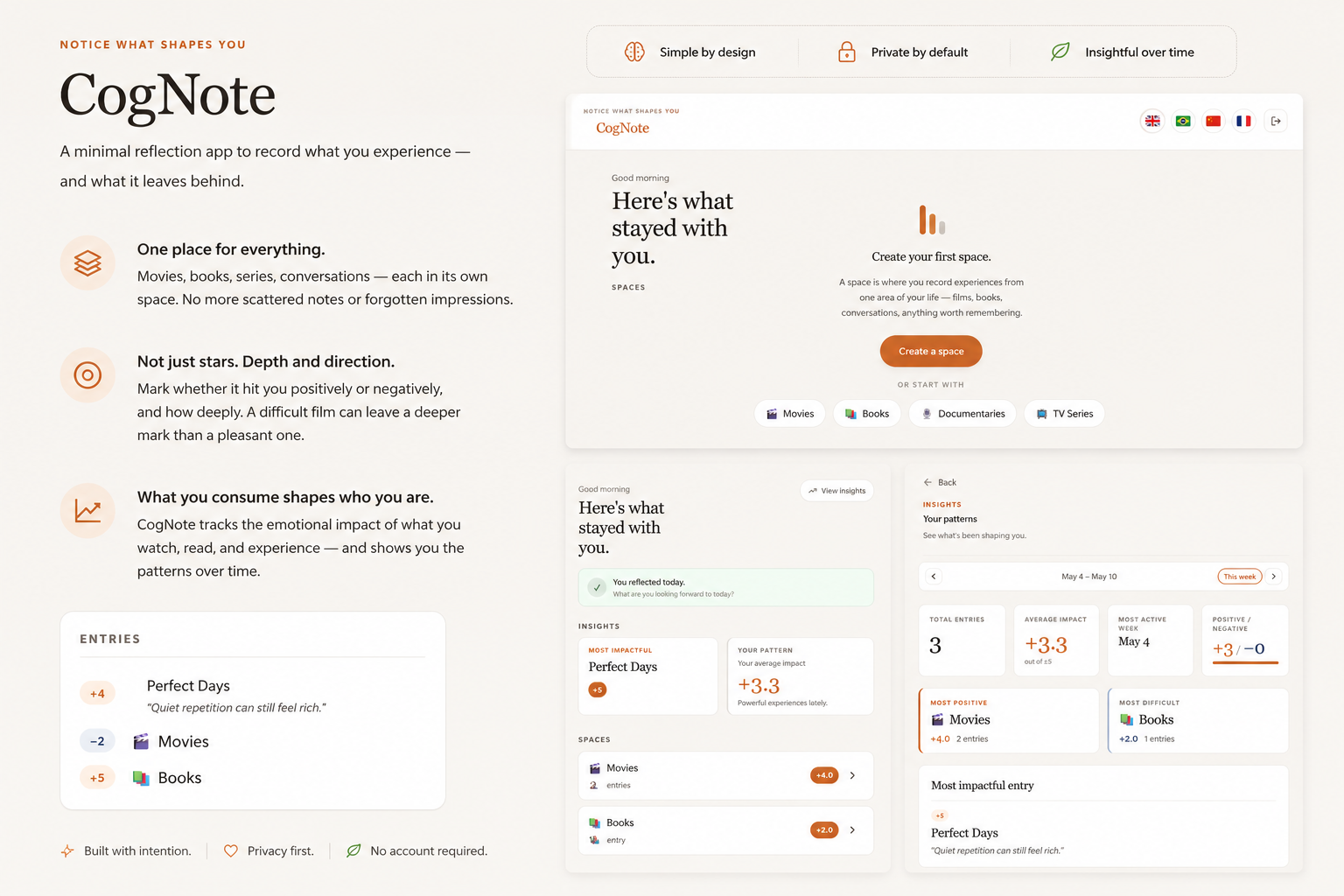
CogNote is a calm reflection app. Not a productivity tool, not a habit tracker — a quiet space to notice what experiences actually shape you over time.
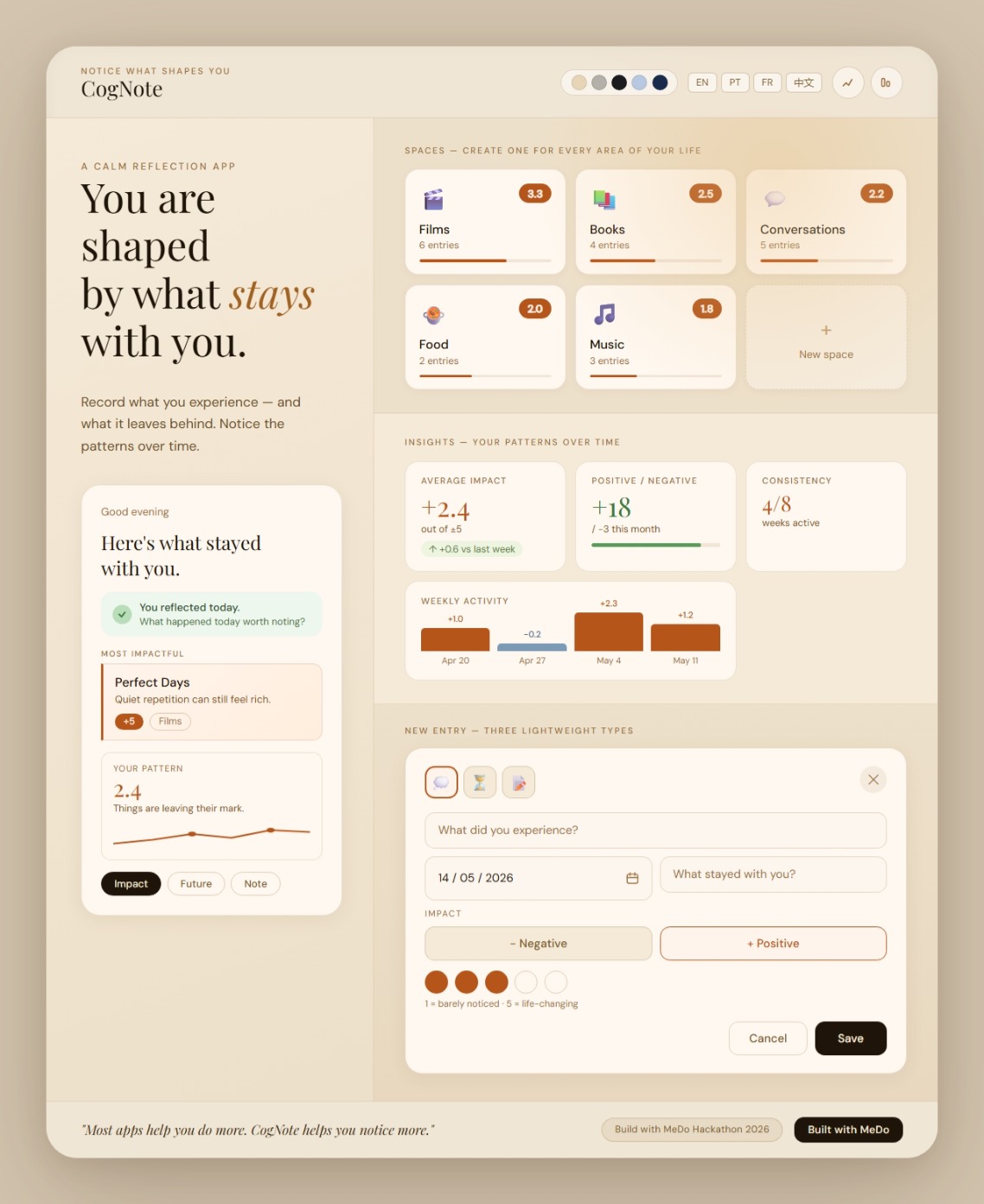
Users create Spaces for any area of their life — films, books, conversations, food, anime, or anything meaningful to them — and log entries in one of three lightweight forms:
- Impact — what you experienced, what stayed with you, and how deeply it affected you (positive or negative, 1–5)
- Future — what you want to come back to later, with an optional note
- Note — a freeform thought with a date
Over time, CogNote surfaces gentle patterns: your average emotional impact, your most meaningful entries, which spaces affect you most, and how your experience shifts week to week.
The core idea: most apps help you do more. CogNote helps you notice more.
How we built it with MeDo
CogNote was built entirely in MeDo through multi-turn conversations. We used MeDo to generate the full-stack application — data models, UI components, routing, theme system, and the insights logic that calculates emotional patterns across spaces.
What made MeDo particularly valuable was iteration speed. Rather than spending time on boilerplate setup, We could focus entirely on the product decisions that actually matter:
- How lightweight should each entry type be?
- How do you surface patterns without turning reflection into analytics?
MeDo handled the implementation. We focused on the philosophy. That combination is what made this possible in a hackathon context.
🔗 Live app: app-ba3t02l4rym9.appmedo.com
The most impressive thing MeDo generated
The theme system.
CogNote supports five visual themes — warm beige, grayscale, dark grayscale, light blue, and dark blue — that apply consistently across every screen, component, and state. MeDo generated a coherent CSS variable architecture that made this work without manual overrides.
The emotional atmosphere of the app shifts completely between themes. It just works.
Challenges we ran into
The hardest challenge was resisting complexity.
Almost every new idea sounded interesting:
- AI-generated insights
- Social sharing
- Recommendation systems
- Deeper analytics dashboards
But every addition forced the same question:
Does this deepen reflection — or distract from it?
Maintaining simplicity became an active design discipline. Minimalism is not the absence of features. It is the result of difficult decisions.
What we are proud of
- Building a product with a clear emotional identity under hackathon constraints
- Designing reflection as atmosphere rather than productivity
- Five coherent visual themes, each with a distinct emotional feel
- Full multilingual support in four languages — English, Portuguese, French, and Simplified Chinese — with translations that preserve tone, not just literal meaning
- Using MeDo as a thinking collaborator, not just a code generator
What we learned
- Simplicity requires restraint, not just fewer features
- Emotional tone matters as much as functionality
- Constraints clarify what actually matters
- MeDo becomes far more powerful when used during product thinking, not only at implementation time
What's next
- Lighter long-term pattern discovery
- Faster in-the-moment capture
- Optional cross-device persistence
- Subtle reflection summaries over time
The core constraint stays the same: the simpler, the better.
Built With
- claude
- gtp
- medo
- react
- shadcn/ui
- supabase
- tailwind-css
- typescript
- vite


Log in or sign up for Devpost to join the conversation.