-
-
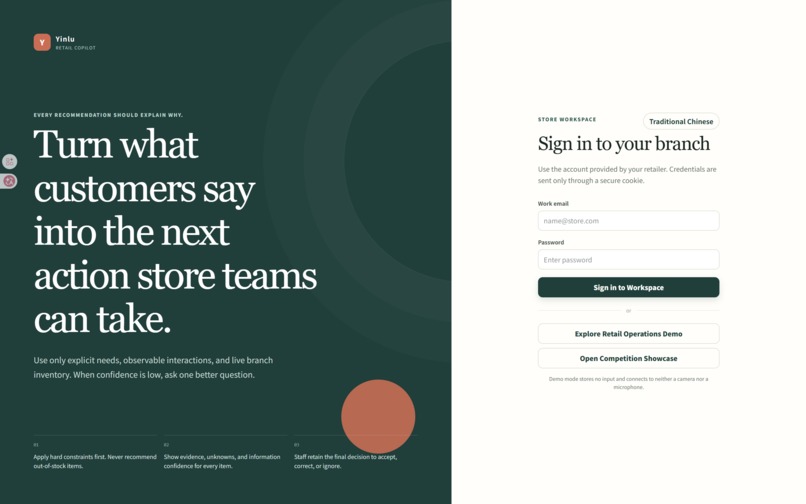
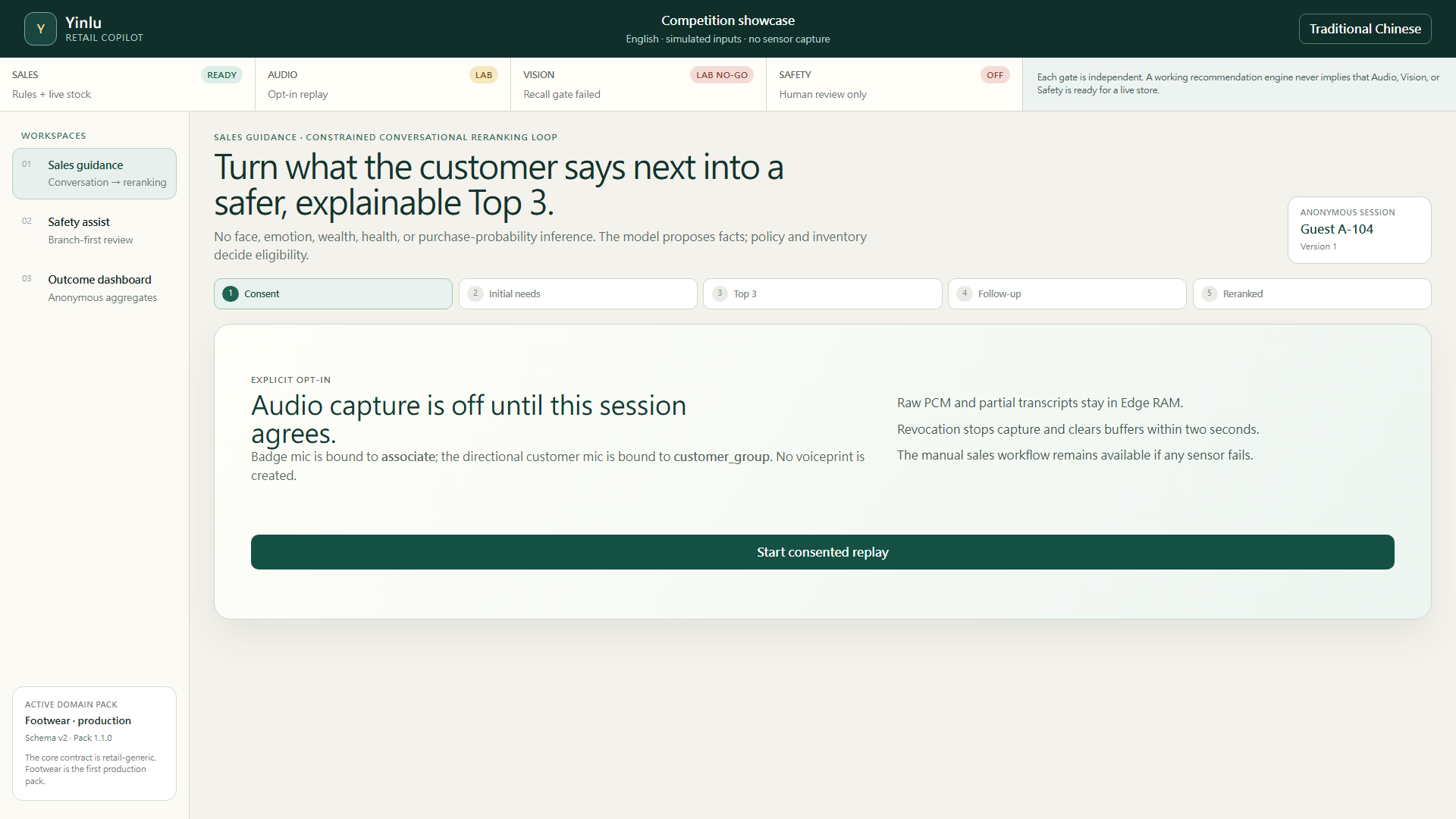
Entry
-
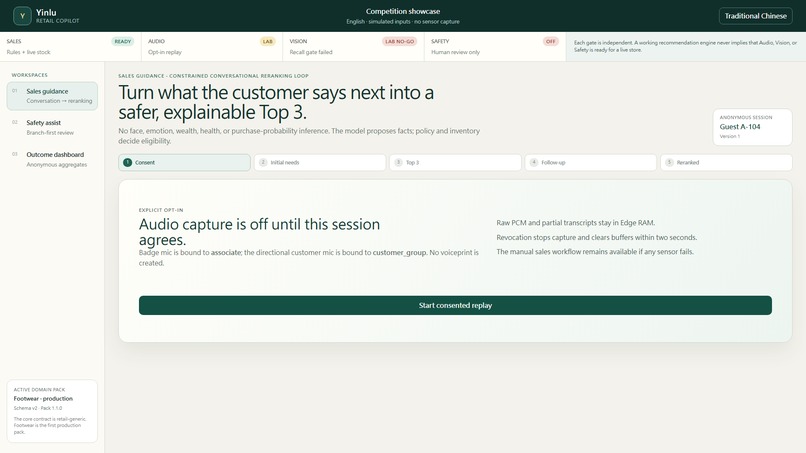
consent-boundary
-
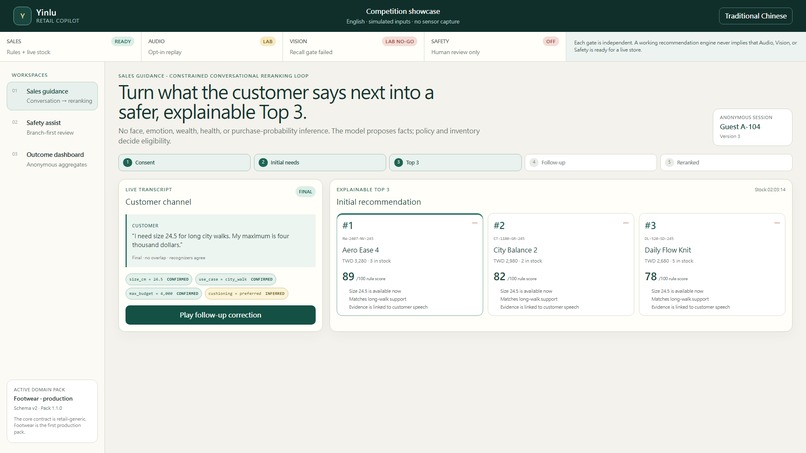
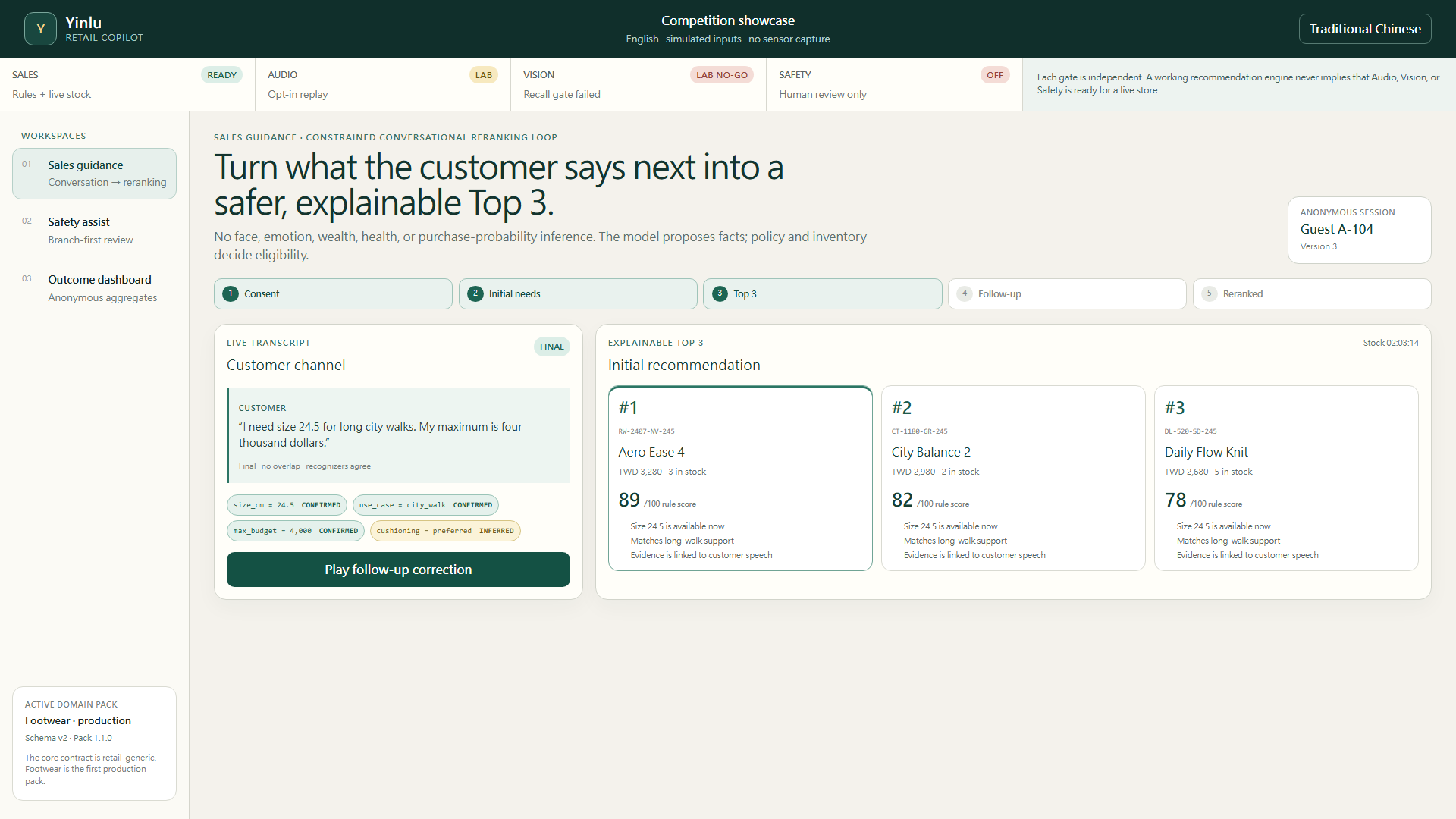
initial-top3
-
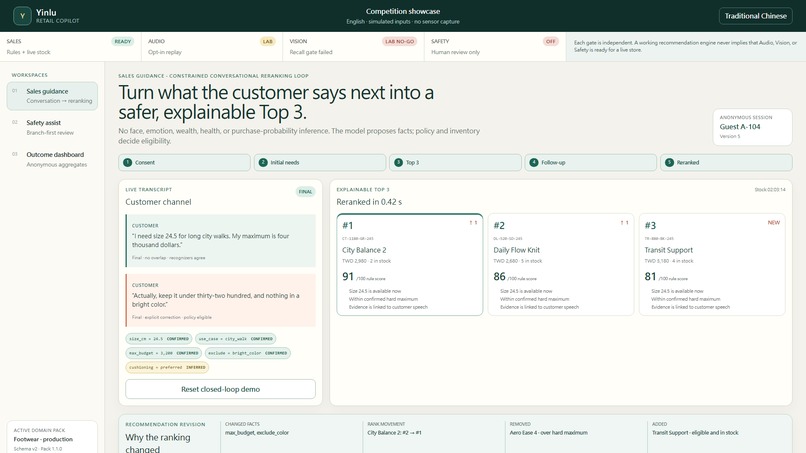
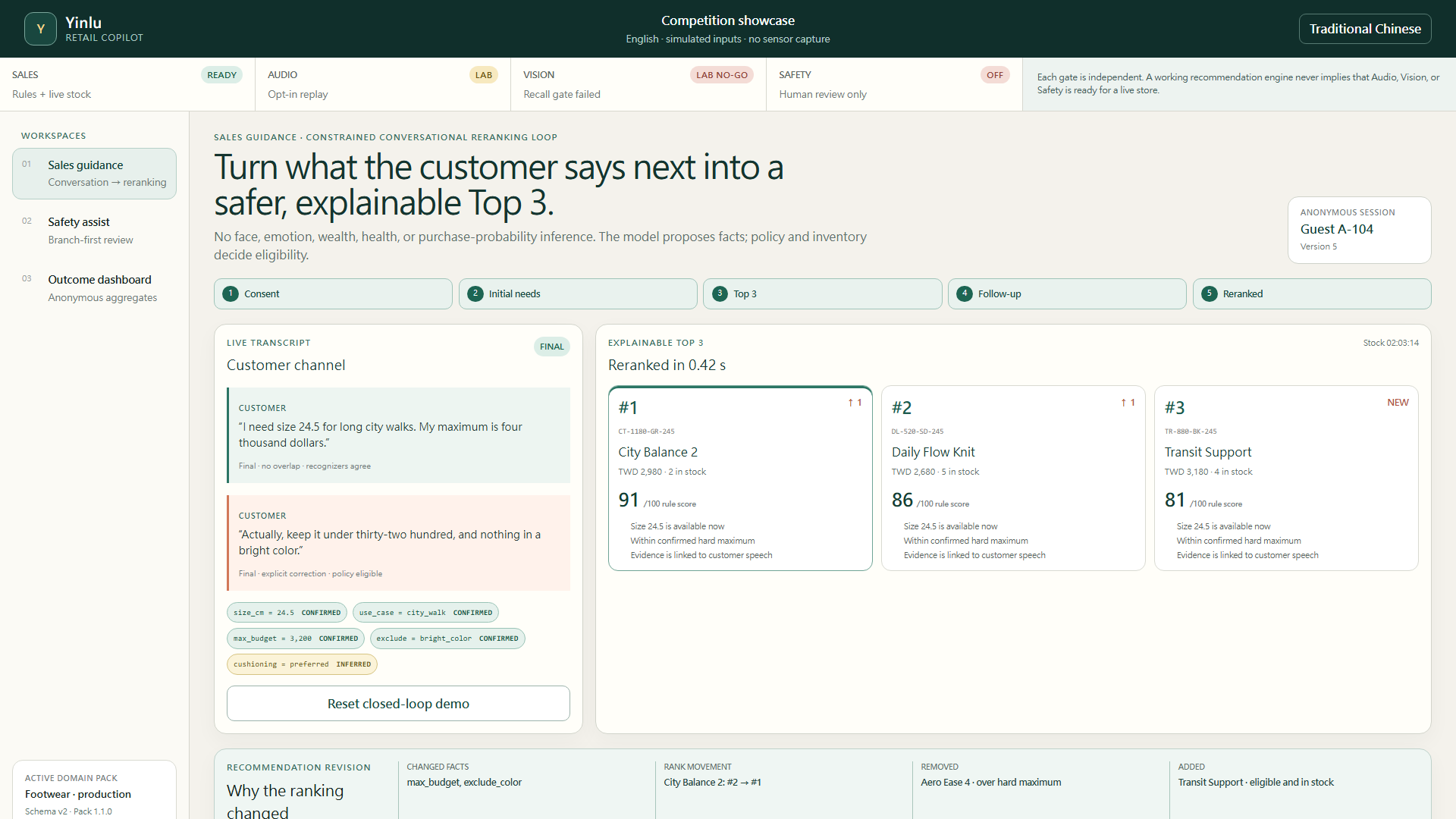
conversation-rerank
-
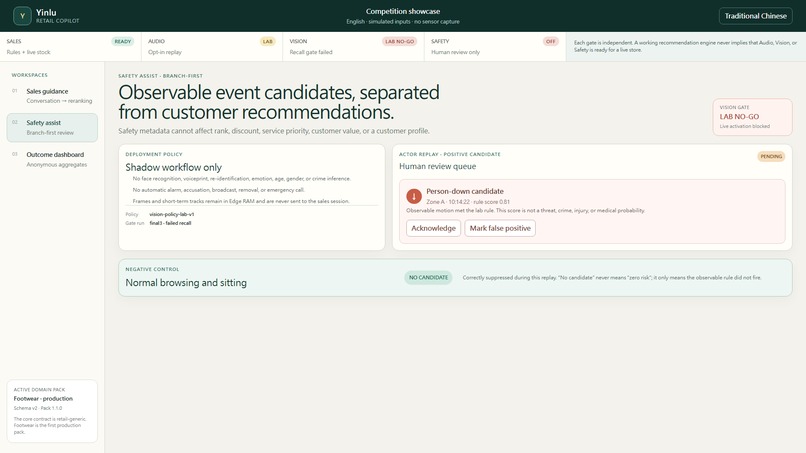
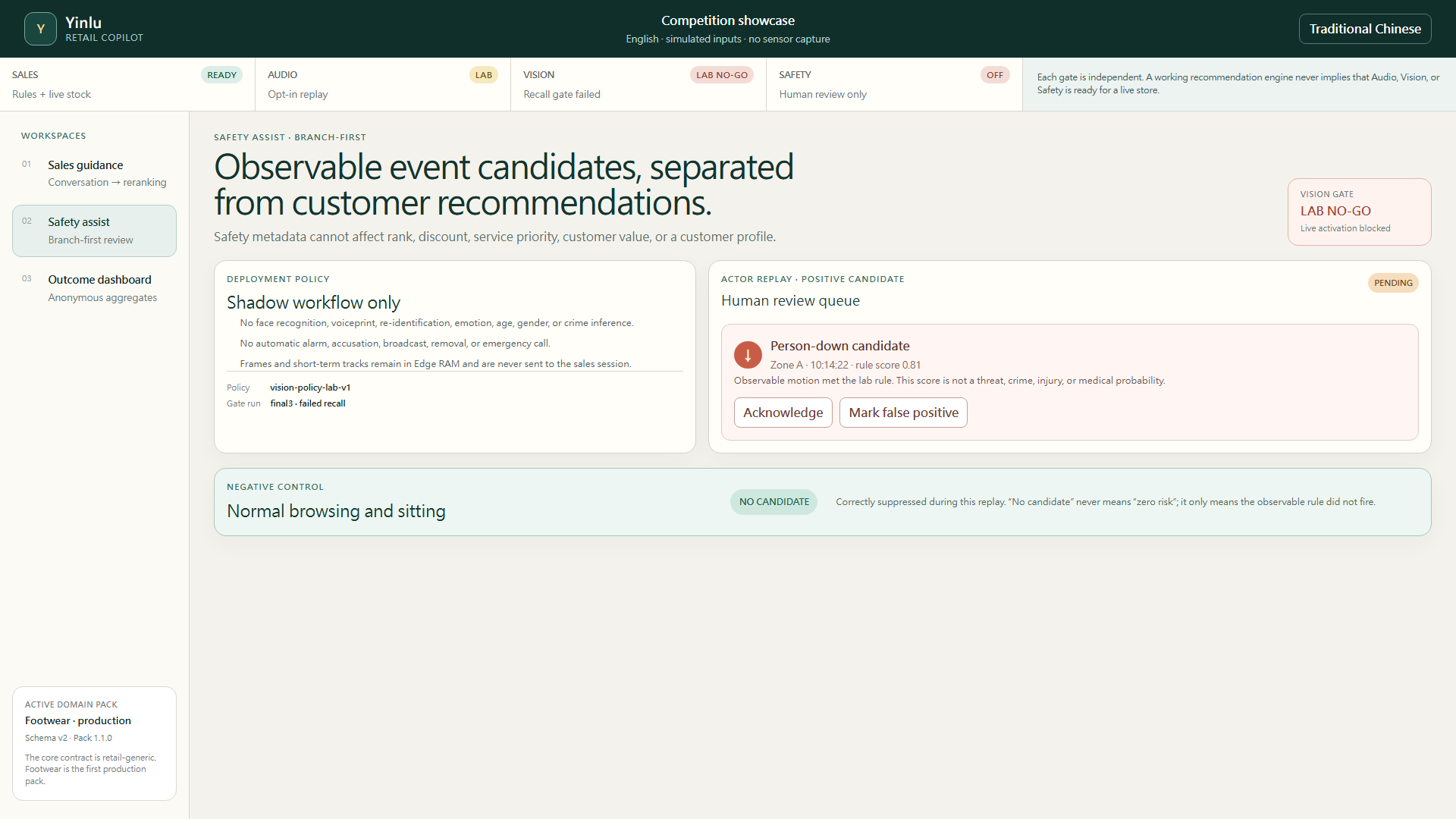
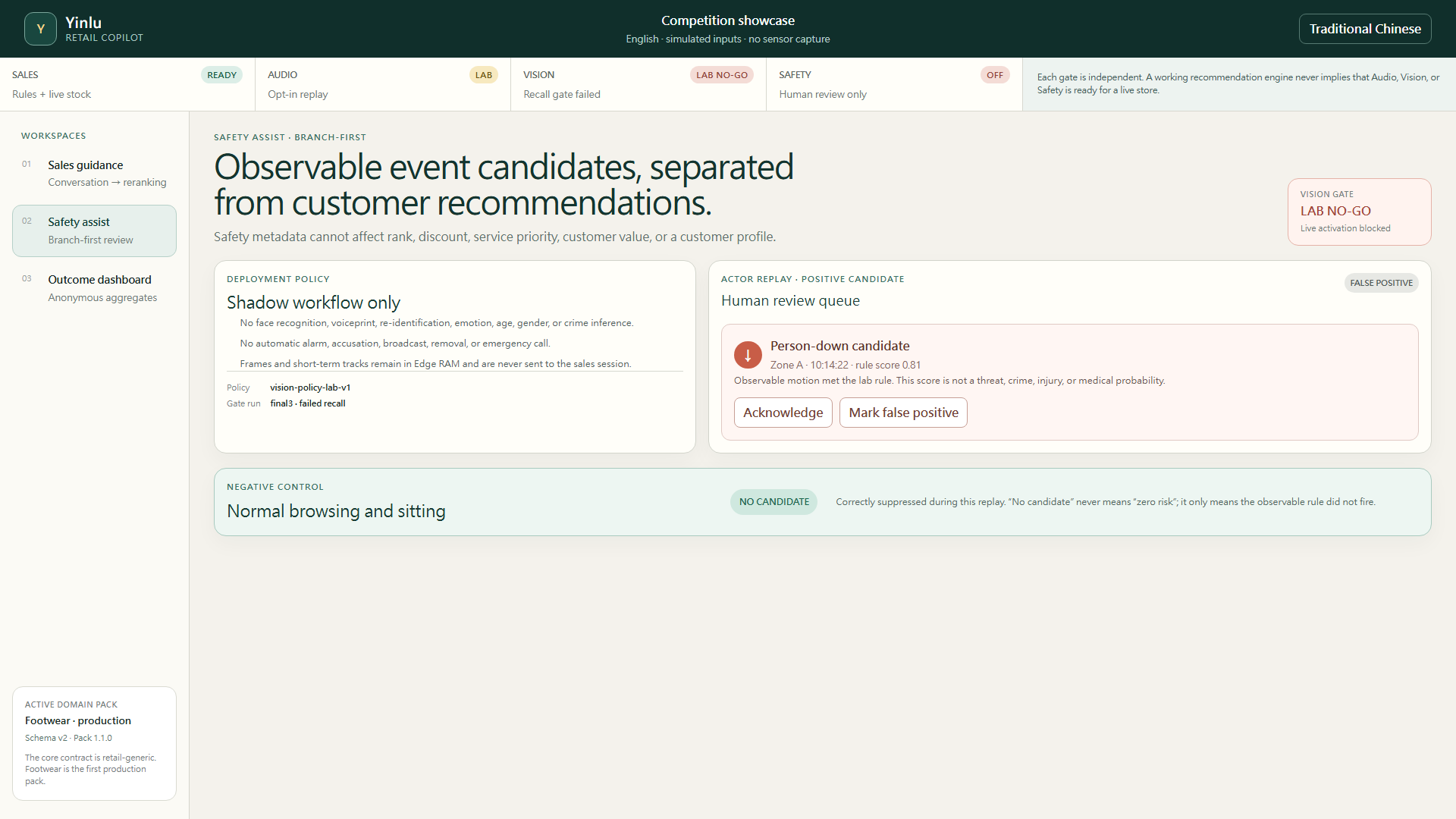
safety-positive-negative
-
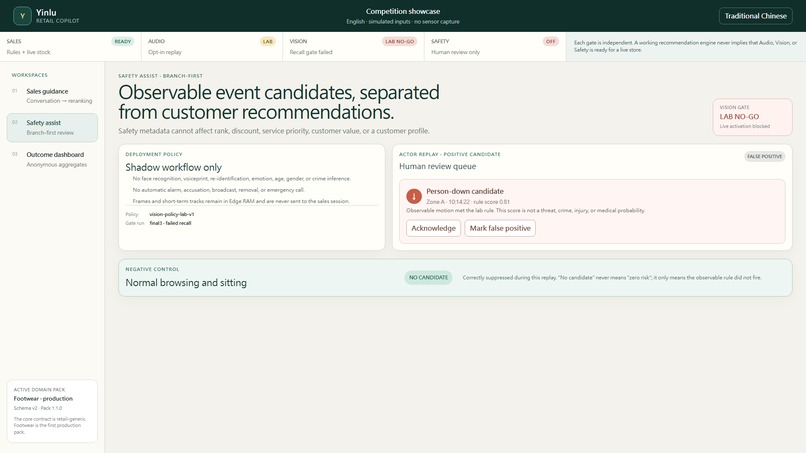
human-reviewed-false-positive
-
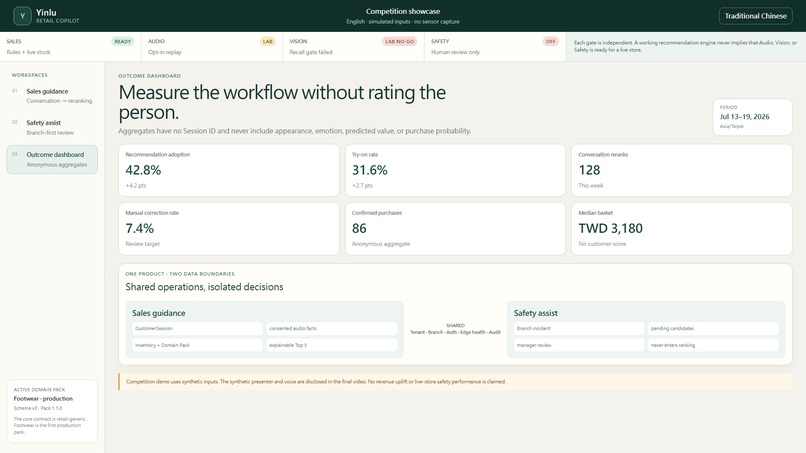
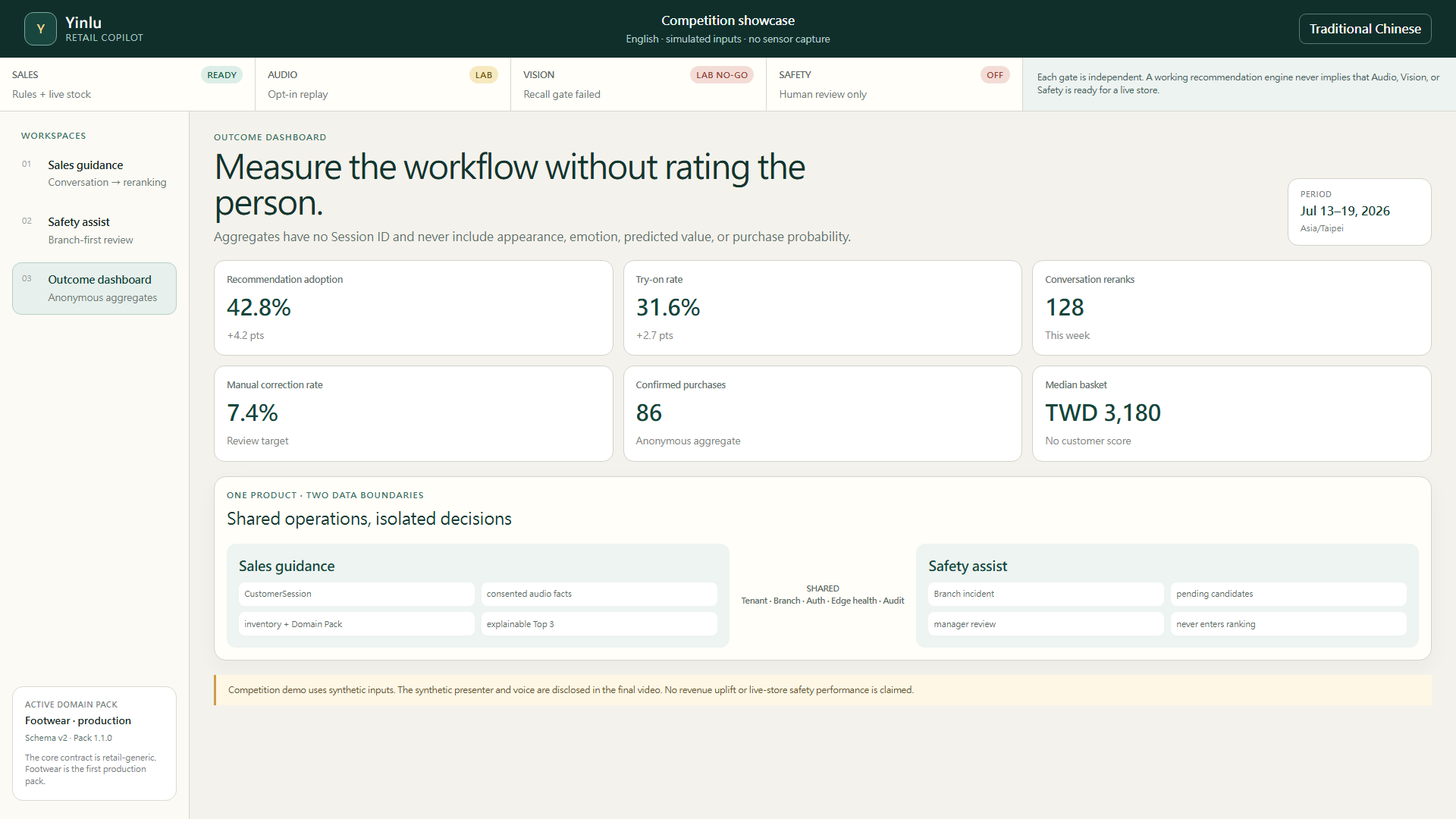
anonymous-analytics
Inspiration
Retail staff often need to understand a customer's needs quickly, recommend the right products, and avoid unsafe or overly personal assumptions. We wanted to build a sales copilot that helps associates make better recommendations while keeping privacy, consent, and human review at the center.
What it does
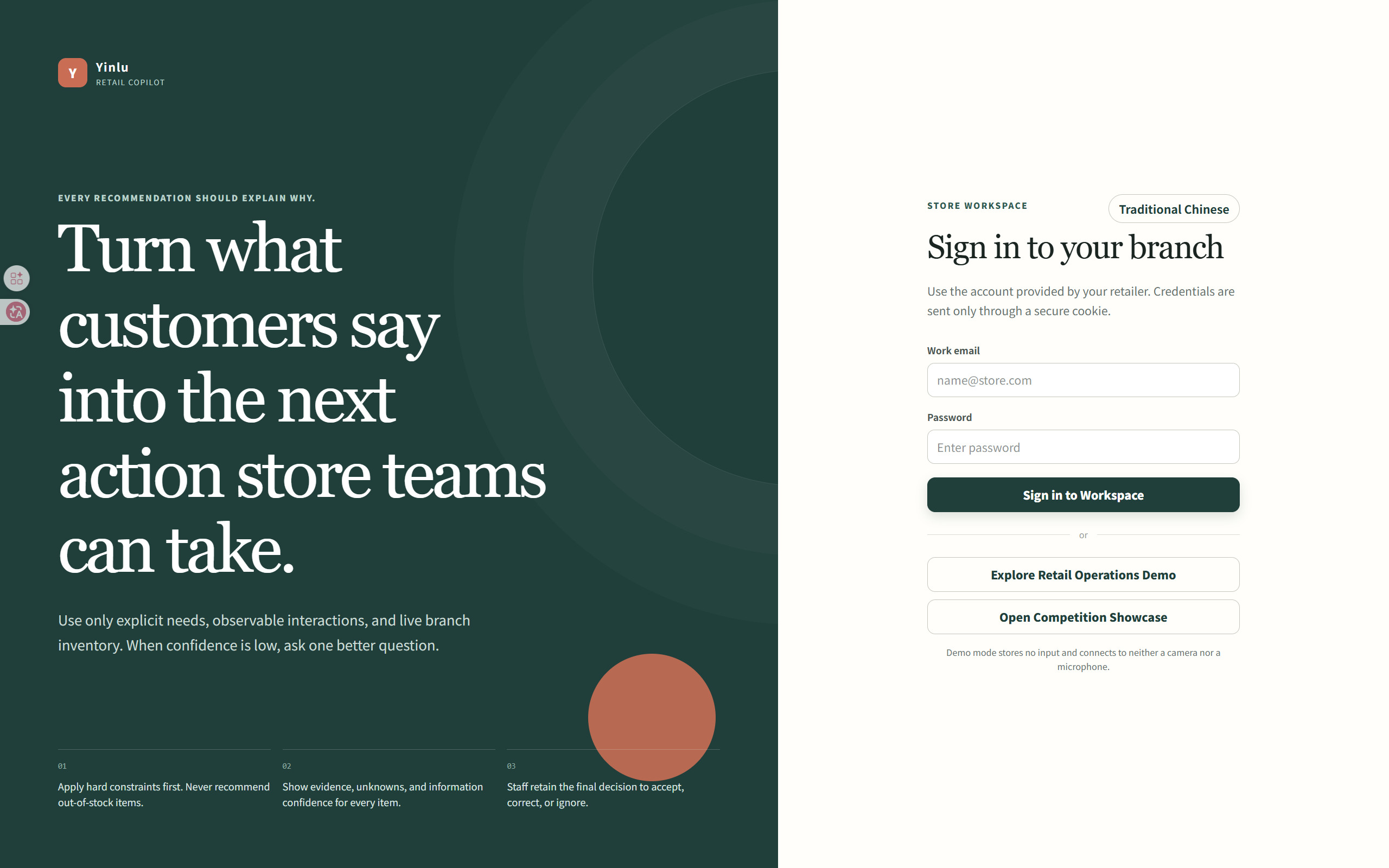
Yinlu Retail Copilot is an AI-powered retail sales assistant. It turns customer context into explainable product recommendations, shows why the ranking changed, and separates confirmed facts from inferred or uncertain signals.
The demo includes a bilingual retail workflow, top-3 product recommendations, conversation-based reranking, safety checks, consent-aware capture flows, and operational analytics for a store team.
How we built it
We built a full-stack system with a Next.js web app, FastAPI backend, PostgreSQL, Redis, Docker, and domain packs for retail catalogs and recommendation rules. The recommendation engine uses structured customer facts, product constraints, inventory context, and safety policies to produce traceable ranking decisions.
We also explored edge audio and vision workflows using Whisper/faster-whisper, Qwen, ONNX, and replay-based lab tooling, while keeping high-risk signals behind consent gates and human review.
Challenges we ran into
The hardest part was balancing useful AI assistance with privacy and safety. We did not want the system to silently infer sensitive attributes or make recommendations that staff could not explain. Another challenge was making the demo feel realistic while keeping the architecture testable, deterministic, and suitable for a hackathon submission.
Accomplishments that we're proud of
We are proud that this is more than a prompt demo. It includes a working web experience, API, recommendation engine, domain-pack system, consent model, safety workflow, tests, simulation tooling, screenshots, and a demo video.
We are also proud of the explainability layer: the copilot can show recommendation deltas and connect product suggestions back to customer facts and rule-based constraints.
What we learned
We learned that retail AI needs more than good model output. It needs clear data boundaries, human confirmation, auditability, and graceful failure modes. We also learned how valuable structured domain packs are for adapting an AI copilot across product categories without rewriting the whole system.
What's next for Yinlu Retail Copilot
Next, we would improve the live pilot workflow, add more retail domains, connect POS and inventory systems, strengthen evaluation metrics, and continue refining the consent-aware audio and vision pipelines before any real-world deployment.
Built With
- ai
- api
- caddy
- computer
- docker
- edge
- fastapi
- faster-whisper
- gpt-4o
- next.js
- onnx
- openai
- playwright
- postgresql
- privacy
- pytest
- python
- qwen
- react
- recommendation
- redis
- systems
- typescript
- vision
- whisper

Log in or sign up for Devpost to join the conversation.