-
-
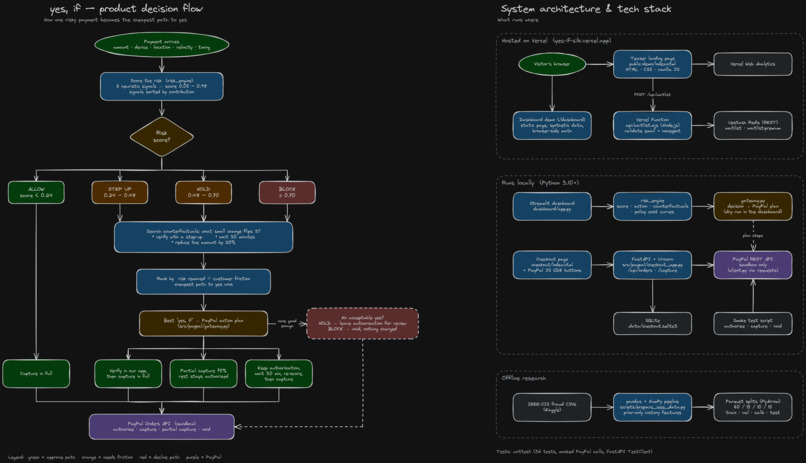
FLOWCHART AND TECHSTACK
Inspiration
I got this idea while building another project of my own where there is a same risk engine for malicious node modules and unapproved API's
What it does
When a payment looks risky, yes, if finds the smallest change that makes it acceptable, like a quick verification or capturing 75% now. It then carries that out through PayPal instead of simply declining.
How we built it
A Python risk engine scores payments and generates “yes, if…” options. A PayPal sandbox integration (Orders and Payments APIs), a FastAPI checkout and a Streamlit dashboard turn those decisions into real actions.
Challenges we ran into
Partial capture, delayed capture and void only work with authorize-first orders, so I redesigned the flow around them. There’s also no real outcome data for friction, so those trade-offs are still simulated.
Accomplishments that we're proud of
Every engine decision maps to a concrete, tested PayPal action, turning a hard “no” into a “yes, if…” a customer can act on.
What we learned
Detecting risk is only half the problem; deciding what to do about it is where customers are won or lost.
What's next for yes if counterfactual risk engine
A trained risk model, a policy that learns which friction works, and support for more payment processors.
