About the Project
Inspiration
Travel planning today is focused mostly on where to go, not when to go. Popular destinations often become overcrowded, uncomfortable, or unsafe during peak hours, extreme weather, or festival surges. The idea behind this project was to create a system that helps people make smarter travel decisions by predicting footfall levels using real-world context.
The goal was simple: turn everyday factors like temperature, time, season, and tourism patterns into meaningful insights that help travelers avoid congestion and plan better experiences.
What We Learned
While building this project, we explored how multiple small signals can combine to produce intelligent predictions. We learned how environmental data, human behavior patterns, and seasonal trends can be modeled into a scoring system.
We also gained experience in:
- Working with live weather APIs
- Designing rule-based prediction systems
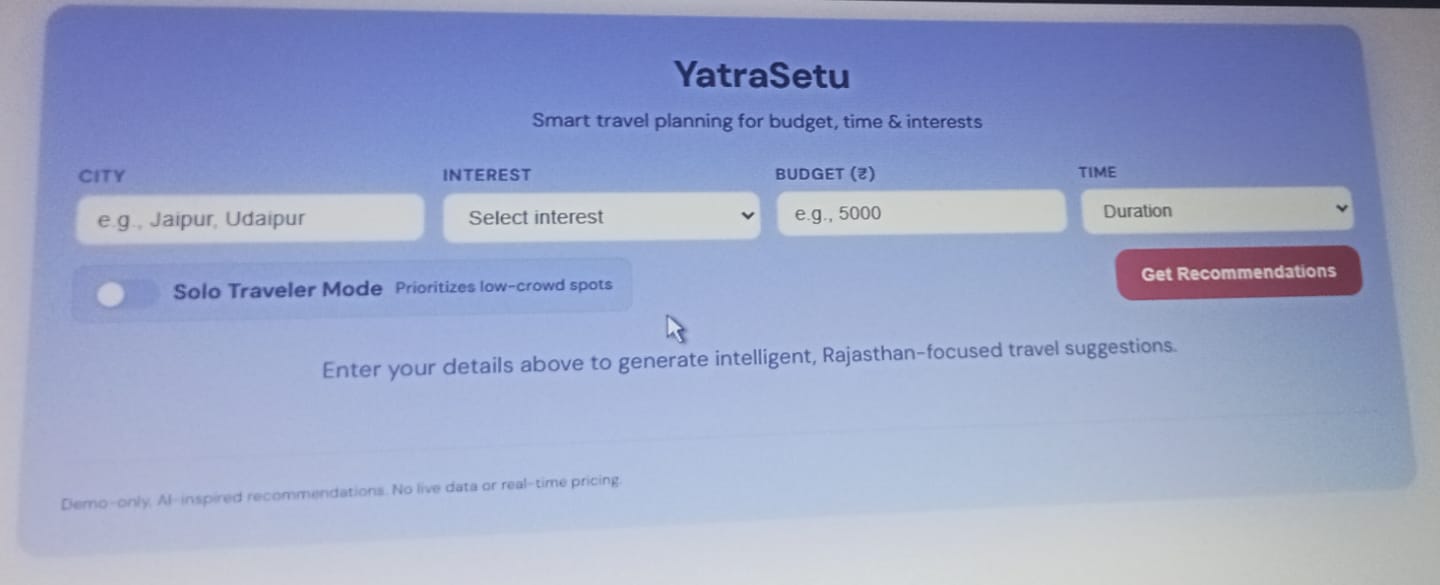
- Building a compact, user-friendly interface
- Structuring logic that still works even when real-time data fails
A key takeaway was that even simple models can produce valuable insights when different factors are layered thoughtfully.
How We Built It
The system predicts footfall using a weighted scoring approach. Each location starts with a base crowd level, which is then adjusted using time, day, weather, and seasonal conditions.
Conceptually, the prediction score can be expressed as:
[ \text{Footfall Score} = B \times T \times W \times S ]
Where:
- ( B ) = Base crowd level of the location
- ( T ) = Time and day factor
- ( W ) = Weather adjustment factor
- ( S ) = Seasonal or festival multiplier
For example:
- Rain or storms reduce outdoor visits
- Extreme heat lowers overall crowd movement
- Pleasant temperatures increase tourism activity
- Weekends increase expected footfall
- Festival months create surge patterns
We integrated the Open-Meteo API to fetch real-time weather data and applied fallback logic so predictions still work even if the API fails.
The interface was designed to be compact and informative, showing:
- Predicted crowd levels
- A numeric footfall score
- Weather insights
- Best visiting time
- Seasonal context
- Safety and location information
Challenges We Faced
One of the biggest challenges was balancing realism with simplicity. Since real footfall data isn’t publicly available for every location, we had to simulate behavior patterns using logical assumptions and multipliers.
Other challenges included:
- Making predictions meaningful without overcomplicating the model
- Ensuring the system works even without live API data
- Designing a UI that shows a lot of information without overwhelming the user
- Handling edge cases like extreme temperatures and seasonal tourism spikes
Another important challenge was keeping the experience fast and responsive while layering multiple prediction factors in real time.
What This Project Represents
This project is not just a travel recommendation tool. It’s a decision-support system that demonstrates how contextual intelligence can improve everyday planning. By combining environmental data, human behavior patterns, and seasonal trends, it helps travelers make more informed choices about when and where to go.
