-
-
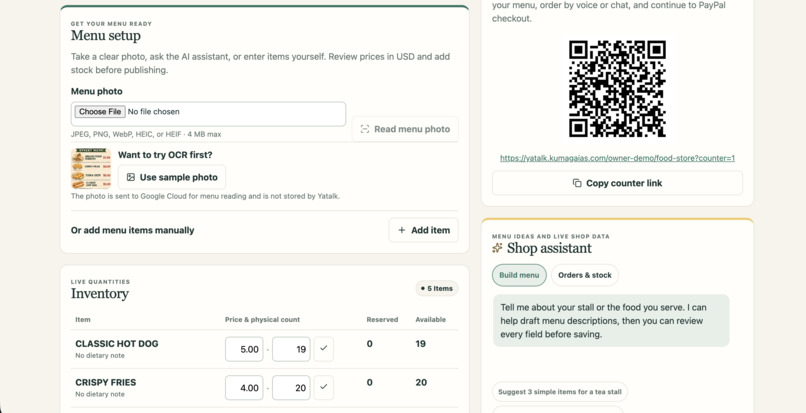
You can scan a menu using OCR to set up your inventory.
-
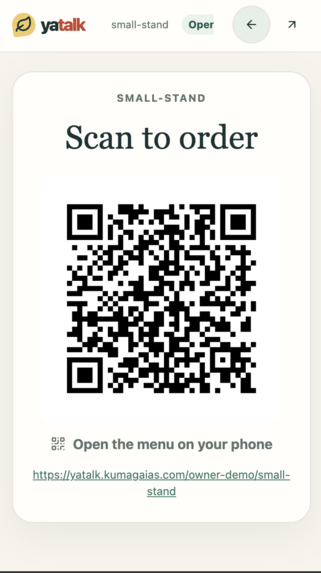
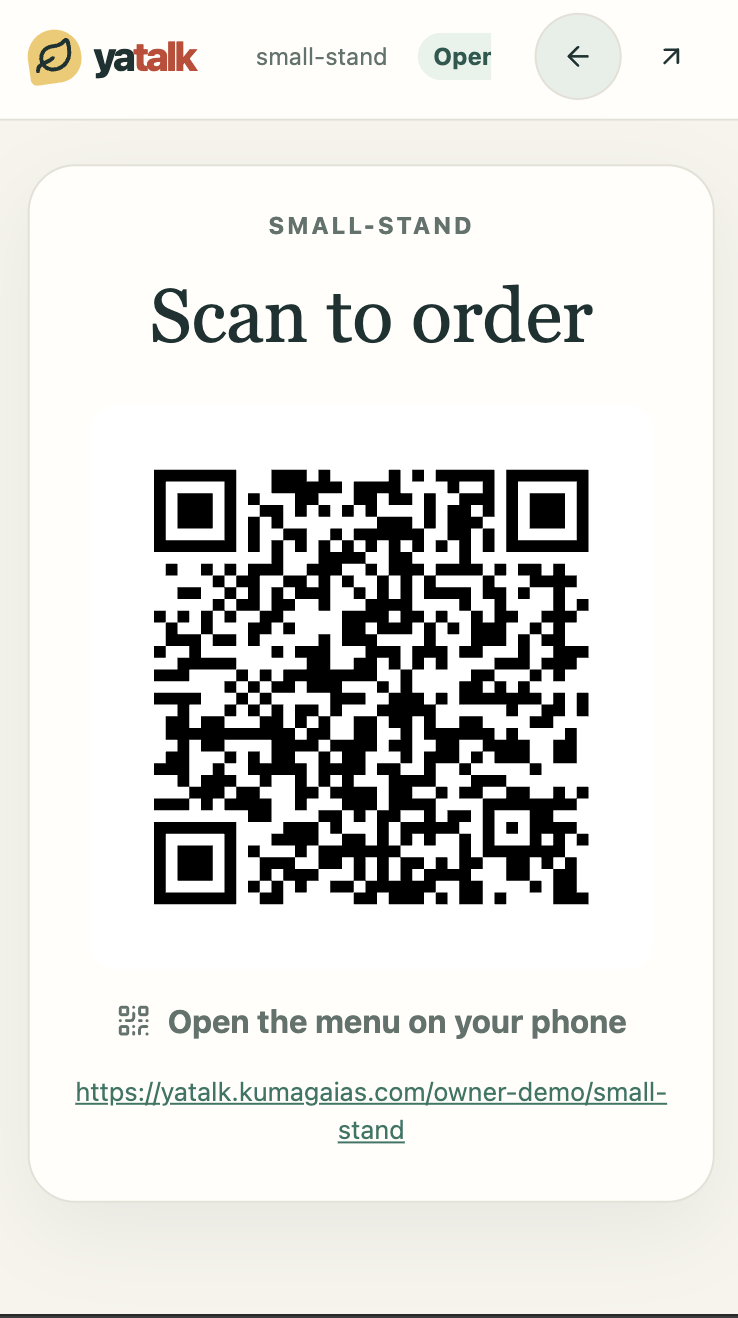
Customers can scan a QR code to order.
-
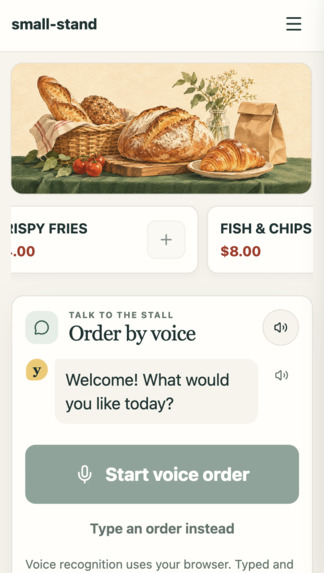
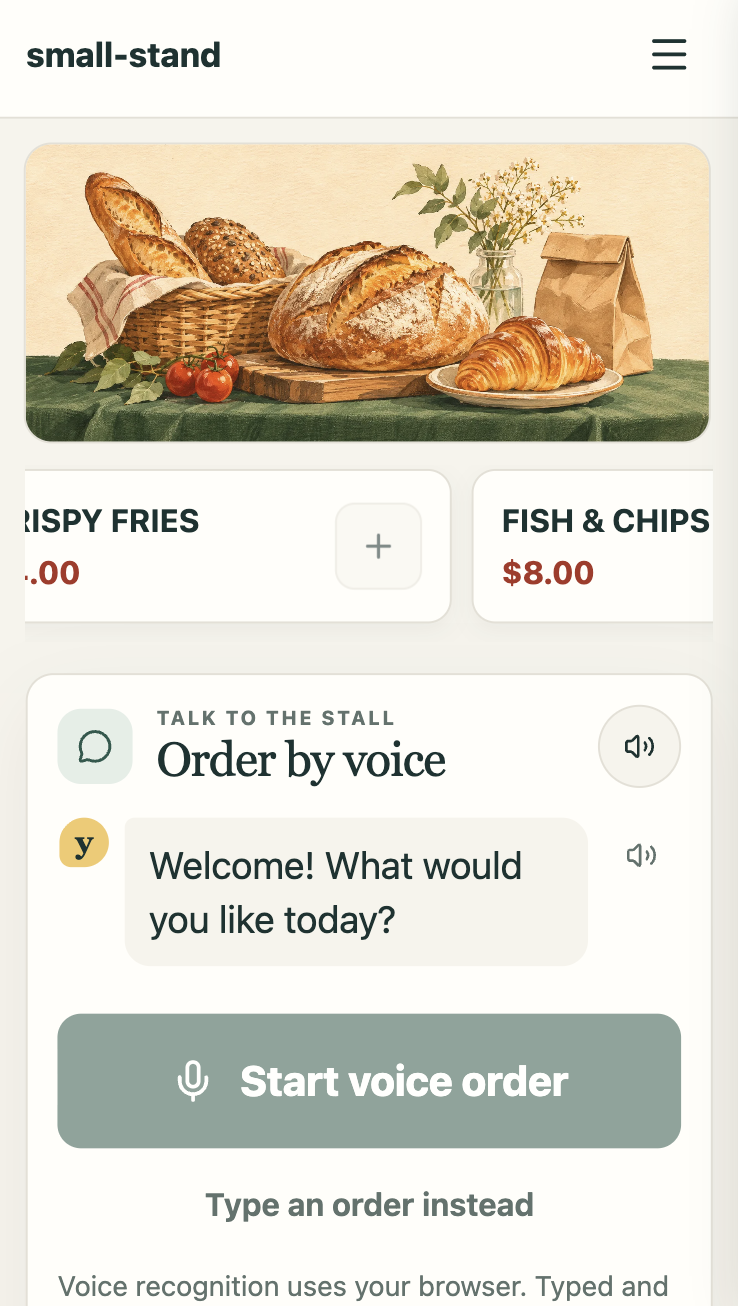
Customers can order with their voice.
Inspiration
Small market stalls often take orders one customer at a time from a printed or handwritten menu. We wanted to make it easier for a shop to put its menu online, while keeping the ordering process simple for both the owner and the customer.
What it does
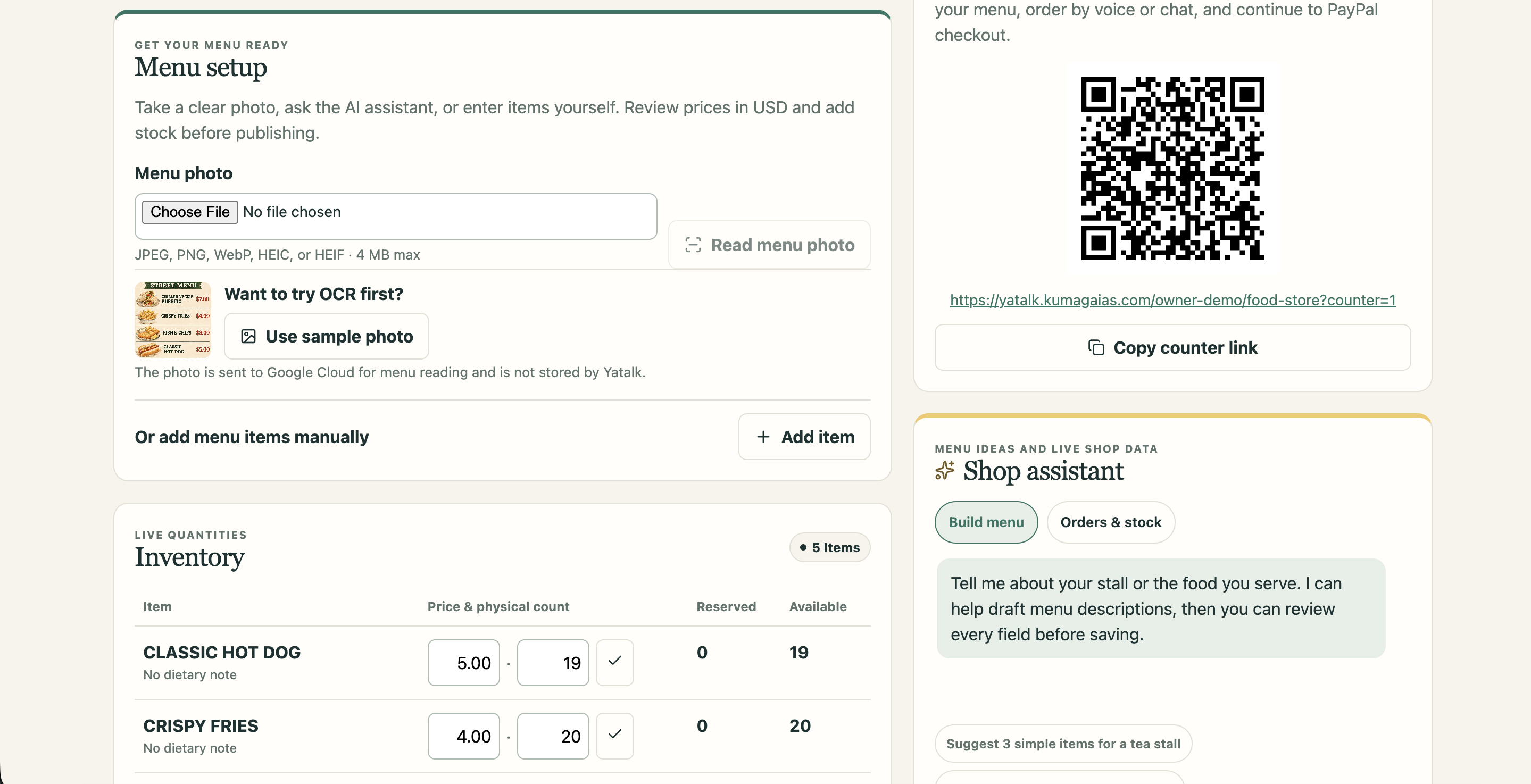
Yatalk turns a menu photo or a manually entered list into a QR-linked storefront. The owner reviews AI-suggested items, sets availability, and shares the shop’s QR code. Customers scan it, browse the menu, order by voice or chat, review their transcript and cart, and check out with PayPal Sandbox. Owners manage menus, stock, and incoming orders from a dashboard.
How we built it
We built a TypeScript web app with a React and Vite frontend and an Express API. Gemini through Vertex AI helps extract menu items from photos, transcribe short voice requests, interpret order text, and answer questions about shop operations. Yatalk stores data locally in SQLite during development and uses Firestore for the hosted preview. The server calculates prices and manages inventory and payment state; customers review their order before checkout.
Challenges we ran into
The main challenge was connecting flexible AI input to exact menu items, prices, and stock. We made photo results, transcripts, and cart changes reviewable, and keep price and inventory decisions on the server. We also had to account for payment retries, webhook replays, refunds, and concurrent stock reservations. The hosted preview still needs a buyer-approved PayPal Sandbox purchase to confirm the full checkout flow.
Accomplishments that we're proud of
We brought the owner and customer experiences together: shop setup, AI-assisted menu entry, QR storefronts, voice and chat ordering, Sandbox checkout, and an order dashboard. We also moved the hosted preview to Firestore and added automated coverage for inventory reservations, payment transitions, webhook replays, and refunds and restocking.
What we learned
AI is useful when it reduces repetitive work and gives people an editable starting point. Clear review steps and server-owned transaction rules help make the overall ordering experience dependable. We also learned that automated tests and a real Sandbox purchase each provide different kinds of confidence.
What's next for Yatalk
We’ll complete a hosted walkthrough with a fresh shop, menu photo review, QR ordering, and a buyer-approved Sandbox payment, then record a short demo. Longer term, we’d explore per-shop PayPal onboarding and settlement. Today, shops use one shared Sandbox seller, and live payments are outside the prototype’s scope.
