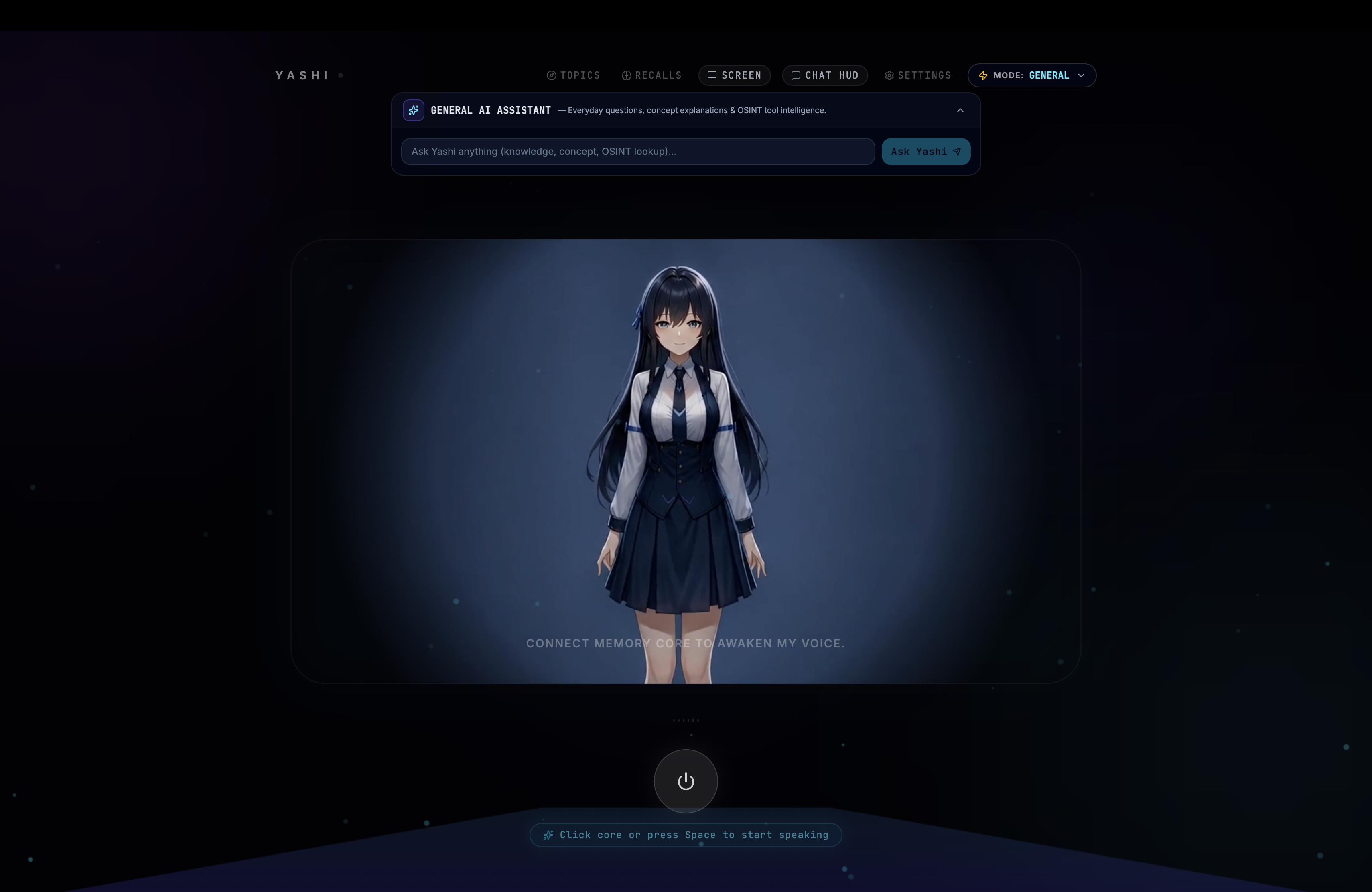
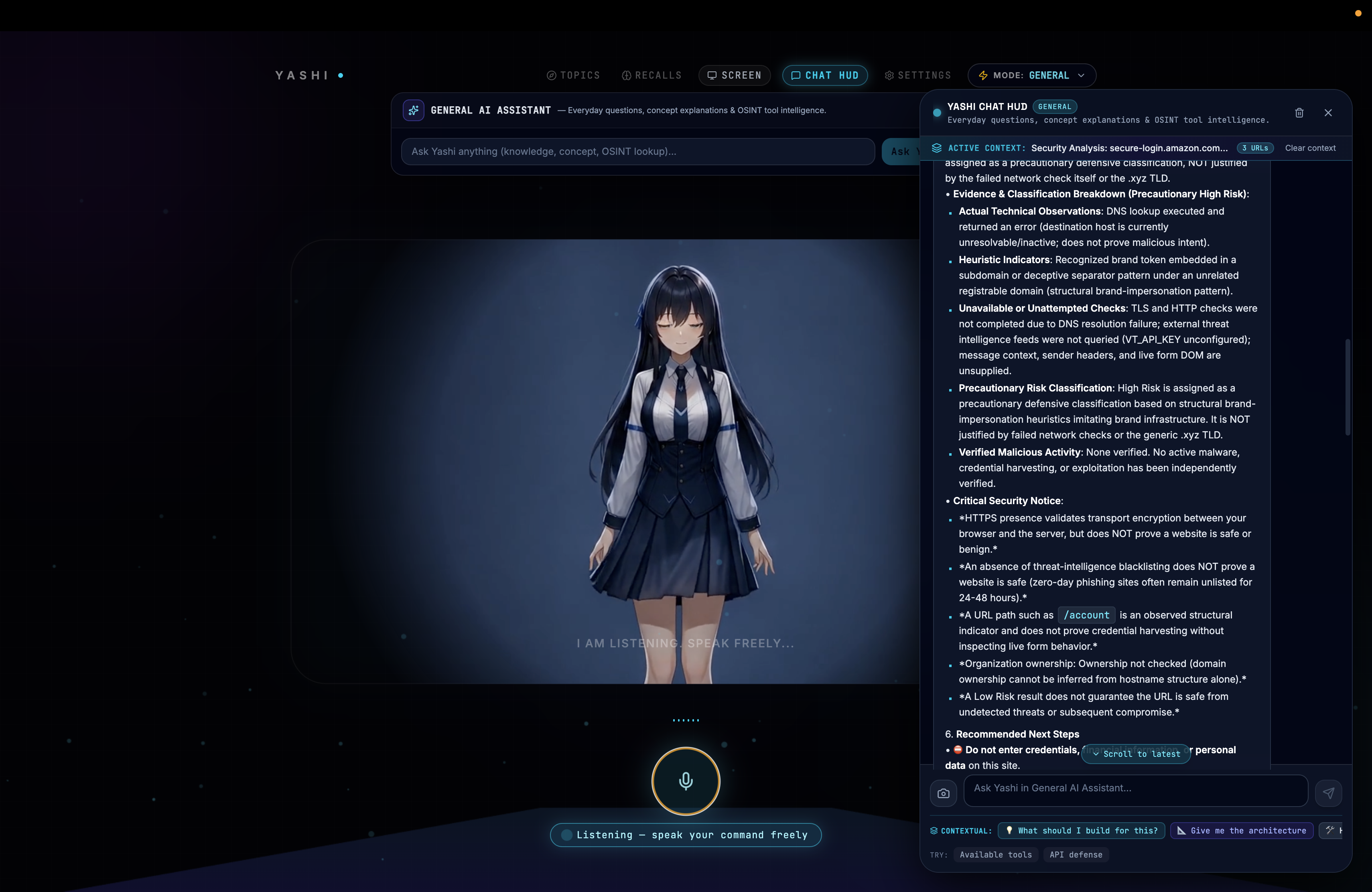
Yashi AI — Your AI-Powered Cybersecurity Copilot
💡 Inspiration
Cyber threats like phishing, fake login pages, and brand impersonation can be difficult to identify, especially for users who don’t have a cybersecurity background. I wanted to build an AI-powered assistant that makes cybersecurity analysis easier to understand and helps people make safer decisions online.
This idea led to Yashi AI, a cybersecurity copilot designed to analyze suspicious URLs, identify potential warning signs, and explain security risks in a clear, understandable way.
🚀 What It Does
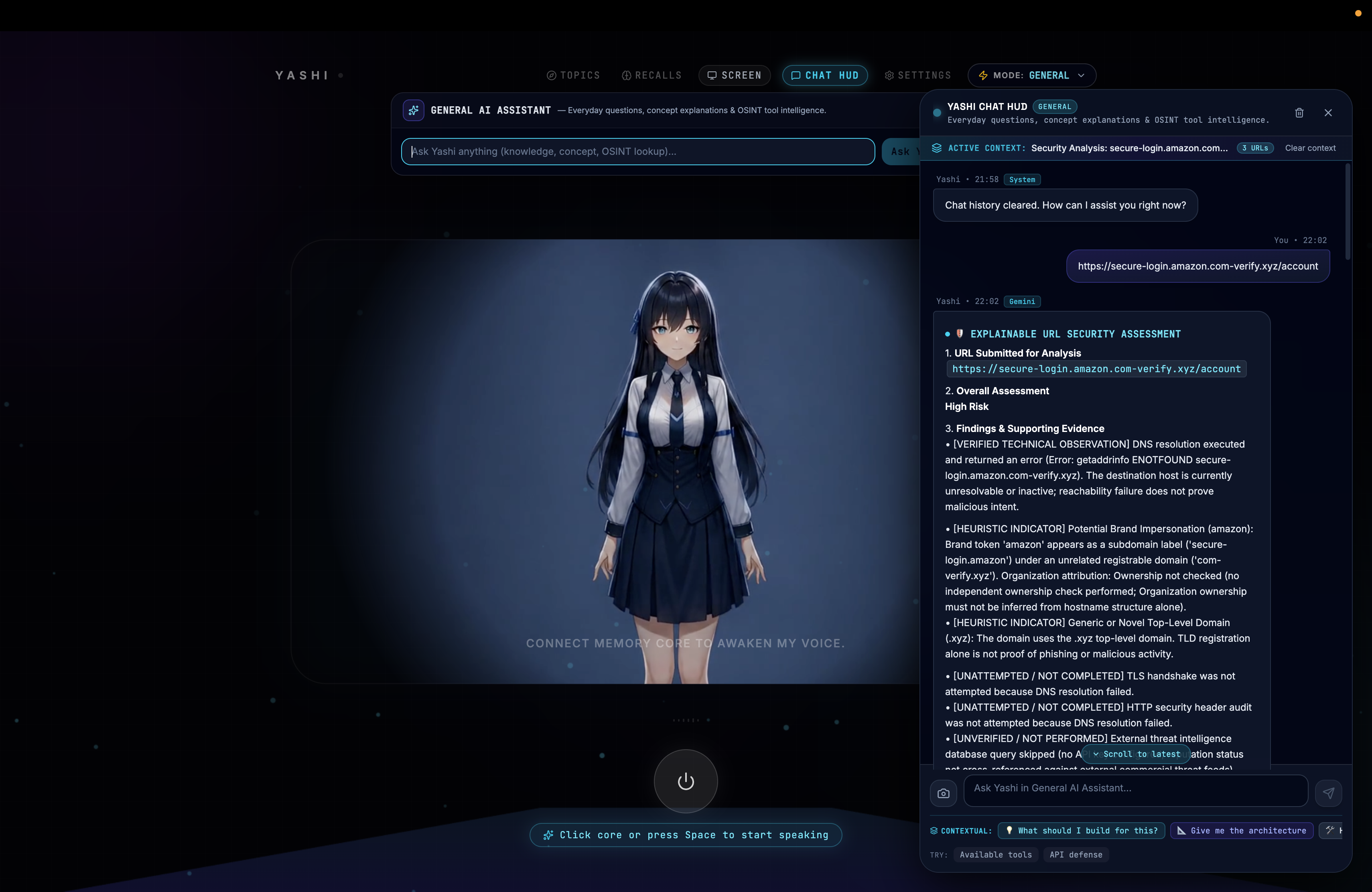
Yashi AI combines AI-assisted analysis with technical security checks to help users investigate potentially suspicious URLs.
Key capabilities include:
- URL Risk Analysis: Examines URLs for suspicious patterns and potential impersonation.
- Technical Security Checks: Gathers available information such as DNS resolution, HTTP responses, and TLS certificate details.
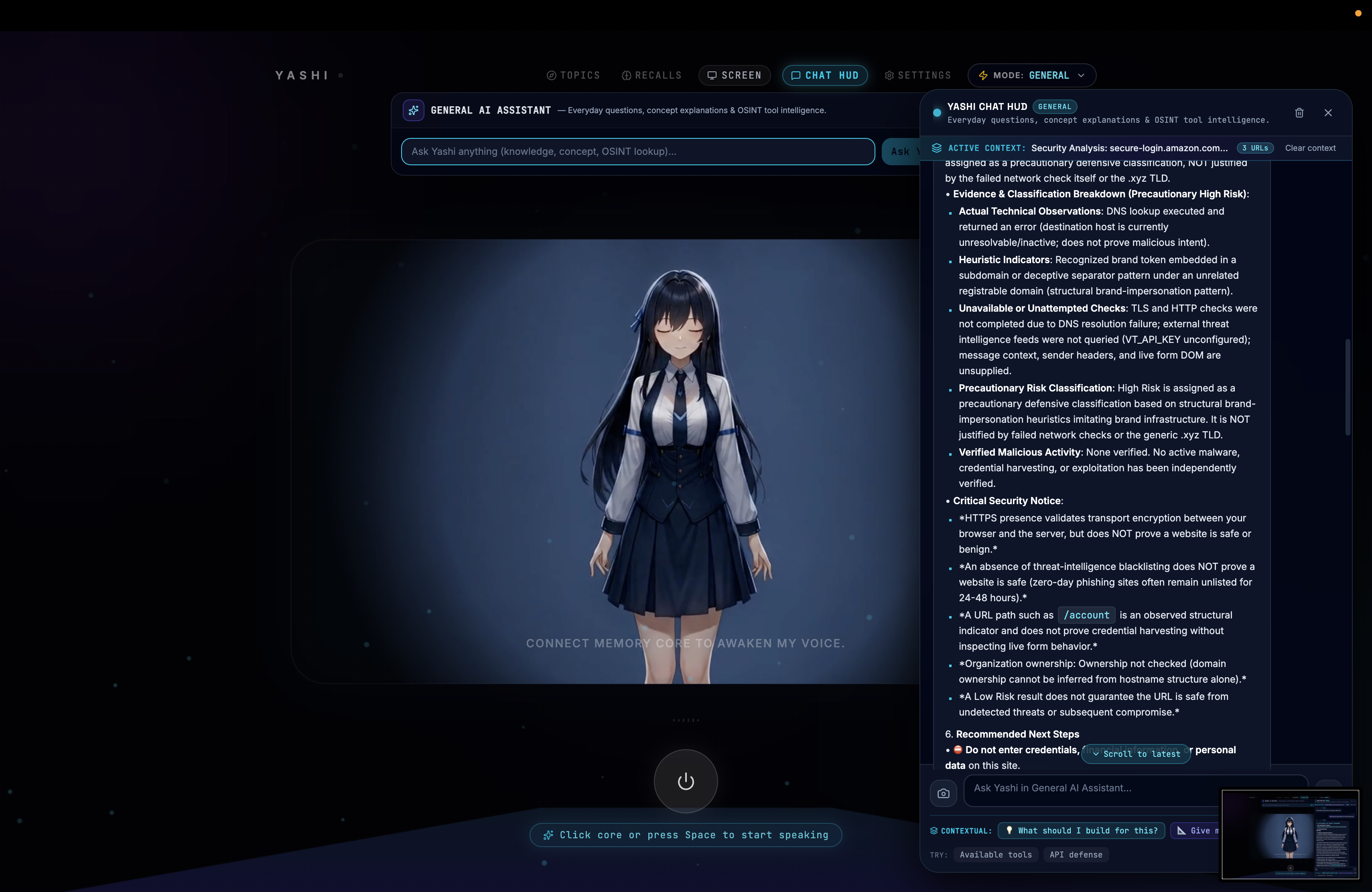
- Explainable Findings: Presents security observations and potential warning signs in an understandable format.
- AI-Assisted Investigation: Helps users interpret findings and understand what additional evidence may be needed.
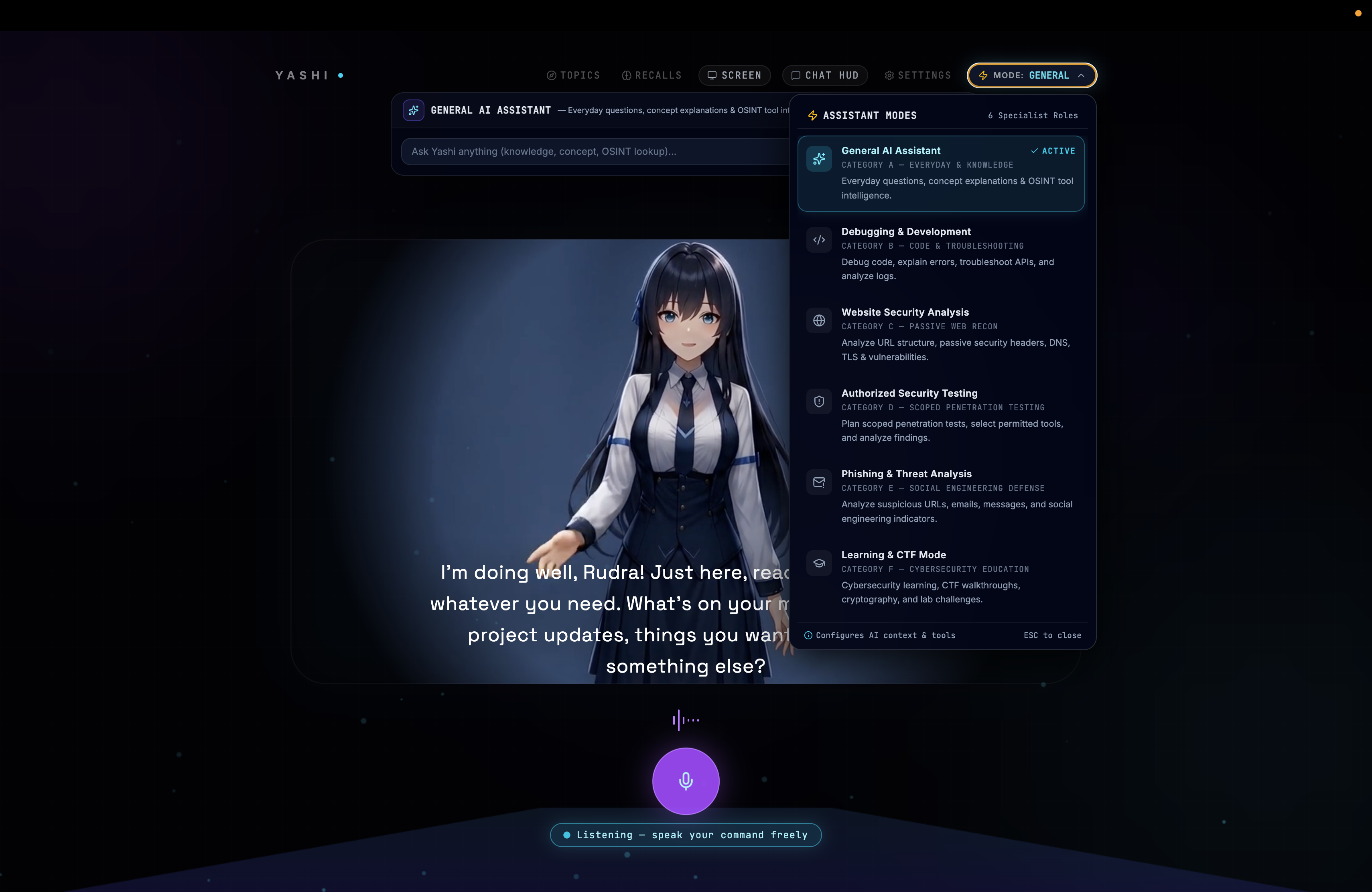
- Cybersecurity-Focused AI Assistant: Brings conversational AI and security investigation into one workflow.
Yashi AI is designed to distinguish observed technical facts from heuristic indicators instead of treating every suspicious pattern as proof of malicious activity.
🛠️ How I Built It
I built Yashi AI using a combination of modern desktop application technologies and AI-assisted development tools.
The project uses Electron, React, TypeScript, Vite, and Node.js for its application architecture, alongside Python-based desktop-agent components. Gemini-powered capabilities support the conversational AI experience. The project also includes an MCP server intended to expose supported capabilities to compatible clients.
Building the project involved connecting the user interface, AI functionality, security-analysis workflow, and supporting services into a single application.
🧩 Challenges I Faced
One of the main challenges was making security findings useful without overstating what the available evidence could prove. A suspicious URL pattern does not automatically mean a website is malicious, and a successful HTTP response does not establish that a website is safe.
I worked on presenting technical observations and heuristic indicators separately, improving the clarity of risk reports, and making the analysis easier to understand. Testing and debugging the application also helped me identify reliability and consistency issues.
📚 What I Learned
Developing Yashi AI helped me strengthen my understanding of cybersecurity analysis, application architecture, AI integration, MCP, and software testing. I also learned the importance of clear reporting, responsible security practices, and communicating technical risks to users who may not have a cybersecurity background.
🔮 What’s Next
My goal is to continue improving Yashi AI’s analysis accuracy, reliability, usability, and integrations with compatible AI tools. I want to make cybersecurity knowledge more accessible and help users investigate online threats with greater confidence.
Yashi AI — Think Before You Click. Understand the Risk. Stay Safer Online.

Log in or sign up for Devpost to join the conversation.