-
-

YapSlap app logo
-

-
-
-

-

-

-
-
-
-

-

-
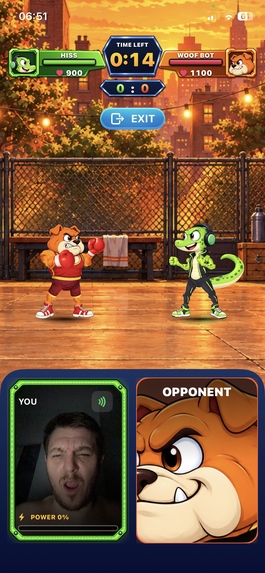









Your face. Your fighting style.
Open your mouth. Throw a punch. Smile. Land a kick. Try to keep a straight face while your friend fights back.
Yap Slap is a native iPhone fighting game that turns facial expressions and head movements into combat controls. Colorful characters, expressive animation, and real competitive mechanics turn a familiar device into an unexpected way to play.
The hook takes one sentence to explain: your face is the controller. The reason to return is learning how to use it.
Inspiration
Some of the best gaming moments happen outside the game: the look of concentration, the reaction to a comeback, the laughter after an unexpected win. We wanted to make those expressions part of the experience itself.
Yap Slap began with a simple question: what if the face you make while playing could actually control the fight? That idea became a game where the action on screen and the person behind it are equally entertaining.
Our goal is an experience that is easy to understand when you see it, funny to try with a friend, and rewarding to practice.
What it does
Yap Slap translates facial gestures into a fighter's movement, attacks, and combinations. A guided calibration helps players get started, and local bot battles provide a place to learn before facing another player.
- Fight with expressions. Open your mouth to punch, smile with closed lips to kick, and combine facial gestures with head movements for more advanced moves.
- Find your rhythm. Learn crouching attacks, aerial strikes, throws, and combos. Puff your cheeks to charge a special, then relax to release it.
- Start locally. Practice against an on-device bot without an online account or server connection.
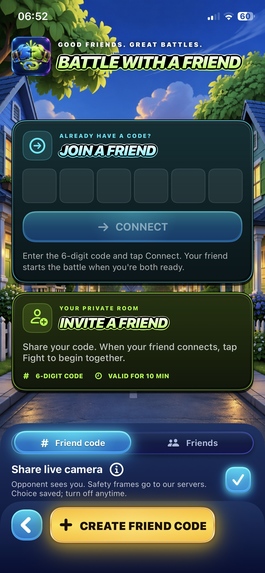
- Challenge a friend. Create a private duel using a room code, a link, or a Game Center invitation.
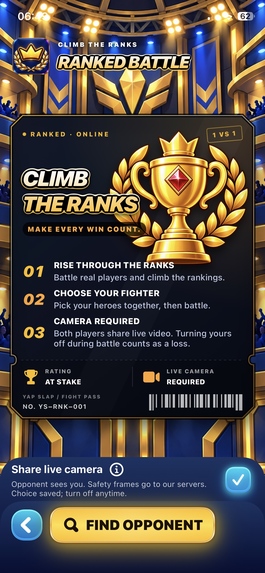
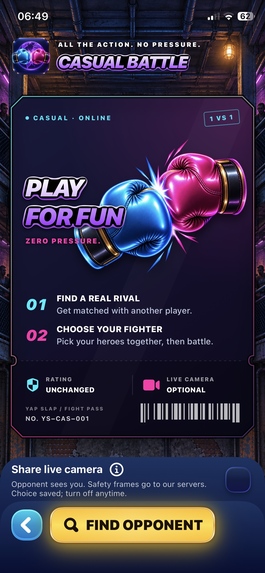
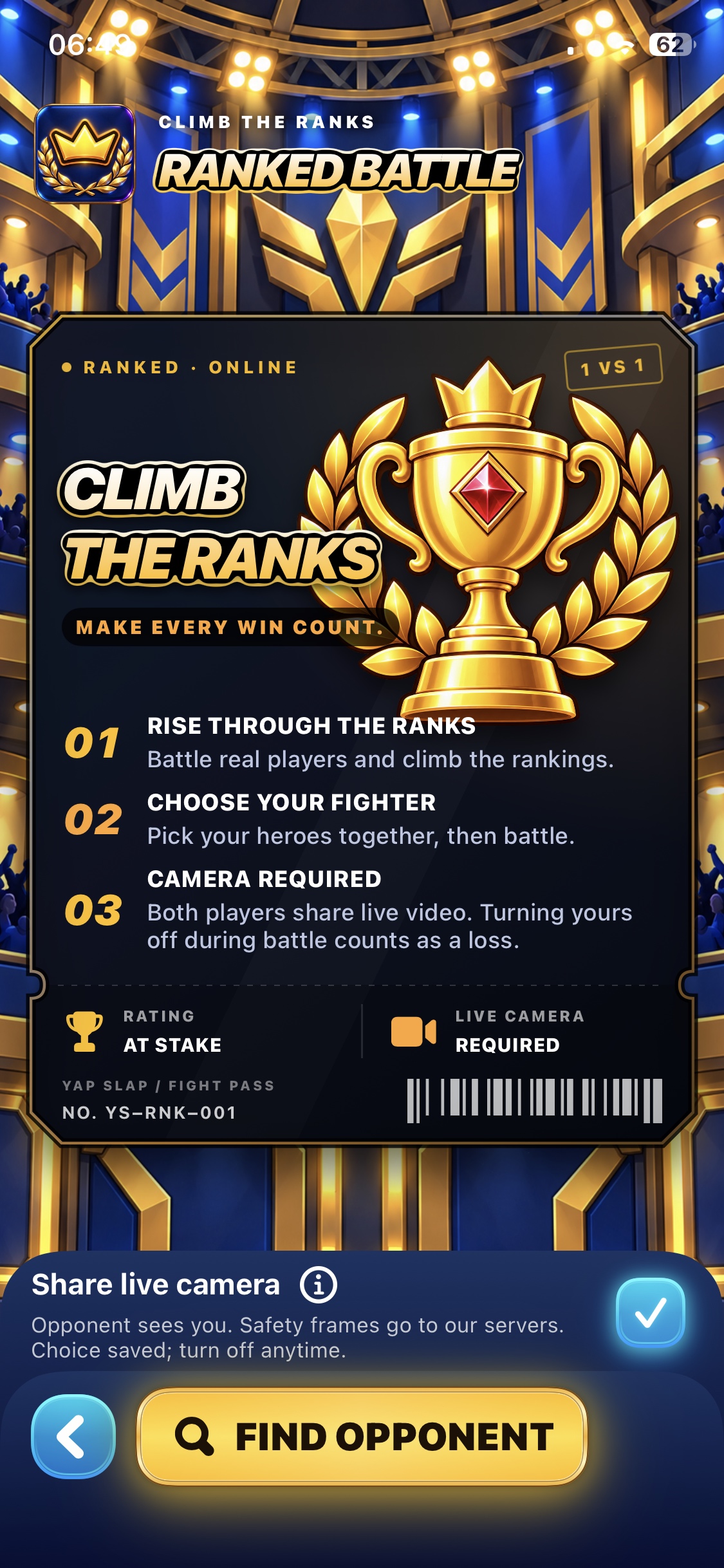
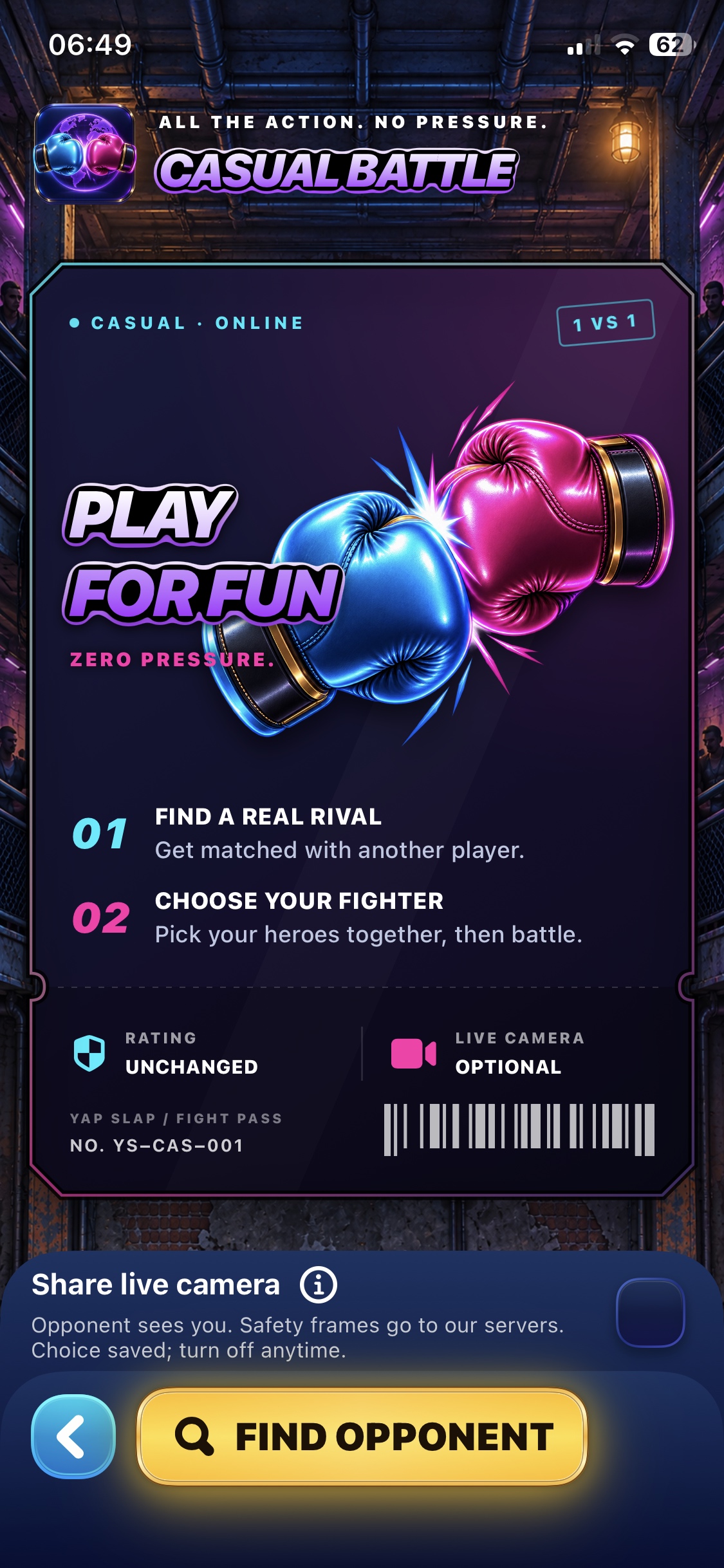
- Make it competitive. Move into casual matchmaking or seasonal ranked battles, with ratings and rewards that give each session a longer-term purpose.
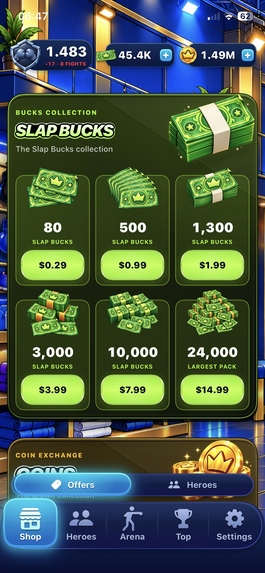
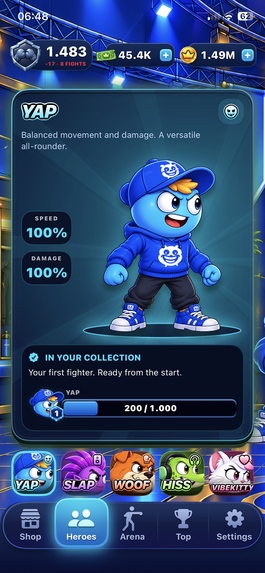
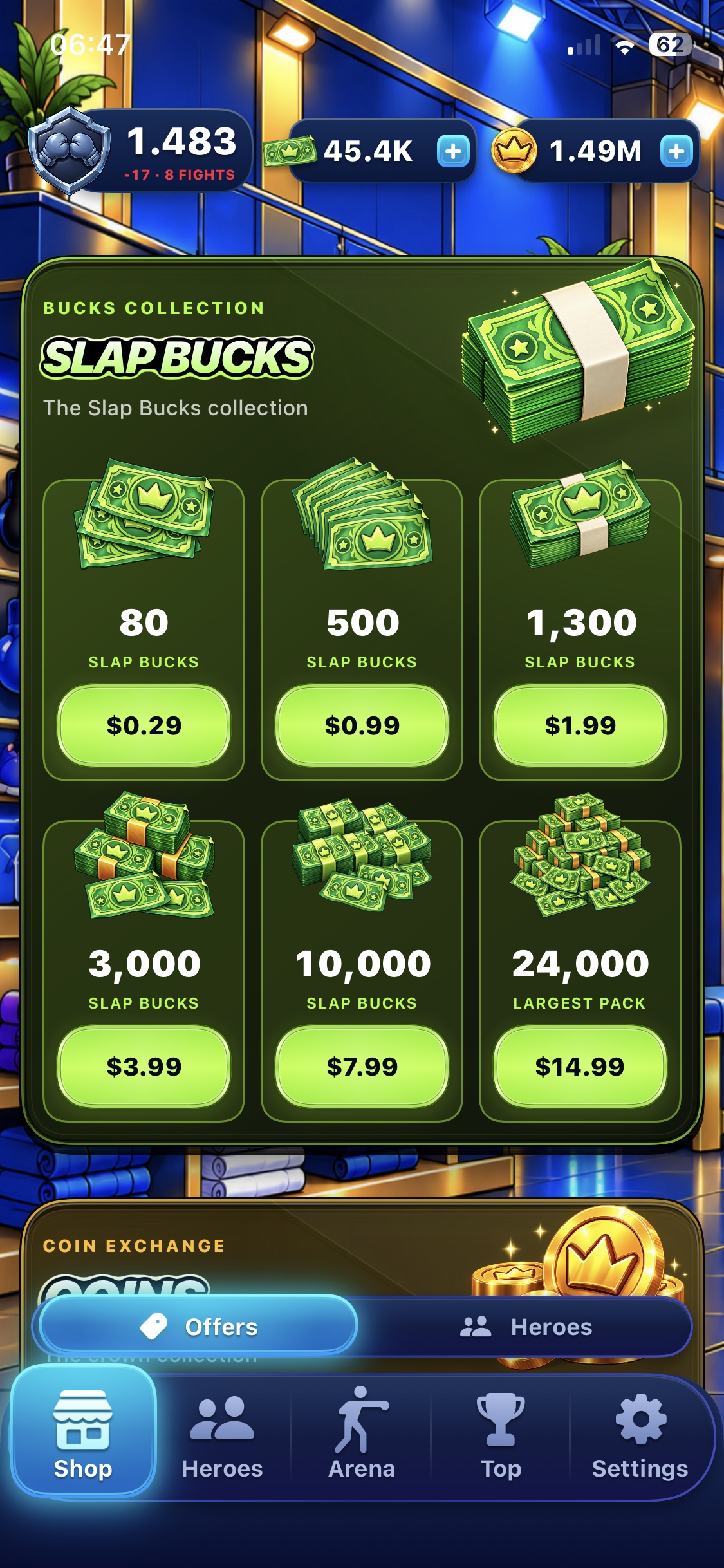
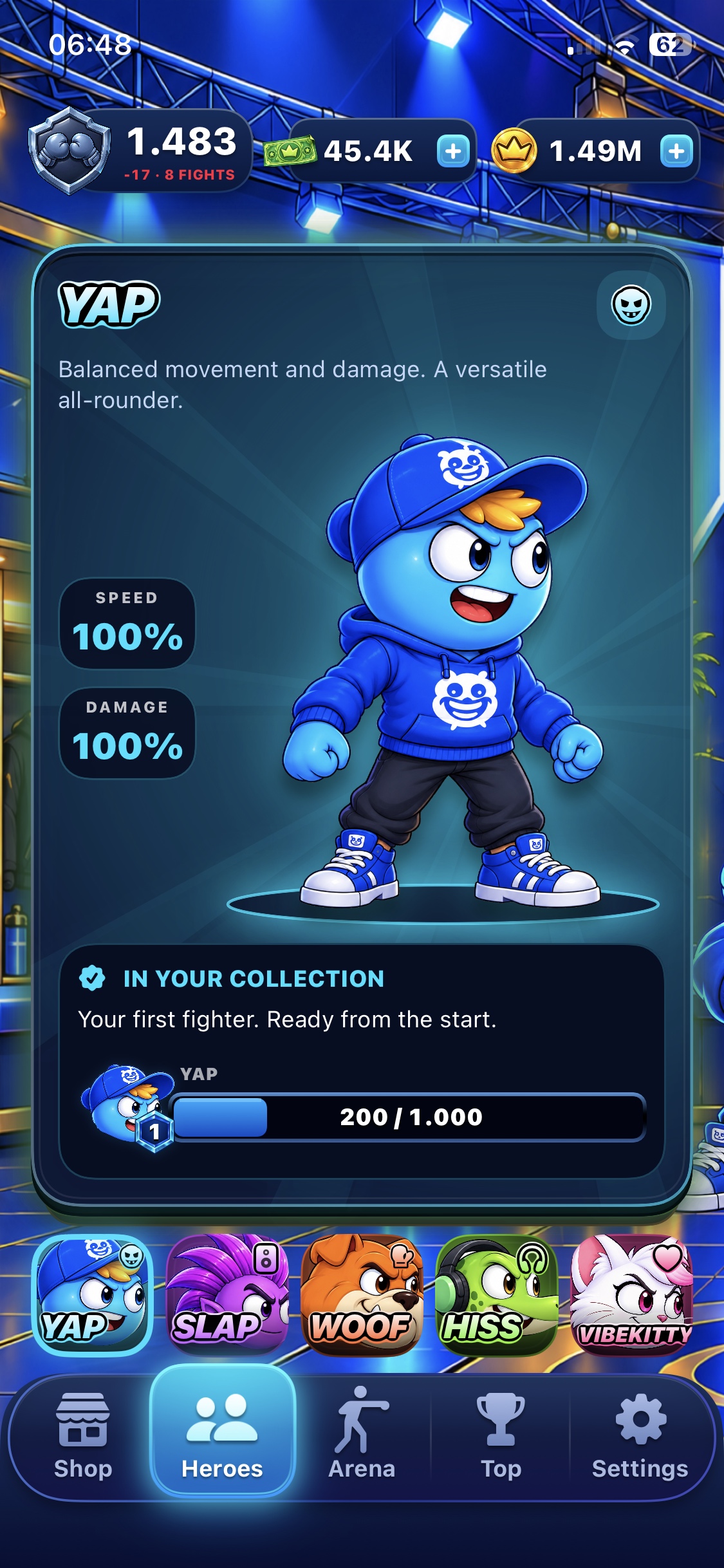
- Bring personality to the arena. Choose from a distinctive cast of fighters and build your collection through progression and the in-game store.
- Make the reactions part of the match. Video-enabled duels let opponents see the expressions behind the action. Local battle recording lets players save their own moments.
Camera-based controls and opponent video are separate parts of the experience. Video has its own consent and eligibility requirements, with hiding, reporting, and blocking controls. Voice chat is not part of the game.
Why it stands out
A memorable first impression. A player controlling a fighter with their face communicates the concept immediately. The product has a visual demonstration built into every match.
Comedy with a skill curve. The expressions create the laughter; timing, movement, and combinations create the challenge. The design gives players something to master after the initial surprise.
A natural social moment. Friend duels and visible reactions give people a reason to invite someone else into the experience. Each match can be both a competition and a performance.
A path beyond the first session. Training, a character collection, casual play, and seasonal competition connect the novelty of face control to a broader game progression.
How we built it
The iPhone app is built with Swift and SwiftUI, using ARKit for on-device face tracking. A gesture engine translates facial signals into game commands, with calibration and feedback to help players understand what the game recognizes.
Online battles run on a TypeScript and NestJS backend. A dedicated match worker simulates combat at 30 ticks per second, while WebSockets and Redis carry player inputs and synchronized state. The server determines online battle outcomes, keeping both players in the same authoritative match.
PostgreSQL and Prisma store persistent game data. Game Center supports player authentication and invitations. WebRTC provides opponent video, and StoreKit 2 supports in-app purchases with server-side transaction validation.
Raw face geometry stays on the device; online combat sends game commands. Opponent video is handled through a separate media path with its own controls.
Challenges we ran into
Turning expressions into intentional controls. A face is always moving. The challenge is distinguishing a deliberate attack from an ordinary expression, while keeping the response quick enough for a fighting game. Calibration, gesture thresholds, and clear move guidance are central to that experience.
Making a funny idea worth practicing. Face control creates an immediate reaction, but a game needs depth. We built movement, defensive options, and combinations around the input system so that players can improve rather than simply repeat a trick.
Keeping two players in one fight. Real-time combat needs consistent rules across devices and resilience to connection interruptions. Authoritative simulation and match recovery became essential parts of the architecture.
Treating video as a product responsibility. Showing real people introduces different requirements from showing animated fighters. Consent, eligibility, protective controls, and reporting needed to be part of the design from the beginning.
Accomplishments that we're proud of
We have brought the core idea into a playable native iPhone experience, with a distinctive visual identity and a path from learning the controls to challenging another player.
The project goes beyond a face-tracking demonstration: it includes a combat system, private duels, matchmaking, progression, a store, and the backend needed to support them. We are especially proud of making facial expressions serve both as meaningful game inputs and as the source of the game's personality.
What we learned
An unusual control method only works when players understand the connection between their action and the result. Clear feedback matters as much as recognition accuracy.
We also learned that comedy and competition can strengthen each other. The same expression that makes a spectator laugh can be a deliberate move for the player. The goal is to preserve that humor while giving practice a real payoff.
What's next for Yap Slap
Our immediate focus is completing release validation on physical iPhones and preparing the App Store launch. That includes the full regression pass, two-device combat and video acceptance, and final purchase and onboarding checks.
After launch, we want to refine the experience through player feedback: clearer training, better combat balance, and more reasons to challenge a friend again.
Yap Slap turns the face you make while gaming into the way you play.
Built With
- arkit
- gamekit
- ios
- nestjs
- postgresql
- prisma
- redis
- storekit
- swift
- swiftui
- typescript
- webrtc

Log in or sign up for Devpost to join the conversation.