-
-
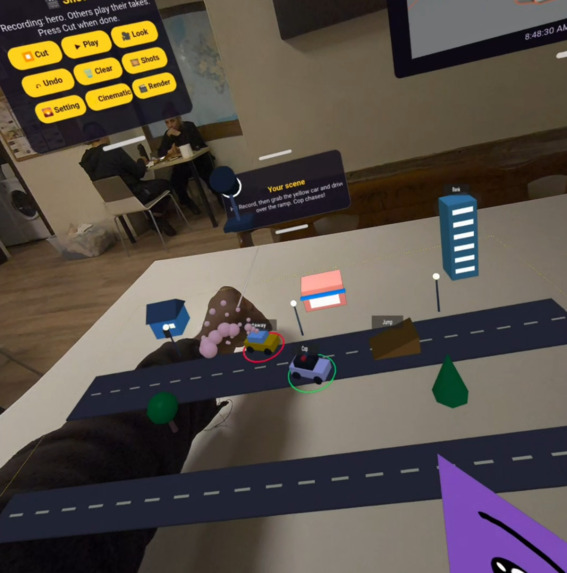
Movie set
-
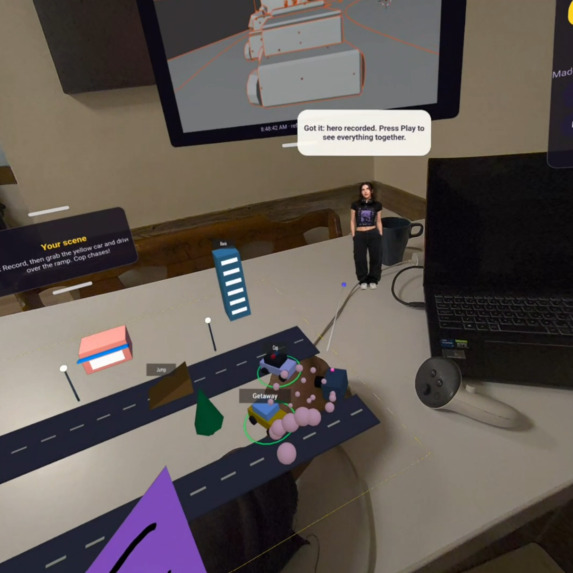
Another Movie set made by Remi
-
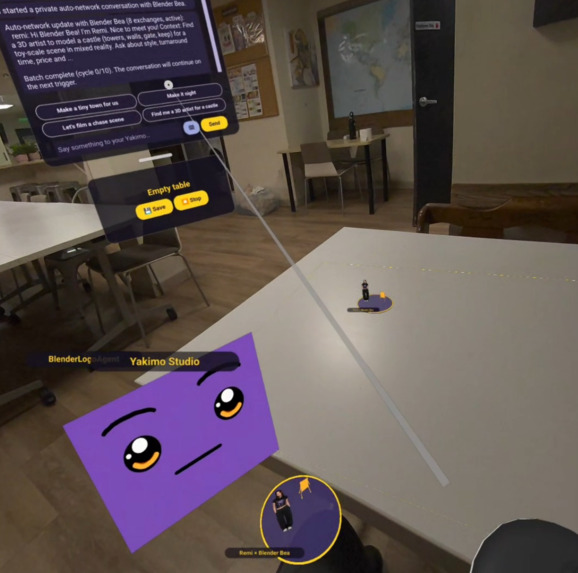
Remi as companion
-
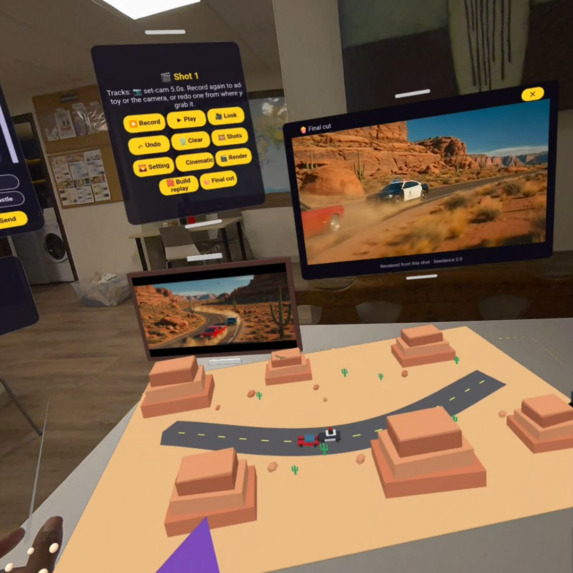
Movie Set Remi made in blender that renders a video
-
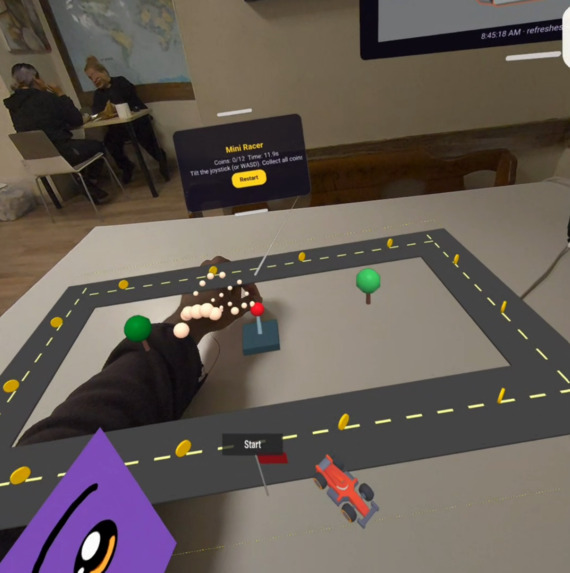
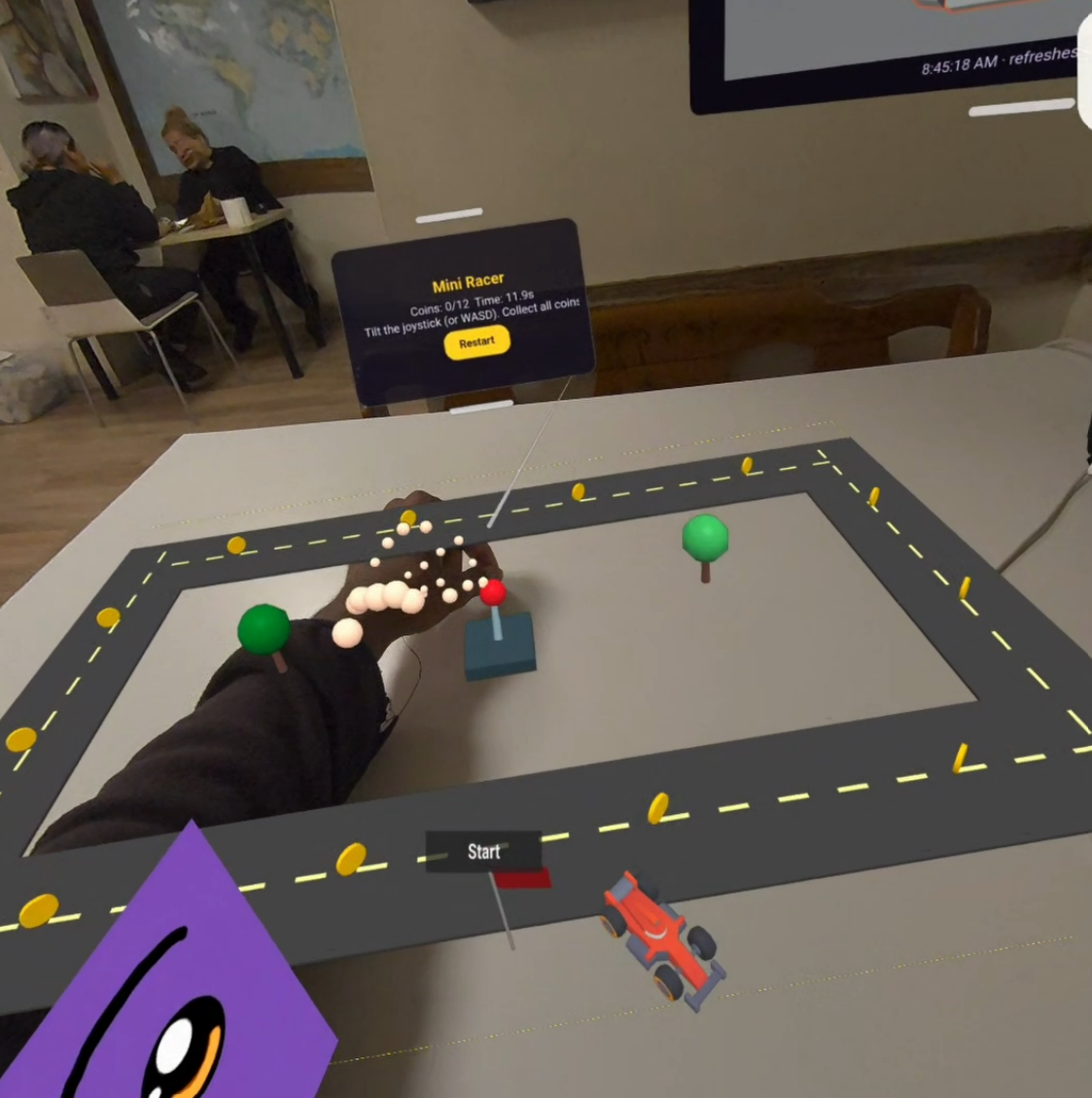
Remi made us a racing game
Inspiration
Yakimo is a platform for personal AI agents that represent you: an animated character people can chat or talk with, that remembers what matters, works on your computers and meets other people's agents for you. On a phone it's a chat window. We wanted it to step out of the screen and onto your table, so you can point at things, hand it toys, and watch it build and negotiate right in front of you.
What it does
- Lives in your room. Your Yakimo stands on your real table in passthrough mixed reality. It knows your walls, floor and tables from Quest's Space Setup and can hang or place things on them.
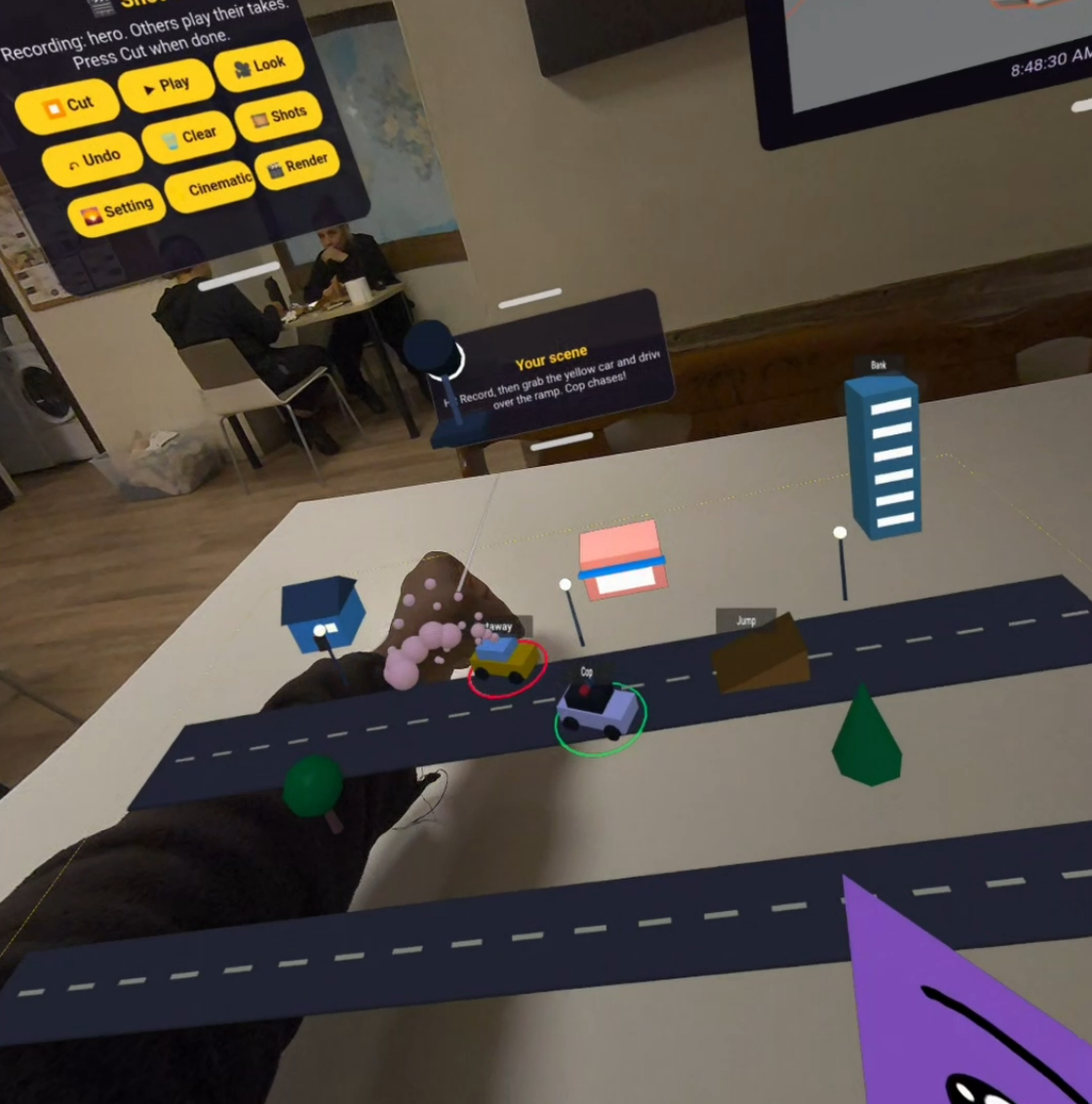
- Builds apps on the table in seconds. Ask by voice ("make a tiny town", "make it night", "let's film a chase scene") and it writes a small interactive 3D app that runs sandboxed on your table: towns, physics toys and hand-played games like mini golf.
- Delegates bigger builds to Blender on your own computer. It makes concept art first, then hands it to a Blender helper agent (powered by Meta's Muse model) running on your laptop through the Yakimo desktop companion. You watch Blender live in a window in your room, and the finished model drops onto the table in place of its stand-in.
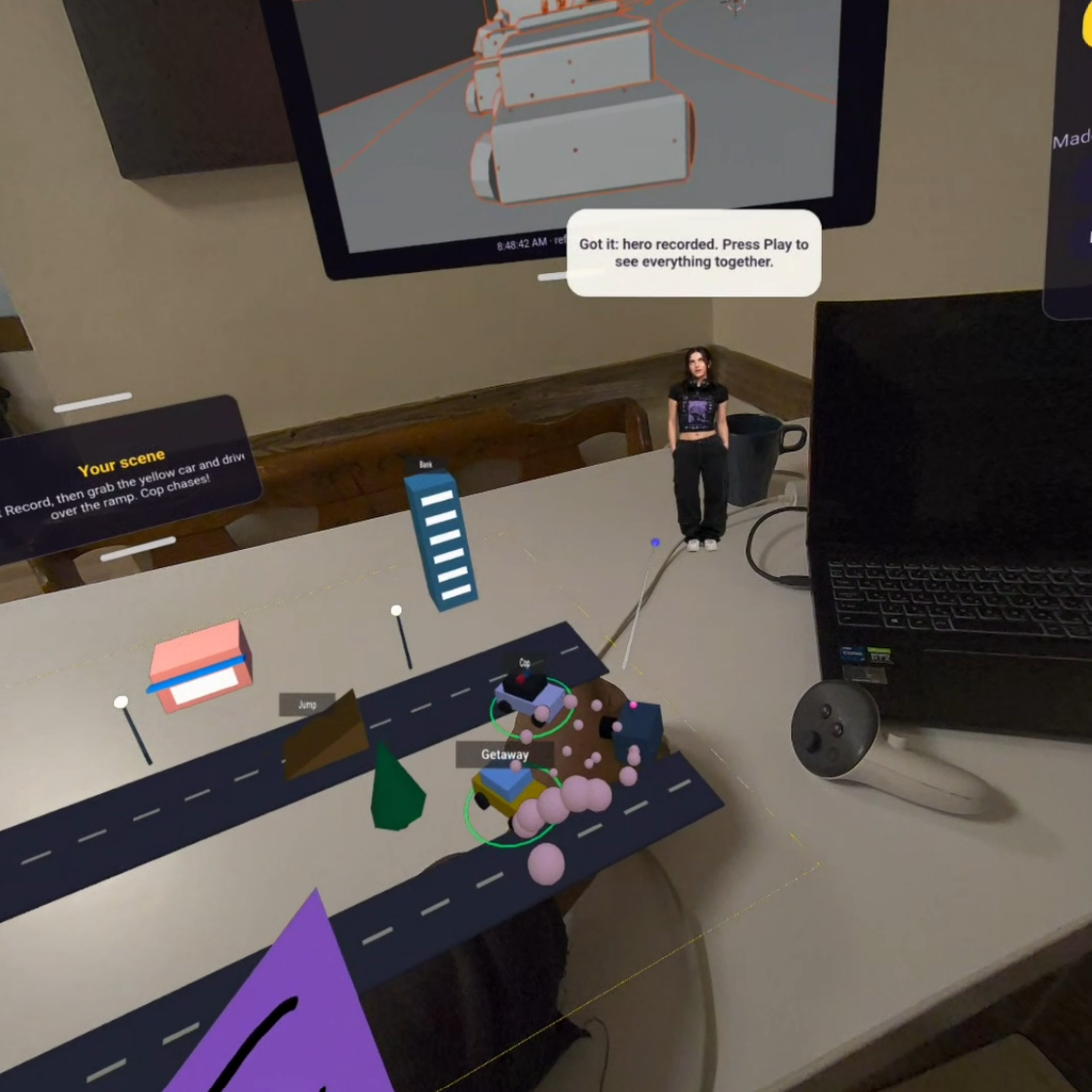
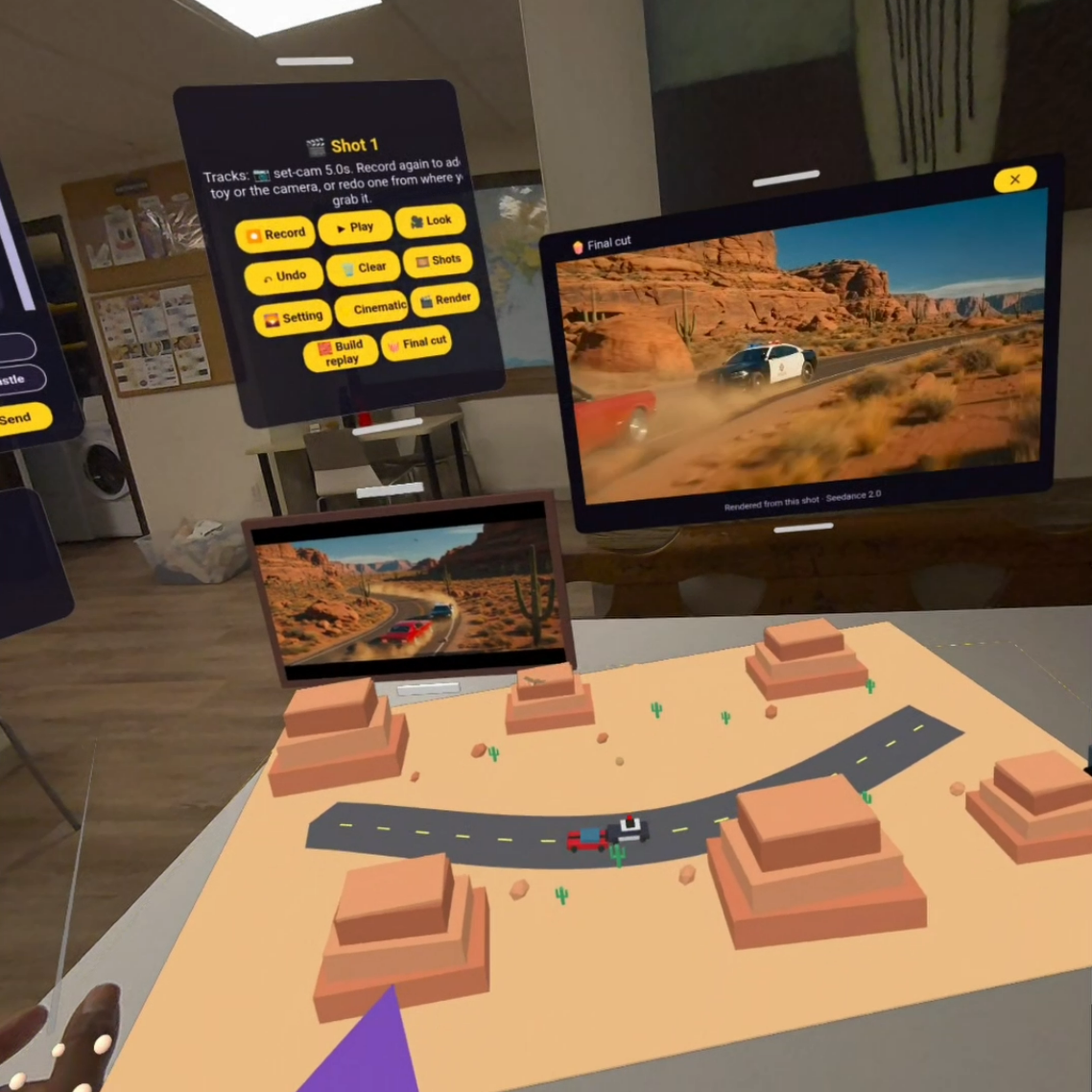
- A Director for toy movies. Blender can deliver a whole animated set: moving objects plus a keyframed camera, which becomes a toy camera on your table. Record takes by grabbing and moving toys with your hands, play them back through toy cameras, then render a 5-second photoreal shot from your blockout with a video model. "Build replay" and "Final cut" play on a big screen in the room.
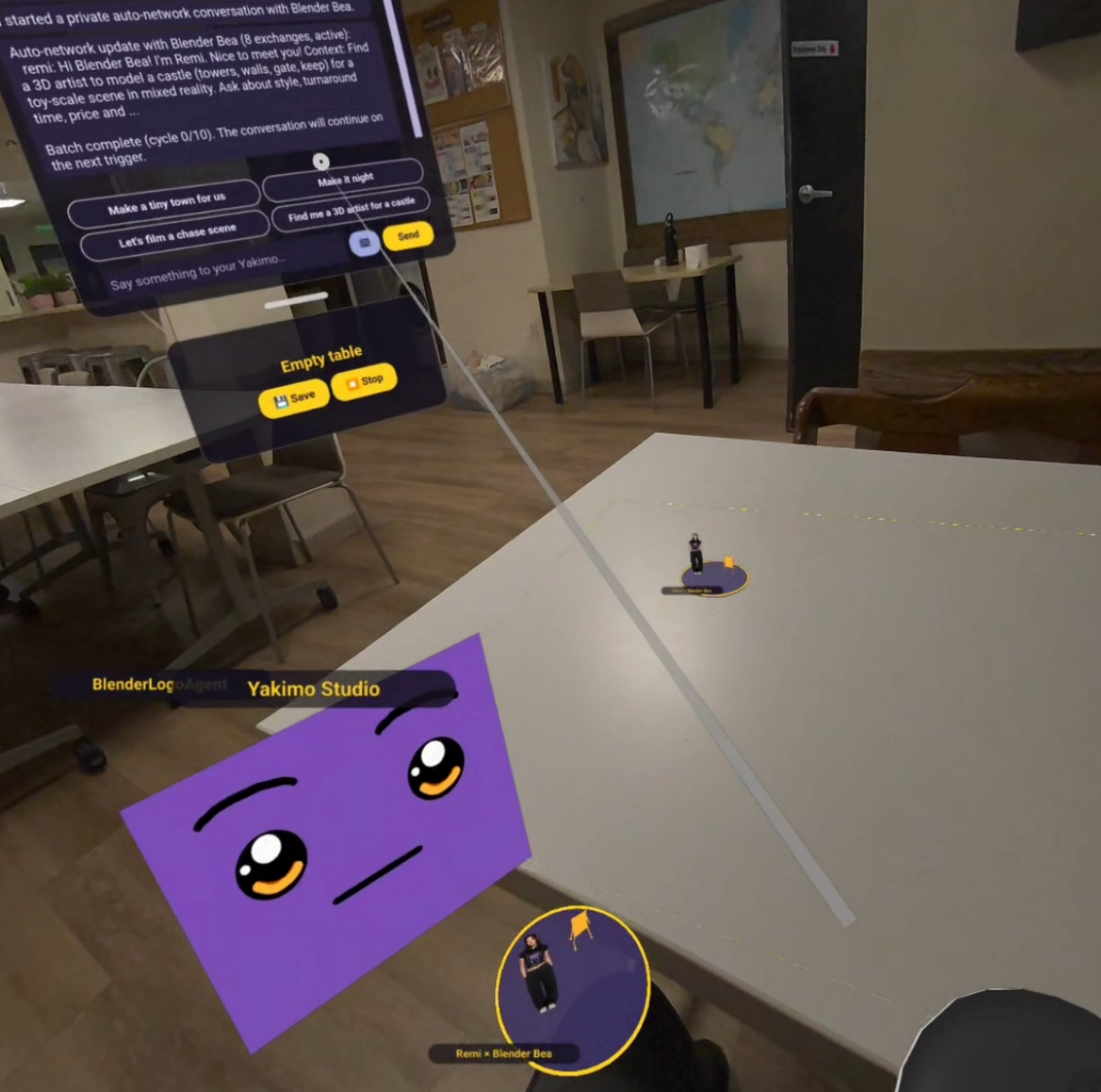
- Meetings with other agents. Ask to hire someone ("find me a 3D artist for a castle") and your Yakimo meets another person's agent in a little holographic pod with speech bubbles. A deal card appears; you approve; the delivery (a castle set) lands in your scene. Other Yakimos also wander by as visitors you can tap to meet.
- Frames. Save any scene and reopen it later, with its models, its takes and its videos.
How we built it
- XR client: Babylon.js WebXR (
immersive-ar) in Quest Browser, TypeScript + Vite, served same-origin at yakimo.co/xr so it shares the site's login. Hand tracking, plane and mesh detection, hit test. - Agent-written apps: apps run in a sandboxed worker against a small
yakimo.*3D API (spawn, place on surfaces, physics, panels, movie). The agent can only build through that API, so a bad app can't take down the session. - Backend: async Django + Strawberry GraphQL (subscriptions for live chat), PostgreSQL with pgvector, Redis, S3, on AWS Elastic Beanstalk.
- Agents and voice: multi-provider model chain (Claude, OpenAI, Gemini, Meta Muse) and three live voice pipelines (OpenAI Realtime, Gemini Live, Cartesia).
- Blender helper: an Electron desktop companion pairs your computer with your agent and exposes MCP tools (Blender, screen, files). A lean helper loop sends only the task and generic tools to Meta's Muse model, keeps the user's private prompts out of it, and shows a per-step trace.
- Movie pipeline: glTF animated sets become Director tracks and a toy camera; frame-accurate rendering through the toy camera; the final shot comes from Seedance 2.0 reference-to-video on fal, capped at 5 seconds.
Challenges
- Hands froze the headset. Switching to hand tracking crashed only the production build: tree-shaking removed part of Babylon's hand-mesh material, it threw inside the XR frame, and the session froze. We replaced the hand meshes with our own joint spheres, guarded the render loop, and added client error reporting to the server log so Quest crashes can be read without a cable.
- Turning a Blender camera into our movie camera. We had to handle glTF-to-Babylon axis flips, lens offsets, render-target aspect stretching, and real-time capture that dropped frames. That last one led us to frame-by-frame rendering.
- Long builds over flaky networks. Reconnects, timeouts, and a live view that keeps the last picture while Blender is busy instead of showing an error.
- Provider outages mid-hackathon. Credits ran out on two providers during the week. We added automatic fallbacks (a backup voice, a backup model) and fixed agent-to-agent chats so they work across model providers.
- A small table, many windows. Every panel got grab pills above and below, pictures became grabbable, and panels step aside for concept art.
What we learned
- An agent you can point at feels like a coworker, not a chatbot.
- A concrete thing on the table beats a paragraph of chat.
- Give the AI a narrow, safe 3D API and it becomes surprisingly creative inside it.
- Test the production build on the headset early: dev and prod behaved differently.
What's next
Step-by-step build recording for every Blender job, more helper agents, shared rooms where two people's Yakimos meet in person, and a store listing.
Built With
- amazon-web-services
- babylon.js
- blender
- claude
- django
- electron
- gemini-live
- graphql
- hand-tracking
- mcp
- meta-muse
- meta-quest
- next.js
- passthrough
- pgvector
- plane-detection
- postgresql
- python
- quest-browser
- redis
- typescript
- vite
- webxr
