-
-
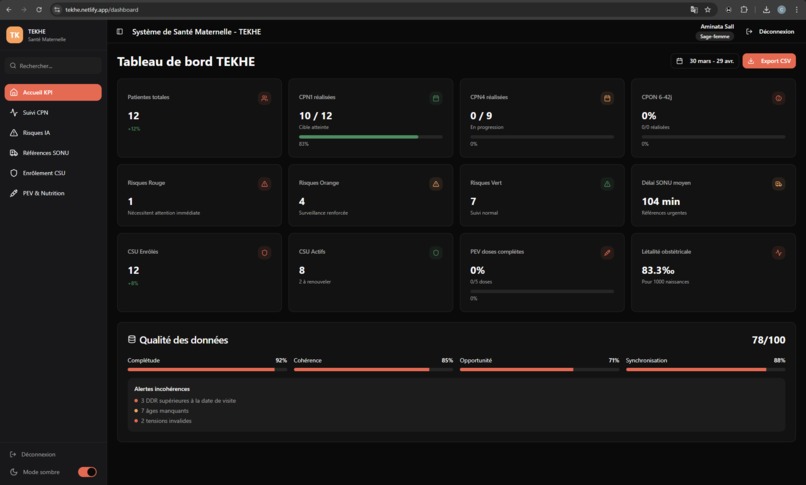
Yaay portal
-
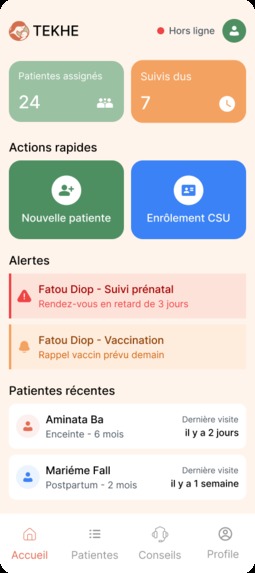
Nurse
-
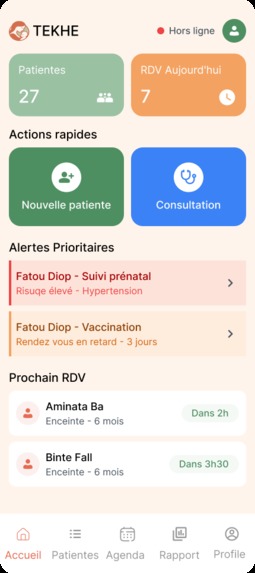
midwife
-
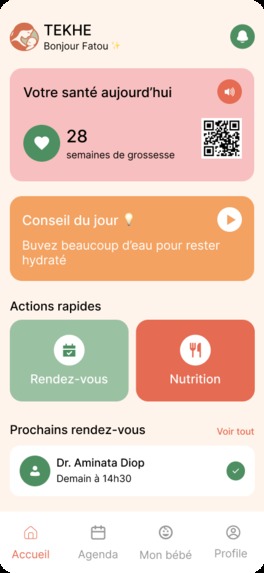
Mother
-

Onboarding
-

Onboarding
-

Onboarding


Inspiration
Maternal mortality remains a preventable tragedy in many low-resource settings. In many communities, pregnant women are not consistently monitored, and critical warning signs are often detected too late.
We were inspired by real-life scenarios where mothers—like Fatou—face barriers such as illiteracy, limited access to healthcare, and lack of continuous follow-up. At the same time, community health workers are overwhelmed and lack simple tools to prioritize high-risk cases.
YAAY was born from a simple idea: no mother should go through pregnancy without support, visibility, and timely care.
What it does
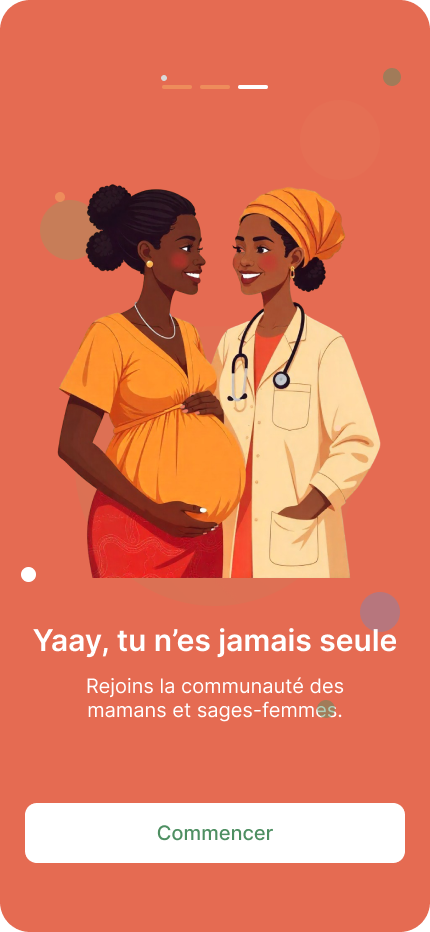
YAAY is a smart maternal health platform designed to monitor pregnancies, detect risks early, and connect mothers with healthcare workers in real time.
It provides:
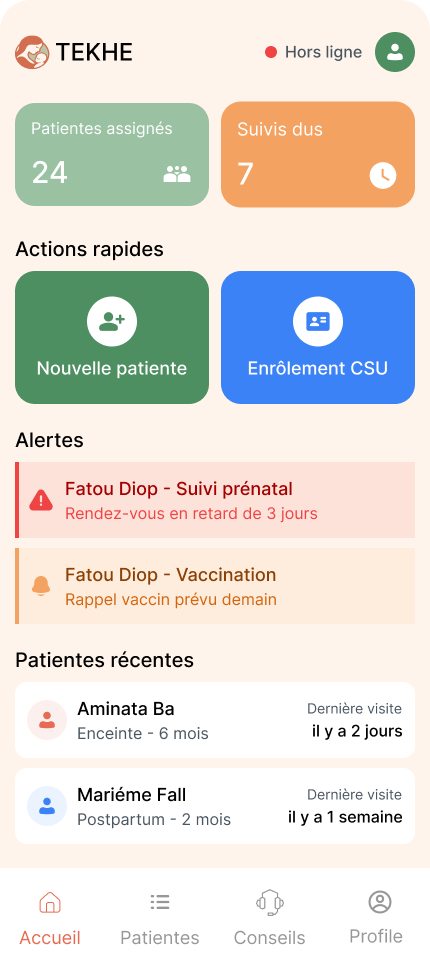
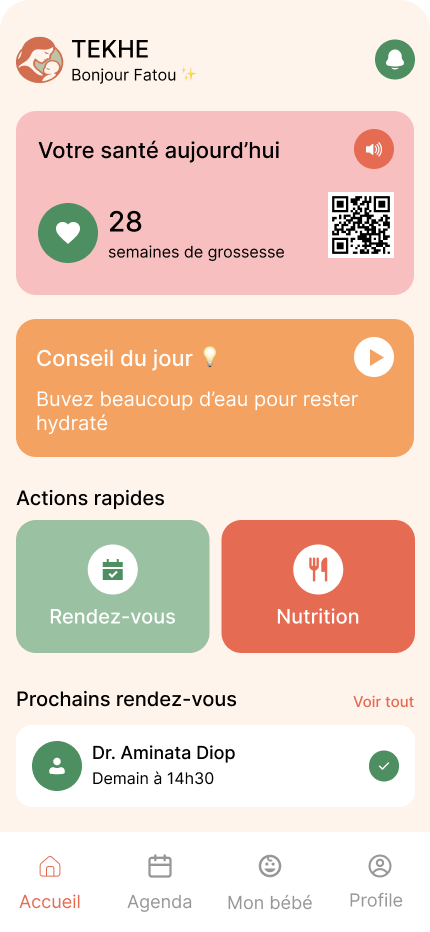
- A mobile app for mothers with simple tracking, reminders, and audio guidance in local languages
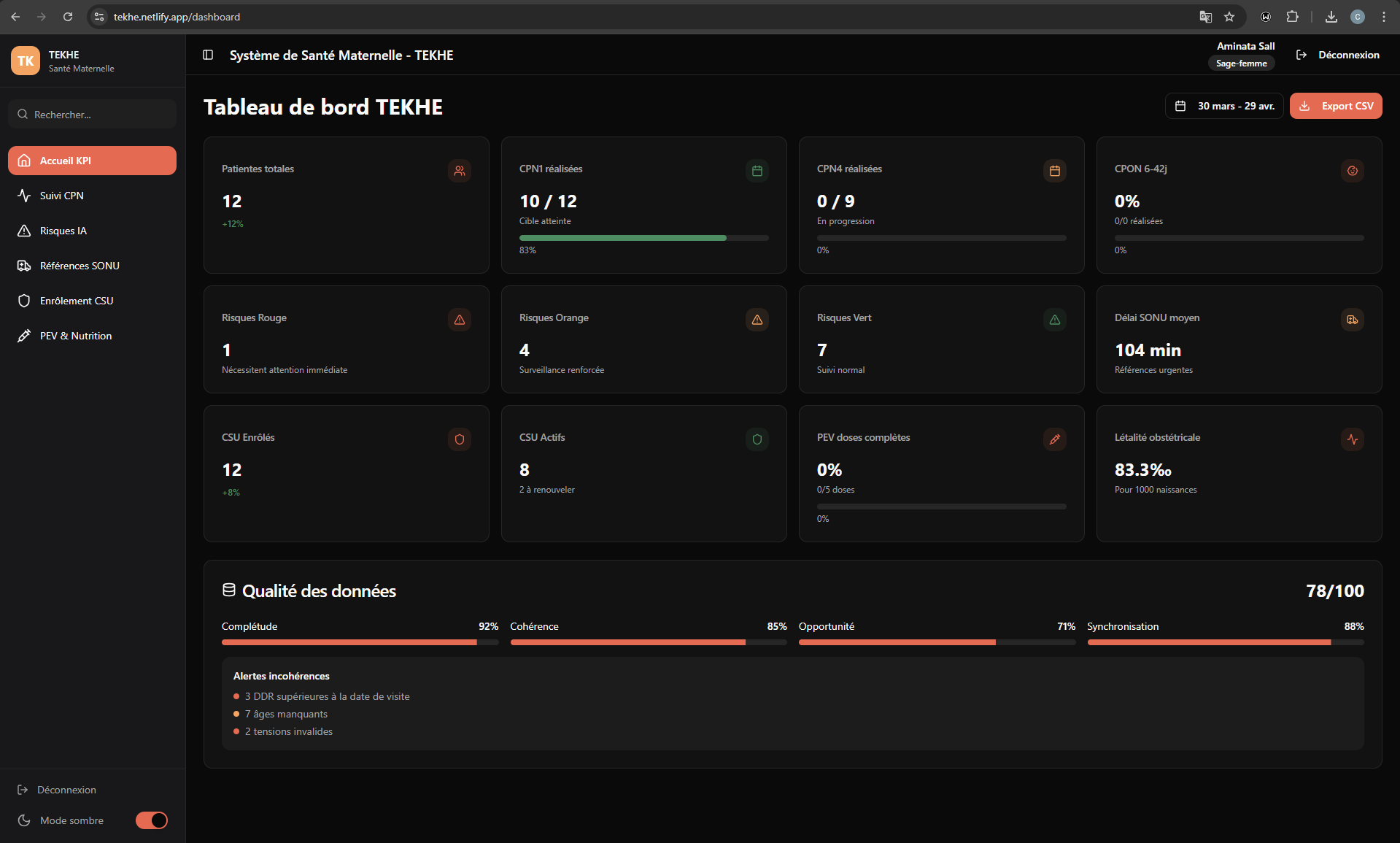
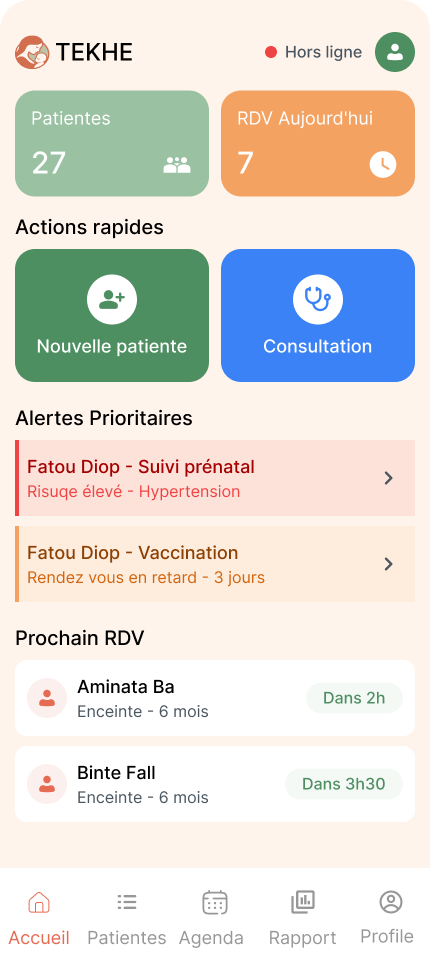
- A tool for midwives and community health workers to monitor patients, assess risk levels, and receive alerts
- A QR-based health card system that allows instant access to a patient’s history
- A risk detection system that flags high-risk pregnancies (green / orange / red)
- A real-time alert system for critical situations
YAAY works even in low-connectivity environments and is designed for accessibility and real-world conditions.
How we built it
We built YAAY as a modular system combining mobile and web technologies:
- Mobile apps for mothers and healthcare workers (designed for simplicity and offline usage)
- Backend system to manage patient data, risk scoring, and synchronization
- QR code system for instant patient identification and access to medical history
- Rule-based risk engine to detect early warning signs (e.g. blood pressure, medical history, pregnancy conditions)
The system is designed to scale from community-level usage to district and national health systems, with compatibility for public health data platforms.
Challenges we ran into
- Designing for low literacy: we had to rethink UX using audio, icons, and minimal text
- Offline-first architecture: ensuring the app works without stable internet
- Balancing simplicity and medical relevance: keeping the interface usable while still meaningful for healthcare workers
- Data sensitivity: integrating privacy, consent, and secure data handling from the start
Accomplishments that we're proud of
- Creating a complete, end-to-end maternal health system, not just a standalone app
- Designing a solution that is deeply adapted to local realities (language, infrastructure, usage patterns)
- Building a clear and intuitive risk visualization system for healthcare workers
- Delivering a concept that bridges technology, public health, and social impact
What we learned
- Technology alone is not enough—usability and context matter more than complexity
- The most impactful solutions are those that empower frontline workers, not replace them
- Designing for constraint (low connectivity, low literacy) leads to better, more inclusive products
- Clear problem focus is more powerful than adding more features
What's next for YAAY
Next steps include:
- Integrating a more advanced AI-based risk prediction model
- Expanding support for multiple local languages and voice interactions
- Piloting YAAY with community health workers and local clinics
- Integrating with national systems (e.g. health data platforms)
- Exploring wearable/NFC integration for faster identification in emergencies
Our vision is to make YAAY a scalable digital health infrastructure that helps reduce preventable maternal deaths across underserved regions.
Built With
- aes-encryption
- dart
- docker
- flutter
- nestjs
- offline-first-architecture-(sqlite)
- postgresql
- qr-code-integration
- rest-apis
- typescript
- websockets

Log in or sign up for Devpost to join the conversation.