-
-
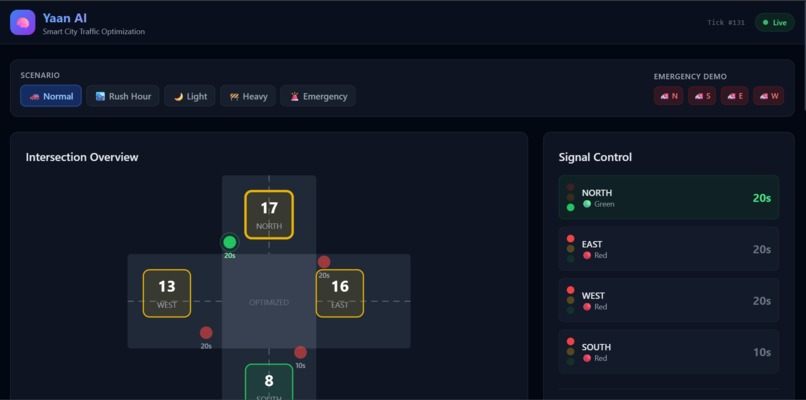
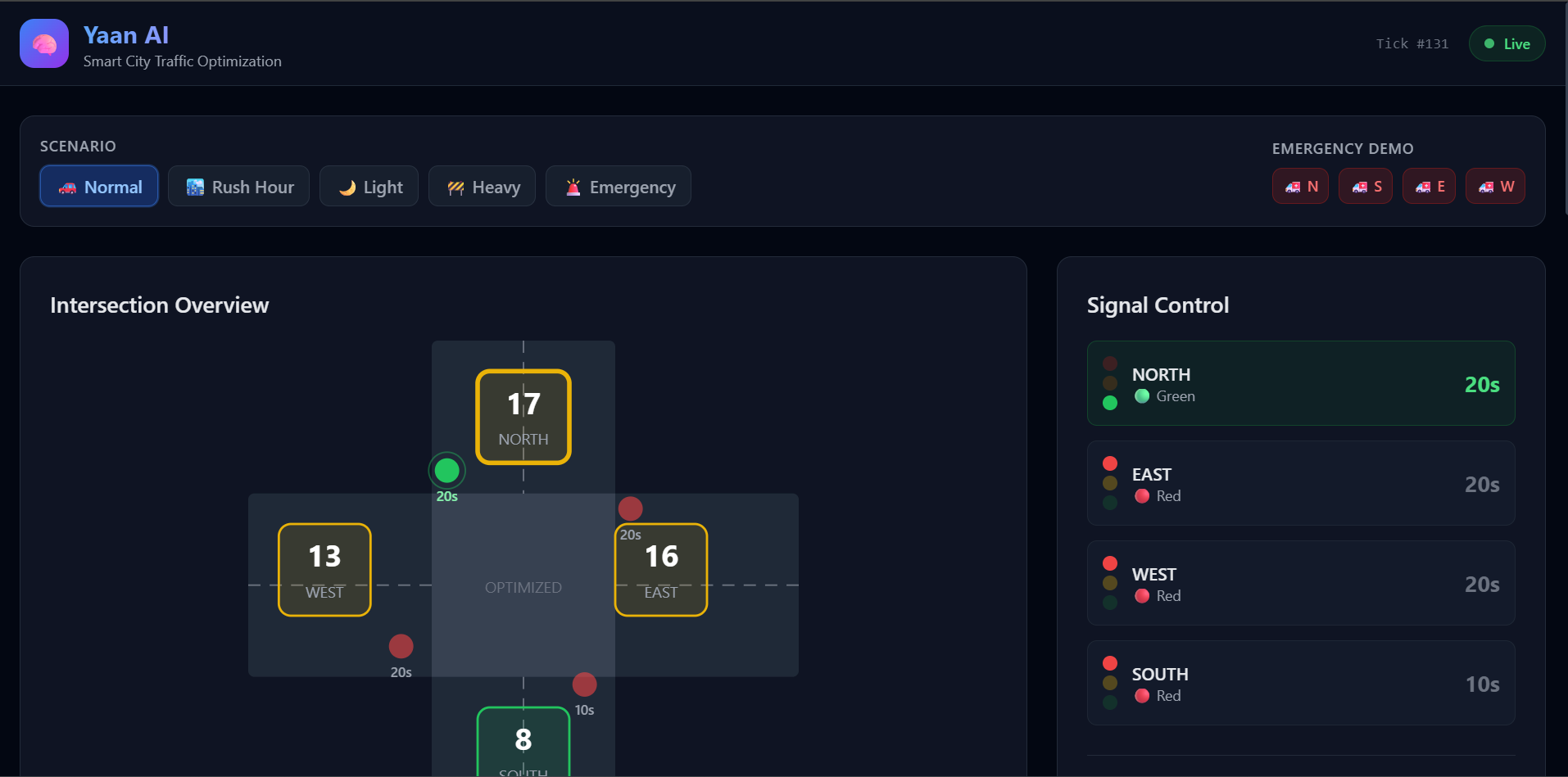
The Interface
-
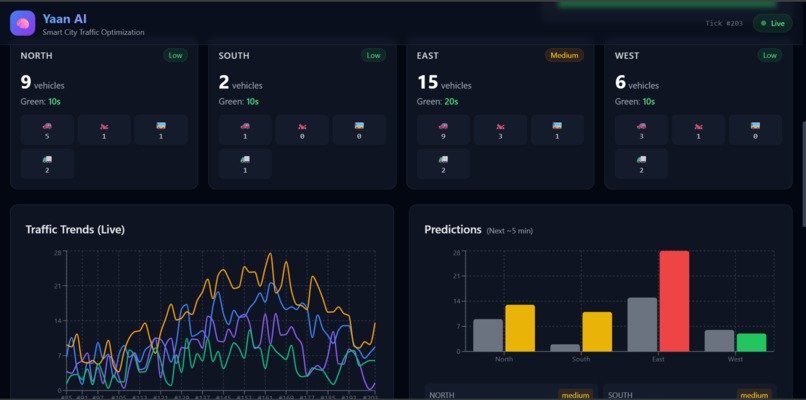
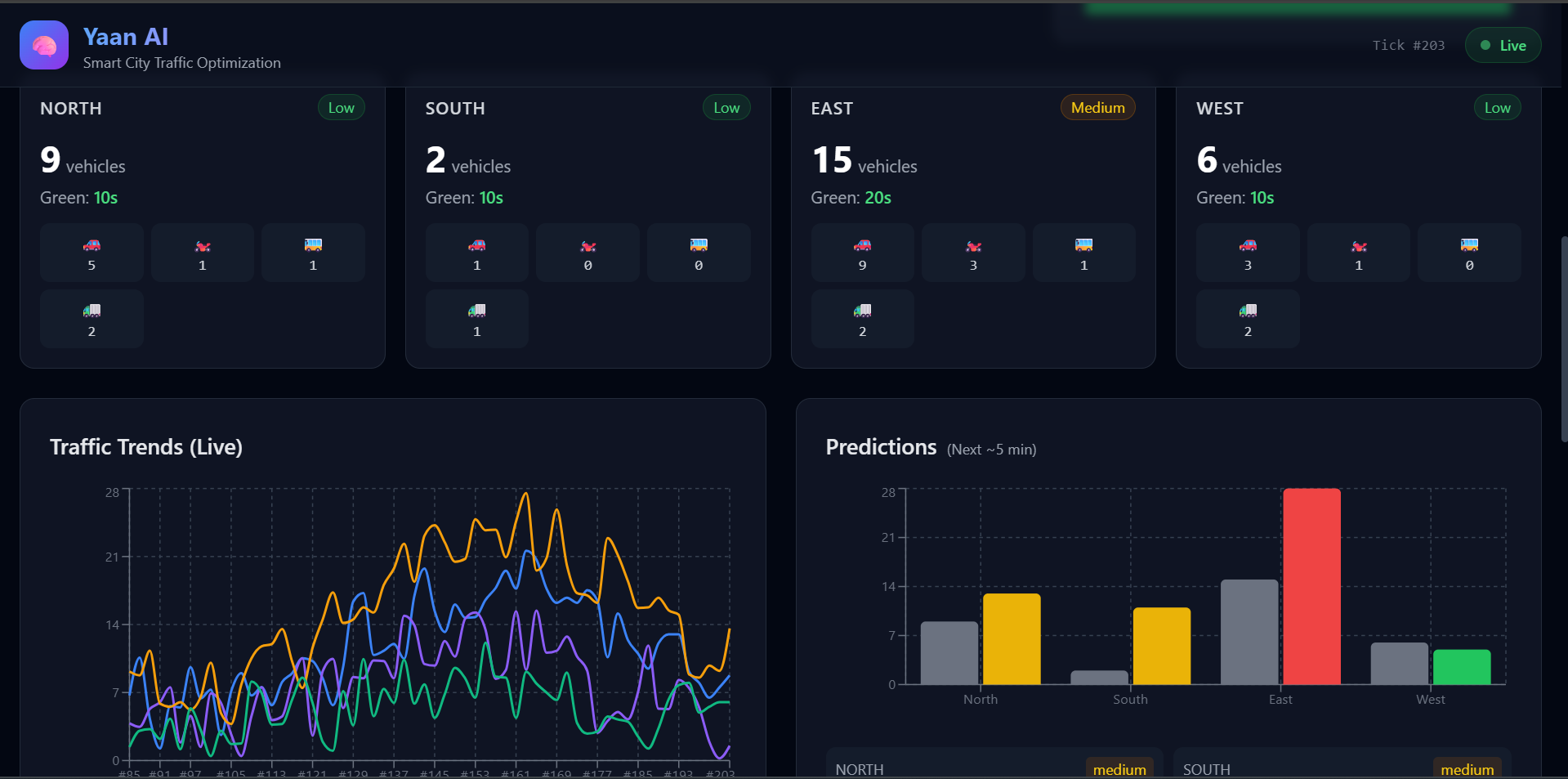
The Analysis and directions
-
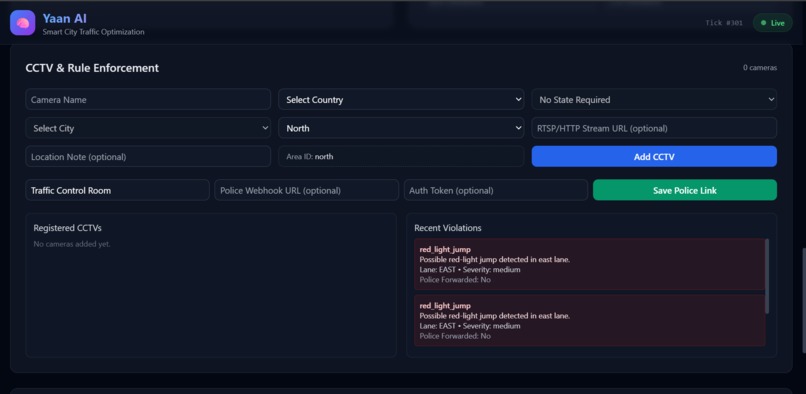
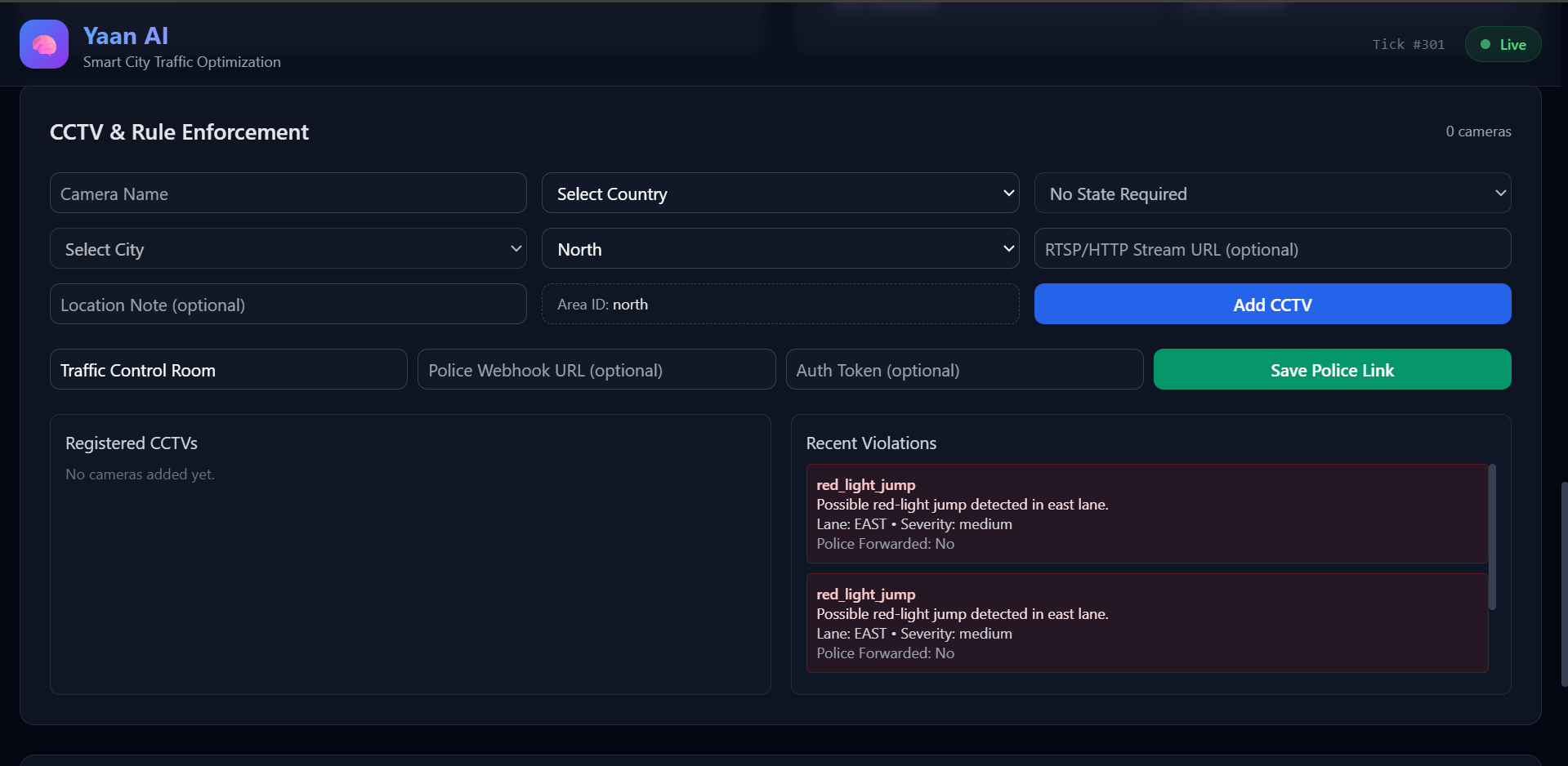
CCTV Details to make the AI analyze the incoming vehicles
-
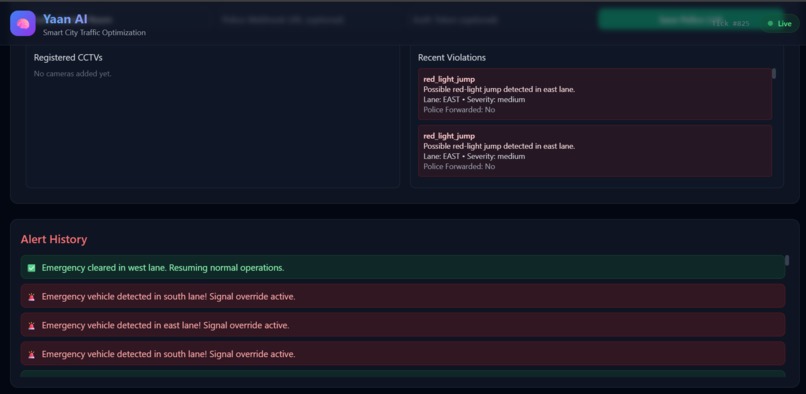
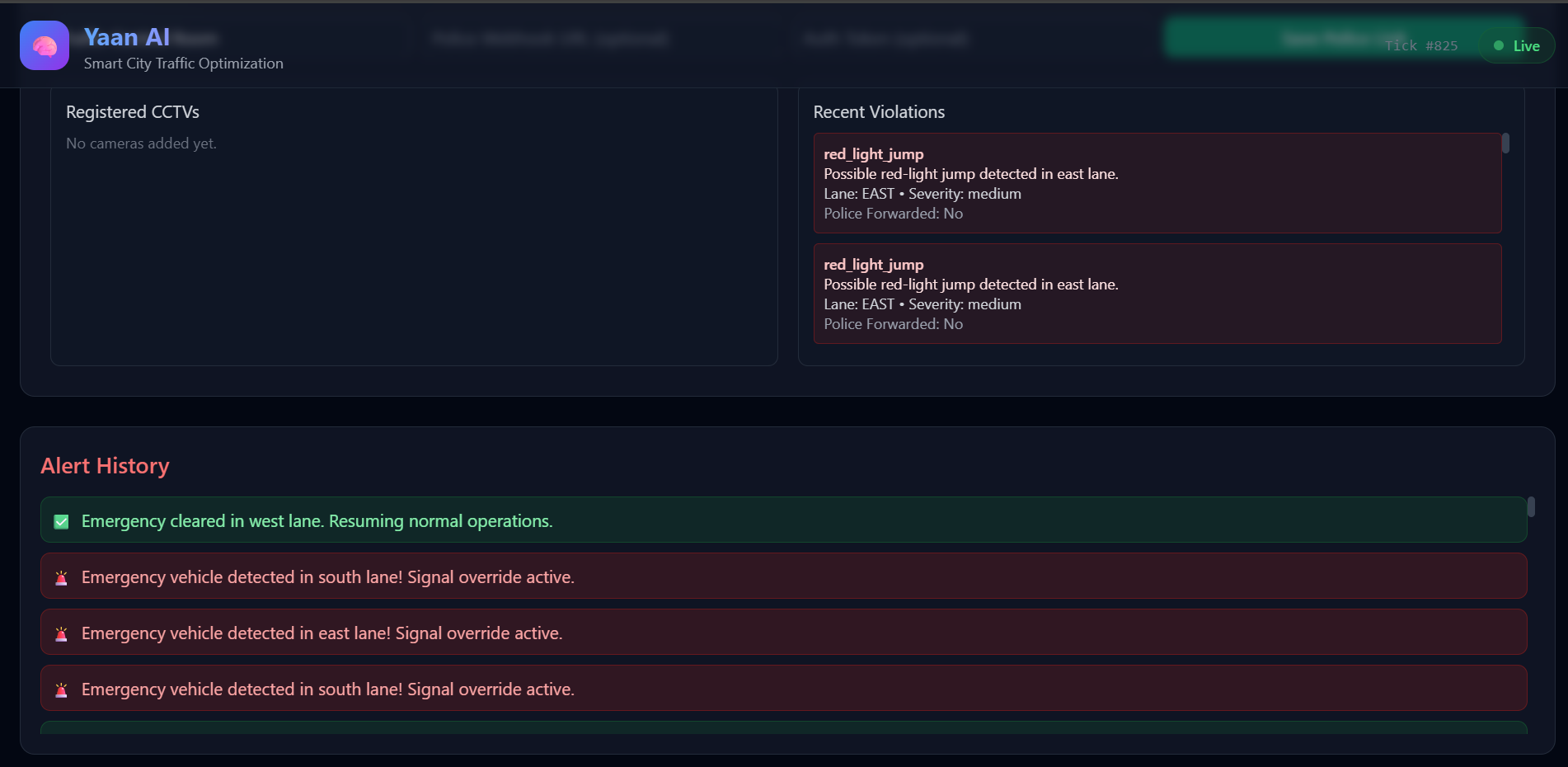
Alert Window
🚦 Inspiration
Traffic congestion in growing cities is not just frustrating—it delays emergency services, increases pollution, and wastes valuable time. We noticed that most traffic signals still operate on fixed timers, ignoring real-time conditions.
This inspired us to build Yaan AI, a system that can see, analyze, and respond to live traffic dynamically.
⚙️ What it does
Yaan AI is an intelligent traffic management system that:
- Detects vehicles in real time using computer vision
- Estimates traffic density per lane
- Dynamically adjusts signal timings
- Prioritizes emergency vehicles like ambulances
- Displays insights through a live dashboard
The goal is simple: reduce congestion and save lives through smarter traffic control.
🏗️ How we built it
1. Vehicle Detection
We used a YOLO-based computer vision model to detect vehicles from video input and count them per frame.
[ V = \text{number of vehicles detected} ]
2. Traffic Density Classification
We categorized congestion levels:
[ \text{Density} = \begin{cases} \text{Low} & V < 10 \ \text{Medium} & 10 \leq V \leq 25 \ \text{High} & V > 25 \end{cases} ]
3. Adaptive Signal Timing
Signal duration is adjusted dynamically:
[ T = \begin{cases} 10s & \text{Low} \ 20s & \text{Medium} \ 40s & \text{High} \end{cases} ]
4. Emergency Vehicle Priority
When an ambulance or fire truck is detected:
- The signal turns green instantly
- Other lanes are paused
- Alerts are triggered on the dashboard
5. Dashboard
We built a real-time dashboard to display:
- Live traffic feed
- Vehicle counts
- Signal timing
- Emergency alerts
⚠️ Challenges we ran into
- Real-time performance: Balancing detection accuracy with speed
- Limited emergency vehicle data: Hard to reliably detect rare classes
- System integration: Syncing AI outputs with a live UI
- Scope control: Avoiding overengineering while maintaining impact
🏆 Accomplishments that we're proud of
- Built a working real-time prototype within hackathon time
- Successfully demonstrated adaptive traffic signal logic
- Implemented emergency vehicle prioritization
- Delivered a clean, intuitive dashboard for visualization
🧠 What we learned
- Simple, rule-based systems can outperform complex models in real-time scenarios
- End-to-end integration (AI + backend + UI) is more valuable than isolated models
- Clear visualization is key to communicating technical ideas effectively
🚀 What's next for Yaan AI
- Predictive traffic modeling using historical data
- Integration with IoT-enabled smart traffic lights
- Scaling to multi-intersection city networks
- Deployment with live camera feeds and edge devices
💡 Conclusion
Yaan AI shows how combining real-time computer vision with adaptive logic can transform urban mobility. By optimizing traffic flow and prioritizing emergencies, it takes a step toward building smarter and safer cities.


Log in or sign up for Devpost to join the conversation.