-
-
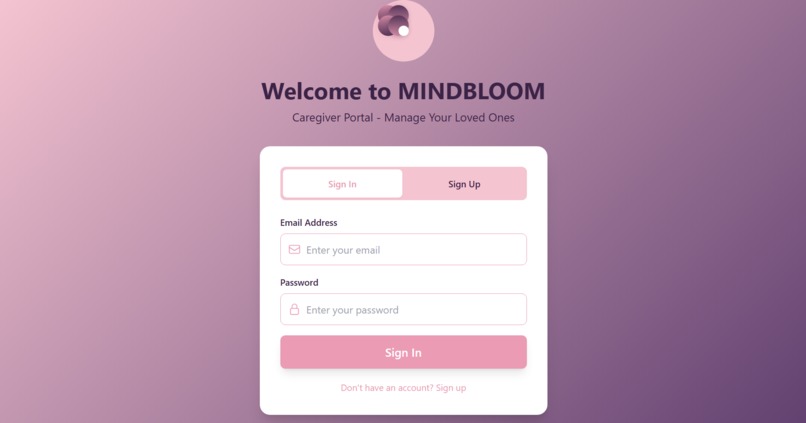
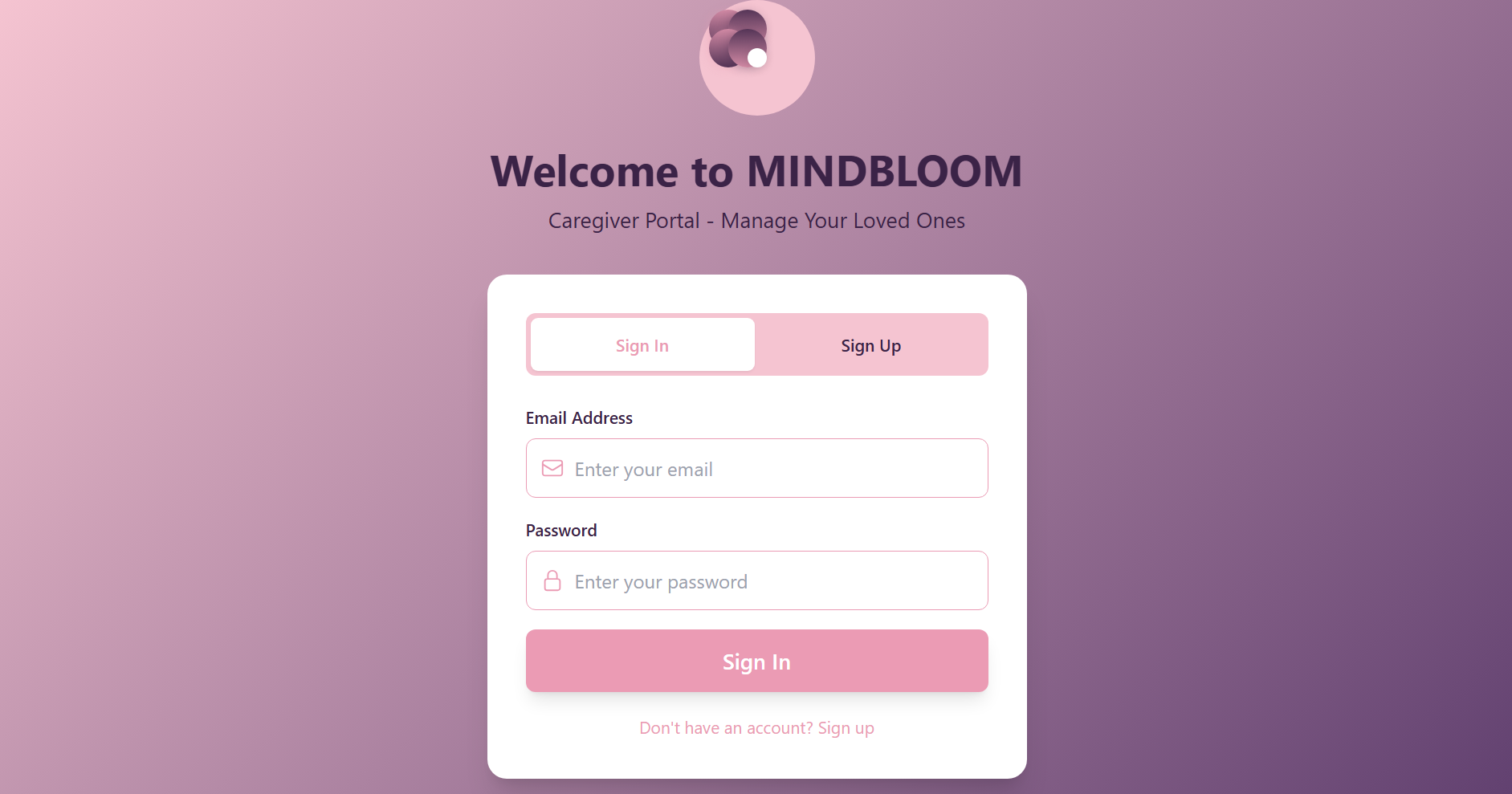
Sign-in page
-
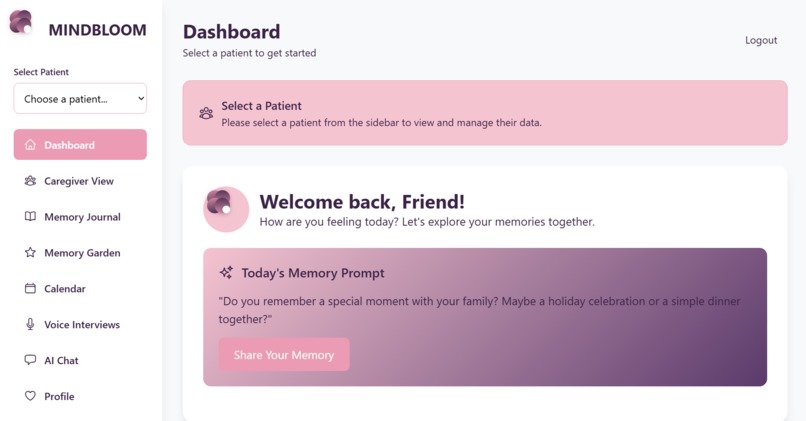
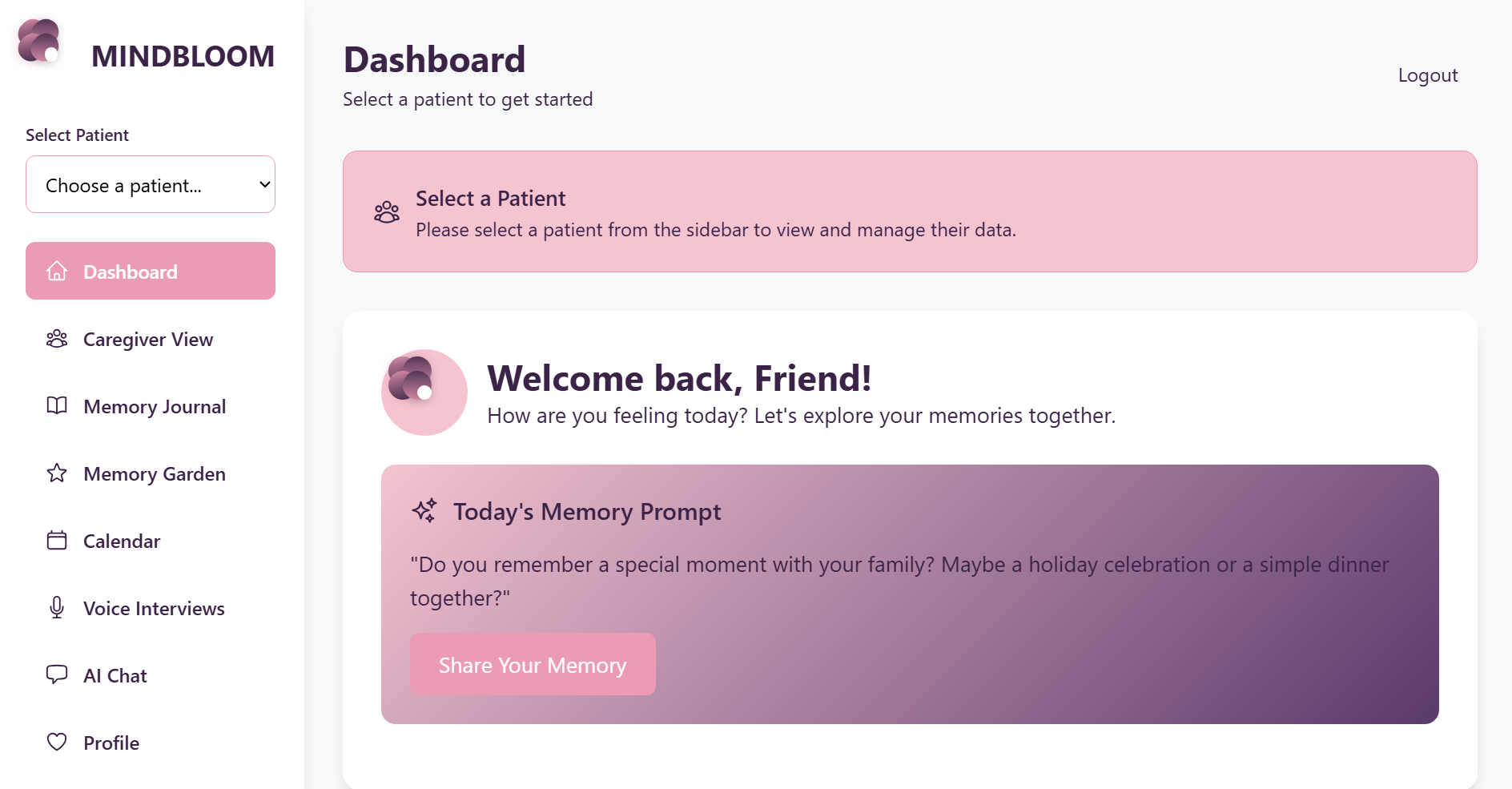
Dashboard
-
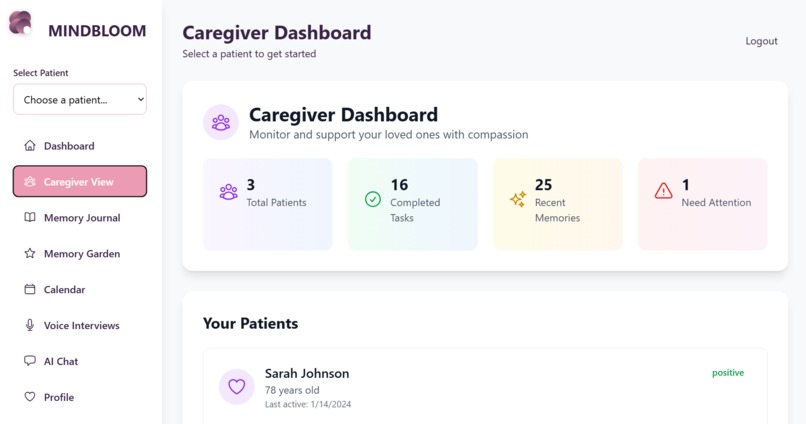
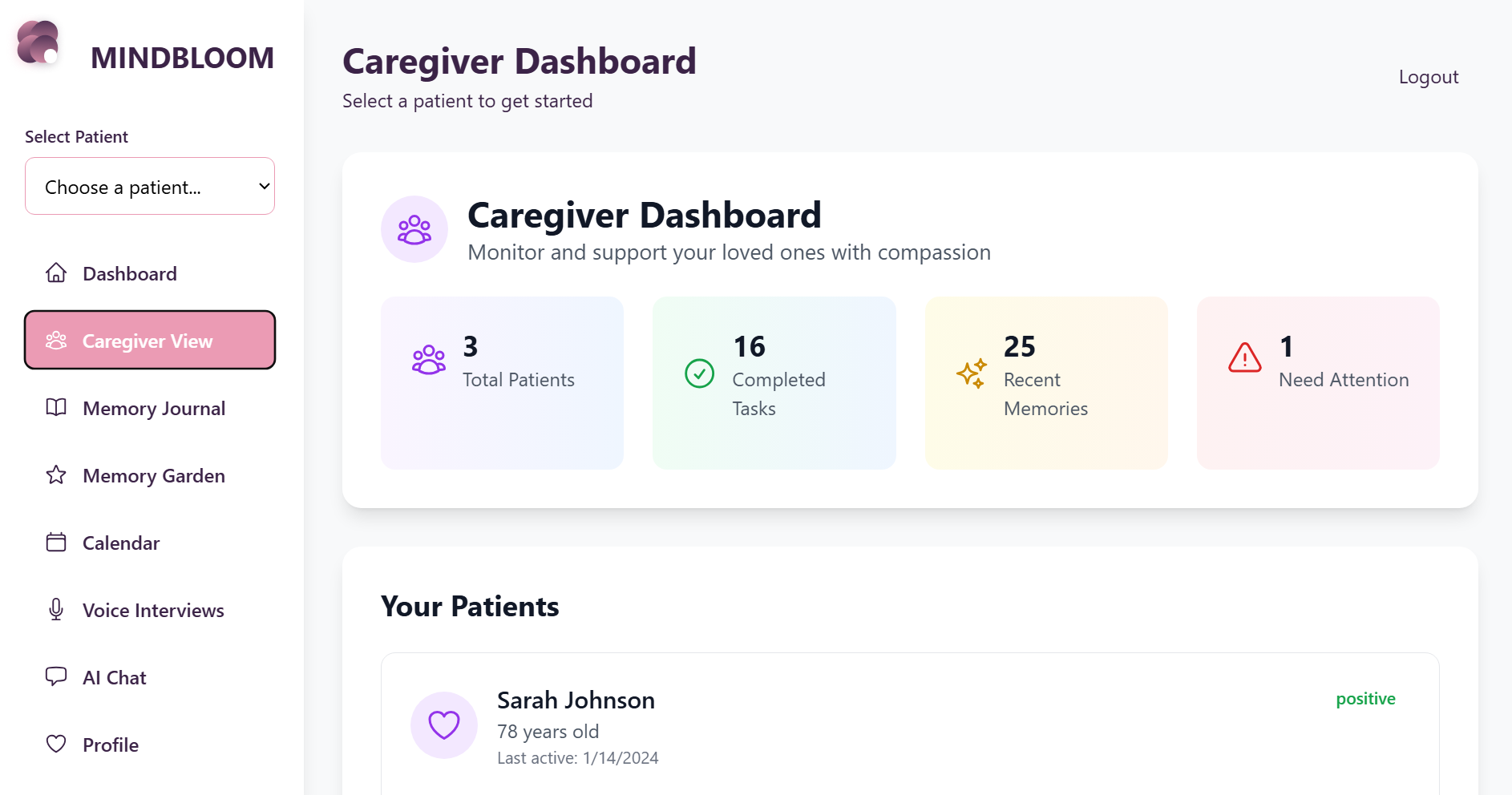
Caregiver Dashboard
-
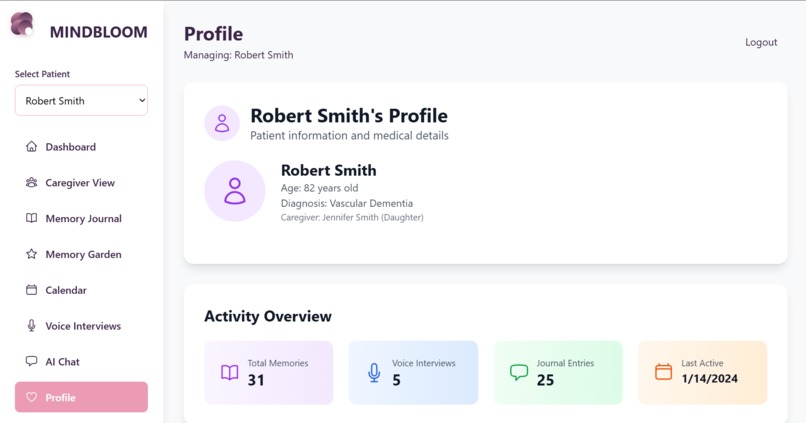
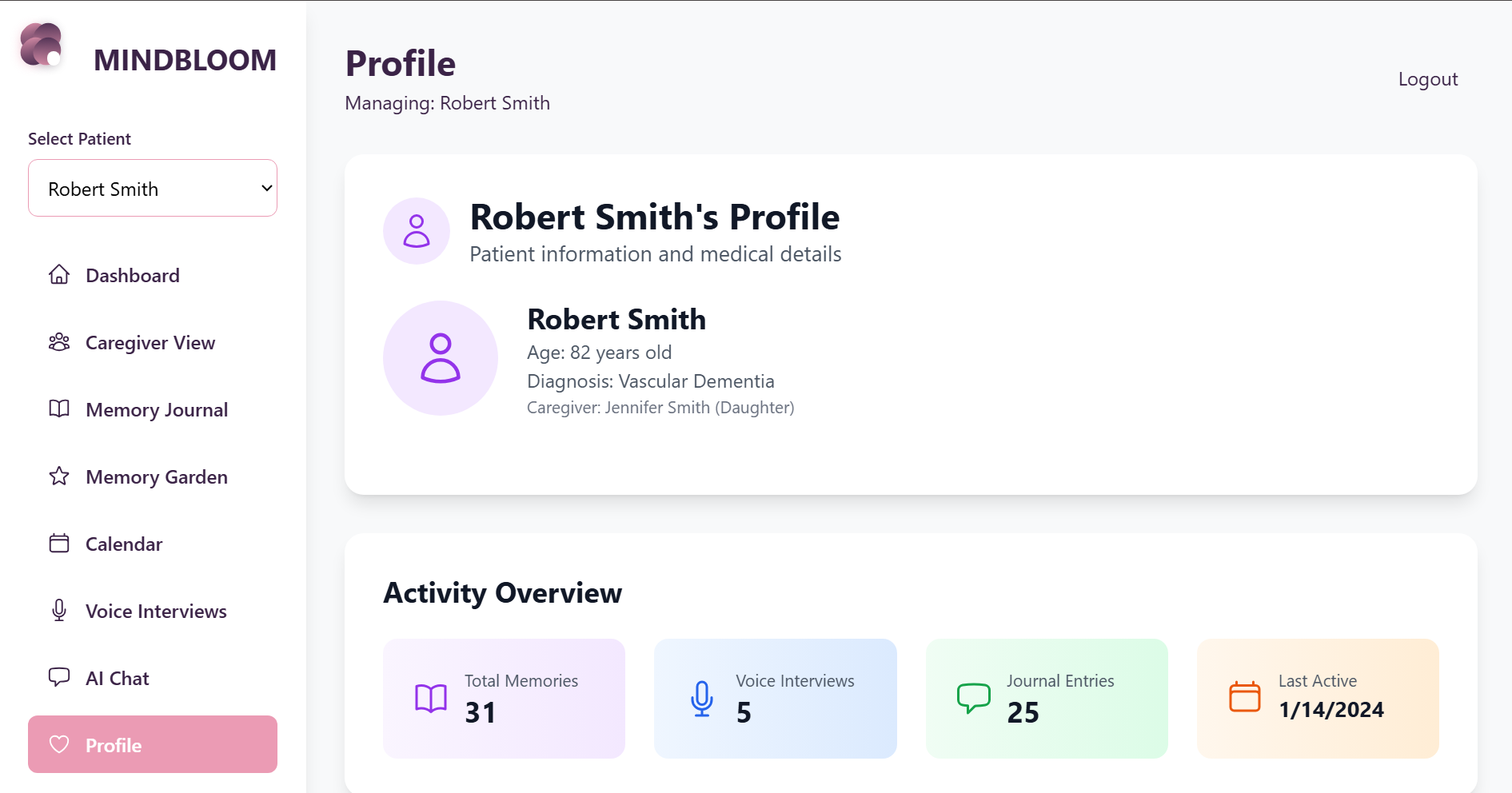
Profile
-
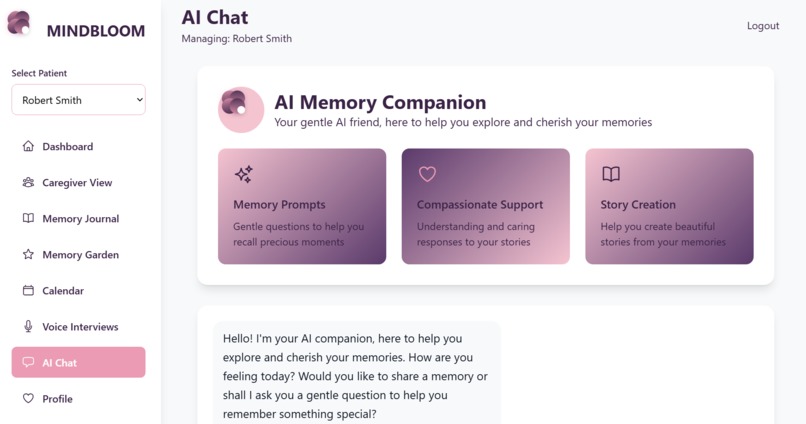
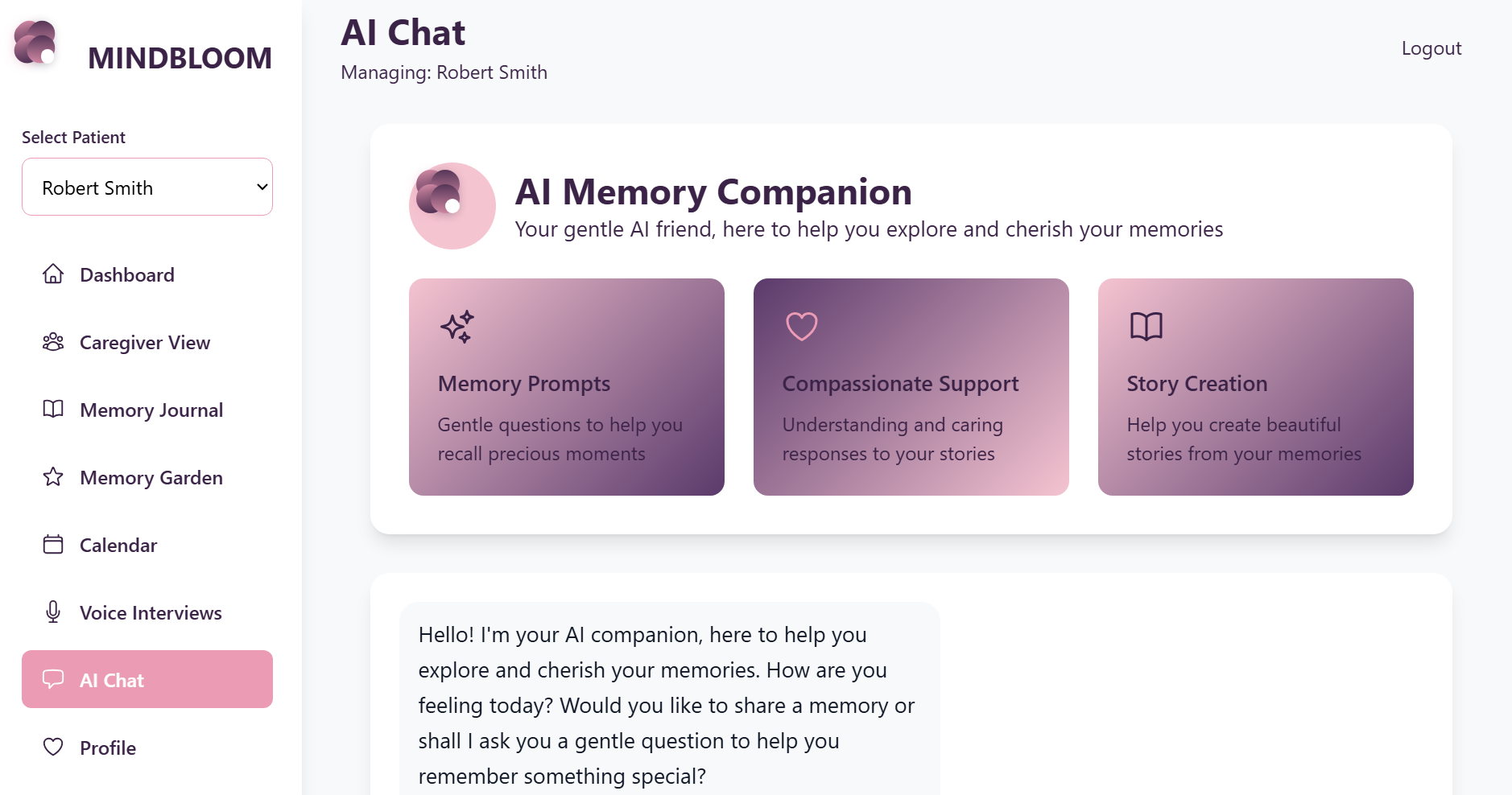
AI Chat Feature
-
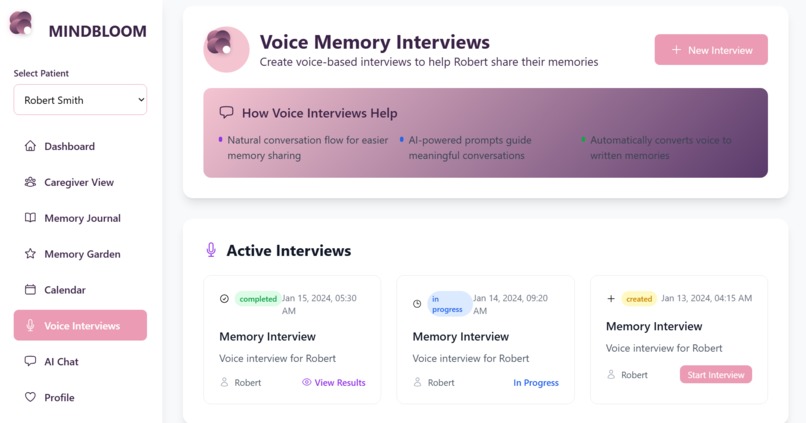
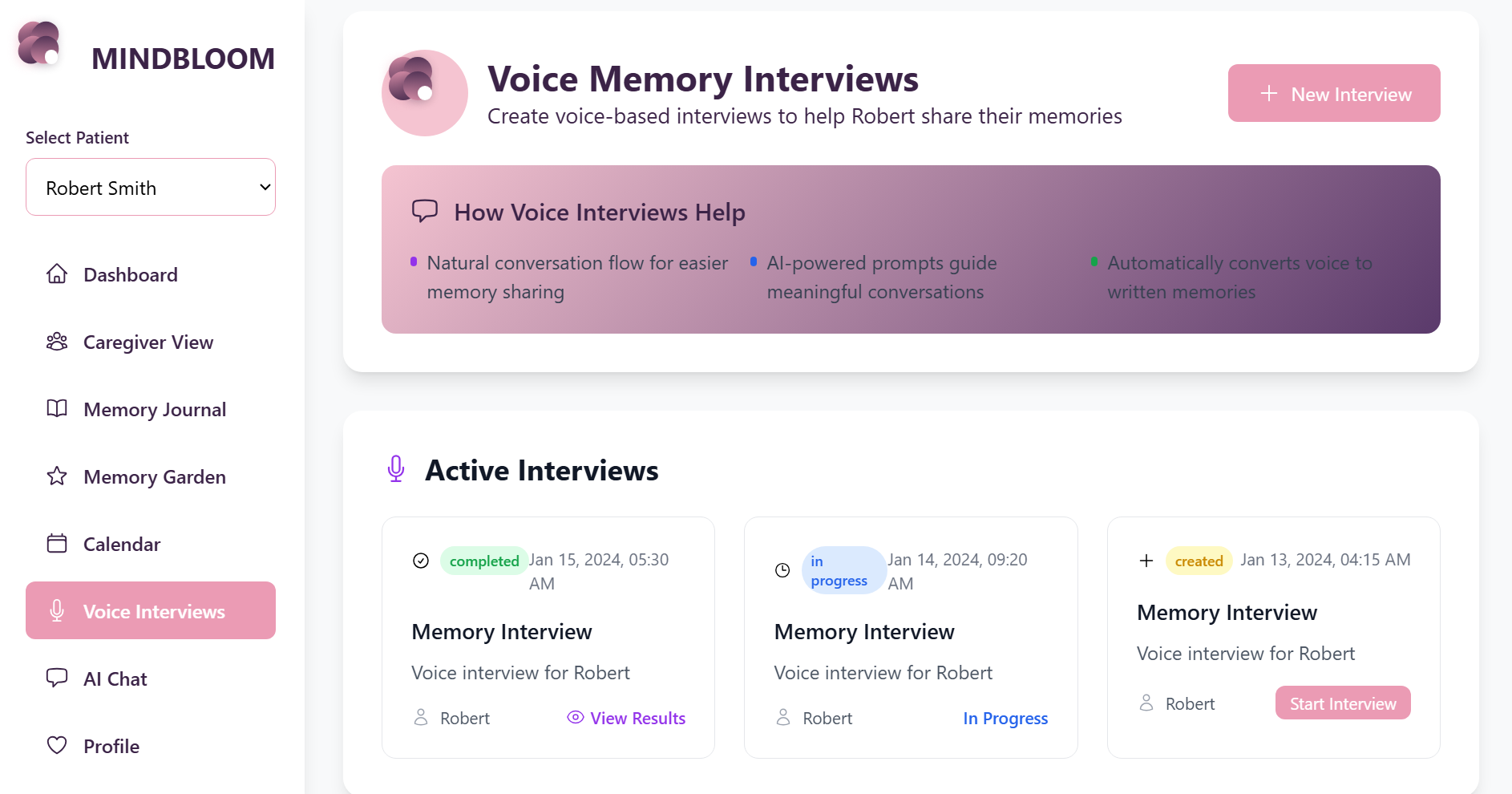
Memory Interviews
-
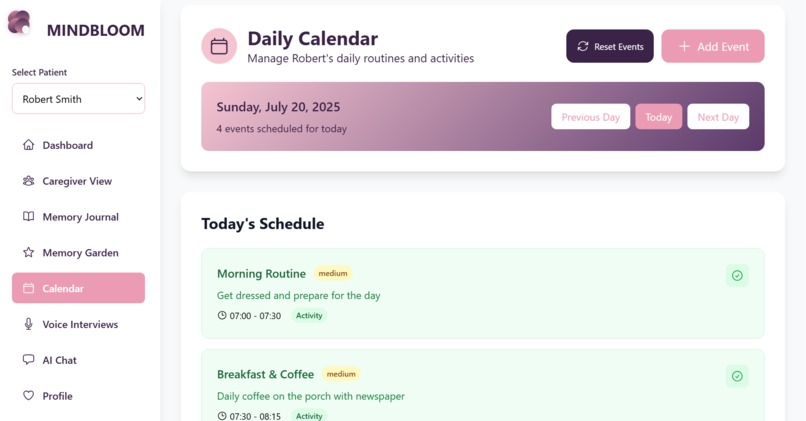
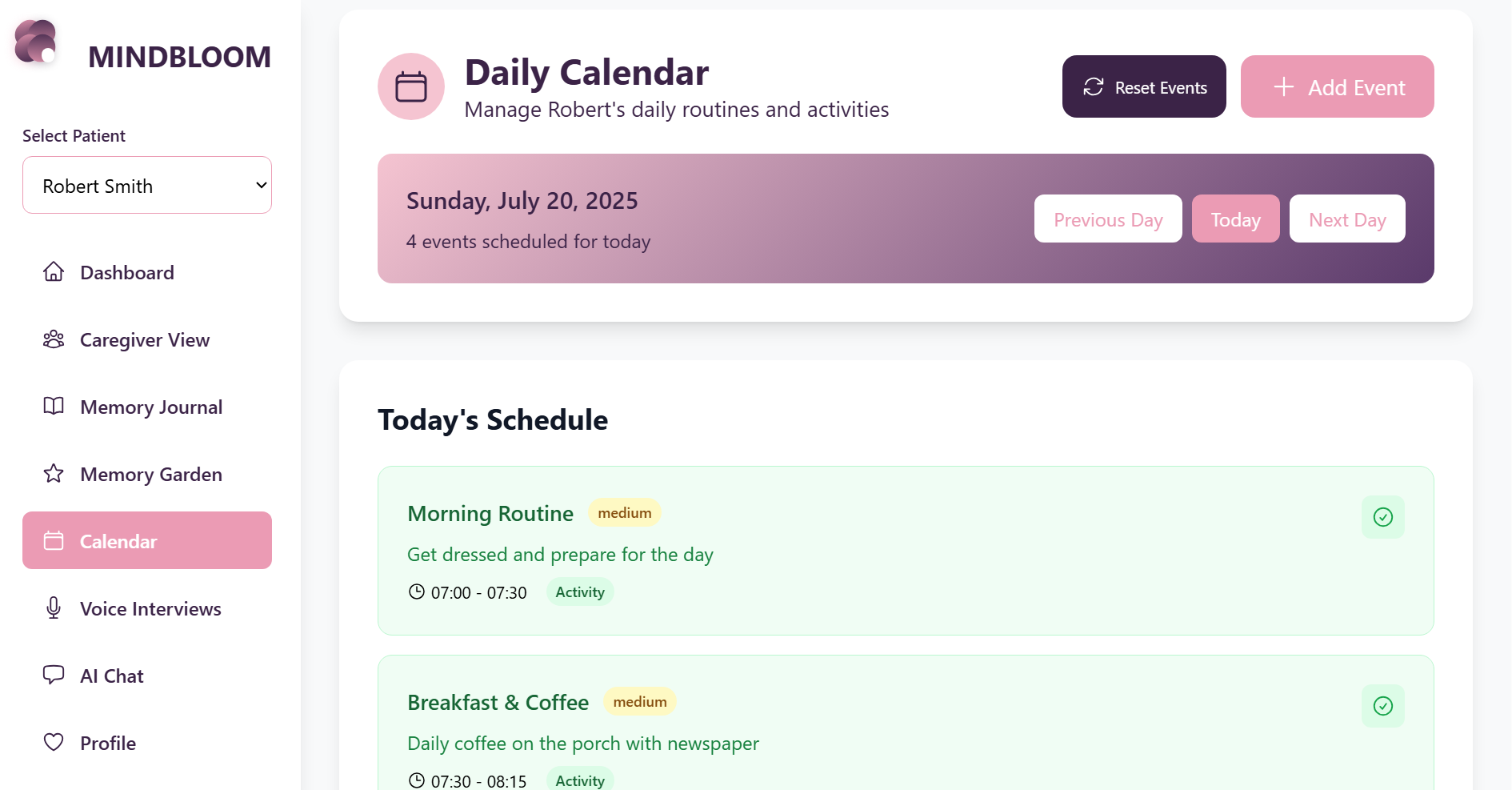
Daily Calendar
-
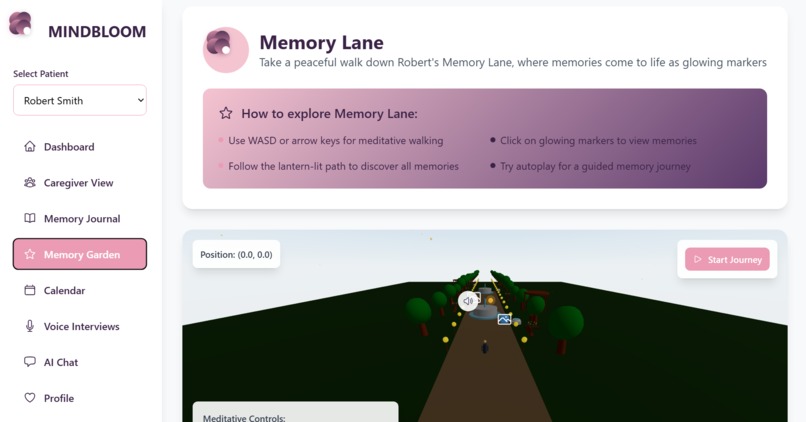
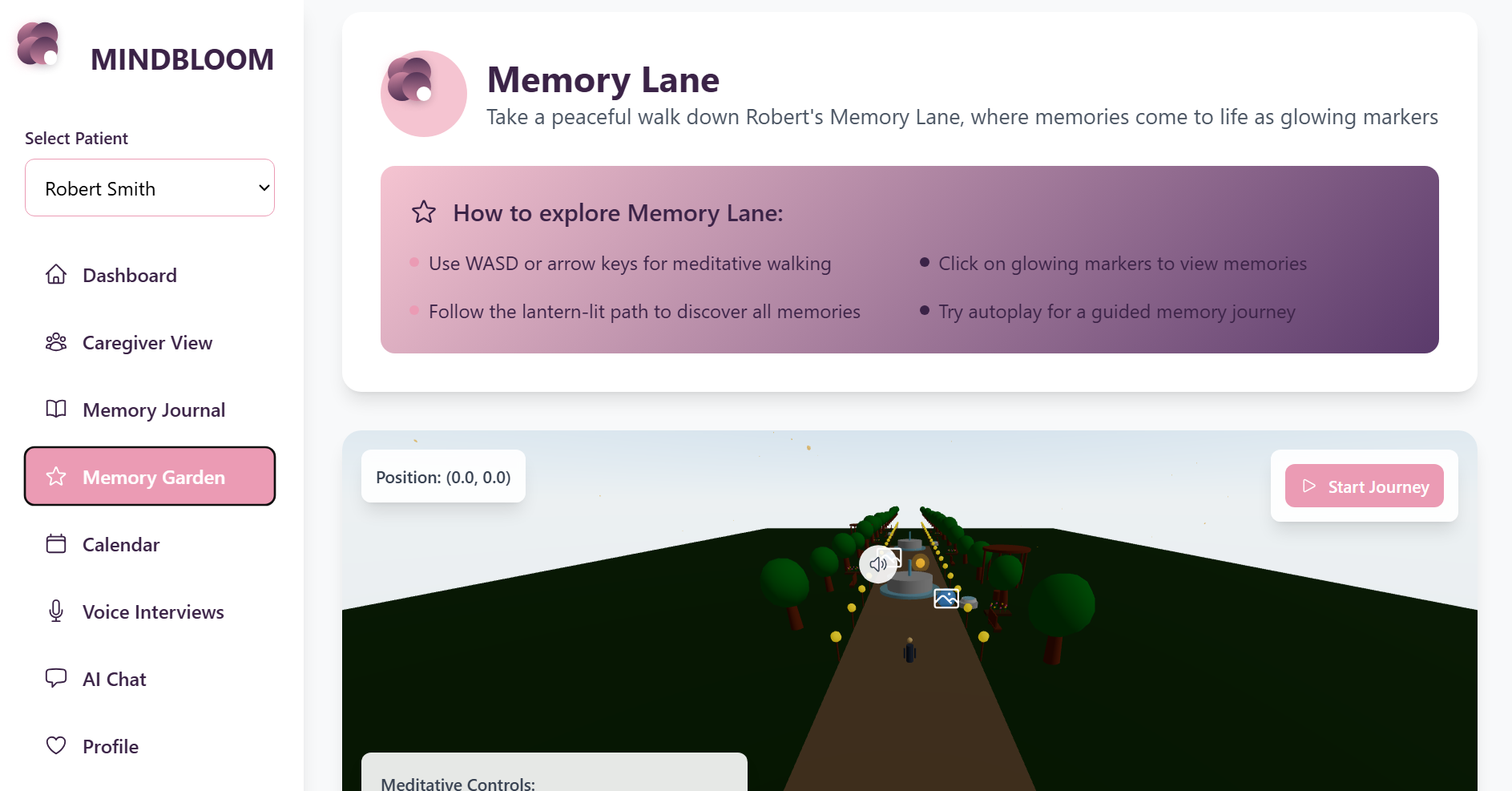
Memory Lane
-
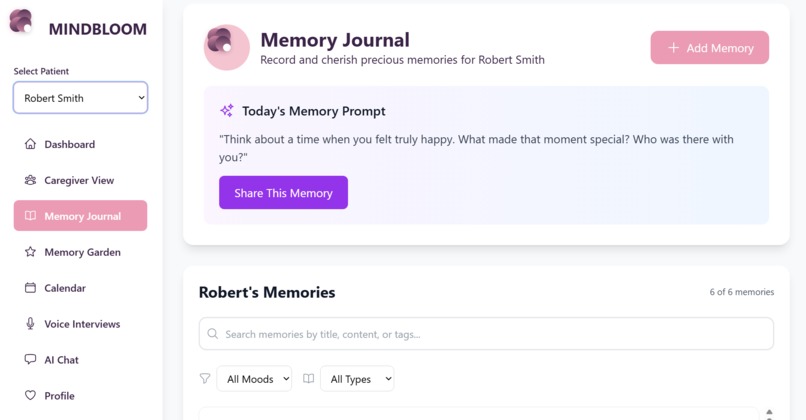
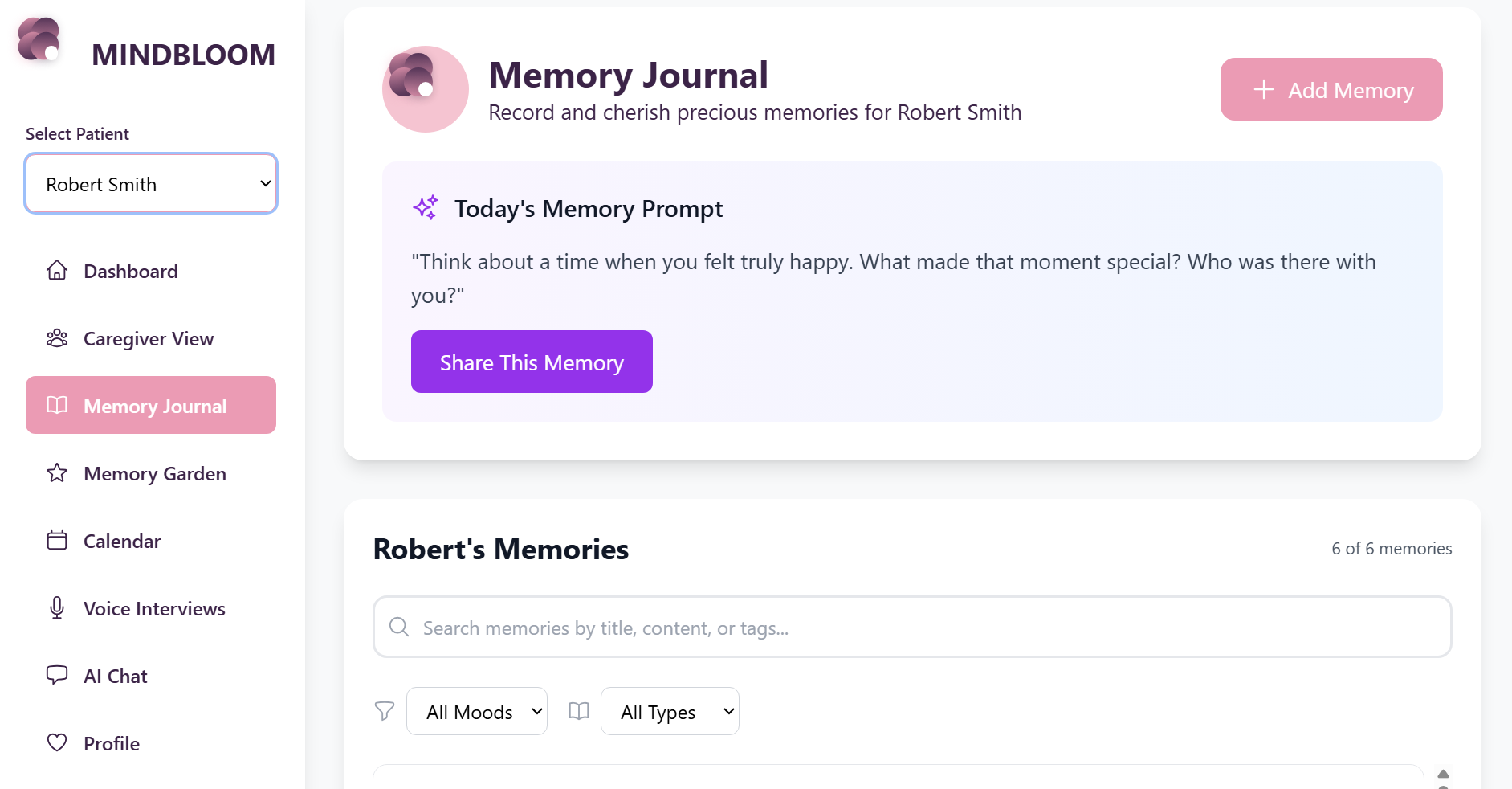
Memory Journal
🌱 Inspiration
I was inspired by the growing need for better mental health support and memory preservation, especially for elderly individuals and those with cognitive challenges. I wanted to create a platform that combines AI technology with compassionate care to help people preserve and cherish their precious memories.
✨ What it does
MindBloom is a comprehensive memory care platform that helps users capture, organize, and visualize their life memories through AI-powered interviews and intelligent memory management. The app features voice-based memory interviews, AI-generated memory visualizations, and a beautiful memory garden interface that makes reminiscing an engaging experience. Caregivers can monitor patient progress, track emotional well-being, and access detailed analytics to provide better personalized care.
��️ How we built it
I built MindBloom using a modern full-stack architecture with React for the frontend and FastAPI for the backend. The application integrates with MongoDB for data storage and uses AI services for memory analysis and image generation. I implemented real-time voice recording capabilities, AI-powered interview questions, and created an intuitive dashboard for caregivers to manage patient memories and track emotional well-being.
📋 Technologies Used:
Frontend:
- ⚛️ React.js - Main frontend framework
- 🎨 Tailwind CSS - Styling and responsive design
- 🎤 Web Audio API - Voice recording functionality
- 📱 Progressive Web App (PWA) features
- 🔄 React Hooks - State management
- 📊 Chart.js - Data visualization
Backend:
- 🐍 FastAPI - Modern Python web framework
- 🗄️ MongoDB - NoSQL database with Motor async driver
- 🎯 Uvicorn - ASGI server
- 📝 Pydantic - Data validation
- 🔌 CORS middleware - Cross-origin requests
AI & External Services:
- �� Google Gemini AI - Memory analysis and generation
- 🎨 Unsplash API - AI-generated image visualizations
- �� Speech Recognition - Voice-to-text processing
- 🔑 Ribbon API - Memory interview generation
- 📊 NumPy - Mathematical computations
DevOps & Deployment:
- �� Docker - Containerization
- ☁️ Render - Cloud hosting platform
- 🔧 Git - Version control
- 📦 npm/pip - Package management
🚧 Challenges we ran into
The biggest challenge was integrating multiple AI services while maintaining a smooth user experience. Voice recording and real-time processing required careful optimization to handle audio data efficiently. I also faced deployment challenges with Python package compatibility on Render, particularly with numpy and motor versions for Python 3.13. Another significant challenge was creating an intuitive interface that works well for both elderly users and their caregivers, requiring extensive UX testing and iteration.
🏆 Accomplishments that we're proud of
I'm most proud of creating a truly compassionate AI system that helps preserve precious memories. The voice-based interview system works seamlessly, and the AI-generated visualizations add a beautiful, personal touch to memory preservation. The caregiver dashboard provides valuable insights into patient emotional well-being, making it a practical tool for healthcare professionals. The entire application is fully functional with real-time features, secure authentication, and a responsive design that works across all devices.
📚 What we learned
I learned the importance of graceful fallbacks when integrating multiple AI services - the system continues working even when some services are unavailable. I gained deep experience with async programming in Python, real-time audio processing, and creating accessible interfaces for elderly users. The project taught me how to balance technical complexity with user-friendly design, especially when dealing with sensitive topics like memory preservation and mental health.
🚀 What's next for you
I plan to expand MindBloom with more advanced AI features like emotion detection from voice patterns and personalized memory recommendations. I want to add support for family members to contribute memories and create a mobile app version. I'm also exploring partnerships with healthcare providers to make this tool available to more people who could benefit from memory preservation technology. The goal is to create an even more comprehensive platform that can help families preserve their loved ones' stories for generations to come.

Log in or sign up for Devpost to join the conversation.