-
-
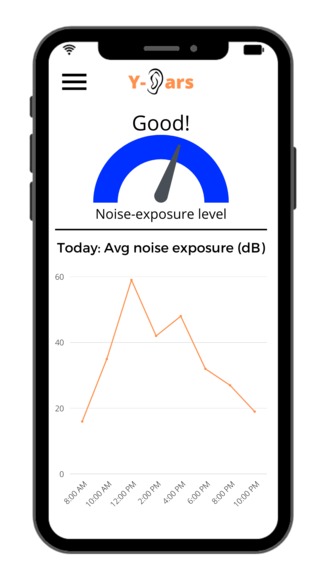
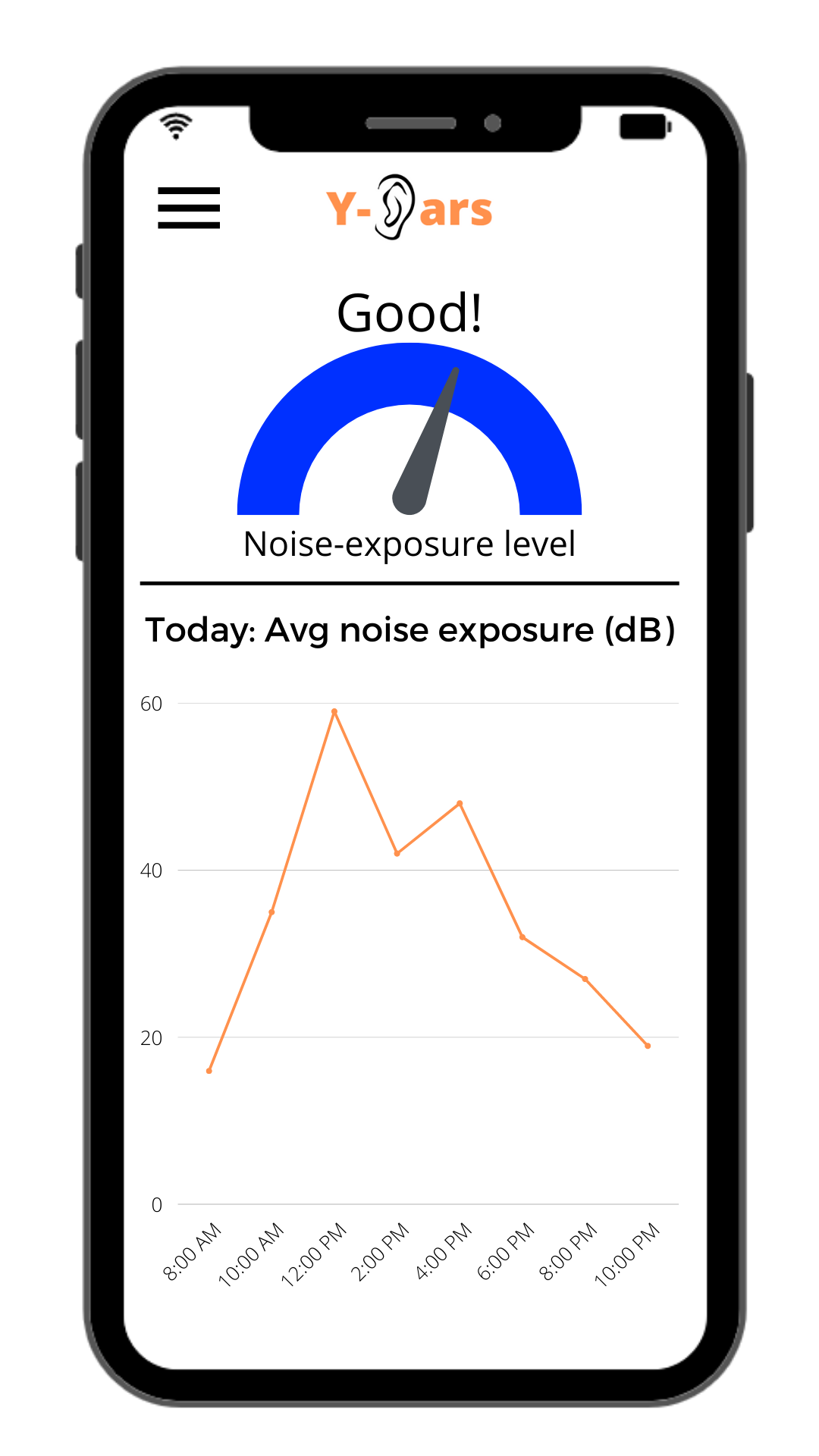
Home Page
-
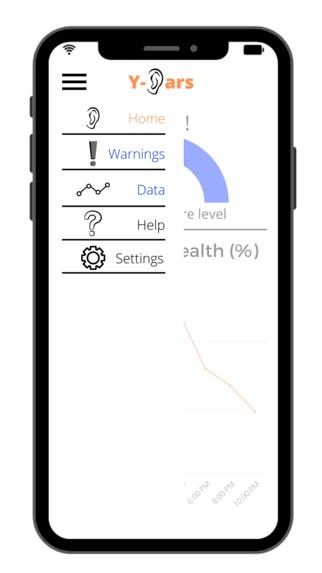
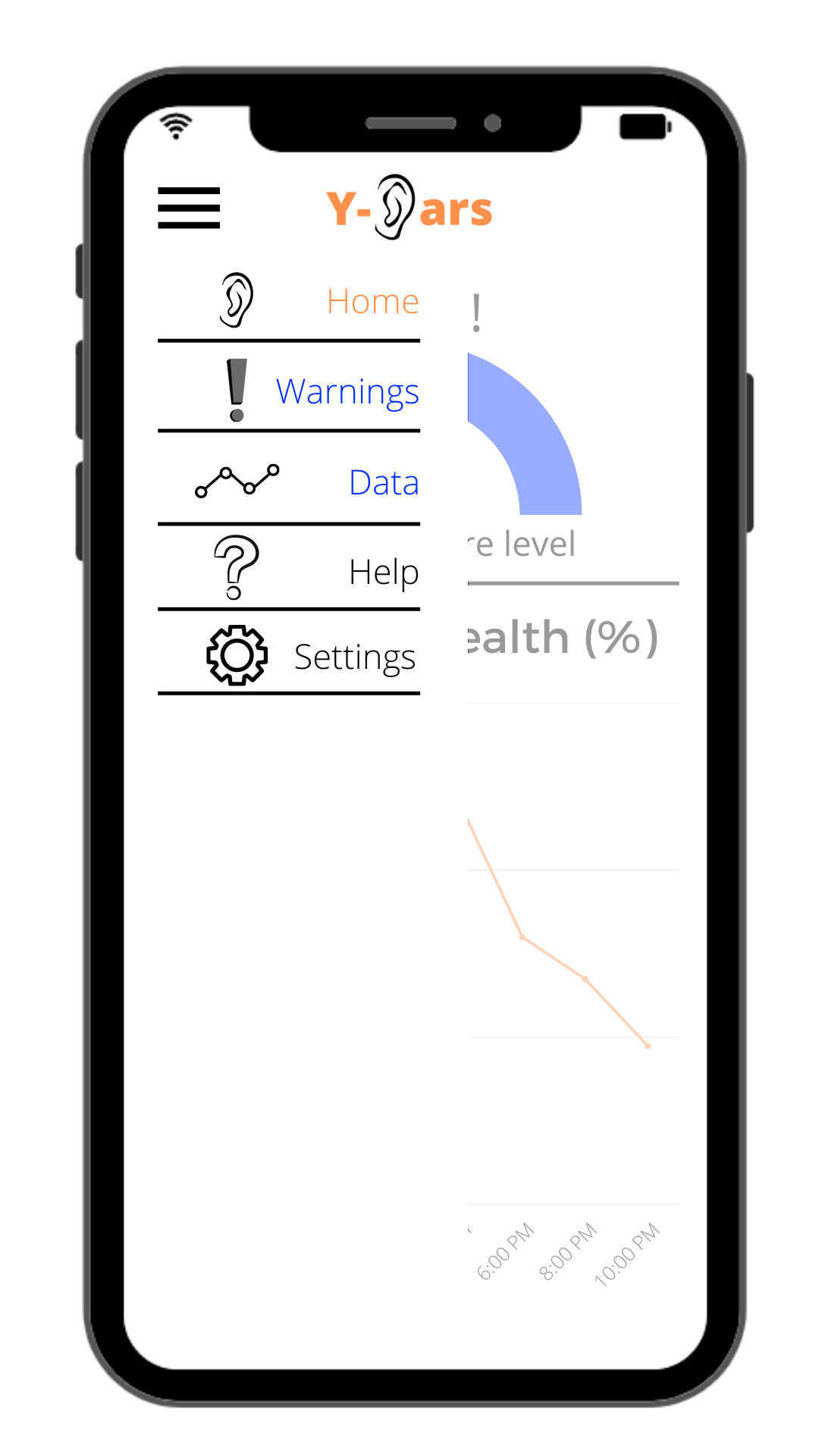
Menu Screen
-
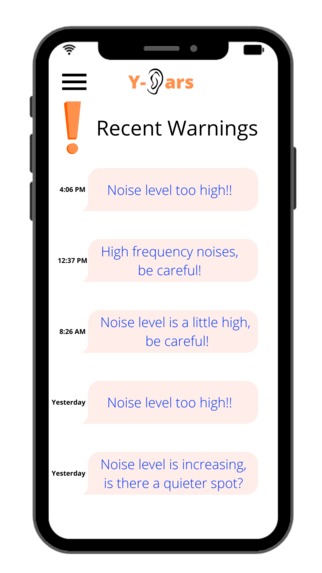
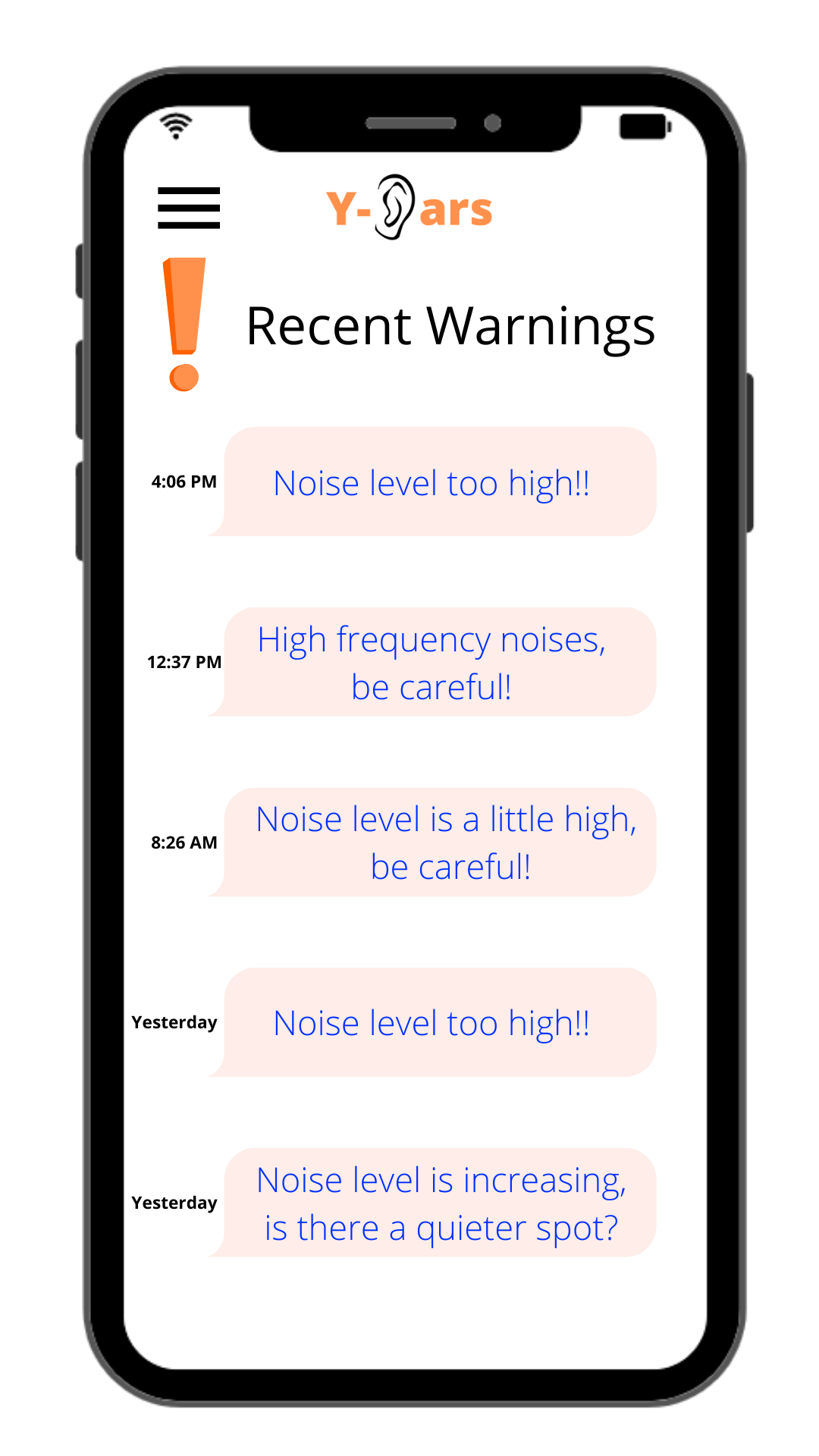
Warnings Page
-
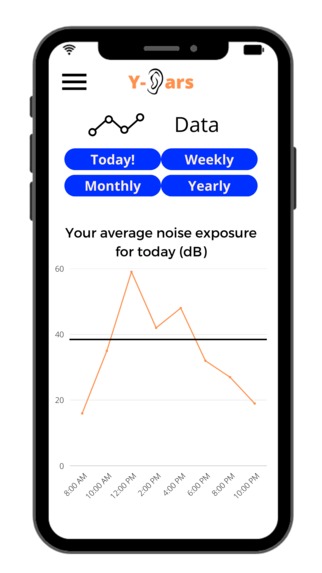
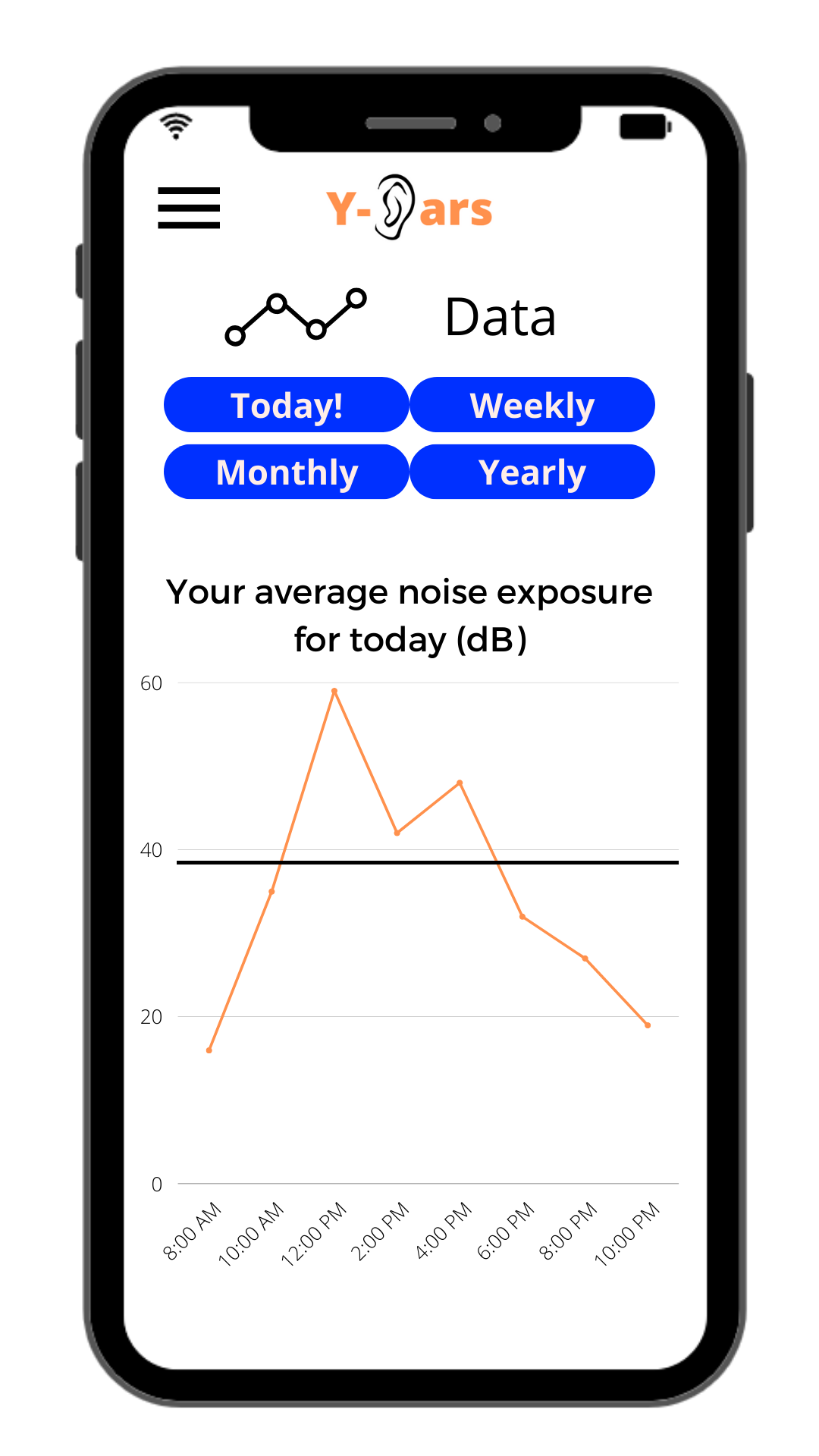
Data Page
Inspiration
Throughout the pandemic and due to rapidly evolving technology, the use of headphones has increased significantly. However, such prolonged exposure to sound may damage ears and hearing - something that could never be taken back once it gets damaged. As a way to maintain the health of our ears, we wanted to create an app that could notify users when sound and noise exposure is too much.
We named our app Y-EARS because we wanted users to maintain their ears’ health for years, by using.
What it does
Our app ultimately prevents ear damage by reducing one’s exposure to high-frequency or loud noises/sounds. It runs as a background program on the user’s device and notifies the user if the sound they are exposed to could be dangerous. Y-EARS has 4 main features, Measure noise levels (in decibels) Calculates the potential harm that the noise could cause Notify users if noise levels are too high or could be damaging Compile data regarding overall sound exposure and update users on a daily, weekly, or monthly basis (the frequency of updates is decided based on the user’s preference) So far, our prototype includes a feature that measures noise levels, as well as a feature that notifies users if the noise levels are damaging.
How we built it
We developed Y-EARS using Vim and VS Code and using Github for collaboration. We then used HTML, CSS, and Javascript to develop our prototype referencing notes we took during workshops and online documentation.
Challenges we ran into
We ran into several problems during the project, such as audio input not working due to missing permissions, attempting to read from the incorrect audio device, and many other issues. We also attempted to use a decibel conversion API, only to find it was deprecated. Despite these issues, our team persevered to complete our prototype.
Accomplishments that we're proud of
Ignition Hacks is our first hackathon and simply finishing a prototype was a great success to us.
Some highlights of our project are: The decibel meter We created a decibel meter to measure the noise levels of the users’ surroundings. By showing the dBA in numbers and using a dial to help users visualize that number, we gave users multiple ways to connect with the data our app gives them. The application of the Intro to building your first website workshop We applied the lessons we learned about user experience design from the workshop to our web app, allowing us to style our prototype to have a clean, good looking interface.
What we learned
Through this project we learned a lot about browser APIs, sound analysis and programming in general. We learned how to use the MediaDevices API to gather input from our users’ microphones. We learned about the complexity of sound analysis, including units of measurement that are often used, like dB and dBA. We also learned about tools that are commonly used for sound analysis such as the fast fourier transform. Finally, we learned a lot about how to work as a programming team, including how to divide up work and resolve merge conflicts.
What's next for “Y-EARS”
Y-EARS has lots of potential as a tool in an increasingly noisy world. In the future, we hope to add features that aim to educate and promote ear health and protection. We also want to add a feature to calculate the potential ear damage based on the noise levels taken in, as well as a feature to compile data regarding overall sound exposure that would give users a daily, weekly, and monthly summary.
Built With
- css
- dom
- html5
- javascript
- mediadevices

Log in or sign up for Devpost to join the conversation.