Xypher – Anonymous Ephemeral Chat App
Inspiration:
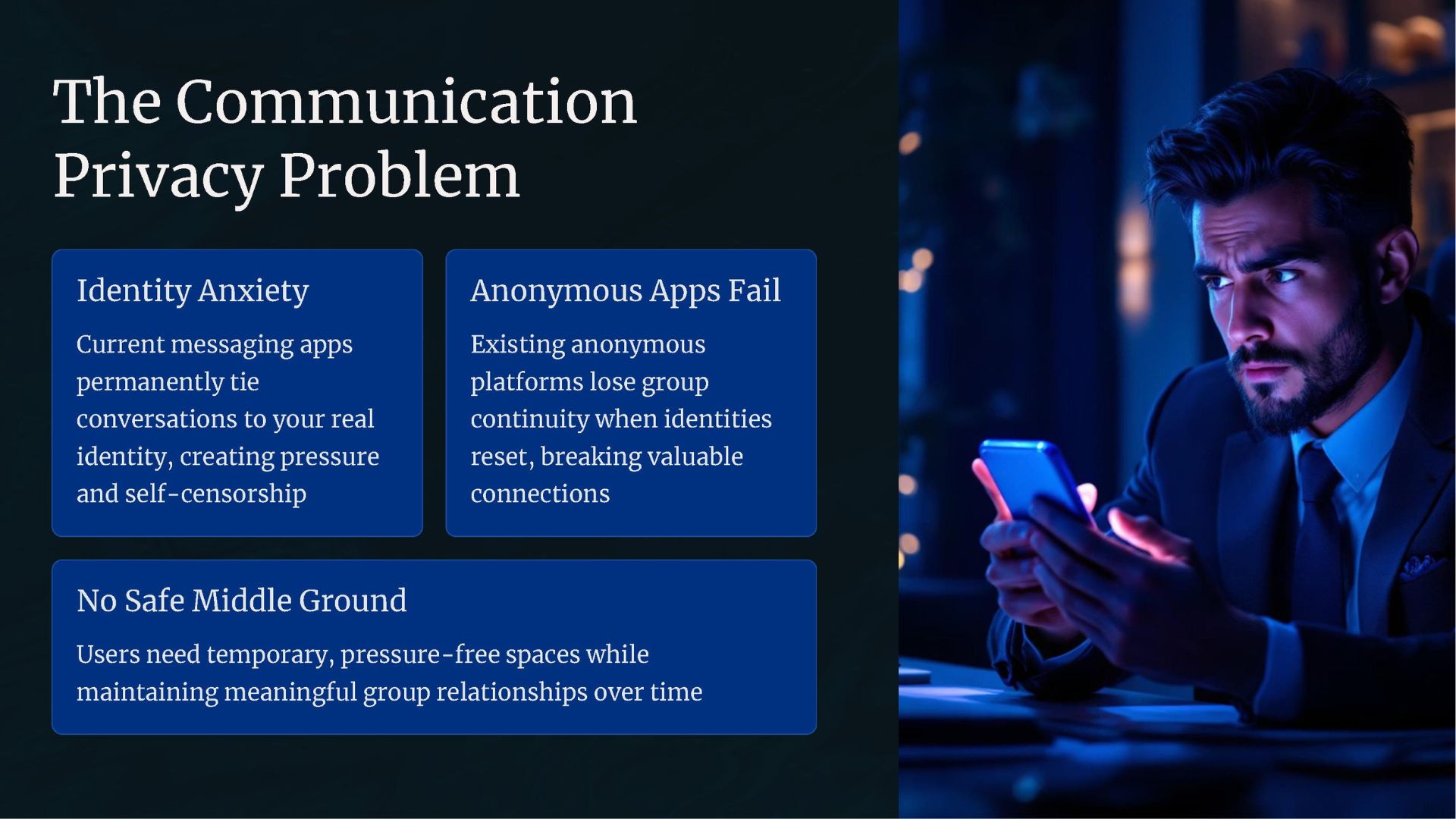
In today’s digital world, people want freedom to speak their minds without social pressure, judgment, or permanent traces. Existing anonymous chat apps either break group continuity or store too much personal data, making users hesitant to engage. We envisioned a platform where identity resets every session, messages self-destruct, yet room connections persist — giving users true anonymous yet continuous interactions. Inspired by vanishing conversations, fleeting moments, and safe digital spaces.
What it does:
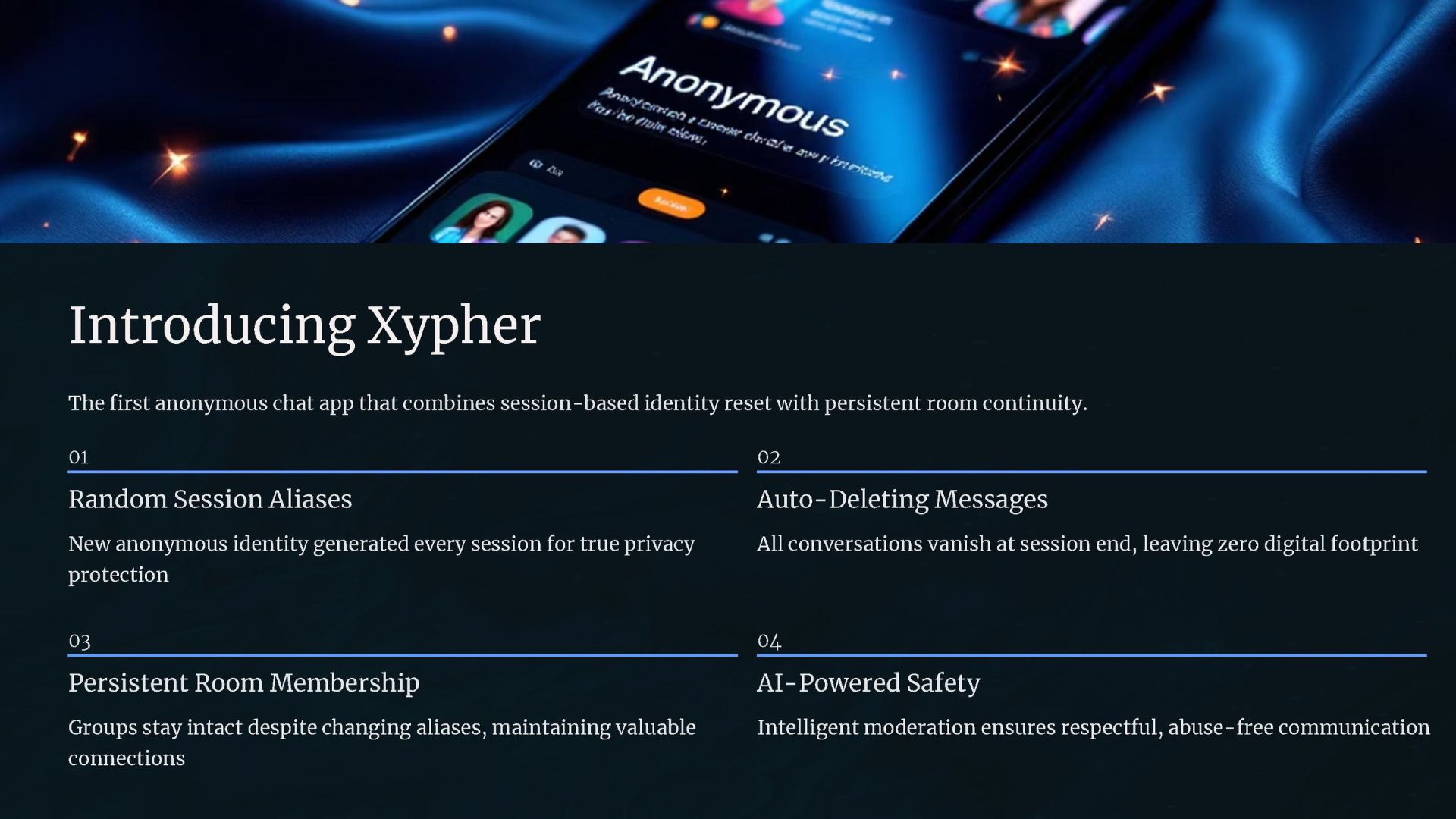
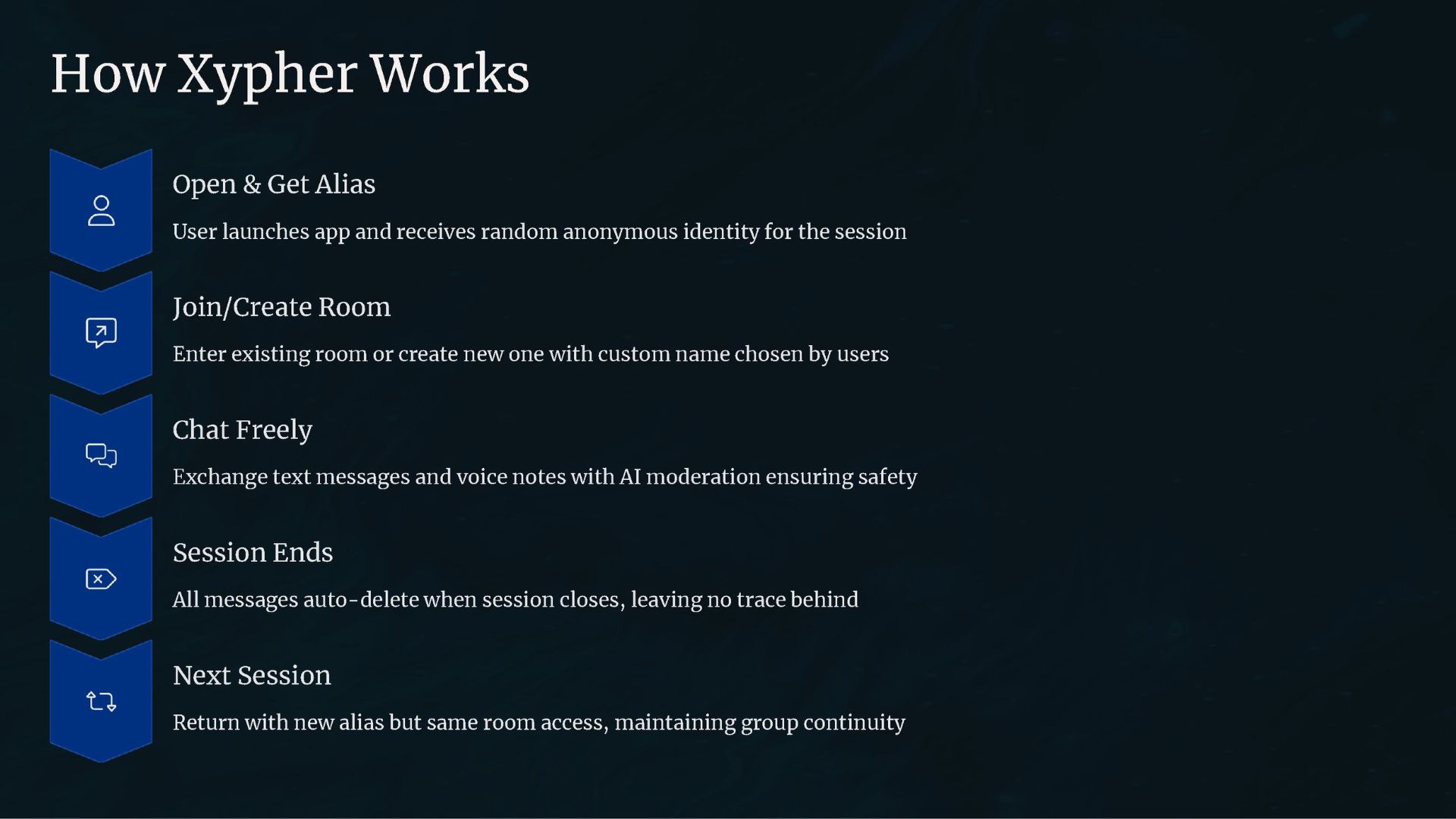
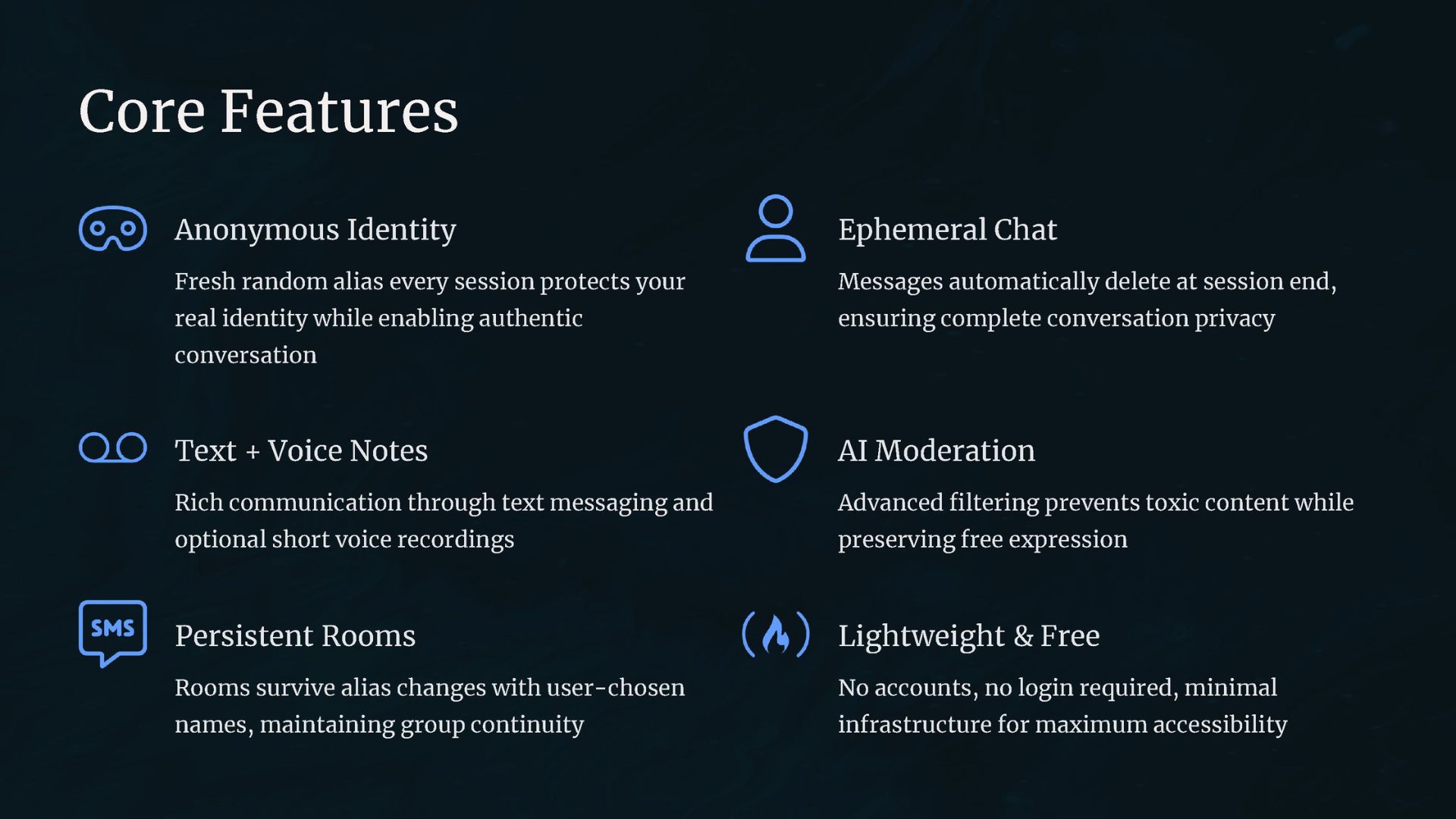
Xypher allows users to chat anonymously, with random aliases assigned each session. Users can send text messages and short voice notes, enriching communication without revealing identity. Persistent 2-person or group rooms allow users to reconnect even if their aliases change. AI moderation ensures conversations remain safe, respectful, and non-toxic. All messages auto-delete at the end of each session — zero trace, total privacy. Users can choose room names, creating a sense of ownership without compromising anonymity.
How we built it:
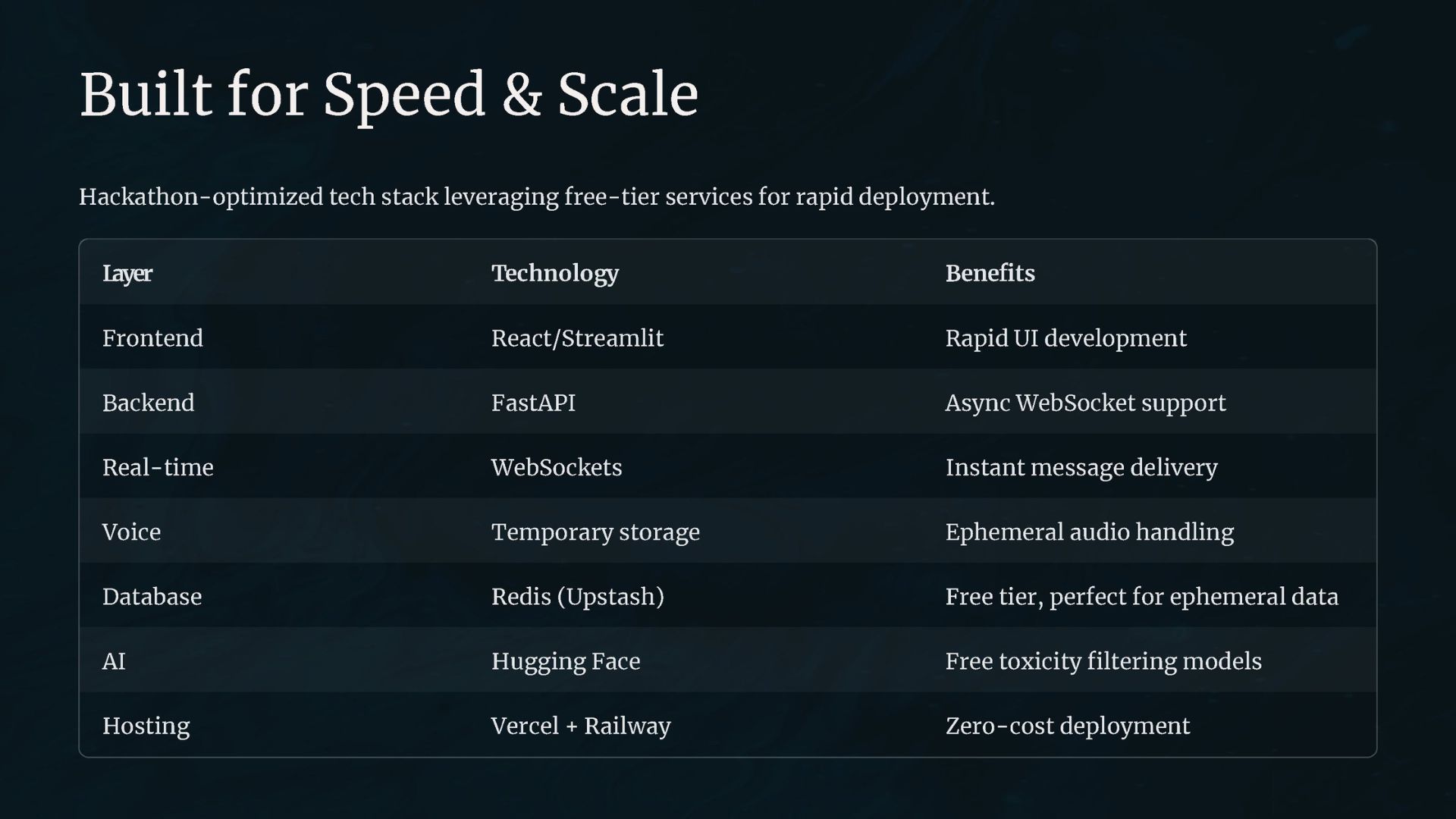
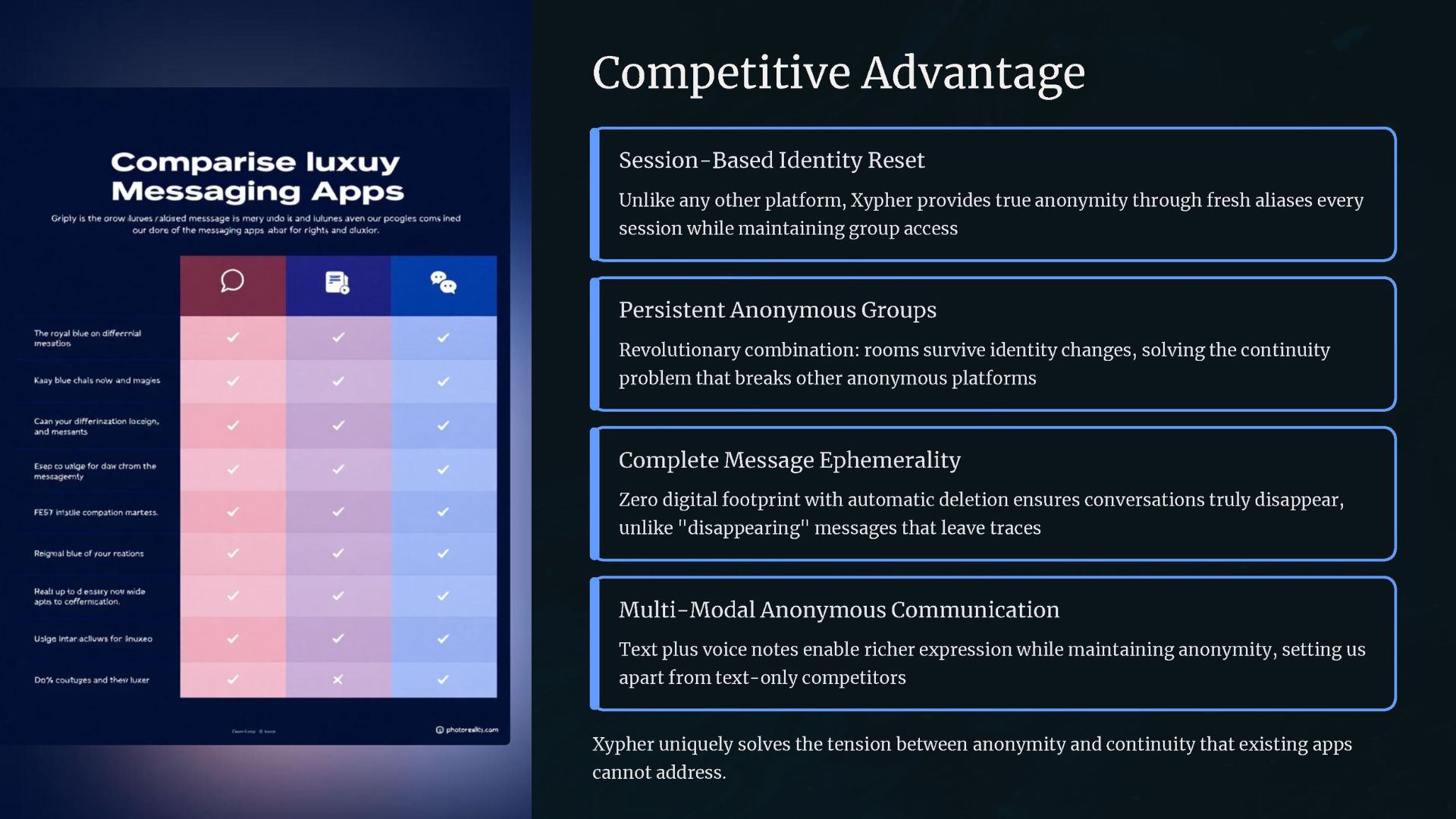
Frontend: React (web) and optional Streamlit for MVP → fast prototyping and sleek UI. Backend: FastAPI → lightweight, asynchronous, supports WebSockets for real-time chat. Real-time chat: WebSockets for instant text and voice messaging. Voice note storage: Temporary, session-based storage (local memory or S3 free tier). Database: Redis (Upstash free tier) → ephemeral messages and room membership management with TTL. AI Moderation: Hugging Face free models detect toxic/abusive content in real-time. Hosting: Free-tier Vercel / Netlify (frontend) and Render / Railway (backend) for live demo. Key innovation: Persistent rooms even with alias changes + ephemeral messaging → not available in any existing anonymous chat platform.
Challenges we ran into:
Maintaining anonymity while preserving room continuity: solved by assigning opaque tokens per user that persist across sessions. Ensuring ephemeral storage for messages and voice notes → Redis TTL + auto-expiry on S3 for temporary media. AI moderation of anonymous content: had to balance privacy vs safety without storing user-identifiable data. User experience with alias changes: designing clear visual cues so users recognize “same participant” without revealing identity. Scaling real-time messaging with free-tier infrastructure → optimized WebSocket connections and lightweight storage. Accomplishments that we're proud of Truly anonymous ephemeral chat MVP with text and voice. Persistent rooms despite alias changes, a unique feature not seen in existing apps. AI moderation fully integrated to prevent toxic behavior without storing personal data. Fully deployable using free-tier tech stack → hackathon-ready with a live demo. Created a scalable foundation for future features like anonymous video, stickers, and gamified aliases.
What we learned:
Designing anonymous systems requires balancing privacy, safety, and UX. Ephemeral storage + persistent connections is achievable using Redis, WebSockets, and temporary storage. AI moderation is critical even in short-lived sessions — anonymity doesn’t eliminate responsibility. Rapid prototyping with React + FastAPI + free hosting is sufficient to demonstrate complex real-time apps at hackathons. Users value clarity in alias/session management — good UX is key even in privacy-first platforms.
What's next for Xypher:
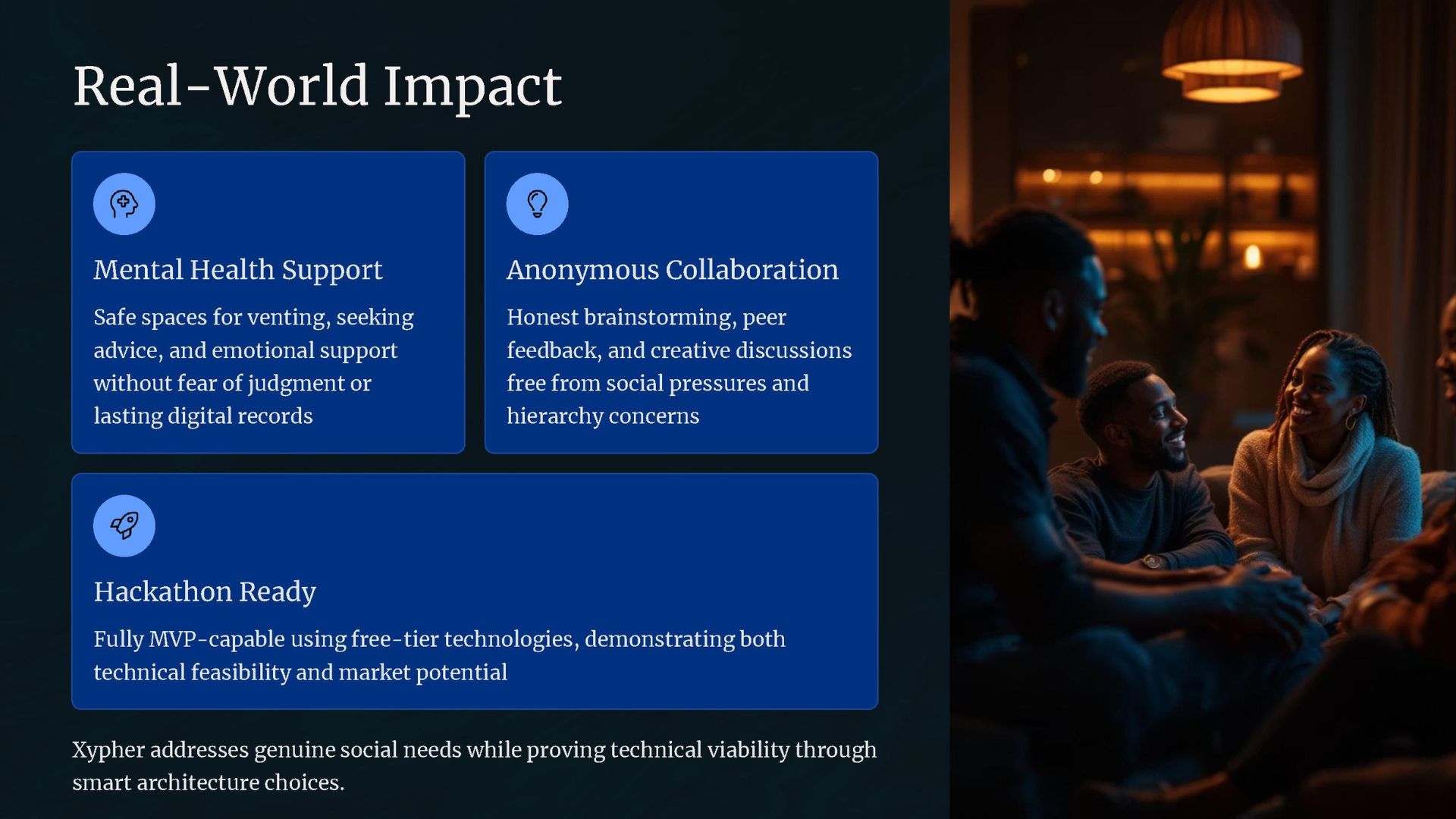
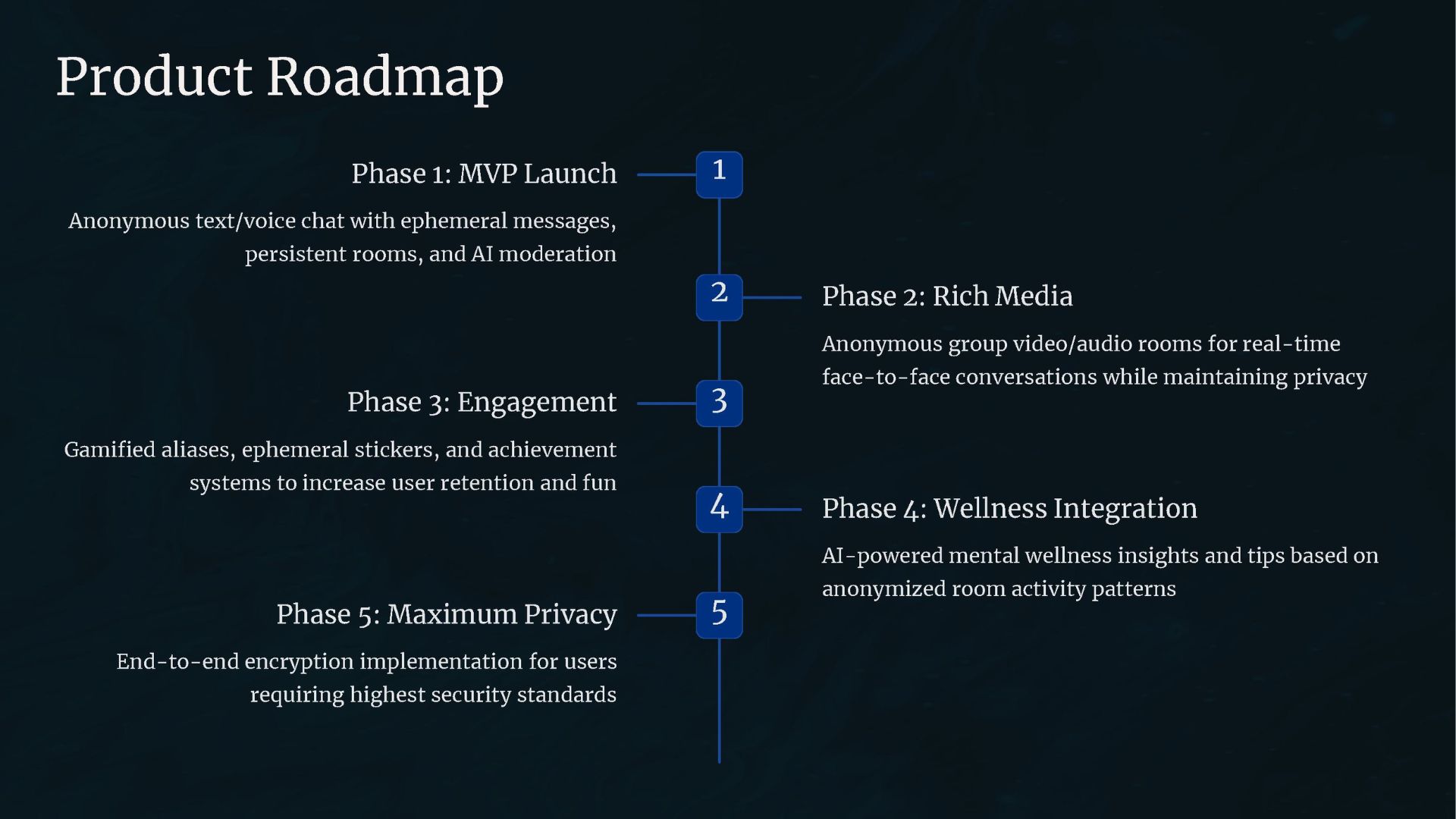
Anonymous group video or audio rooms → extending ephemeral communication beyond text. Gamified aliases or ephemeral stickers to increase engagement. Client-side sentiment/mood summaries for private session reflection. Optional end-to-end encryption → fully secure and private messages. Analytics & safety dashboards → measure usage safely while respecting anonymity. Potential integration with mental wellness platforms to provide safe venting and advice channels.
Built With
- fastapi
- huggingface
- react/streamlit
- redis
- vercel
- websockets

Log in or sign up for Devpost to join the conversation.