-
-
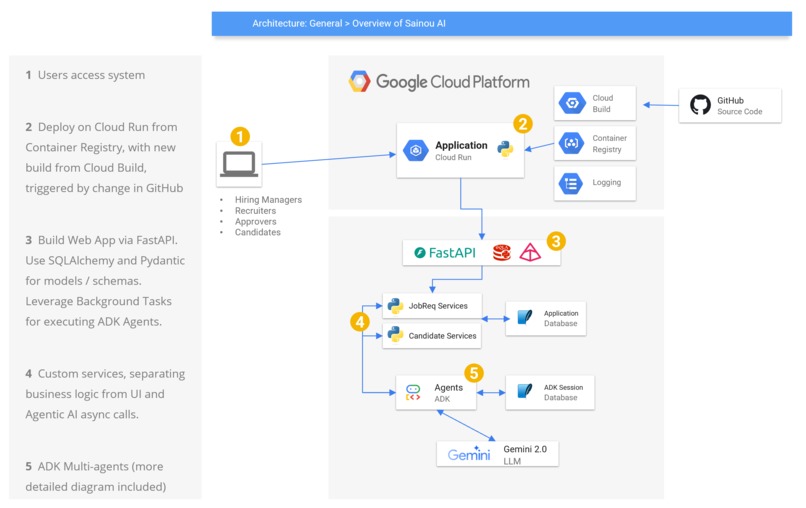
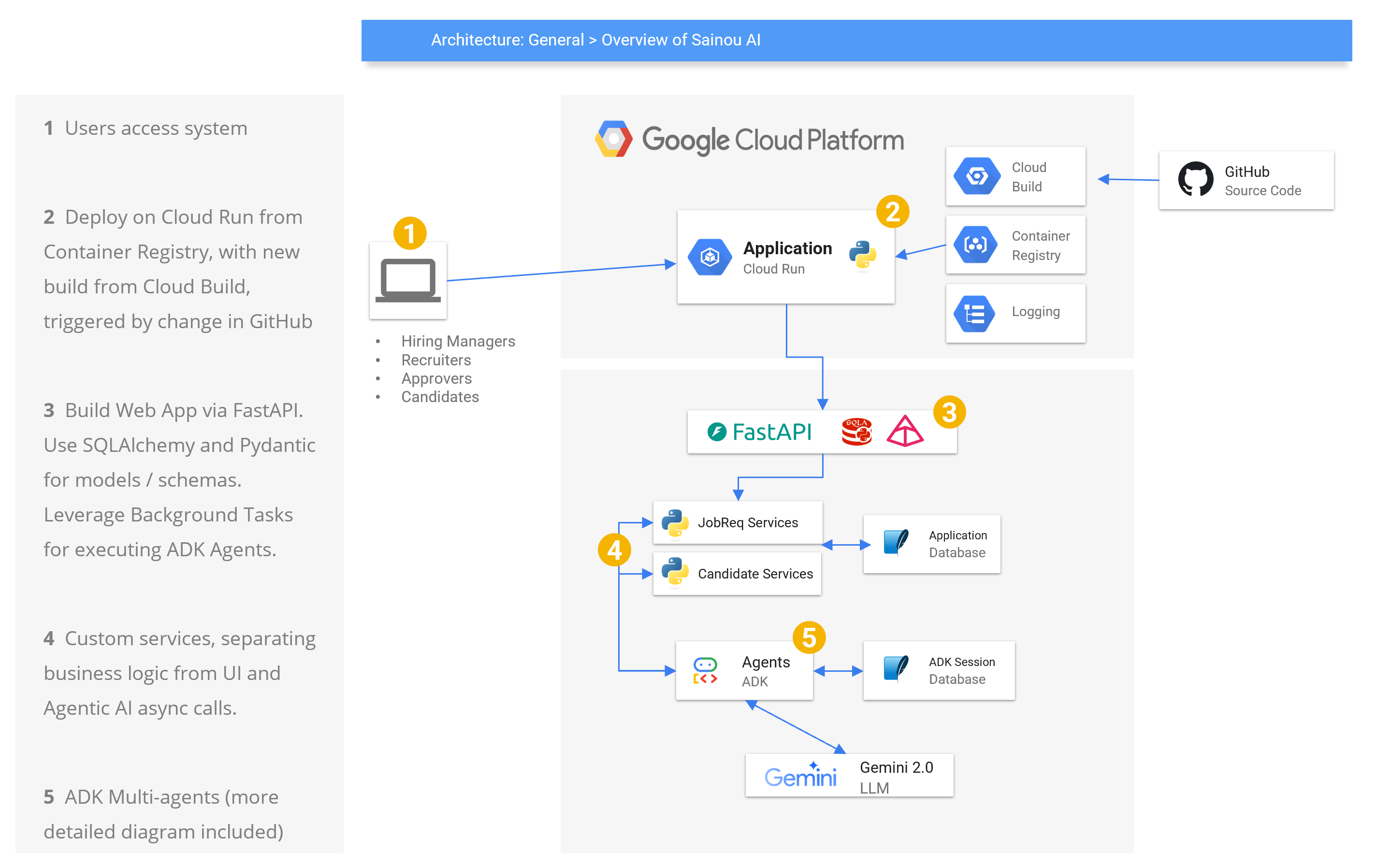
System Diagram
-
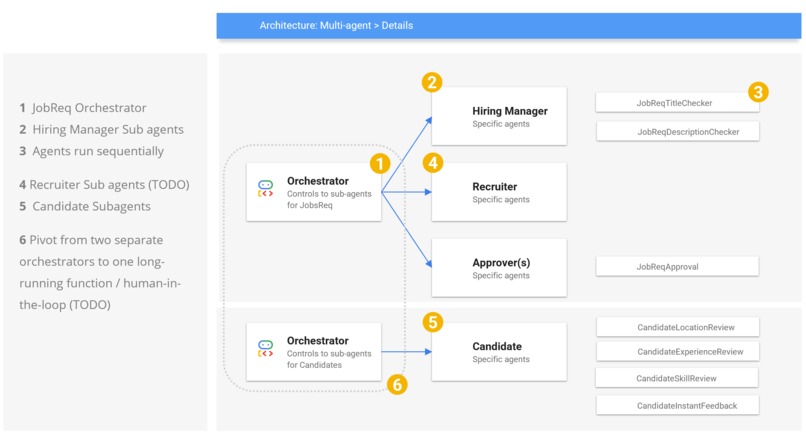
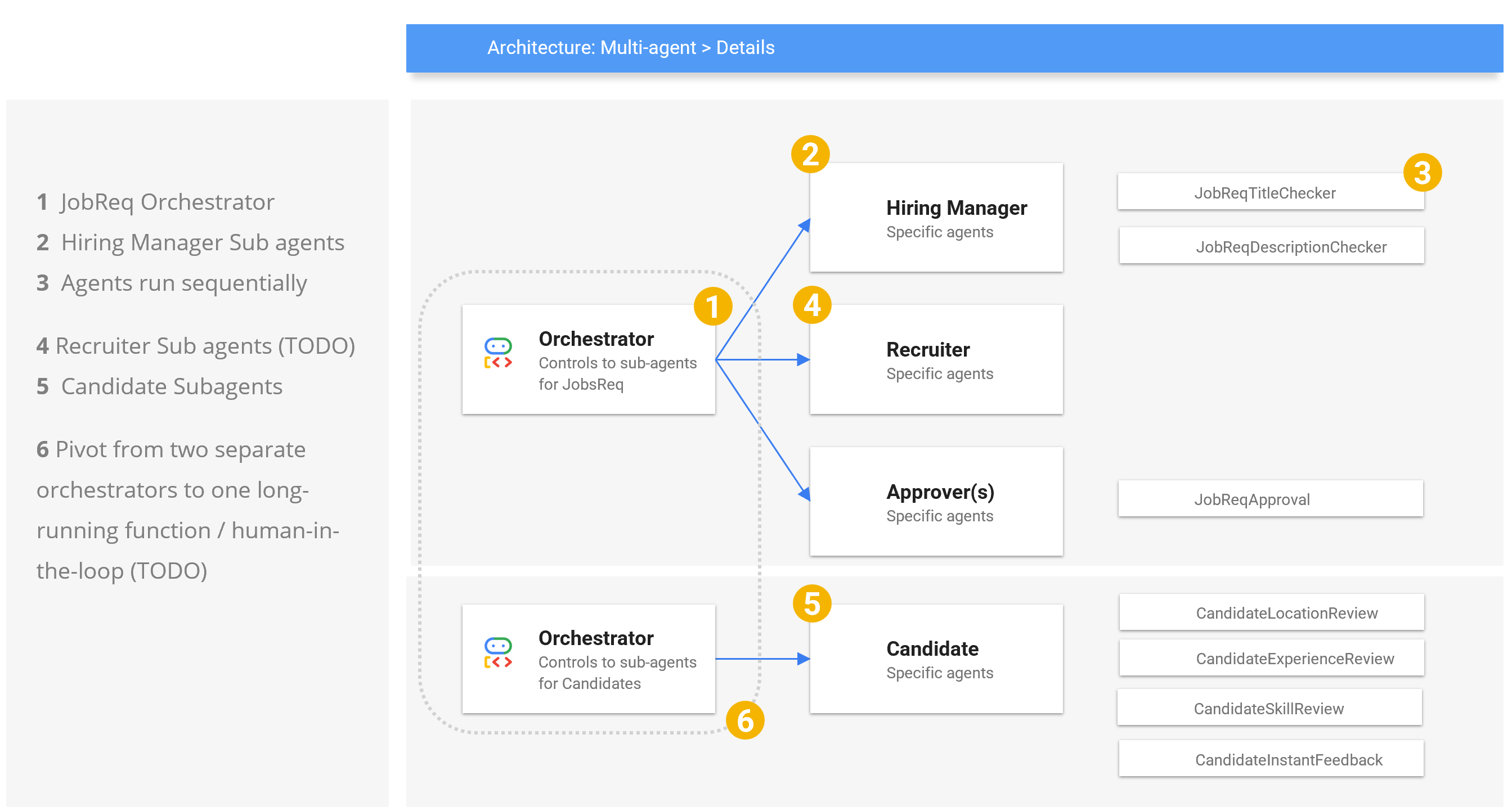
Multi-Agent Diagram
The Japanese word 'sainou' (才の) refers to a unique combination of innate talent, skill, and artistry – a natural aptitude that goes beyond mere ability. I am leveraging this concept to reimagine the recruitment proces for employers and candidates.
Inspiration
As a hiring manager across multiple large-scale IT modernization programs, I’m intimately familiar with the challenges of modern recruitment. The current landscape is plagued by "stuffed" resumes, inefficient processes, and a disconnect between companies and candidates. The reliance on outdated systems and keyword-driven searches often leads to missed opportunities and wasted resources. I saw a need for a more intelligent and human-centric approach, leveraging the power of Agentic AI to bridge the gaps.
This is not about replacing human-to-human interviews or reviews in the hiring process but using AI behind the scenes to fill the perceived gaps that affect both sides.
The Problem
The traditional hiring process is costly and inefficient. According to SHRM, it averages $4,700 per hire, escalating to over $28,000 for executive roles. Beyond the financial burden, the process is often frustrating for both sides. Candidates feel lost in the system, while recruiters struggle to identify the best fit amidst a sea of applications. The reliance on a single resume fails to capture the full potential of a candidate, and the lack of real-time feedback leaves both parties in the dark. This inefficiency not only impacts a company's bottom line but also hinders its ability to innovate and grow.
User Stories: This project aims to address the needs of various stakeholders in the hiring process. I’ve identified the following key user stories:
- As a hiring manager, I want to quickly identify qualified candidates who align with the specific requirements of the role, so I can spend less time sifting through irrelevant applications and more time interviewing promising individuals.
- As a recruiter, I want to automate repetitive tasks like job requisition creation and initial candidate screening, so I can focus on building relationships with top talent and improving the overall candidate experience.
- As a job seeker, I want to understand how my skills and experience align with a potential role, and receive timely feedback on my application, so I can feel confident and informed throughout the hiring process.
What it does
My approach reimagines the recruitment process by leveraging a multi-agent workflow. The system focuses on two key areas: streamlining the company’s internal processes and empowering candidates with a more engaging and informative experience. The system handles job requisition creation, ensures alignment with corporate standards, and facilitates internal approvals. By automating these repetitive tasks, the system frees up recruiters to focus on higher-value activities like candidate engagement and relationship building. For candidates, the system provides a dynamic assessment, offers real-time feedback, and potentially asks targeted engagement questions to uncover deeper insights. This creates a more transparent and candidate-centric experience, improving employer branding and attracting top talent. This isn’s about replacing human interaction; it’s about augmenting the process with AI to improve efficiency and transparency.
How I built it
Developed in under a week during this hackathon, my solution leverages Python, FastAPI, SQLite, and the Google ADK framework. I'm utilizing Google Cloud Build, Cloud Run, and Logging for deployment and monitoring. While I have experience with Google Cloud, this project served as a deep dive into Python and the power of ADK. The ability to rapidly prototype and iterate using ADK’s intuitive interface and sample code was invaluable.
Challenges I ran into
A key challenge was implementing long-running functions, a critical component for complex workflows. While I'm actively working to integrate this functionality, I'm currently maintaining state using a SQLite database. This experience highlighted the importance of ADK’s session state and callbacks for debugging and workflow management. I’m now comfortable with Python and FastAPI, and I appreciate the ease of toggling between the ADK UI and a custom interface for testing.
Accomplishments that I'm proud of
- Pulling this together hackathon entry together in under one week. I created the source code folder on my laptop on Wednesday, June 18th at 10:22pm. I had sat in on some ADK sessions at Google Cloud Next this past April and knew of the hackathon, but kept getting caught up with daily life. Finally decided to sit down, spend a few hours each evening and pound out what I could.
- I have decades of development experience and a few years work specifically with Google Cloud, but my Python skills were limited to scripting and notebooks. Learning FastAPI, SQLAlchemy and Pydantic in short order was challenging but well worth the effort.
What I learned
- A lot, not only about Python but about how ADK works and can work across multiple domains.
- How much of what ADK offers OOTB is beyond valuable - including but not limited to session state management and callbacks. (Also the docs and samples wer a huge help)
What's next for Project: Sainou AI
I envision expanding the system to include:
- Full Long-Running Functionality: Integrating this crucial feature for more complex workflows.
- Incorporation of External Tooling / Functions: Hackathon entry limited to self-contained data / workflow, enterprises have ATS, HR, ERP and documented branding and standards
- Enhanced Candidate Experience: Providing more personalized feedback and engagement opportunities.
- Proactive Job Matching: Suggesting relevant opportunities to candidates based on their skills and interests.
- Mature Agents: Ensure agents such as Job Description checker dont invent responsibilities or qualifications that weren't orginally intended. Make sure no over-correction or scope creep.
Built With
- cloud-run
- fastapi
- google-cloud
- pydantic
- python
- sqlalchemy

Log in or sign up for Devpost to join the conversation.