-
-
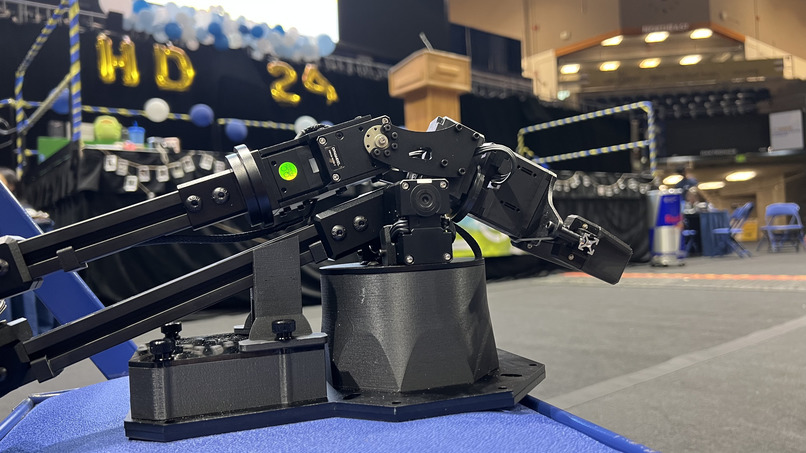
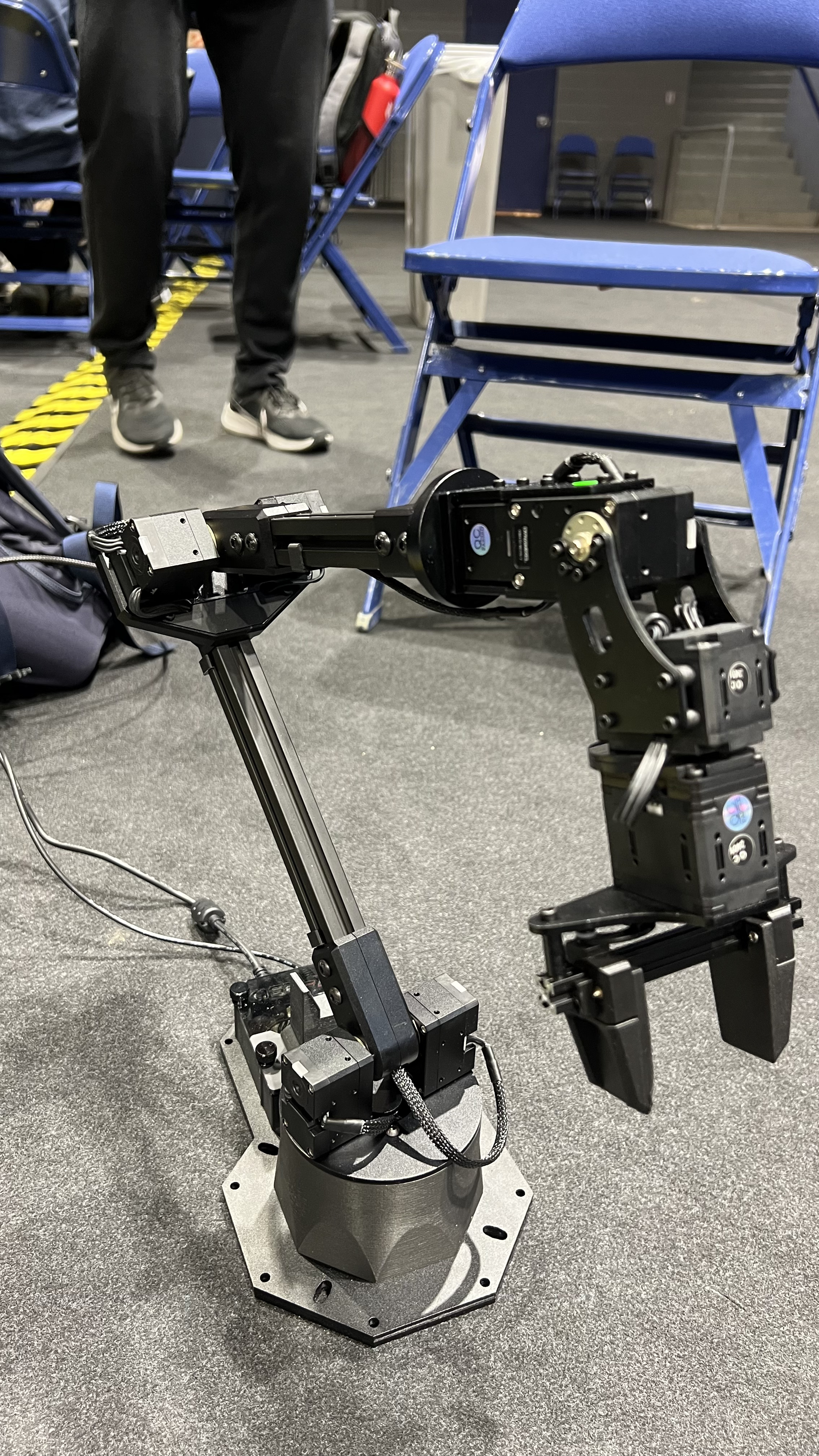
A closeup to our Interbotix robot arm with the nice HackDavis background
-
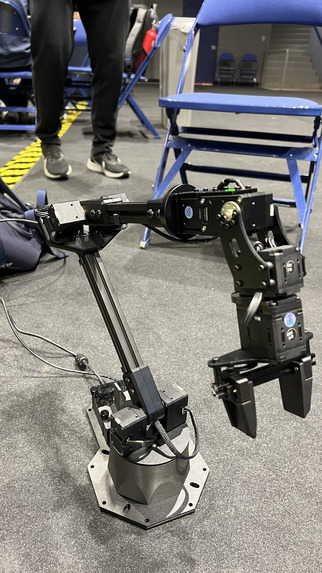
A 45 angle down close up to our Interbotix robot arm after the connectionn
-
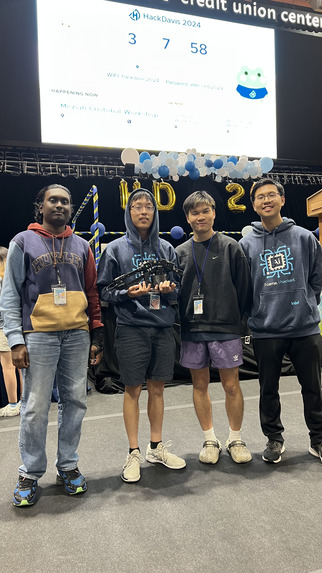
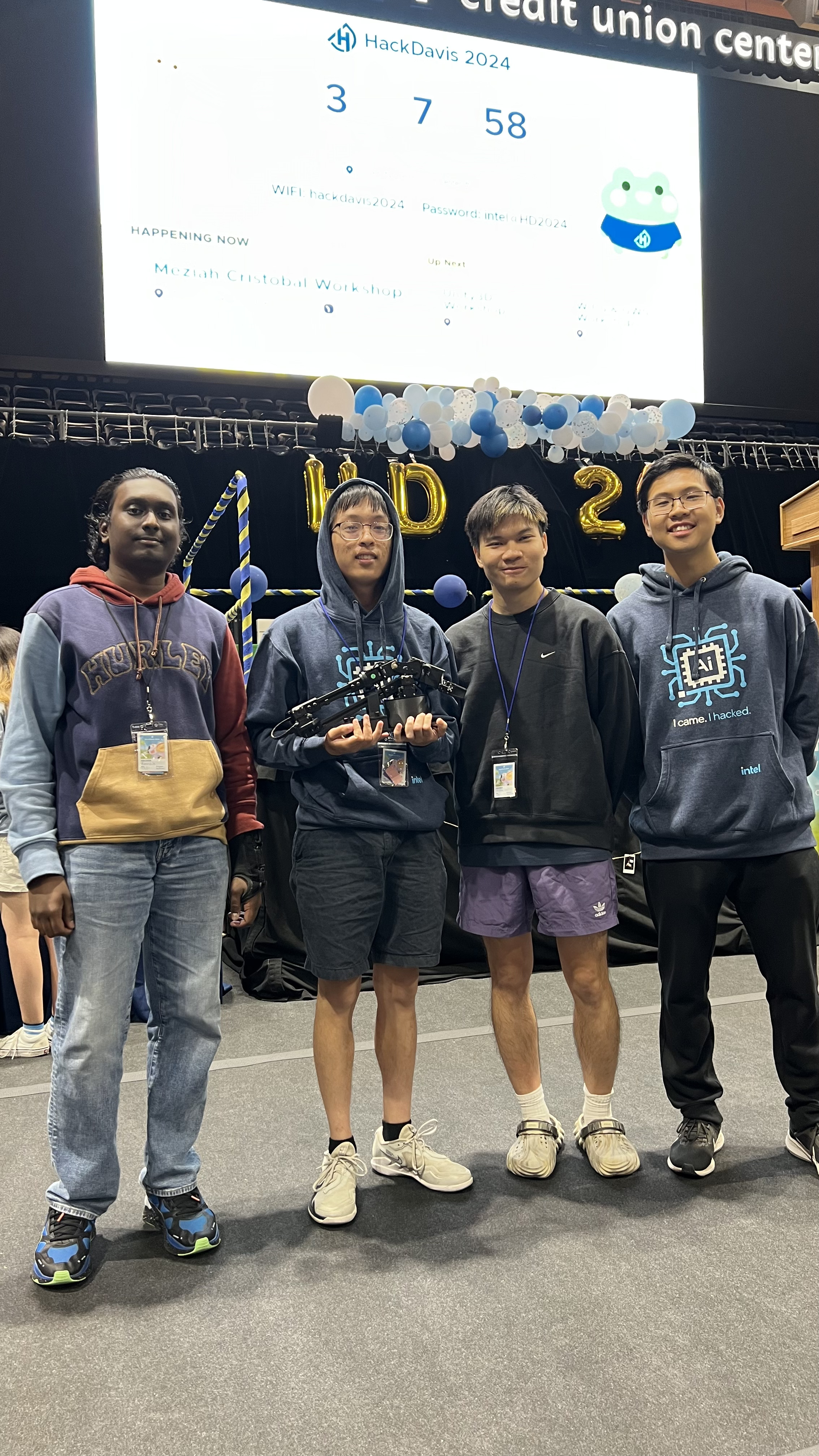
A photo of team members with our Interbotix robot arm
Inspiration
As society trends towards greater efficiency, cost-saving measures, and productivity, there arises a need for innovative tools. Our robot arm, controlled through Meta Quest 2, offers intuitive control, surpassing traditional button-based interfaces. This achievement enables a user-friendly interface, significantly reducing training costs and time. Moreover, the rapid development of internet networks instills confidence in achieving true remote capabilities, regardless of distance. We expect it to integrate with trending fast internet technology to achieve low-to-none latency.
What it does
Precisely and responsively interact with a robotic arm using the Meta Quest 2. The robotic arm and the Meta Quest 2 can be paired over the Internet through computers across the ocean!
How we built it
We utilized HTML, CSS, and JavaScript for our full-stack application with Firebase for server side hosting. To achieve the peer-to-peer telecommunication, we use WebRTC to establish connection in between computers. We used Interbotix and Ros to control the movements of the robotic arm.
Challenges we ran into
- WebRTC Integration
- Programming robotic arm movements
- Creating JavaScript sockets
- Lack of design
Accomplishments that we're proud of
- Amazing supportive teamwork
- Using WebRTC for the first time
- Overcoming road blocks with programming the robotic arm movements
What we learned
- WebRTC Integration
- Learned design principles and how to set up backend with Firebase
What's next for VR Robotic Arm Controller
- Introduce some sorts of threshold to filter out "noisy" hand actions. More specifically, the robot arm would act more stable to shaky hand.
- More robotic arm movements, more joints, more human-like grabbing.
- Seamless integration with other VR headsets, better to be adaptable for cheaper VR gears.
- Bridge with faster internet agreement such as 5G or futuristic 6G.
Built With
- css
- html
- interbotix
- javascript
- python
- ros
- webrtc


Log in or sign up for Devpost to join the conversation.