-
-
-
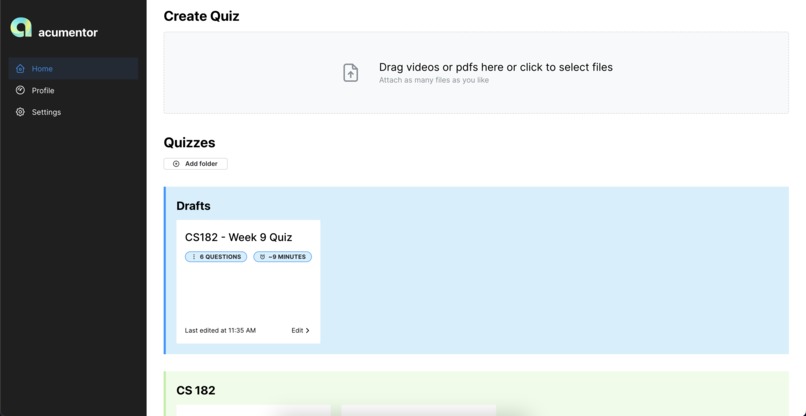
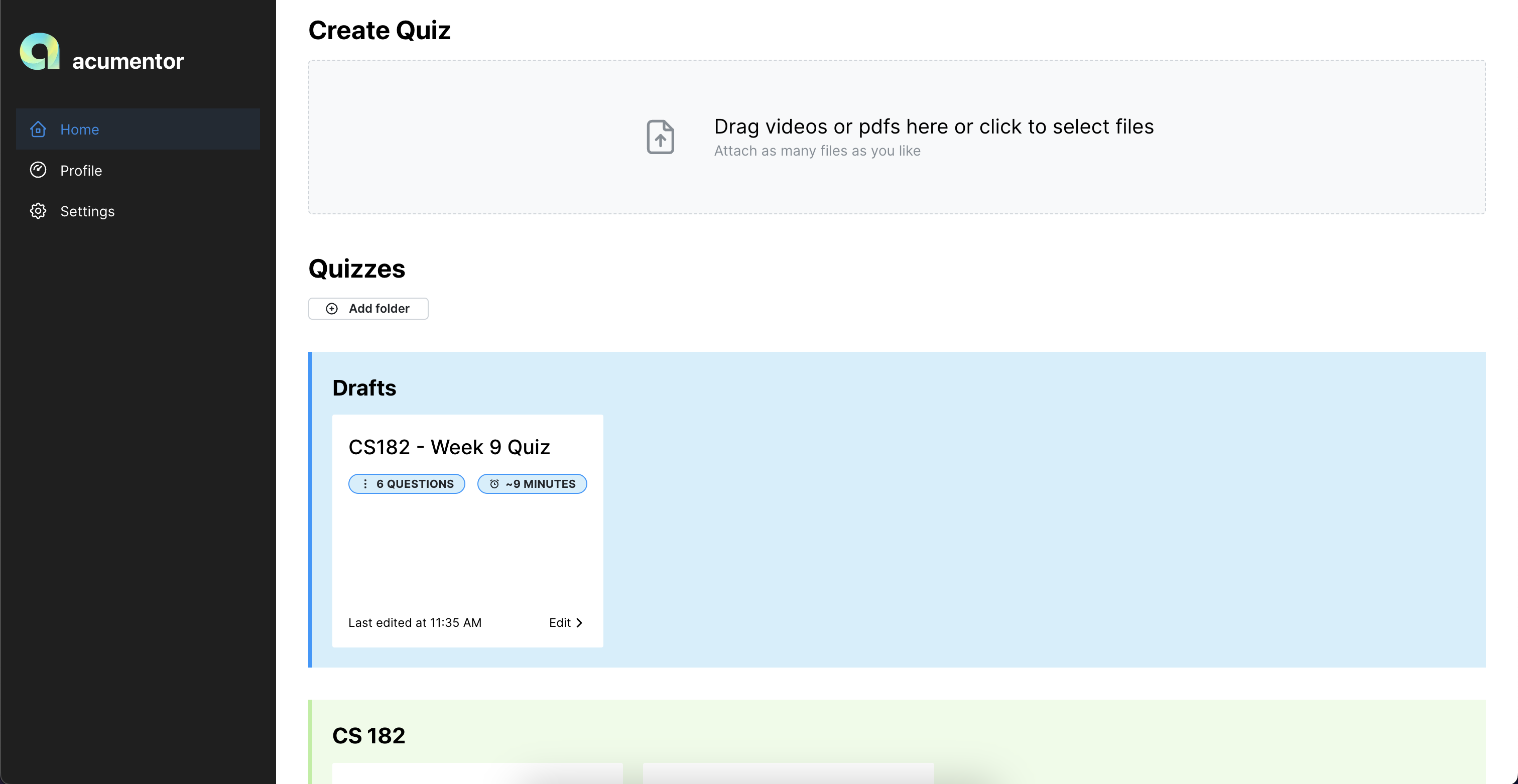
Dashboard
-
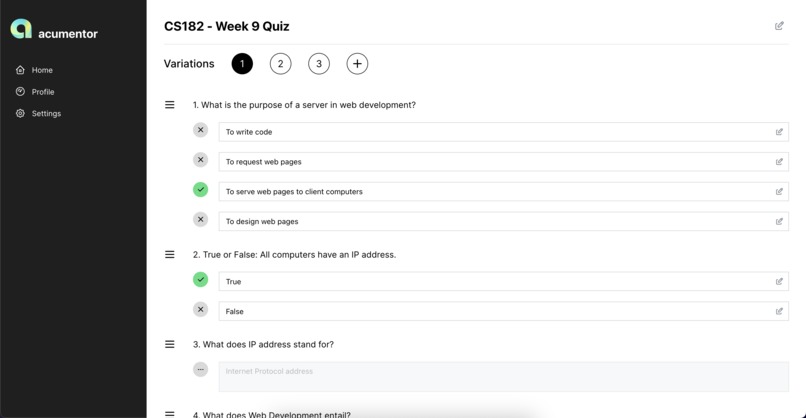
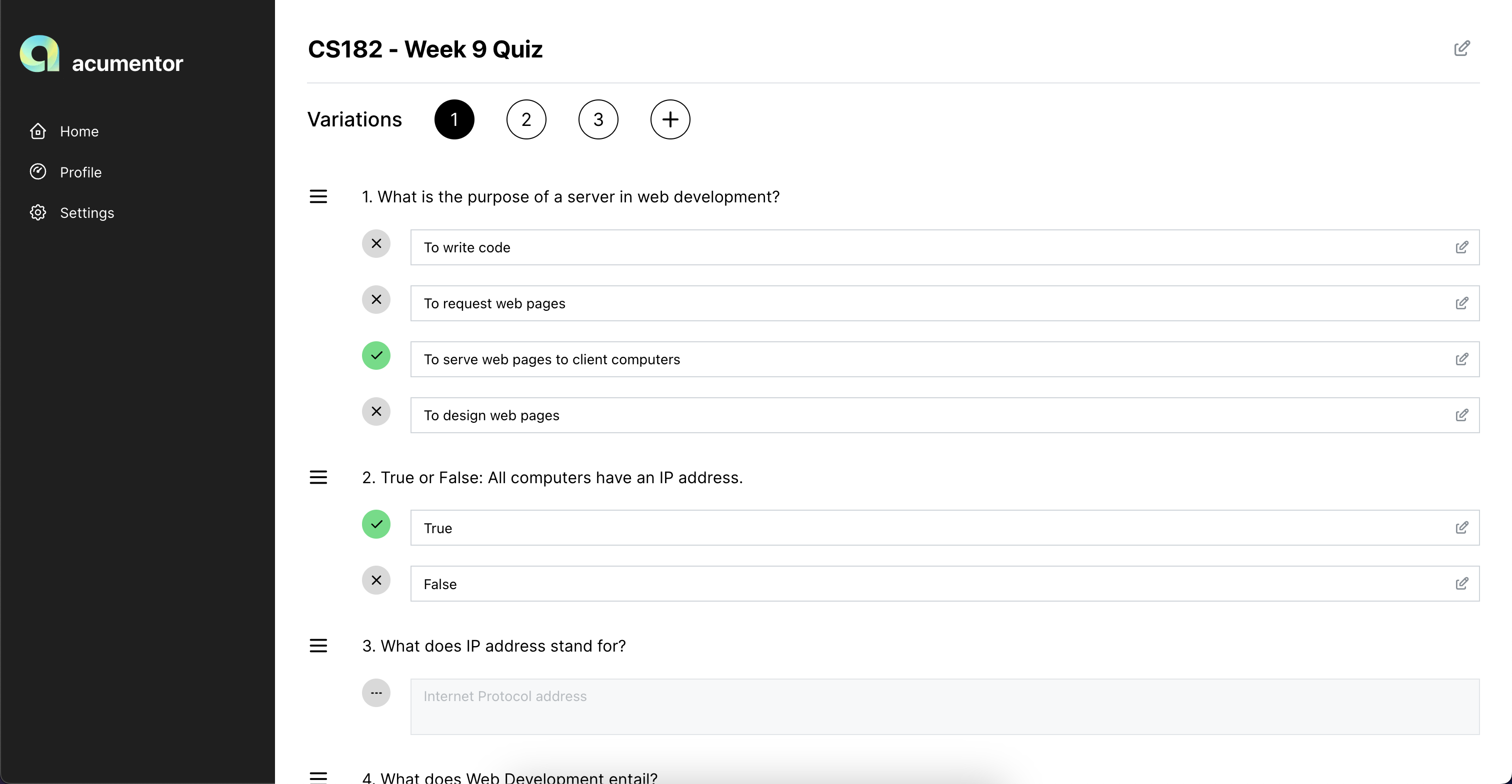
Quiz View
What is the problem your solution is trying to solve?
Given the tumult of digitization of education spaces, educators often encounter challenges with time constraints, workload, and a lack of innovative teaching methods. This leads to burnout, creative fatigue, and subpar technology integration in the classroom. Current solutions fail to adequately address these issues because the current market has greater emphasis in learning than teaching.
How are we solving this problem?
Acumentor is an educator's favorite quiz generator. Taking in course content tailored for their class, Acumentor creates multiple variations of testing material with different types of questions. Choose a number of multiple-choice, true/false, and open-ended questions that accurately reflect knowledge found in lecture slides, textbooks, videos and more.
How Acumentor works
Acumentor combines a plethora of techniques to parse input media before running it through a large language model to generate the multiple quizzes. Methods such as optical character recognition, speech-to-text encoding, and web scraping were used to take apart video, speech, and text files to ingest data. When generating quiz models, chatGPT's OpenAI API library was utilized to develop multiple unique quiz variations with a variety of question types (multiple choice, true/false, short-answer). Acumentor's front-end consists of React.js and Next. Multiple pages, clickable features, and aesthetics were implemented for an exciting user experience.
Challenges we ran into
Our team ran into obstacles when consolidating front-end, back-end, and design complexities. The front-end team struggled in developing their code without the completion of the generative AI model, which outputs the quizzes. There was slow progress developing the quiz generator due to issues on the optical character recognition software and the speech-to-text model (input processors), delaying connection between the two. Each of these segments in the project had struggles with bugs in the code, connecting large language models to the OpenAI segment of the quiz generator, and difficulty in parsing text and speech. Regarding the backend, connecting the APIs was a difficult challenge, especially with the google cloud vision api due to all the credentials that we needed to authenticate. Nevertheless, the team handled all these obstacles with grace to create our final working demonstration of Acumentor.
What's next for Acumentor
Acumentor aims to bring its model to the real world, primarily in the sights of educators looking to create unique testing material tailored to their course content. Acumentor’s team encourages educators to look forward to enhancing their teacher-student connections, especially with less time spent figuring out how to ensure your students are learning!



Log in or sign up for Devpost to join the conversation.