-
-
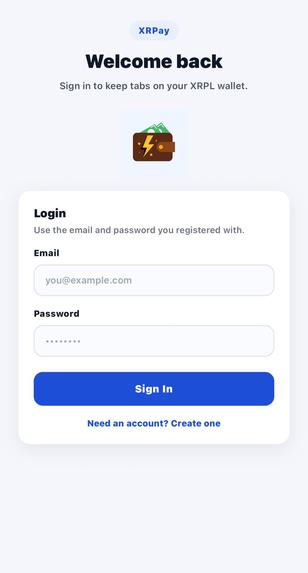
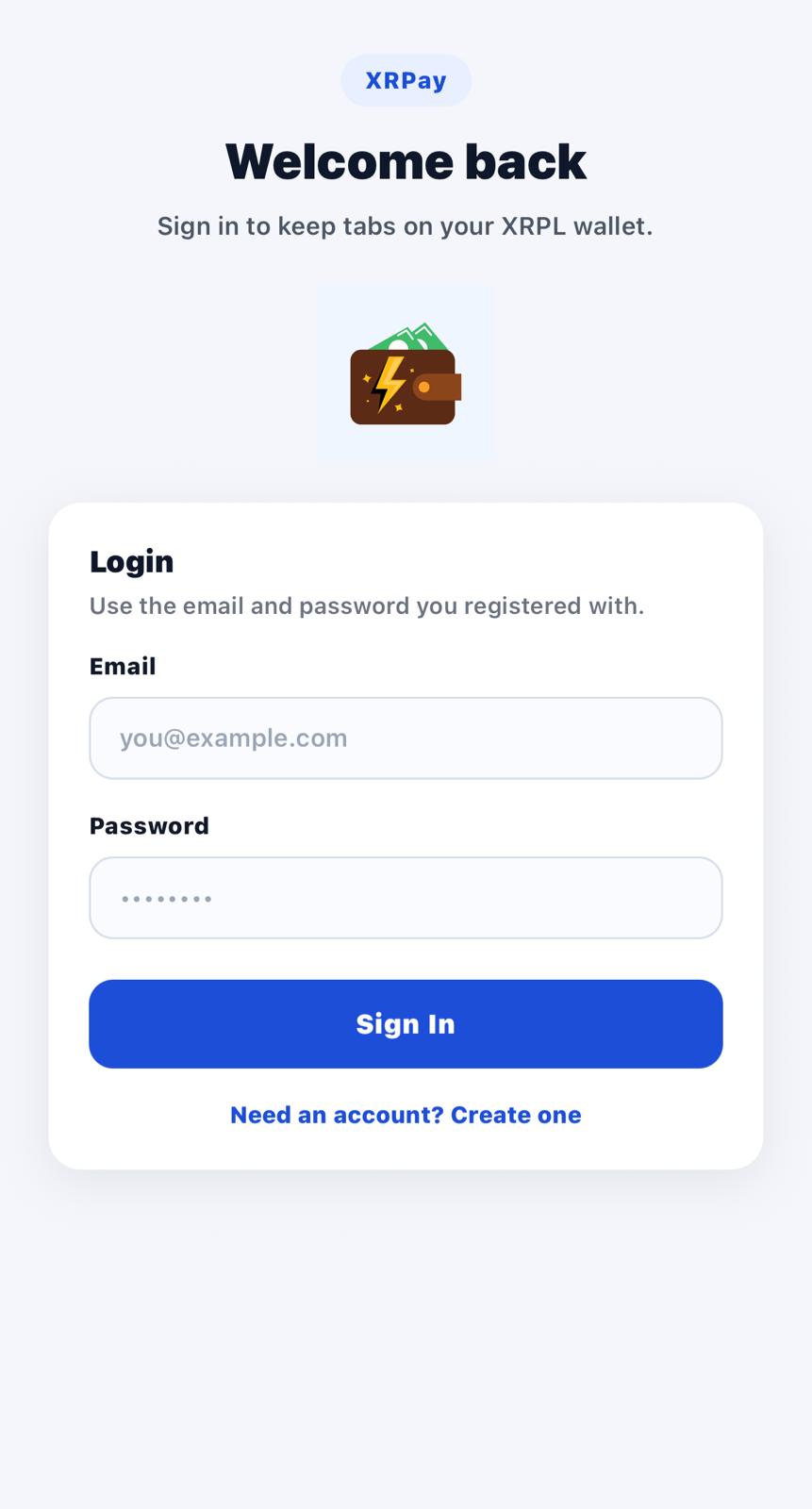
Login
-
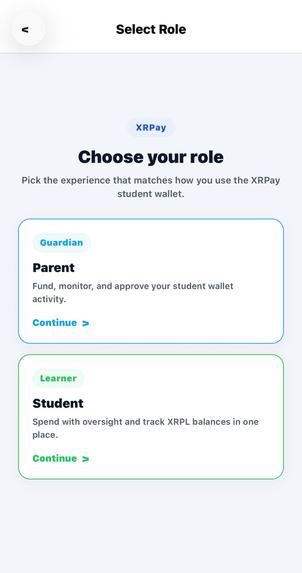
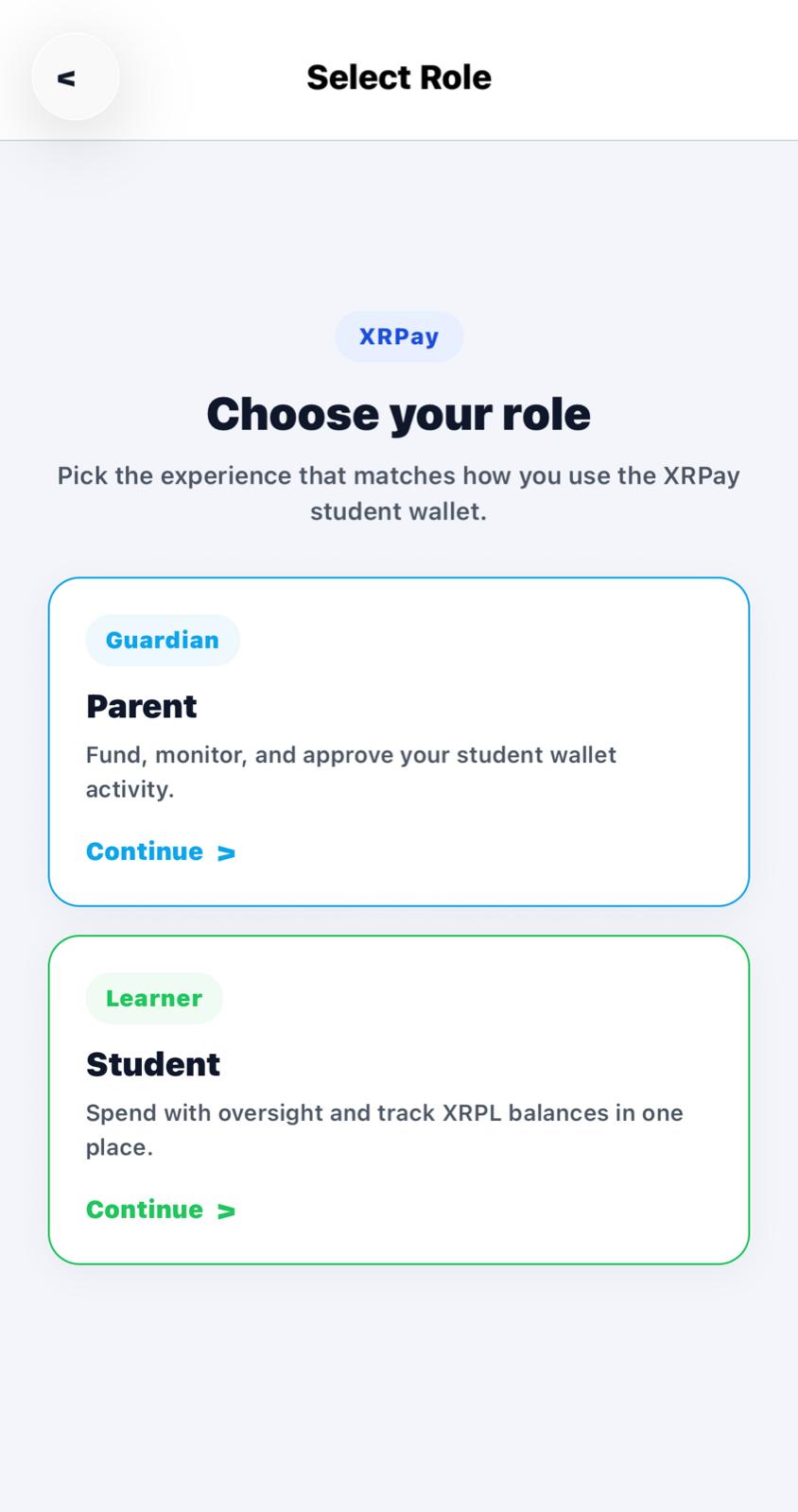
Sign Up(Role Selection)
-
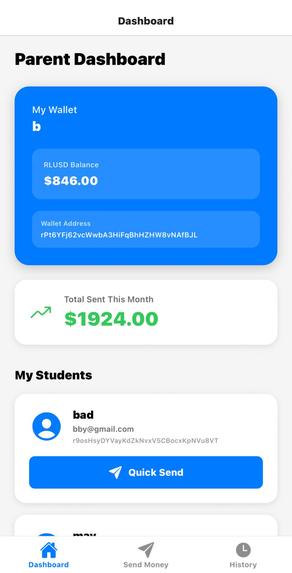
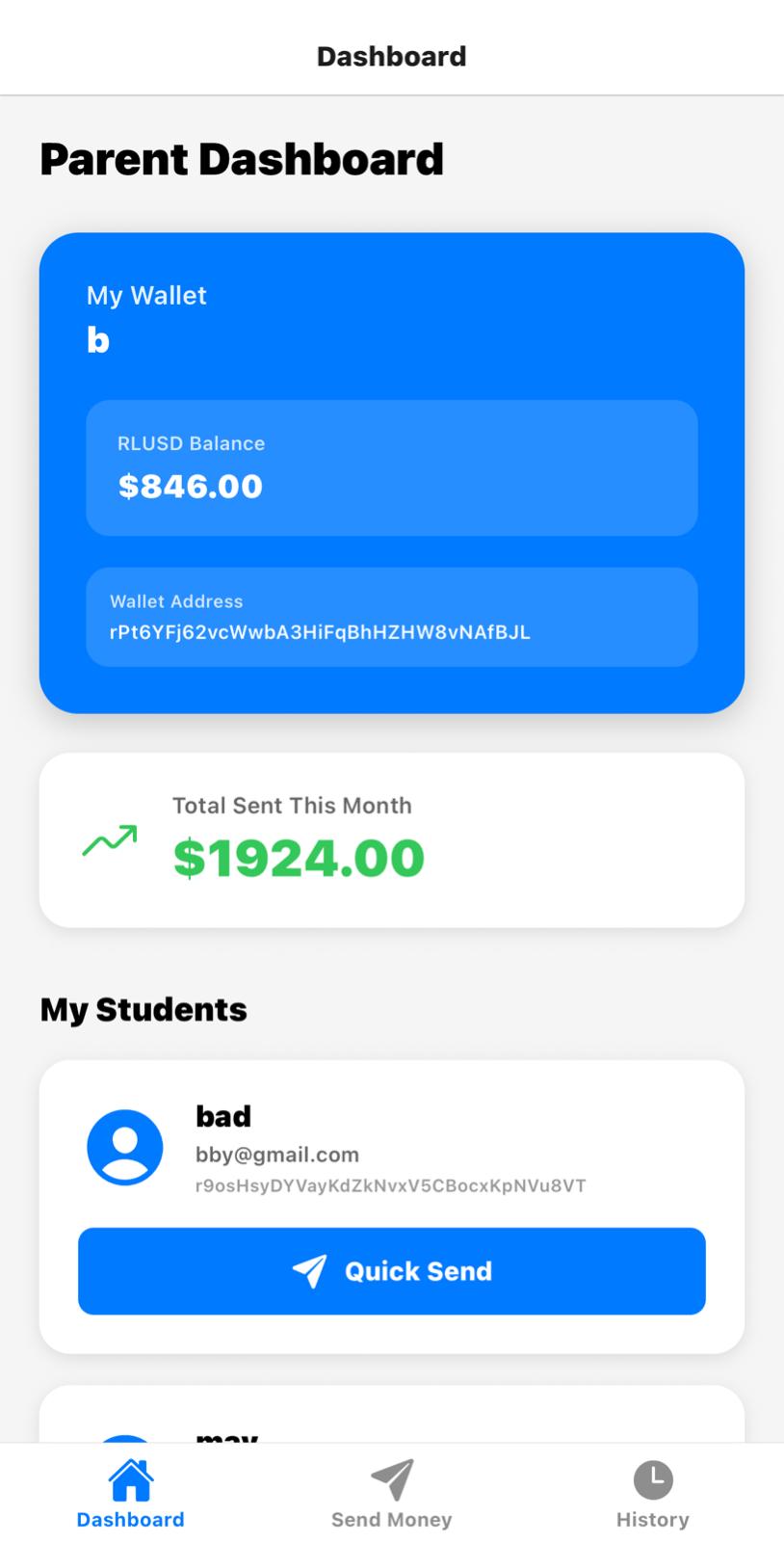
Parent Dashboard
-
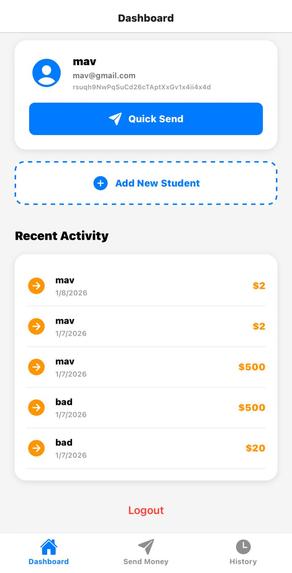
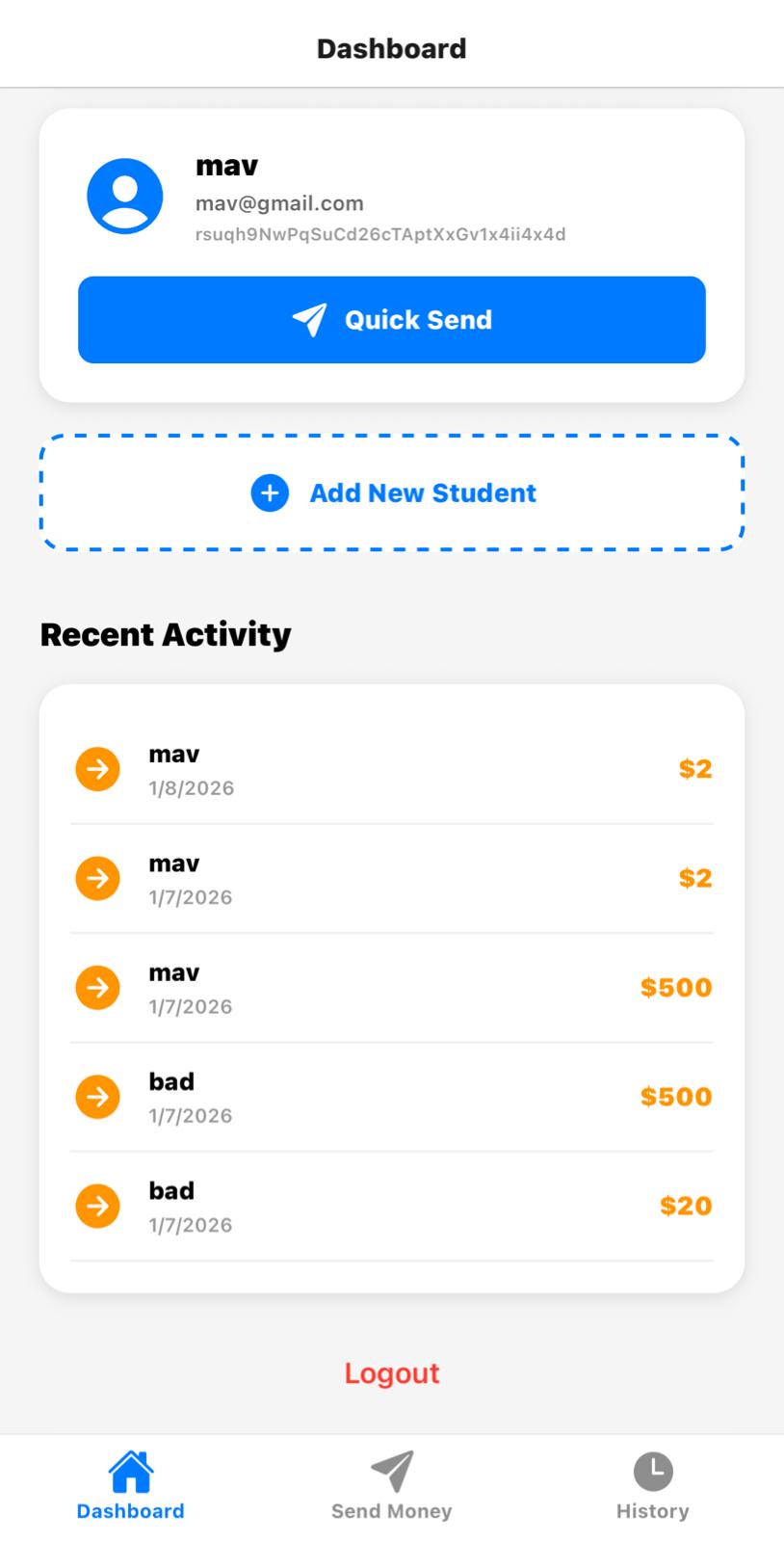
Parent Dashboard(Continuation)
-
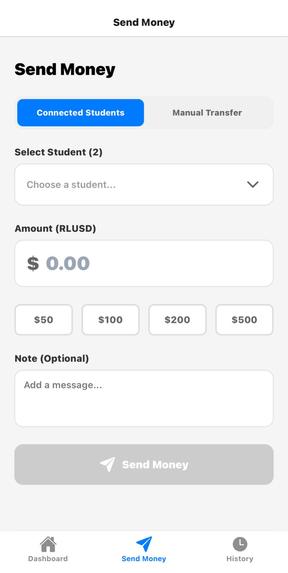
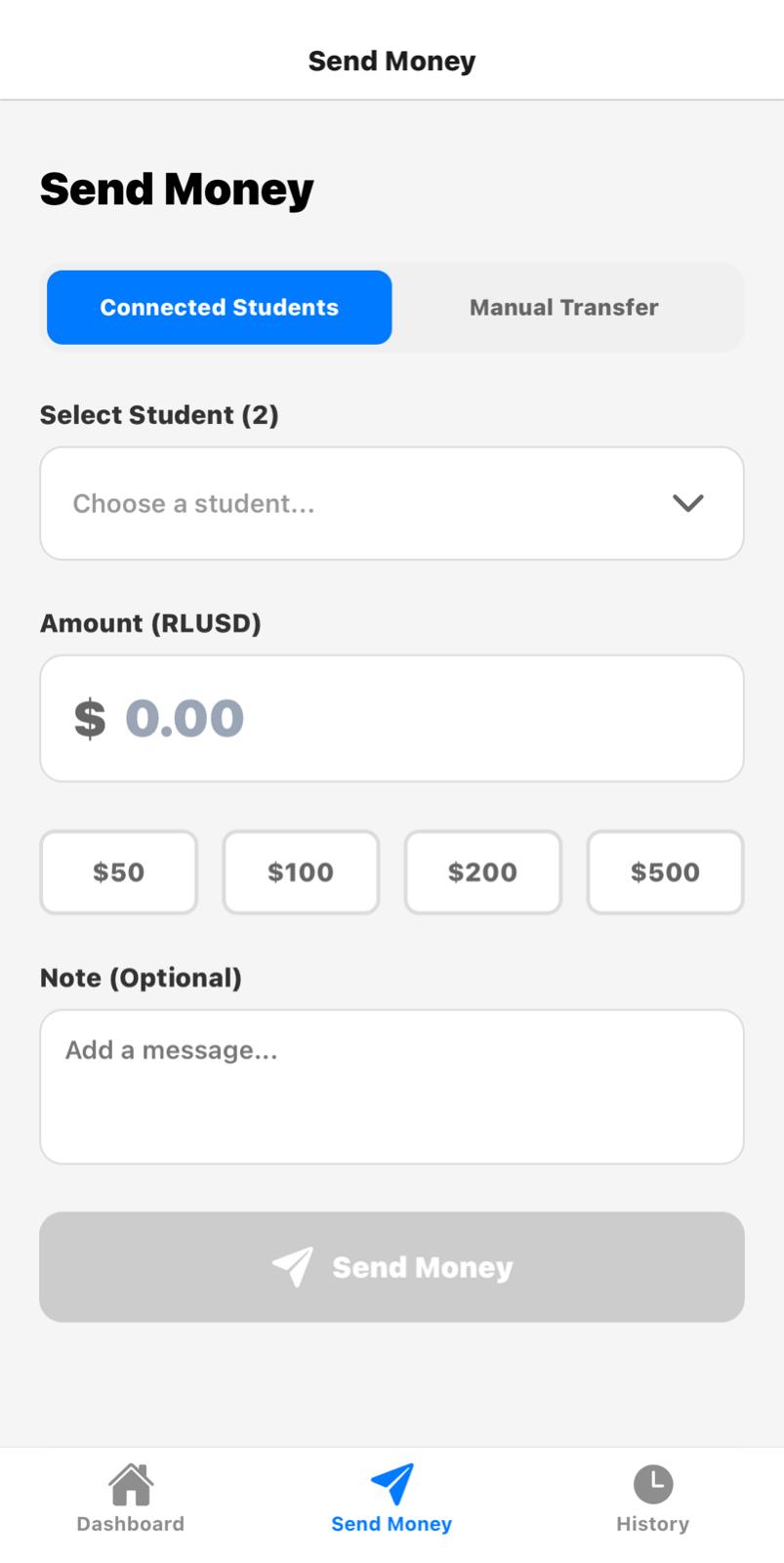
Send Money(Connected Students)
-
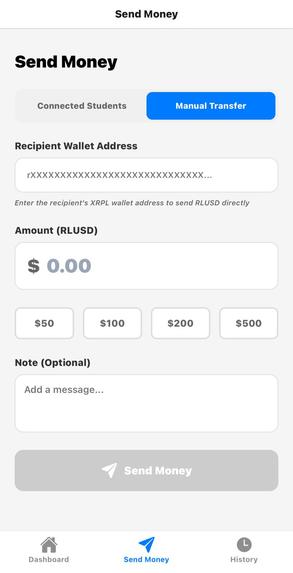
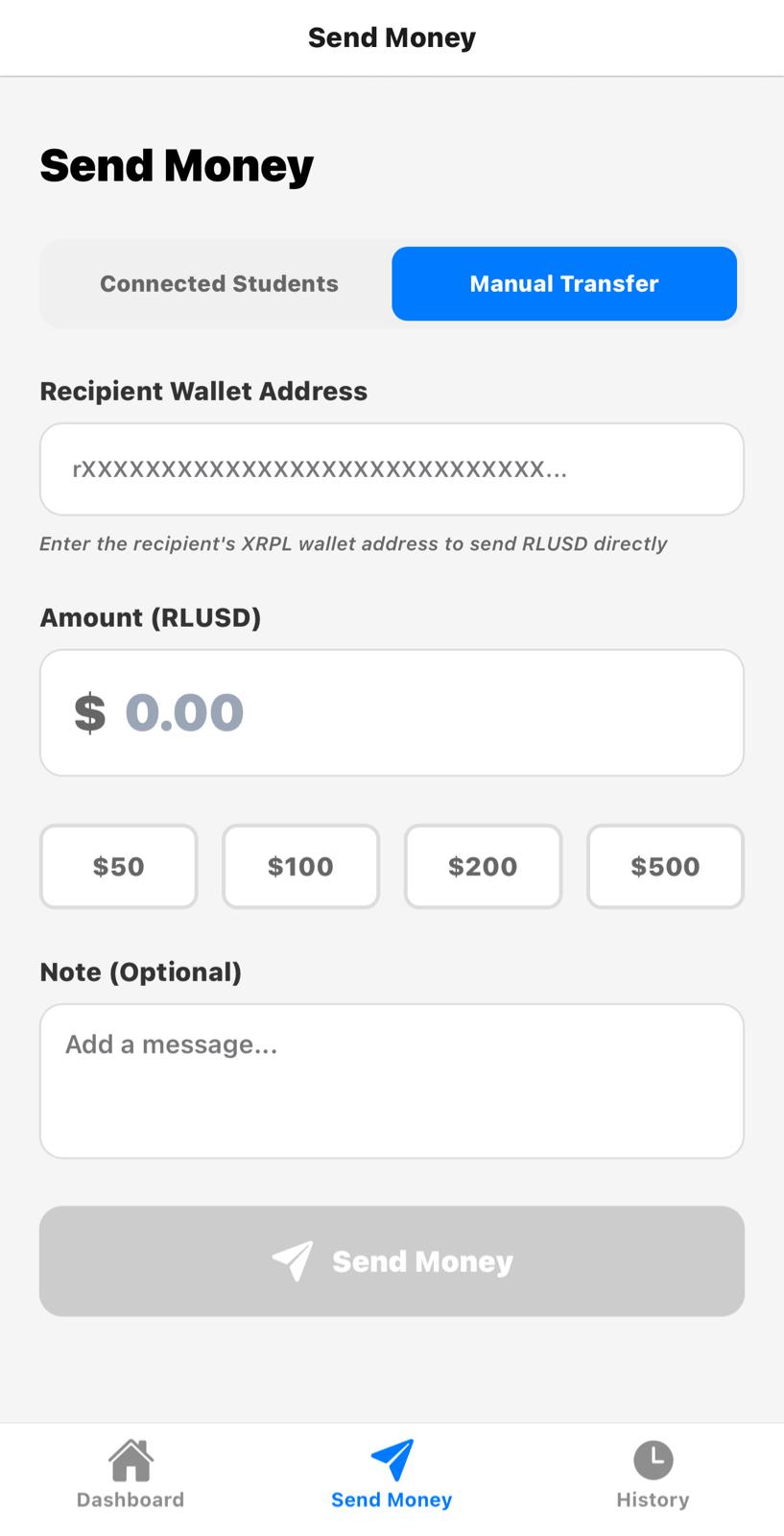
Send Money(Manual Transfer)
-
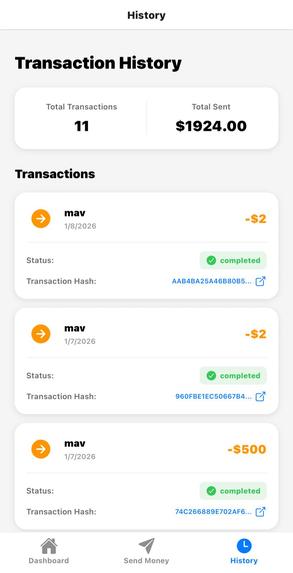
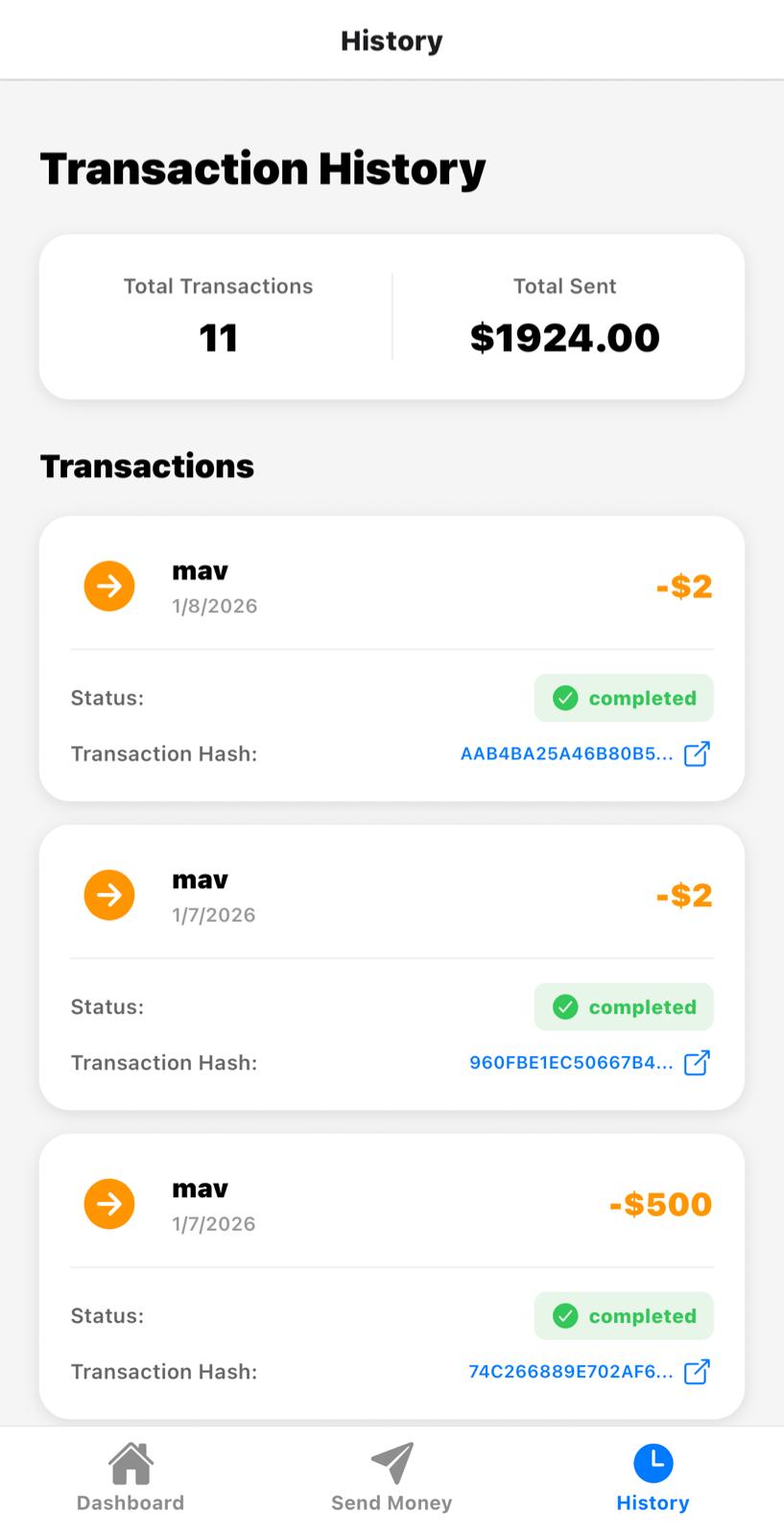
Transaction History(Parents)
-
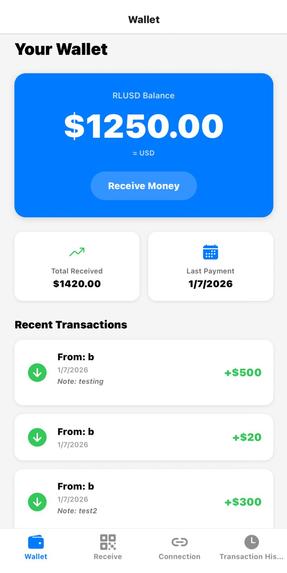
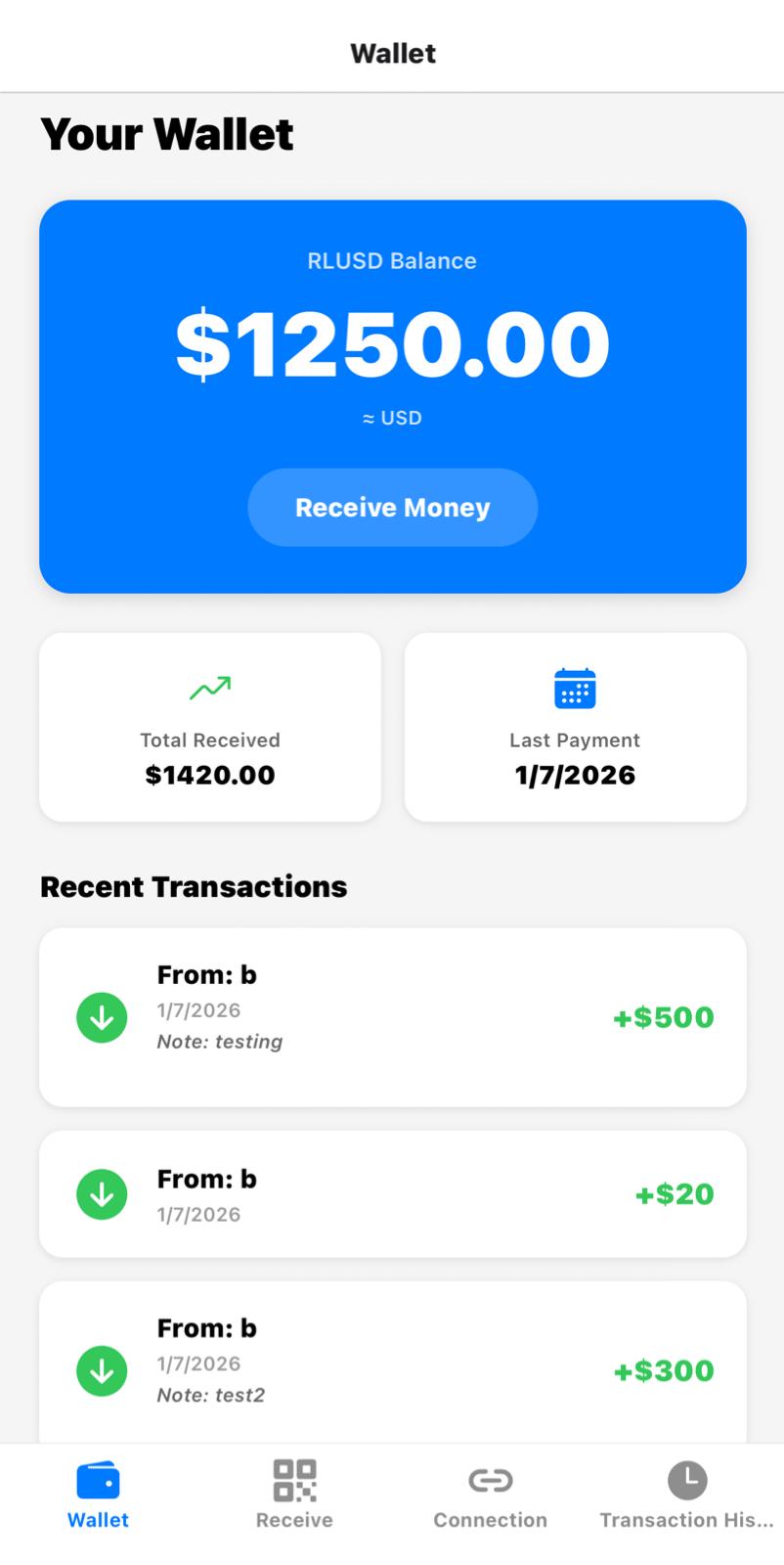
Student Wallet
-
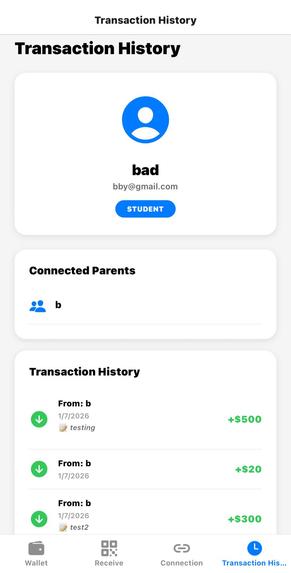
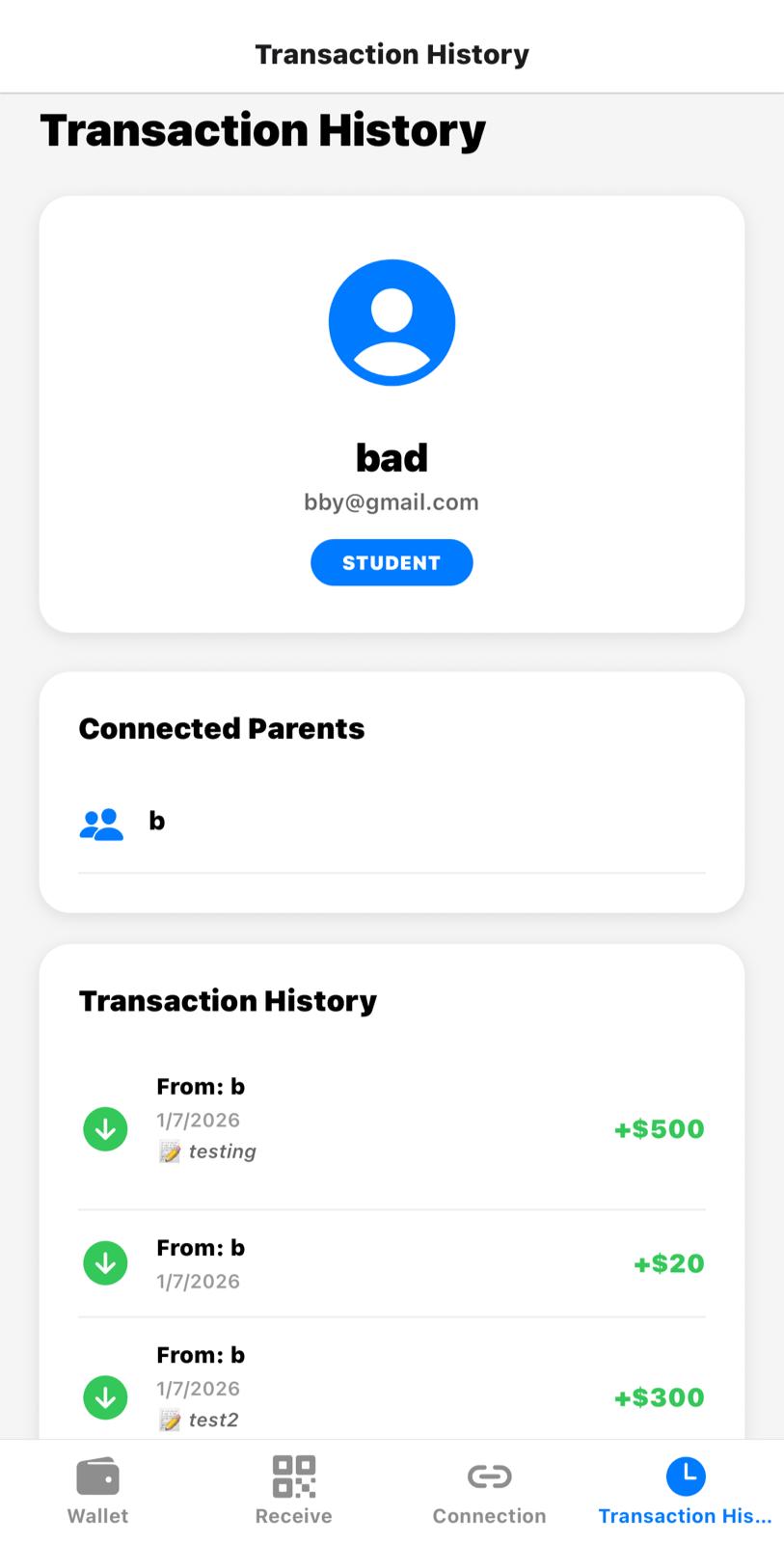
Transaction History(Student)
-
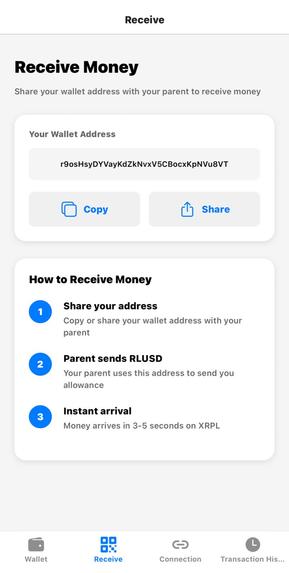
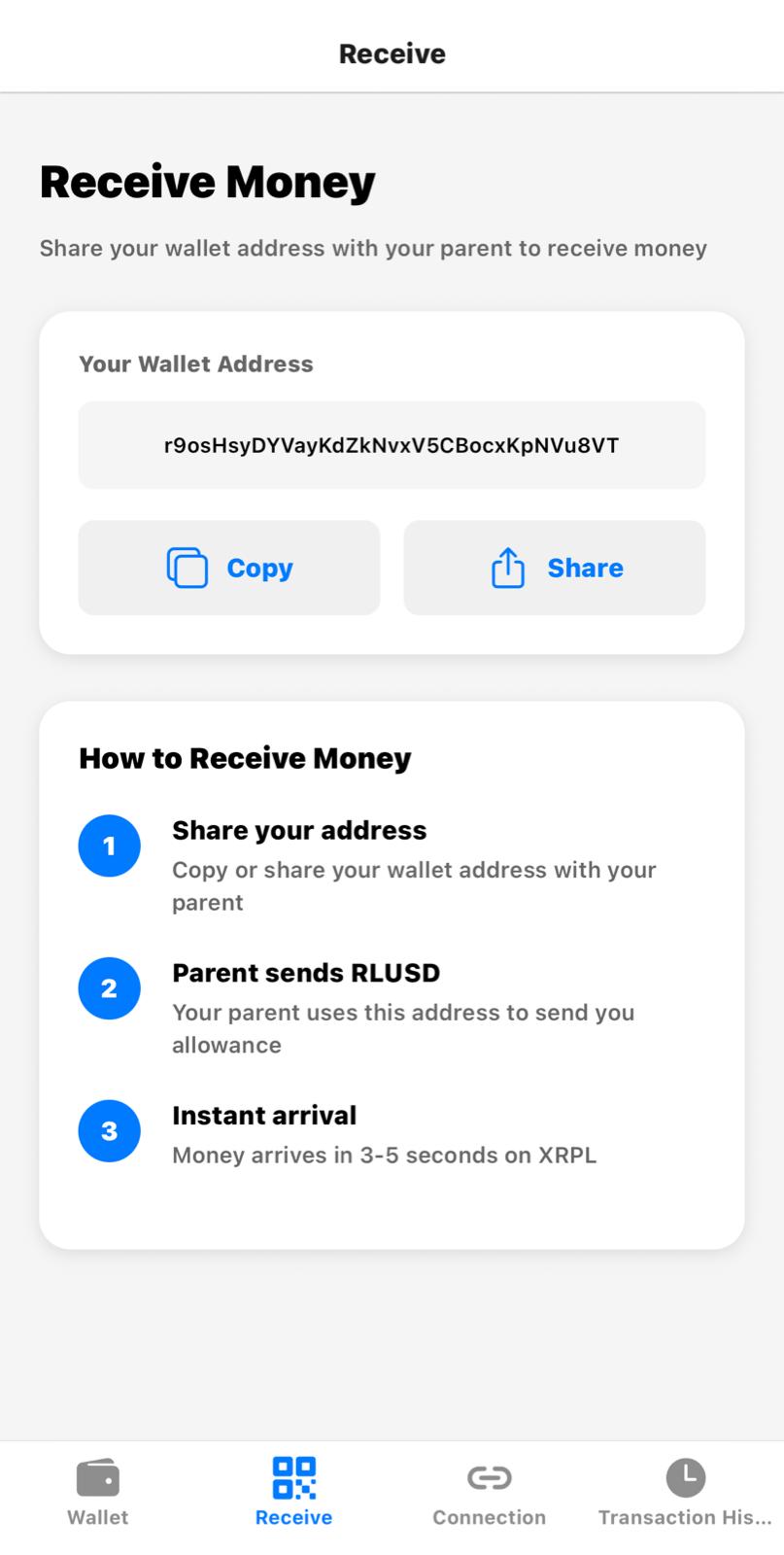
Receive Money(Student)
-
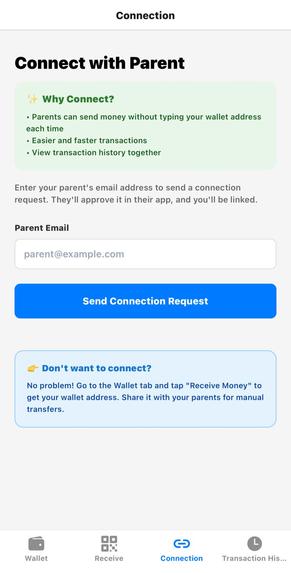
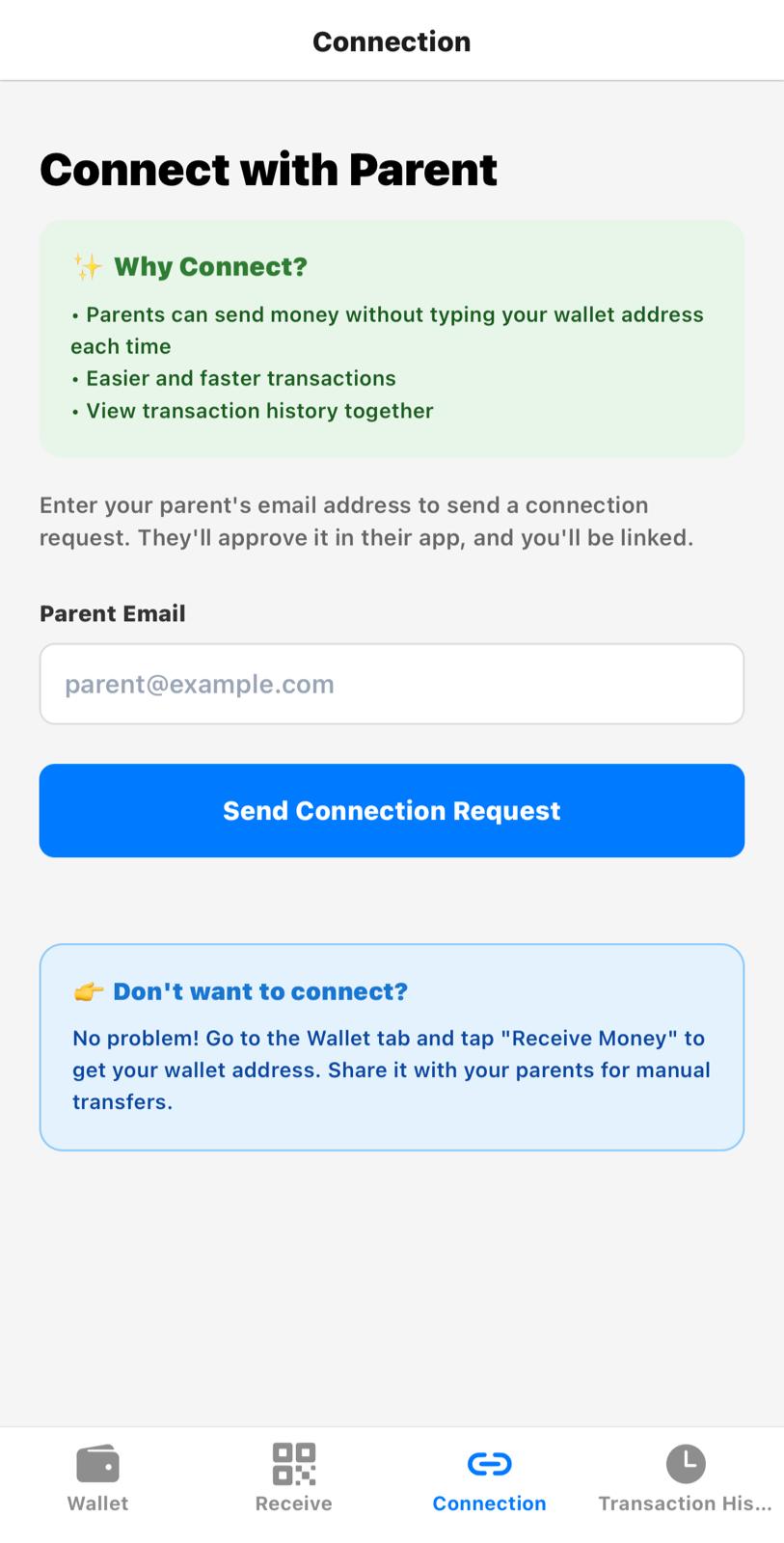
Connection to Parents
Inspiration
Cross-border education is becoming increasingly common, yet the way parents support students financially has barely evolved. Many of us have personally seen parents sending monthly allowances overseas through bank transfers or remittance services that are slow, expensive, and opaque. Funds can take days to arrive, fees eat into allowances, and there is little control or visibility over how the money is spent.
This inspired XRPay , a blockchain-based student allowance platform that enables parents to send funds instantly, securely, and transparently to students studying abroad, while maintaining appropriate spending controls and trust.
What it does
XRPay is a cross-border student allowance app built on the XRP Ledger ecosystem.
- Parents deposit funds using RLUSD, a USD-pegged stablecoin.
- Students receive allowances instantly on-chain with minimal fees.
- Each student wallet is linked to a Decentralized Identity (DID) for verification.
- Parents can issue allowance tokens with configurable limits, categories, and schedules.
- Transactions are immutable and traceable, providing transparency without compromising privacy.
At its core, XRPay turns allowances into programmable financial flows rather than simple transfers.
How we built it
XRPay was built using a modular Web3 architecture:
- Blockchain layer: XRP Ledger (XRPL) Testnet for fast settlement and low transaction costs.
- Stablecoin: RLUSD on XRPL for predictable, fiat-backed value transfer.
- Identity: DID-based student verification to ensure funds are routed to verified recipients.
- Backend: Business logic to manage allowance rules, spending limits, and transaction validation.
- Frontend: A mobile-friendly interface for parents and students to manage wallets and allowances.
Challenges we ran into
- Stablecoin maturity: RLUSD is still in its early stages, requiring us to work within testnet constraints.
- User experience: Abstracting blockchain complexity (wallets, trust lines, gas) into a simple UX was non-trivial.
- Identity vs privacy: Designing DID verification without exposing sensitive student data on-chain.
- Cross-network learning curve: Integrating XRPL-specific concepts such as trust lines and issued assets.
Accomplishments that we're proud of
- Successfully integrating RLUSD on XRPL Testnet for real-time allowance transfers.
- Designing a parent-controlled allowance model rather than unrestricted wallet transfers.
- Implementing identity-linked wallets without storing personal data on-chain.
- Building a working end-to-end prototype suitable for demos and investor pitches.
What we learned
- Blockchain is most powerful when it solves real financial pain points, not just technical ones.
- Stablecoins dramatically simplify cross-border payments when paired with low-fee ledgers.
- Good Web3 UX requires hiding complexity while preserving decentralization.
- Regulatory awareness must be considered early when dealing with money, identity, and minors.
What's next for XRPay
- Mainnet readiness once RLUSD exits beta.
- Merchant integrations (e.g. food, transport, education services).
- Spending analytics and alerts powered by on-chain data.
- Multi-currency and multi-stablecoin support.
- Partnerships with schools and education providers for verified onboarding.
XRPay aims to become the default financial bridge between parents and students in a global education economy.
Built With
- firebase
- firestore
- javascript
- react
- typescript
- xrpl

Log in or sign up for Devpost to join the conversation.