-
-
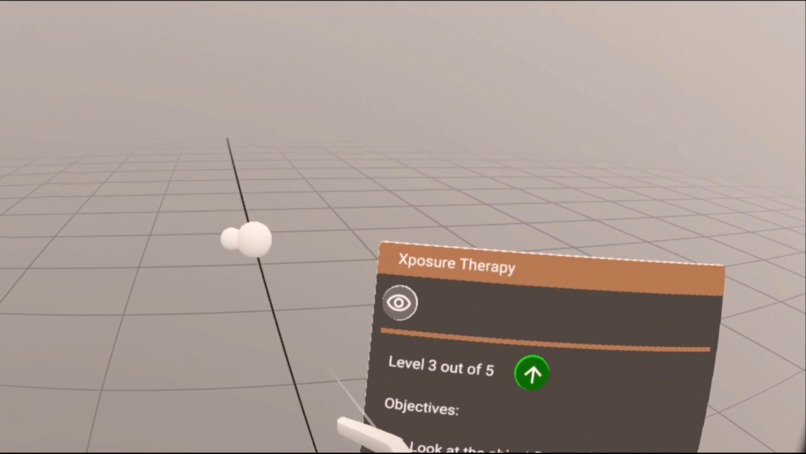
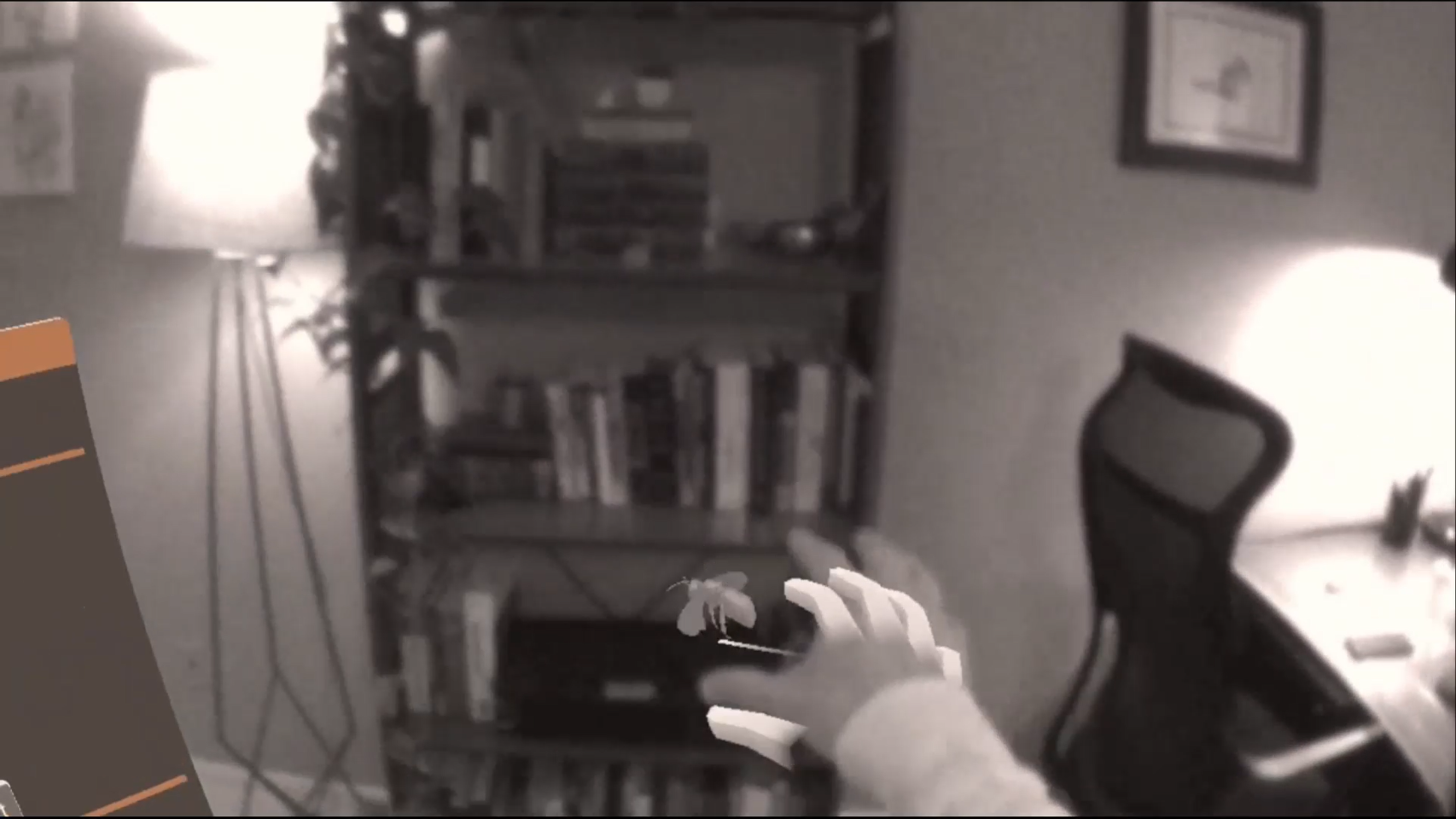
An approximation of a bee model in VR
-
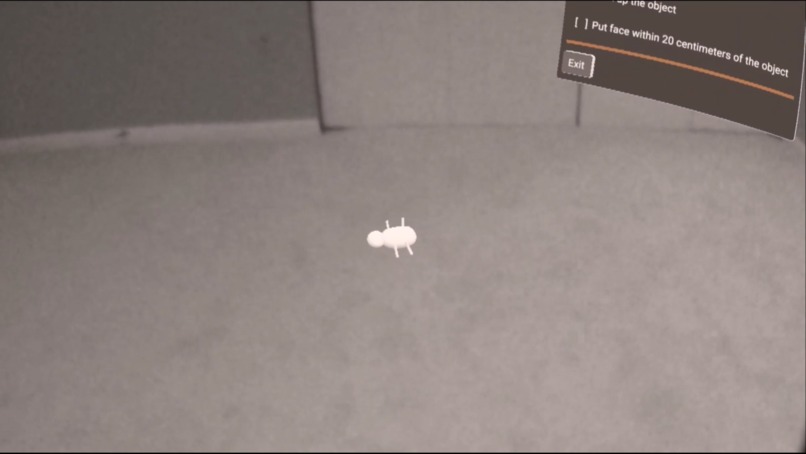
A spider approximation
-
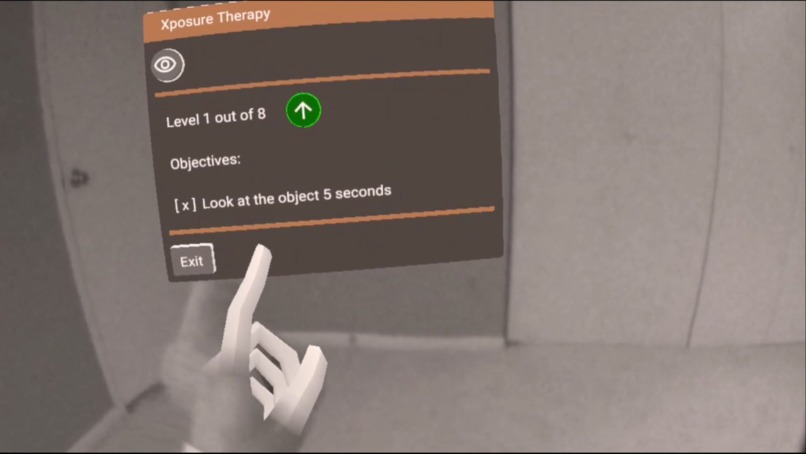
User can go on to next level after completing objectives
-
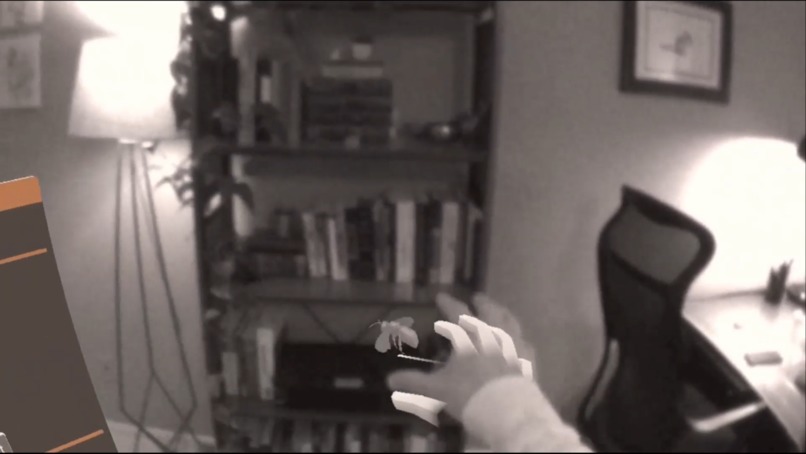
A more realistic bee model in AR
-
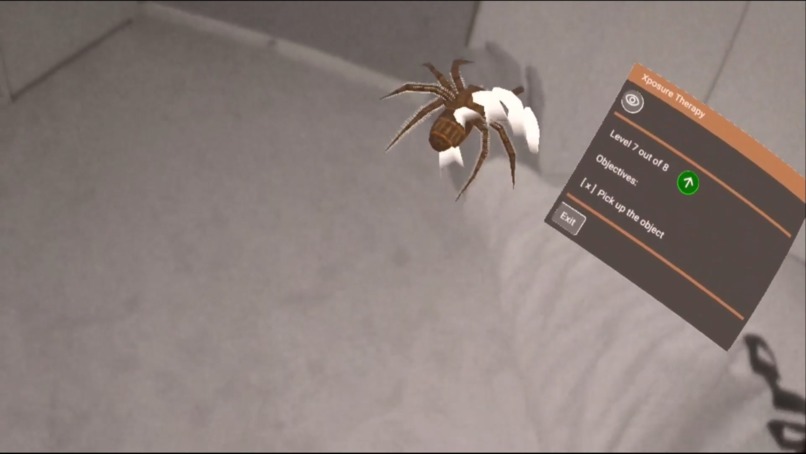
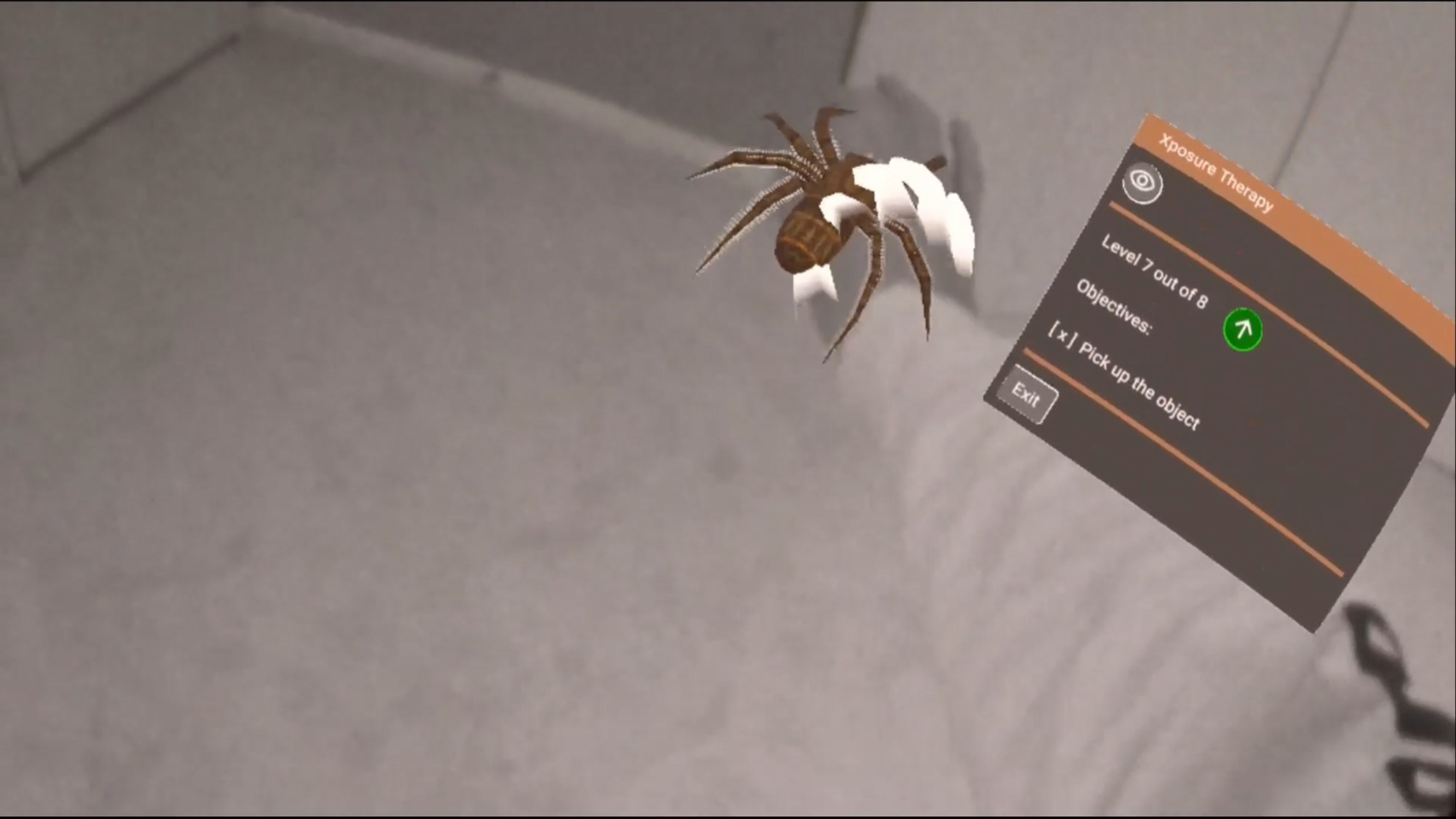
A user picking up a realistic spider model in mixed reality
Inspiration
About 2 - 9% of the world’s population experiences a phobia within a given year. These phobias can have debilitating effects on patients’ lives. Exposure therapy is a proven method for helping patients overcome this disorder. Mixed reality (MR) provides a new modality for the age-old problem of phobias. MR can conveniently and cost effectively deliver exposure therapy to patients across the world.
What it does
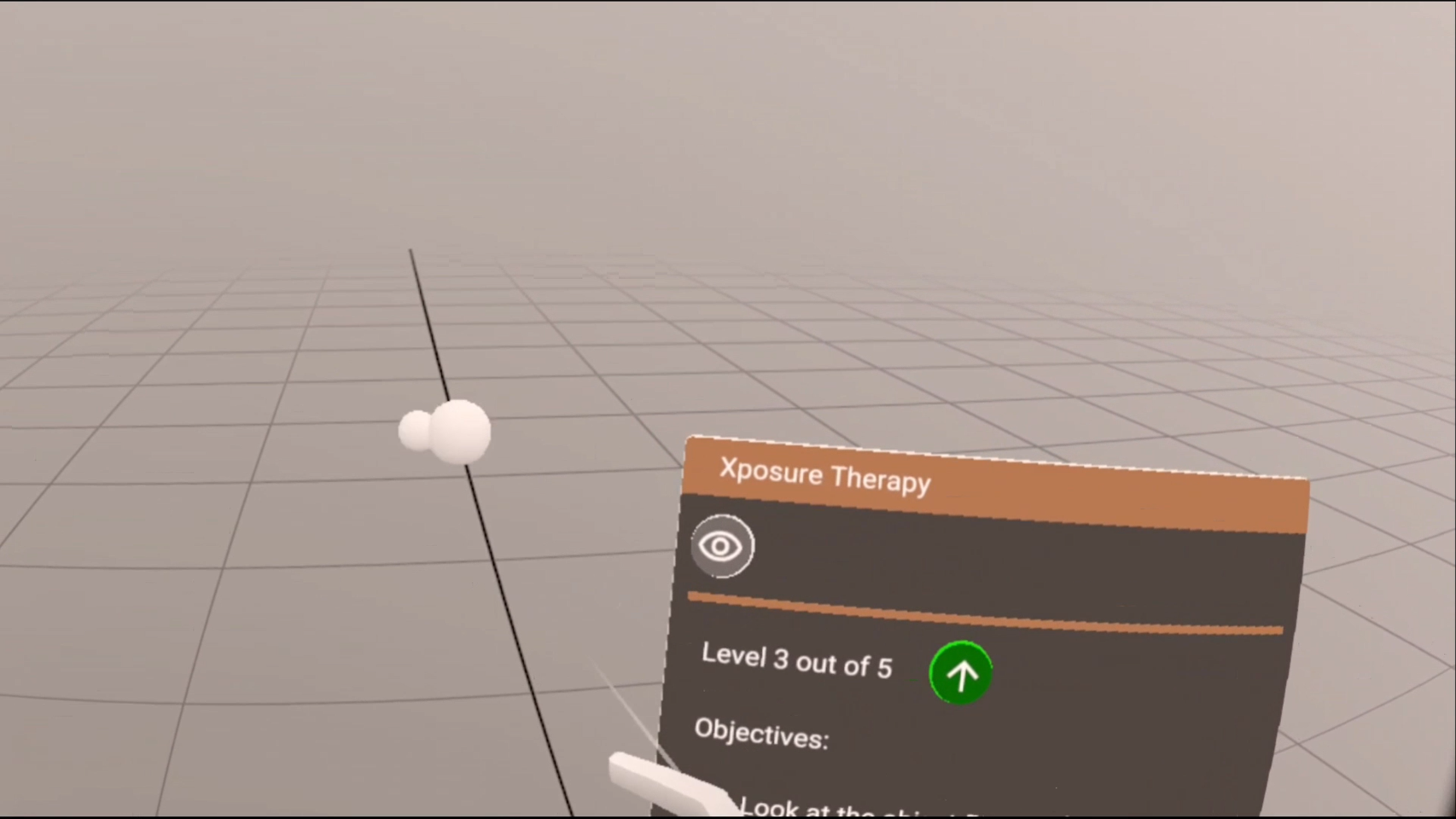
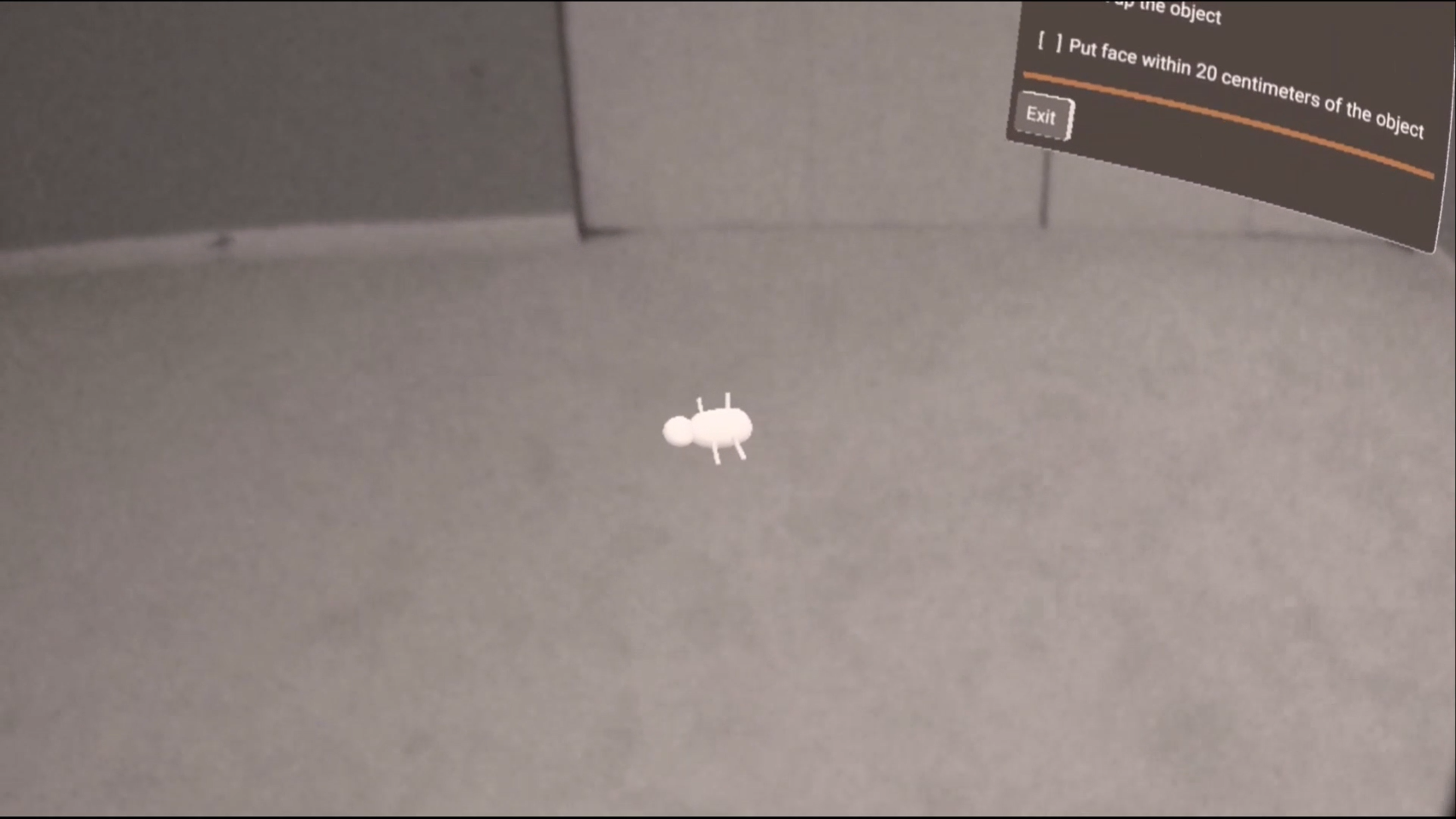
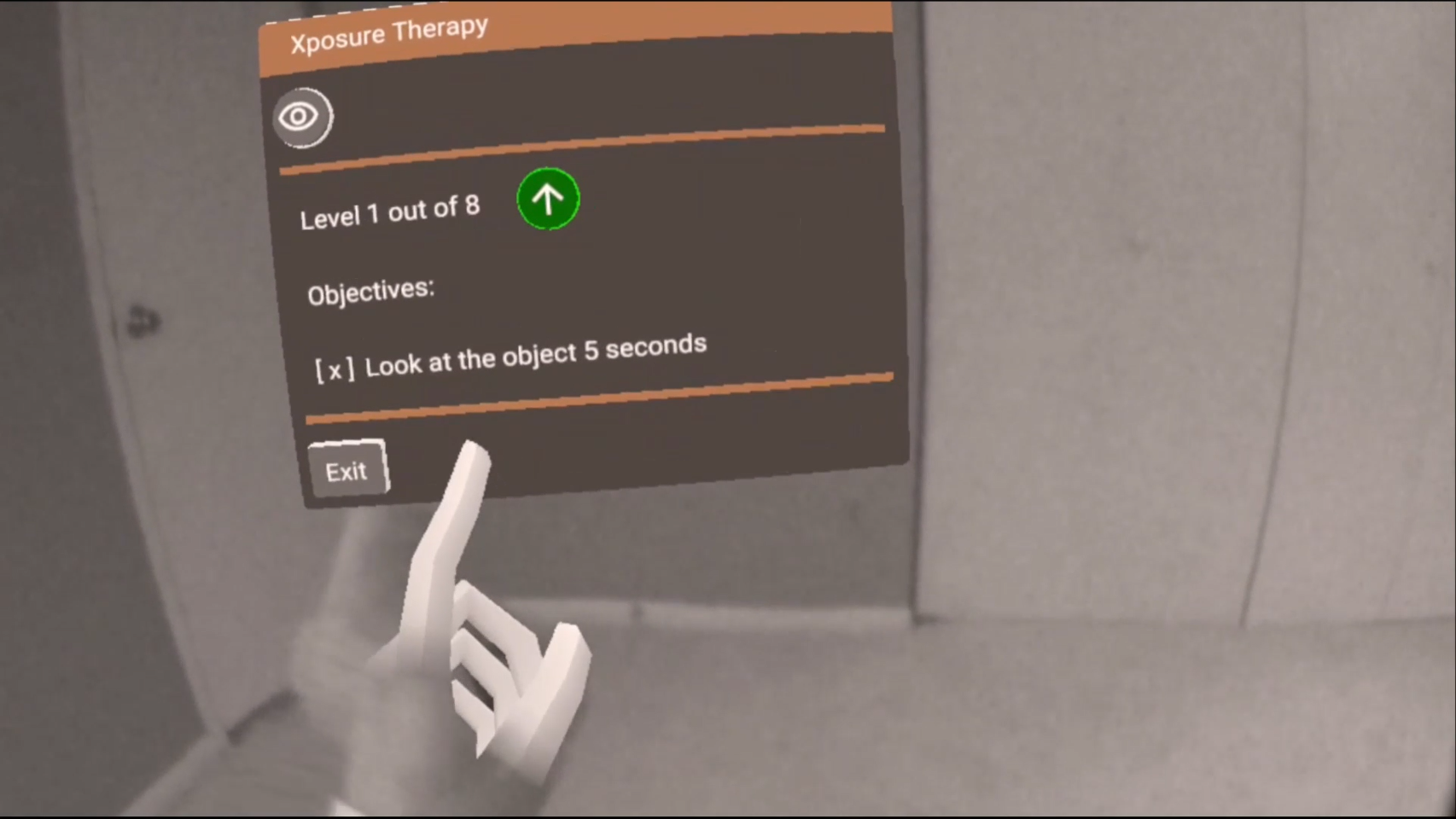
This app creates a mixed reality experience where patients can gradually learn to reduce their fear response to a given phobia. Currently, the application supports two specific phobias: spiders and bees. The patient will complete a list of objectives as they progress through several levels. Initially, the patient will see a very rough approximation of their phobia. For example, for the spider simulation, the user will initially just see a simple sphere. After completing the objectives, the user can progress to a higher level. At each level, the simulation gets a bit more realistic. The goal of the gradual exposures is so that by the last level the patient will have learned to not fear the object. The application also collects data on the user’s interactions with their environment which could be used by a therapist to better understand the patient’s progress. This data is presented as a simple report at the end.
How we build it
This application was build with StereoKit in C# using Visual Studio. We started with the StereoKitXPlat template so that our app could run on the SK fallback simulator as well as natively on Quest. Having the fallback simulator was great for quick iterations. And the ability to use Quest + Link with hot reloads allows for very quick deployments to test in-headset.
Challenges we ran into
For everyone on this team, this was our first real XR application. Getting off the ground and figuring out how to get StereoKit to run on a Meta Quest 2 was a lot of work! There wasn’t a lot of information online on how to do this.
Enabling passthrough on the Meta Quest 2 was a little tricky. It took some time to figure it out since there wasn’t a step-by-step guide online anywhere.
When doing cross-platform development, we learned that files in the Asset folder are not case-sensitive on windows… but are case sensitive on Android! So now we just make all our assets lowercase just to be safe.
Accomplishments that we’re proud of
We built an XR app! This was the first XR app for all of us. We are happy with how much of the StereoKit platform we were able to take advantage of in such a short time, from the model loading, animation, sound, and physics features. The first time putting on a VR headset and seeing our app load up was such a thrill!
What we learned
A ton! We learned a lot about StereoKit and a good bit about graphics in general. We learned a lot about how assets are loaded into StereoKit, how to work with the physics and sound systems, how to enable user interactions with models, model transformations, and working with user input variables (like head and hands).
The StereoKit documentation was great. It had lots of tidbits sprinkled throughout, like visualizations for the dot product and Quaternion reading recommendations. For newcomers to the field, it felt like a warm welcome!
What’s next for Xposure Therapy
It would be great to package and publish the app somewhere! It would be interesting to see if we can make it available on SideQuest or the like. That way, we can share the app with friends. Before this, we’d like to polish up the app a bit, add some more phobia types, and maybe add some more fun features that make use of more SK features.
Built With
- stereokit


Log in or sign up for Devpost to join the conversation.