-
-
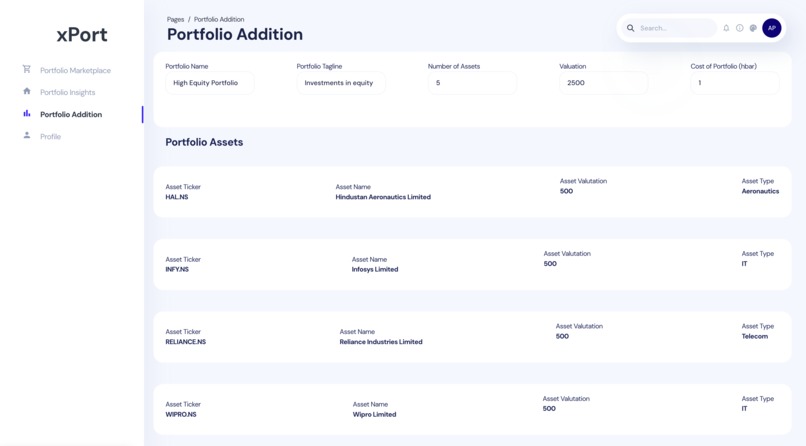
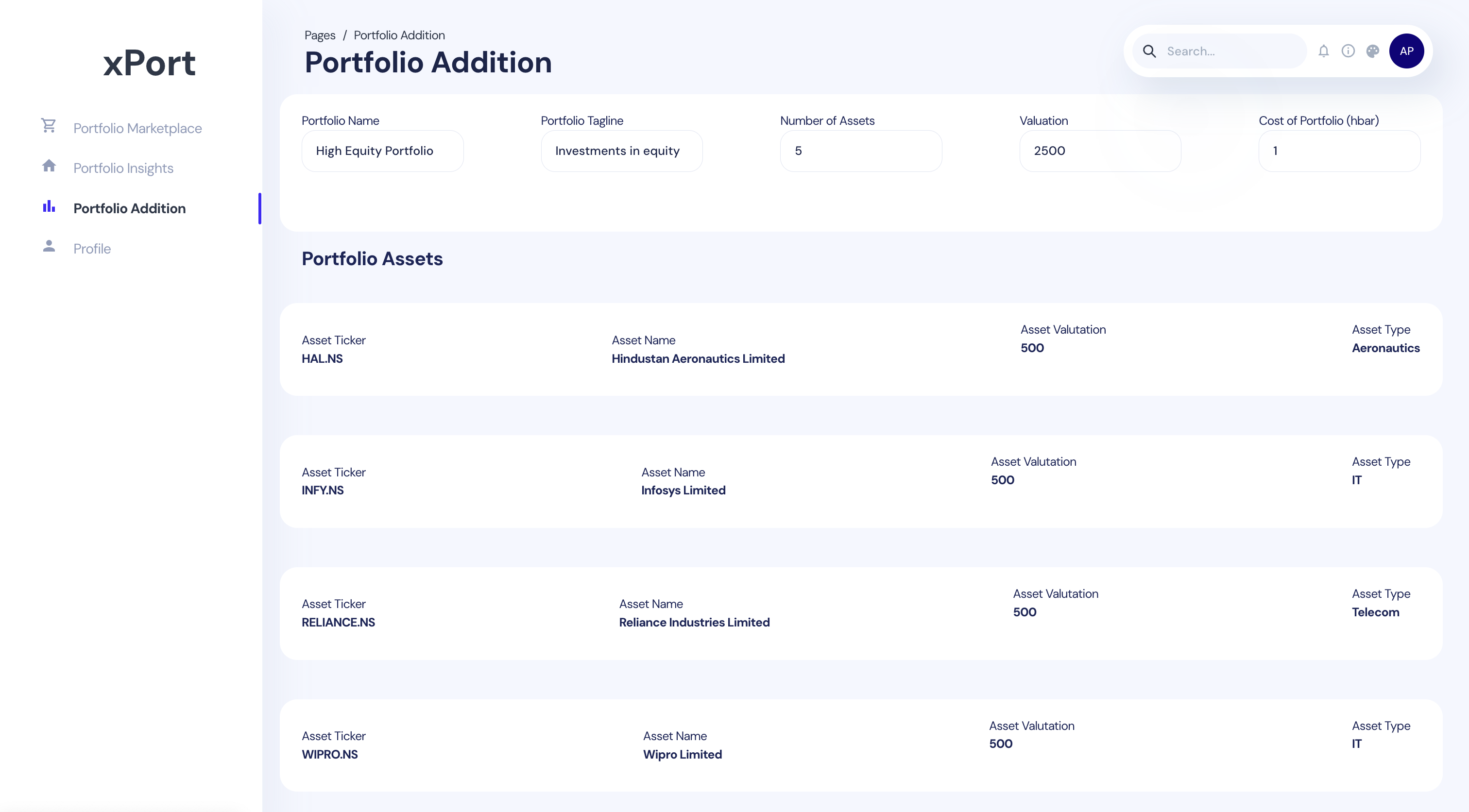
Portfolio Addition Page
-
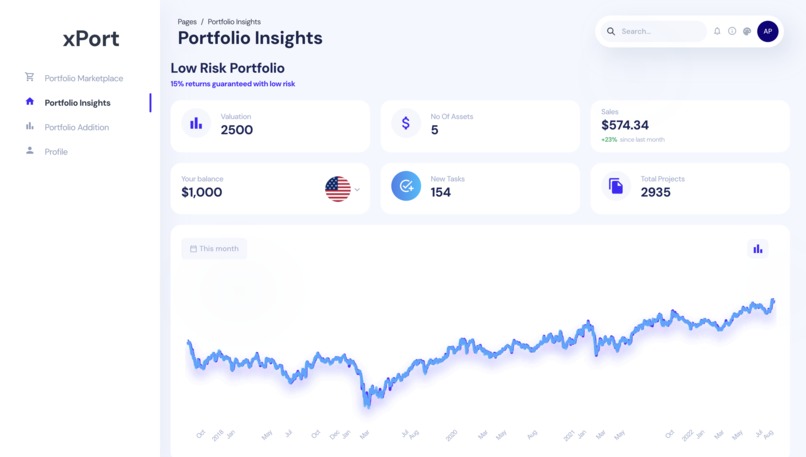
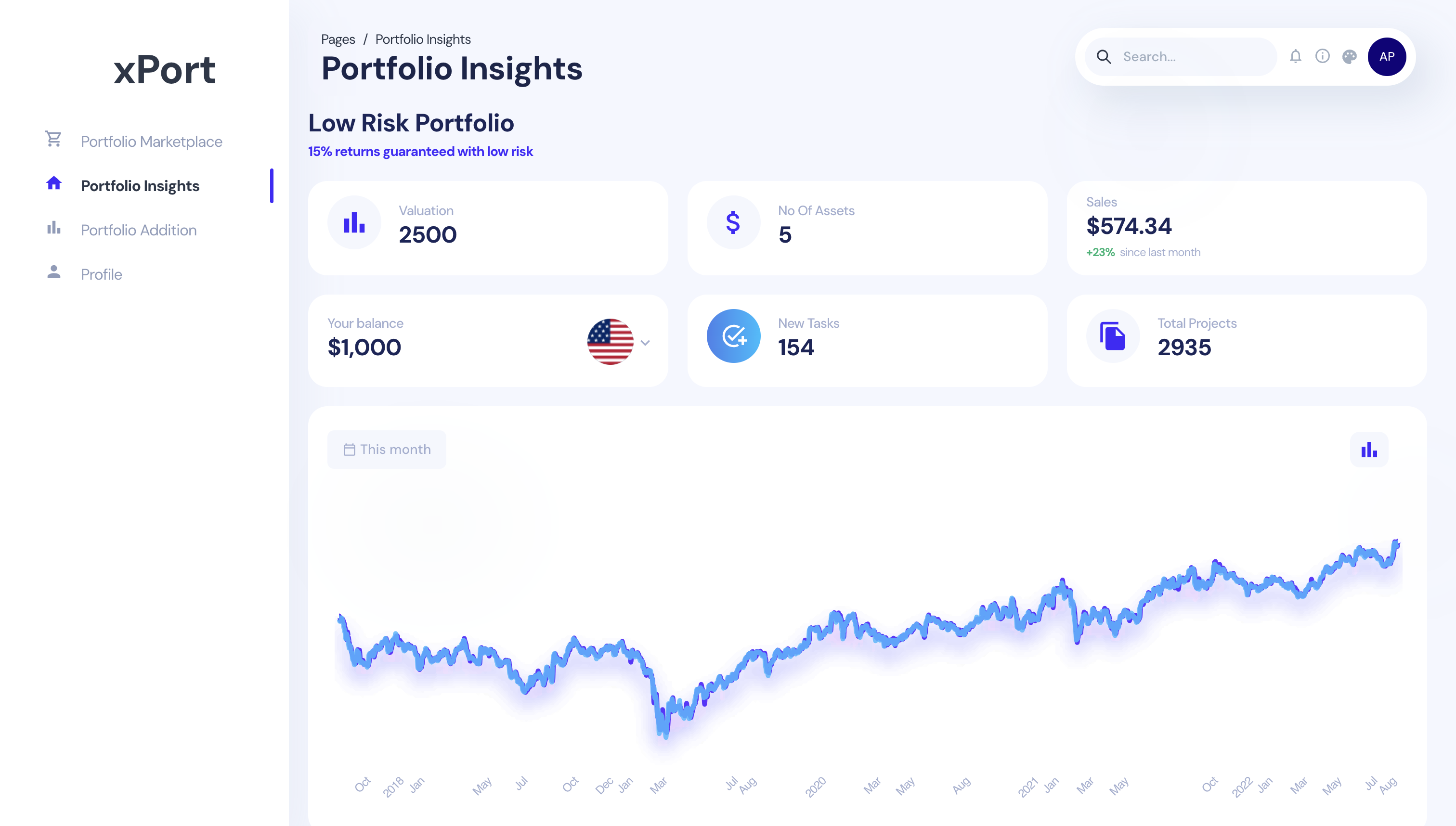
Portfolio Insight Page
-
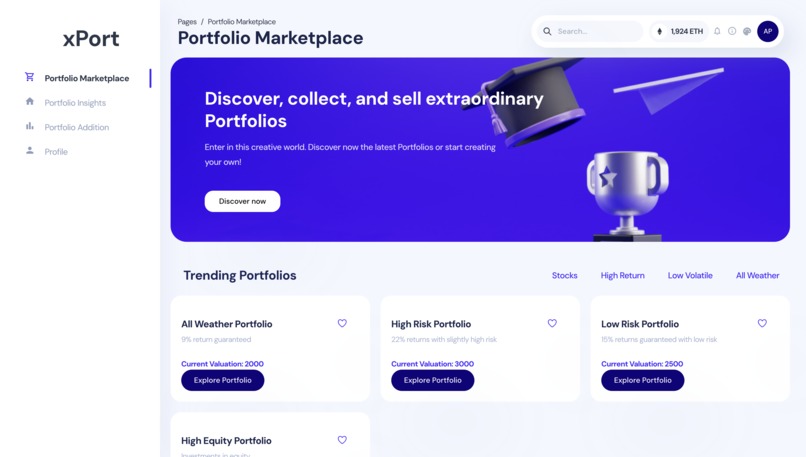
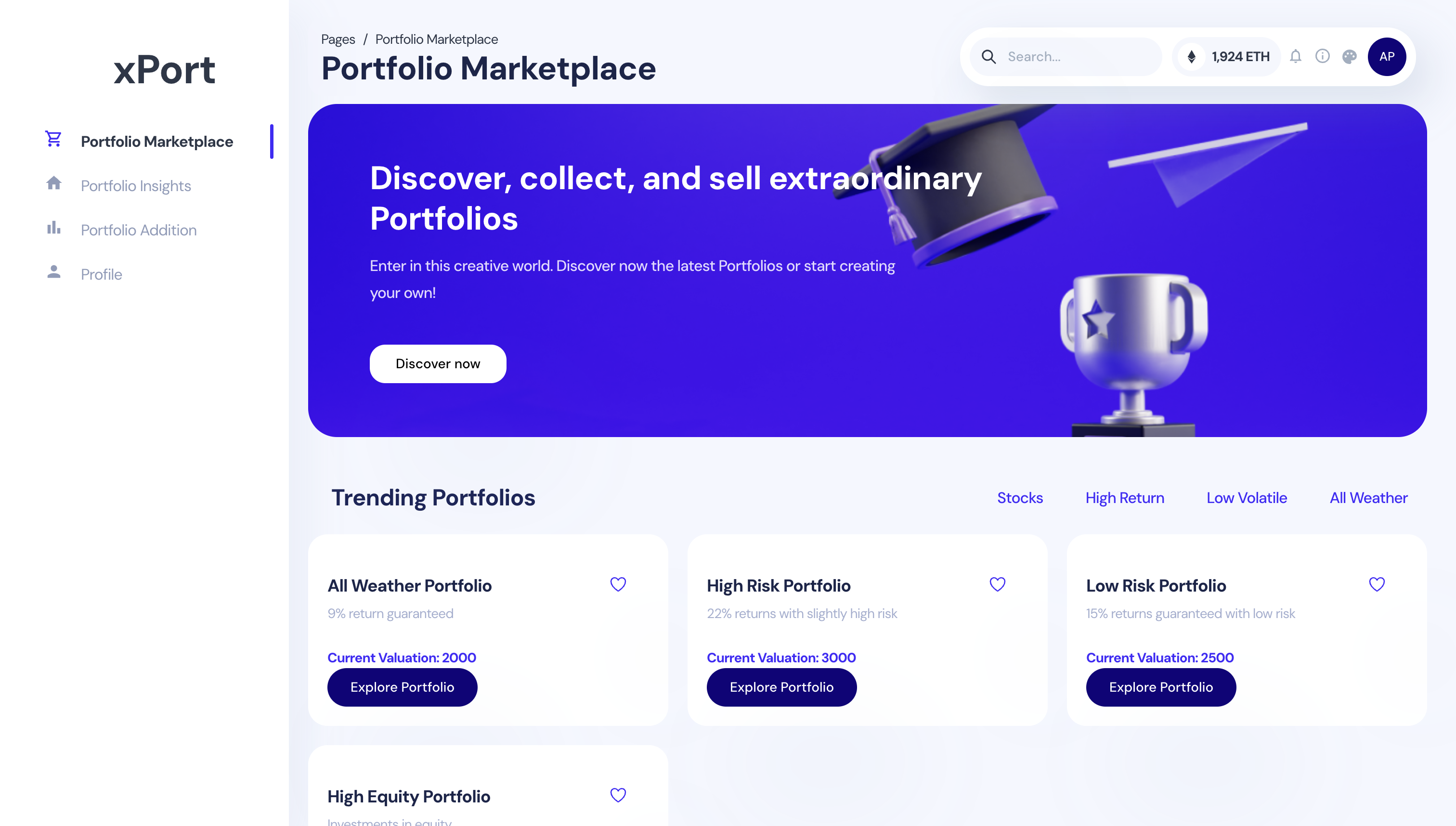
Portfolio Marketplace Page
Inspiration
The objective is to build an xPort - Tokenized Portfolio App using Hedera Hashgraph's decentralized network. The app will allow users to securely list and sell their stock portfolios, leveraging Hedera's fast and transparent transactions.
What it does
It will offer real-time market data updates, ensuring buyers have up-to-date information for making informed purchases. The platform will prioritise user privacy, providing a seamless and user-friendly experience for portfolio creation and selling. By utilising Hedera's robust infrastructure, the app aims to offer a secure, scalable, and efficient solution for buying and selling stock portfolios while maintaining data integrity and transparency.
How we built it
There are parts of our decentralised app - frontend, backend and Hedera solidity contracts. Frontend of the app is built using React, backend is in Nodejs and Hedera contracts are written in Solidity.
Challenges we ran into
Building a Hedera-based decentralized Portfolio Management App to the MVP stage comes with several challenges. Here are key challenges faced during the project:
Technical Complexity : Developing a decentralized app on Hedera Hashgraph involves a learning curve, especially if your development team is not already familiar with blockchain technology. Understanding Hedera's consensus mechanism, smart contract development, and SDKs can be challenging, which can slow down the development process.
Scalability : While Hedera Hashgraph is known for its scalability, ensuring that your app can handle a growing user base and an increasing number of portfolio transactions can be complex. Scalability issues can lead to performance bottlenecks and affect the user experience, even at the MVP stage.
Data Integration : Providing real-time and accurate market data within the app can be challenging. Relying on external data sources for market information introduces potential delays and data accuracy concerns. You'll need to implement robust data integration mechanisms to address these issues.
What's next for xPort
There is a long road ahead for xPort. The more features that can be added to current version are:
Integration of More Asset Classes : Expand the range of assets that can be tokenised on the platform beyond traditional stocks. Consider adding options for tokenised bonds, real estate properties, commodities, and even digital assets like cryptocurrencies. This diversification can attract a wider range of investors and increase the platform's utility.
DeFi Integration : Embrace the decentralised finance (DeFi) ecosystem by integrating with DeFi protocols and platforms. This could enable users to participate in lending and borrowing, liquidity provision, yield farming, and other DeFi activities using their tokenised portfolios as collateral. DeFi integration can enhance the financial services offered by xPort.
Cross-Chain Compatibility : Explore interoperability with other blockchain networks to allow users to trade and interact with assets on multiple blockchains. Cross-chain compatibility can expand the range of assets available for tokenisation and trading, improving liquidity and market access for users.
Asset Management Services : Consider offering advanced asset management features, such as automated portfolio rebalancing, robo-advisory services, and customizable investment strategies. These services can cater to users who want automated and optimized portfolio management solutions.


Log in or sign up for Devpost to join the conversation.