Zploit.ᴢᴇʀᴏ - Project Summary
Zploit.ᴢᴇʀᴏ started when our game designer came across a small AR experiment on LinkedIn showing flying enemies in mixed reality. It was a simple post, but it clicked for us: placing turrets in your room and watching them fight off digital threats sounded fun! From there, the idea grew into building something designed specifically for AR, not a traditional tower defence adapted to a headset.
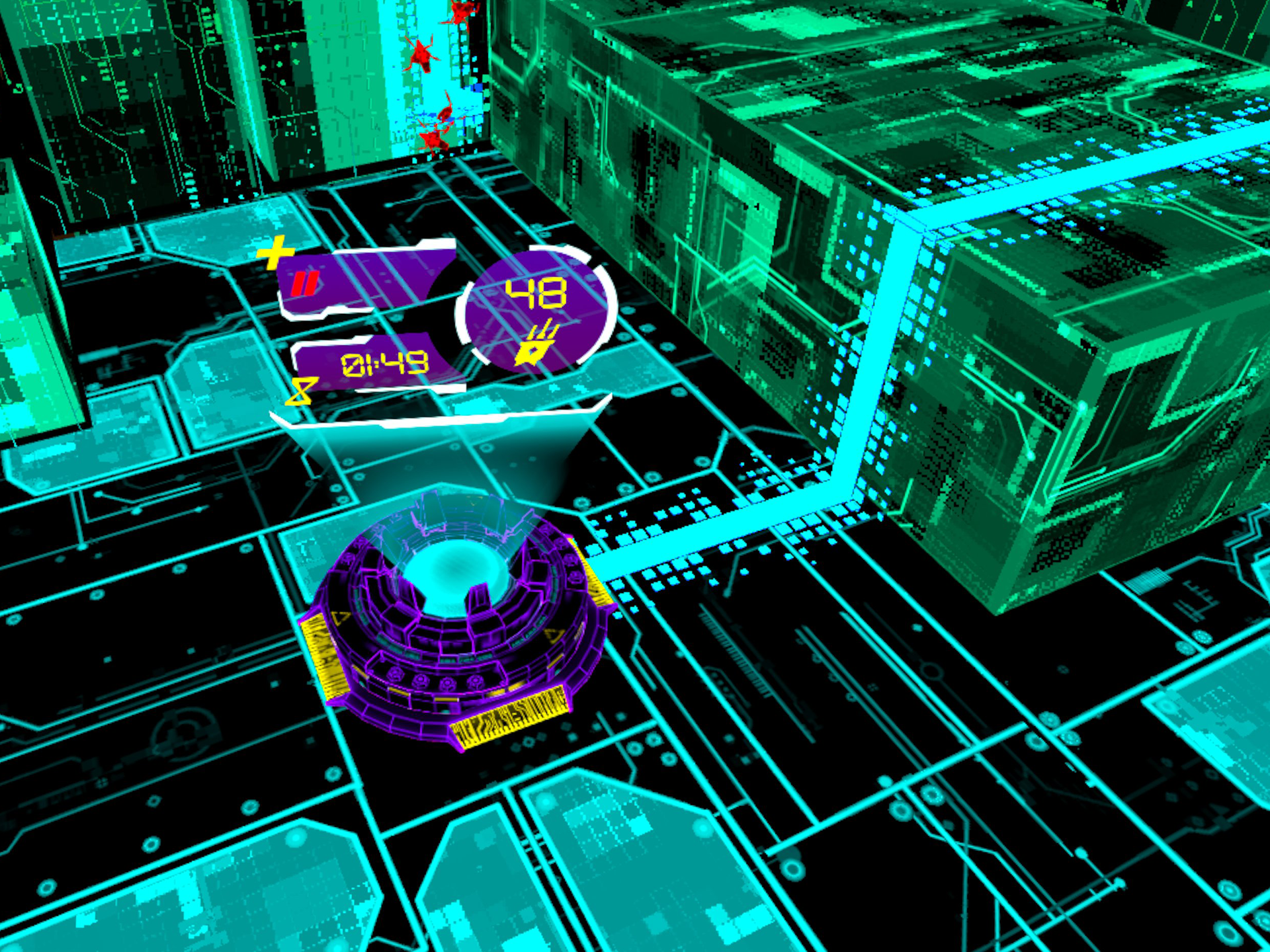
We focused first on the mechanics, making sure the game used the player’s real room in a meaningful way. Once that felt solid, we explored art directions and chose a style inspired by Tron and the cyberspace vibes of Shadowrun. It fit naturally with the idea of playing as a netrunner trapped in a digital conflict. In the story, you’re defending your NeuroGate, the device that keeps your mind anchored to reality. If it falls, you’re stuck in the matrix forever.
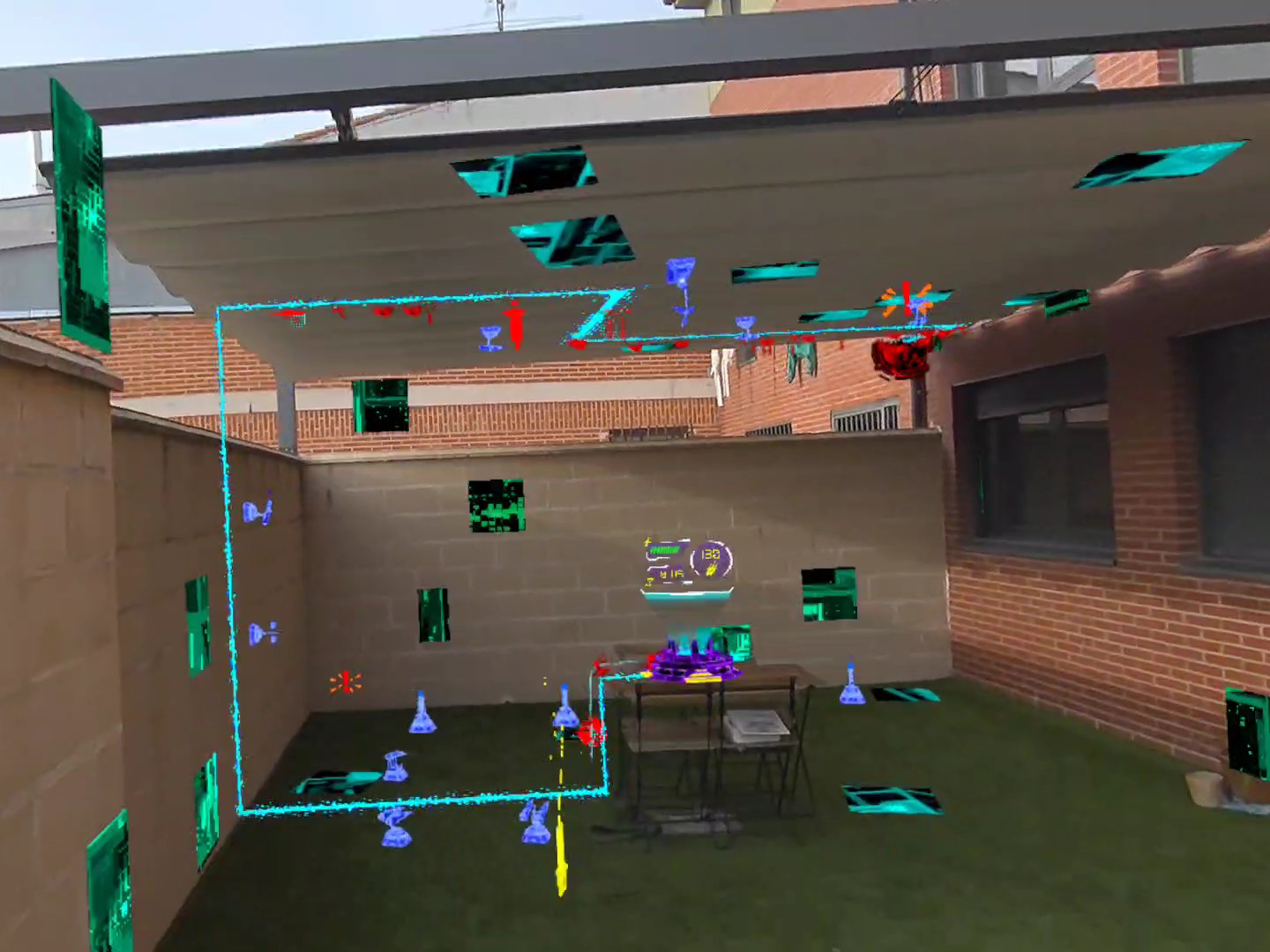
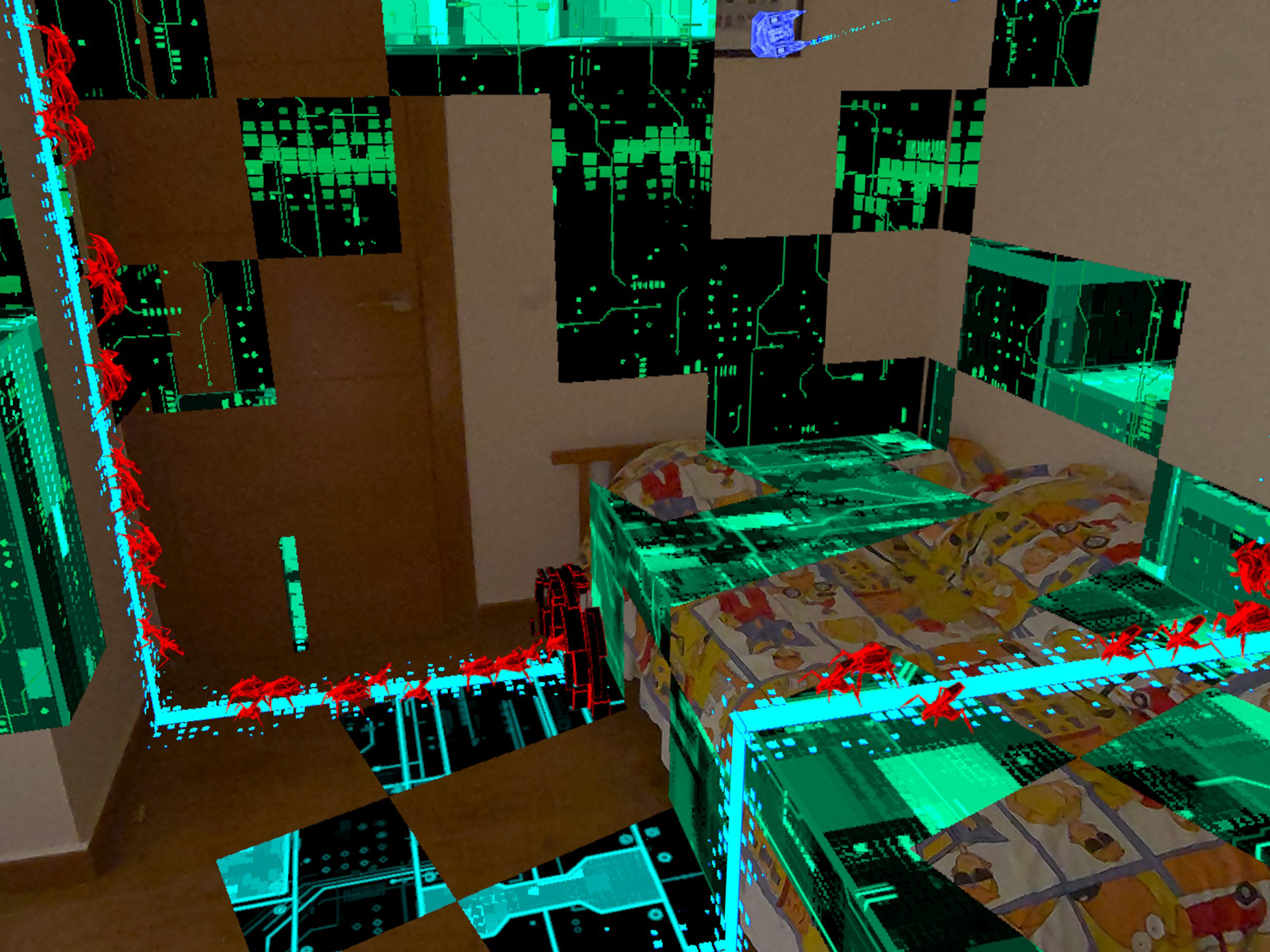
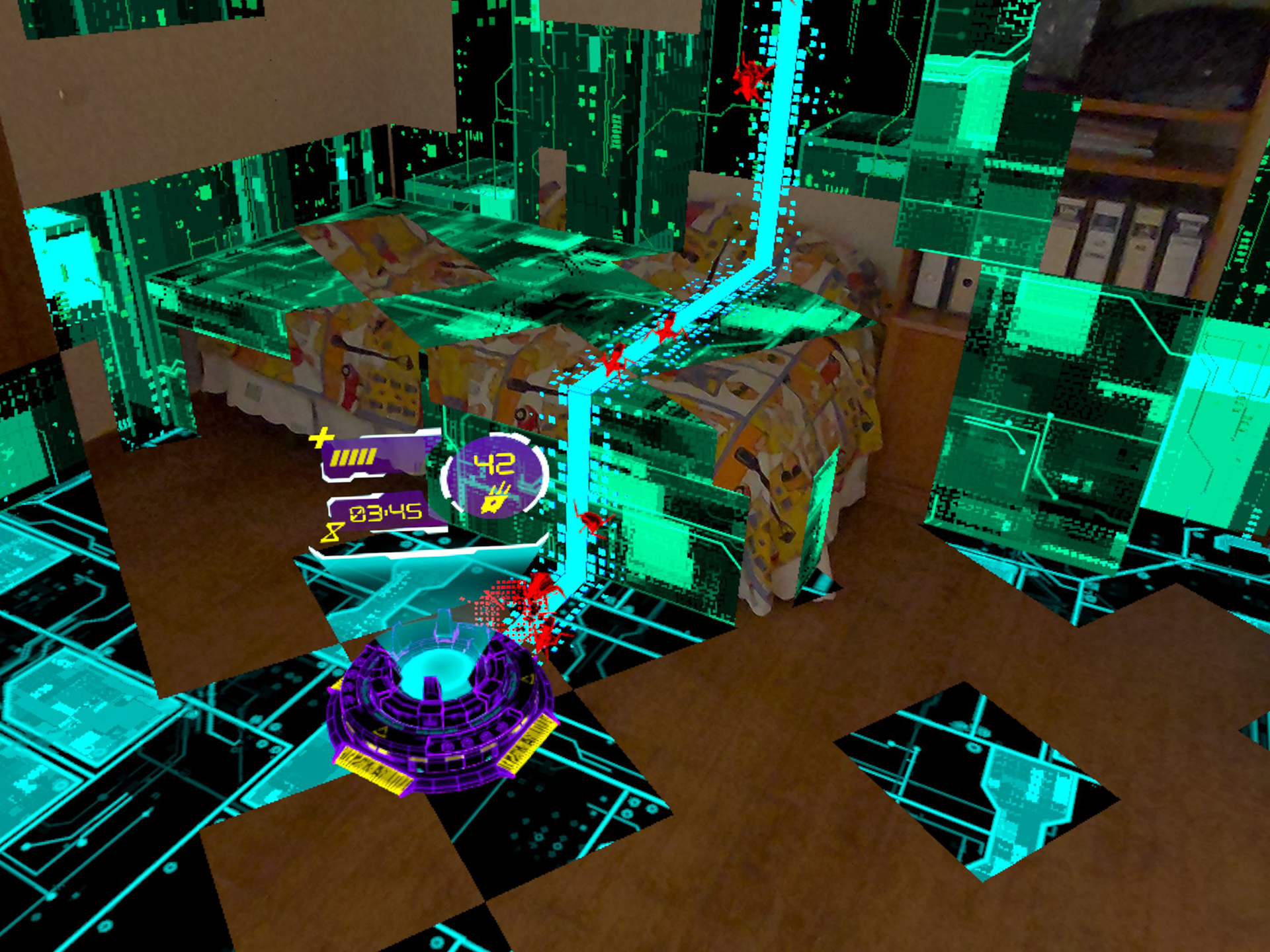
The game begins when you place the NeuroGate in your room. From there, the system draws a digital path across your walls and furniture. Two core gameplay loops run at the same time:
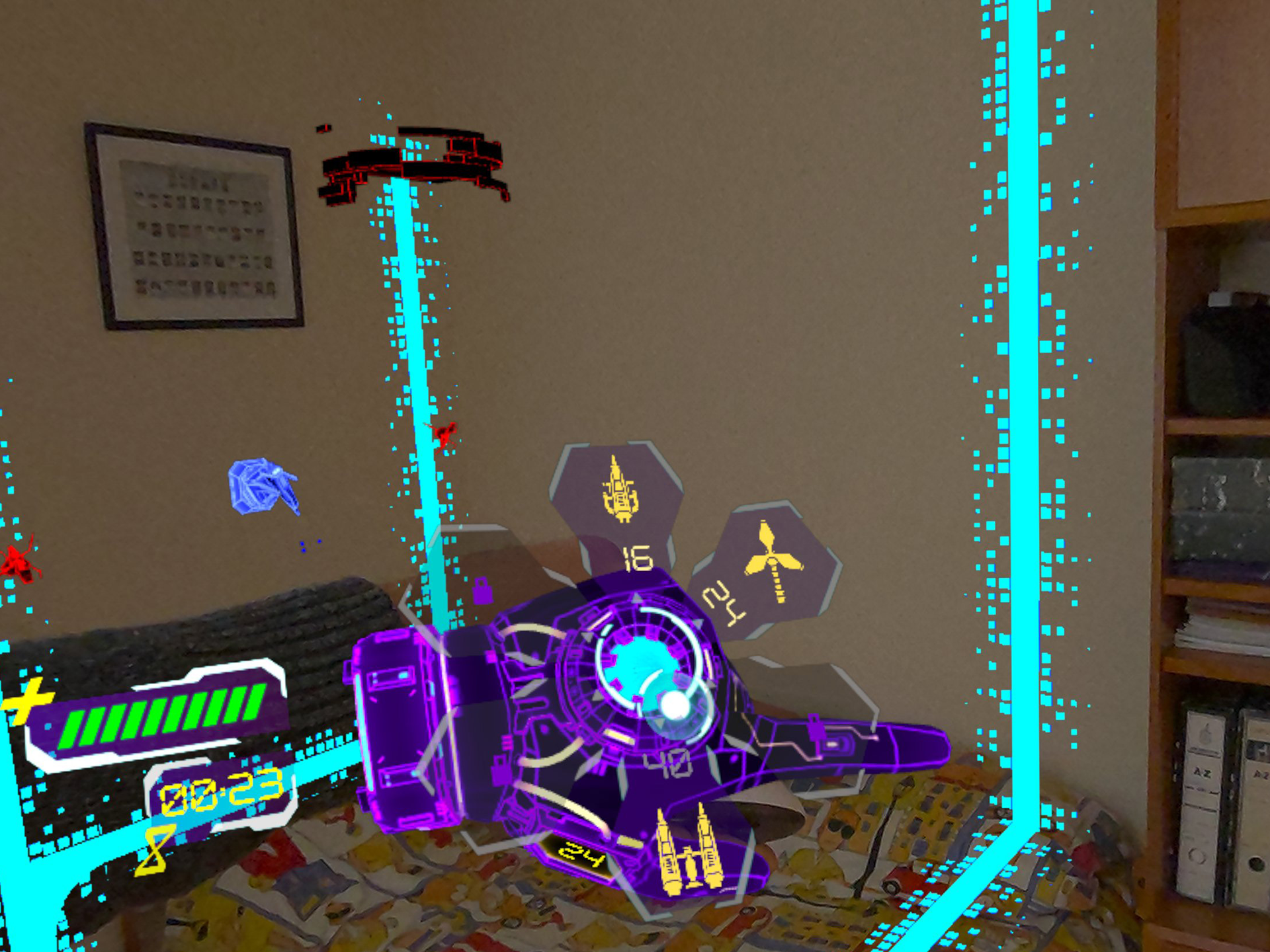
Tower Defence (vs. DDoS Viruses): Waves of DDoS enemies move along the path and try to overload your NeuroGate. You place turrets around your room to stop them, unlocking new turret types and abilities as you progress.
Defend the Towers (vs. Malworms): Malworm viruses appear anywhere in the room and fly straight toward your turrets. You have to attack them directly with your hands, adding a fast and physical element to the game.
Each level lasts five minutes, and once you beat it, you can replay it in endless mode to see how long you can survive.
We built the project in Unreal Engine, which came with its own challenges. Some of us had only worked with VR in Unity, while others knew Unreal well but had little VR experience. Even so, we saw this as a chance to learn, since the project is small and ideal for experimenting.
The biggest challenge was designing a game where the environment is completely unpredictable, because it’s the player’s room. We had to deal with all kinds of room shapes, odd corners, and furniture that might not be mapped correctly. Creating a path that works in every possible layout turned out to be a lot more complex than it sounds.
We also ran into the typical hurdles of working with AR on Quest: limited documentation, evolving tools, and a lot of trial and error. But facing those issues helped us understand the platform better.
We’re proud of what we’ve achieved so far. Zploit.ᴢᴇʀᴏ is genuinely fun for us to play, and the visual style gives the game a clear identity without relying on the usual low-poly approach.
As we get closer to launch, we’re focusing on polishing gameplay, fixing remaining bugs, tuning difficulty, and exploring how we can integrate partially the Guardian system to help players play safely inside their real room without breaking the immersive AR experience.


Log in or sign up for Devpost to join the conversation.