-
-
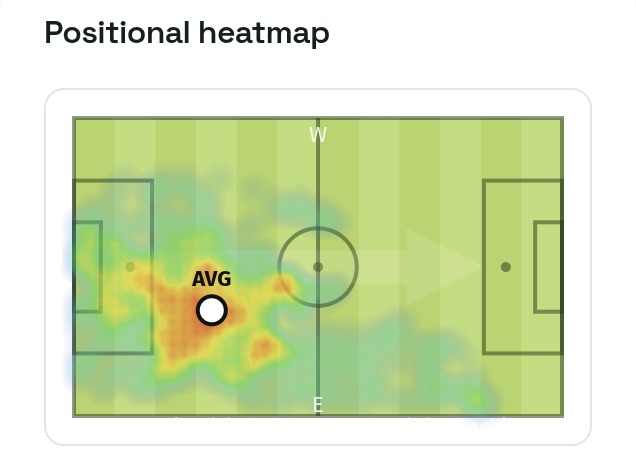
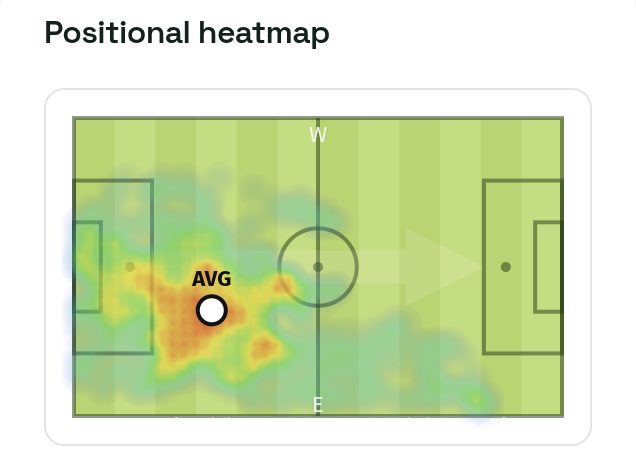
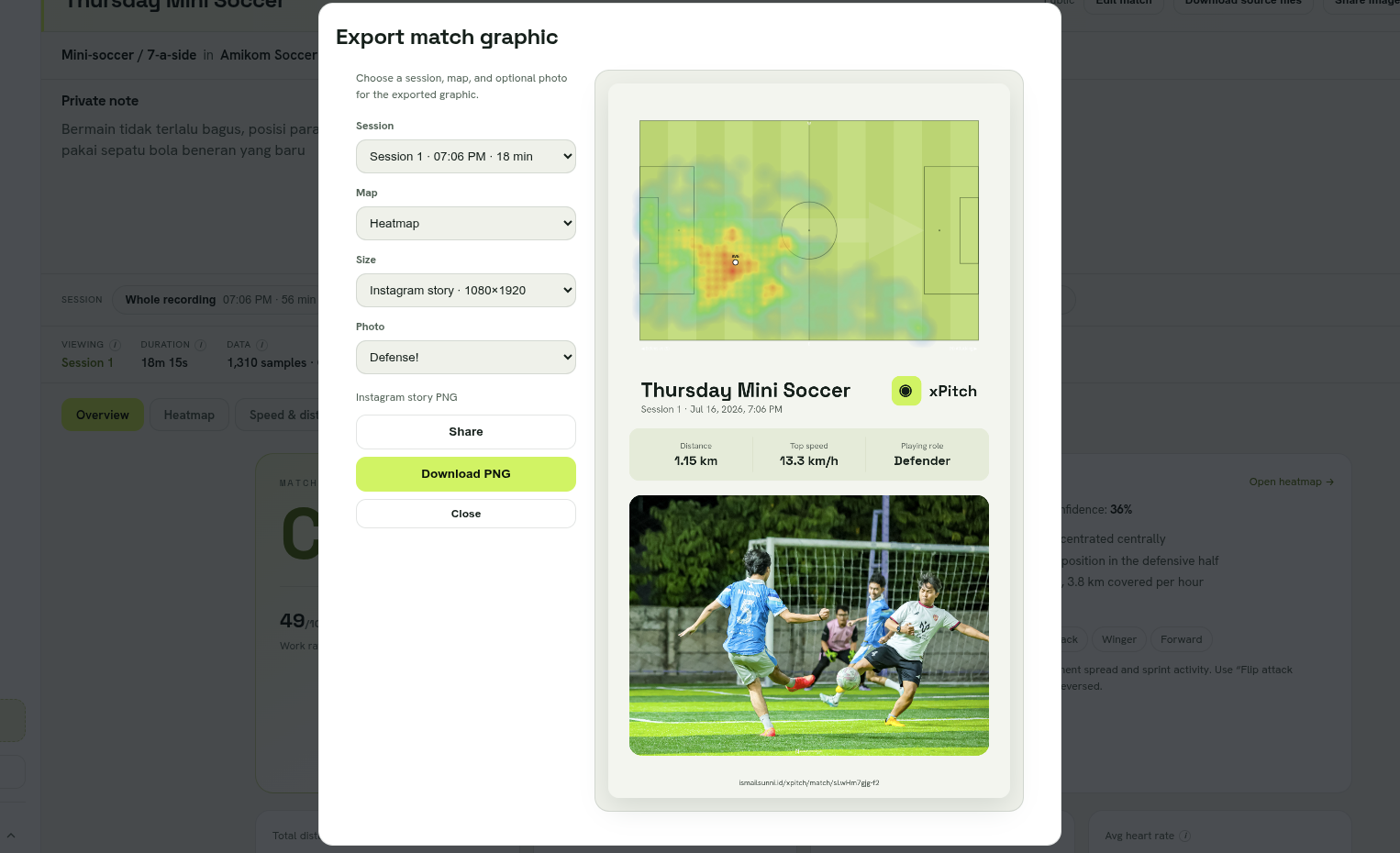
Positional heat map, just like in the real football match analysis
-
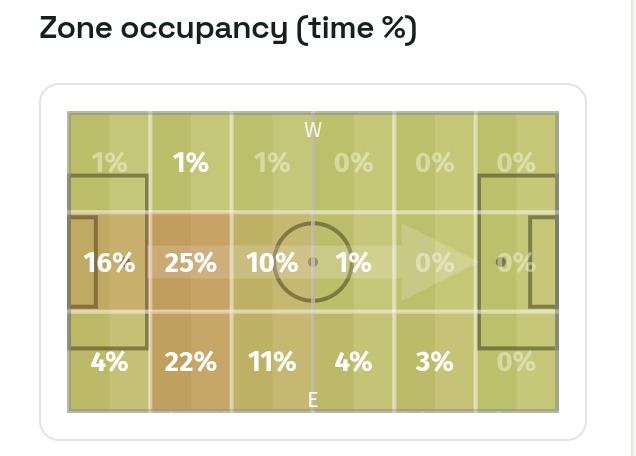
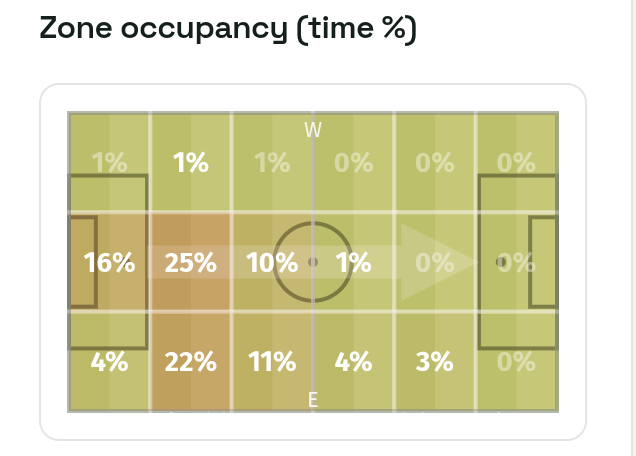
Zone Occcupancy
-
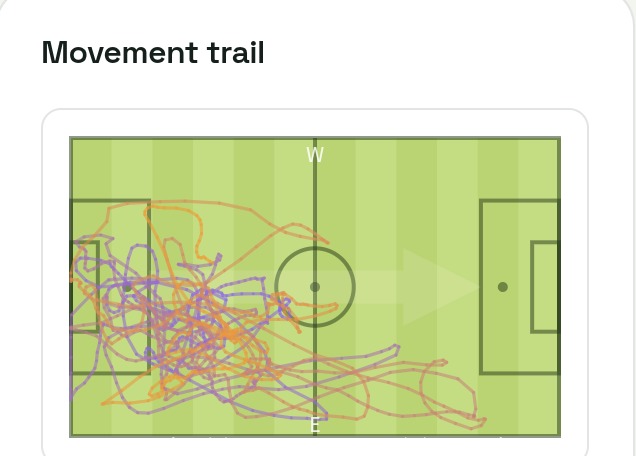
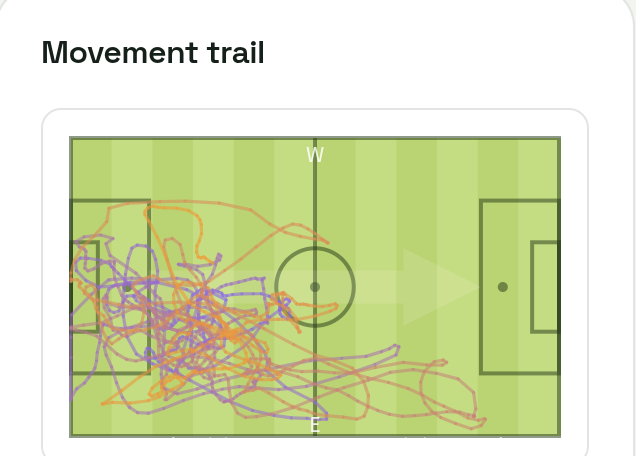
Movement trail
-
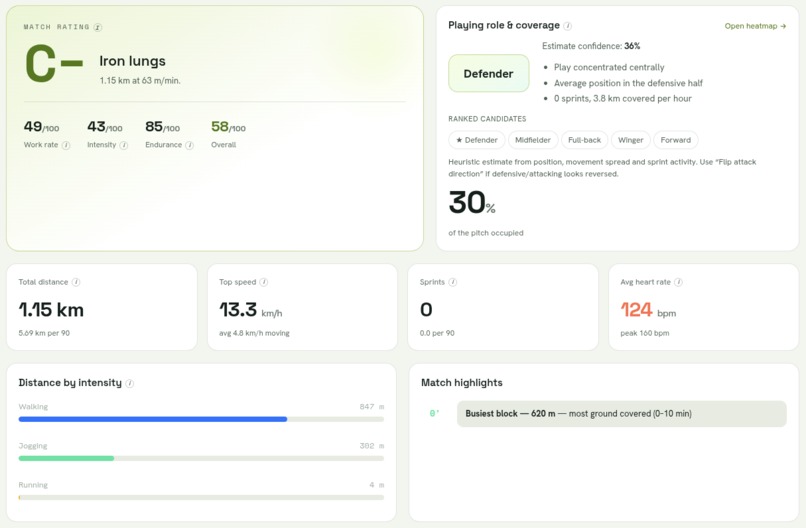
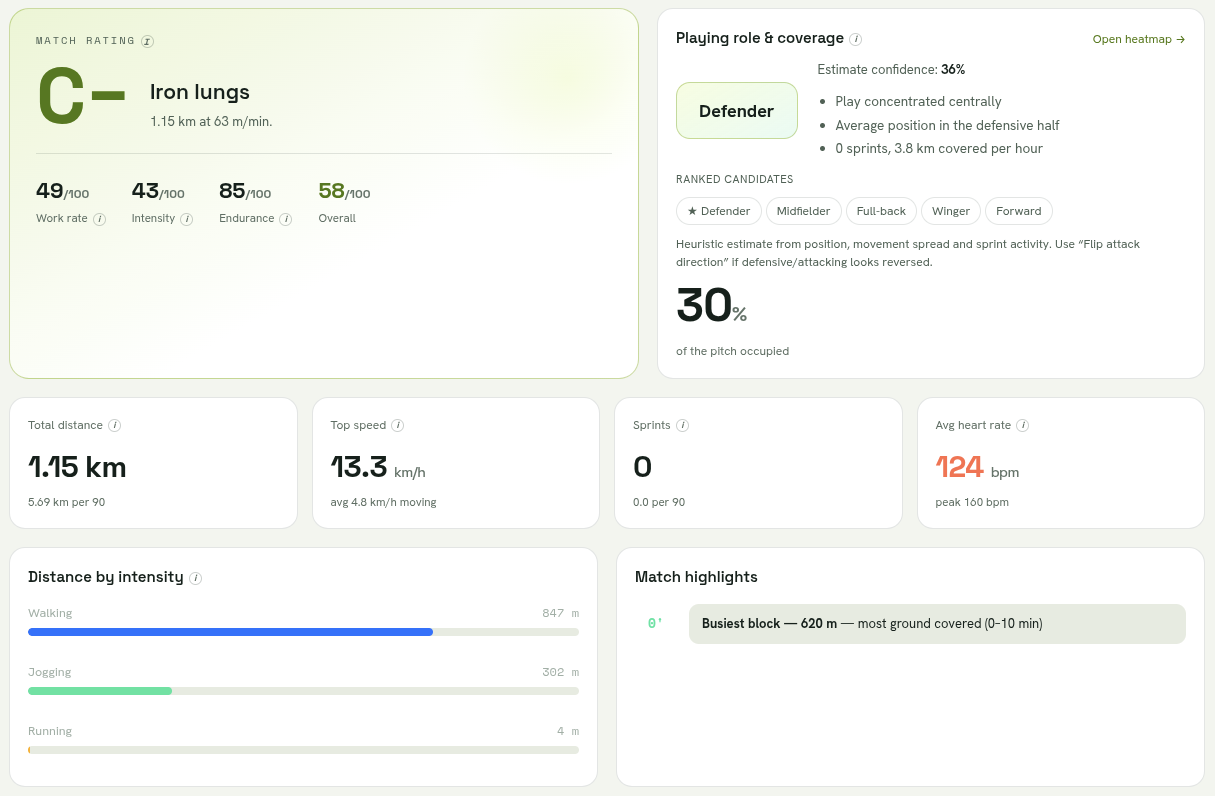
Match overview and grade rate
-
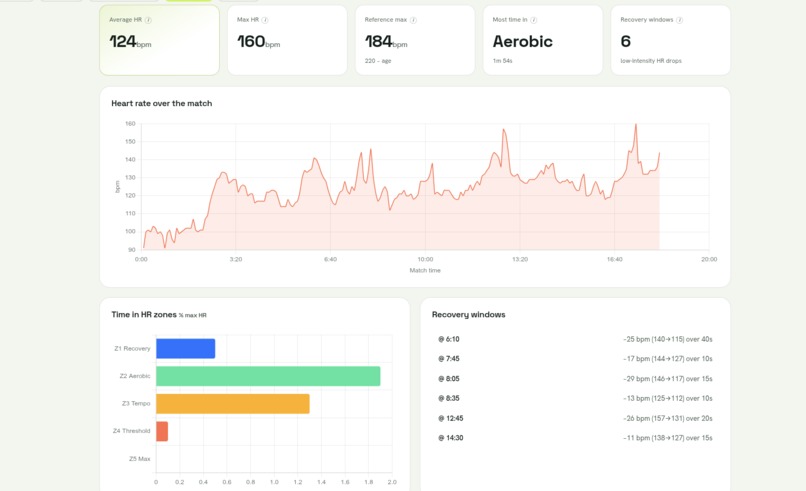
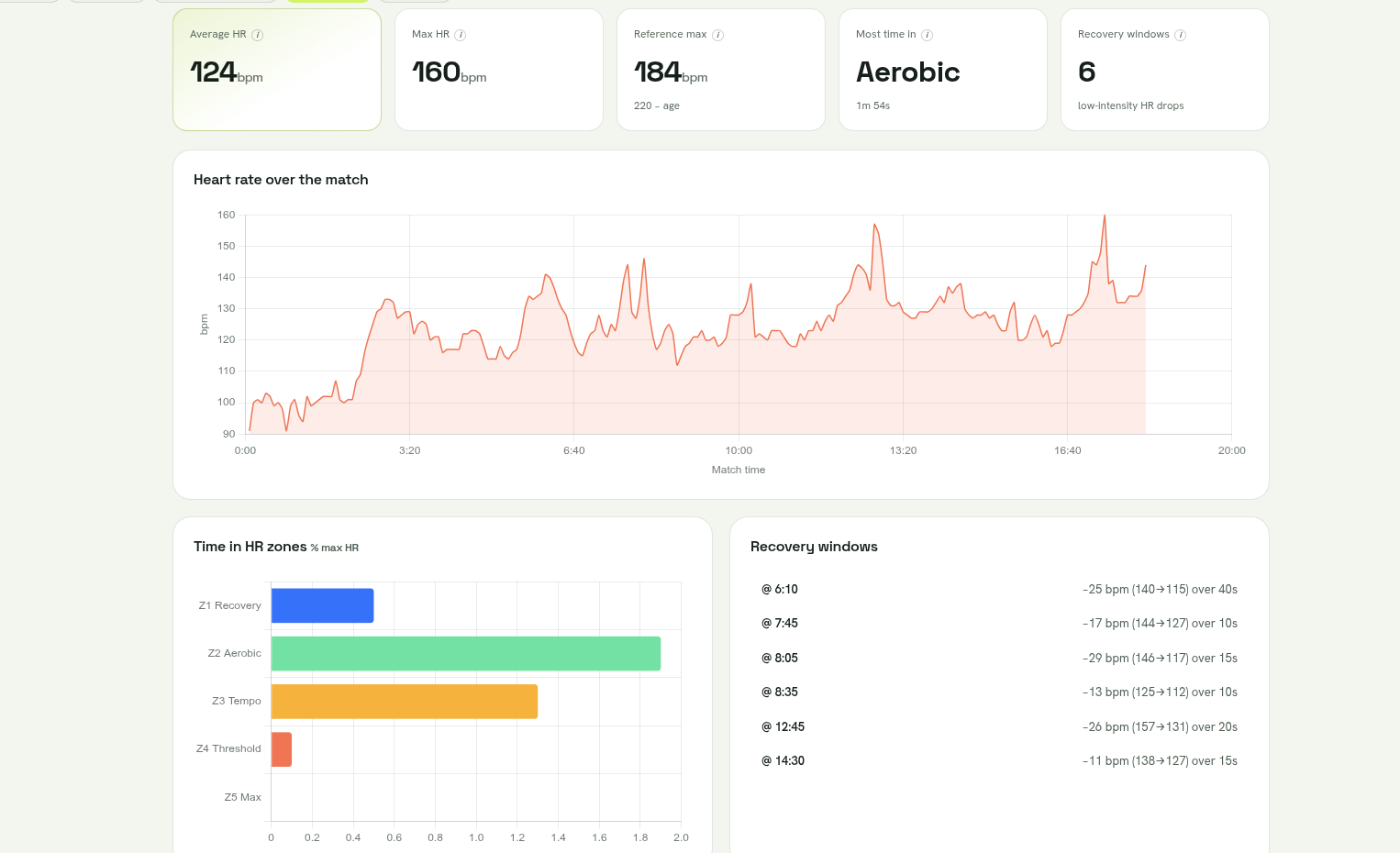
Detailed data
-
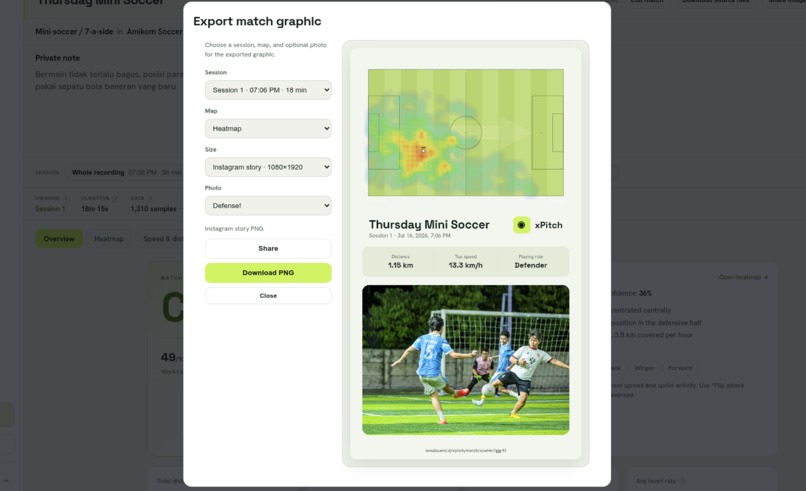
Create social media material, ready to share, including your photo. Impress your friends!
-
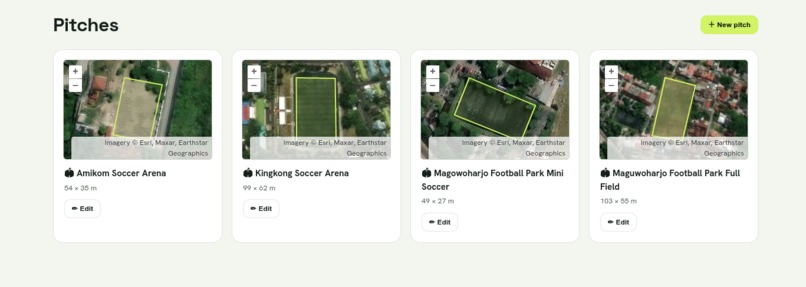
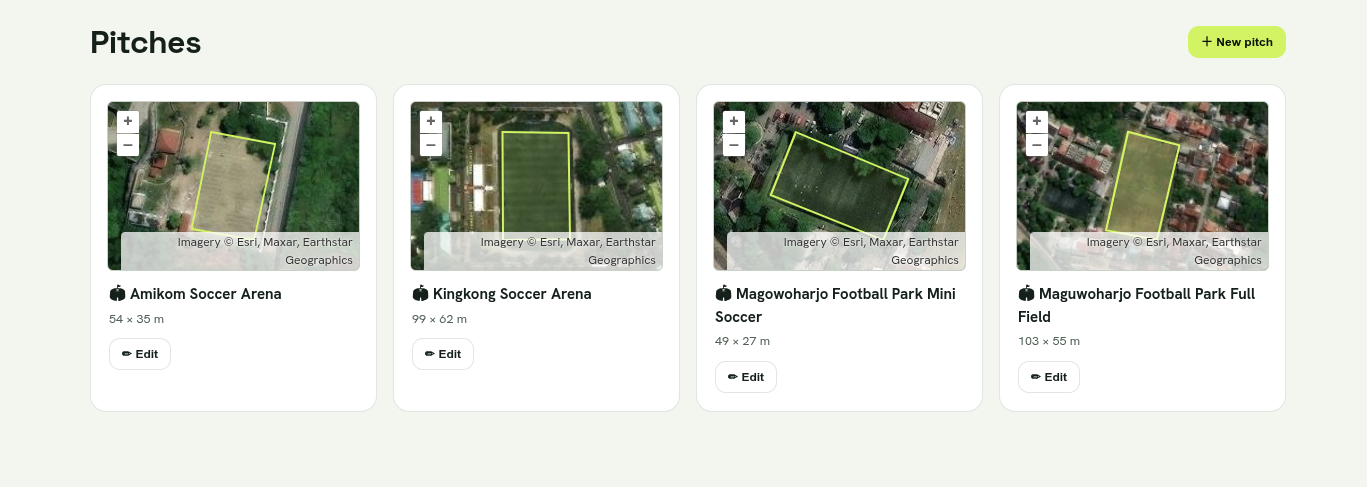
Creata and view pitch. Because without the pitch, it's not football, just running without objective
-
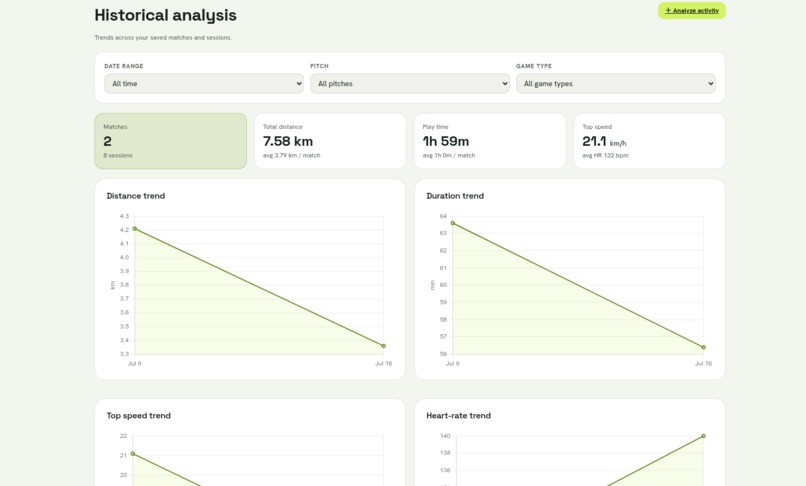
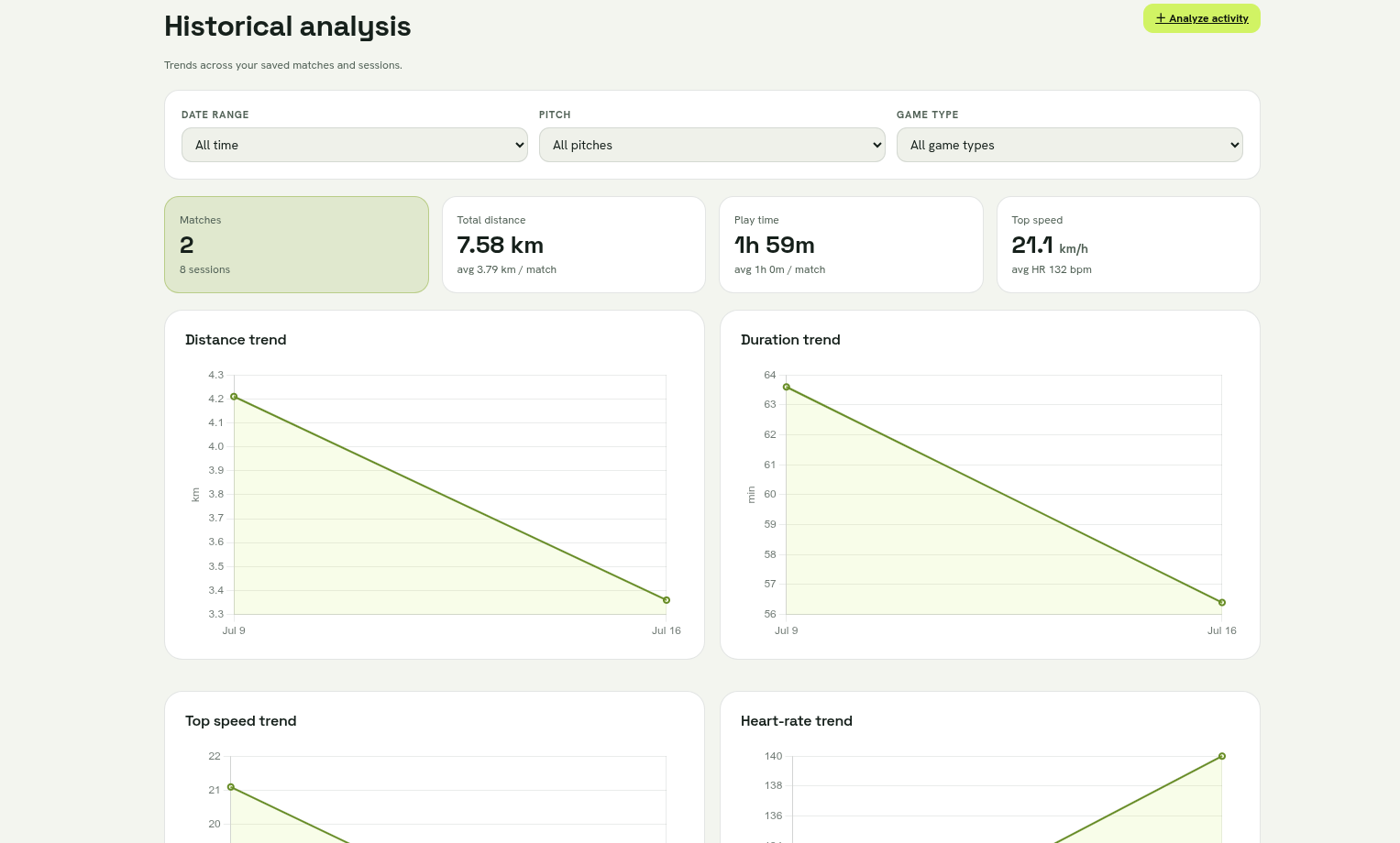
See and analyze your historical match data
-
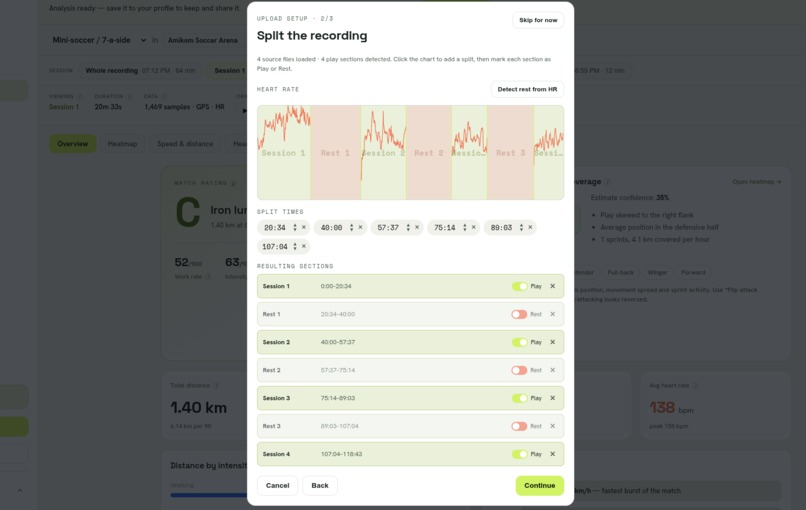
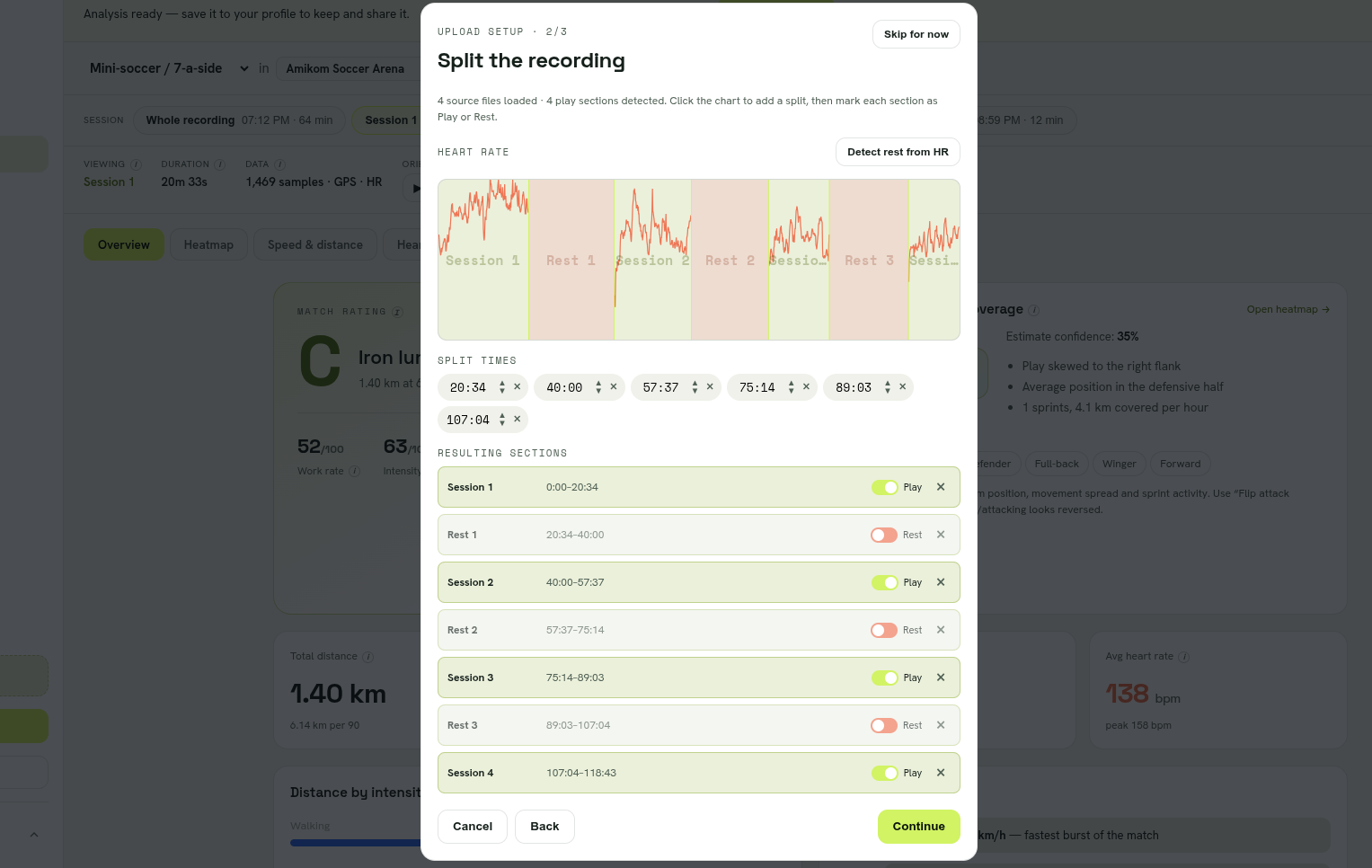
Session spliting because 1 match can have multiple session and difference attack orientation. Including auto split based on heart rate
xPitch — Strava for Football
OpenAI Build Week submission · Track: Apps for Your Life · Built with Codex + GPT-5.6
Inspiration
I love playing football, but I could never find an app that analyzes my own playing data the way we see professional matches broken down on TV — heatmaps, positional zones, sprint counts, heart-rate load. That data exists: my smartwatch already records GPS and HR every second of a match. It just had nowhere to go.
Strava is amazing for running and cycling, but it treats a football match like a jog around a field. Football isn't a jog — it's stop-start, multi-directional, played in halves, and all about where on the pitch you spend your energy. I wanted the Strava experience, but built around how football actually works. So I built xPitch.
What it does
You upload the .fit file from the smartwatch you wore during a match. From that, plus a little context (your age, the pitch geometry, attacking direction, and how the recording splits into halves/sessions), xPitch turns raw GPS into football insight:
- Positional heatmap and zone occupancy: where you actually spent your time, mapped onto a real pitch.
- Movement trail and average position: your shape over the match.
- Work-rate and intensity metrics: distance covered, sprints, high-speed running, and HR zones.
- A shareable report card : a letter grade with work-rate / intensity / endurance sub-scores and a role estimate (e.g. "box-to-box engine").
- Historical Data: now, that we can record our play, we can analyze the historical data. Unfortunatelly, I only play twice since I build this project. So, I don't have enough data. Yet.
Almost everything is automatic. Matches can be saved to the cloud (using supabase), shared via a public link, or exported as an Instagram-ready post/story image generated straight from your data. Because, I want to "impress" my friend :D
How we built it
I started a rough prototype the weekend before I heard about Build Week (a few early commits used another assistant). Once I found the hackathon, I stopped, waited for my API credits, and rebuilt the project around Codex with GPT-5.6 — which is where the vast majority of the real work happened: refactoring the prototype, designing the data pipeline, adding the backend, and hardening the code.
The architecture came together in layers, and Codex drove each one:
- Local-first analysis. A dependency-free
.fitdecoder parses the binary file entirely in the browser — no upload required to get results, which keeps it private and fast. - Insight engine. From the cleaned GPS/HR stream I derive distance, speed zones, sprint/high-speed-running counts, HR zones, fatigue, and a role estimate.
- The pitch layer. This is the hard part. Raw lat/long isn't enough for a football heatmap — you need the pitch's real geometry and orientation. I let the user place four corners on a satellite map, and fall back to a PCA-based orientation guess when they don't.
- Session splitting. A match isn't one continuous effort like a run, so I built semi-automatic splitting that detects breaks (e.g. half-time) from the HR signal, with manual override.
- Cloud + social. I added Supabase for accounts, profiles, saved matches, photos, and sharing — so friends can use it with their own accounts — plus a social-media image generator.
My Codex workflow was a tight plan → build → review → fix loop: I'd describe the feature I wanted, have Codex propose a plan, implement it, then act as its own reviewer before I merged. Codex accelerated the parts I'd normally lose whole evenings to — the FIT binary format, the coordinate transforms, the Supabase schema and row-level security — and let me stay focused on the football logic and product decisions. Later I asked a friend to stress-test it and, with Codex, added automated tests and engineering best practices.
The whole thing is deployed on GitHub Pages. All free. :)
Challenges we ran into
- The data is deliberately minimal. A watch only gives GPS and HR — no ball, no camera, no vest array. That's a constraint, but I leaned into it as the point: simple in, meaningful out.
- GPS alone isn't football. To get a realistic positional map I needed the pitch's geometry and attacking direction. The great-circle distance between fixes uses the Haversine formula:
$$ d = 2r \arcsin!\sqrt{\sin^2!\left(\tfrac{\Delta\varphi}{2}\right) + \cos\varphi_1 \cos\varphi_2 \sin^2!\left(\tfrac{\Delta\lambda}{2}\right)} $$
and I project each fix onto pitch-local coordinates using the field corners. My GIS background made this tractable.
- Orientation without input. When a user skips drawing the pitch, I estimate the playing direction with PCA — the dominant axis of the position cloud is (usually) the length of the pitch, recovered from the covariance matrix:
$$ \Sigma = \frac{1}{n}\sum_{i=1}^{n} (\mathbf{x}_i - \bar{\mathbf{x}})(\mathbf{x}_i - \bar{\mathbf{x}})^\top, \qquad \Sigma\,\mathbf{v} = \lambda\,\mathbf{v} $$
- Matches have periods; runs don't. I had to build custom, semi-automatic session splitting driven by the HR timeline so "first half vs second half" means something.
- Handling messy reality — different match formats, orientations, and inconsistent GPS.
- Getting test data was absurd. My Huawei watch has no football mode. So I set it to running mode, played, synced to Strava, and exported the
.fit— just to get realistic data to build on. For other more common swart watch like Garmin, it's much more simpler
Accomplishments that we're proud of
- The heatmaps and zone-occupancy maps are genuinely beautiful — and they're built from my own matches, not a demo. I impress my friends with it, feel like a real football player :D
- A dependency-free FIT parser that decodes the raw binary (including compressed timestamps and developer fields) entirely client-side.
- Football-aware analysis: format-aware thresholds (futsal / 7-a-side / 11-a-side), half-time-aware orientation flipping, and a role estimate that's honest about being an estimate.
- Privacy by default — the core analysis runs locally; nothing has to leave your browser to see your stats.
- A complete product loop — from raw file to cloud-saved match to a share link to an Instagram-ready image.
- Real engineering rigor — refactored architecture and automated tests, developed and reviewed with Codex.
- It works, and people want it. I have a real tracker for my own football matches with a built-in content generator, and my friends have asked for accounts.
What we learned
- Football analytics from the inside — what sprints, high-speed running, and work-rate actually measure, and how pros frame them.
- GPS is only half the story — positional accuracy needs real pitch geometry, not just raw coordinates; that's where GIS thinking mattered most.
- The
.fitformat — its binary structure, message types, and quirks. - How to build with an AI agent — that a tight plan → build → review → fix loop with Codex lets one person ship something that would normally take a team.
- End-to-end software engineering — from a local prototype to a deployed, tested, cloud-backed product.
What's next for xPitch
- Open it up to everyone. Friends have tested it and the feedback is great — next is a public launch where anyone can sign up with their own account.
- Strava integration — so you never have to export a
.fitby hand (pending a Strava subscription for API access). - Garmin and other watch integrations for a seamless experience — the format is already compatible.
- Apple Watch support — the acrobatic one, given its export restrictions.
- Deeper analytics — per-90 stats for fair comparison, teammate/opponent comparison, and load management over a season.
Built With
- canvas
- github
- openlayers
- postgresql
- supabase
- typescript
- vite
- vue


Log in or sign up for Devpost to join the conversation.