Inspiration
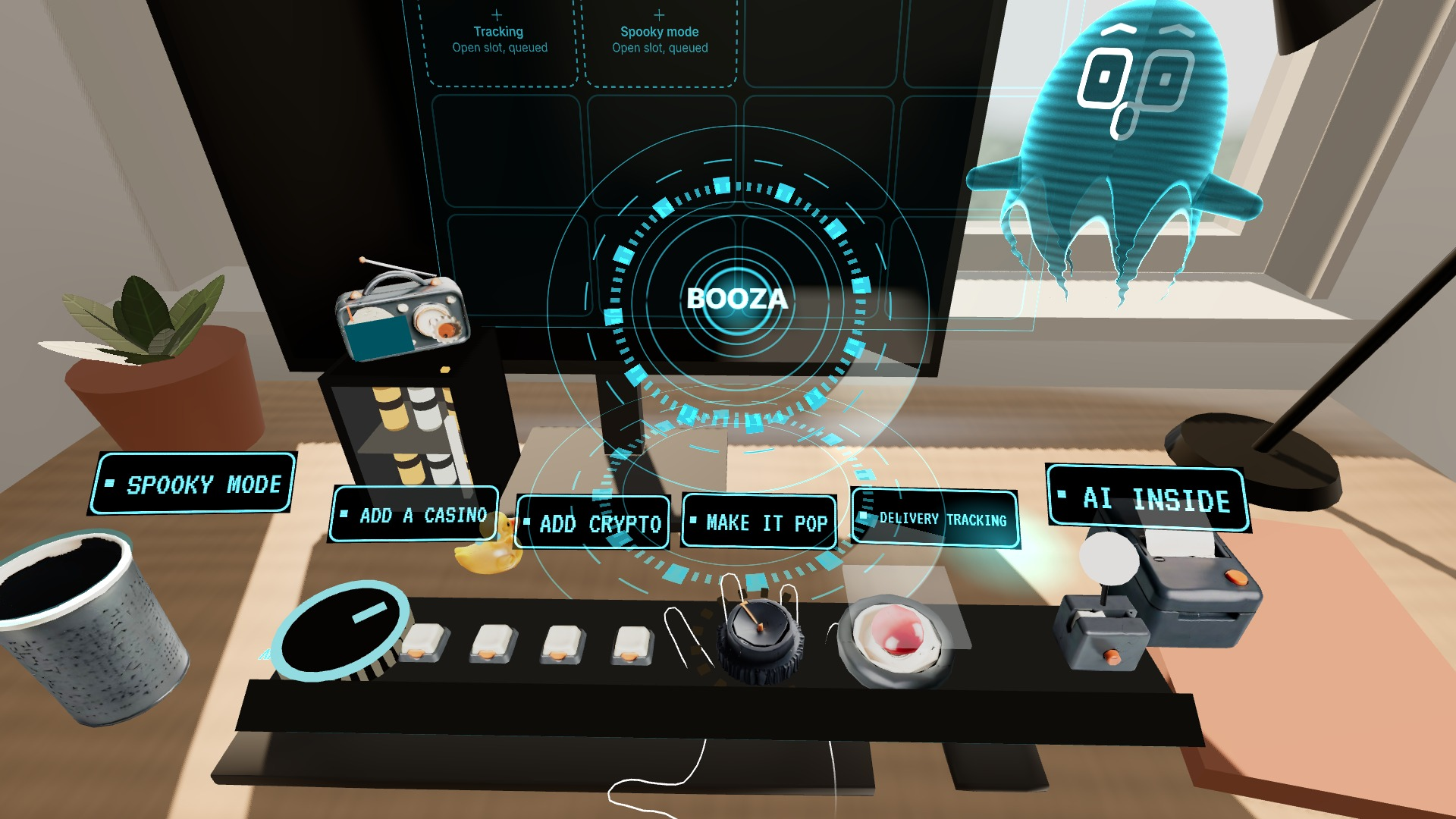
I wanted a VR game you could play when you're tired. Seated, hands only, nothing to hold, no menu to learn. My first idea was a god game and it asked too much of the player, so I dropped it and made something smaller: a late night desk shift. You freelance for clients who are all a bit ridiculous, and a cyan ghost named XPC helps you. "Vibe coding" is the joke, and here you do it with your actual hands.
What it does
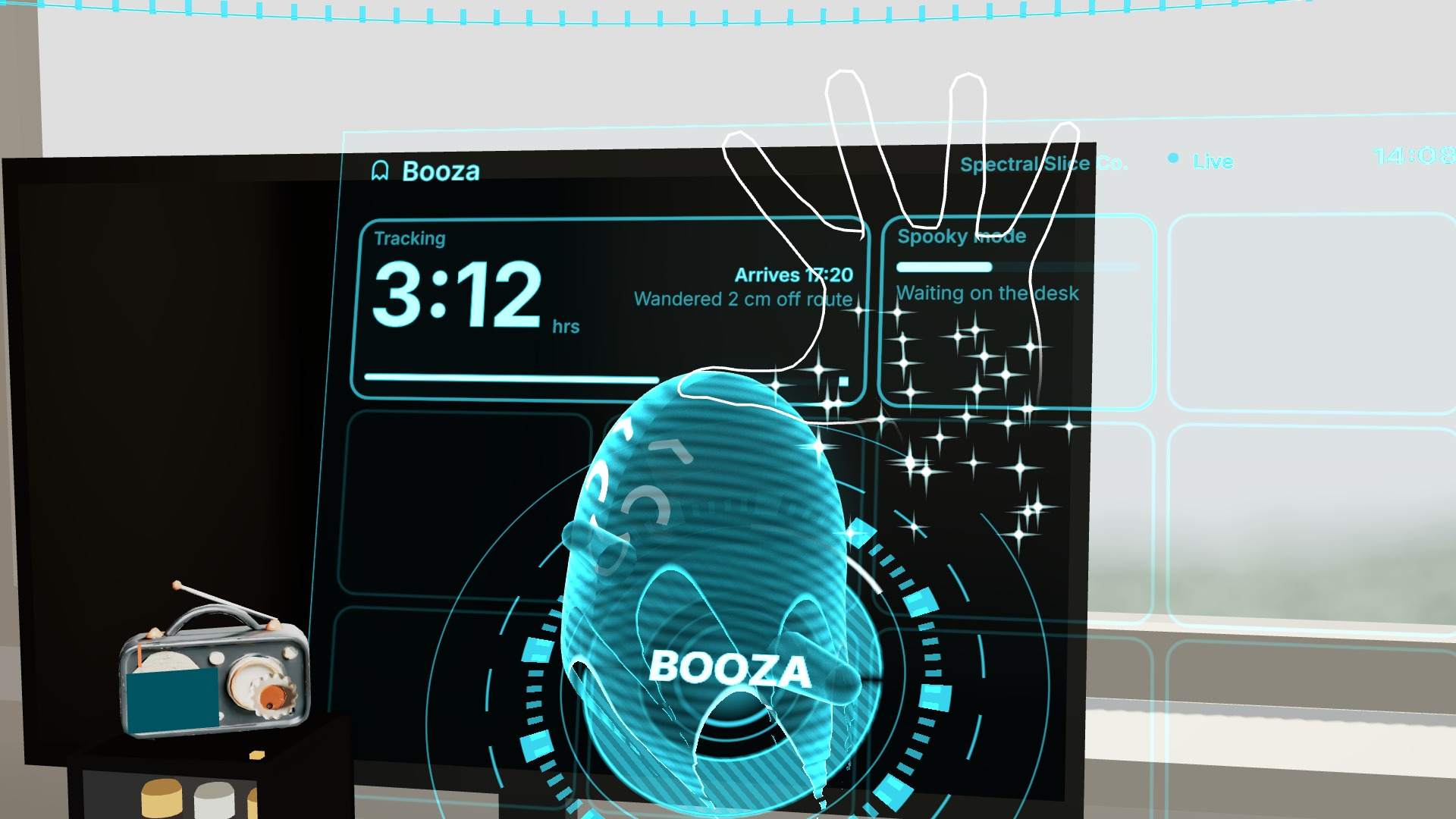
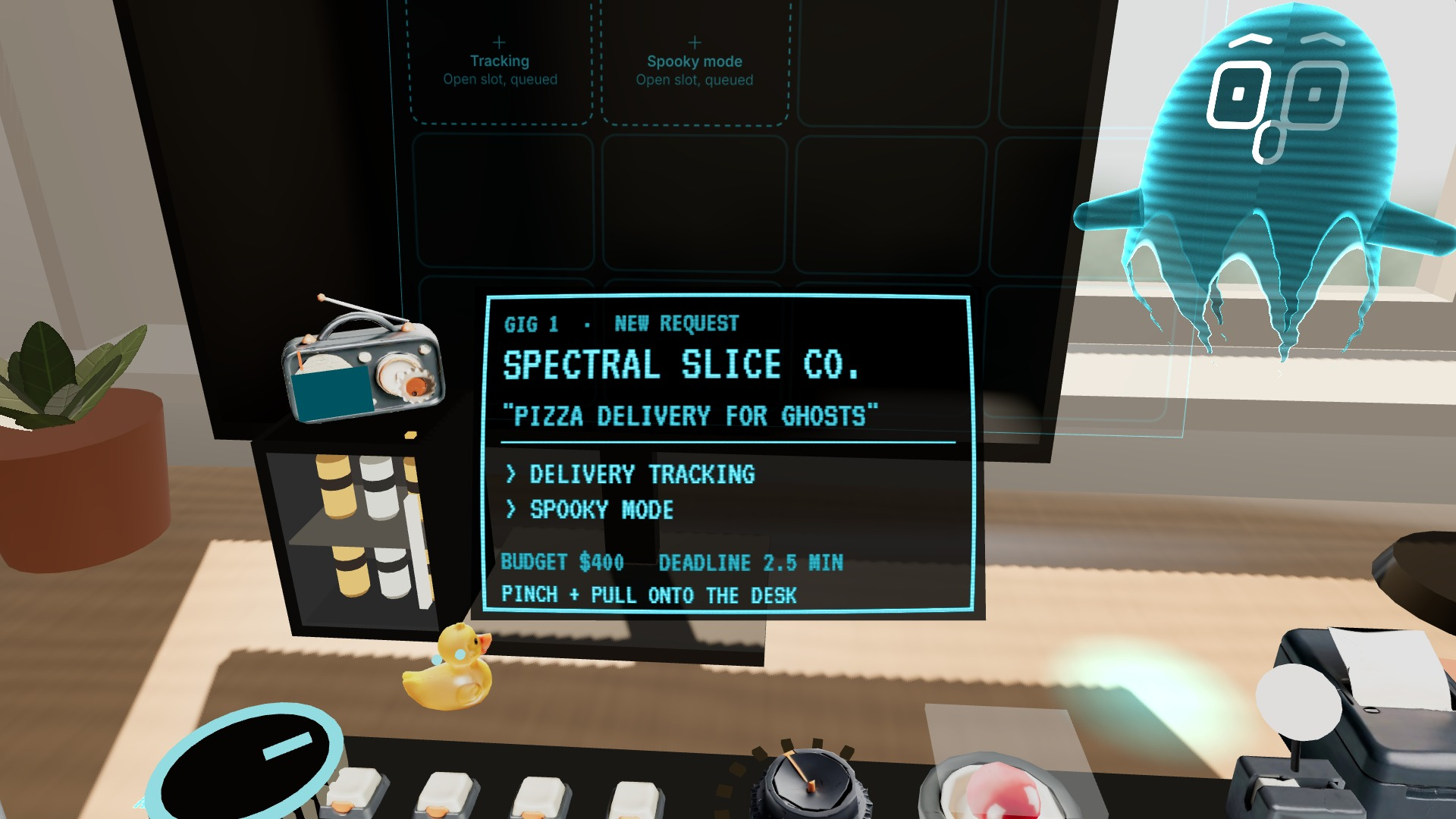
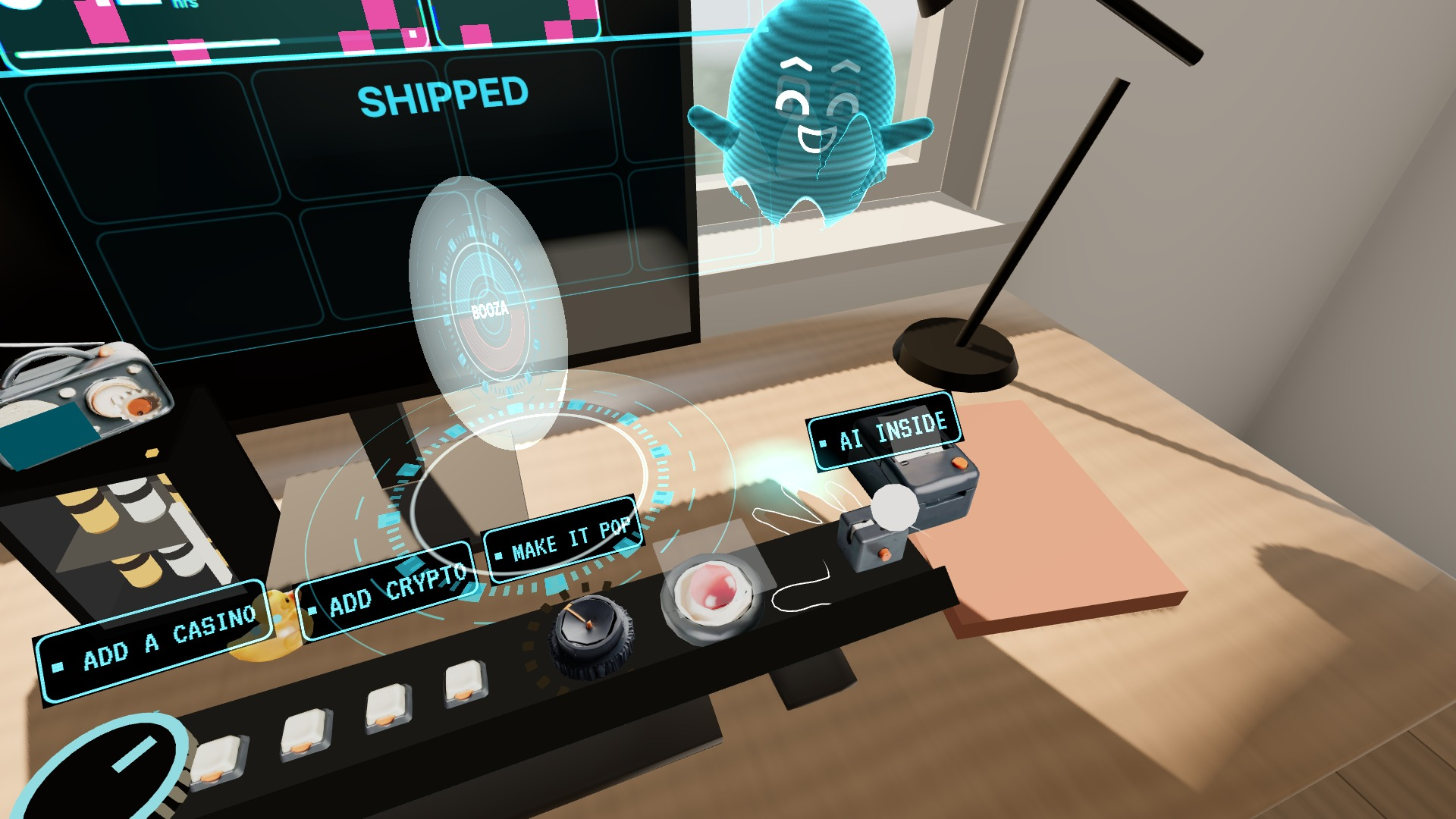
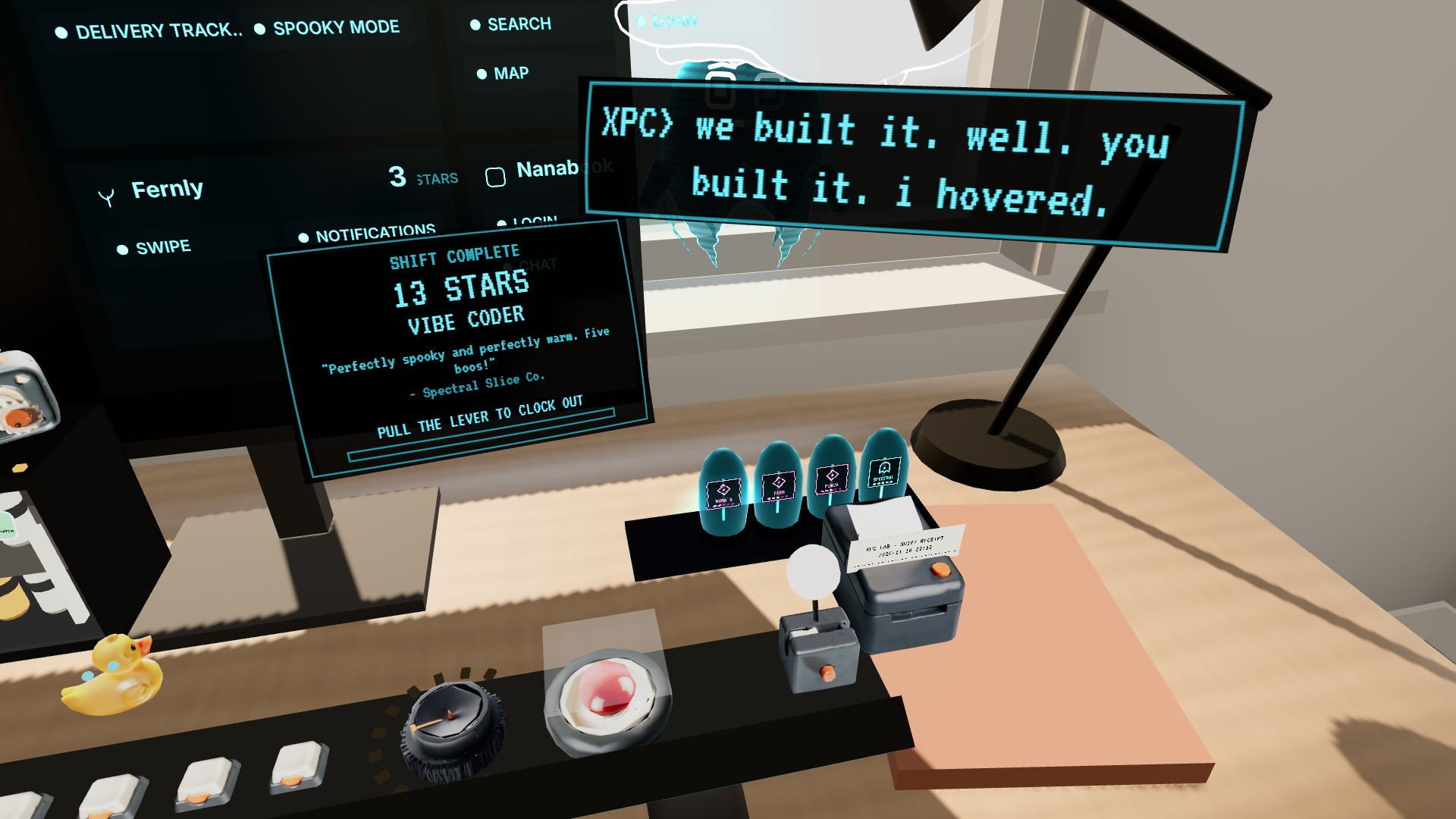
A gig card lands on your real desk from one of 20 clients: pizza delivery for ghosts, maps for mermaids, a job board for hermit crabs. Pinch the card, pull it down, and XPC wakes up. He talks in blips with typed subtitles. Pinch feature chips like DELIVERY TRACKING or SPOOKY MODE and flick them at him. He eats the right ones and builds them, and he'll eat the wrong ones too (ADD A CASINO), so be picky. While he builds, bugs crawl onto the table: fist them down. Fires start: smother them with your palm. He sometimes hallucinates extra parts into the app, so pinch those and flick them away, or crumple them into paper balls and shoot them into the junk bin on the floor. When it's done, pull the lever to ship. Reviews come in, stars count up, a receipt prints and you tear it off. Every app you ship becomes a tube on your shelf, and if you shake one it turns into a snow globe.
How we built it
I built and tested everything in the IWER emulator with 60 scripted hand-tracking playtest checks, and wrote it with Claude Code as my pair programmer. It runs on Meta's Immersive Web SDK with three.js and ECS, as a WebXR link. I kept draw calls on a budget for 60 fps, but I've only measured that in the emulator, not on a Quest. XPC's lines are scripted. There's no AI model running inside the game. The props are 3D models made with Hyper3D Rodin, the radio loops were generated with Stable Audio, and most sound effects are real recordings from my own library, with a few generated where I couldn't find a good one.
Challenges we ran into
I don't own a headset, so every gesture was tuned in the IWER emulator with scripted hand poses. To keep from breaking things I wrote 61 automated hand-tracking playtest checks that run the whole shift. Hands-only input was the hardest part: with no buttons, a pinch, a fist and an open palm all have to mean different things without misfiring. One bug I only caught while shooting the trailer: the mini-fridge sits on the desk's rim, so grabbing a can also grabbed the rim and dragged the whole desk across the room. XPC's subtitles were another one. They floated above the board and you never saw them while looking down at your hands. Now they follow your gaze on a dark plate. Keeping every prop and hologram under about 70 draw calls per eye took a lot of merging. And I started this jam with a different game, a god game, and dropped it about a week in because it asked too much of the player.
Accomplishments that we're proud of
The whole game plays seated with bare hands. Nothing to hold, no menu. XPC feels like a character: he talks in blips, reacts to what you feed him, high-fives you and purrs when you pet him. There are 20 silly clients, 8 desk toys and an overtime mode, and it all runs from a web link with no install. The trailer is 100% real gameplay, captured frame by frame from the emulator with a small rig I built so every take could be repeated exactly.
What we learned
A lot things, the amount of work a cozy sitting game can take. But it was all a fun experience and I like the game that came out. Many bugs relating to small small things, sizing issues, all were part of it. And a small, cozy loop with lots of little toys beat a big systemic idea I couldn't finish.
What's next for XPC Lab
Get it onto a real Quest and fix whatever my emulator hands got wrong. More clients, more desk toys, and a way to share your shelf of shipped apps with a friend. Then a release on the Meta Horizon Store.
Built With
- audio
- claude
- ecs
- emulator
- hyper3d
- immersive
- iwer
- meta
- rodin
- sdk
- stable
- three.js
- typescript
- vercel
- vite
- web
- webxr

