-
-
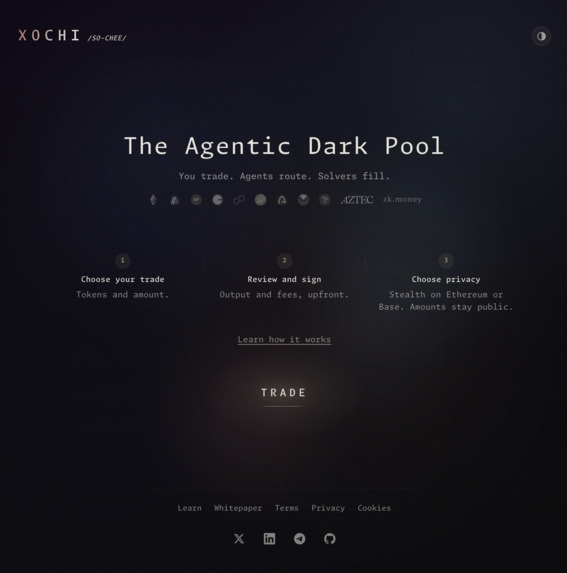
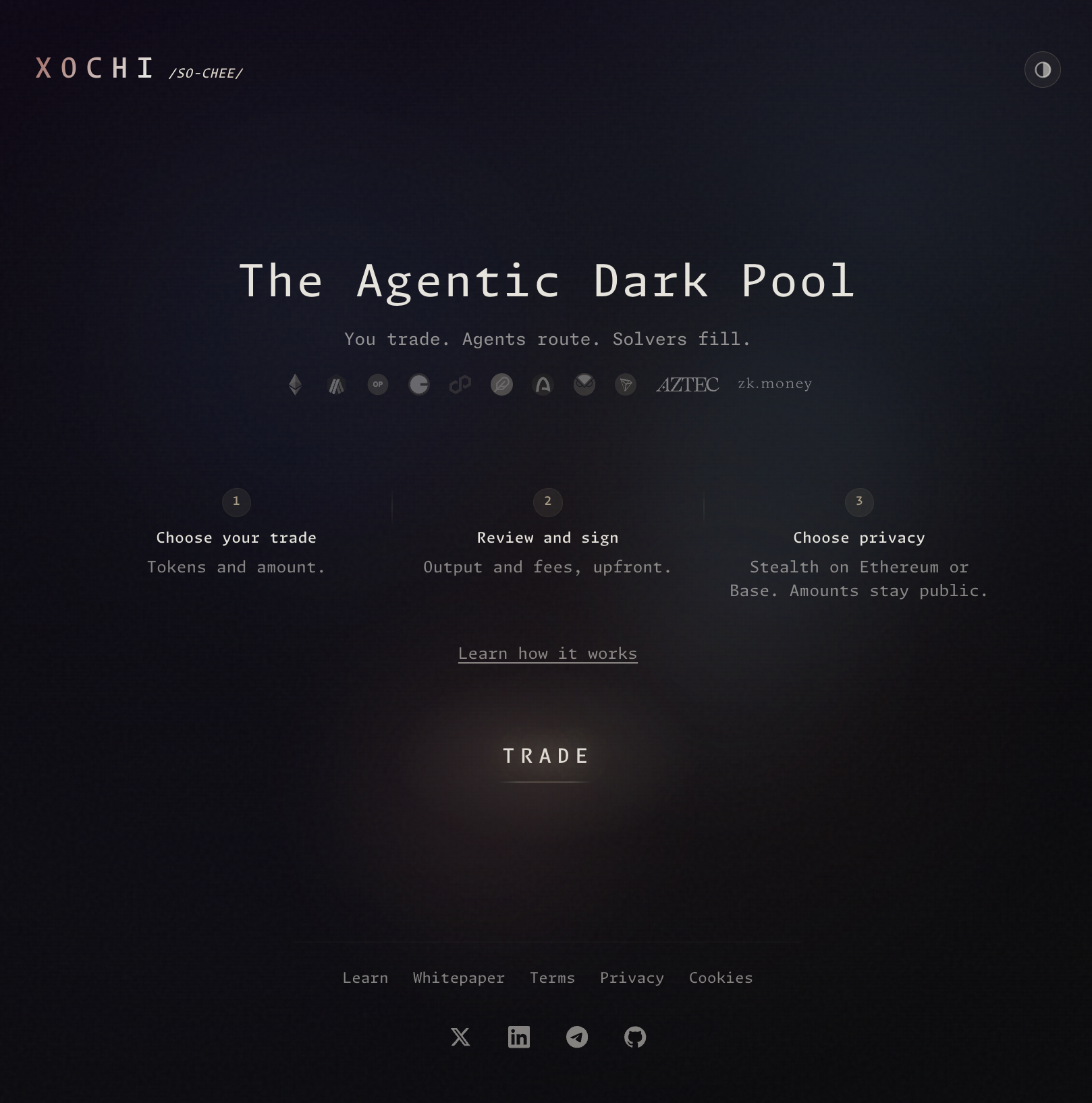
Xochi.fi-Home
-
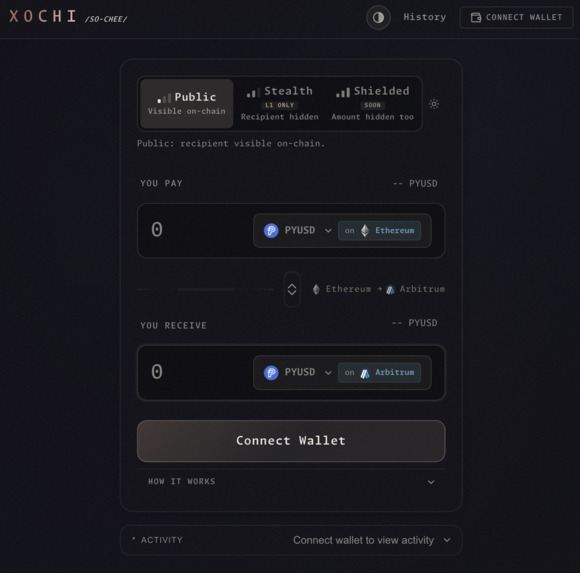
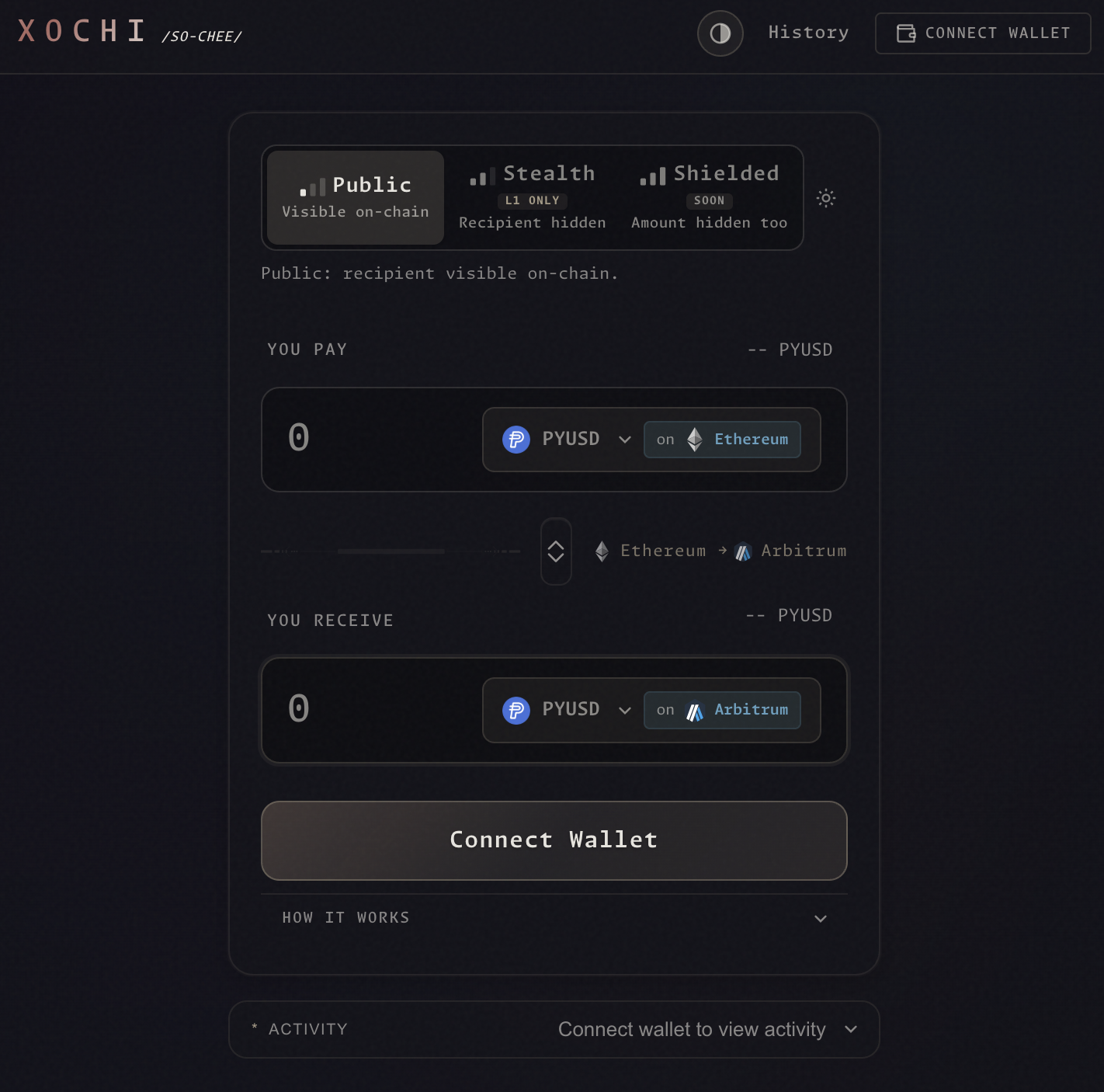
Xochi.fi-PyUSD-Routes
-
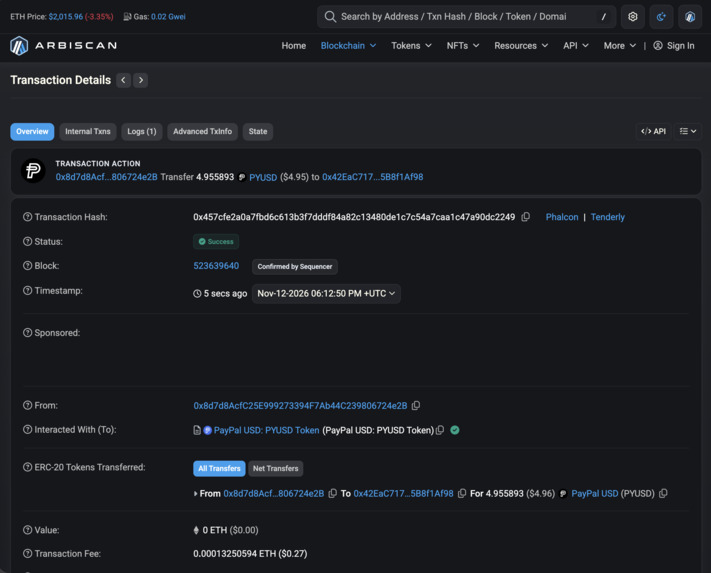
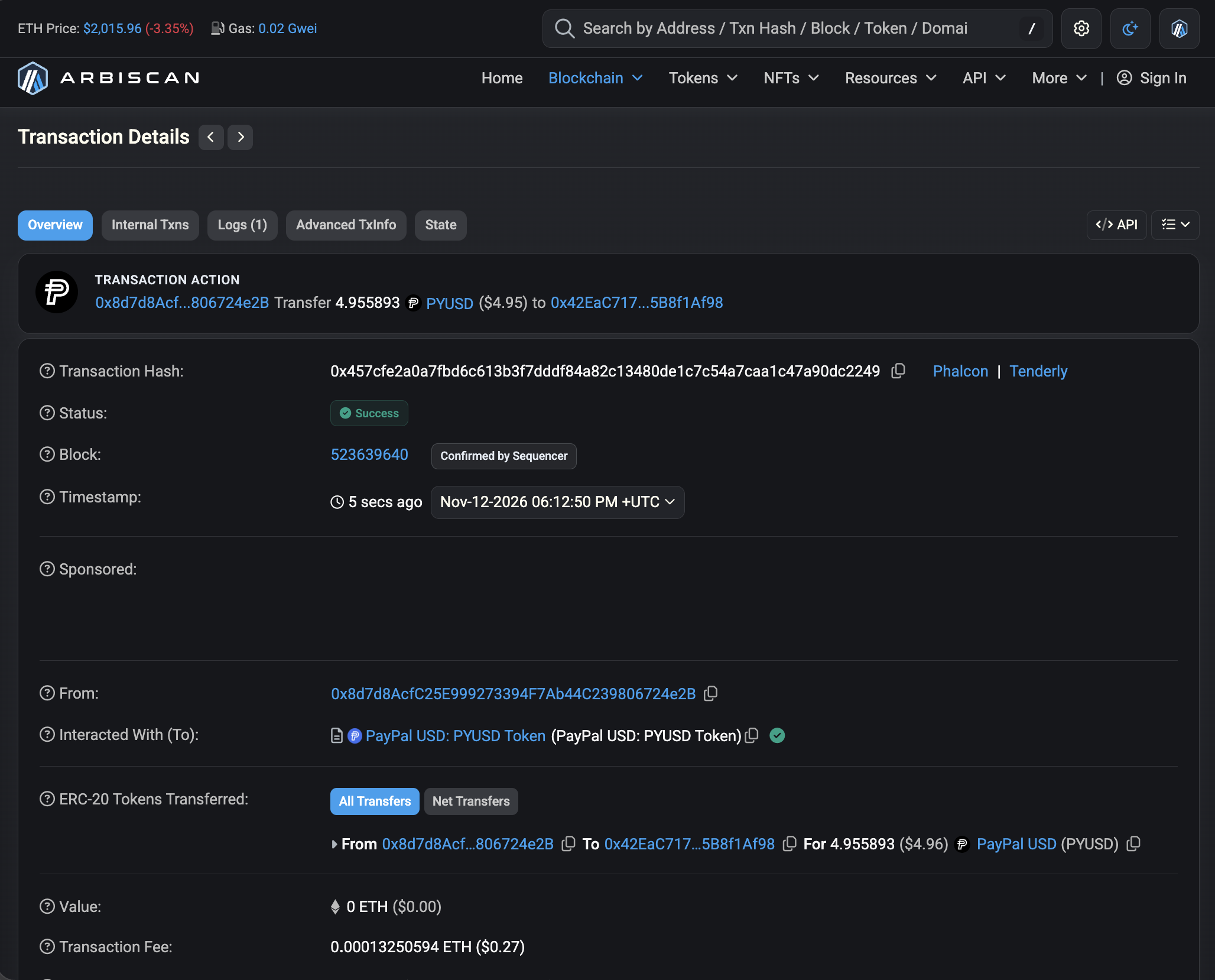
Arbscan Mainnet Swap of PyUSD Confirmation
-
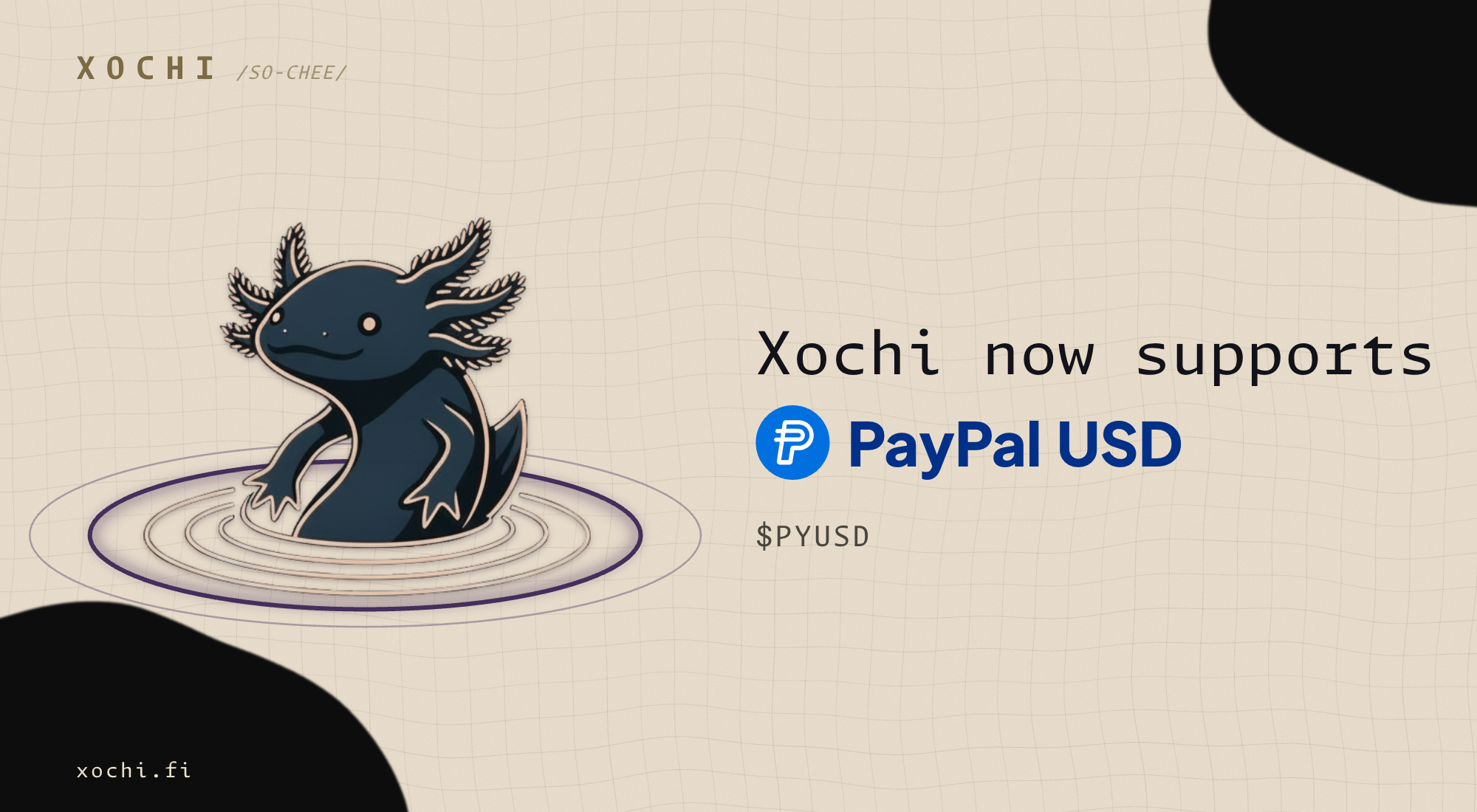
Public PyUSD Trading Announcement!
Around the turn of the millennium, PayPal changed how people could move money online. Sending a payment suddenly needed nothing more than an email address, and private individuals could securely pay each other over the internet as easily as merchants and banks. Payments, even across borders, stopped being an institutional service and became something everyone had access to.
Inspiration
We believe currency exchange is waiting for a similar moment. Stablecoins already let anyone hold different fiats in a single wallet, but swaping between them or across networks still happens in public. On most blockchains, every FX trade is a press release. When a business converts dollar revenue into euros, anyone can read who paid whom, how much and when. Payroll, strategies, and margins end up published forever, and large orders in public mempools get front-run before they land. Traditional finance solved this decades ago with dark pools and request-for-quote desks. Onchain currency exchange is still held back by ledgers that expose everything.
What it does
We built Xochi as intent-based dark pool for stablecoin FX to close that gap without giving up on regulatory compliance. You sign an intent, solvers compete to fill it, and nothing hits the mempool. Our goal is to make compliant and privately settled FX as ordinary for people and their agents as PayPal once made online payments. The platform already supports most major USD-, EUR- and CHF-denominated stablecoins, and the range keeps widening toward other currencies that carry world trade, such as JPY and GBP. Adding PYUSD is about far more than listing another token. It brings private onchain trading to the PayPal community, the early adopters who made that first shift happen. In this way, PayPal's reputation as an innovator and its immense offchain reach extend onchain, and the dollar leg, where most of the flow lives, can settle natively.
With Raxol, our agent runtime, users can already hand tasks to agents, including brokered trading inside the Robinhood app. The question we keep hearing is not whether an agent can trade, but how to prove the legitimacy of what it is doing without exposing who stands behind it. We wanted one venue where a person and an agent acting on that human's mandate get the same privacy and the same compliance guarantees.
How we built it
During the hackathon we integrated PYUSD's Ethereum & Arbitrum contracts into our supported asset set, extended solver quoting and liquidity routing to PYUSD pairs, and wired Raxol so agents can construct, sign, and submit PYUSD swap intents under scoped human mandates.
Accomplishments that we're proud of
A working end-to-end flow: PYUSD in, a competitively priced fill, private settlement out; identical whether a human or a Raxol agent signs the intent. One venue serving people and their agents with the same guarantees is, we think, the right shape for what's coming.
What we learned
Privacy and compliance aren't opposites, but they have to be designed together from the start rather than bolted on. We also learned that agents raise the stakes: an agent trading in public leaks its strategy at machine speed, so private venues matter more in an agentic world, not less.
What's next for Xochi.fi, PyUSD-FX
Deepen PYUSD liquidity and widen the pairs toward the other currencies that carry world trade: e.g. JPY and GBP next. Follow PYUSD onto the other networks it expands to, and grow Raxol mandates from one-off swaps into standing jobs, recurring conversions, treasury rules; so a business can tell an agent "keep 30% of revenue in euros" and have it happen publicly or privately and compliantly, every time.


