-
-
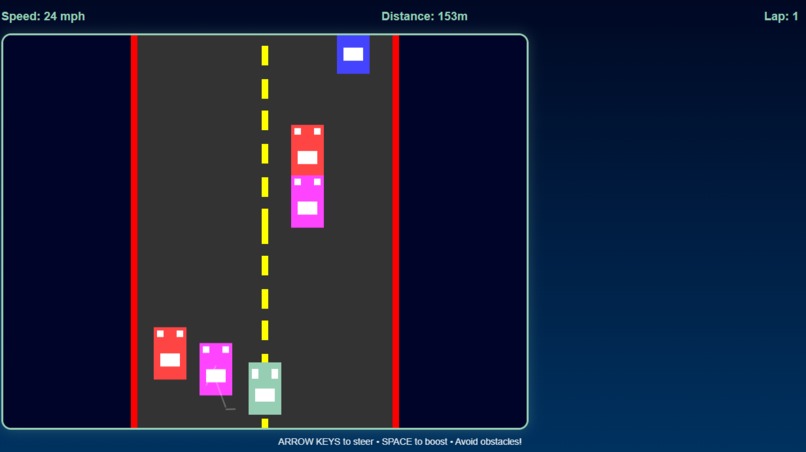
Every game is sandboxed, rated by the community, and curated in real time.
-
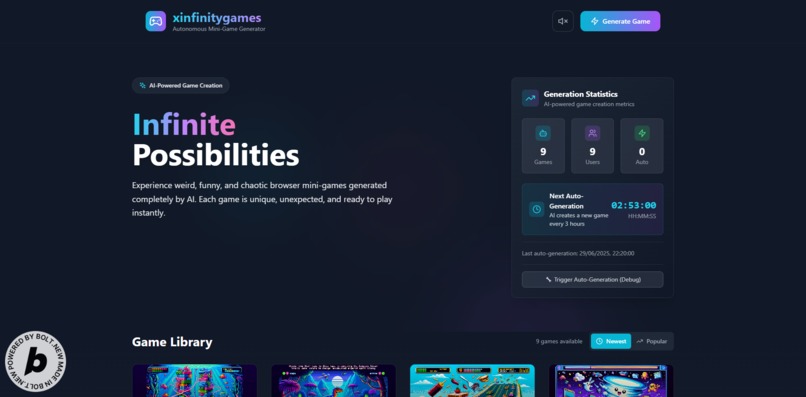
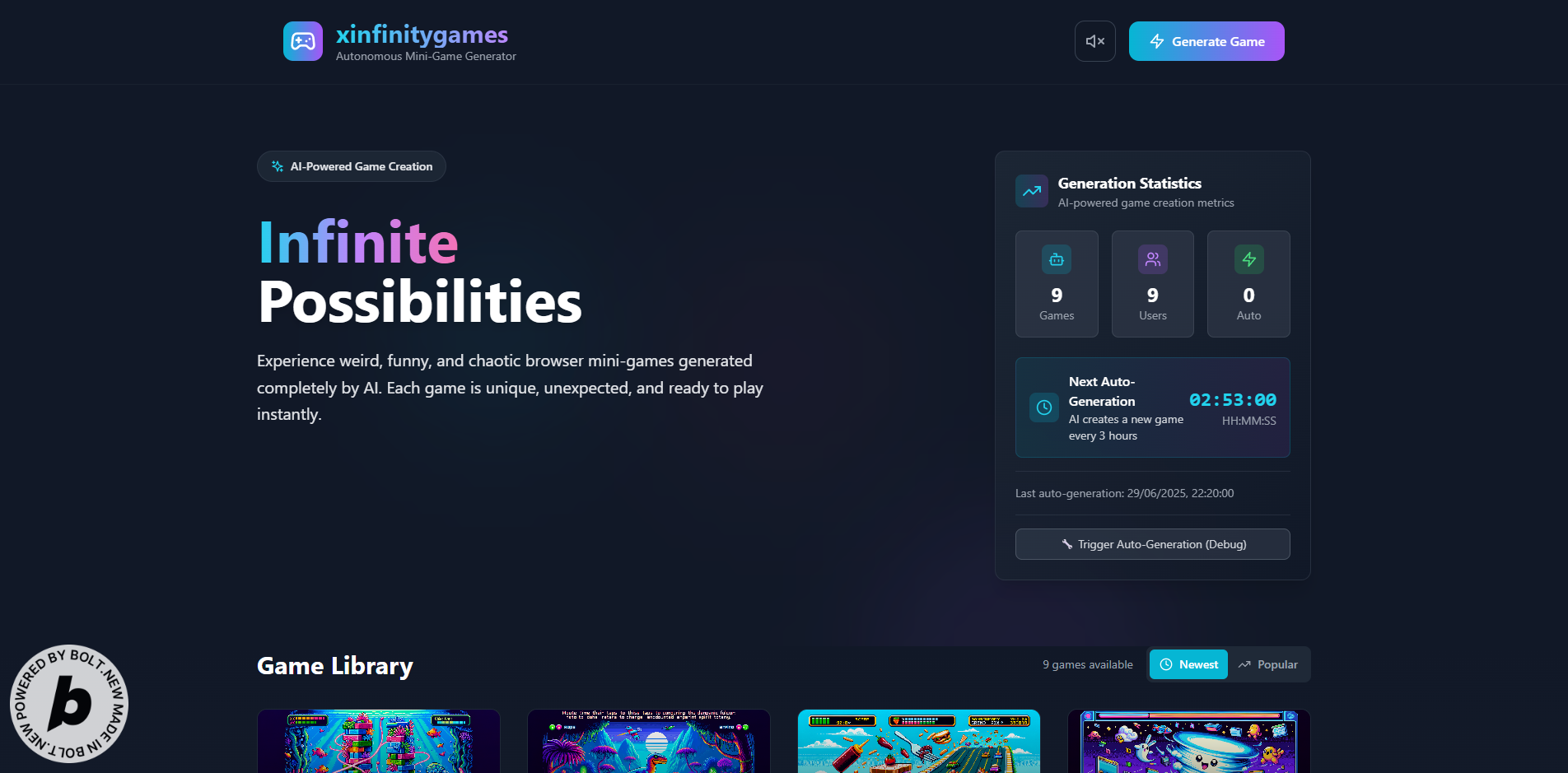
Autonomous game library — new titles appear every 3 hours, no human input.
-
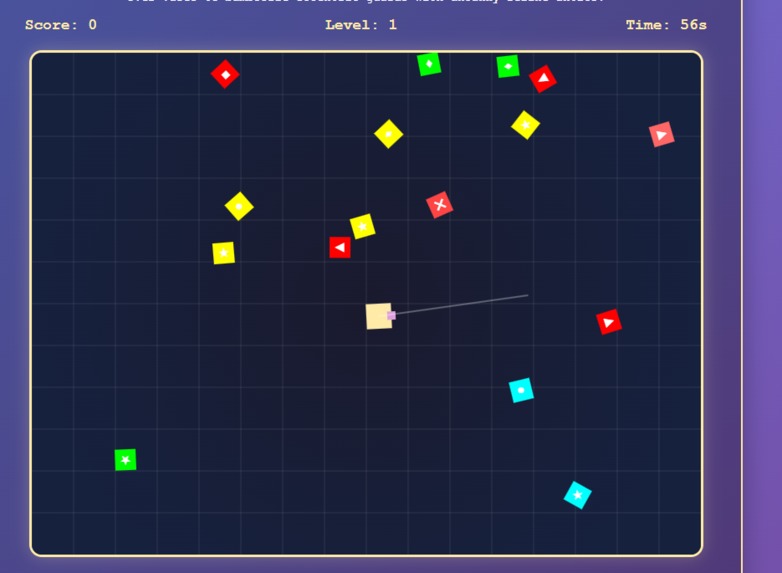
AI-generated games with custom DALL·E 3 thumbnails

Inspiration
We wanted to push the limits of autonomy — not just generating text or images, but creating fully playable games.
Why should players only play games when AI can now invent them?
xinfinitygames was built to answer that question: a dark arcade that thinks for itself. No input, no limits, just pure, self-generating creativity.
What it does
xinfinitygames is an autonomous game generation platform. Every 3 hours, it:
- Uses GPT-4 to write original HTML5 game code
- Uses DALL·E 3 to generate custom pixel art thumbnails
- Stores and curates games in a live library via Supabase
- Allows users to play instantly, vote on games, or generate their own
No two games are the same, and the platform continuously evolves without human input.
How we built it
Frontend
- React 18 with TypeScript
- Tailwind CSS for styling
- React Router for navigation
- Lucide React for icons
- HTML5 Audio API for background music
Backend & AI
- Supabase with PostgreSQL and row-level security
- Edge Functions for serverless execution
- GPT-4 for game logic/code generation (Sonnet next?)
- DALL·E 3 for art generation
Hosting
- Netlify for frontend deployment
- Supabase Storage for asset management
- Real-time subscriptions for game and vote updates
A scheduled edge function triggers automatic game creation every 3 hours with full AI autonomy.
Challenges we ran into
- Prompting LLMs to consistently generate valid, playable HTML5 code
- Hallucinated or incomplete game mechanics , especially with complex prompts
- Ensuring iframe execution was secure and sandboxed
- Wrangling AI output into something that felt polished and playable
- Balancing automation with fallback logic when generations failed
- Made us wonder: would Sonnet or other models output cleaner structured code?
Accomplishments that we're proud of
- Built the first fully autonomous HTML5 game generation platform
- Integrated GPT-4 + DALL·E 3 with a fully live backend + voting + asset management
- Created a complete self-running loop with no human curation
- Designed a fallback system for unstable AI output
- Made the chaos feel intentional, fun, and surprisingly replayable
What we learned
- LLMs are powerful, but they break often , guardrails are essential
- GPT-4 did a decent job generating playable HTML5 games, but it's not perfect
- Models like Claude Sonnet might produce more stable structured code — worth testing
- AI hallucinations are real, and users will absolutely notice
- Community-driven curation is more scalable than moderation
- Presentation matters — even weird, experimental content can feel premium with the right UI
What's next for xinfinitygames
- Try alternative LLMs (Claude Sonnet, Gemini) for better HTML structure
- Add user accounts, favoriting, and collections
- Enable remixing and re-publishing of games
- Create difficulty scaling with reinforcement learning signals
- Launch mobile app (React Native)
- Experiment with multiplayer game generation
- Improve fallback variety and auto-tagging system
- Fine-tune prompts for fewer hallucinations and better game logic
Built With
- audio
- dall?e-3
- edge-functions
- html5
- lucide-react
- netlify
- openai-gpt-4-(tested)
- postgresql
- react
- supabase
- tailwind-css
- typescript


Log in or sign up for Devpost to join the conversation.