
💡 Inspiration
Small and medium businesses across the Arab world face a major hurdle: finding an Enterprise Resource Planning (ERP) system that is modern, integrated, affordable, and—most importantly—truly Arabic-native. The market is dominated by expensive, complex commercial solutions from global giants like SAP and Oracle, or regional players like YemenSoft. I saw a local business in Yemen struggling to manage its finances and inventory with pen and paper, wasting time and making costly mistakes. That moment sparked the idea for XD ERP: an open-source, AI-powered, Arabic-first ERP built to empower every Arab entrepreneur to run their business intelligently and professionally.
🎯 What it does
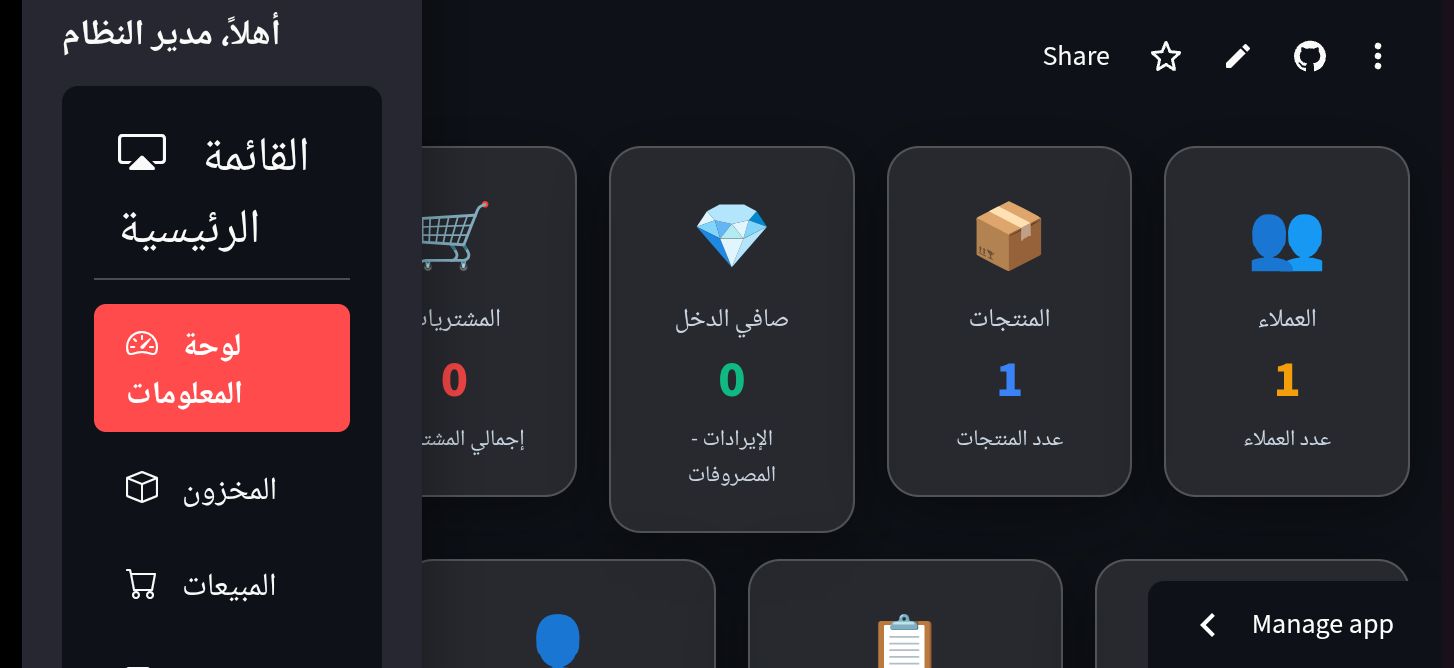
XD ERP is a complete, enterprise-grade ERP system built entirely in Python. It delivers a full accounting cycle (journal entries, general ledger, trial balance, financial statements), inventory, sales, purchasing, HR, and payroll management. What truly sets it apart is the integration of 8 live AI functions that work directly on your data:
- Smart Accountant – answers your questions based on real system data.
- Financial Analyst – provides strategic ratio analysis and recommendations.
- Auto Journal Entry – converts Arabic text directly into a compound journal entry.
- Fraud Detection – audits your entries for anomalies.
- Future Forecasting – predicts sales, cash flow, inventory, and profits.
All of this is wrapped in a stunning glassmorphism UI that works seamlessly on desktop and mobile.
🔑 Live Demo Access:
You can try the system instantly at the live demo link below. Use the default credentials:
Username: admin
Password: admin
🏗️ How we built it
The entire system is built with Python 3.10+ using Streamlit for the frontend and SQLite for the database. Pandas and Plotly power the data processing and charts, while the AI is driven by Groq API using the Llama 3.3 70B model.
Architecturally, the project is strictly separated into two layers:
- Business Logic Layer (Services): 16 independent modules, each handling a specific domain (accounting, sales, AI, etc.).
- User Interface Layer (UI): 16 separate modules responsible only for rendering and user interaction.
All critical financial operations are protected by a Transaction Management system (
BEGIN/COMMIT/ROLLBACK) to guarantee data integrity.
⚔️ Challenges we ran into
- Module Separation: Refactoring the entire codebase to perfectly decouple business logic from the UI was a massive task, requiring thousands of lines to be rewritten with precision.
- Arabic NLP for Finance: Making the AI understand Arabic financial context and generate accurate, balanced journal entries required meticulous prompt engineering.
- Financial Transaction Safety: Implementing
BEGIN/COMMIT/ROLLBACKacross all critical operations required careful planning to prevent data corruption. - Glassmorphism UI: Crafting a modern, blur-effect interface using advanced CSS within Streamlit took significant experimentation and tuning.
🏆 Accomplishments that we're proud of
- 16 fully separated modules, making the system clean, maintainable, and ready for future scaling.
- Integration of 8 practical AI functions that deliver real business value, not just a chatbot.
- Building a complete accounting cycle from journal entries to financial statements and period closing.
- A stunning, professional glassmorphism user interface.
- Writing the entire codebase from scratch as a Solo Developer.
📚 What we learned
- How to architect and build a real ERP system with complex logic and a robust data model from the ground up.
- How to integrate AI into an enterprise system in a practical, data-driven way.
- The critical importance of clean code separation (Services/UI) for scalability and maintainability.
- How to handle the complexities of accounting, inventory management, and FIFO valuation.
- That with patience and continuous learning, a single developer can achieve amazing things.
🚀 What's next for XD ERP
- Build an API Layer (FastAPI): To transform the system into a true product, ready for mobile apps and third-party integrations.
- Migrate to PostgreSQL: To support concurrent users and make the system production-ready.
- Add Advanced Features: Such as multi-currency support, fixed asset management, and cost centers.
- Develop a Mobile App (Flutter): To make the system accessible on all platforms.
- Launch as a SaaS product: To serve hundreds of Arab SMBs across the region.

Log in or sign up for Devpost to join the conversation.