-
-
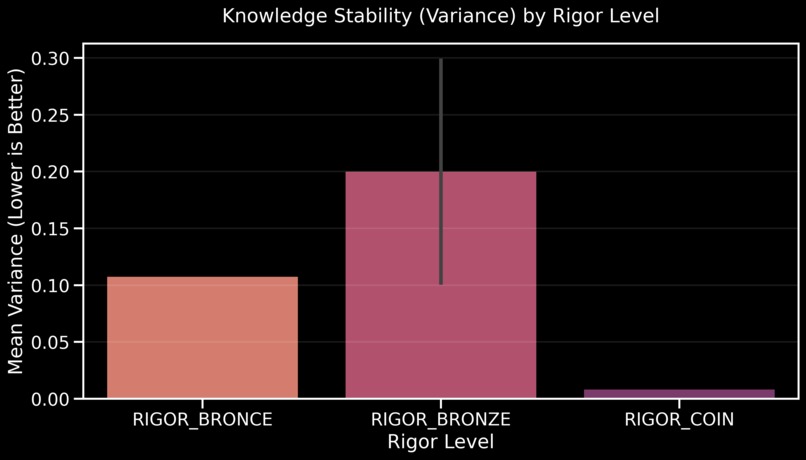
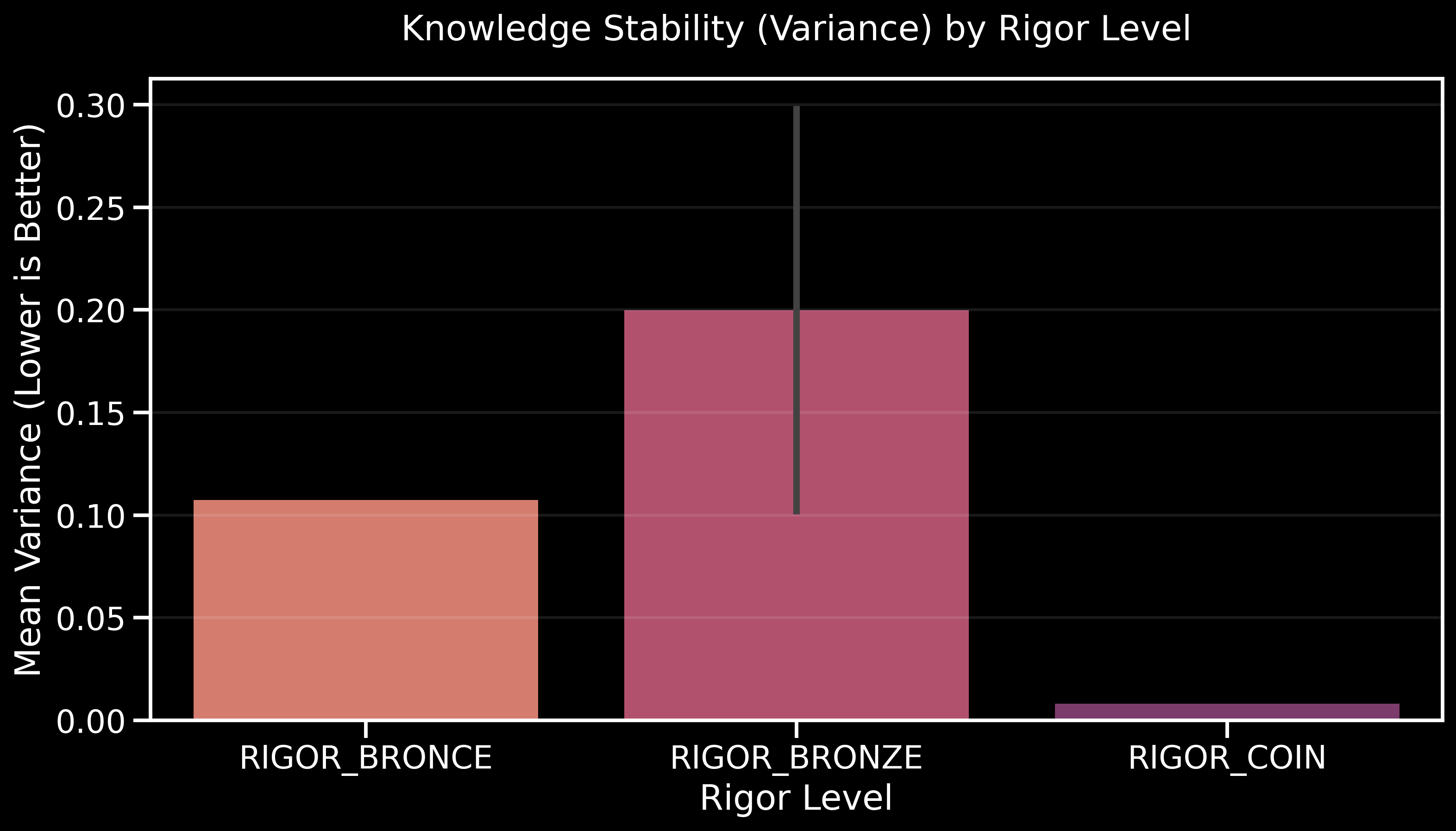
Stability Profile by Clinical Rigor
-
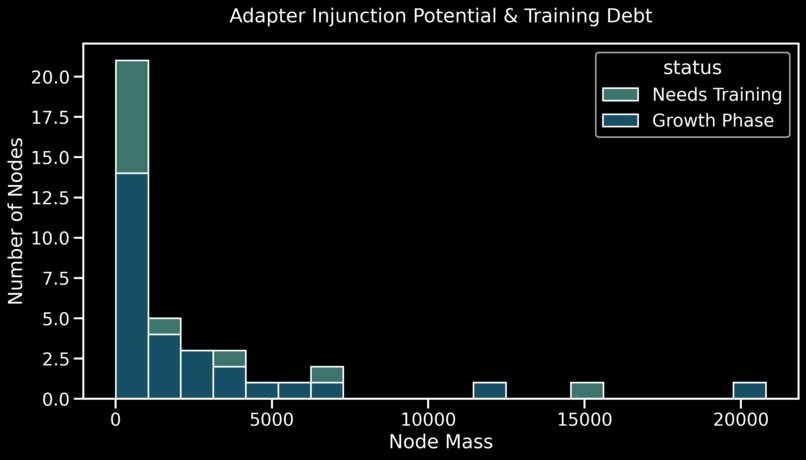
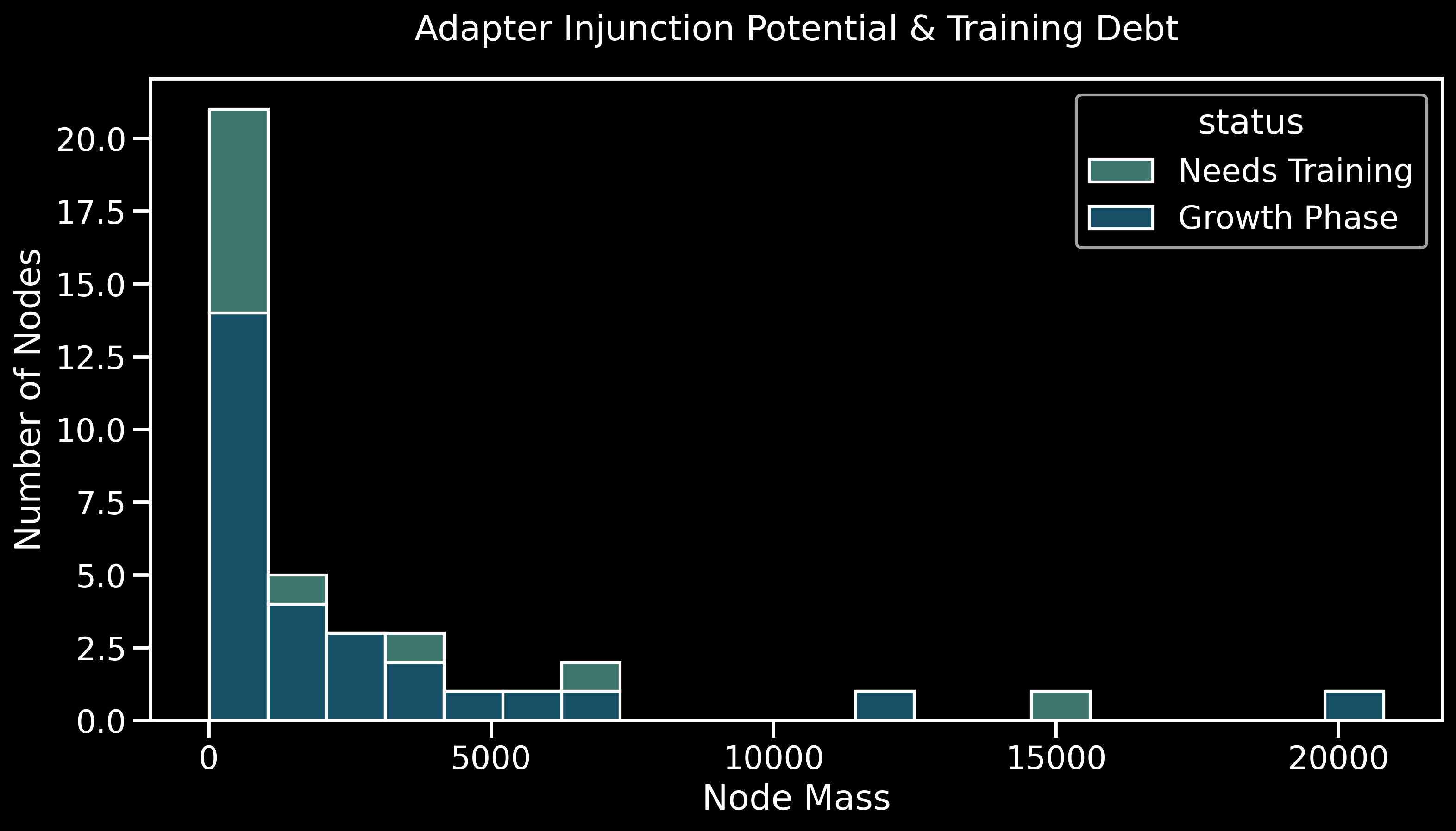
Adapter Injunction Potential
-
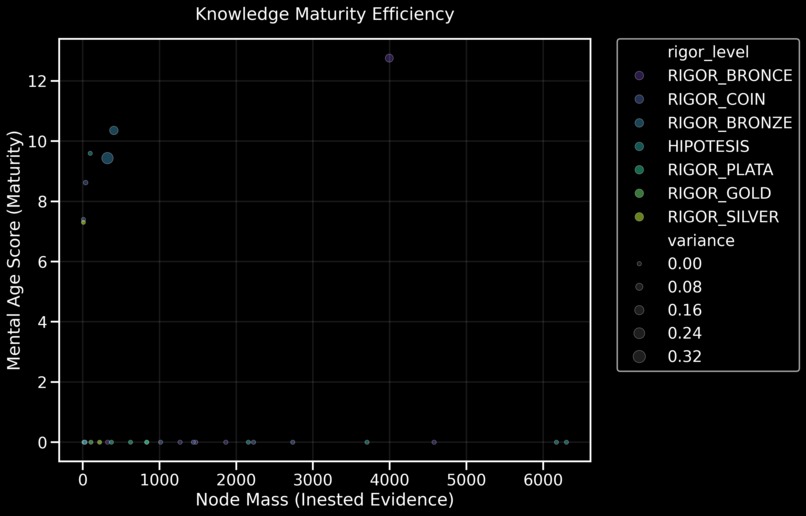
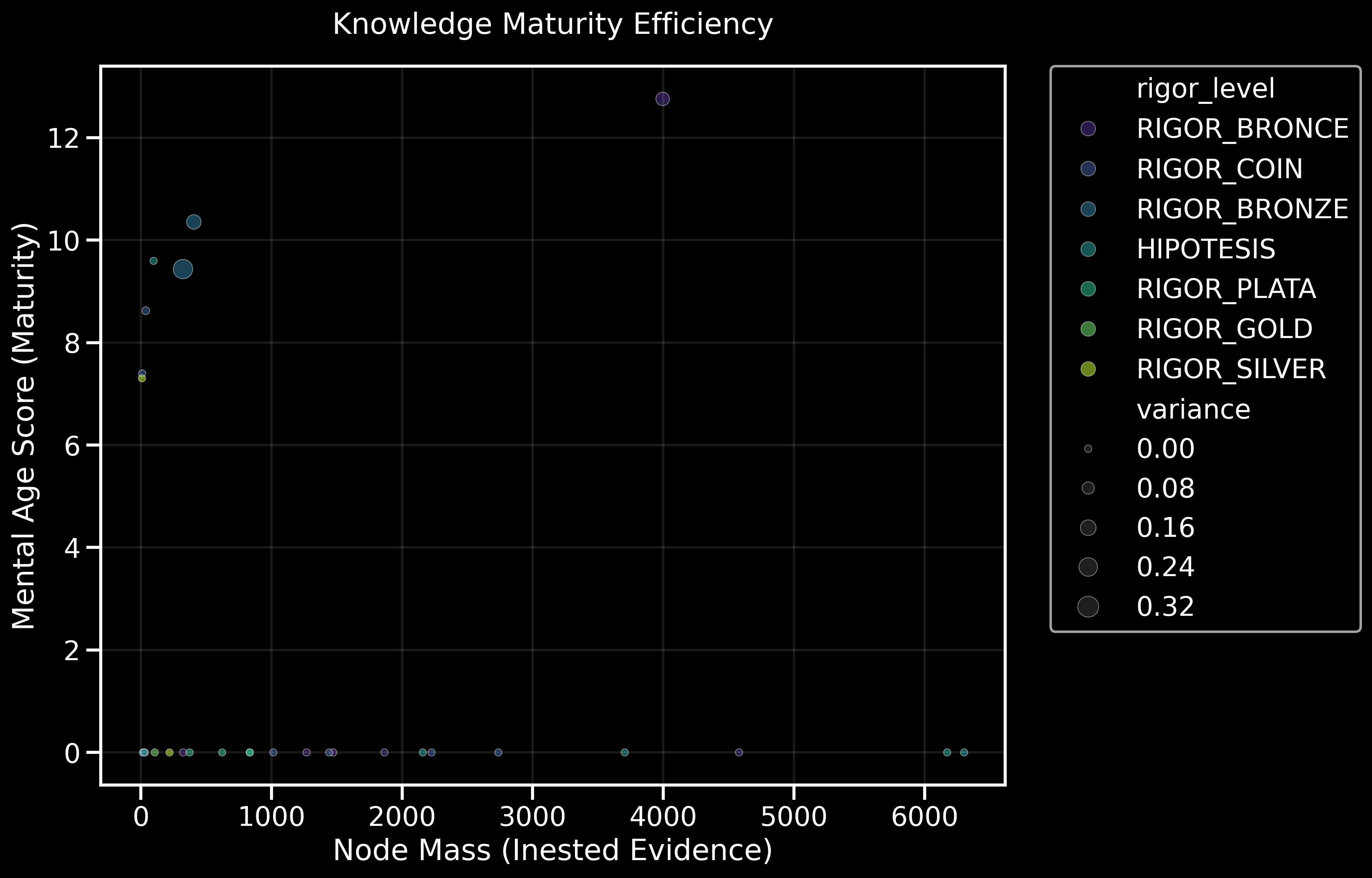
Maturity Efficiency Analysis
-
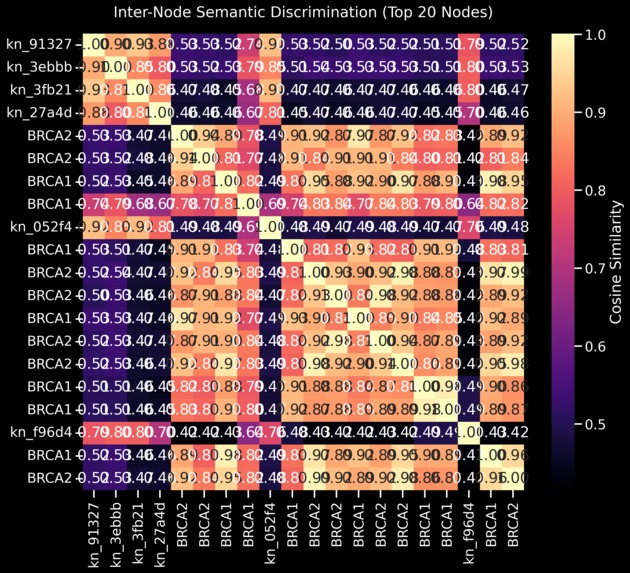
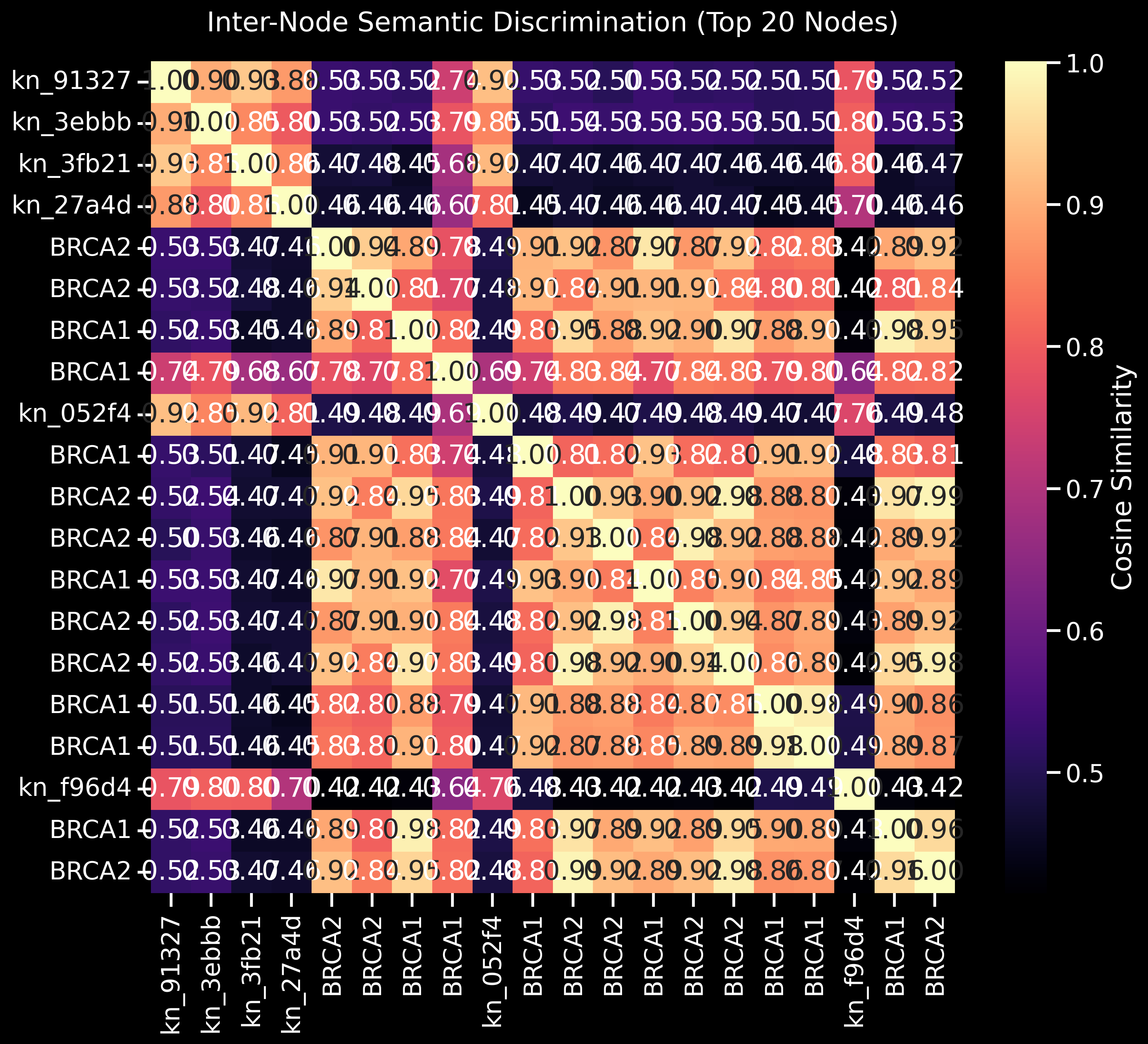
Semantic Boundary
Inspiration
Xctopus stems from biological inspiration to propose a differential approach to mitigating catastrophic forgetting in continual learning. To realize this architecture, we developed the Lab-VUS Explorer: a virtual laboratory that integrates a MiniToy model trained with a high-complexity dataset (Variants of Uncertain Significance). Given the clinical opacity of VUS, this laboratory acts as a proof of concept (PoC) to demonstrate how an atomic architecture can enhance the interpretation and representation of uncertain genomic data.
What it does
Lab-VUS Explorer is an experimental environment designed to navigate the complexity of Variants of Uncertain Significance (VUS) through a novel AI paradigm: Atomic Incremental Intelligence.
Unlike static tools, this project bridges the gap between raw genomic data and architectural research through two core pillars:
What it does: The Core Architecture: Xctopus Framework
The system moves away from traditional gradient descent and epochs, focusing on a Zero-Batch / Bootstrap approach:
Surgical Knowledge Installation: Instead of gradual learning, we perform a "Bootstrap" phase. We inject Atomic Nodes (Absolute Truths) directly into the system. It’s not an approximation; it’s a precise installation of base knowledge.
Bayesian Evolution: When new evidence (CSV/Text) is ingested, the system doesn't just re-train; it evaluates. Using Bayesian Filters, the architecture decides: Confirmation: Reinforces the existing Node. Contradiction: Increases variance and reduces confidence. Novelty: Spawns a new Knowledge Candidate.
Consensus Engine (KN + Transformer): We create Knowledge Nodes (KN)—small capsules containing a LoRA and a Bayesian filter. These gravitate around the Base Transformer. When an input arrives, the KN and the Transformer engage in an orchestrated consensus to deliver a validated, filtered output.
What it does: The Lab-VUS Tool: Visualizing the Model
The Lab is not just a dashboard; it is the observability layer of the resulting model: Interactive Model Representation: The 3D graph doesn't show the code architecture; it represents the trained model itself. Using training data, it generates a live manifold where researchers can interact with the data's topology. Expert Dual-Perspective: The "MiniToy" provides insights through two specialized lenses: The Analyst: Focused on the raw data and structural patterns. The Counselor: Focused on the clinical interpretation and uncertainty guidance. .
How we built it
The Intelligence Layer: Xctopus Framework (Prototype)
it is a dynamic knowledge organism that treats genomic information as physical matter and implement a Topological Learning paradigm:
- From Retrieval to Vector Geometry Instead of simply searching for text, Xctopus creates a high-dimensional space where data has physical properties:
Knowledge Atoms (KN): We transform consolidated genomic "truths" into primary units of knowledge. Each KN possesses Mass (Gravity) based on its evidentiary weight and Rigor Inertia, allowing high-trust nodes (Gold/Silver standards) to resist corruption from "new data noise."
Semantic Anchors: The system establishes fixed coordinates for established knowledge, creating a structural map that prevents the model from "drifting" or hallucinating during clinical interpretation.
- Learning through Movement (Not Training) We have eliminated traditional training epochs. In this Alpha, intelligence emerges from Topological Recalculations:
Non-Linear Evolution: When new evidence is ingested, nodes don't just update; they move. They "push" against each other (Repulsion) to gain specificity or shift their Centroid to reflect new discoveries.
Bayesian Refinement: Every new piece of data passes through a Bayesian filter that acts as a gatekeeper. It decides whether to reinforce a node (Consistence), increase its variance (Conflict), or create a "Hypothesis Buffer" (Novelty).
- The Lab: A Window into Knowledge Friction The Lab-VUS Explorer is the interface where this "Knowledge Friction" becomes visible:
Real-Time Synthesis: The UI allows users to witness the Semantic Symbiosis between the Base Transformer and the Knowledge Atoms.
Expert Dual-Perspective: Through the Analyst and Counselor modes, the "MiniToy" performs real-time synthesis, thinking through the attention mechanism rather than relying on stale, pre-trained weights.
Frontend: The Live Manifold Visualization
- AI-Accelerated Development Workflow To achieve this level of architectural complexity in a hackathon timeframe, we utilized a high-performance AI stack:
Antigravity IDE: Our core engine for rapid prototyping. Its AI-native capabilities allowed us to crate the 3D manifold logic with unprecedented speed.
Gemini (Multidisciplinary Collaborator): Acted as a key consultant in the design phase, synthesizing multidisciplinary concepts from genomics to physics.
- The Visualization Engine: React-Three-Fiber (R3F) To represent a complex semantic manifold, we moved beyond traditional 2D interfaces:
- Spatial Logic: Using Three.js via R3F, we developed a 3D environment where the Z-Axis is programmatically mapped to the Maturity (or "Mental Age") of the knowledge nodes.
- Performance & Topology: The Physics Engine v2.1 manages node repulsion and attraction in real-time. The physical distance between nodes reflects the model's internal semantic topology, while Tidal Force Scaling visually represents the "Mass" (variant count) of each node.
Challenges we encountered
Hardware Constraints & Architectural Pivot: Initially, we attempted traditional Batch Training using a large dataset. However, training on limited hardware was exhausting and inefficient. This bottleneck forced a critical evolution: we pivoted to an Atomic Learning approach. This shift was a breakthrough—it allowed us to bypass the need for massive initial iterations, making better use of our computational resources while achieving a more granular "Knowledge Installation."
Environment & Iteration Speed: We started development in Google Colab, but soon outgrew its limitations. Constant adjustments to library dependencies and the need for a more persistent environment led us to migrate the entire workflow. This move was essential to support the iterative nature of our Physics Engine (v2.1) and custom library configurations.
The Solitary Researcher’s Gap: Perhaps the most significant hurdle was the lack of a human multidisciplinary team. While AI (Gemini & Antigravity IDE) served as a brilliant collaborator for technical feedback and conceptual synthesis, the absence of real-world clinical peers meant I had to wear multiple hats simultaneously.
Time & Scope Management: Materializing a complex research concept into a functional Alpha Experimental Lab within the hackathon's timeframe required rigorous prioritization. Balancing deep architectural research with the development of a representative, visual prototype (the Lab-VUS Explorer) was a constant exercise in "surgical" focus.
Accomplishments that we're proud of
After a relentless period of research, design, and coding, seeing the entire workflow operational is my greatest achievement. Developing an idea, and then watching it grow and materialize, allowed me to reason and shift towards an atomic approach. It also gave me a profound awareness of the impact of AI on our development and how we mutually influence each other, with both worlds striving for continuous improvement.
What we learned
Strategic Optimization: I reinforced the critical importance of hardware resource optimization. I learned that true engineering excellence lies in training high-quality models without sacrificing rigor for speed, proving that deep learning can be accessible even under hardware constraints.
The Open Source Ecosystem: This journey provided deep insights into the challenges of collaborative development. Even though I have actively sought contributors.
Full-Stack AI Resilience: Operating as a solo architect forced me to master every stage of the pipeline, from infrastructure to data science. This experience has been vital in understanding the delicate balance between theoretical research and functional system orchestration.
What's next
Technical Research & Scalability: The immediate next phase involves a deep dive into scalability metrics. We plan to stress-test the Xctopus Framework with larger, more diverse genomic datasets (beyond the initial ClinVar subset) to fine-tune the "Consensus Protocol" and optimize the Bayesian filtering logic.
Improve the metrics: I would like to include a phase that I have developed involving mitosis or fusion. Those would be the next steps.
Multidisciplinary Collaboration: We aim to transition from a solitary research effort to a collaborative team environment. By integrating different work frameworks and domain expertise, we want to evolve this prototype into a production-ready tool that meets the rigorous demands of the clinical genomics field.
Open Science & Community: My goal is to maintain an Open Prototype philosophy. We believe that exploring the project's own evolutionary path will uncover new ways to serve the scientific community, providing an accessible and transparent platform for VUS interpretation.


Log in or sign up for Devpost to join the conversation.