-
-
-
-
-
-
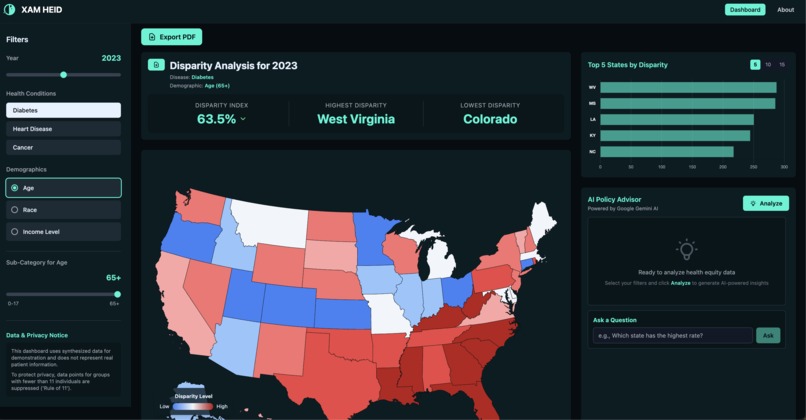
landing page

Inspiration
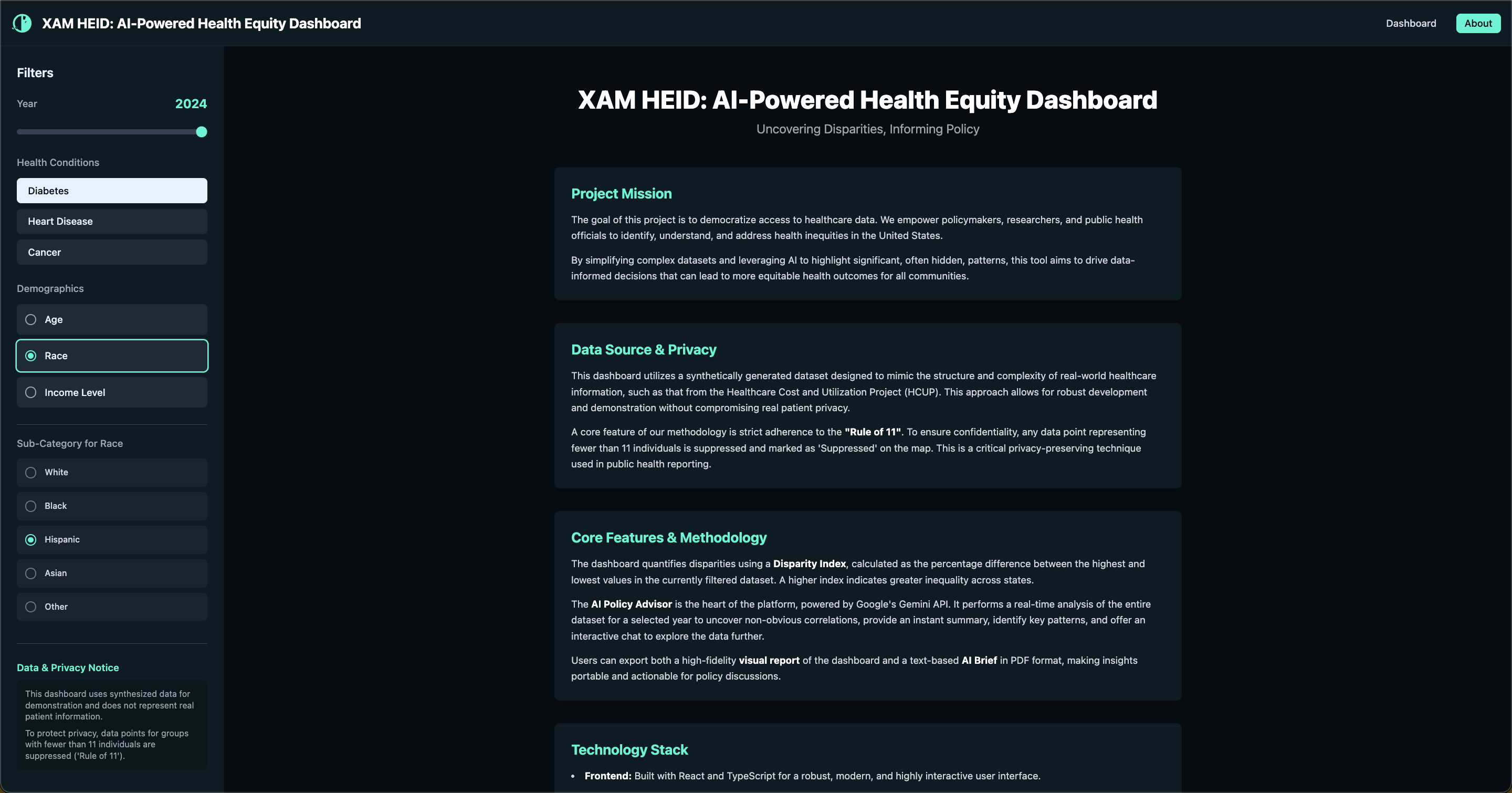
Health inequities often remain hidden within fragmented and complex datasets. Policymakers, researchers, and health planners face significant barriers accessing and analysing data that reveal disparities in underserved populations. XAM-HEID was born from the need to democratise healthcare data access via AI-powered, privacy-first insights, empowering equitable healthcare decisions through accessible technology.
What it does
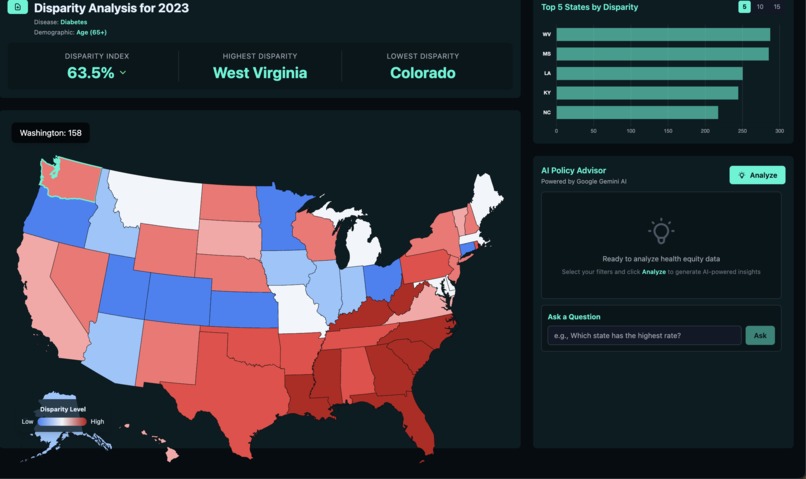
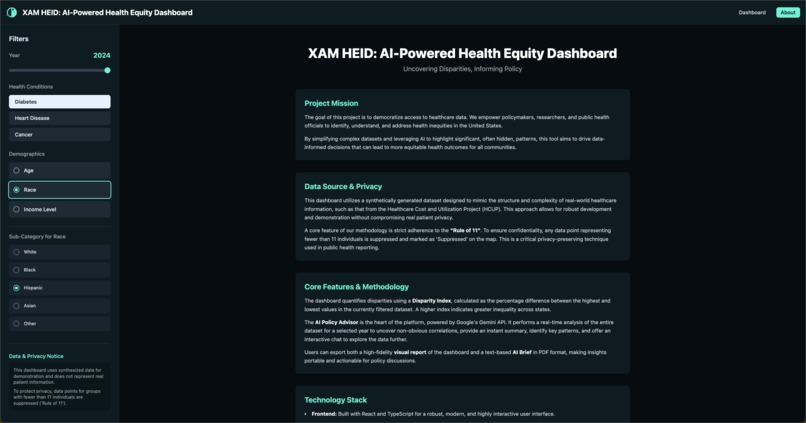
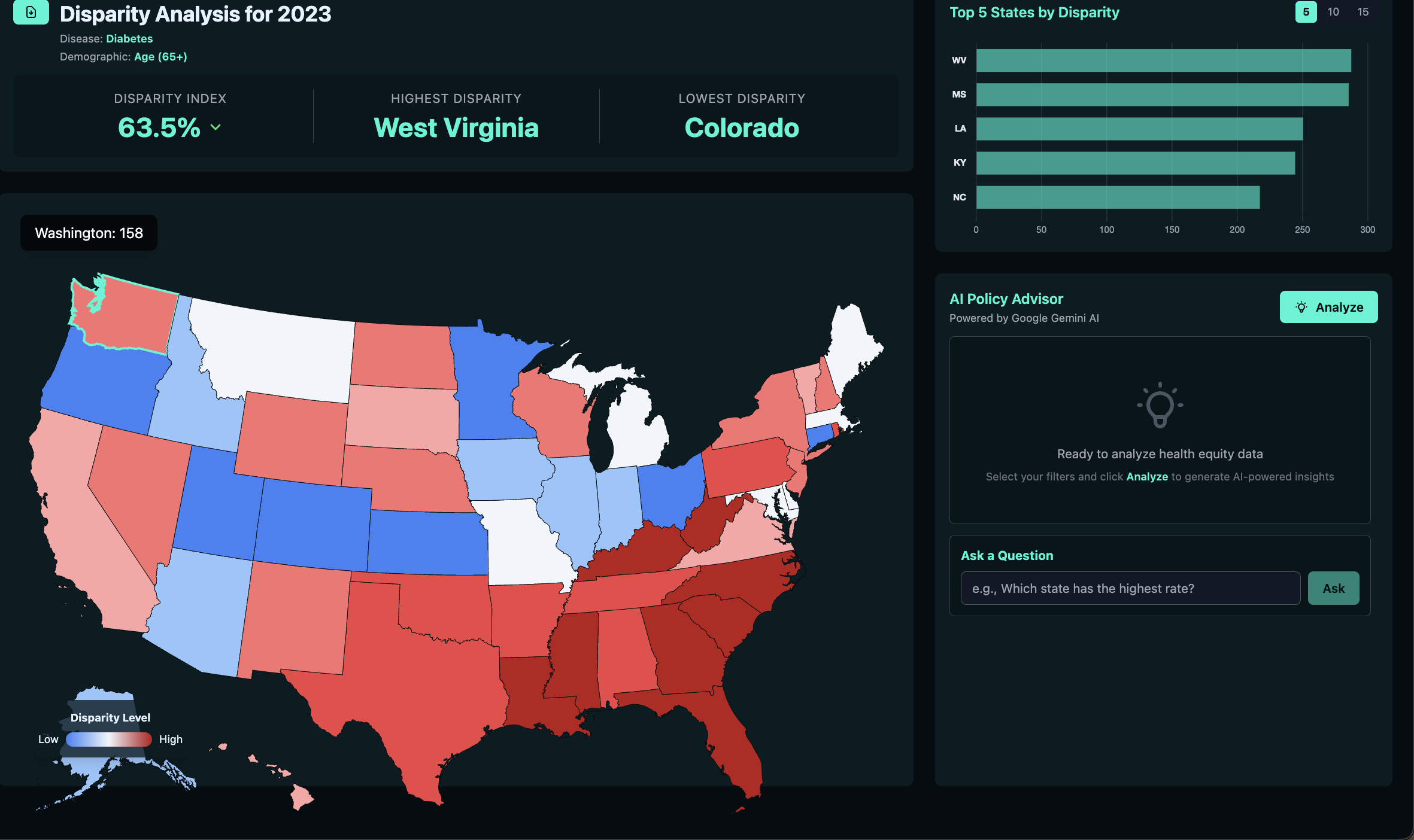
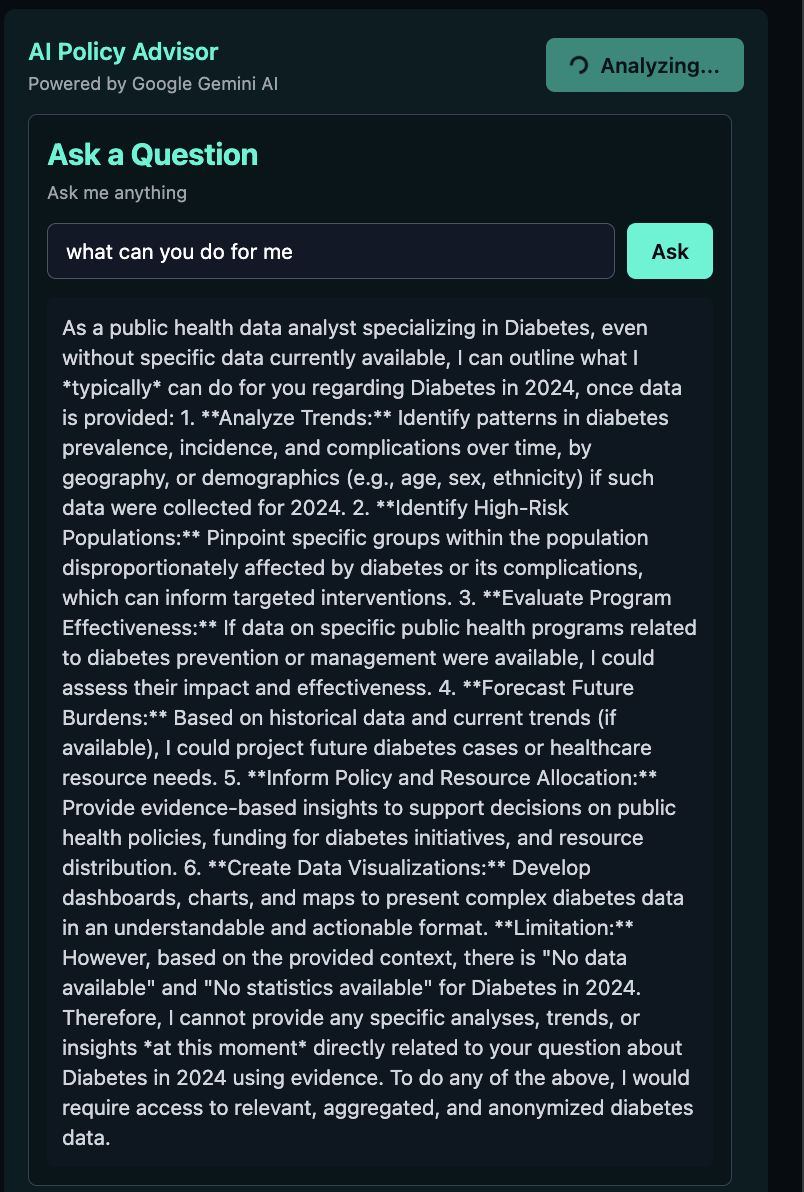
XAM-HEID transforms synthetic healthcare data focusing on conditions like diabetes and heart disease into an interactive dashboard featuring customisable maps, trend charts, and policy-ready reports. The platform bridges data access gaps by delivering regionally relevant insights accessible with no technical expertise, providing policymakers and health officials with actionable, exportable documentation.
How we built it
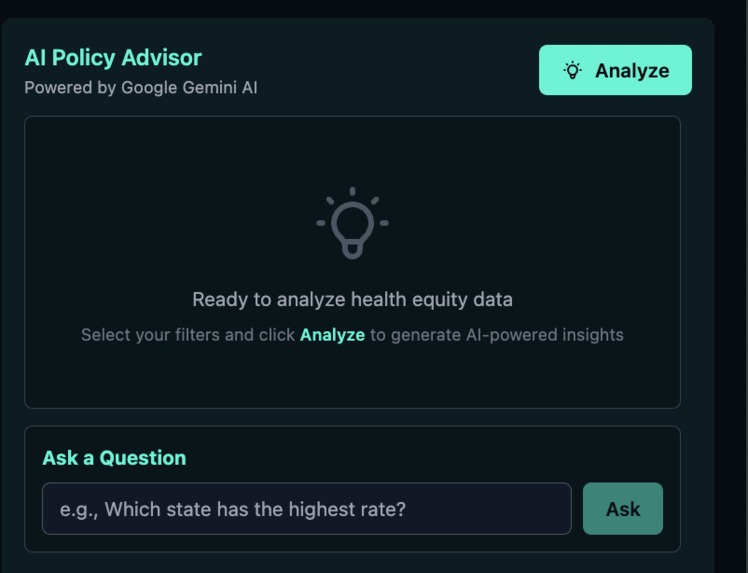
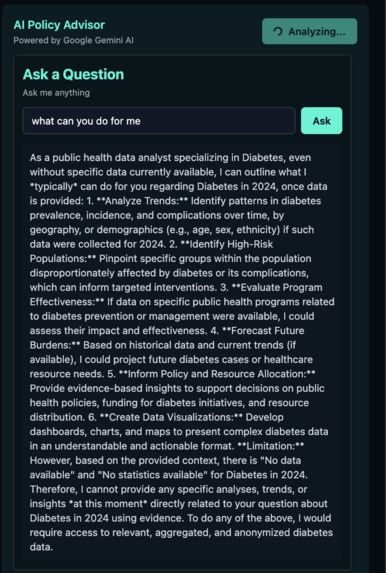
The backend is built with Python and FastAPI, leveraging an ML association rule mining model to detect disparity patterns automatically. The frontend is a React app deployed on Vercel and Docker, offering rich visualisations and filters with a focus on privacy and scalability. Currently, ML processing runs locally because of funding constraints, but the architecture is designed for seamless integration with the Google Gemini API via Vertex AI to unlock advanced AI-powered analytics.
Challenges
U.S. government health data policies impose strict access delays and significant costs, complicating direct use of real data. Cost barriers to AI API usage have delayed full integration, necessitating reliance on synthetic data and local ML models initially. Balancing privacy requirements, technical complexity, and usability remains an ongoing challenge.
Achievements
Despite these hurdles, the team delivered a functional MVP incorporating AI/ML-driven disparity detection within a privacy-first framework, complemented by an intuitive user experience and exportable reports, in PDF format to be used later. This demonstrates the feasibility of scalable, compliant health equity solutions.
What we learned
Using synthetic data enables privacy-safe research while navigating healthcare regulations and funding constraints informs deployment strategies. We refined processes for API integration and environment management, balancing technical feasibility with usability and compliance.
Current and Future Work
The dashboard currently ingests synthetic data modeled closely on government datasets, making health disparities visible to non-technical users. We plan to significantly expand disease coverage and integrate richer real-world datasets as funding and data access improve. Core dashboard features will remain consistent, with enhanced impact from broader, more authentic datasets.
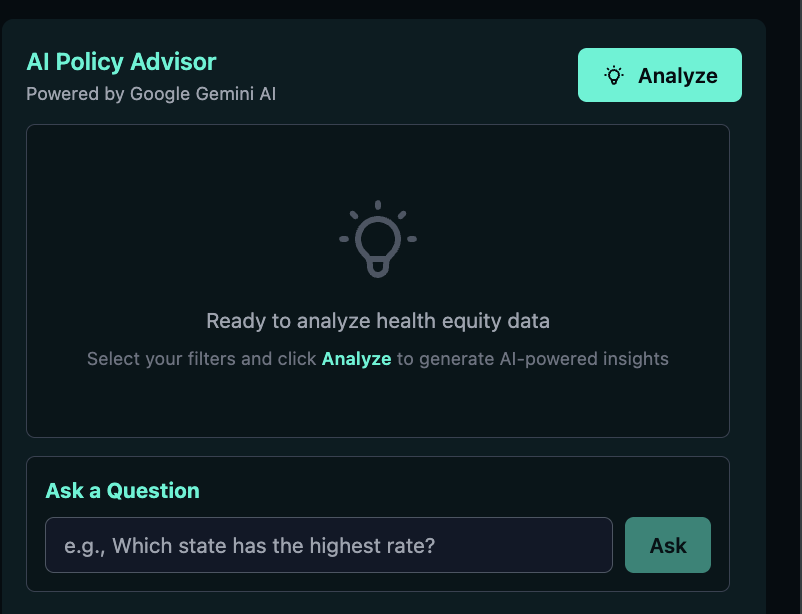
Our roadmap prioritises securing funding for full Gemini API integration, enabling us to automate, explainable AI-driven policy recommendations and collaborative dashboards. Planned improvements include enhanced export capabilities and refined UI/UX to support diverse health equity initiatives in real-world settings.
Built With
- chart.js
- fastapi
- mlxtend
- python
- react
- scikit-learn
- tailwind-css


Log in or sign up for Devpost to join the conversation.