-
-
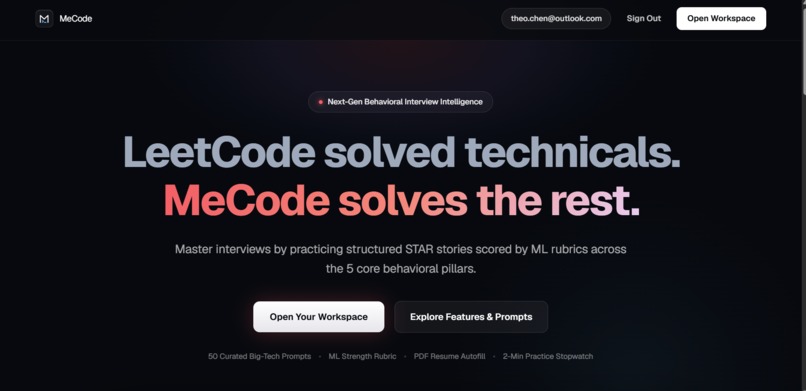
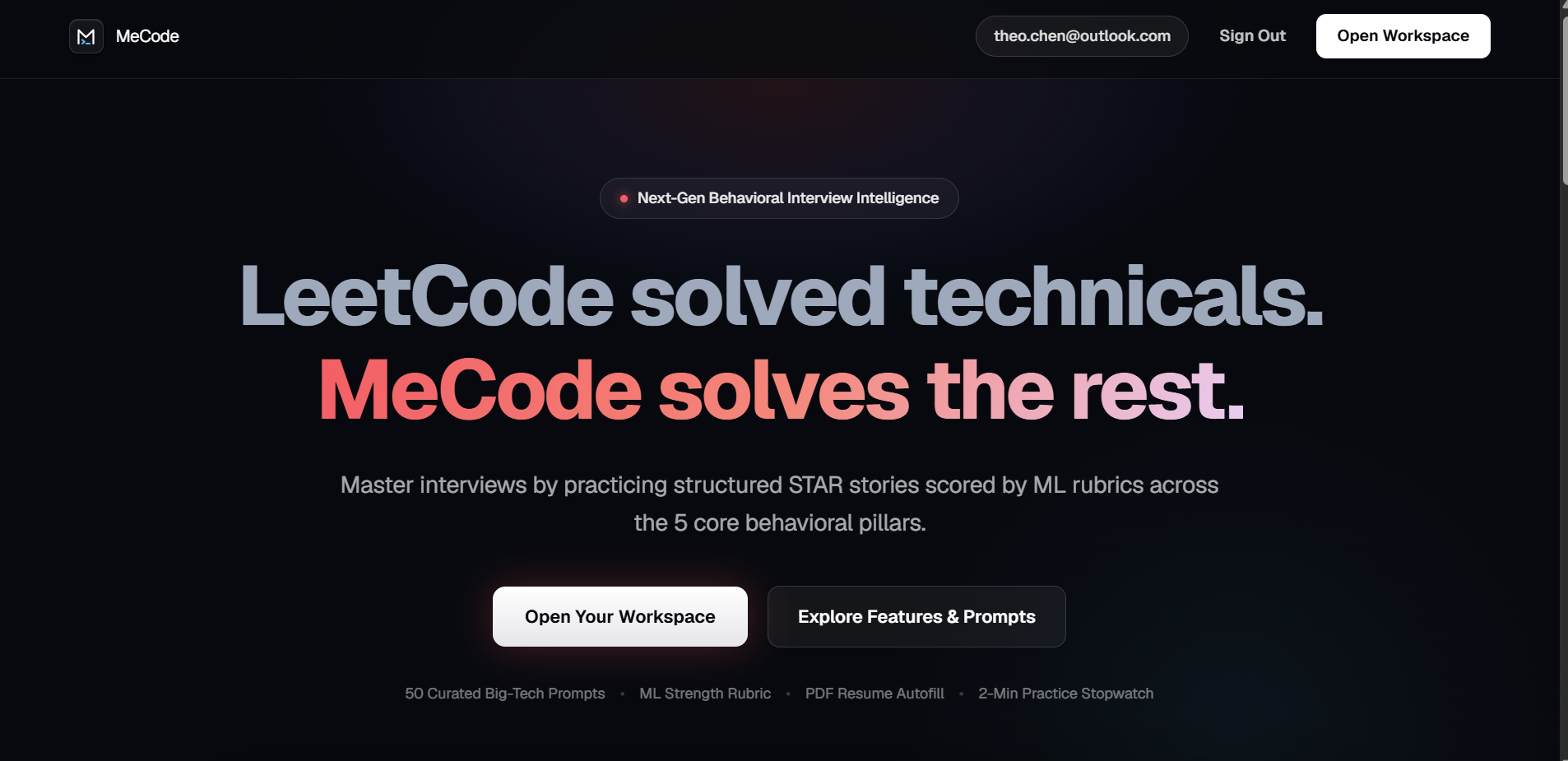
Landing Page
-
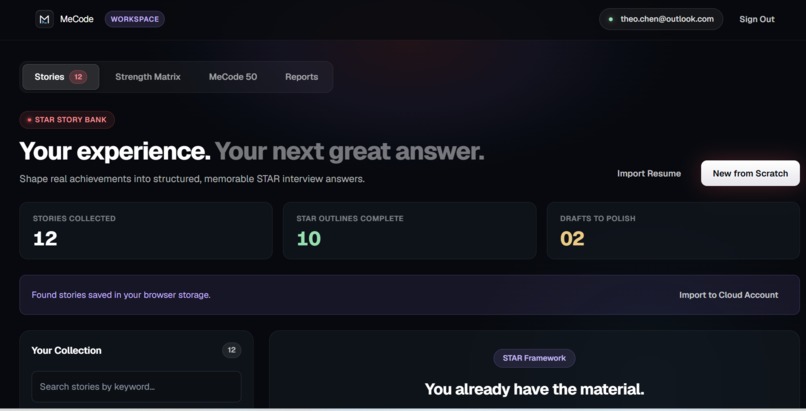
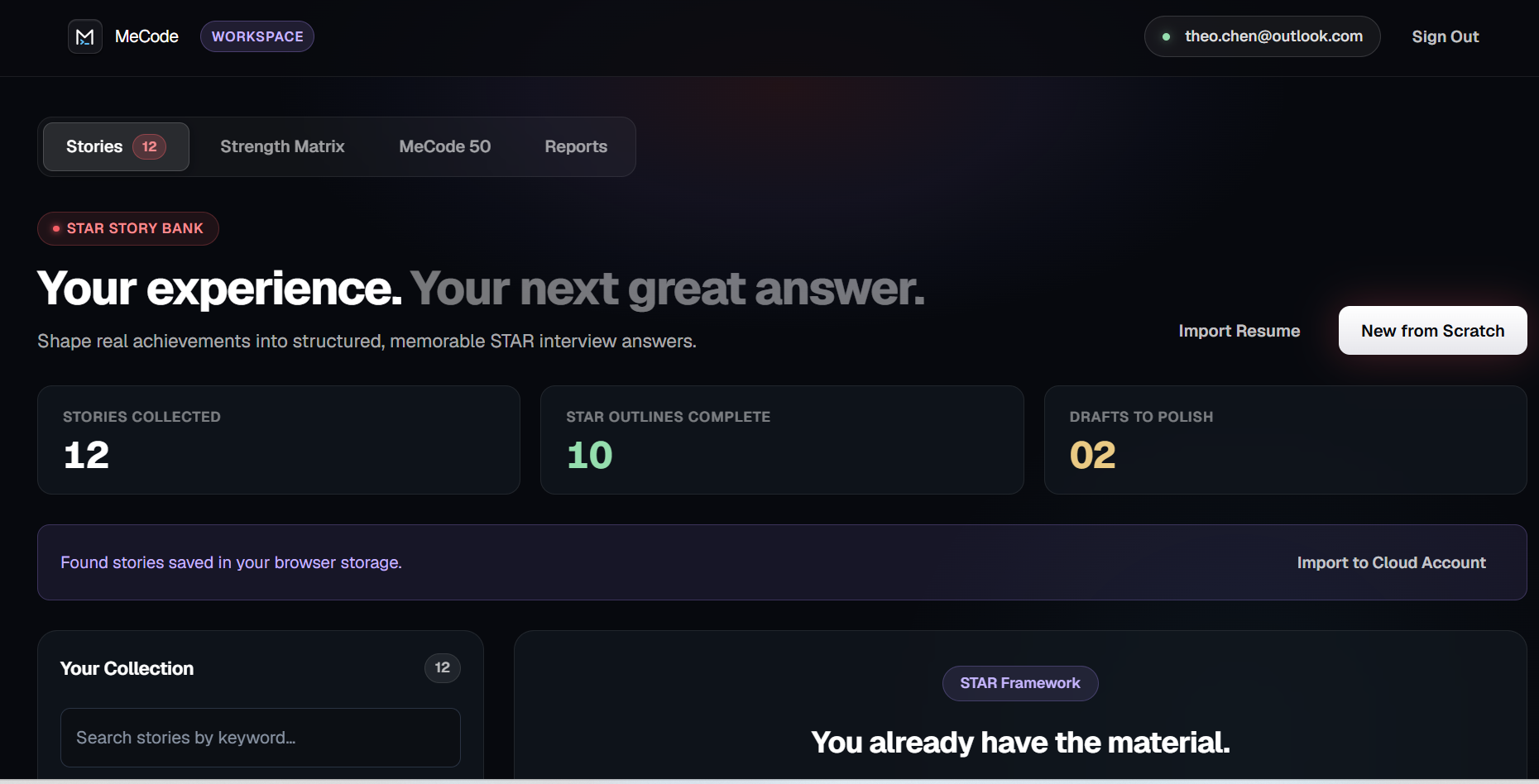
Workspace Home
-
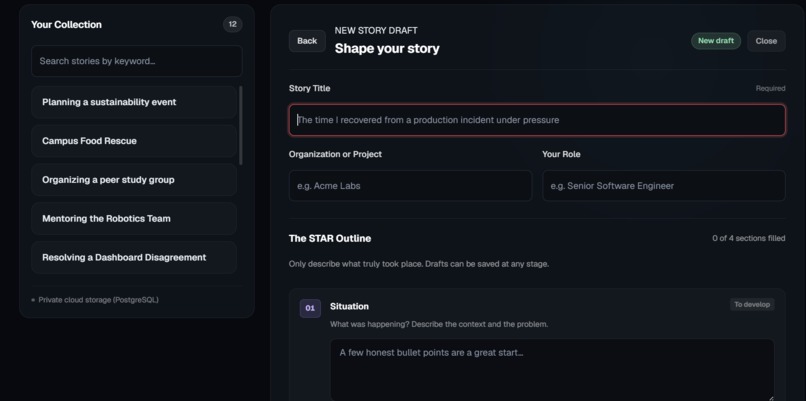
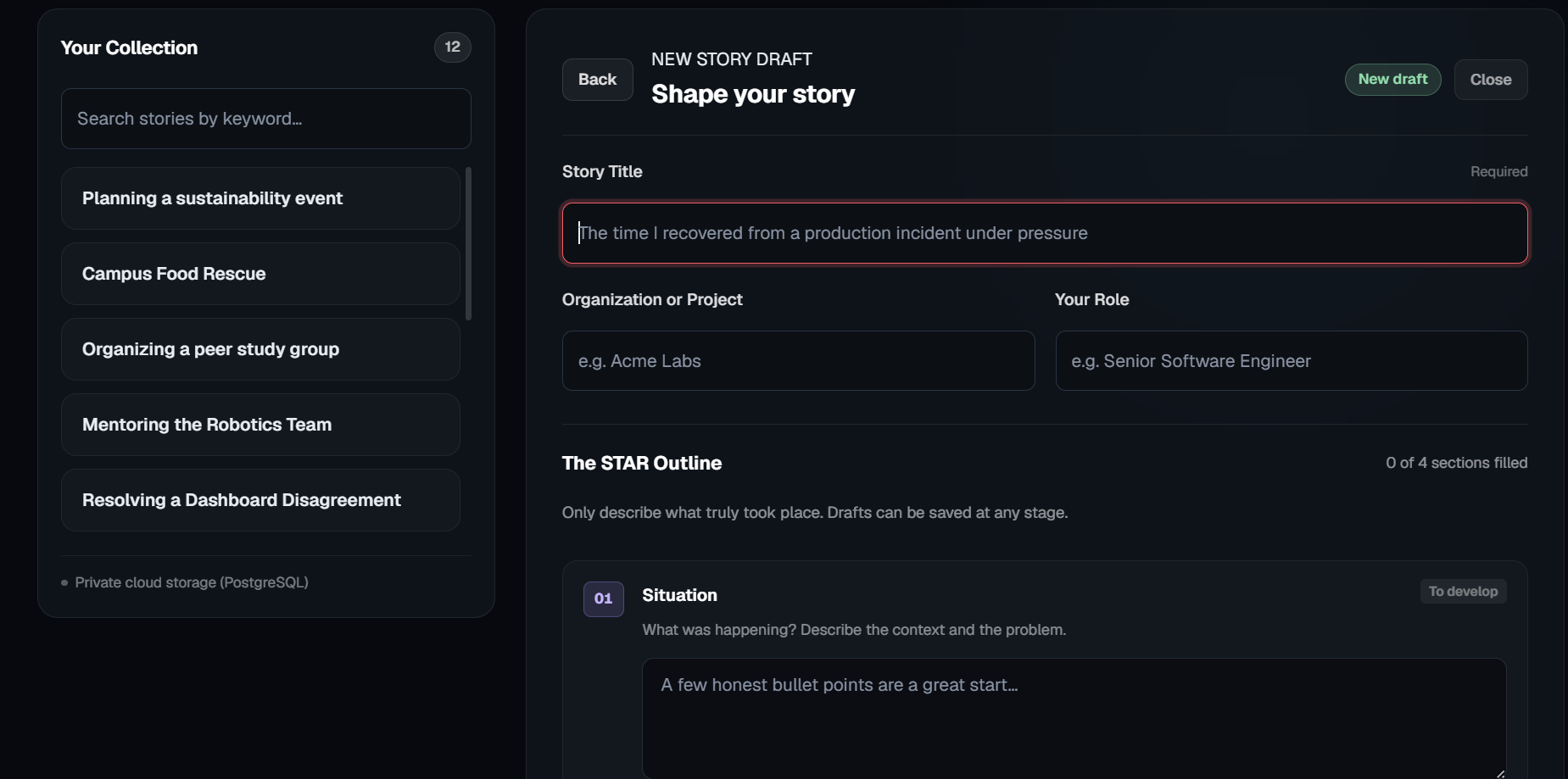
Write STAR Story
-
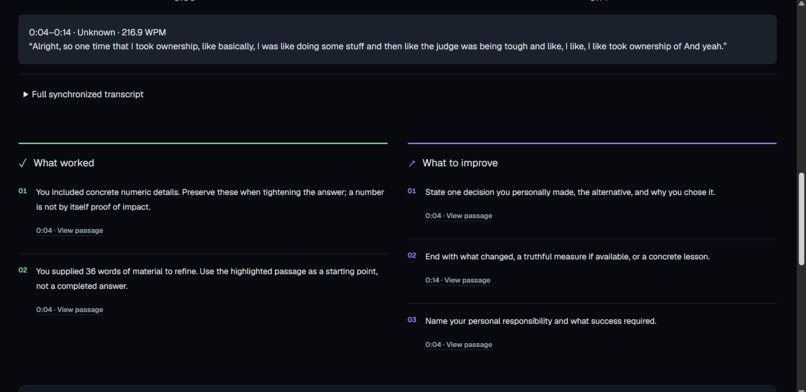
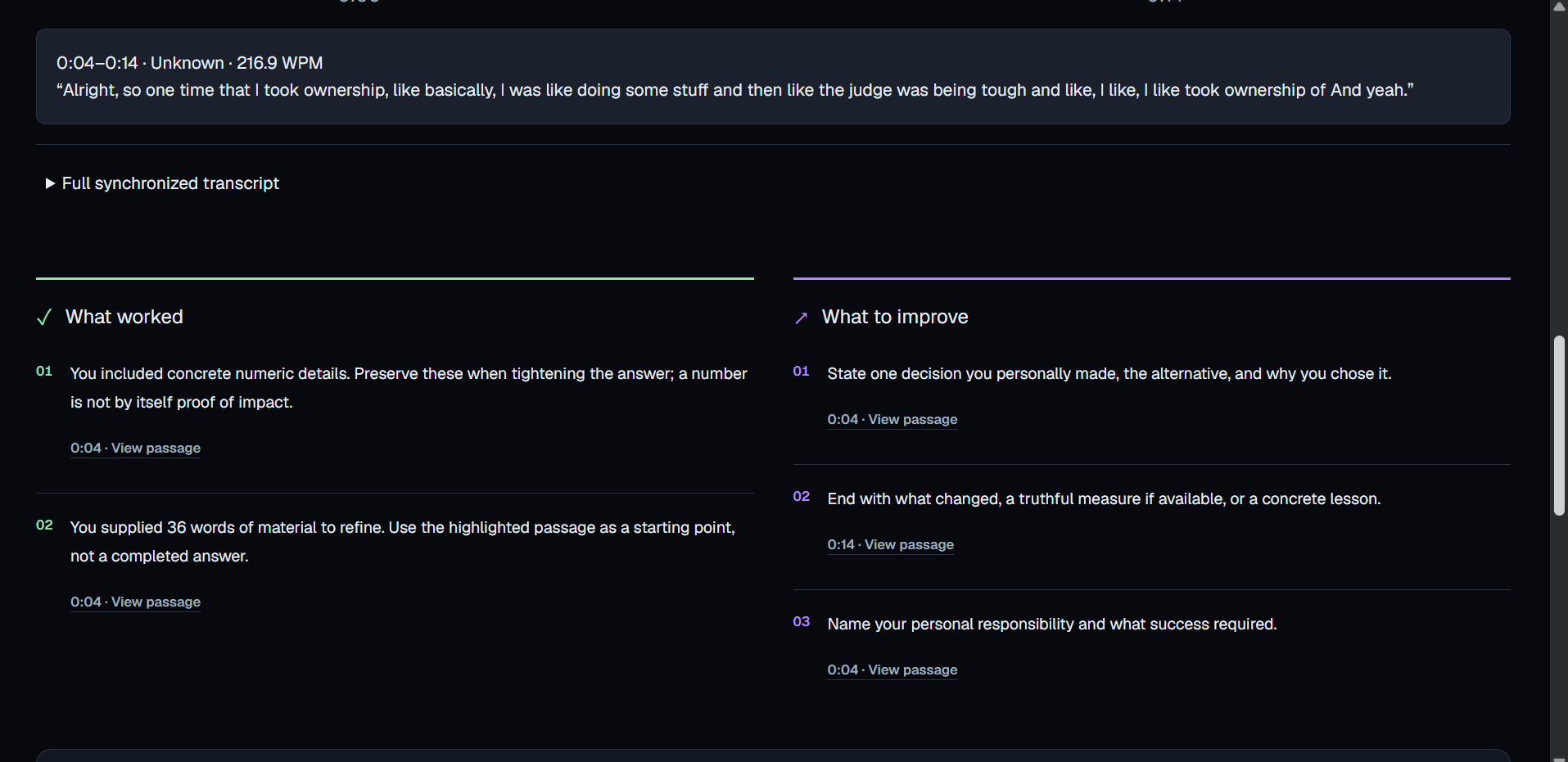
What Worked and What to Improve
-
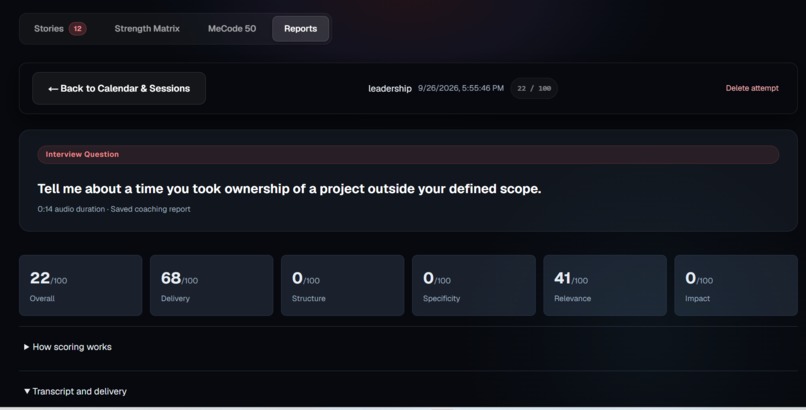
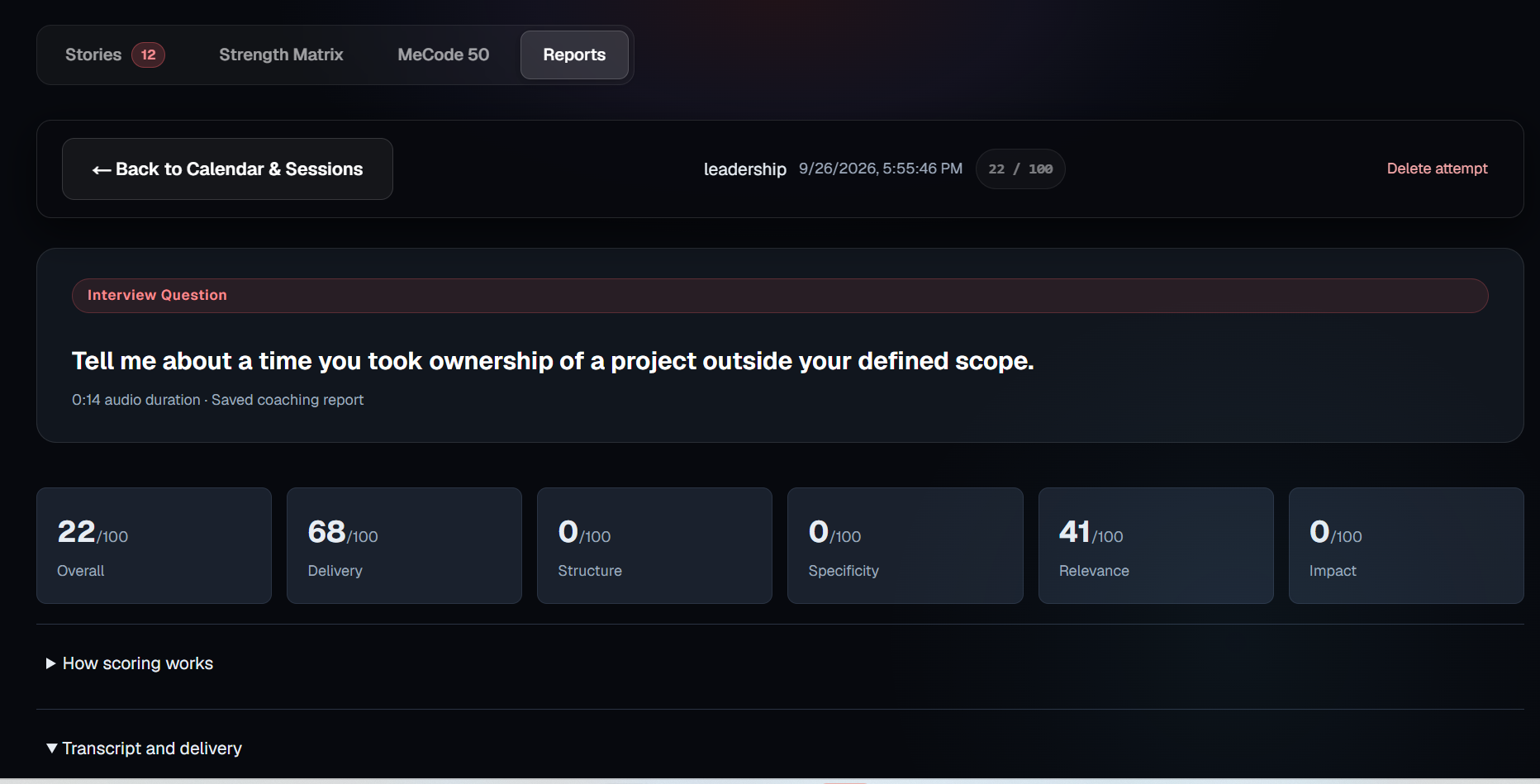
Scores for Response
-
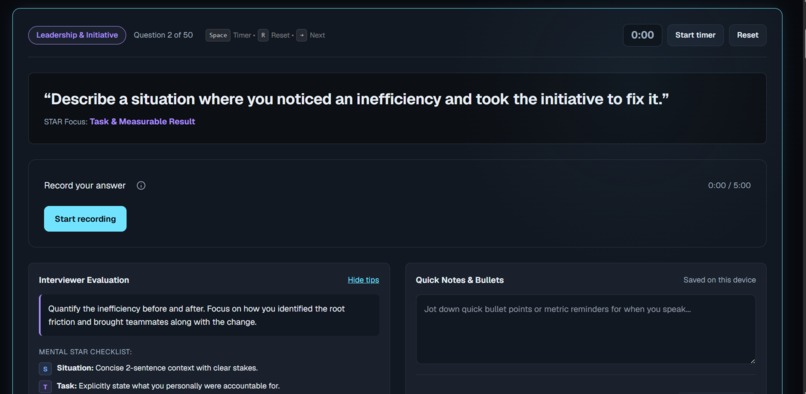
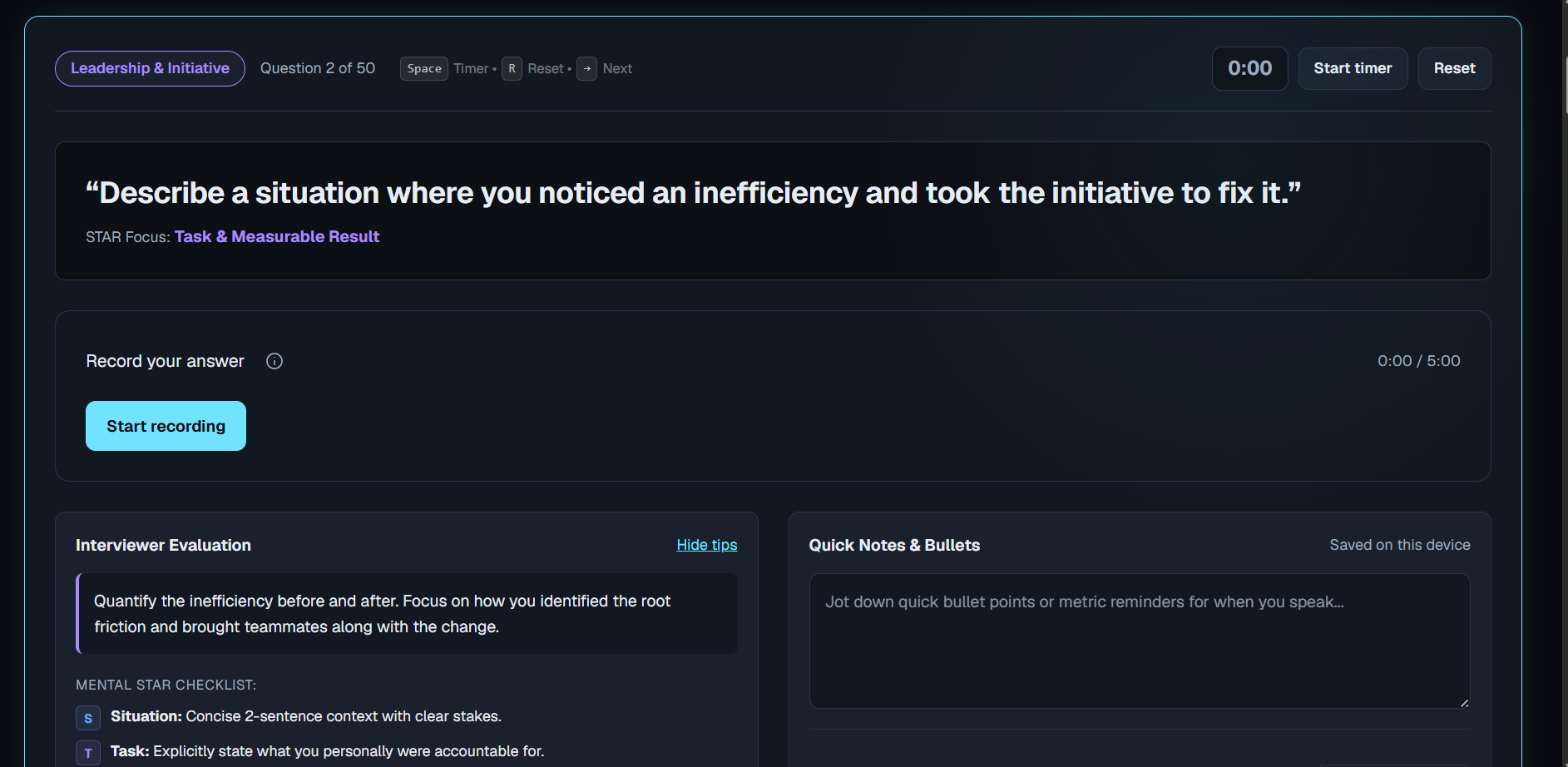
Page to Answer Question
-
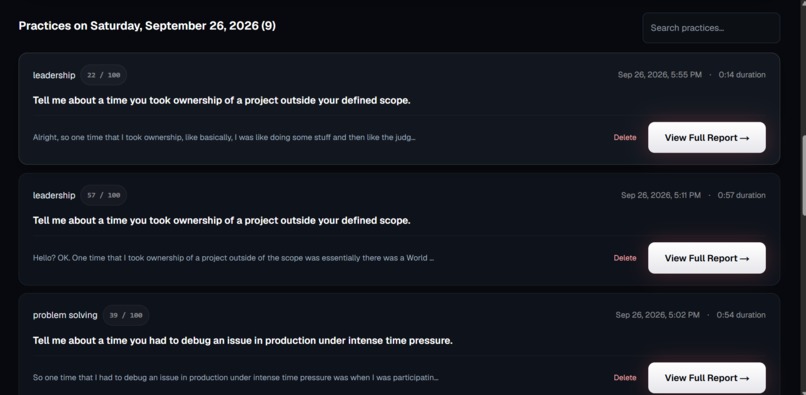
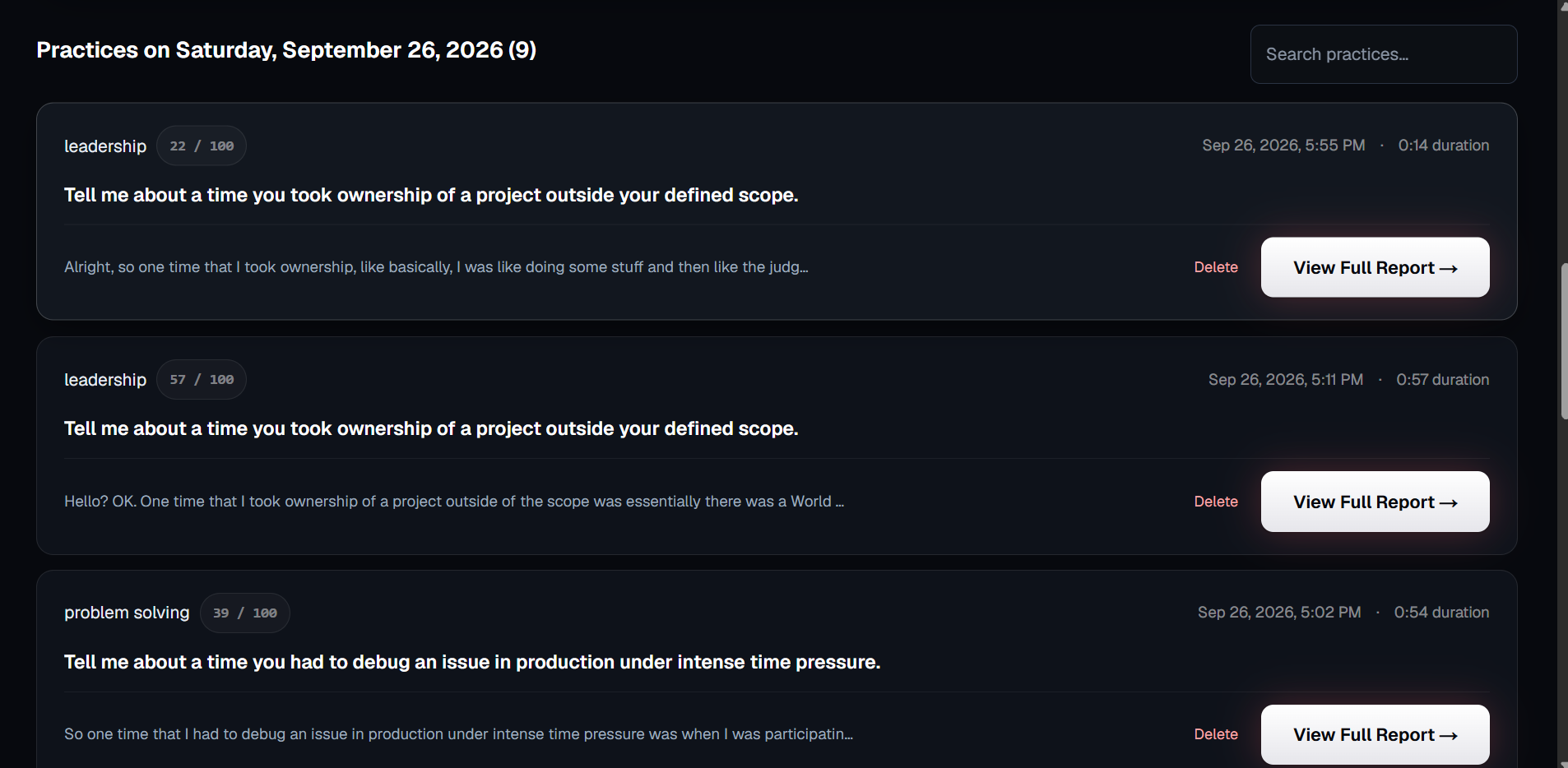
Stored Responses from Certain Day
-
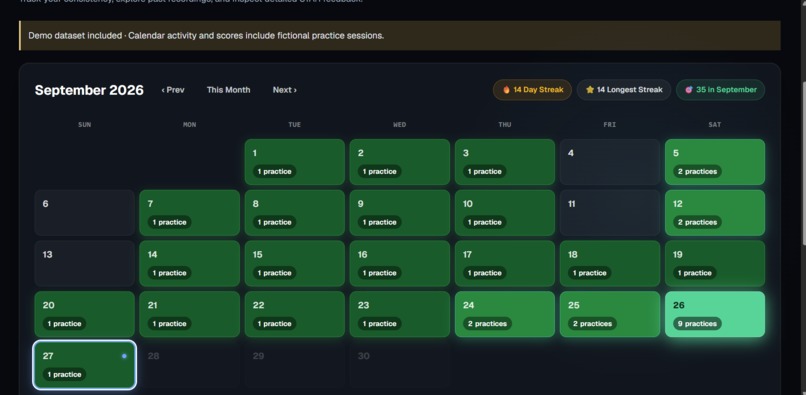
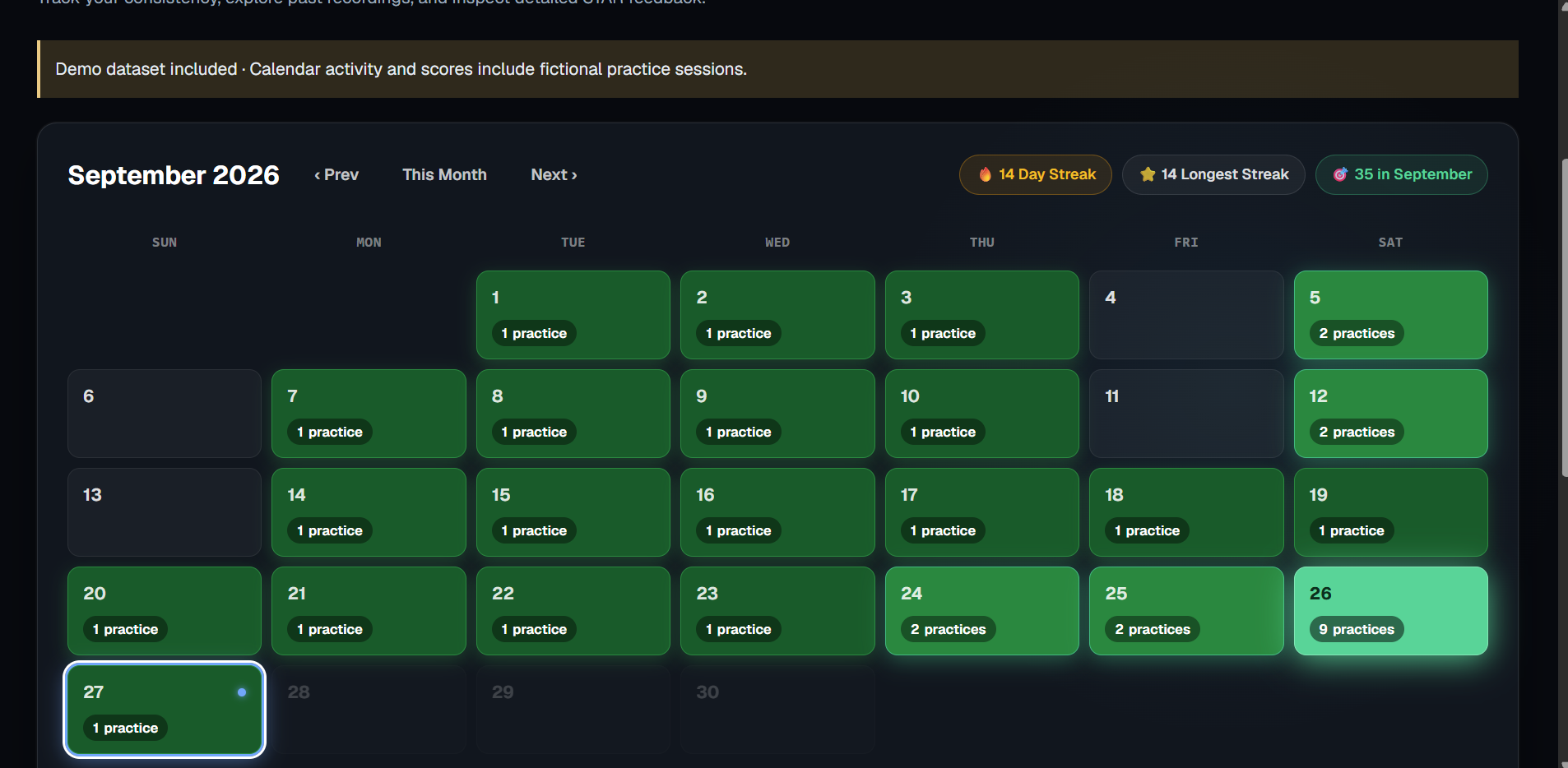
Github Inspired Calendar for Questions Practiced
-
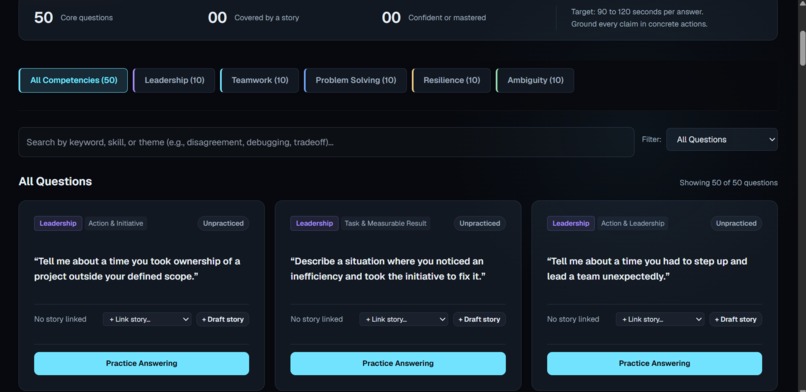
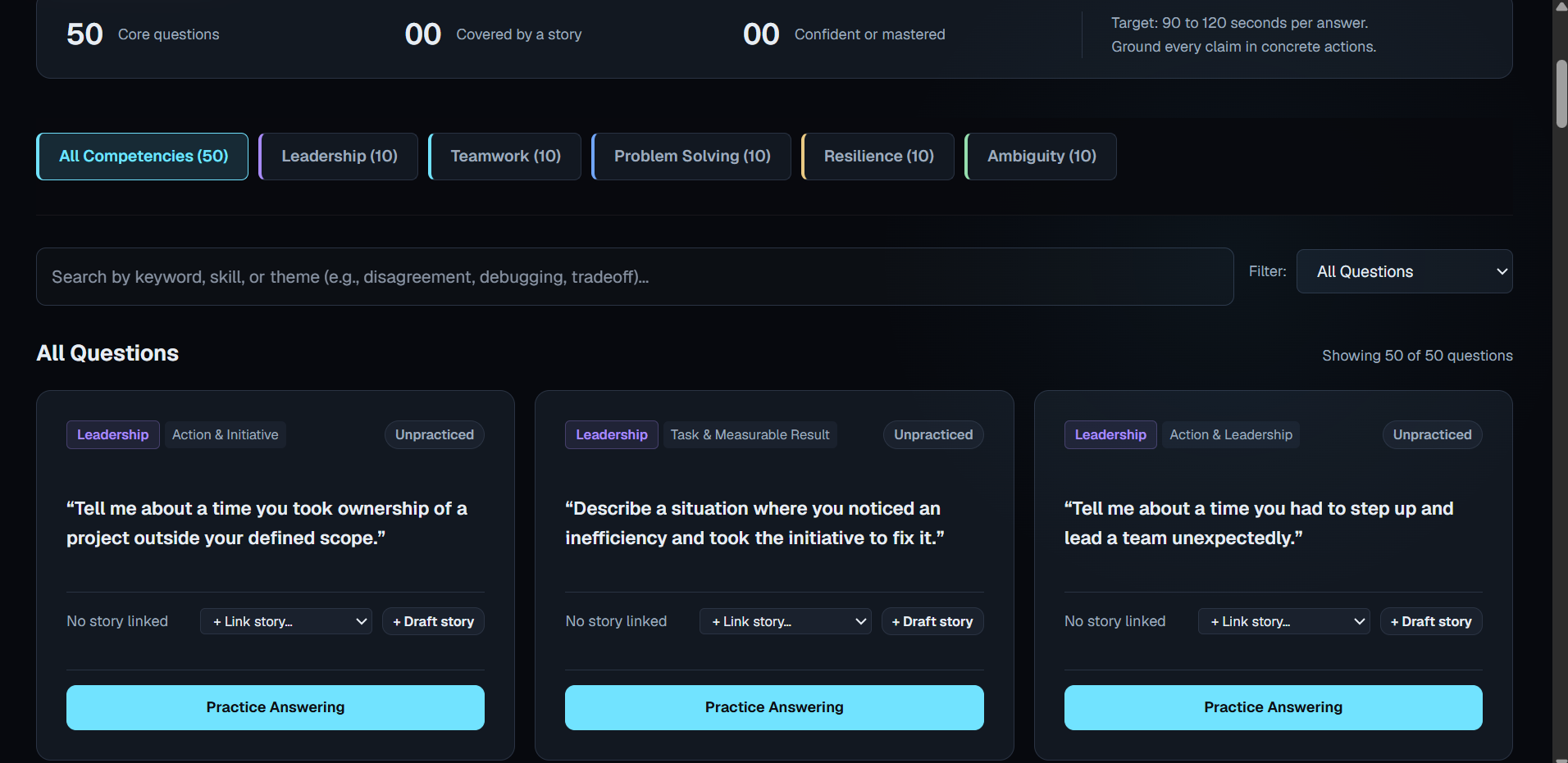
50 Question Bank
-
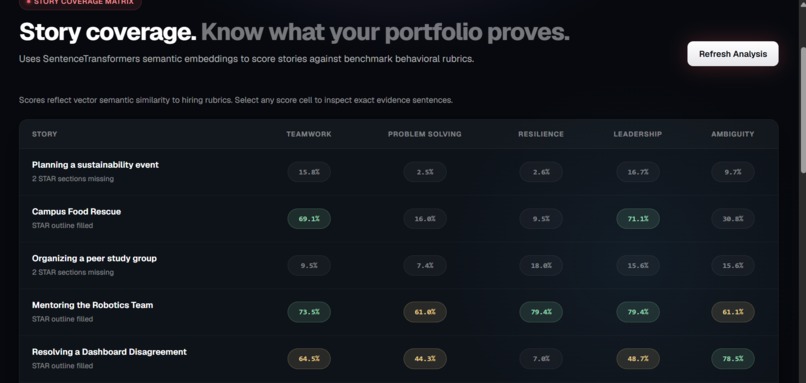
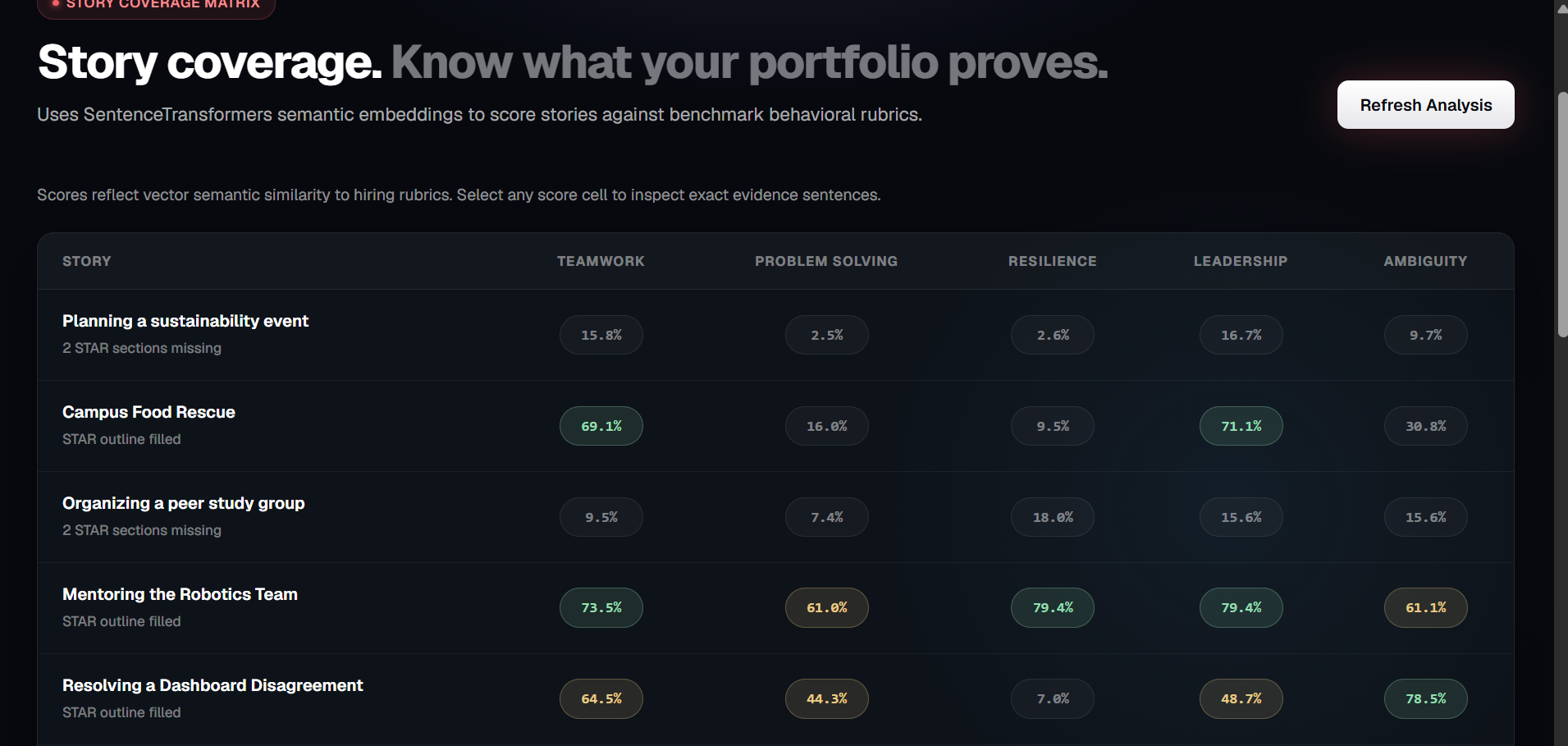
Strength Matrix
Inspiration
Software engineers will spend three months grinding 300 LeetCode problems and mastering system design only to get rejected in the final round when asked something like: "Tell me about a time you disagreed with a tech lead." According to CVMark, over 53% of qualified candidates fail behavioral interviews not because of their background, but because of unstructured delivery. In high-stakes interviews at companies like Google, Meta, and Amazon, interviewers aren't just looking for a casual chat. They are grading candidates against strict company-specific competency rubrics. LeetCode solved technical coding interviews. We build MeCode to solve the rest: a workspace that trains developers to turn their raw experiences into structured STAR stories with real-time audio drills and deterministic ML feedback.
What it does
MeCode guides software engineers through an end-to-end preparation loop, transforming raw engineering experiences into interview-ready behavioral answers:
- Auto-Extract from Resume: Candidates start by uploading their PDF resume. MeCode parses raw project bullets and production incidents into structured, reviewable STAR (Situation, Task, Action, Result) drafts.
- Organize the Story Bank: Engineers refine and catalog their stories in a centralized workspace, tagging each experience by company, role, and technical challenges.
- Analyze Coverage with the Strength Matrix: Before interviewing, candidates inspect their Strength Matrix dashboard to detect gaps across the 5 core behavioral pillars (Problem Solving, Leadership & Initiative, Teamwork & Conflict, Failure & Resilience, and Ambiguity), ensuring they don't walk into an interview with zero stories for a critical category.
- Select a Target Prompt from the "MeCode 50": Candidates browse 50 curated Big-Tech behavioral questions asked in FAANG loops, filtering by the behavioral pillars.
- Simulate the Round with Timed Audio Mock Drills: The candidate hits record and delivers their answer aloud. A live 90–120s sweet-spot countdown and visual STAR pacing checklist keep them from rambling or rushing through their response.
- Receive Instant, Deterministic ML Rubric Scoring: As soon as they finish speaking, MeCode transcribes the audio and evaluates the response using semantic sentence embeddings (SentenceTransformers) against benchmark hiring rubrics. This measures individual ownership, technical depth, and quantifiable impact with zero LLM hallucination.
- Track Progress on the Reports Calendar: Every session is logged into an interactive monthly contribution heatmap (inspired by LeetCode and GitHub). Candidates can click on any day to look at their reports from that day.
How we built it
We built MeCode using a modern full-stack architecture designed for speed, privacy, and deterministic accuracy:
- Machine Learning Scoring (SentenceTransformers & Cosine Similarity): Instead of using an unpredictable chatbot wrapper (like ChatGPT), we evaluate answers with an open-source NLP model (
all-MiniLM-L6-v2). The model converts a candidate's spoken transcript into mathematical points called vector embeddings, which we compare against benchmark Big-Tech hiring rubrics using cosine similarity (a formula that measures semantic closeness). This gives objective, reproducible 0–100% scores without AI hallucinations. - Audio & Backend API (Python & FastAPI): Our backend captures microphone audio and extracts text from uploaded PDF resumes. It processes audio asynchronously so model evaluation returns in sub-second time.
- Tactile Frontend (Next.js 15, React & TypeScript): Built with the latest Next.js 15 App Router. Rather than using generic UI templates, we wrote custom Vanilla CSS inspired by developer tools like Linear and Raycast—giving candidates a clean, dark-mode terminal workspace that runs at 60fps with zero bloat.
- Database & Cloud Sync (PostgreSQL & Supabase): Powered by PostgreSQL with Row-Level Security (RLS) to keep personal career stories private. Candidates can start practicing immediately in a zero-login guest mode, which seamlessly syncs to the cloud once they create an account.
Challenges we ran into
- Avoiding the AI "Yes-Man" Trap: Most generic AI chatbots are overly polite and say "Great job!" to almost anything you say, which doesn't help you prepare for a real interview. Real hiring managers at top tech companies are looking for specific evidence of individual ownership, concrete metrics, and clear results. We calibrated our scoring system to be constructively strict which took significant fine-tuning.
- Working with Messy Resume Formats: Engineers format their resumes in unpredictable ways (two-column layouts, tables, nested project lists, and dense technical jargon). Teaching our parser to reliably extract relevant projects into structured STAR outlines (Situation, Task, Action, Result) without messing up dates, acronyms, or bullet points required a lot of trial and error.
Accomplishments that we're proud of
- One Unified Model for the Entire ML Pipeline: Rather than working with multiple expensive commercial APIs, we architected our entire machine learning pipeline around a single lightweight, open-source embedding model (
all-MiniLM-L6-v2). This one model powers our competency rubric scoring across all 5 pillars, signal keyword extraction, and semantic search. Because it runs locally on our backend, candidates get instant, deterministic evaluations in under a second with zero per-token API costs and complete data privacy. - A Complete End-to-End Engineering Loop in 36 Hours: We’re proud of creating a seamless, full-circle workflow. A candidate can drop in a messy PDF resume, have it auto-structured into STAR stories, jump into a timed spoken audio drill on a Big-Tech prompt, receive instant objective rubric feedback, and see their practice streak update on a LeetCode-style contribution heatmap all within a single, distraction-free workspace.
What we learned
- Behavioral Rounds Are More Algorithmic Than People Think: Many engineers assume behavioral interviews are subjective. In reality, top tech companies use standardized rubrics. Once we broke down what interviewers actually look for, we realized behavioral prep can be practiced and scored with the same structured discipline as algorithmic coding.
- Small, Focused Models Can Outperform Giant Chatbots: We learned that you don't need a massive, multi-billion-parameter LLM to provide meaningful evaluation. A lightweight, 22-million parameter embedding model (
all-MiniLM-L6-v2) gave us faster, reproducible, and strictly honest rubric scoring without the latency, high costs, or hallucinations of general-purpose chatbots.
What's next for MeCode
- Follow-Up Questions: In real Big-Tech interviews, interviewers dig deeper. We want to add live follow-up questions tailored to what you just said ("Why didn't you choose TCP sockets?" or "How did you handle the teammate who pushed back on that decision?") to test candidates under pressure.
Built With
- css
- git
- html
- huggingface
- natural-language-processing
- next.js
- postgresql
- pydantic
- python
- pytorch
- react
- rest-api
- sentence-transformers
- supabase
- uvicorn
- vector-search

Log in or sign up for Devpost to join the conversation.