-
-
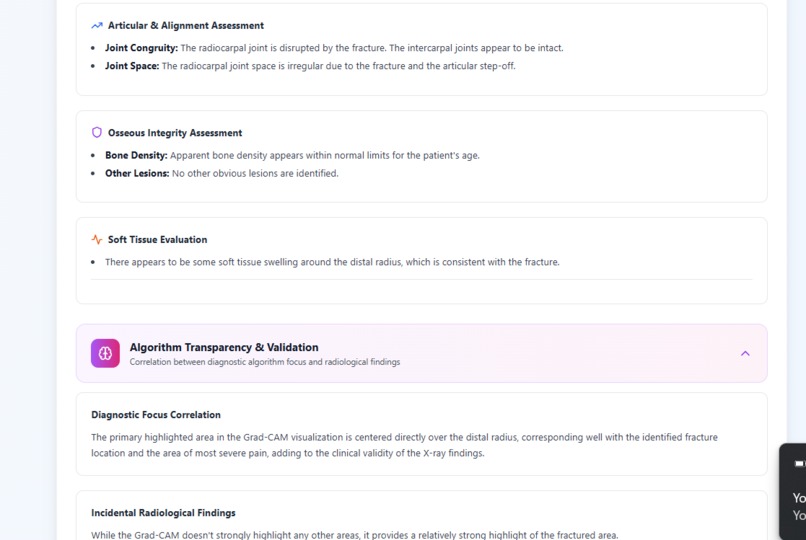
Report Generation
-
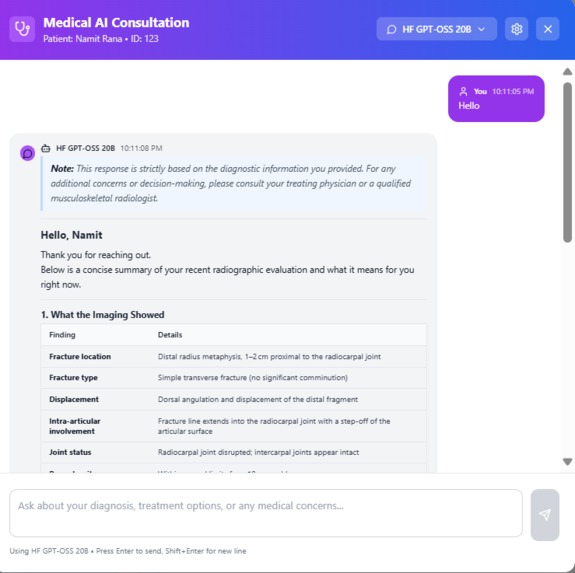
Consultation Analyst
-
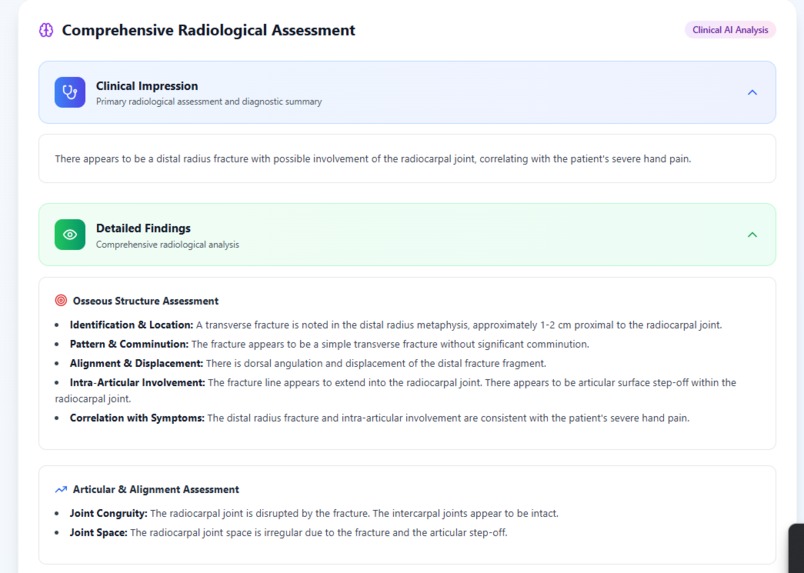
Report Generation
-
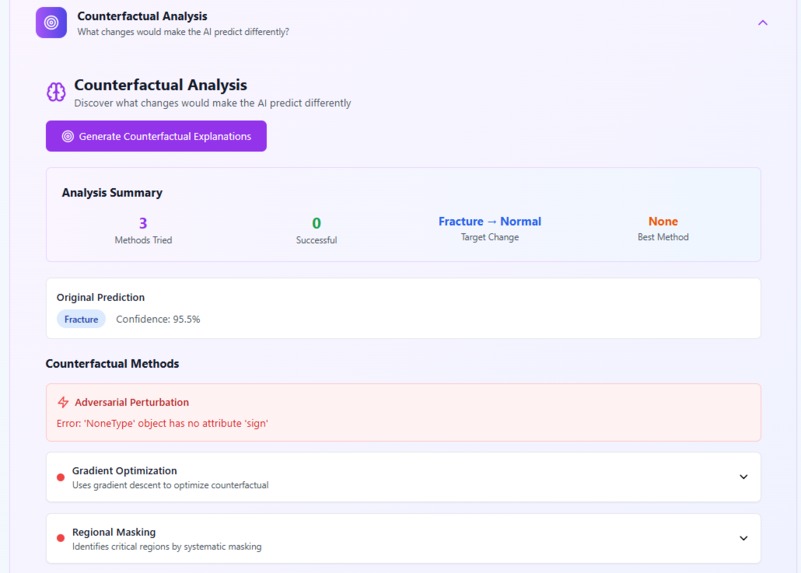
Counterfactual Opinion
-
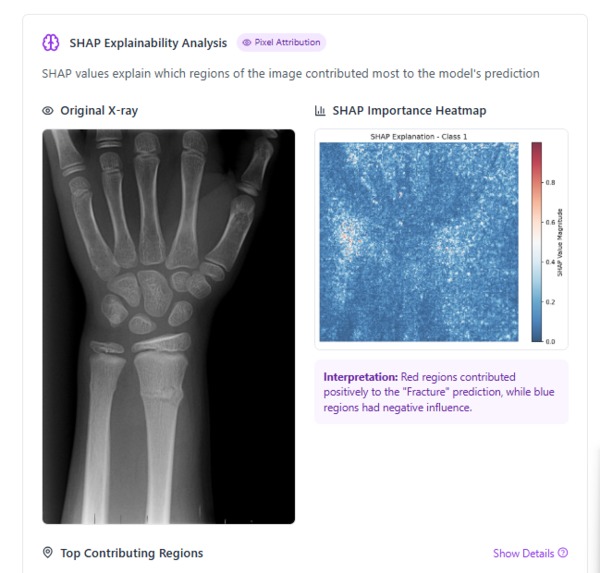
Shap Analysis
-
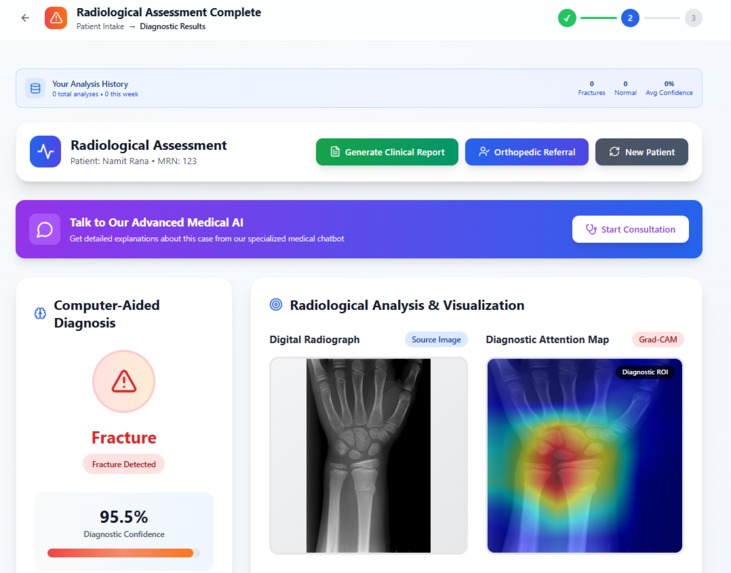
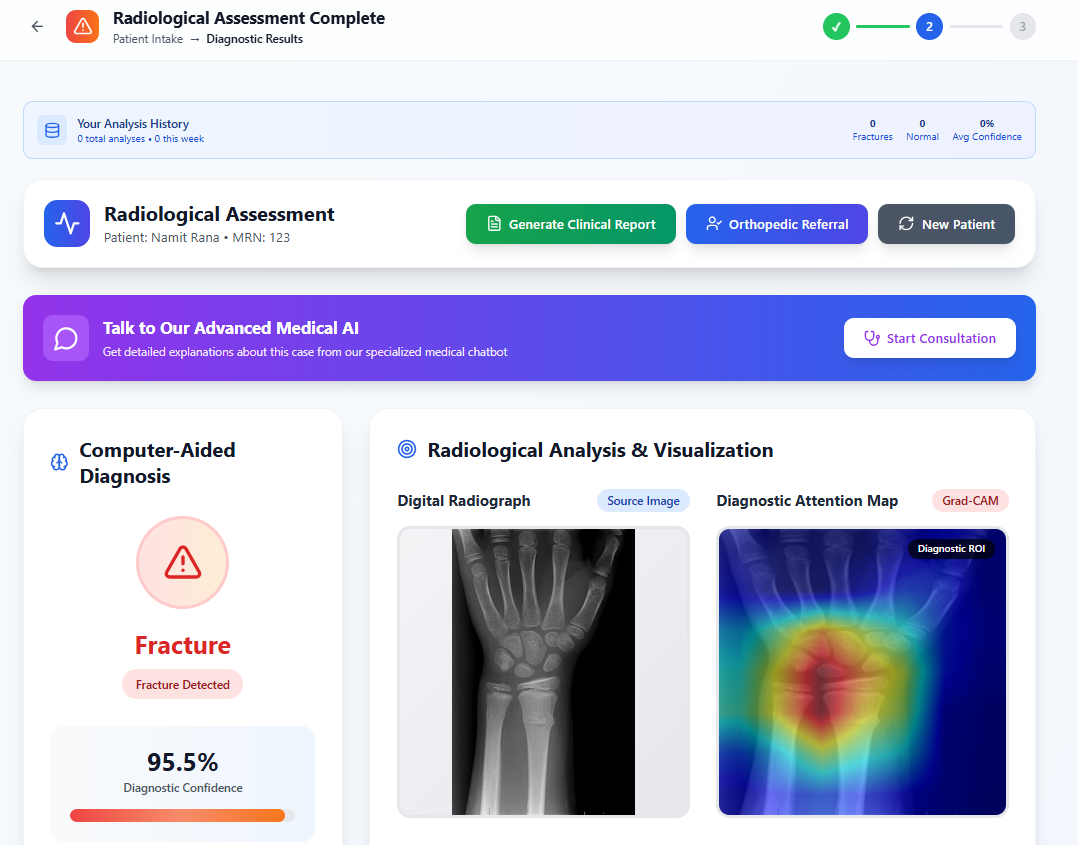
Grad Cam analysis with Confidence
-
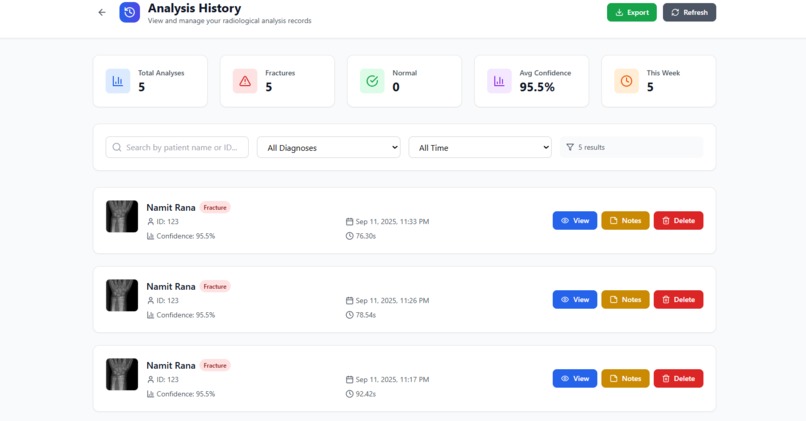
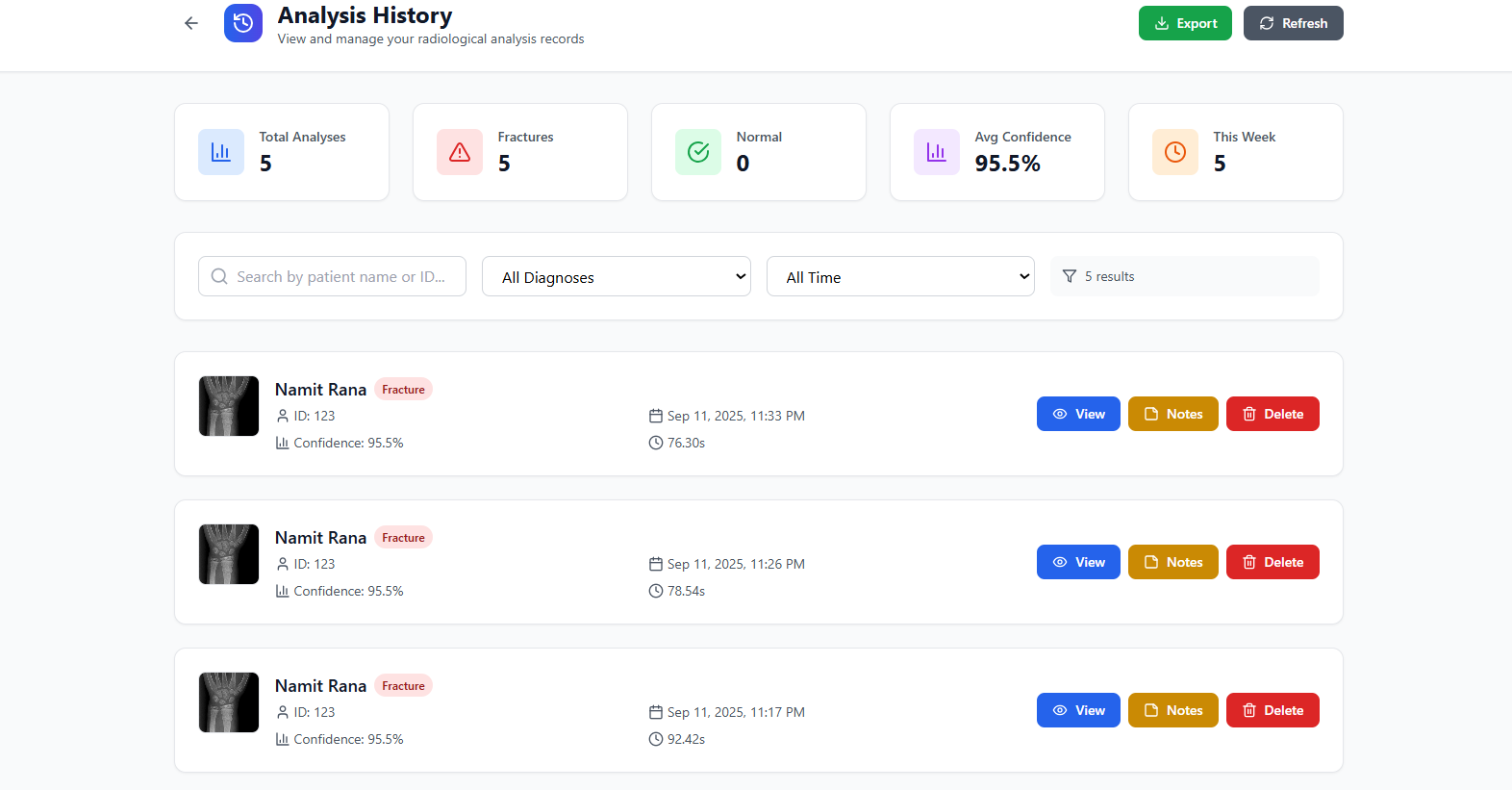
Database
X-AI Care: Open, Explainable Diagnostic Support System
Inspiration
Growing up in a small town in Himachal Pradesh, I saw how limited healthcare access can be. Doctors only visited once or twice a week, and a close friend’s fracture went undiagnosed for nearly two weeks because no doctor was available. This experience inspired me to build X-AI Care — not as a replacement for doctors, but as an assistive, explainable AI prototype that can highlight concerns, provide transparent insights, and improve communication between doctors and patients.
What it does
X-AI Care is an open, explainable diagnostic support system. It allows users to upload medical images (like X-rays), runs them through ML models, and generates:
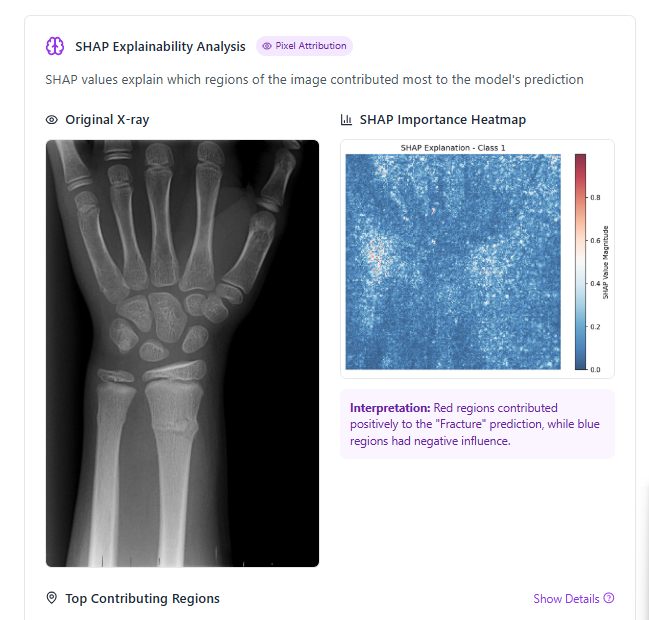
- Visual explainability (Grad-CAM heatmaps).
- Feature attribution (SHAP values).
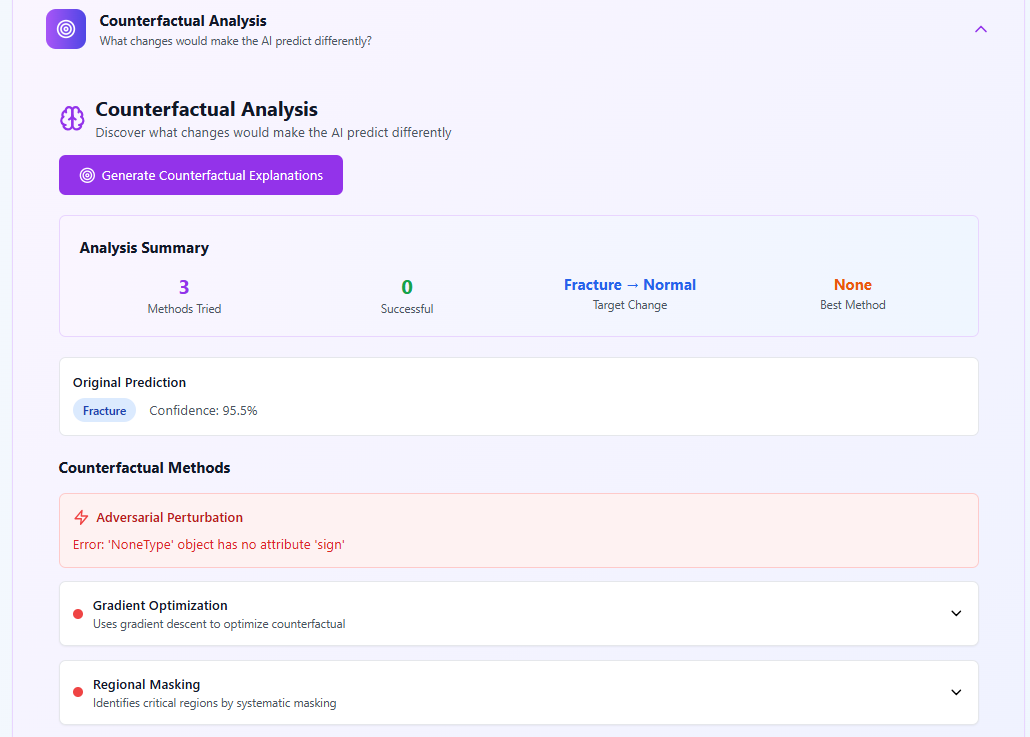
- Counterfactuals (what-if scenarios).
- Confidence scoring for predictions.
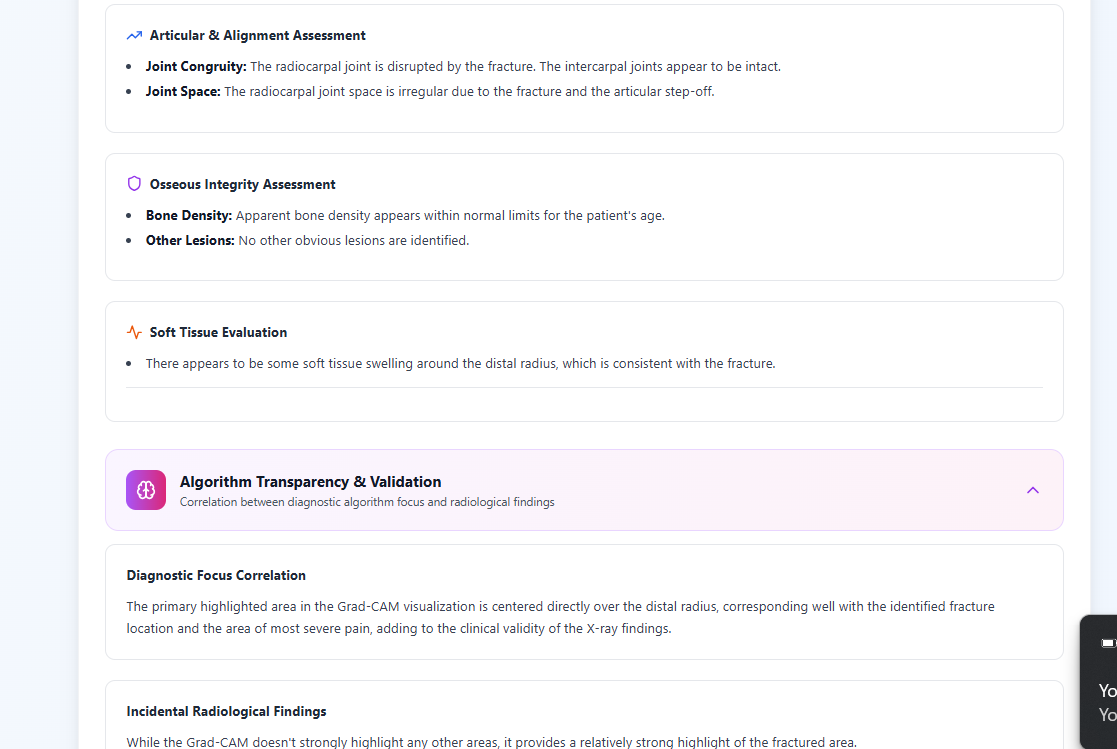
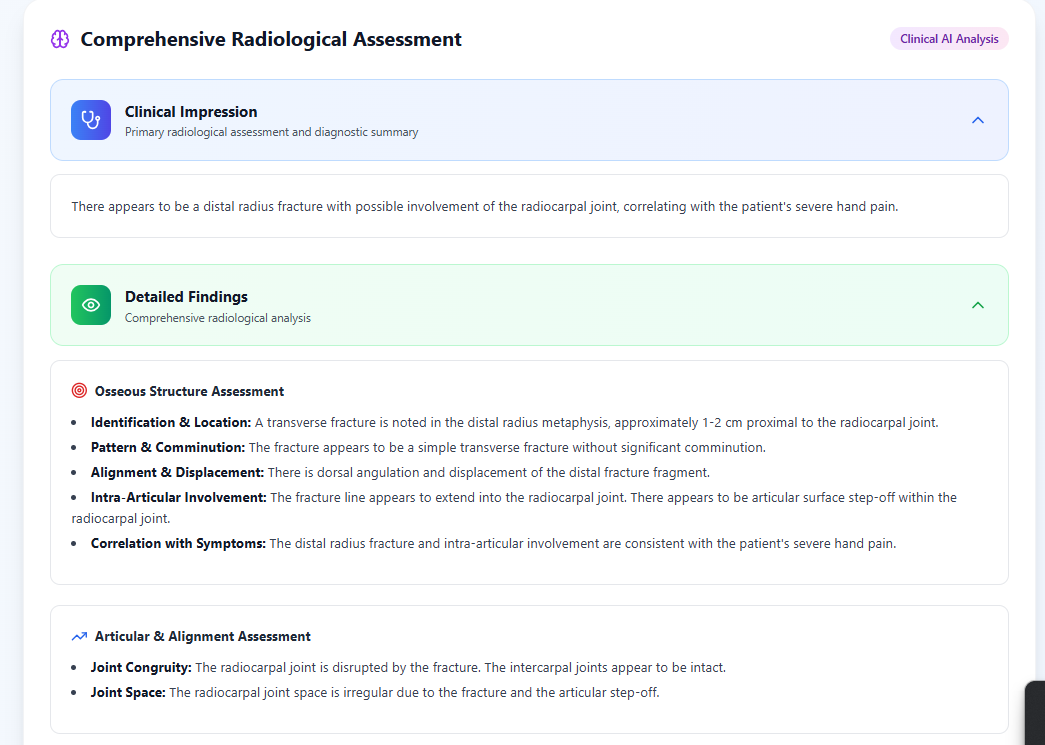
- Doctor-friendly reports with technical insights.
- Patient-friendly summaries simplified for understanding.
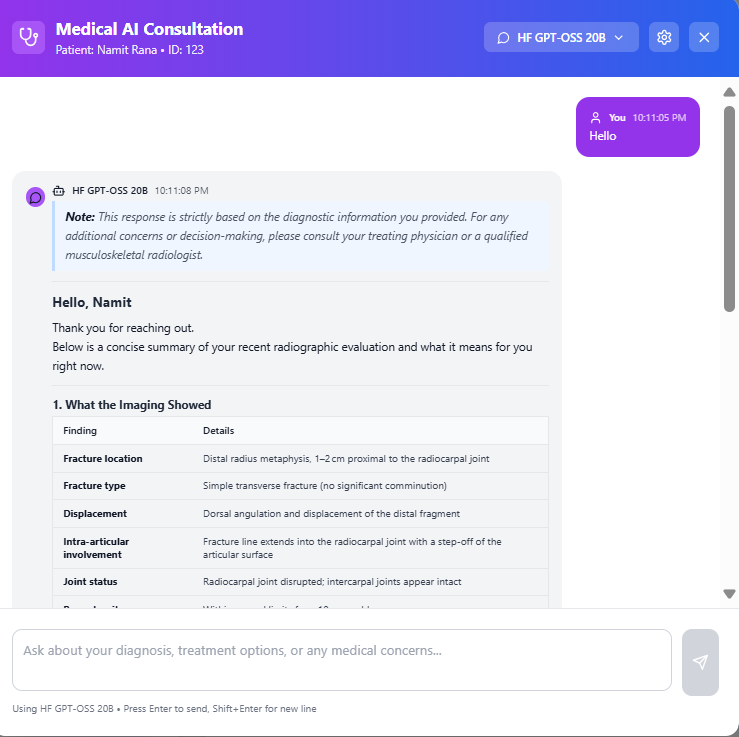
- Interactive chatbot powered by GPT OSS for case discussion.
- Dashboard + Database to manage cases, store reports, and track analytics.
How we built it
- Trained prototype ML models for wrist fracture and cataract detection.
- Integrated Grad-CAM, SHAP, and counterfactuals for explainability.
- Used confidence scoring to show prediction reliability.
- Implemented GPT OSS for automated report generation and chatbot interaction.
- Built a database and dashboard for storing cases, visualizations, and reports.
- Designed a dual report system: one for doctors (detailed, technical), one for patients (simplified, empathetic).
Role of Kiro
We leveraged Kiro to streamline the design and integration workflow. It was used for:
- Feature designing: brainstorming and validating major functionalities of the system.
- Sub-feature structuring: breaking down features into smaller, manageable components for development.
- Integration planning: aligning the frontend and backend workflows to ensure smooth communication between ML explainability modules, GPT OSS, and the dashboard.
This ensured the project development was systematic, modular, and cohesive, making the prototype feel polished and scalable.
Challenges we ran into
- Responsible framing: ensuring this is clearly an assistive tool and not a diagnostic substitute.
- Integration complexity: combining ML models, explainability tools, GPT OSS, and dashboards into one cohesive system.
- Balancing outputs: making technical details digestible while keeping patient summaries simple.
- Resource limitations: simulating a scalable healthcare prototype within hackathon constraints.
Accomplishments that we're proud of
- Created a full end-to-end pipeline: from image upload → explainability → GPT OSS reports → dashboard.
- Combined Grad-CAM, SHAP, and counterfactuals for multi-layer explainability.
- Built doctor + patient dual reports to bridge communication gaps.
- Designed a dashboard + DB system that makes the project feel like a real prototype, not just a demo.
- Translated a real-life personal problem into a tangible solution.
What we learned
- How to integrate multiple explainability techniques into medical AI.
- How GPT OSS can move beyond chat to power dynamic reporting and dialogue.
- The value of human-centered AI design in sensitive domains like healthcare.
- The importance of traceability and reproducibility in AI outputs through database storage.
What's next for X-AI Care
- Expanding to more medical models beyond fractures and cataracts.
- Adding bias and fairness checks to ensure reliability across diverse populations.
- Improving the dashboard with advanced analytics (model performance trends, case clustering).
- Exploring integration with telemedicine platforms as an assistive layer.
- Refining reports further with multi-language support, so patients in rural areas can get insights in their local language.
Built With
- ai
- generative
- kiro
- machine-learning
- openai
- python


Log in or sign up for Devpost to join the conversation.