-
-
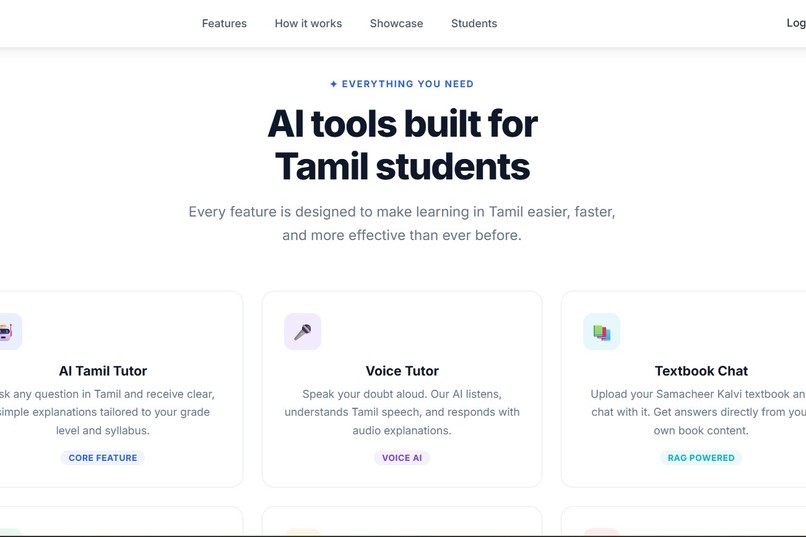
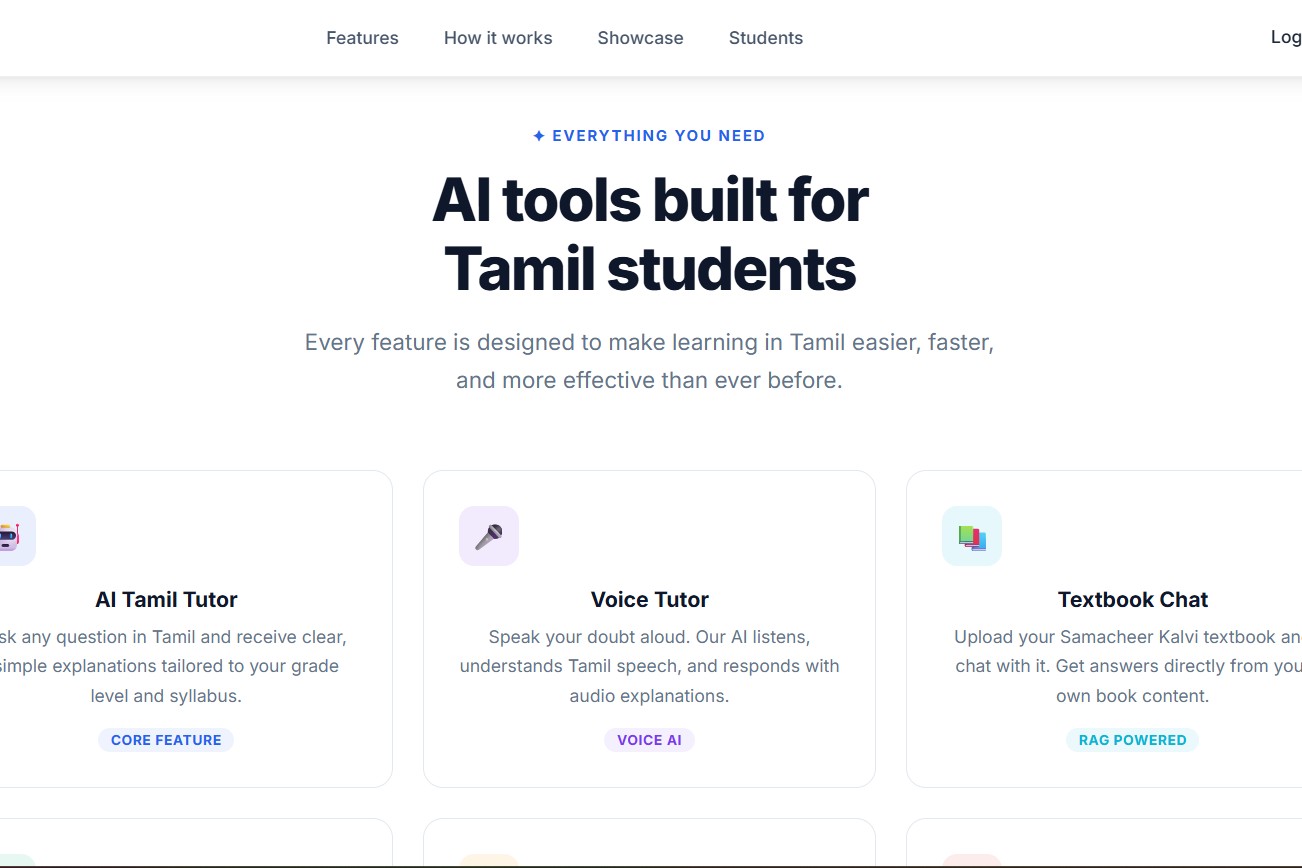
AI Features for Tamil Students – AI tools designed to make Tamil learning easier and effective.
-
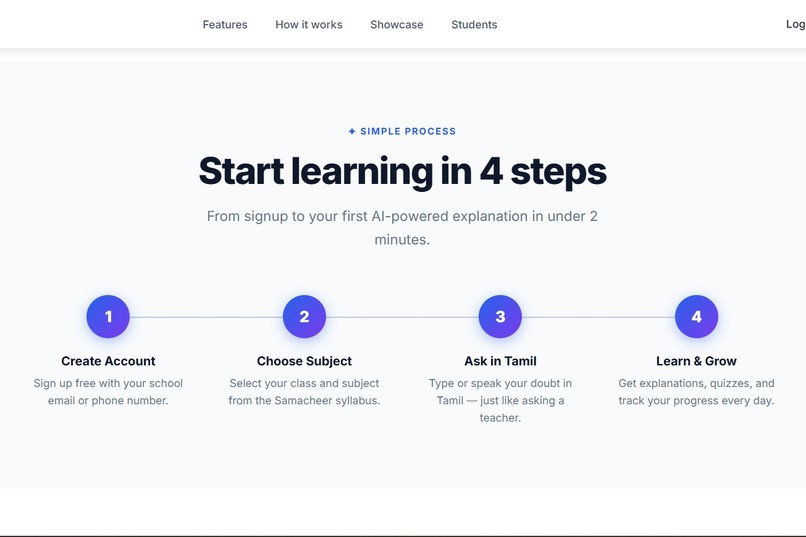
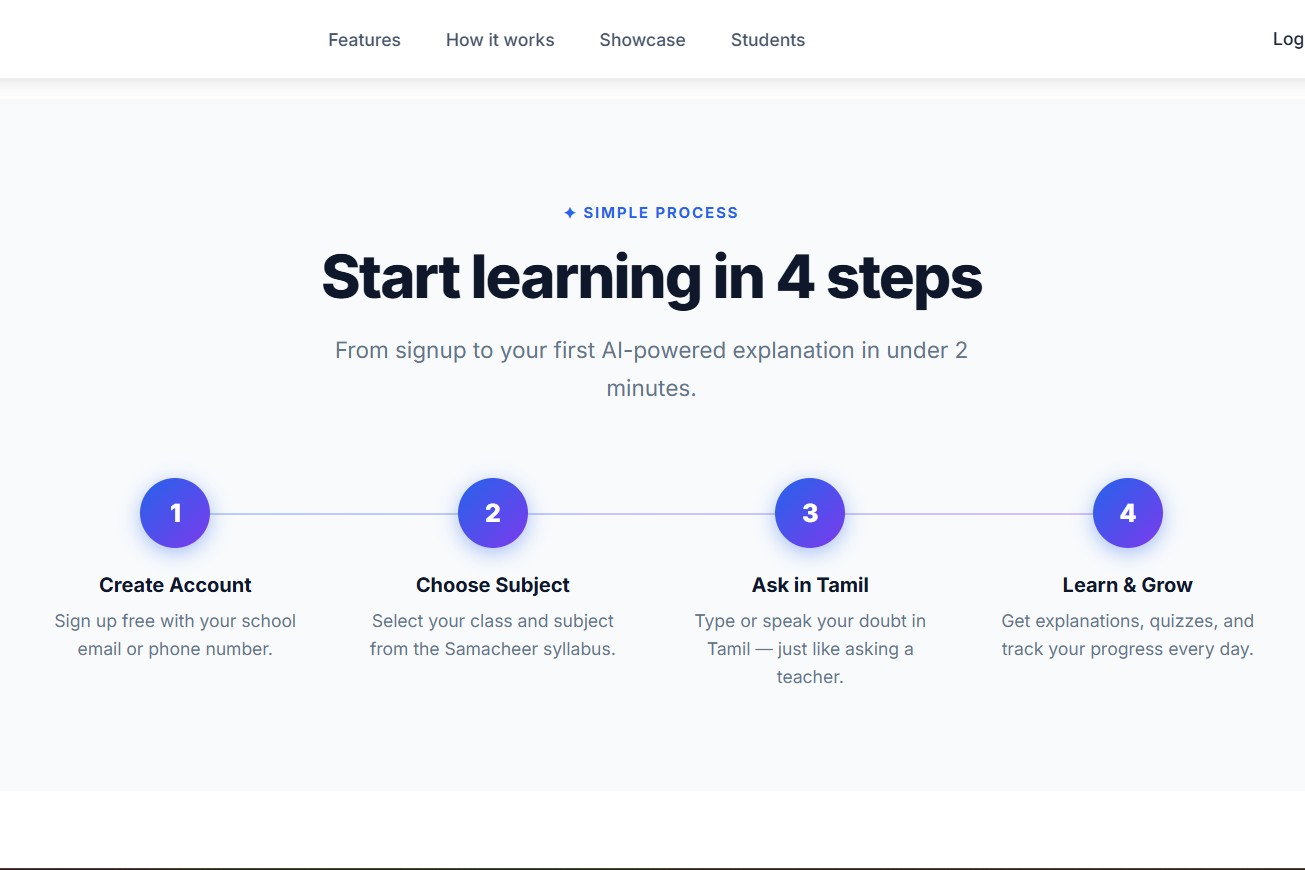
Four-Step Learning Process – A simple four-step process to begin AI-powered learning.
-
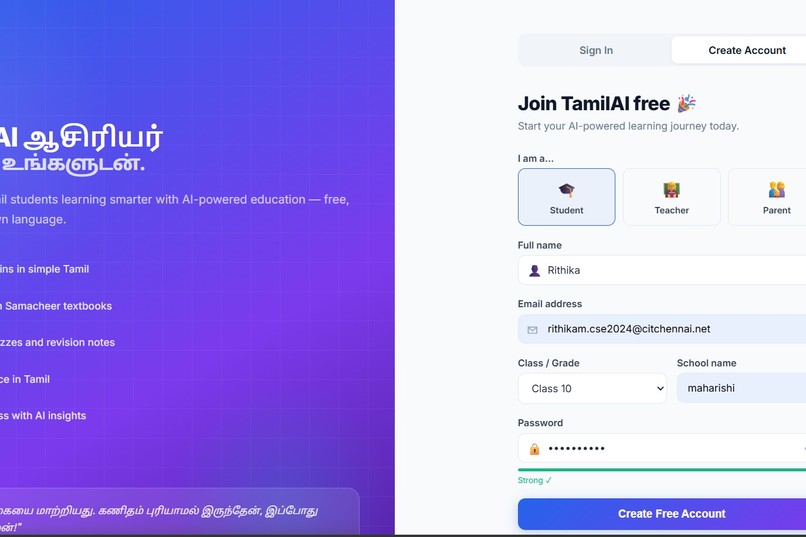
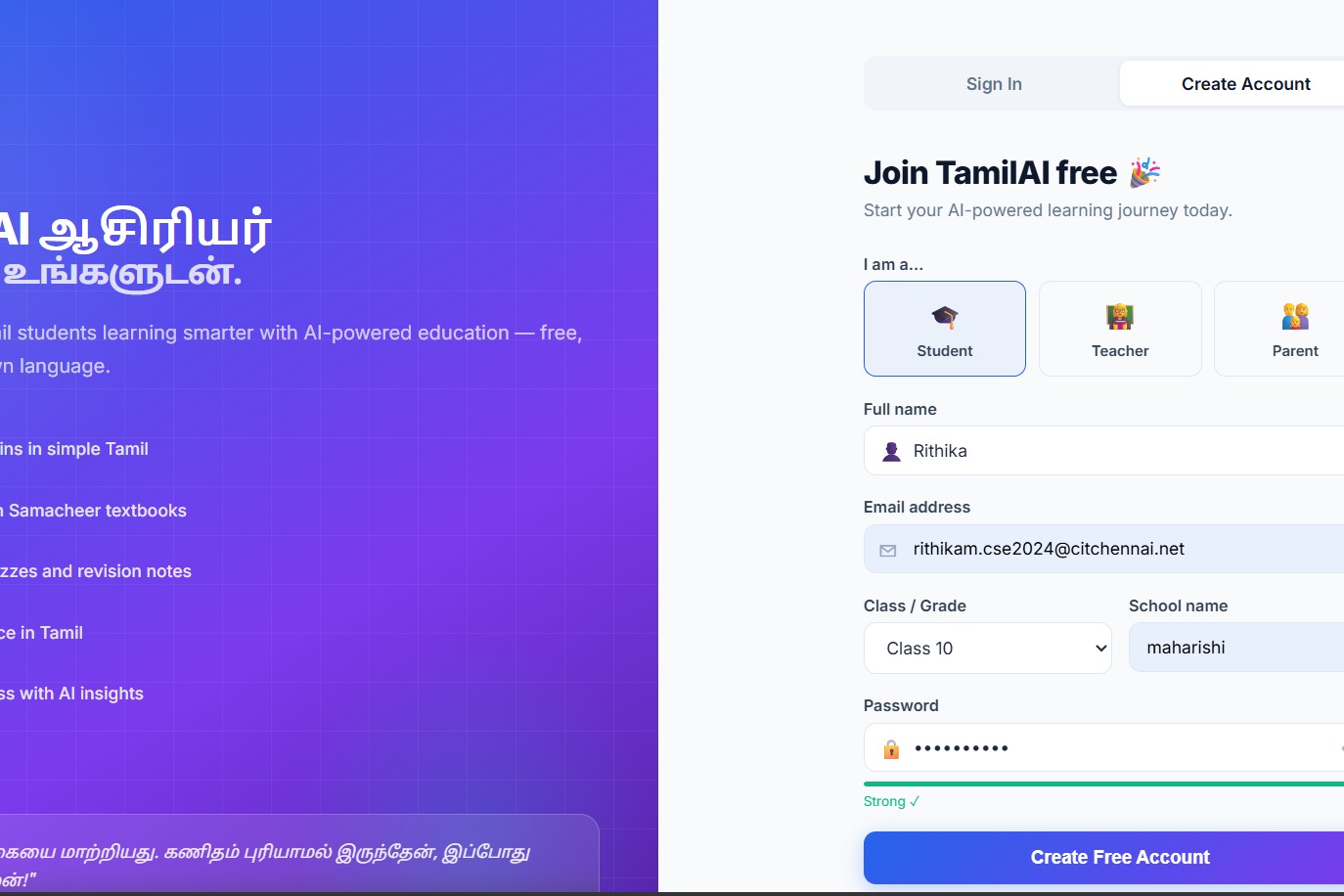
TamilAI Account Registration – Students can create an account and start their personalized learning journey.
-
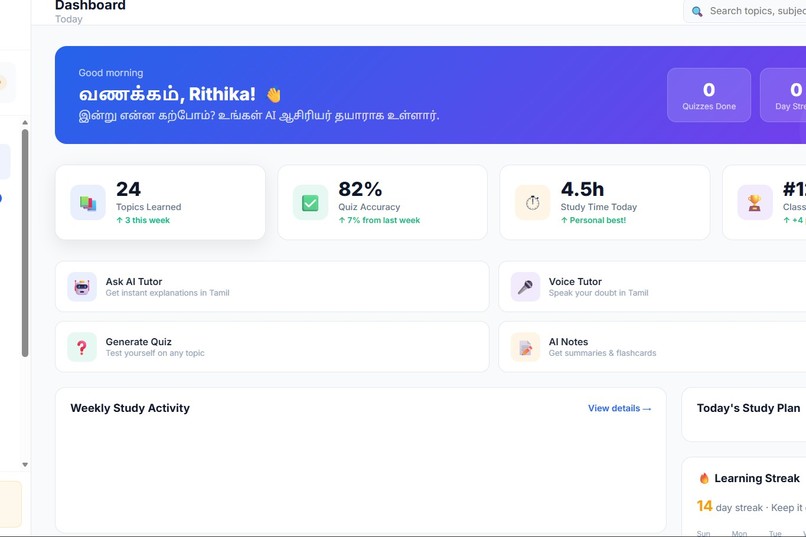
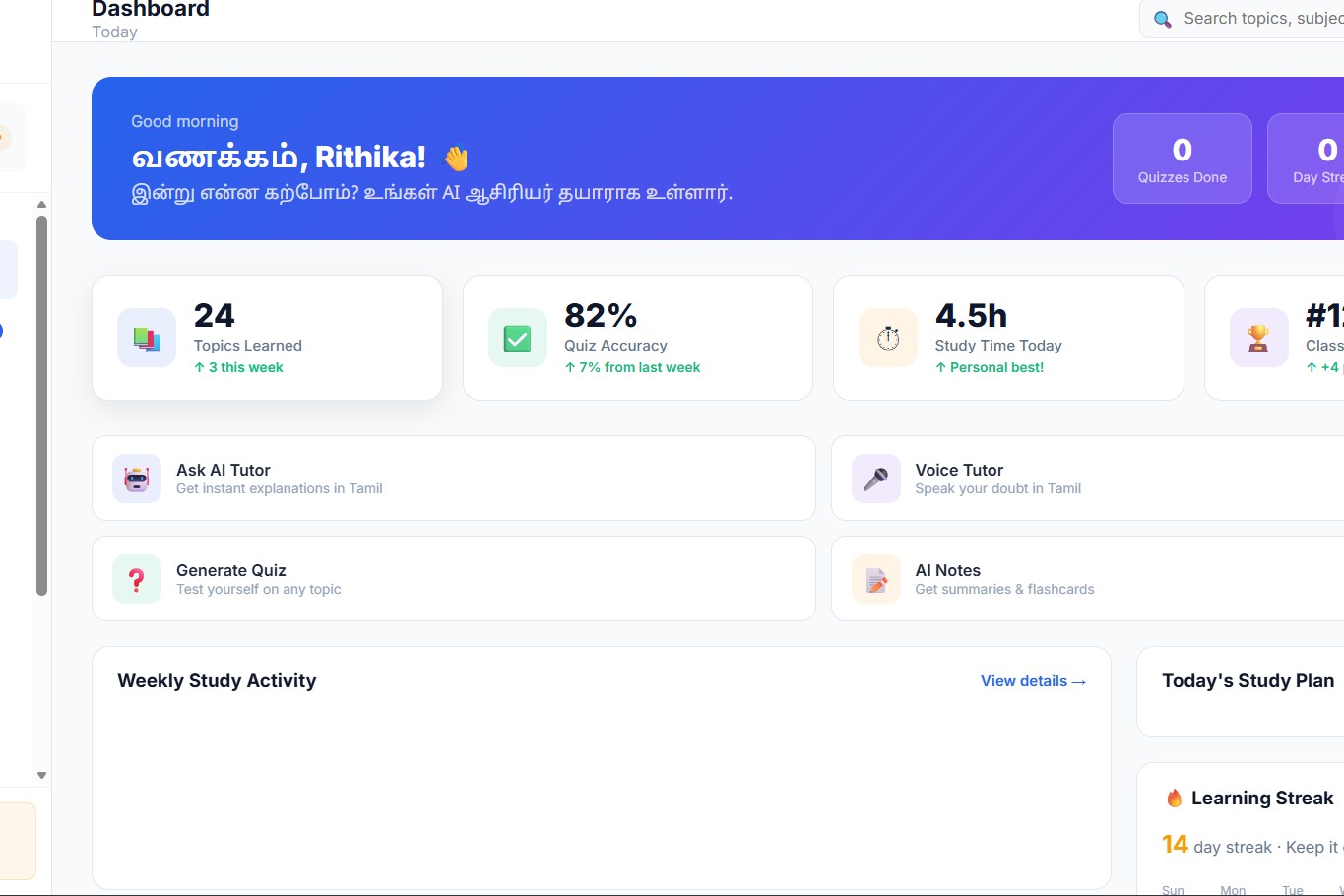
Personalized Student Dashboard – Displays learning progress, quiz scores, study time, and achievements.
-
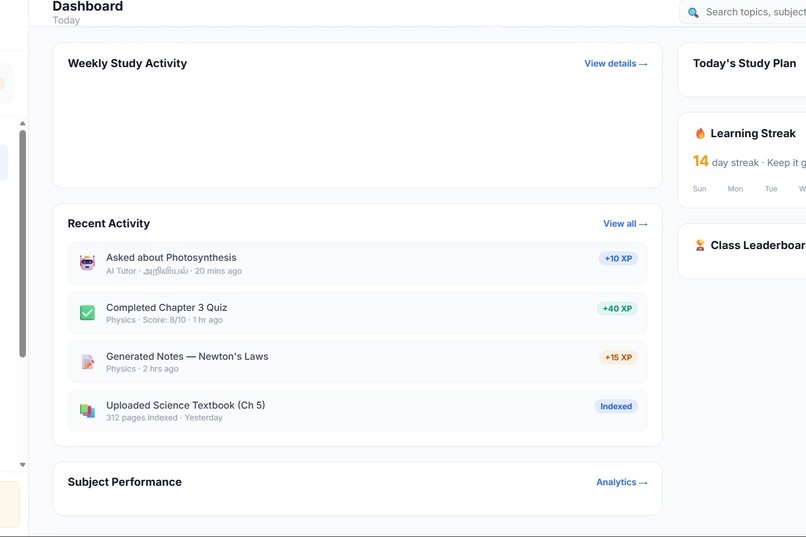
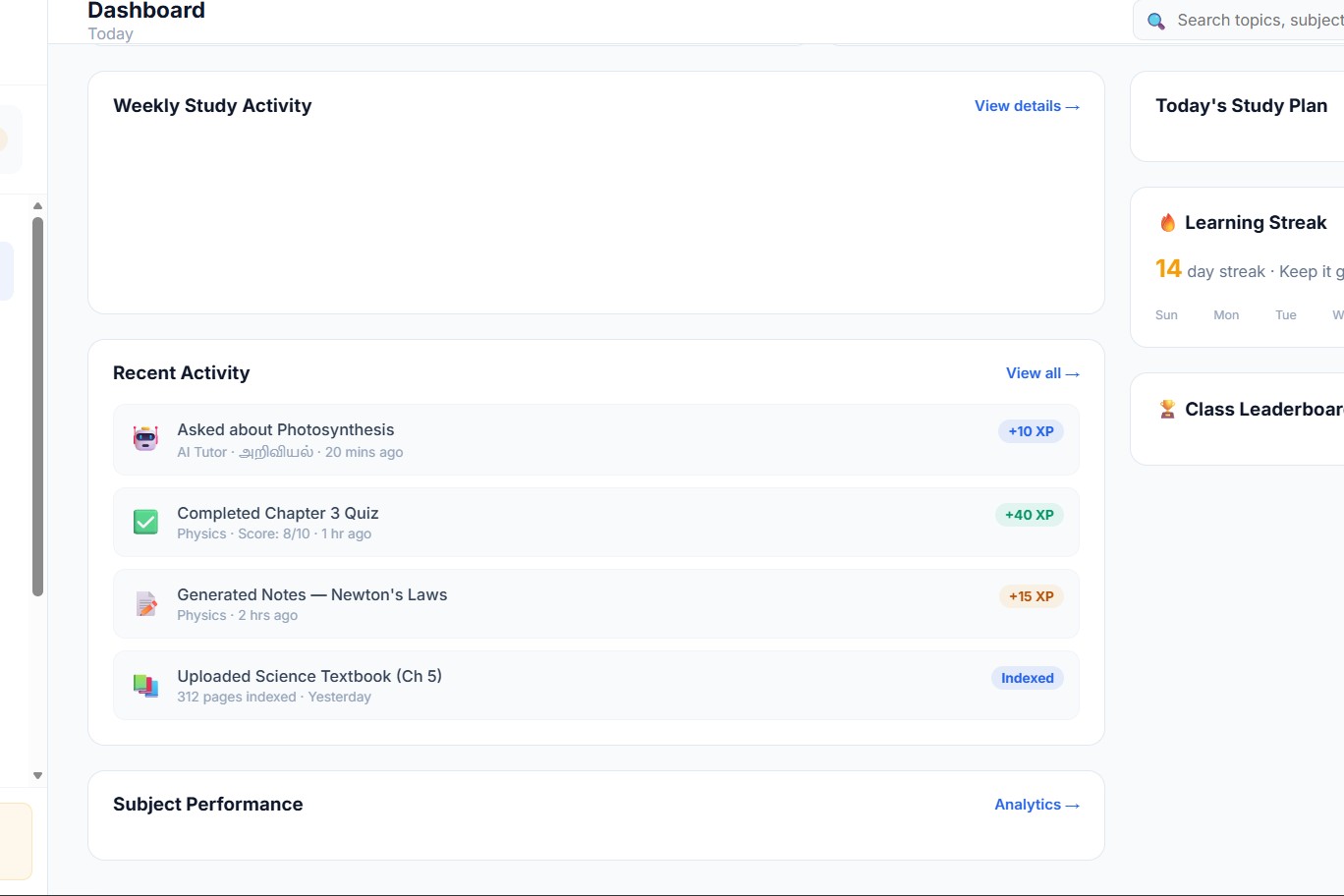
Learning Activity and Progress – Shows recent activities, weekly performance, and subject progress.
-
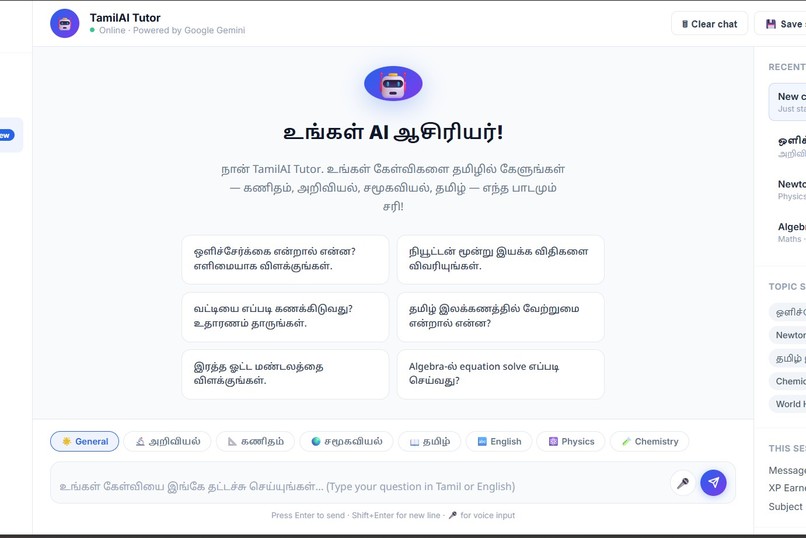
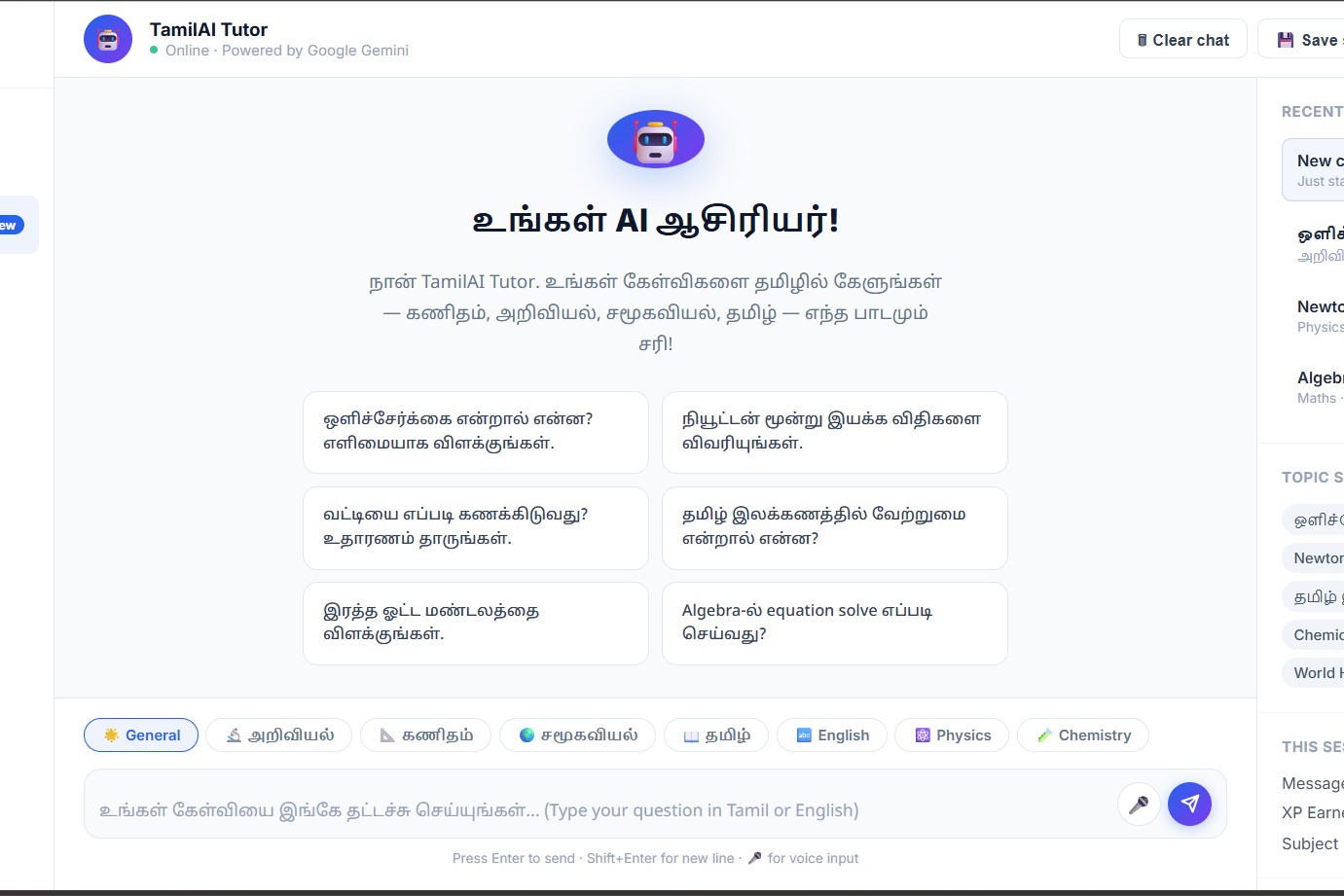
TamilAI AI Tutor – Students can ask questions in Tamil and receive simple AI-powered explanations.
-
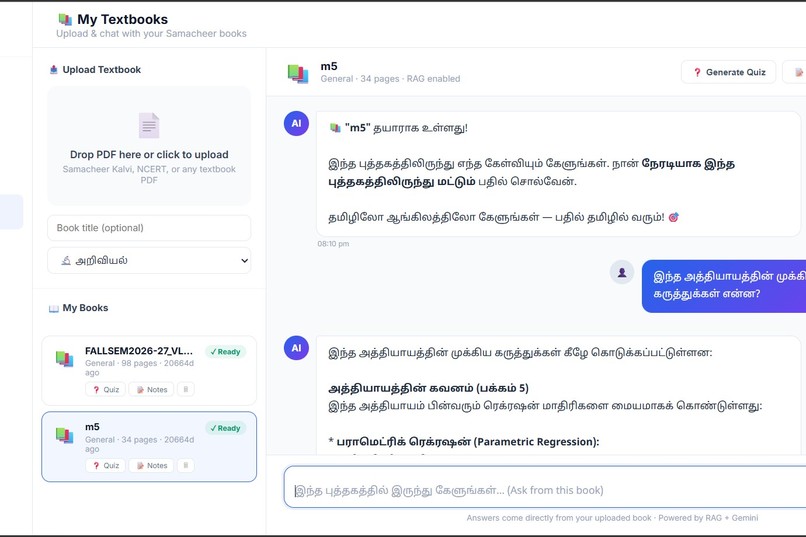
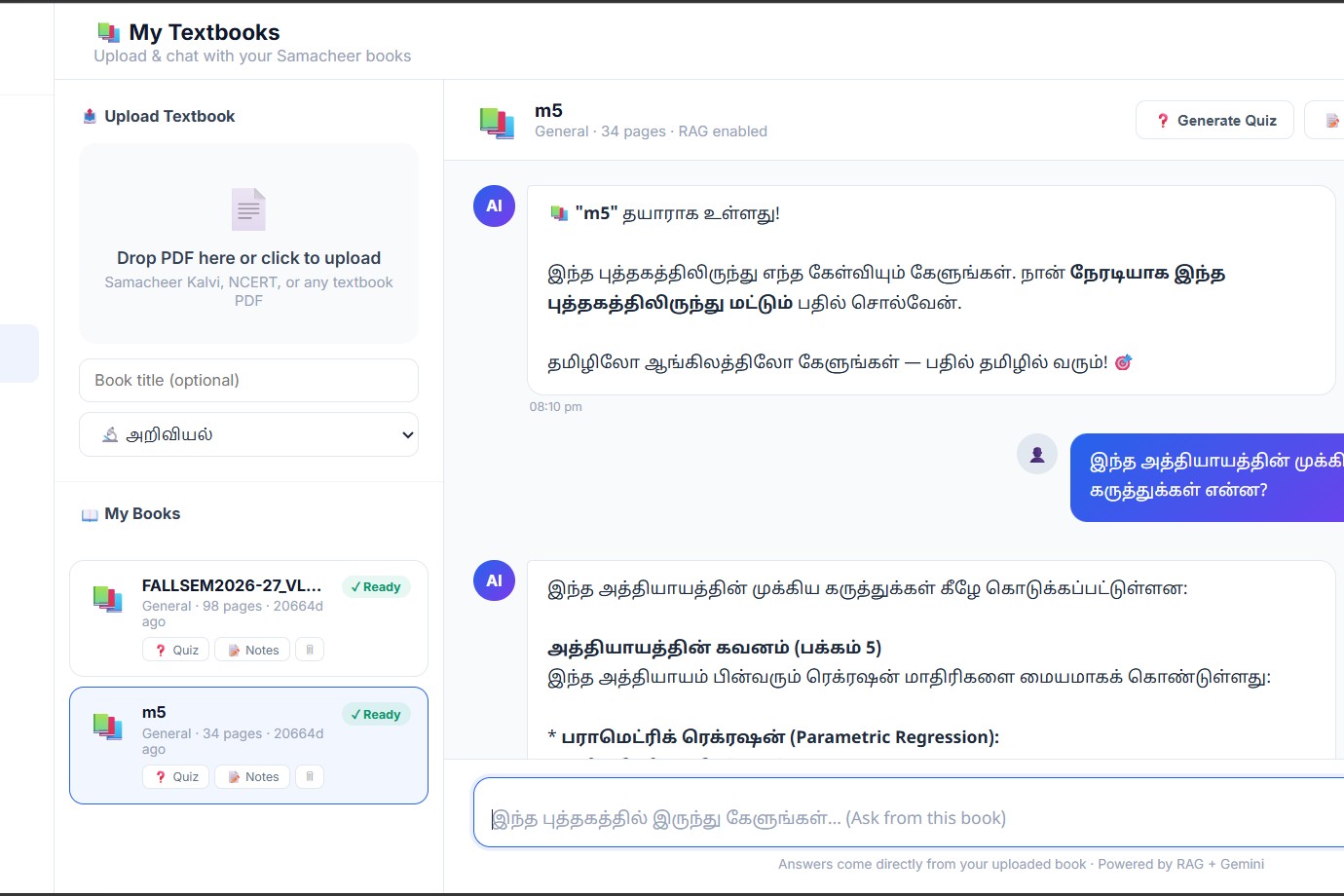
AI-Powered Textbook Chat – Upload textbooks and ask questions to get answers from the book content.
-
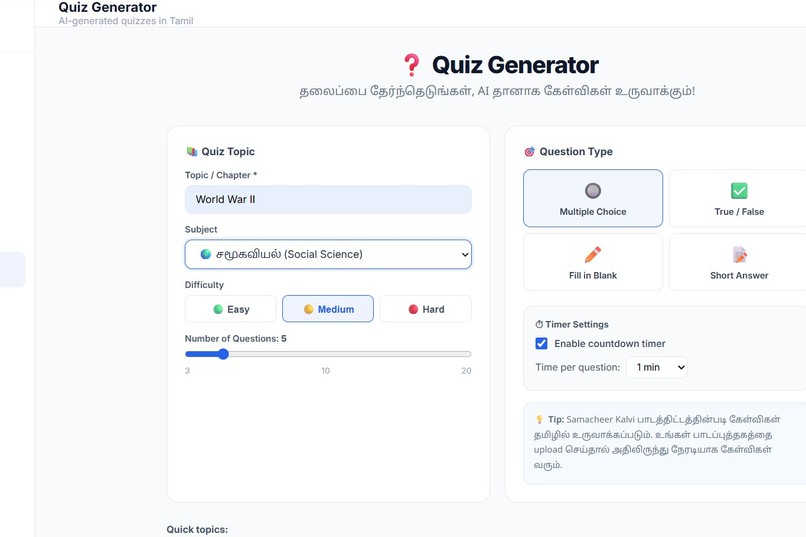
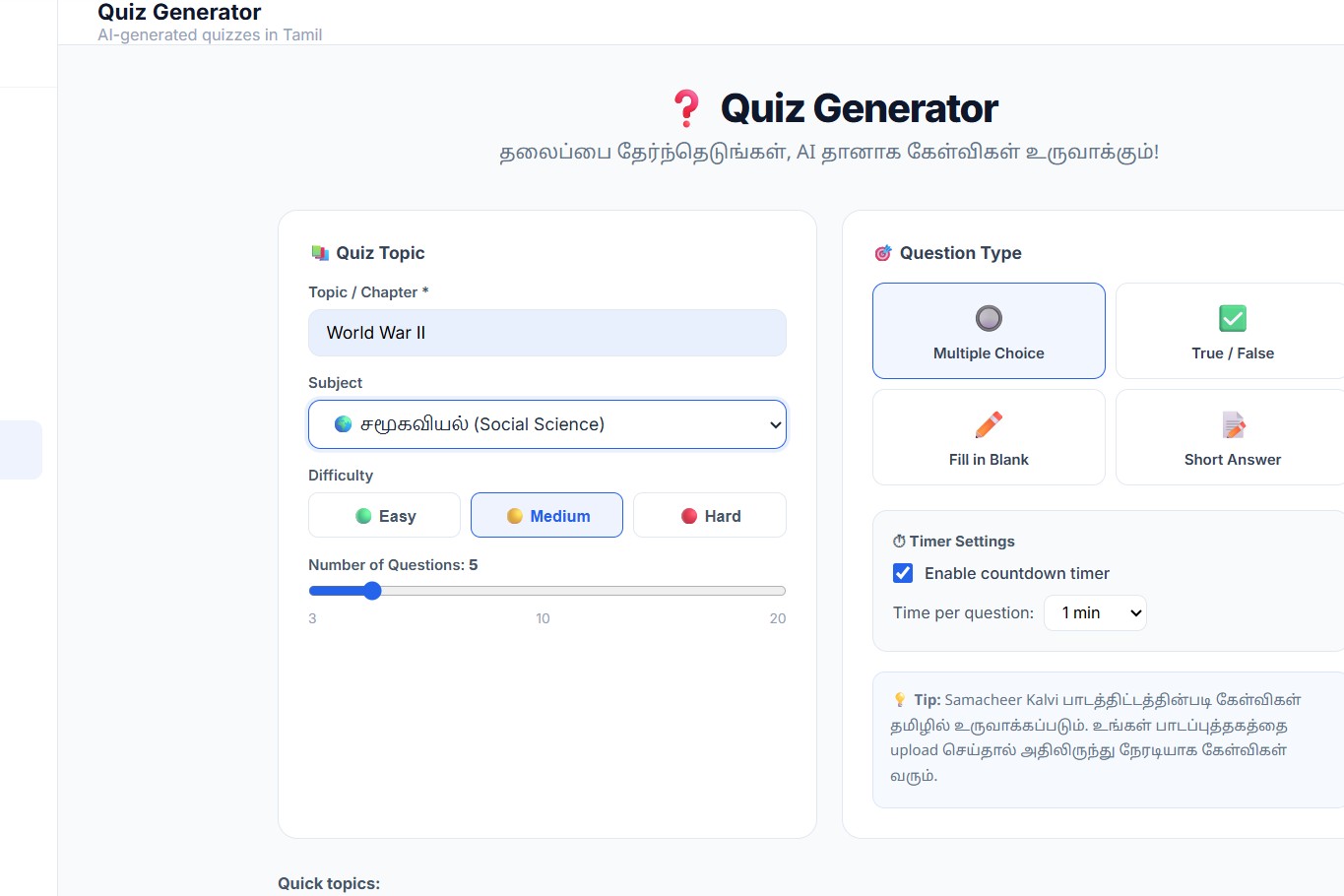
Quiz Generator Configuration – Students can select topics, difficulty, question type, and quiz settings.
-
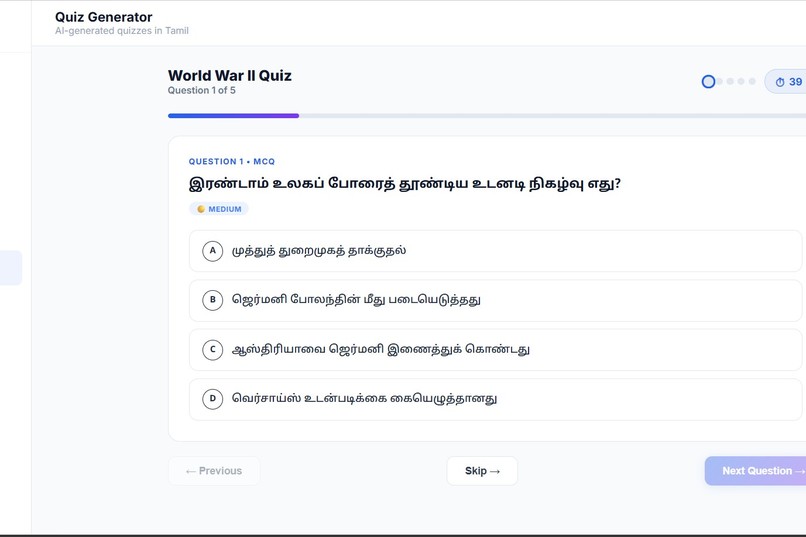
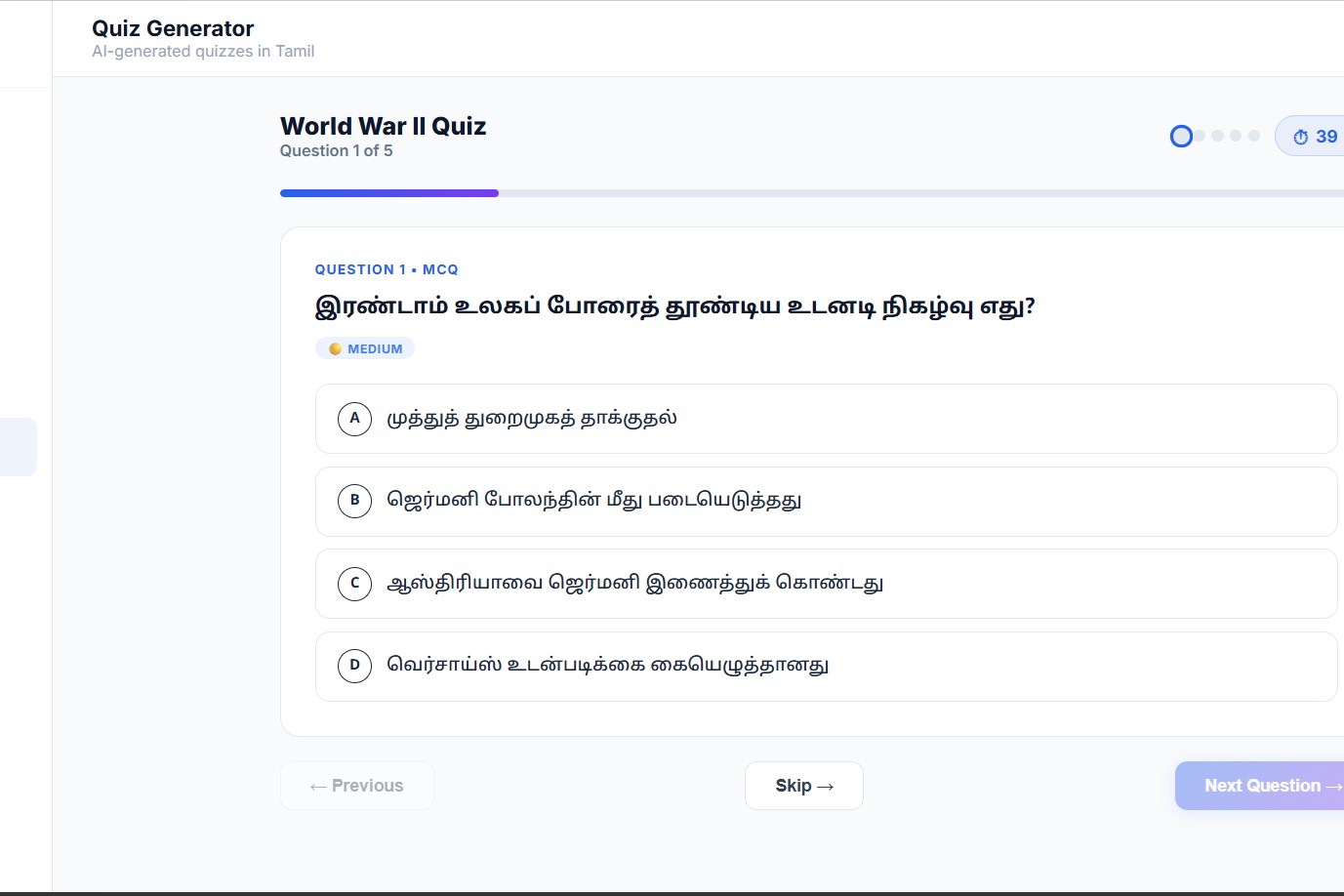
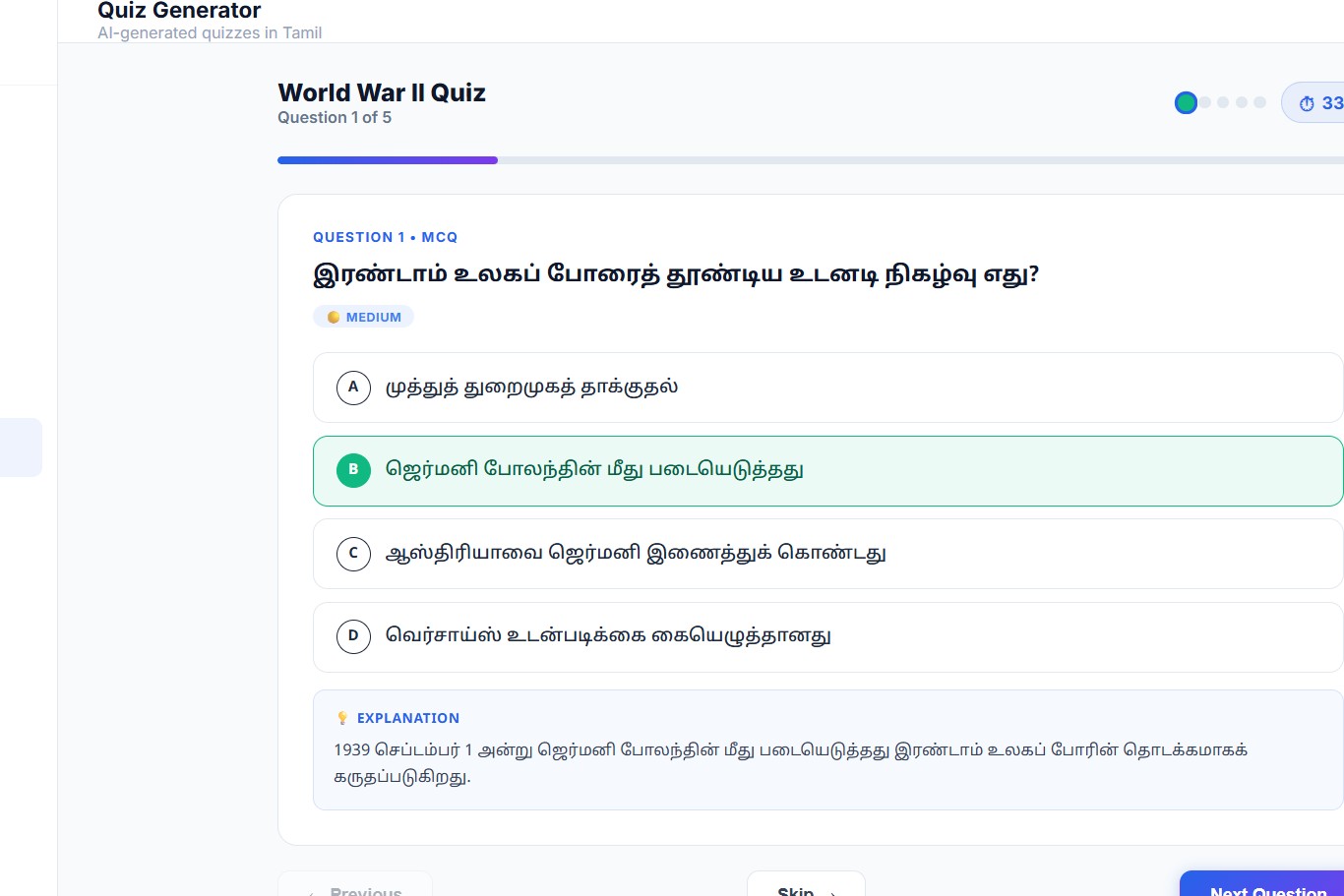
AI-Generated Quiz Question – Presents Tamil multiple-choice questions for interactive learning and practice.
-
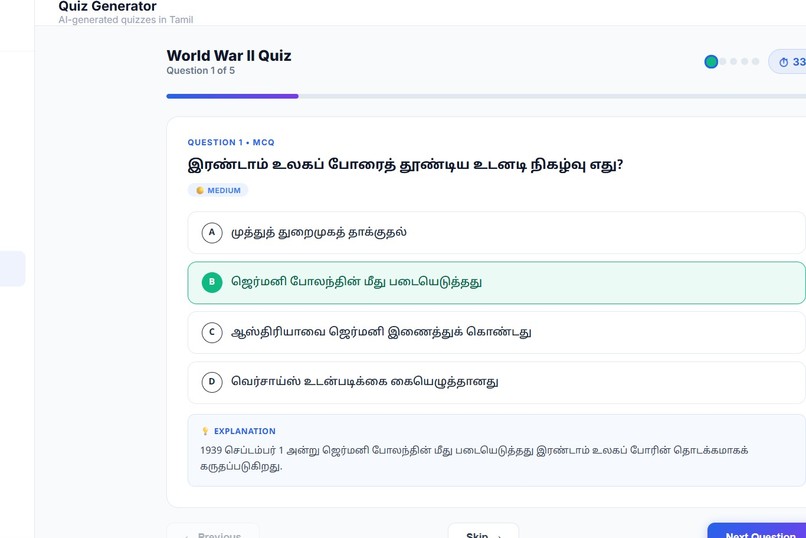
Correct Answer and Explanation – Shows the correct answer with an explanation to improve understanding.
-
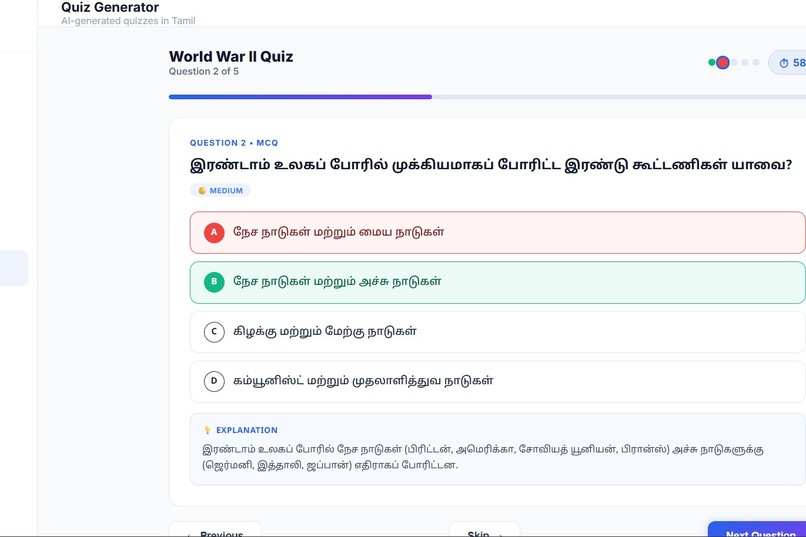
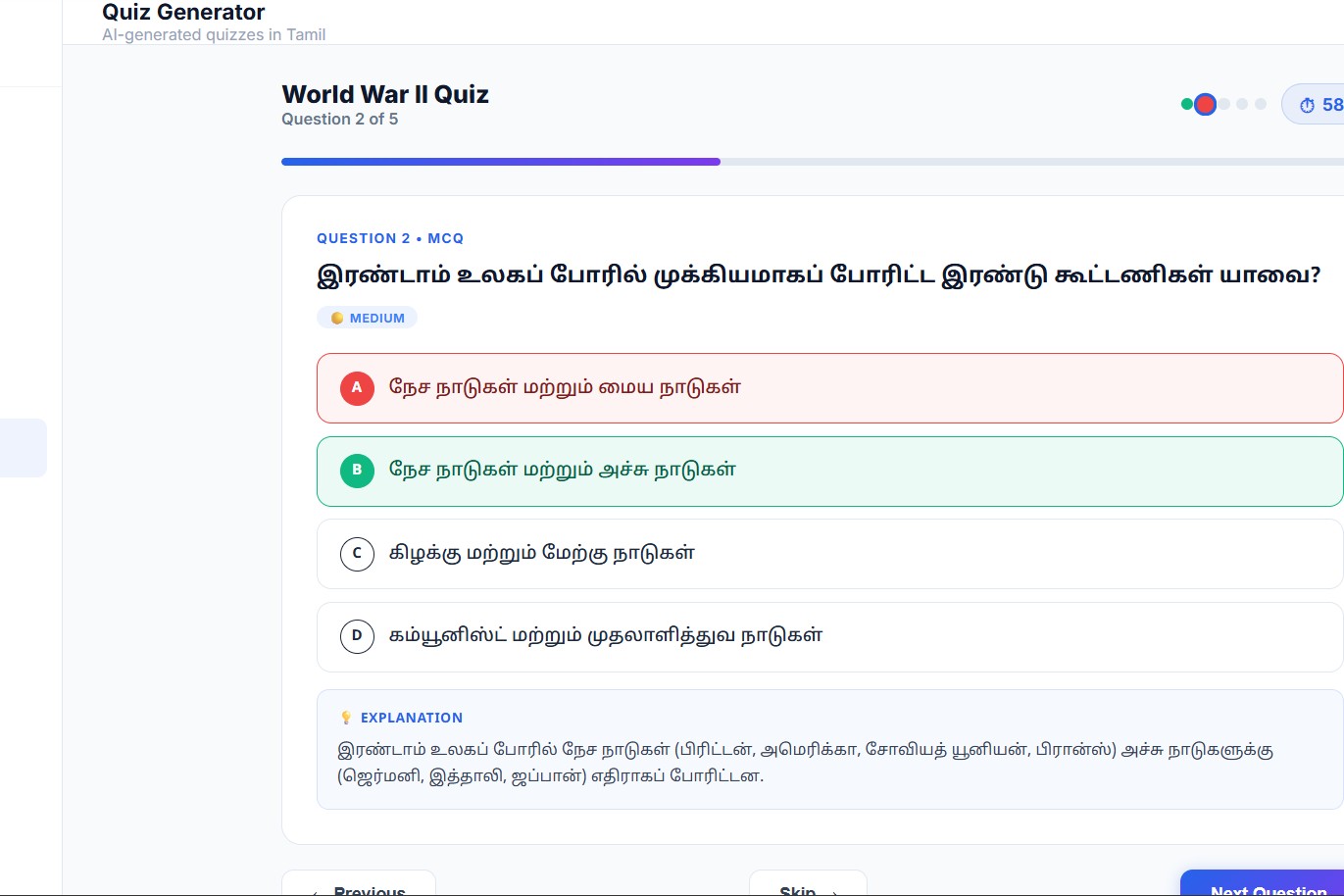
Quiz Answer Evaluation – Highlights correct and incorrect answers with explanations for better learning.
-
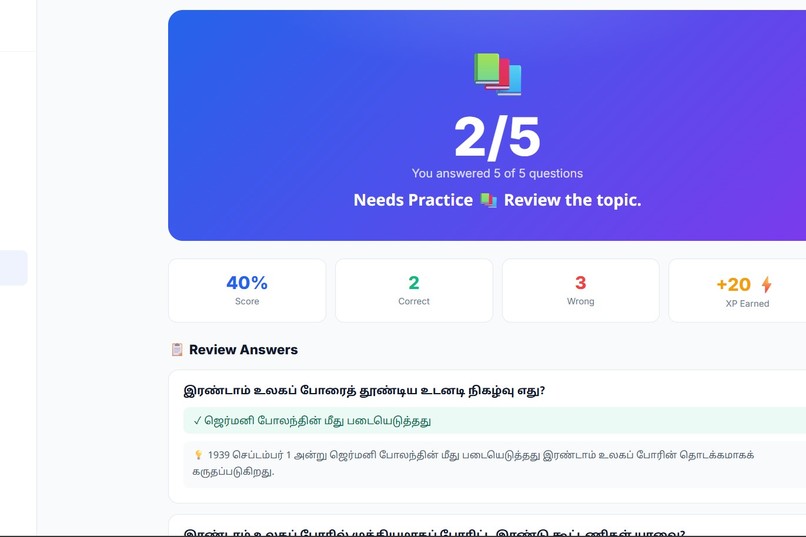
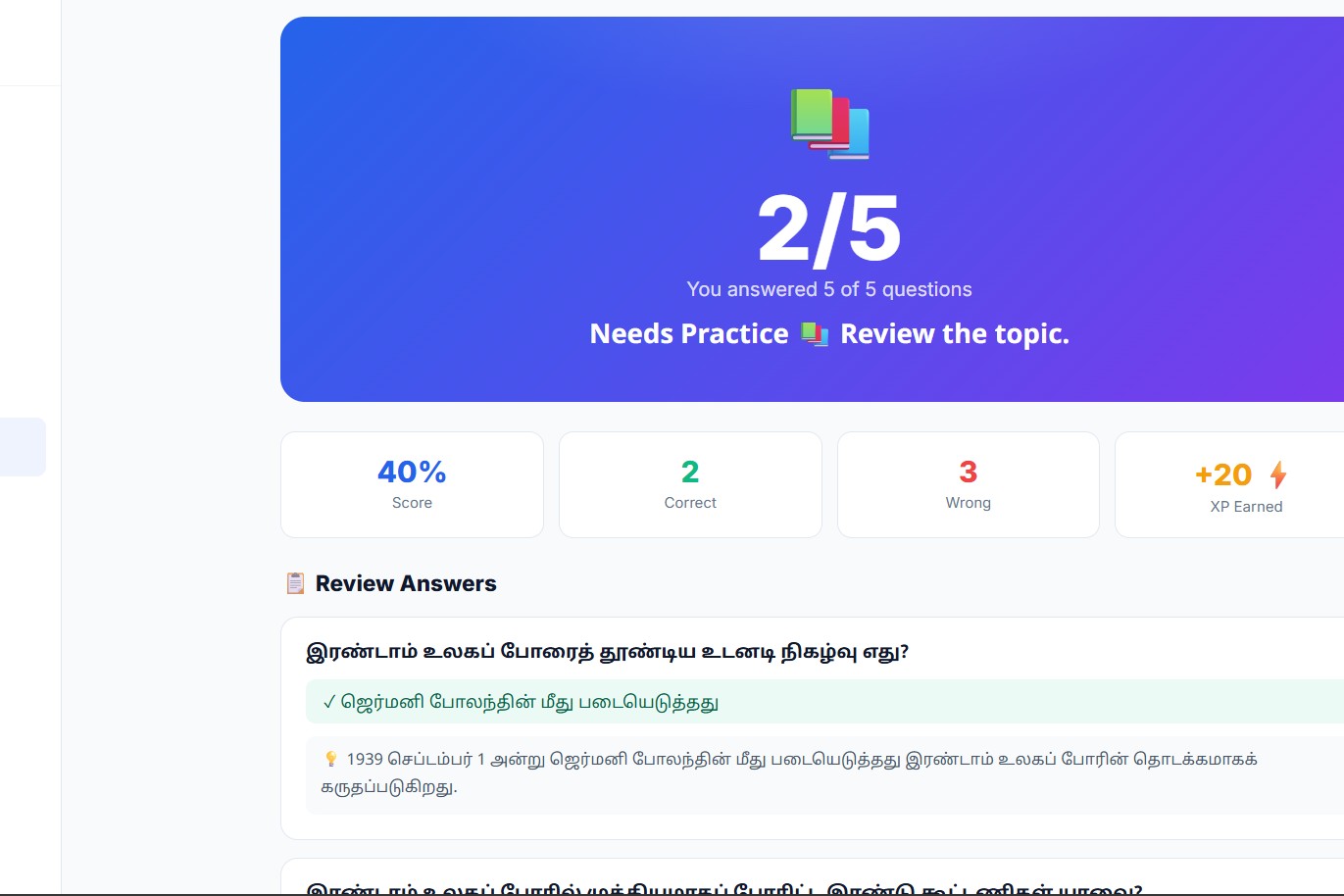
Quiz Results and Performance – Displays scores, correct answers, mistakes, and XP earned by the student.
-
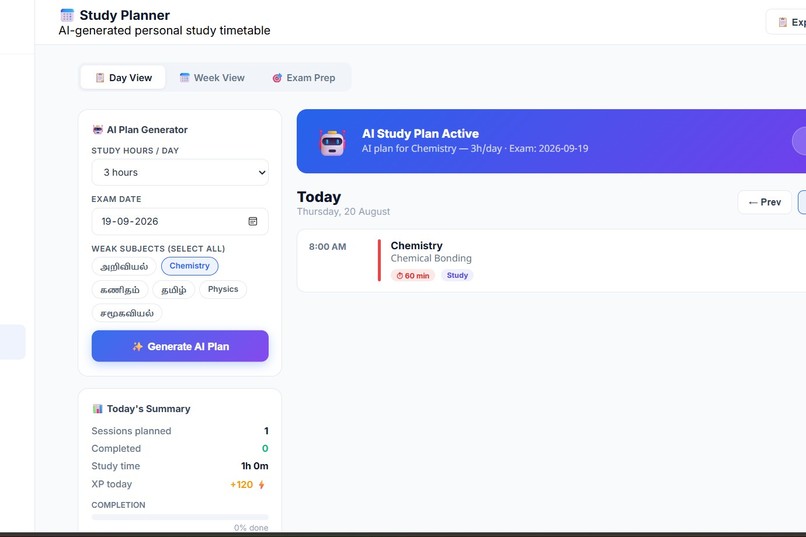
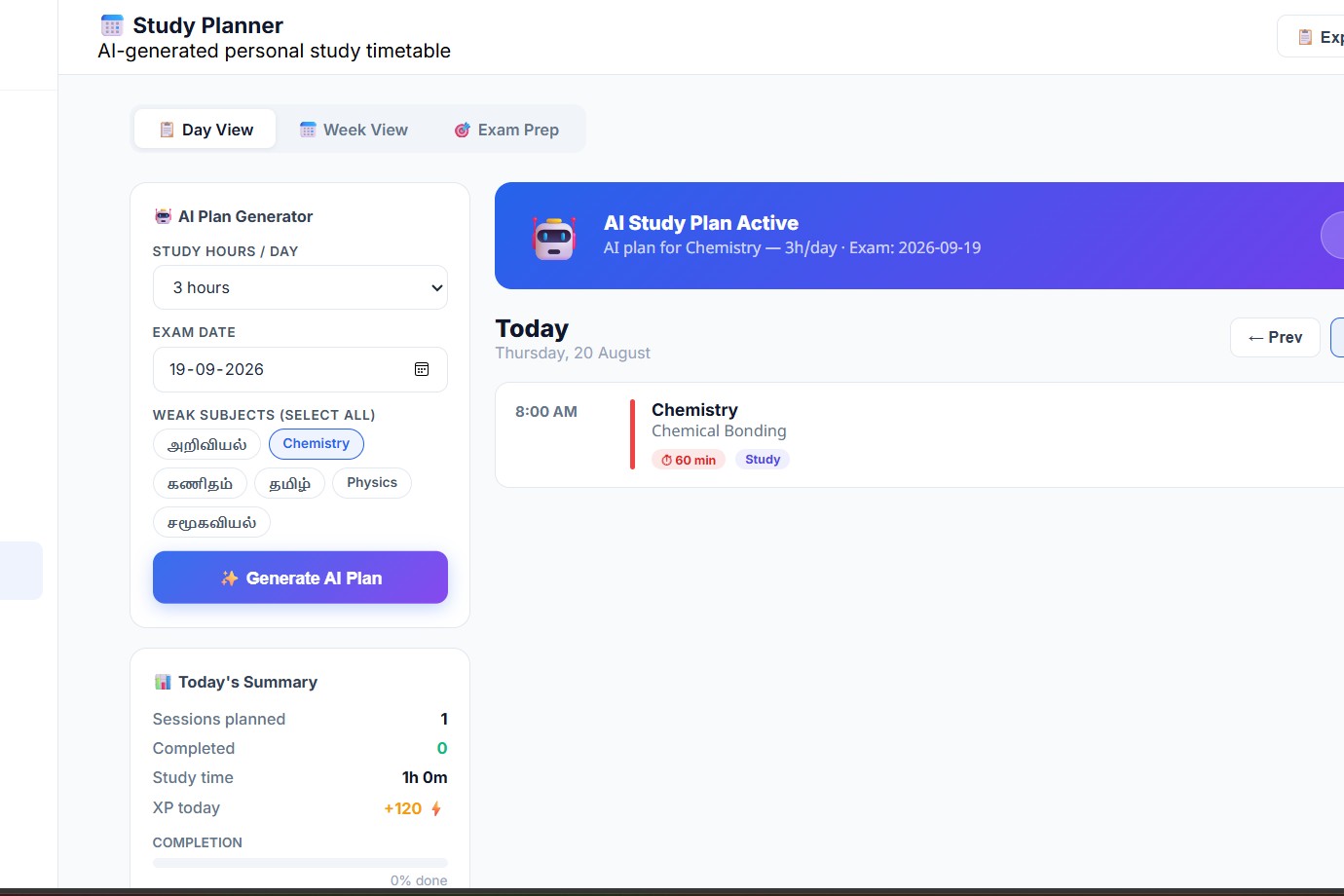
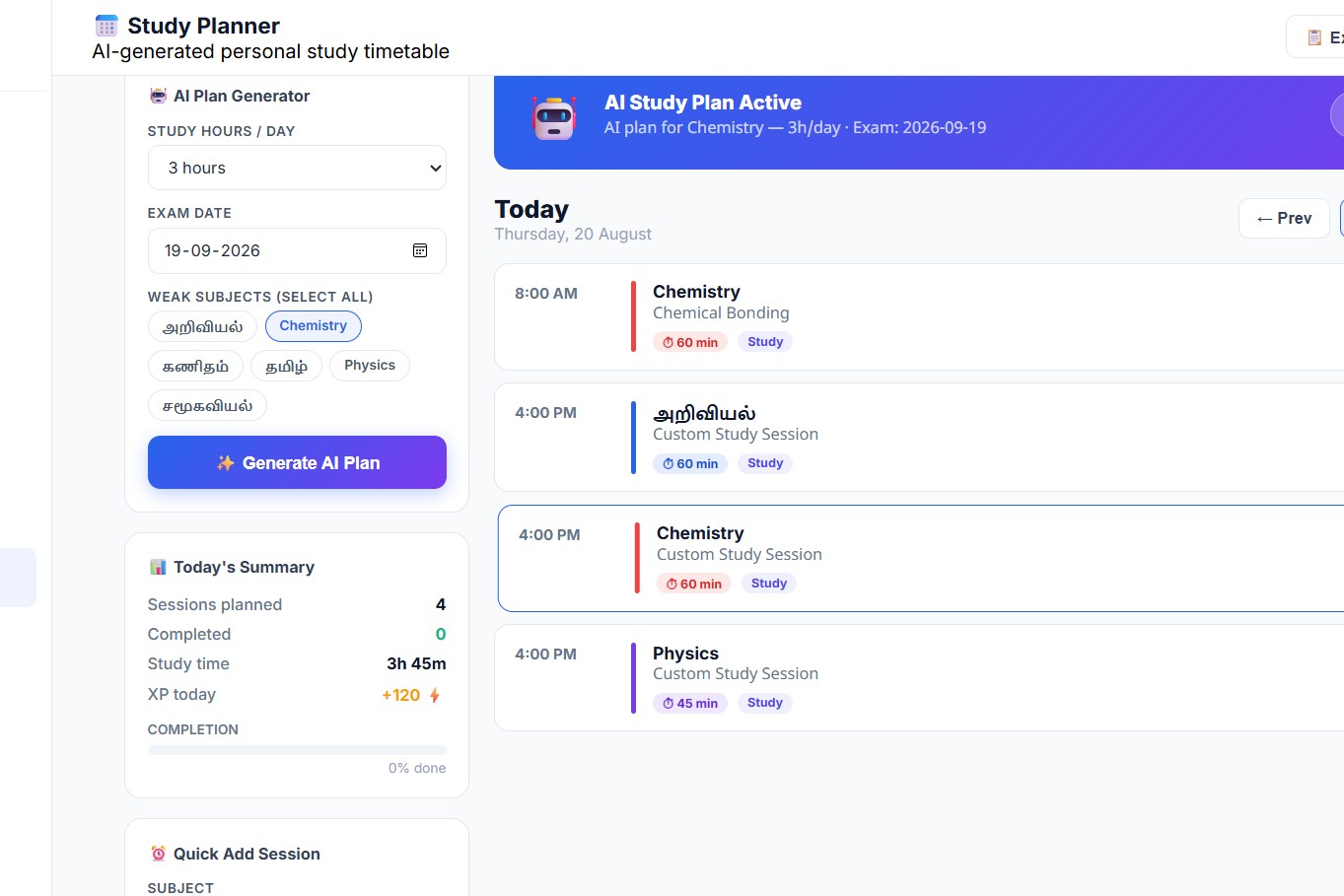
AI Study Planner – Creates a personalized study plan based on subjects, study hours, and exam date.
-
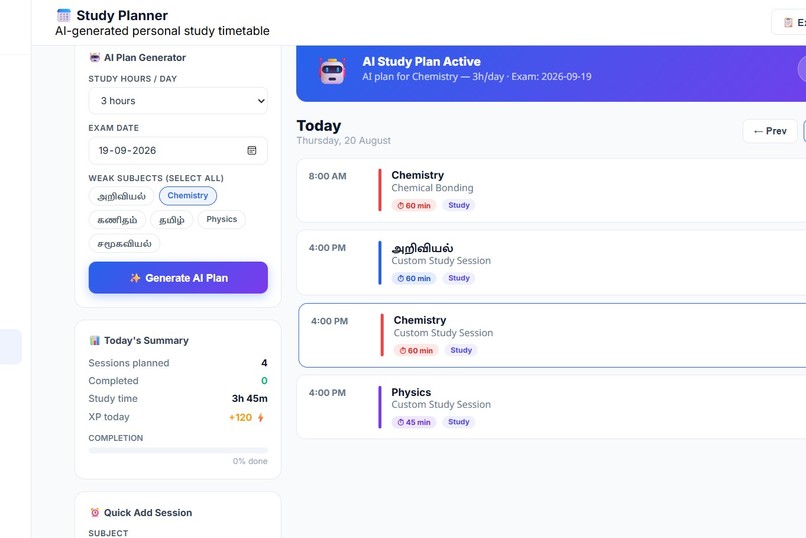
Daily AI Study Schedule – Displays planned study sessions to help students organize their daily preparation.
-
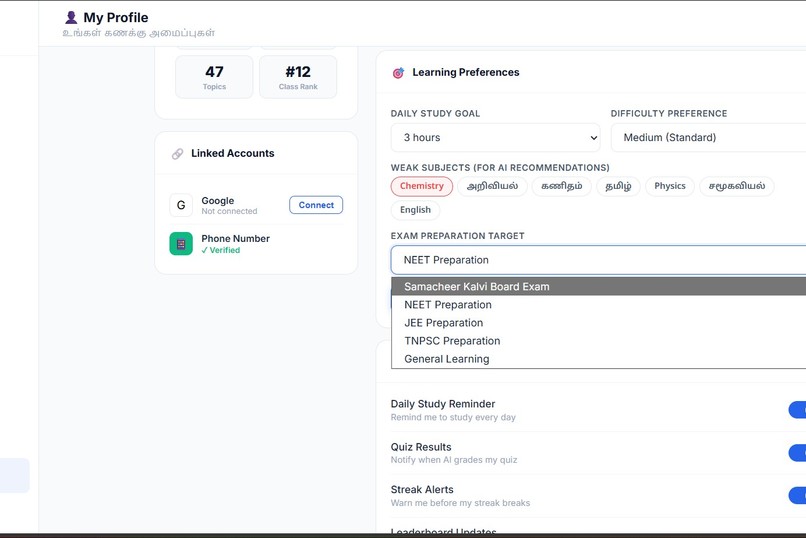
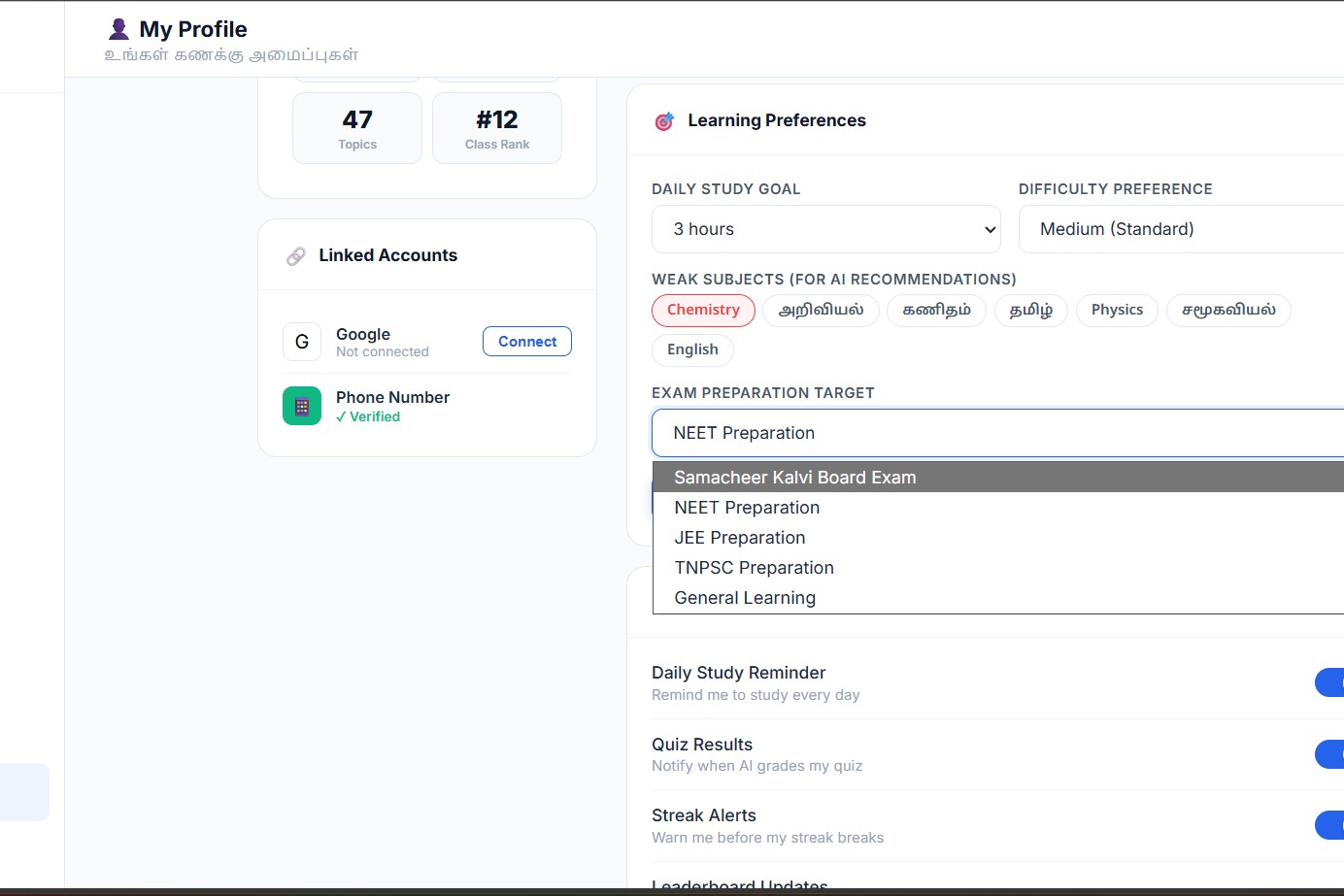
Student Profile and Preferences – Allows students to manage goals, subjects, preferences, and exam preparation.
Inspiration
The idea for EduLingo came from a simple problem we noticed: many Tamil-medium students have access to textbooks and online resources, but most AI learning tools are still more comfortable to use in English. We wanted to create something where students could learn and ask doubts in the language they are already comfortable with.
So, we decided to build EduLingo as a learning companion where students can ask questions in Tamil, upload their textbooks, generate notes and quizzes, and get explanations based on their own study material.
What it does
EduLingo is an AI learning assistant mainly designed for Tamil-medium students. Students can ask questions in Tamil and get simple explanations, upload their textbook PDFs, generate notes, and practice through AI-generated quizzes.
One of the main features is textbook-based question answering. Instead of simply asking the AI a general question, the student can upload their textbook and ask something related to it. EduLingo searches the uploaded content and uses the relevant sections to generate the answer. It can also show the page number and source snippet used for the answer.
The platform also includes student authentication and progress tracking so that the learning experience can be more personalized.
How we built it
We built the project as a full-stack web application. The frontend handles the student interface, while the backend is built with Python and Flask.
For the AI part, we used Google's Gemini API. The most important part of the project is our RAG-based textbook system.
When a student uploads a PDF, we extract the text and divide it into smaller sections. We then generate embeddings for those sections and store them so that we can search them later. When the student asks a question, the system finds the most relevant sections from the textbook and sends that information to Gemini. Gemini then generates an answer in Tamil based on the retrieved content.
We also added separate backend routes for authentication, chat, quizzes, notes, textbook uploads, and progress tracking. The frontend and backend are deployed separately so that the application can be accessed online.
Challenges we ran into
Getting the RAG pipeline to work reliably was one of the biggest challenges. We had to deal with PDF extraction, text chunking, embeddings, semantic search, and connecting everything properly with Gemini.
Deployment was another challenge. We faced issues with Python dependencies, PDF processing libraries, NumPy, and configuring the Flask application correctly for cloud deployment. We had to debug these issues one by one before getting the backend running successfully.
We also wanted the answers to stay connected to the student's textbook instead of allowing the AI to give unrelated information. For this, we made the system retrieve relevant textbook content before generating an answer.
Accomplishments we're proud of
What we are most proud of is that EduLingo became more than just an AI chatbot. We were able to build a complete learning platform around a real problem.
We successfully implemented textbook PDF uploads, textbook-based question answering, AI-generated notes, quizzes, Tamil explanations, authentication, progress tracking, and page-based sources. We also managed to deploy both the frontend and backend so that the project can be tested online.
For us, the most important achievement is creating something that can make AI-assisted learning more accessible to students who study in Tamil.
What we learned
While building EduLingo, we learned a lot about how AI applications actually work behind the scenes. We worked with RAG, embeddings, semantic search, PDF processing, Gemini APIs, Flask APIs, authentication, databases, and cloud deployment.
We also learned that building an AI application is not just about connecting an API and getting a response. We had to think about where the information comes from, how relevant it is, how the user interacts with the system, and how the whole application behaves after deployment.
Most of our learning came from solving the problems we encountered while building and deploying the project.
What's next for EduLingo
There is still a lot we want to add to EduLingo. Our next steps include adding voice-based Tamil interaction, speech-to-text and text-to-speech, personalized learning paths, adaptive quizzes, and better progress analytics.
We also want to extend the platform beyond Tamil and eventually support more Indian regional languages. In the future, we would also like to add teacher and parent dashboards and make the platform available as a mobile application.
Our bigger goal is to make EduLingo a platform where students can get personalized AI support without feeling that language is a barrier to learning.


Log in or sign up for Devpost to join the conversation.