-
-
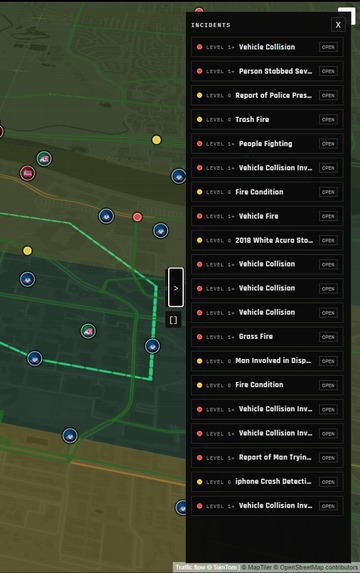
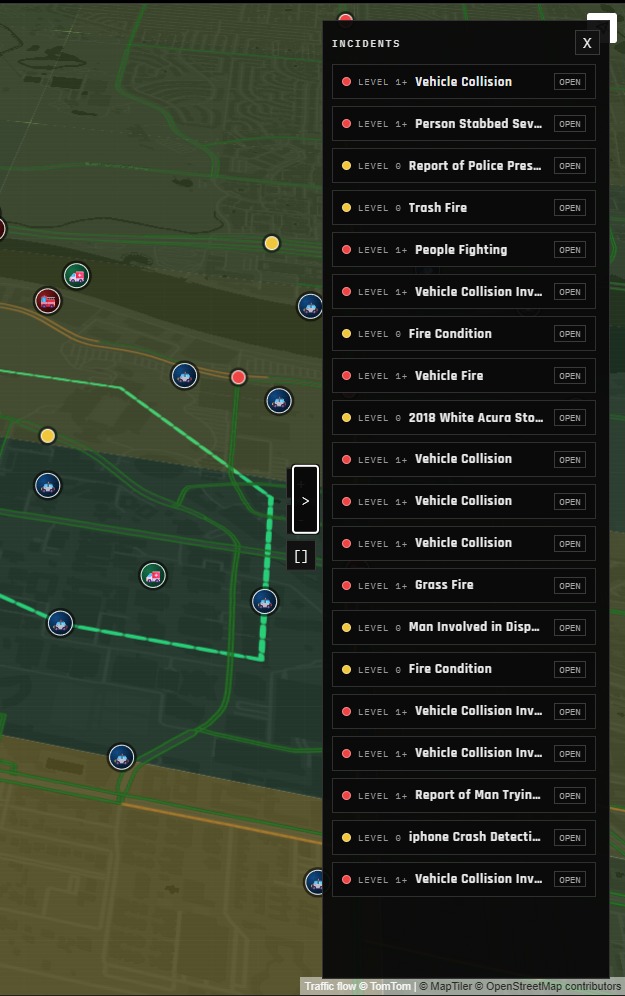
Complete Incident List
-
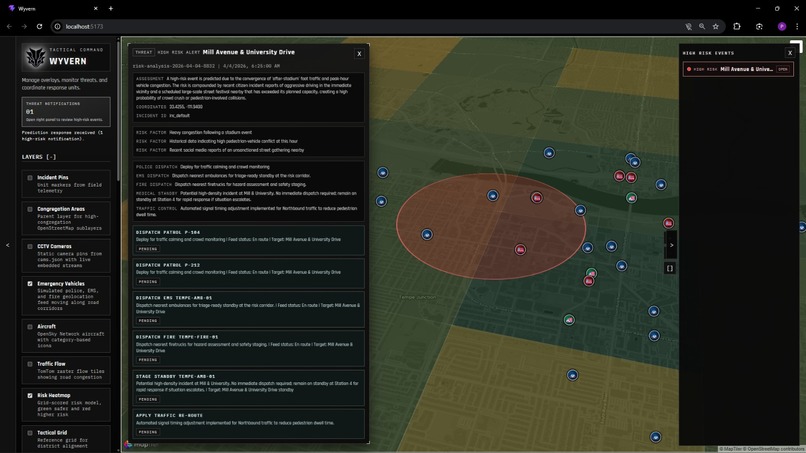
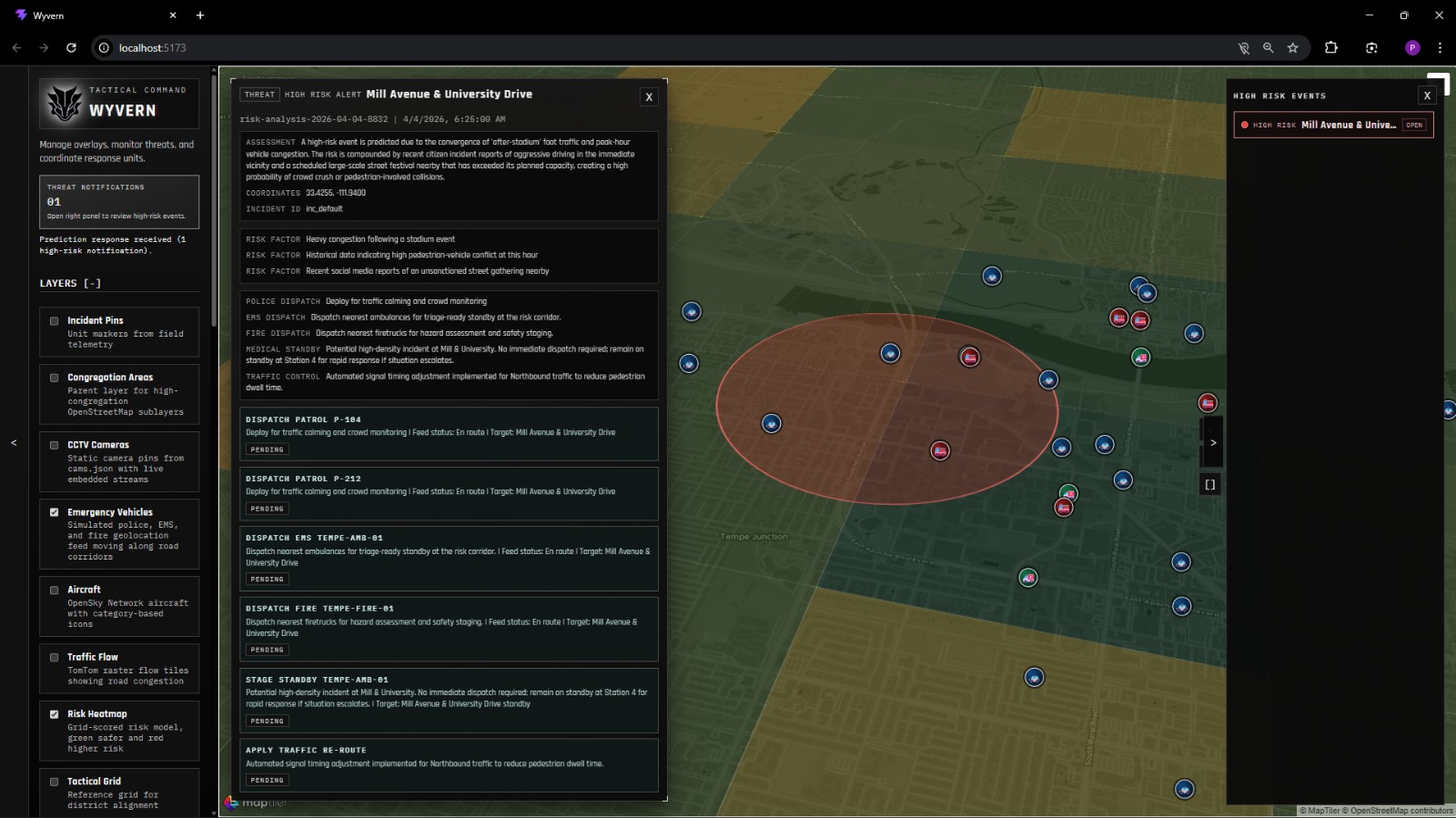
Risk Area for a Given Incident
-
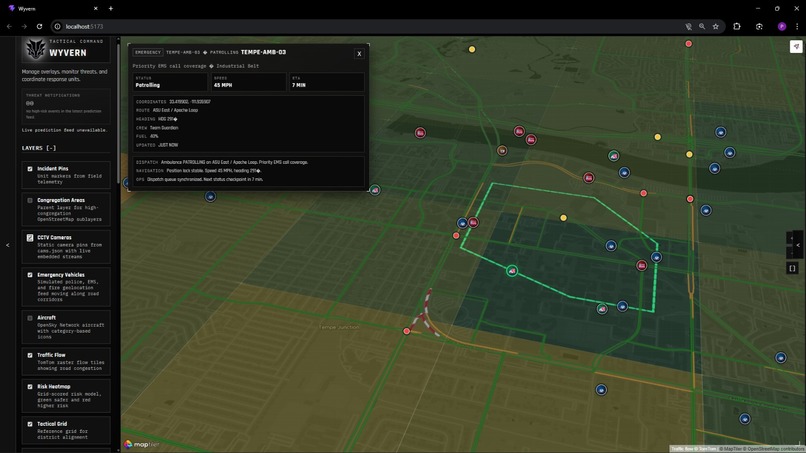
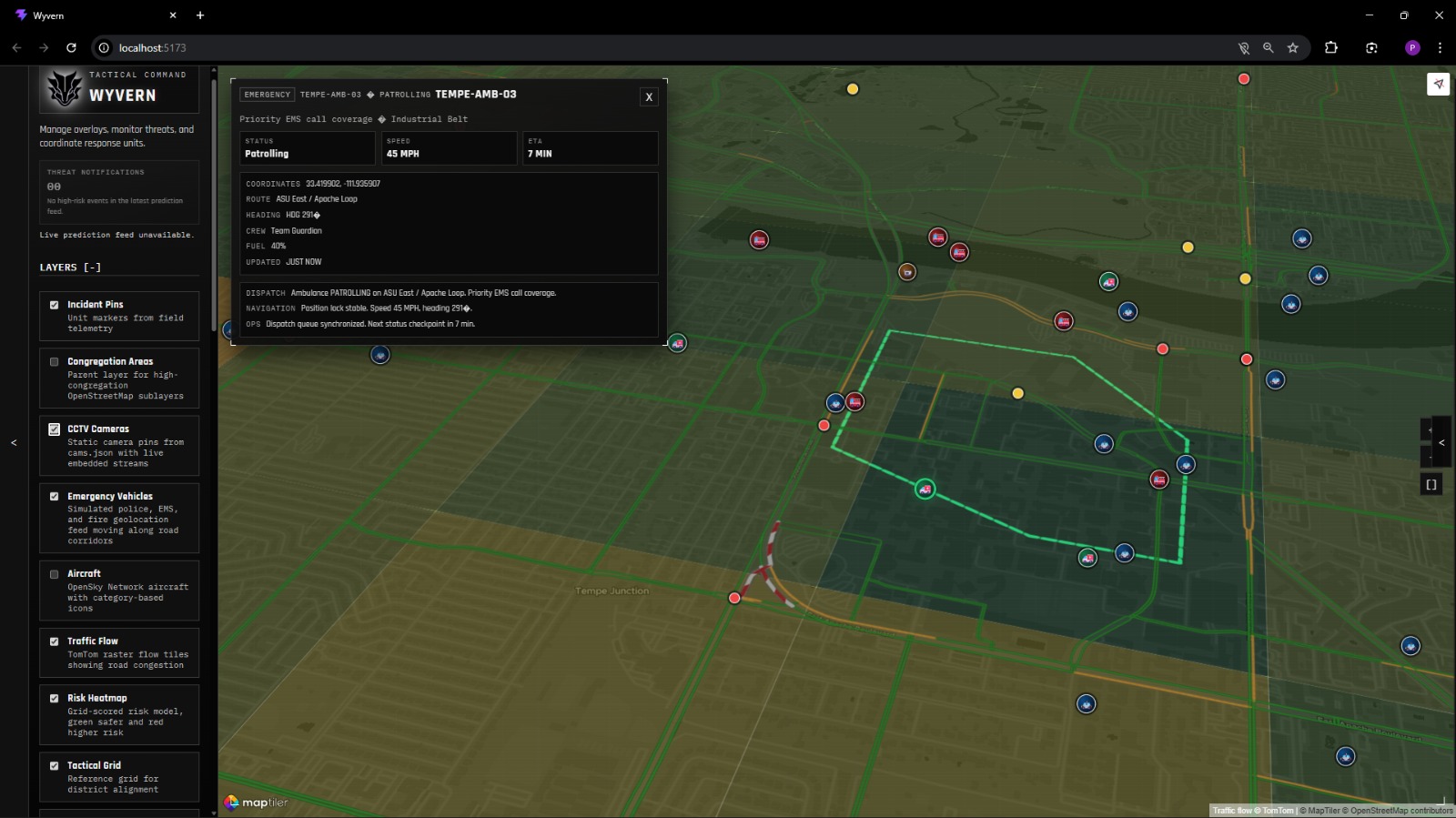
Patrol Route for Selected Vehicle (Ambulance in this Case)
-
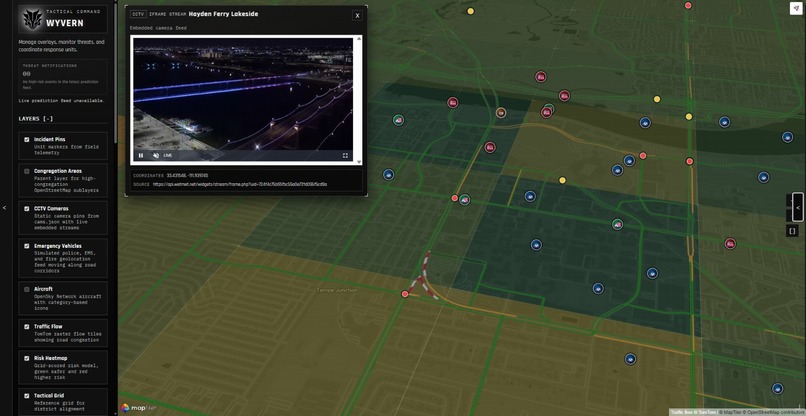
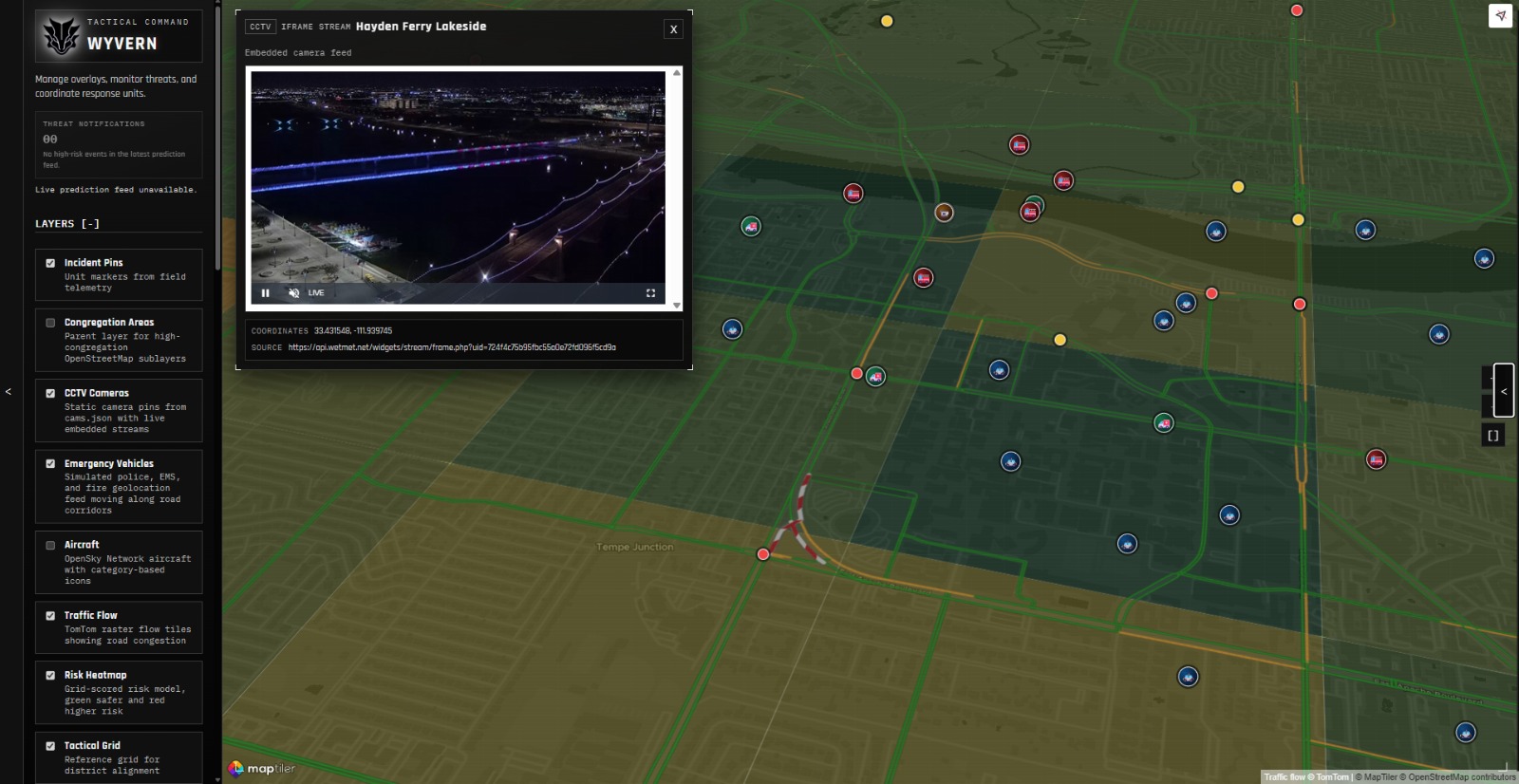
CCTV Footage
Inspiration
High-stakes situations, such as emergencies, law enforcement operations, or large-scale events, often involve fragmented, noisy, and time-sensitive information. Decision-makers struggle to act quickly because critical data is scattered across systems, delayed, or buried in complexity. We created Wyvern to bridge that gap. It transforms chaotic data into actionable insights instantly, helping people make smarter decisions under pressure.
What it does
Wyvern collects data from multiple sources, including APIs, sensors, live feeds, and reports, and analyzes it in real time. It then synthesizes the information and highlights the most relevant actions or risks. Instead of just providing predictions or dashboards, Wyvern gives clear recommendations that users can act on immediately. This saves time, reduces errors, and improves outcomes in complex scenarios.
How we built it
We designed Wyvern as an end-to-end system. Data pipelines collect and normalize incoming streams in real time. We utilized a Gemini 3.1 Flash Lite AI agent running constantly to detect patterns, anomalies, and priorities. A dynamic dashboard displays insights in a clear and intuitive way, while the agentic AI interface allows users to request additional details instantly. Every component was built to prioritize speed, reliability, and actionable clarity.
Challenges we ran into
Integrating multiple data sources in real time without lag was one of our biggest technical challenges. Many feeds were incomplete or inconsistent, making it hard for Gemini to provide trustworthy recommendations. We also had to balance processing speed with the accuracy of insights to ensure Wyvern’s outputs were both fast and reliable. Designing a user interface that made complex information immediately understandable required multiple iterations and testing.
Accomplishments that we're proud of
Wyvern can take messy, fragmented data and turn it into actionable guidance in seconds, giving users a clear advantage over traditional methods. During testing, it consistently highlighted critical risks and recommended optimal actions faster than manual analysis. By combining multiple AI models with real-time pipelines, we created a system that guides decision-making in high-pressure situations.
What we learned
Building Wyvern taught us that AI is only as useful as the way humans can act on it. We learned the importance of designing systems that prioritize clarity, reliability, and speed. We also gained experience integrating multiple AI and data engineering components into a cohesive, high-performance system that uses agentic intelligence alongside human decision making.
What's next for Wyvern
We plan to expand Wyvern’s capabilities to handle more complex environments and integrate additional data sources, including video feeds and IoT sensors. We are exploring advanced reasoning models to allow Wyvern to anticipate secondary risks and provide more nuanced guidance. Our goal is to make Wyvern a versatile real-world tool that can assist professionals in any scenario where fast, informed decisions save time, resources, and potentially lives.

Log in or sign up for Devpost to join the conversation.