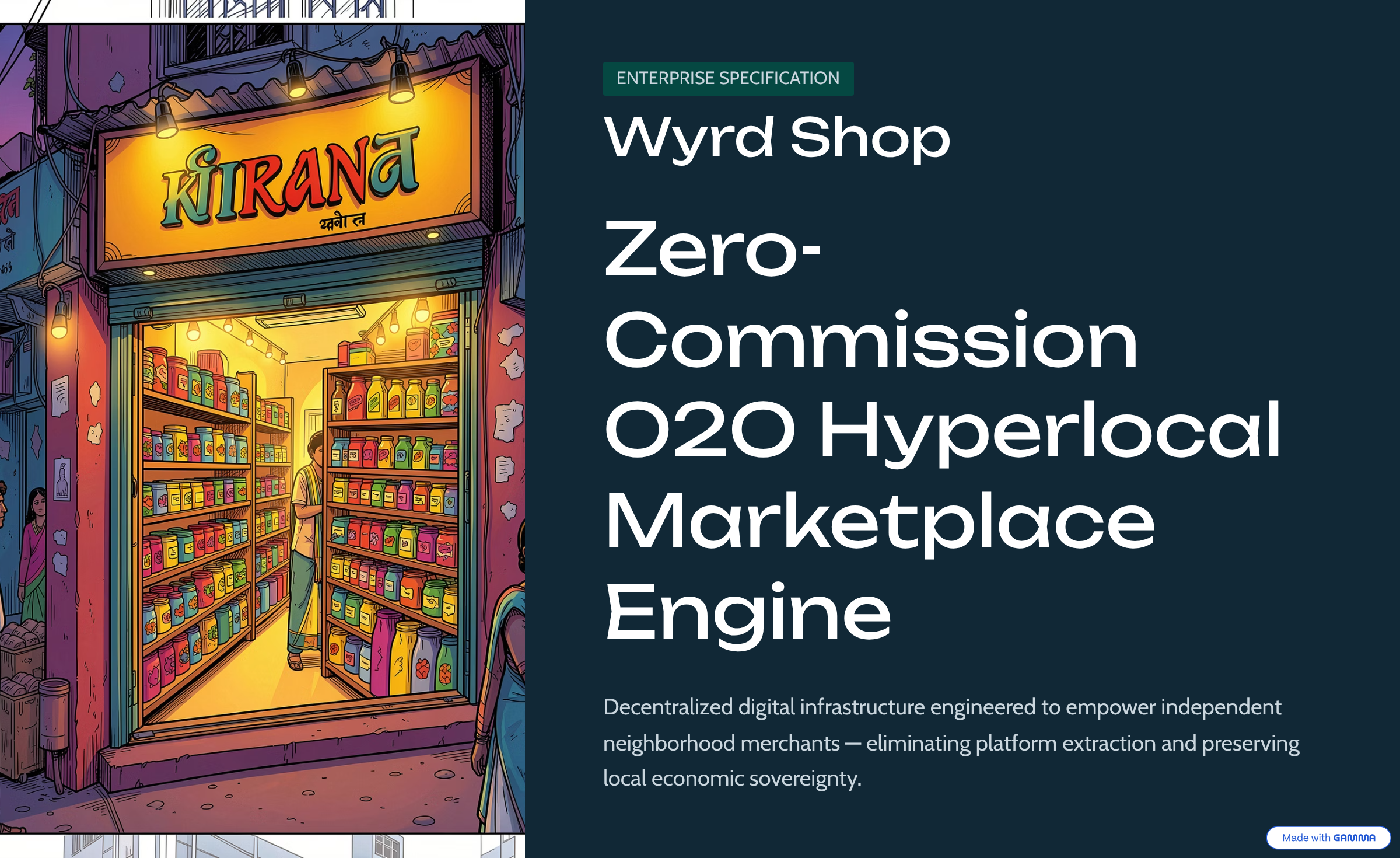
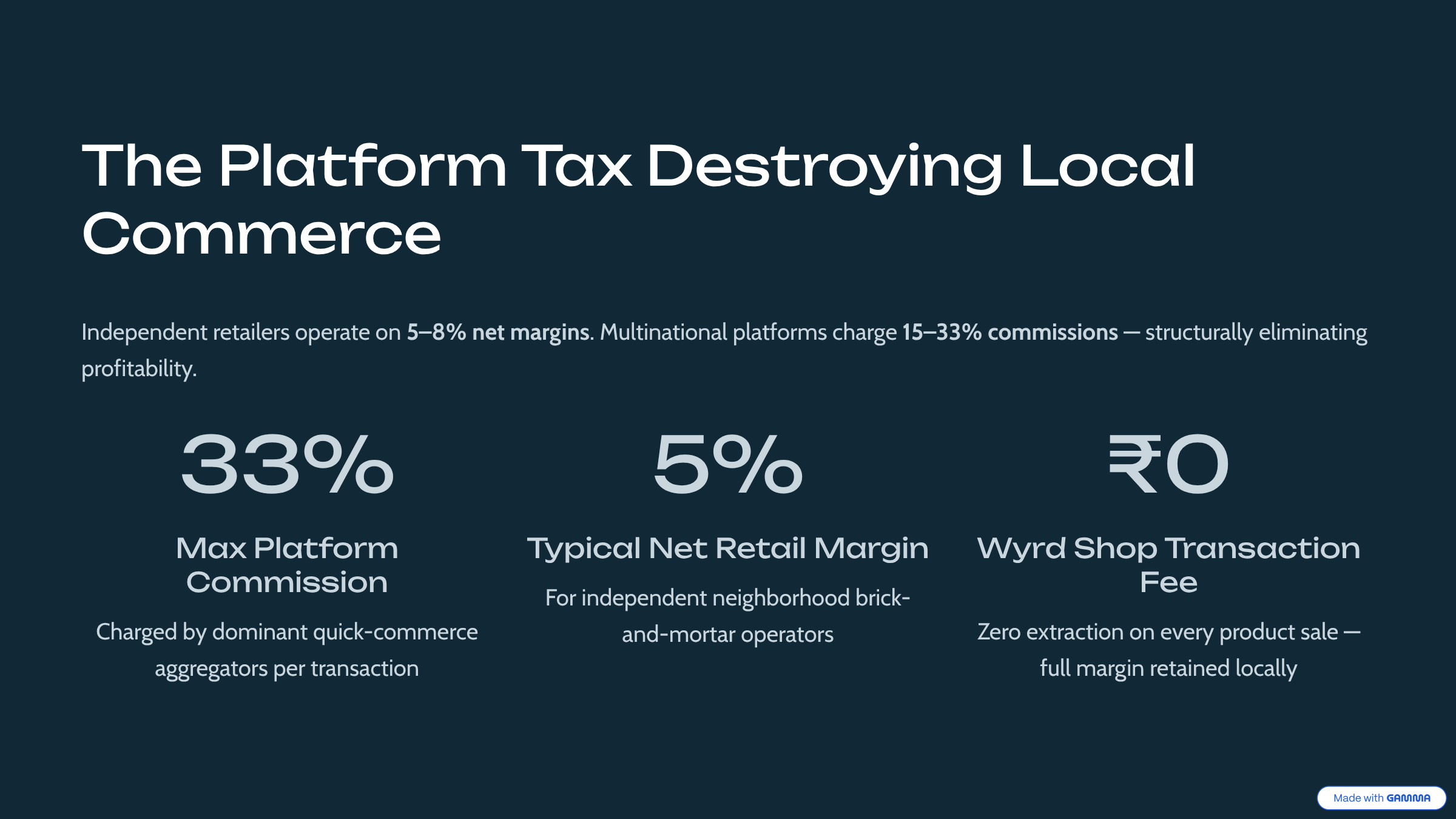
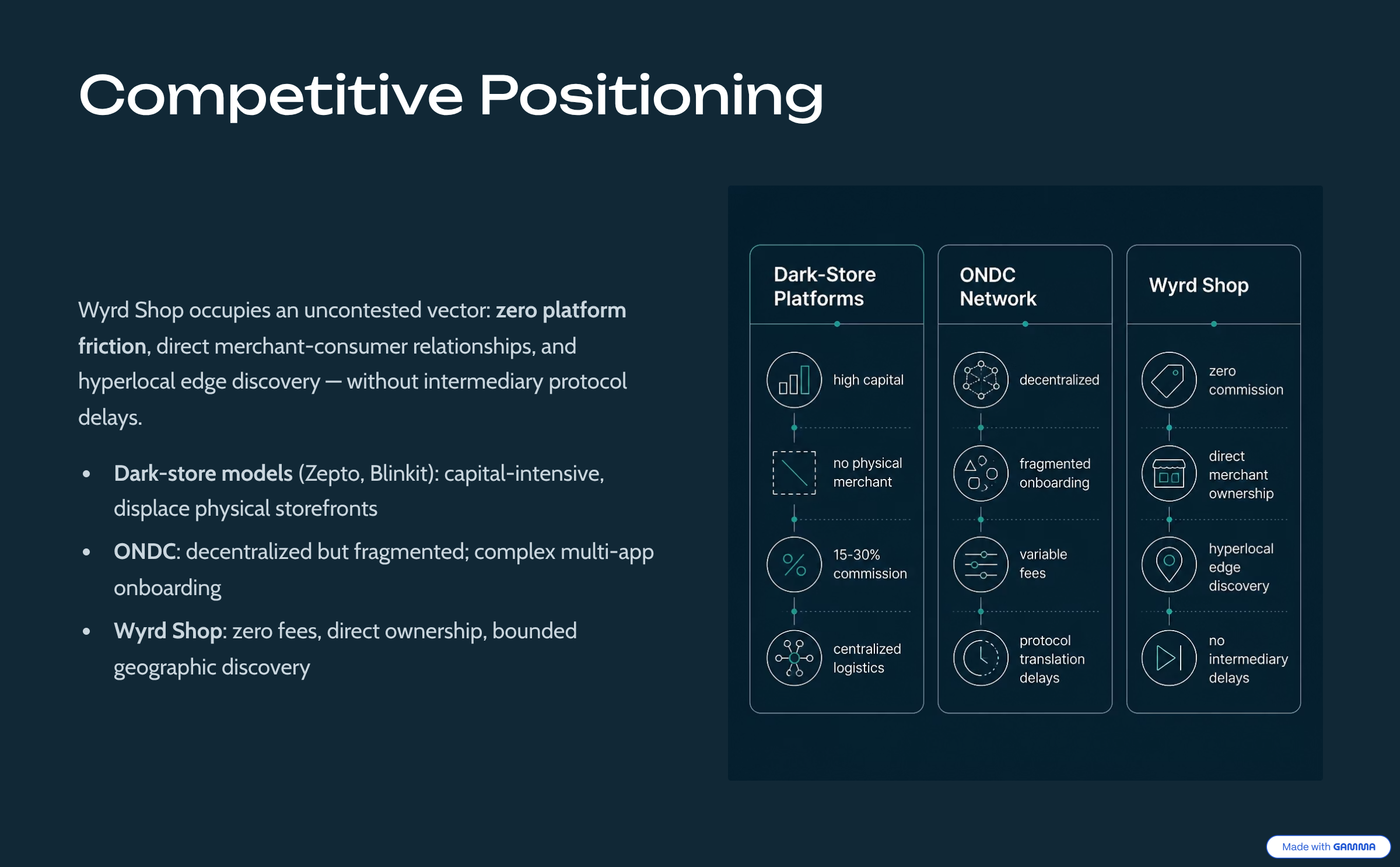
Inspiration= Traditional neighborhood Kirana stores in India operate on razor-thin profit margins of 5% to 8%. When they migrate online via corporate quick-commerce monopolies, they face predatory platform commissions ranging from 15% to 33%. This structural tax forces local family businesses out of the digital market. We built Wyrd Shop to protect these local merchants by cutting out the corporate middlemen entirely.
What it does= Wyrd Shop is a decentralized, zero-commission Online-to-Offline (O2O) marketplace engine. It functions as a dual-sided web platform:
- Consumer App: Provides users a lightning-fast, minimalist interface to browse categories, search items, and synchronize digital shopping carts locally.
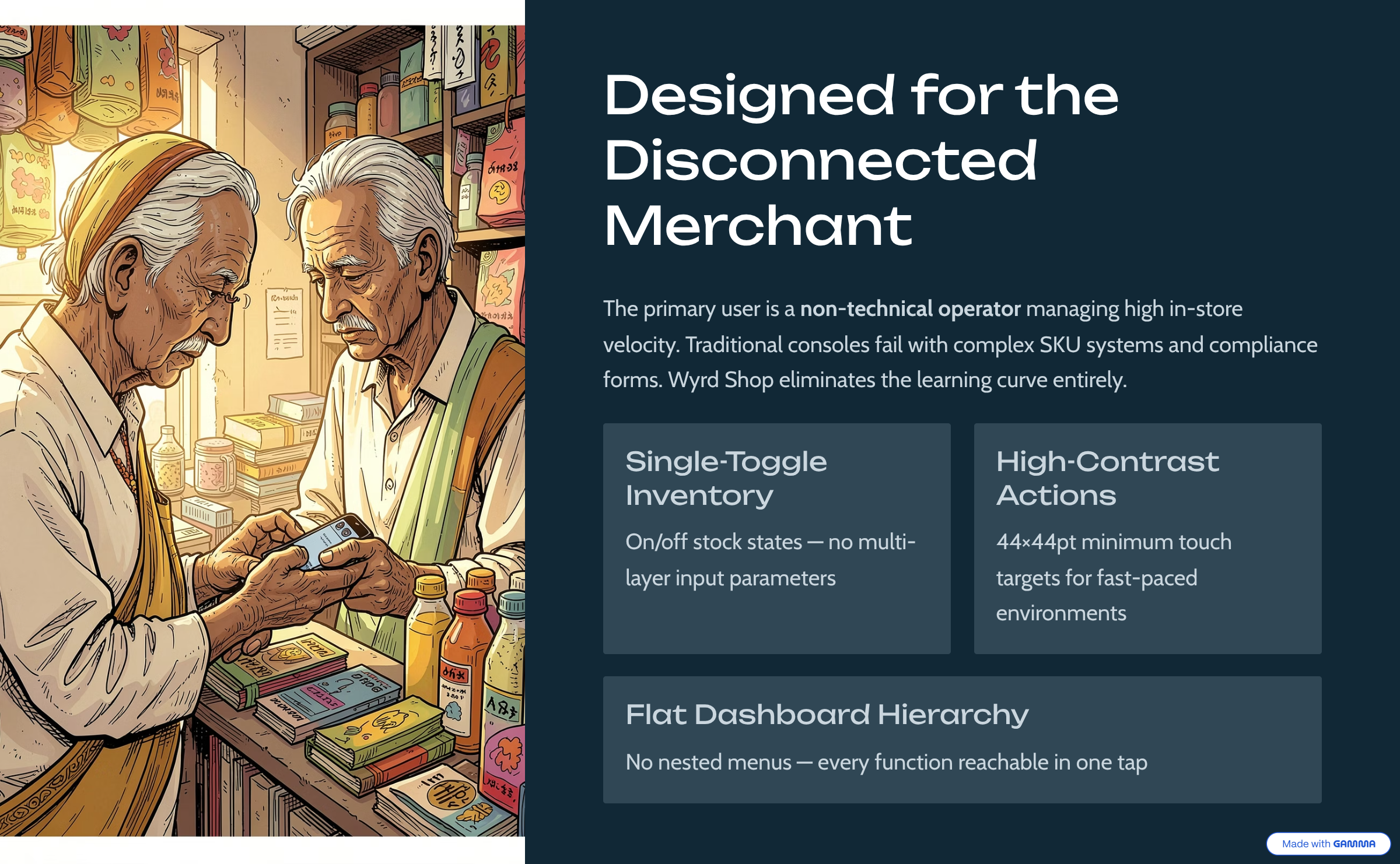
- Merchant Console: Offers elderly or non-technical store owners an ultra-simplified control panel with single-tap inventory visibility toggles.
How we built it= The prototype application architecture was engineered using a high-velocity modern web stack:
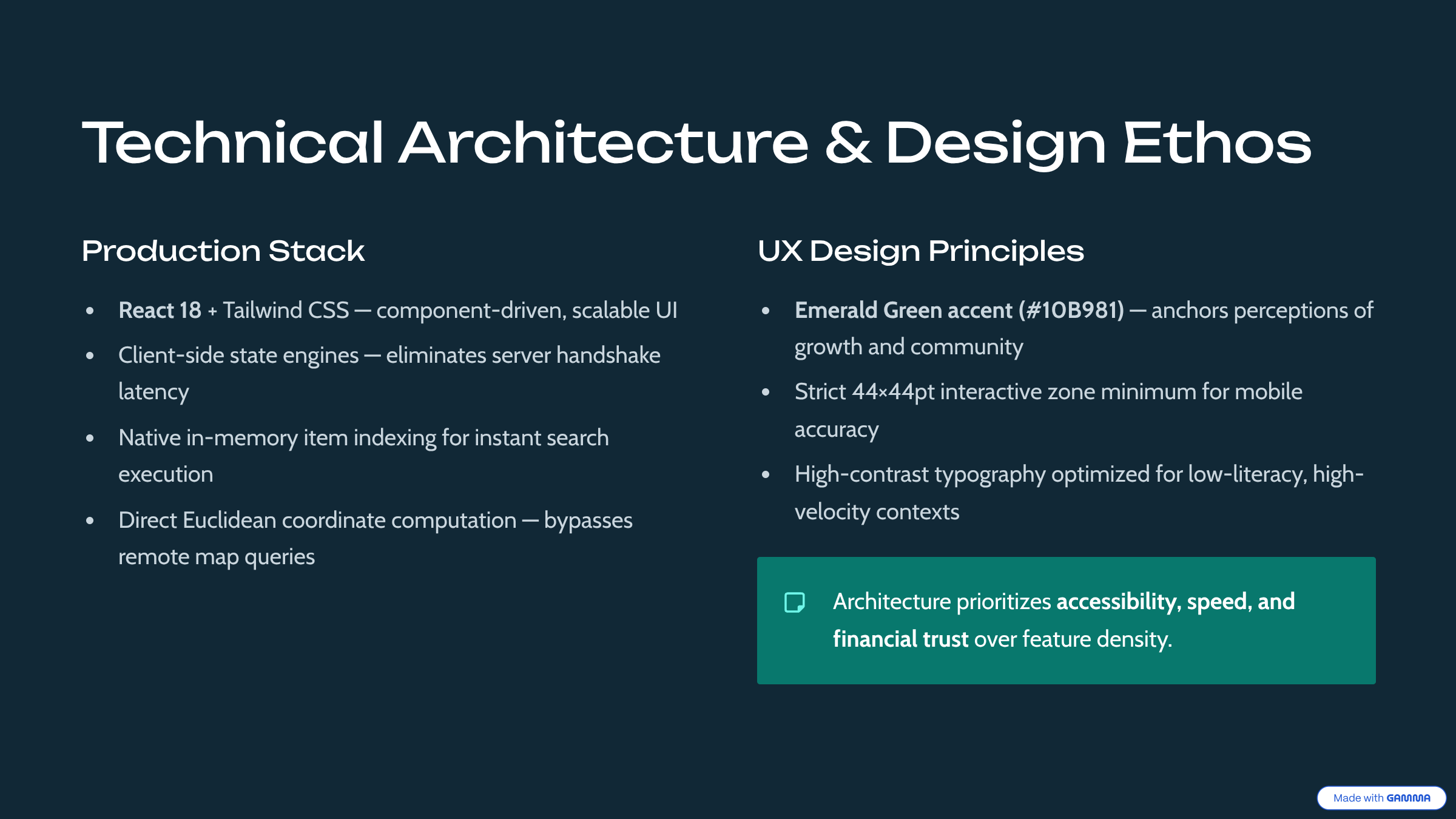
- Frontend Library: React 18 for high-performance, component-driven reactive user interfaces.
- Styling Engine: Tailwind CSS for a highly responsive, utility-first UI design layout.
- State Management: In-memory, client-side data containers for dynamic cart computations.
- Deployment Pipeline: Integrated via GitHub and hosted 24/7 on an enterprise-grade Vercel cloud environment.
Challenges we ran into= Engineering a dual-engine architecture within a compressed timeline required aggressive prioritization. Eliminating complex SKU inventory matrices to build a control panel readable and usable by elderly, non-digitally native storefront operators was a major design obstacle. We overcame this by implementing single-tap reactive toggle controls instead of multi-step forms.
Accomplishments that we're proud of= Successfully deploying a fully functional, live-hosted frontend prototype that handles dynamic cart updates instantly.
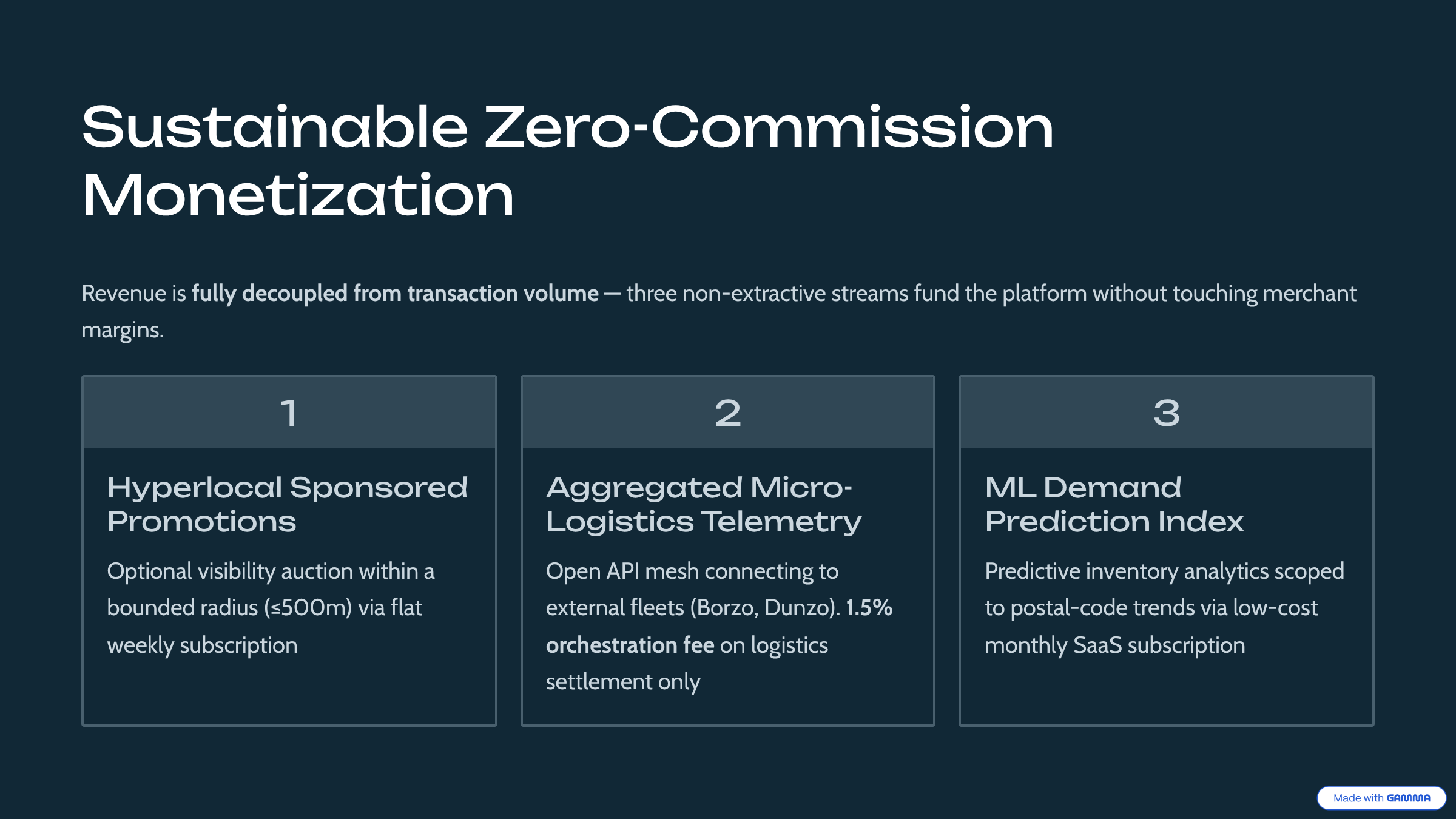
- Structuring a sustainable business framework that generates revenue through non-extractive methods like localized sponsored search ads and demand analytics rather than transaction commissions.
What we learned= We mastered the implementation of component-driven state architecture using React and utility-first styling with Tailwind CSS. More importantly, we learned that creating impactful software requires human empathy—designing for small-scale merchants means prioritizing simplicity and zero financial barriers over complex, bloated feature sets.
What's next for Wyrd Shop= Integrating location-based micro-logistics API routing (such as Borzo or Shadowfax) to automate third-party delivery allocations.
- Implementing a predictive inventory analytics dashboard using light machine learning models to help store owners track localized demand trends within a 1-kilometer radius.
Built With
- css3
- git
- github
- html15
- javascript
- node.js
- react
- tailwind-css
- typescript
- vercel
- vite

Log in or sign up for Devpost to join the conversation.