-
-
-
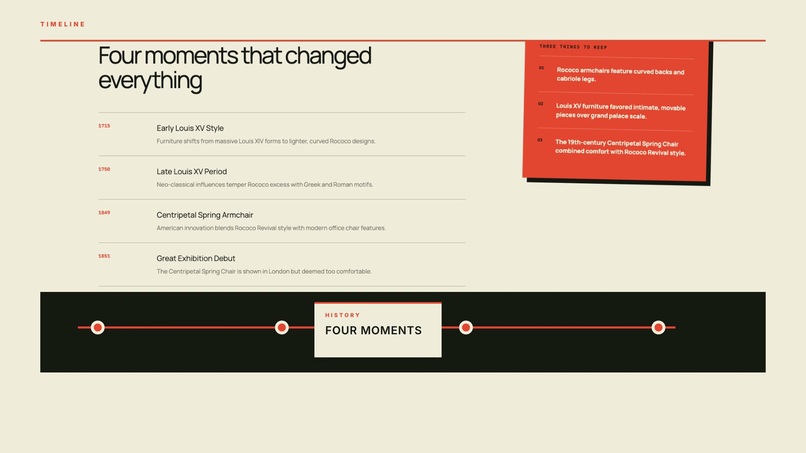
Generated historical plates, a readable timeline, and memorable facts.
-
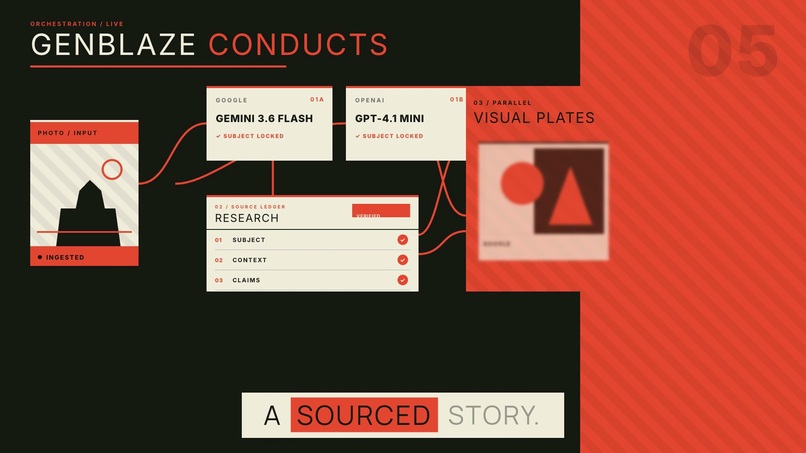
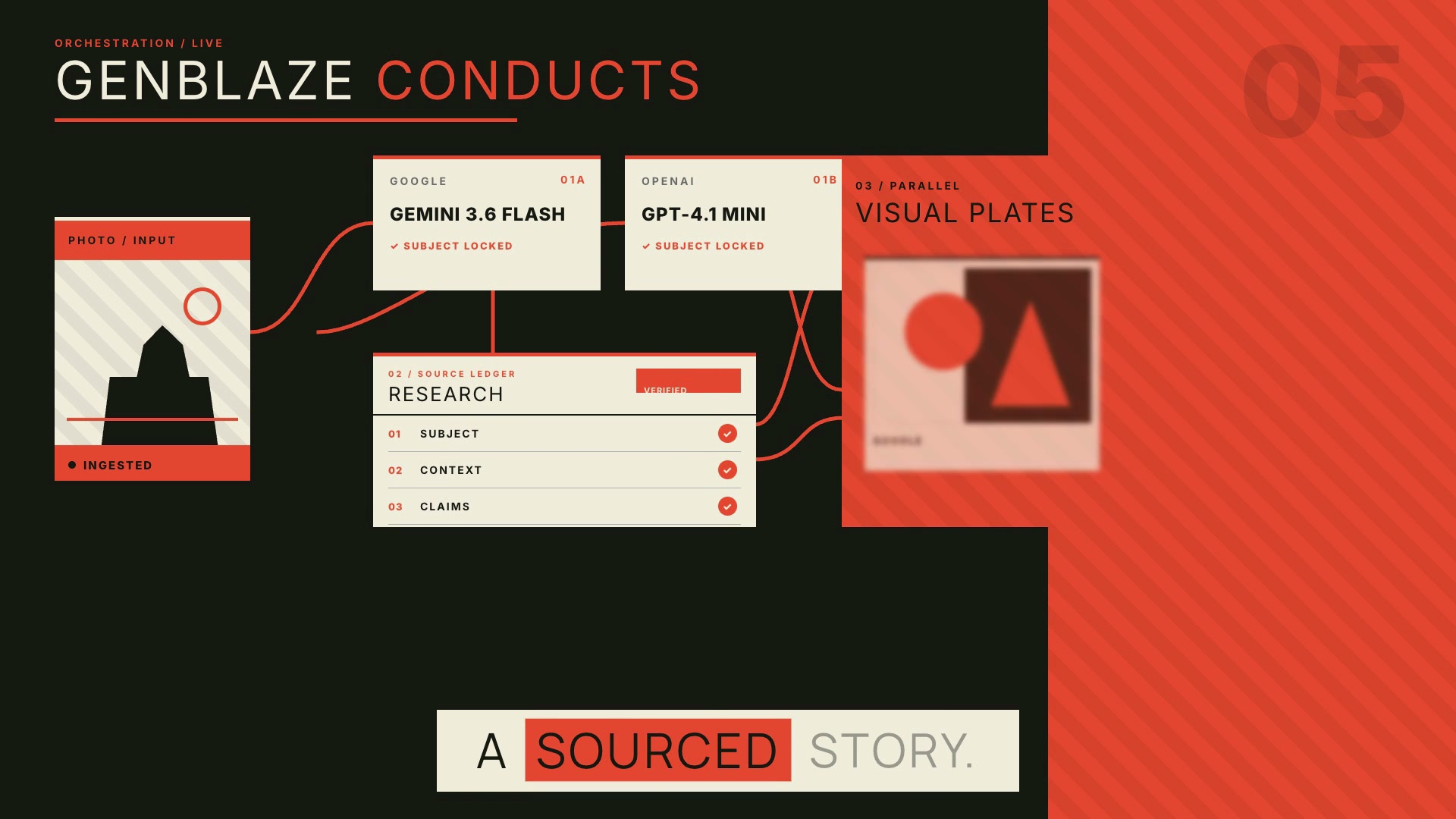
GenBlaze coordinates independent identification, research, evaluation, and parallel media branches.
What if everything around you could tell its story?
WTF turns one photo of an object or place into a source-checked visual history microsite. It identifies the most specific conceptual subject the image can support, researches its history, generates labeled historical reconstructions, publishes a timeline and memorable facts, and renders a narrated mini-film.
Useful information appears progressively: the identification and first sourced facts arrive first; historical plates, narration, and the film join the page as they finish. Every finished story gets a permanent public home, a native Share action, and a place in the public story directory.
Why it is useful
Visual search usually ends in a list of links. WTF creates something people can actually remember, revisit, and send to somebody else. It is useful for travelers, museum visitors, educators, parents, collectors, and anyone who notices an unfamiliar object and wants the story behind it.
Genblaze
Genblaze orchestrates the full multimodal workflow:
OpenAI and Google independently inspect the photo and build a specificity ladder. Research and evaluation steps produce a sourced story. Four historical-reconstruction branches run in parallel across OpenAI and Google image providers. A Genblaze AgentLoop plus callable evaluator scores each plate and retries weak outputs. OpenAI TTS produces narration while image branches run. Genblaze pipelines ingest every accepted artifact and emit canonical, verifiable manifests.
Backblaze B2
B2 is WTF's durable memory and delivery layer. For every story it stores the original photo, research-verification packet, generated plates, narration, rendered MP4, story JSON, and Genblaze manifests. The application shows SHA-256 hashes, model receipts, storage handles, and manifest verification on the public story page.
B2 is essential to persistence, recovery, public delivery, and traceability—not merely a place to upload the final video.
Production readiness
WTF is live and mobile-ready. It supports persistent async jobs, progressive publishing, refresh-safe recovery, confirmation when models disagree, evaluator retries, provider fallbacks, native sharing, a public directory, durable storage, and explicit failure states. The implementation and deployment instructions are public.
Try it
Live app Finished KAPLA story Public story directory Source code
Built With
- backblaze-b2
- coolify
- docker
- fastapi
- ffmpeg
- genblaze
- google-gemini
- openai
- python
- react
- typescript
- vinext

Log in or sign up for Devpost to join the conversation.