-
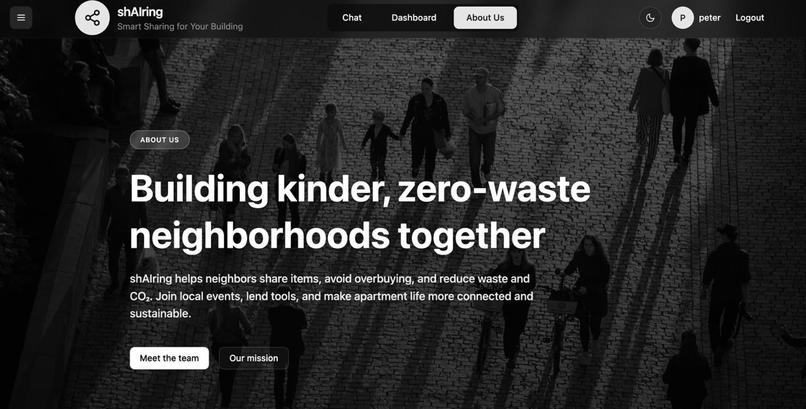
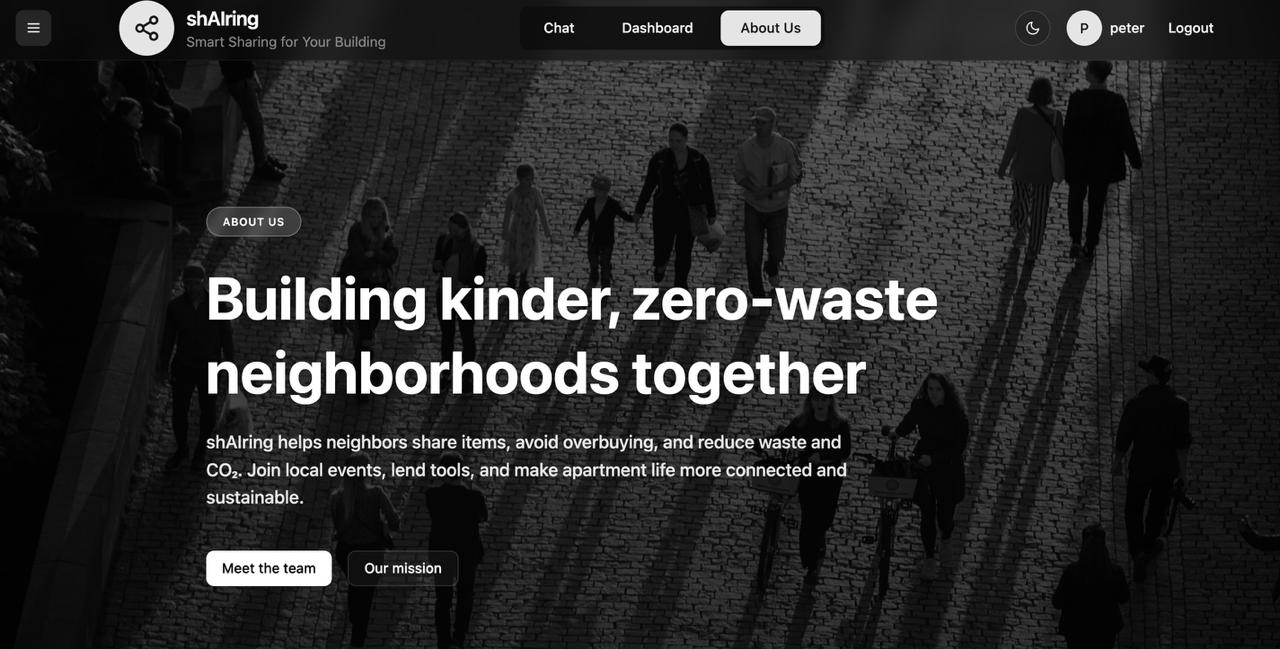
About us
-
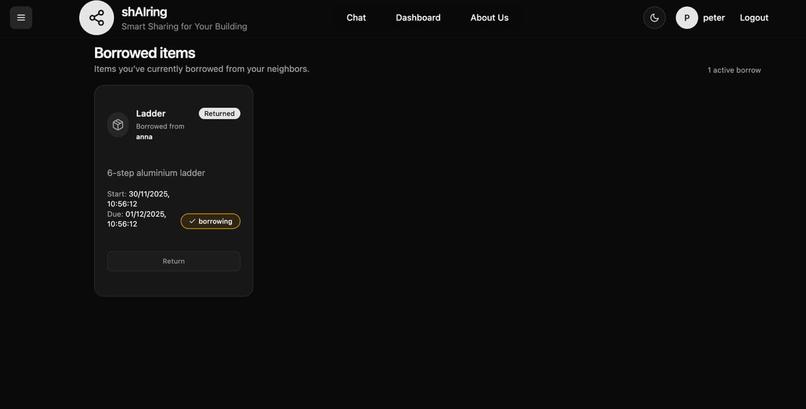
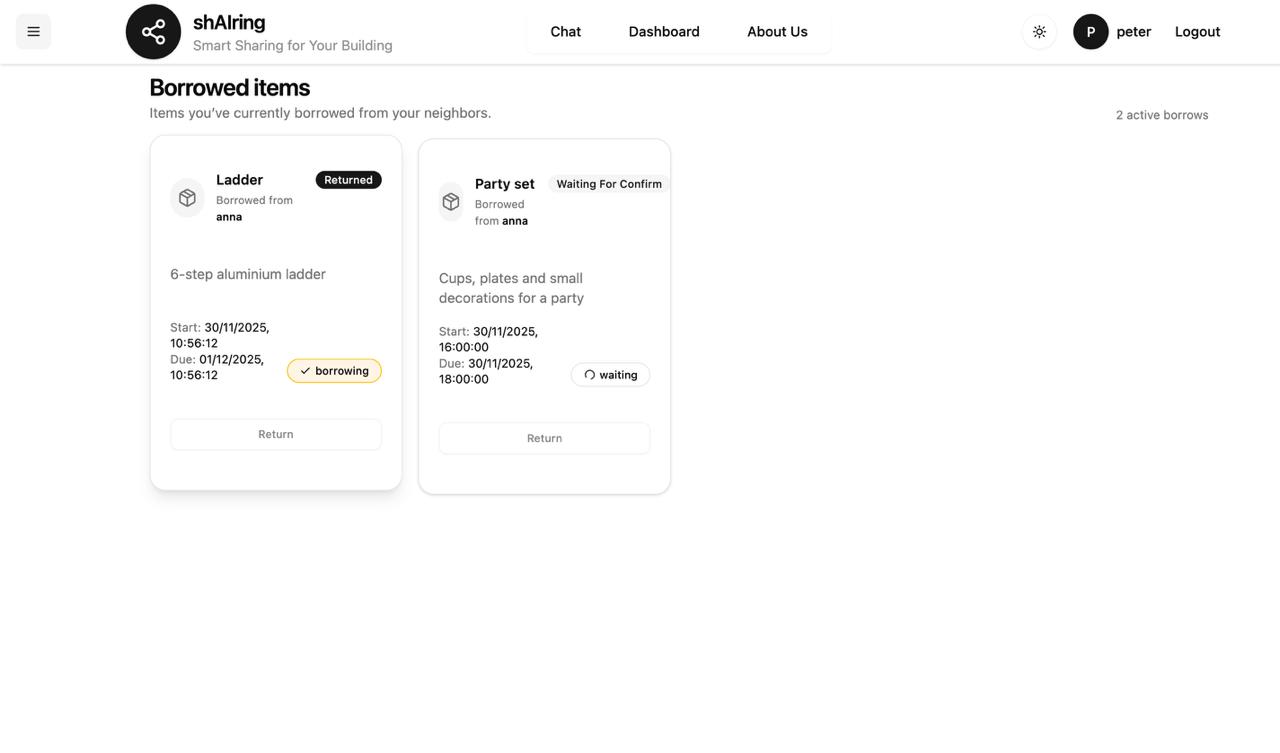
Borrowed items
-
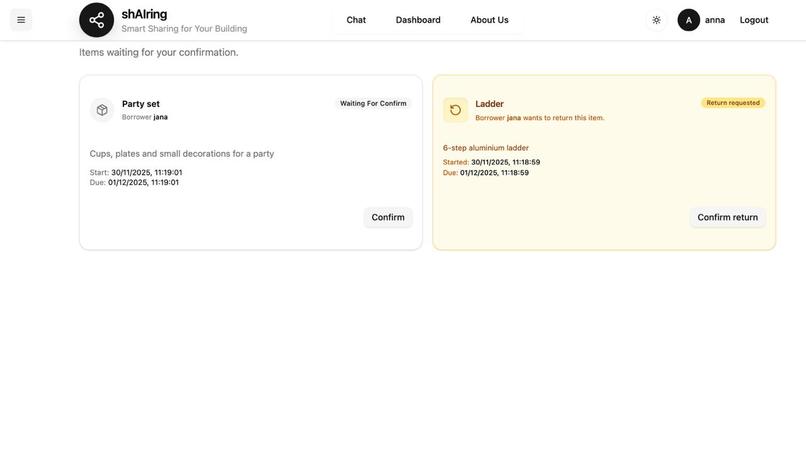
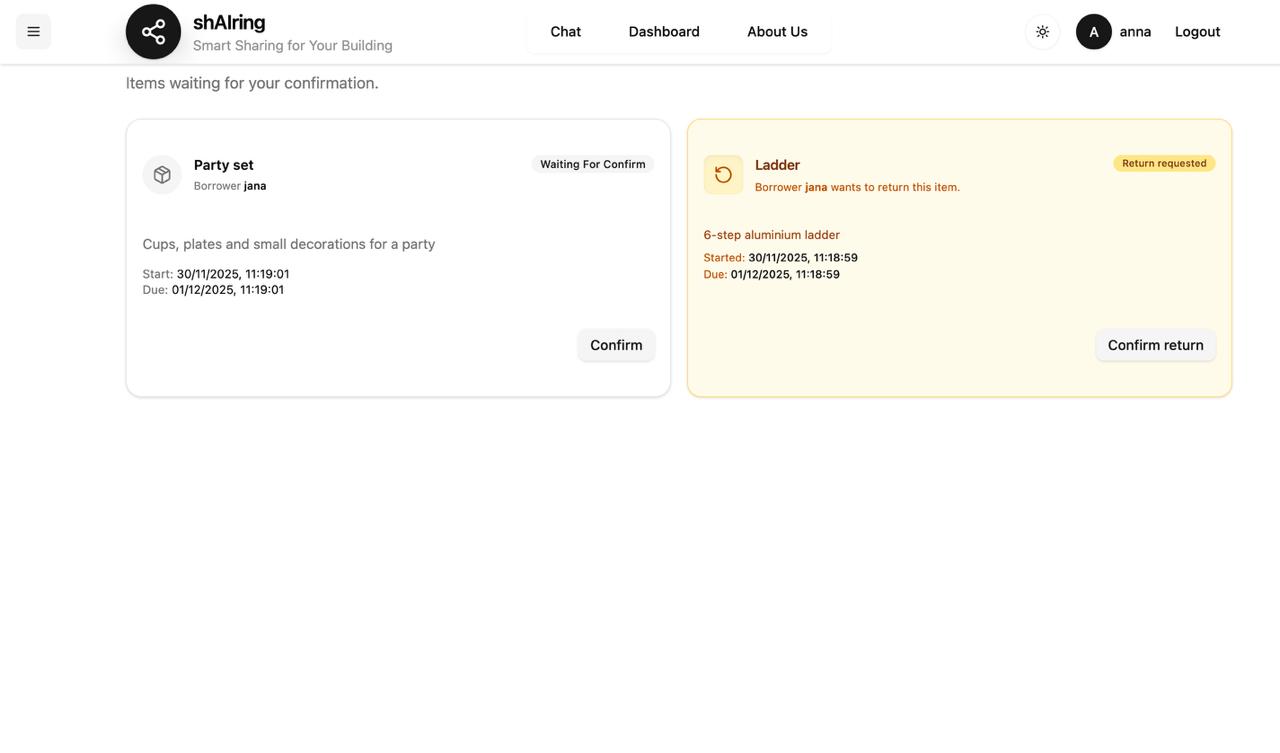
Return confirmation
-
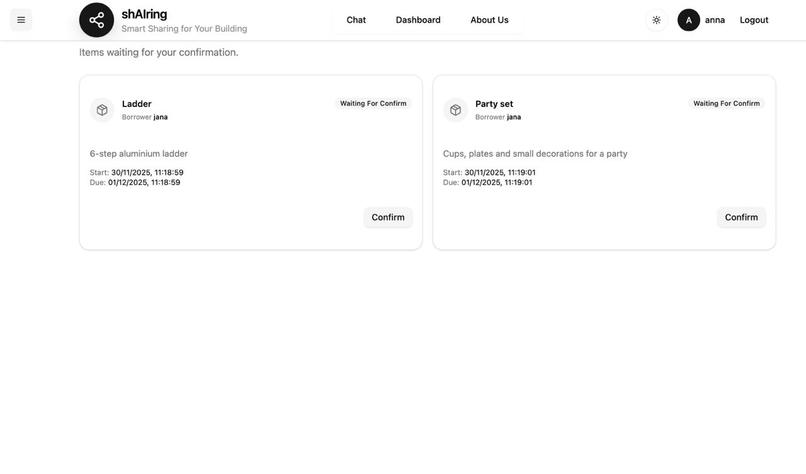
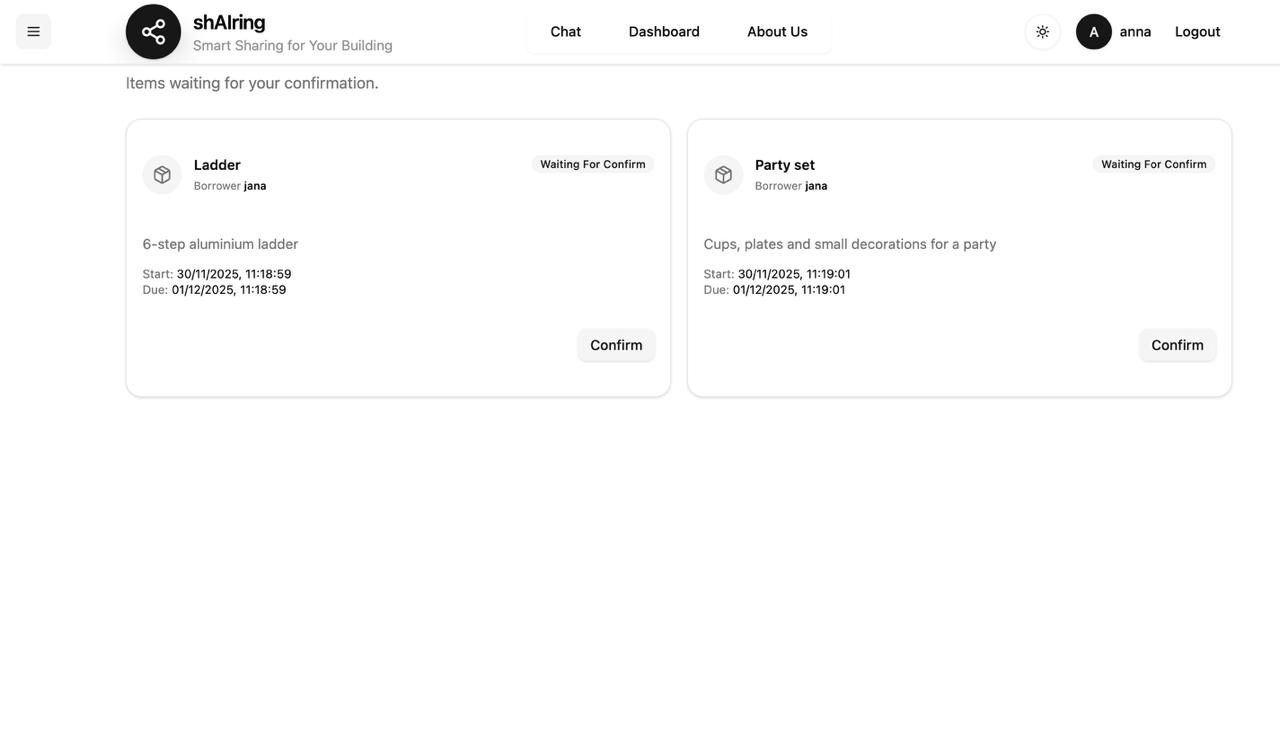
Waiting confirmation for lending
-
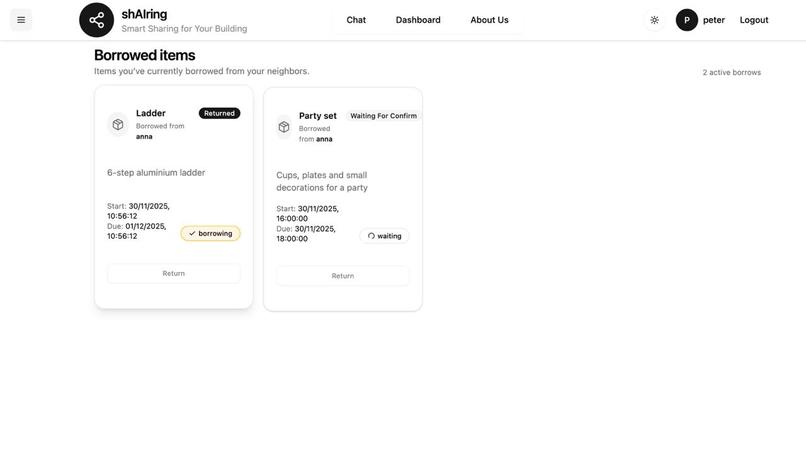
Borrowed items
-
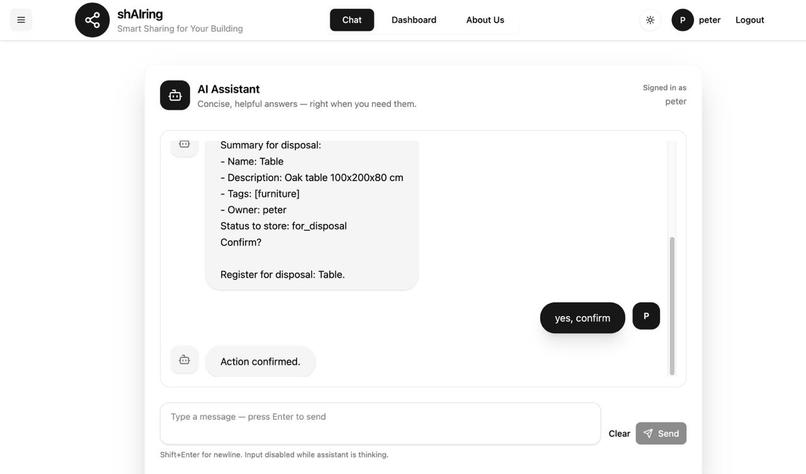
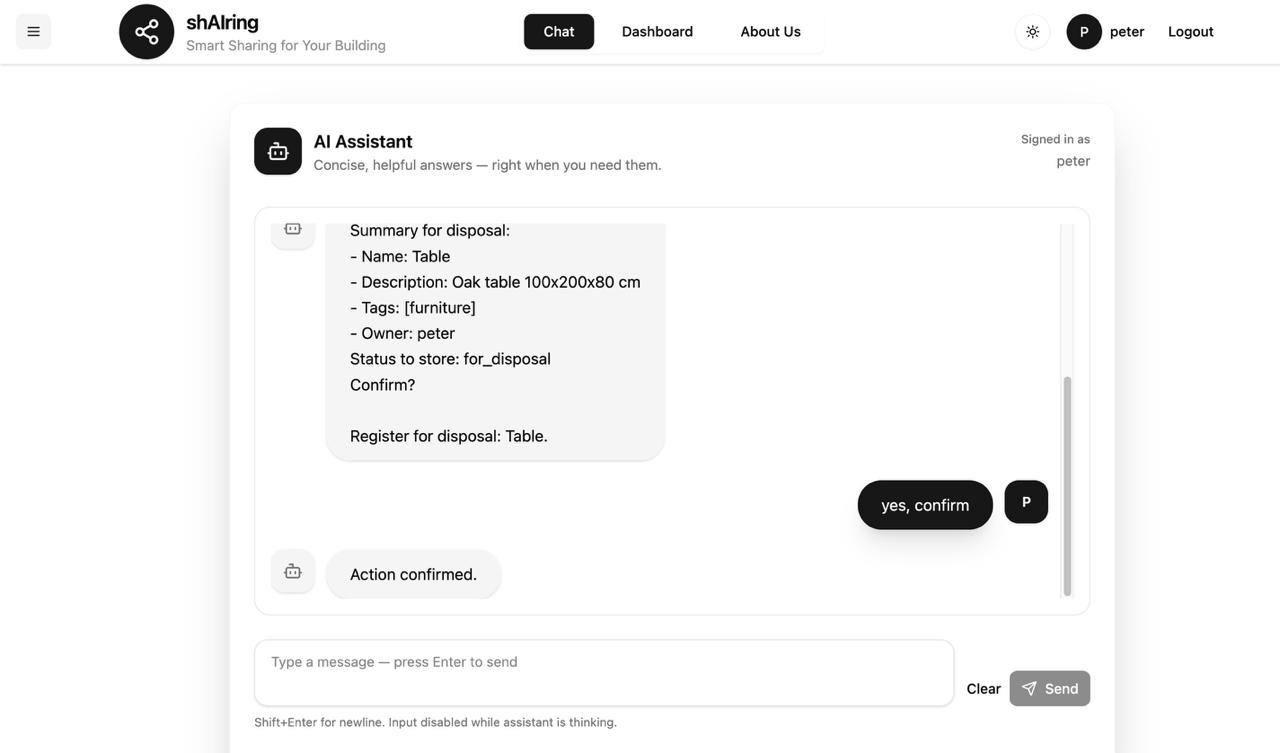
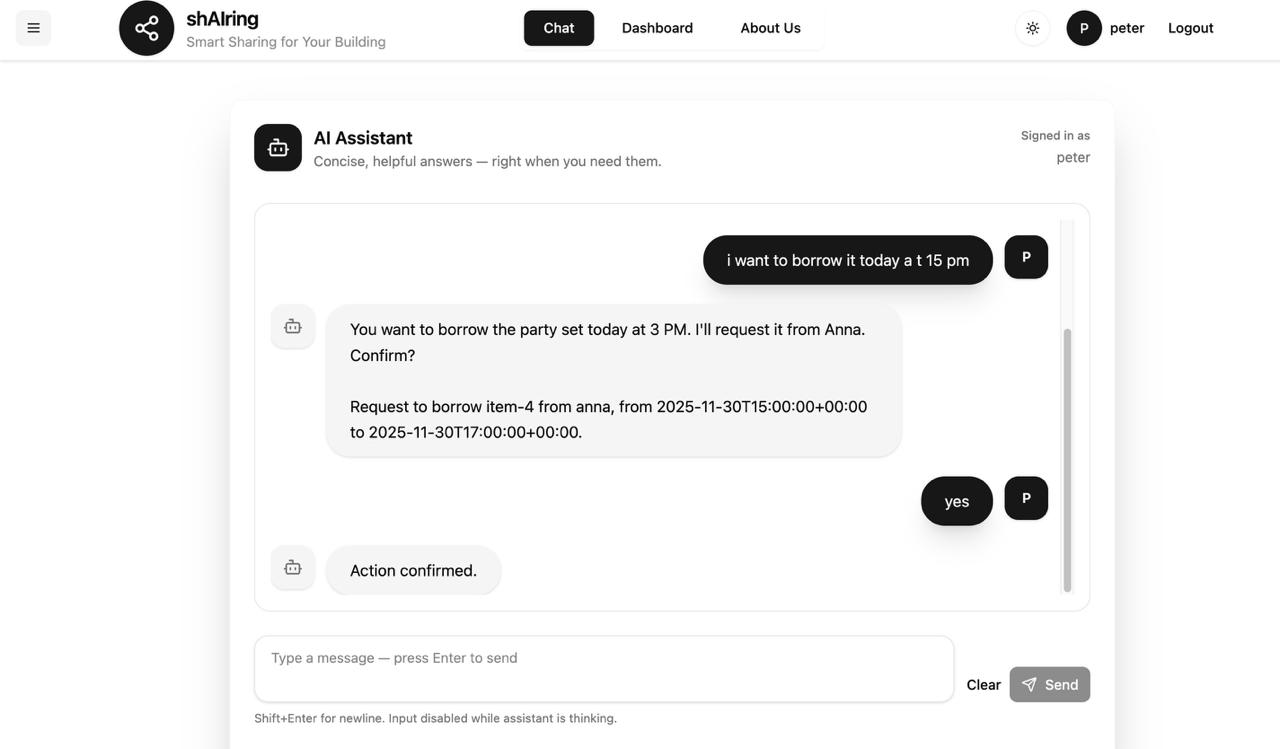
Agent
-
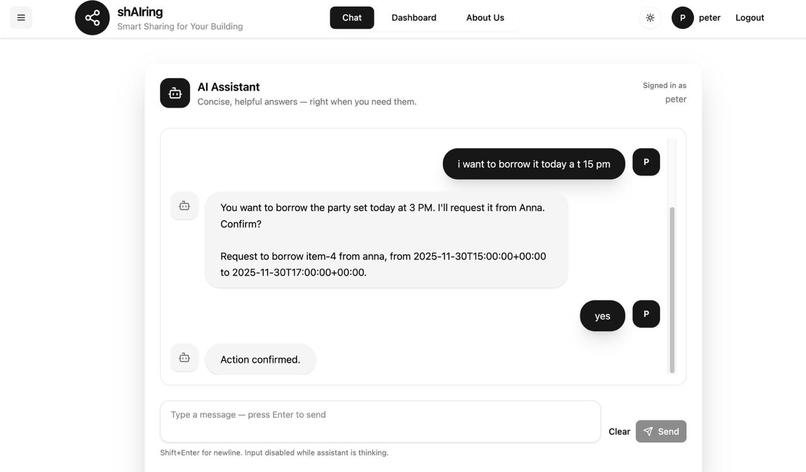
Agent
-
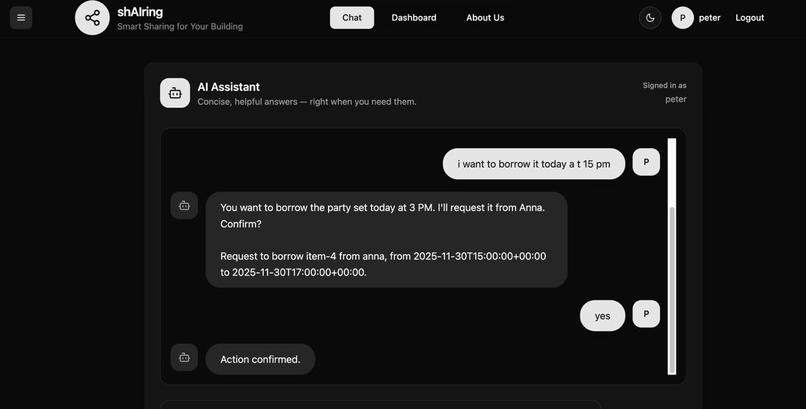
Agent
-
Borrowed items
Inspiration
By 2030, cities will be denser, stuff will be cheaper, and climate pressure much higher.
But everyday life in a normal apartment block will still look the same:
- everyone owns a drill, a party set, piles of clothes – used once, then forgotten
- most of it ends up as waste instead of being shared or reused
We asked: what if one ordinary building could behave like a tiny circular economy – by default, not just for eco-nerds?
What it does
shAIring is an AI helper for a single apartment block.
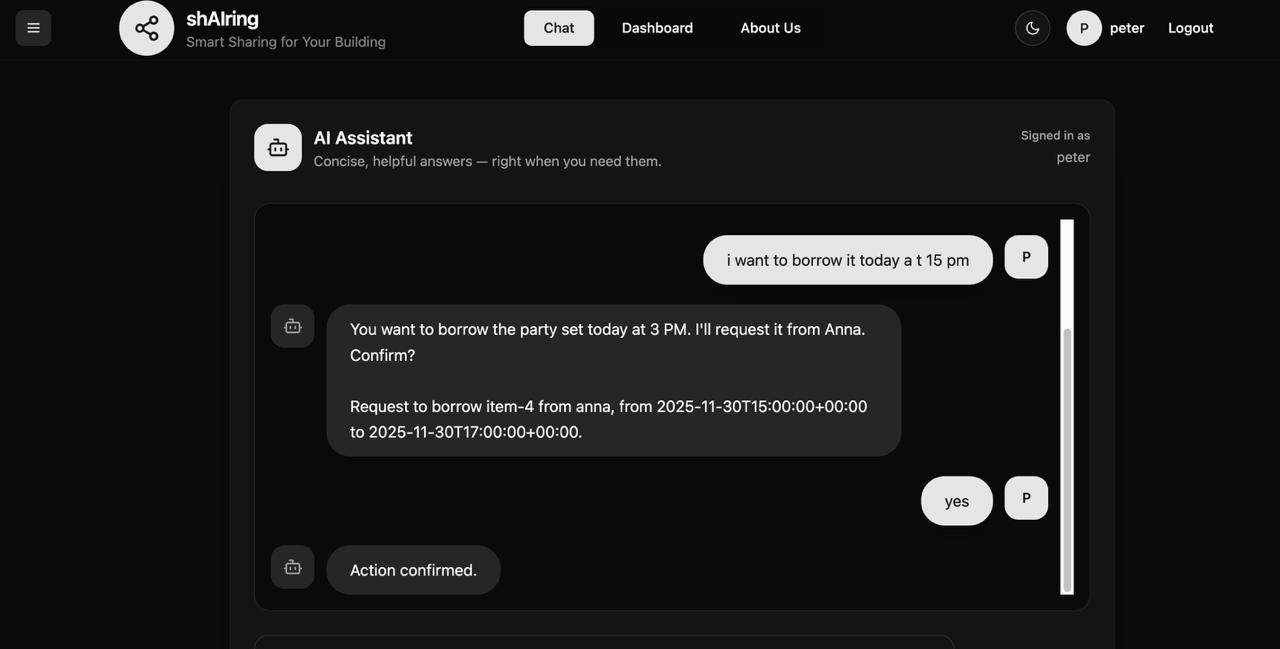
Residents don’t fill forms, they just talk to it:
- “I need a drill tomorrow.”
- “I want to get rid of old clothes and books.”
shAIring then:
- matches people who need things with neighbors who have them
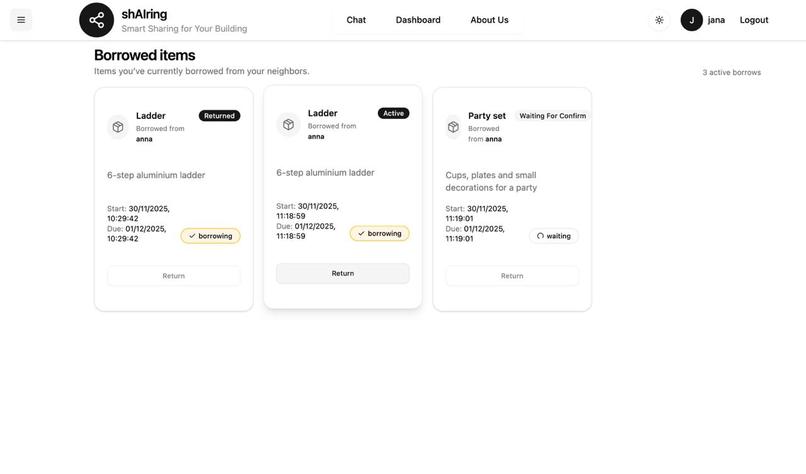
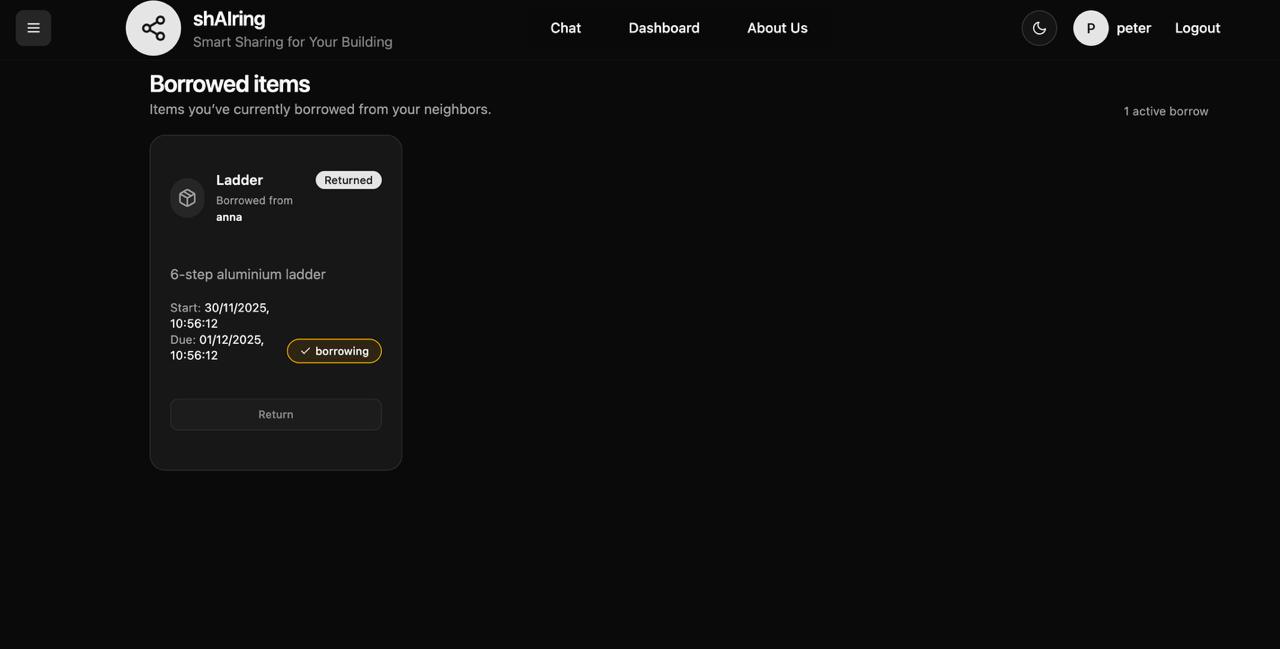
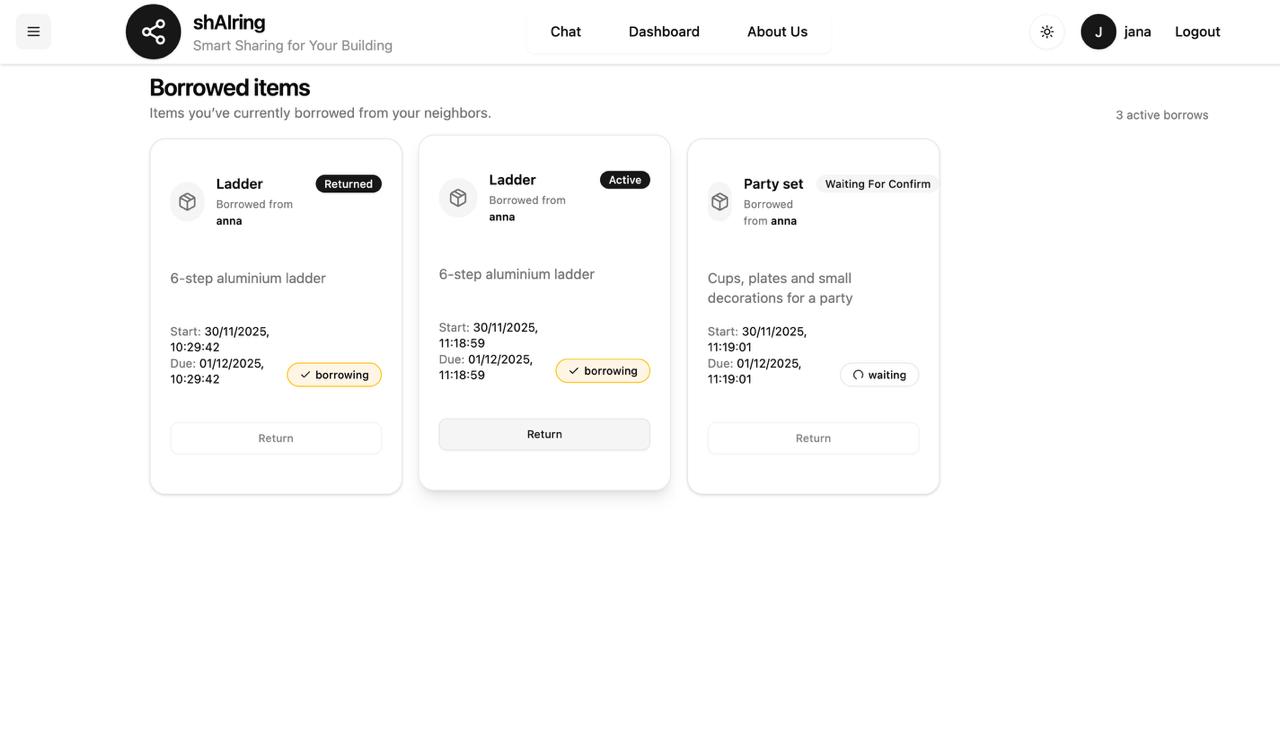
- creates and tracks borrowing agreements between residents
- proposes swap / collection events when several people want to declutter
- estimates how much CO₂ and waste the building saves by sharing instead of buying new
On top of that, it keeps everything transparent with:
- a building dashboard (residents, items, events, impact)
- a borrowings overview (what I borrowed / what I lent)
Challenges we ran into
- Making it feel like a future city service, not just a chatbot
The main endpoint is/api/chat, but we had to design the system so it changes the shared reality of the building (items, events, impact), not just send pretty messages.
Accomplishments that we're proud of
Built a working AI-driven backend that:
- interprets free-text requests
- decides an intent (borrow, dispose, ask impact, etc.)
- and updates the shared in-memory building state accordingly
Implemented a clean React + shadcn UI with:
- chat interface
- building dashboard
- borrowings overview
Designed a simple but meaningful impact model:
- every borrow and event translates into approximate CO₂ and waste savings
- residents can see their building’s impact grow over time
Created a concept that clearly maps to the hackathon megatrends:
- AI Everywhere – embedded in the building, not just in people’s phones
- Climate & Green Transition – reuse by default, not as an afterthought
- Urbanized Life & Trust – anonymous neighbors become a sharing community
- AI Everywhere – embedded in the building, not just in people’s phones
What we learned
How to orchestrate an LLM as a tool-using agent, not just a text generator:
- strict JSON outputs
- clear intents and actions
- a backend that remains the source of truth
That small UX decisions matter:
- “I need a drill tomorrow” feels very different from a form with 5 fields
- showing impact in simple numbers makes climate benefits feel real
- “I need a drill tomorrow” feels very different from a form with 5 fields


Log in or sign up for Devpost to join the conversation.