-
-
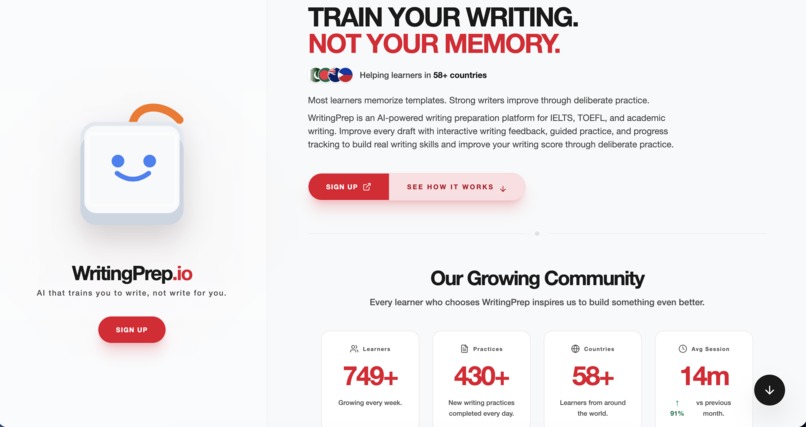
Landing Page
-
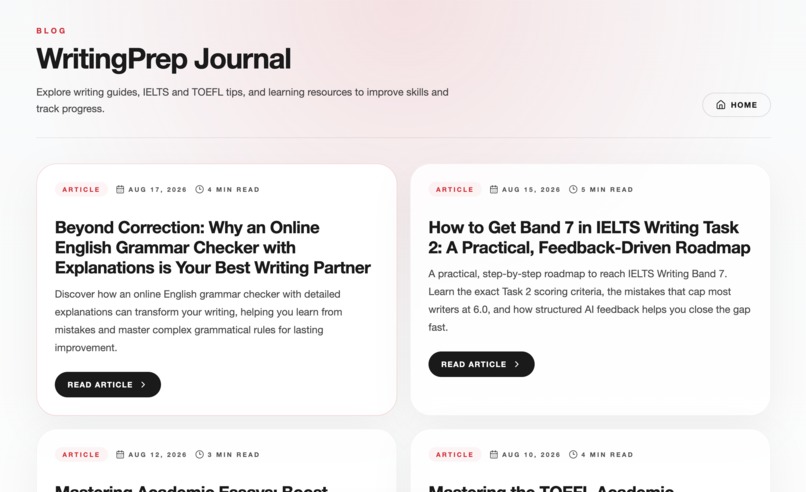
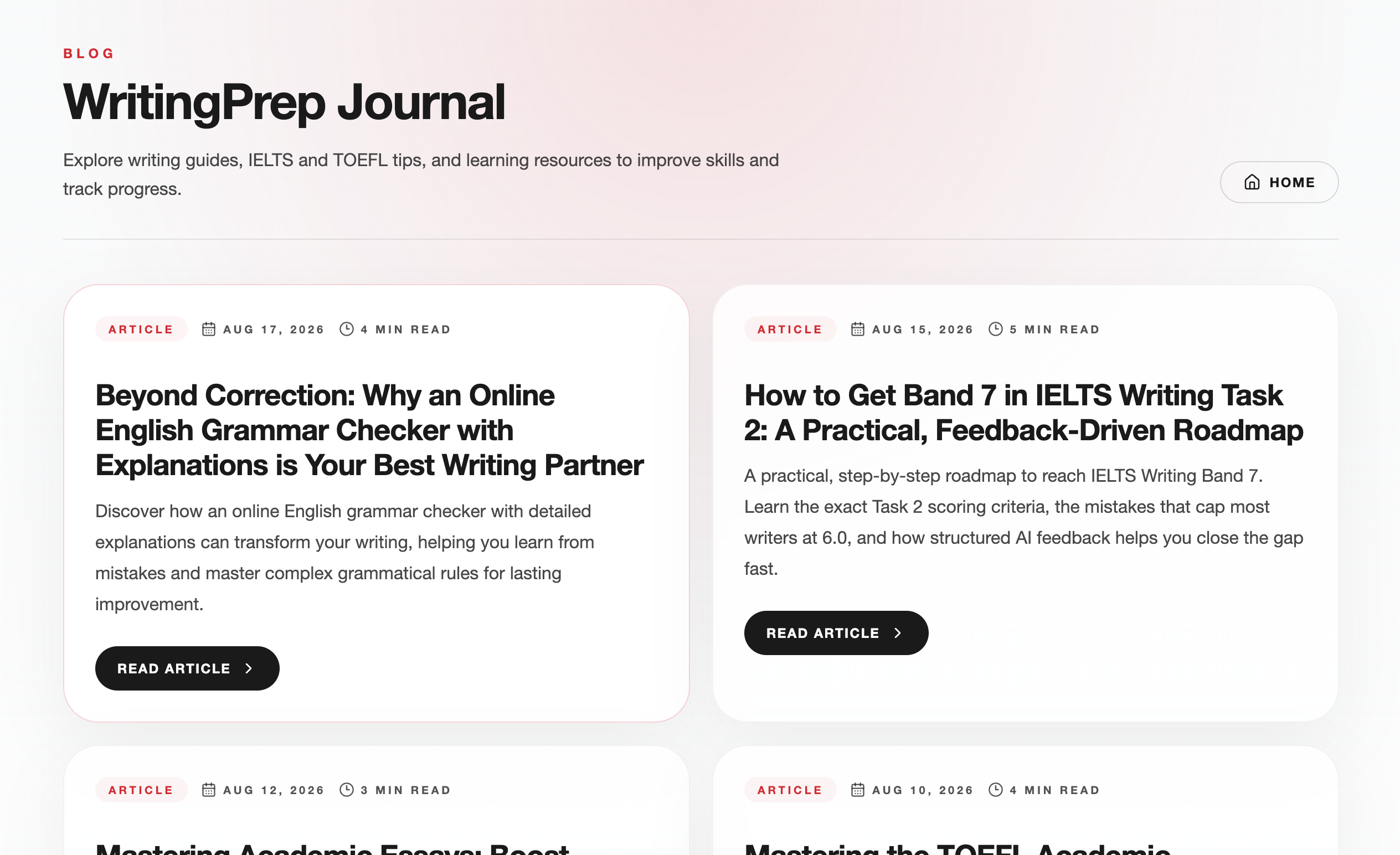
Blog
-
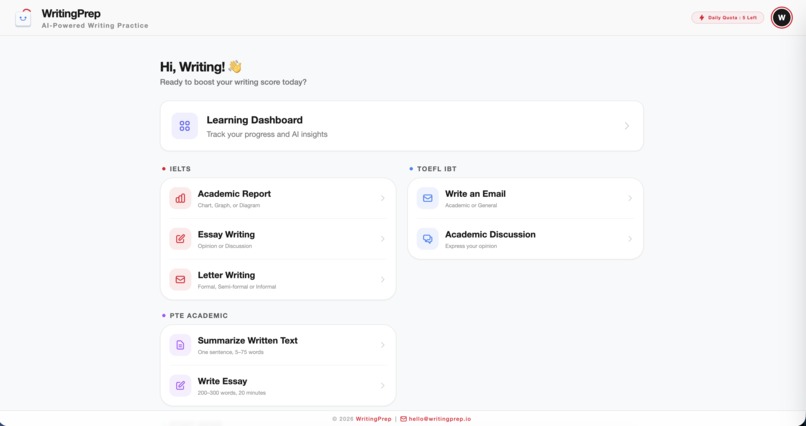
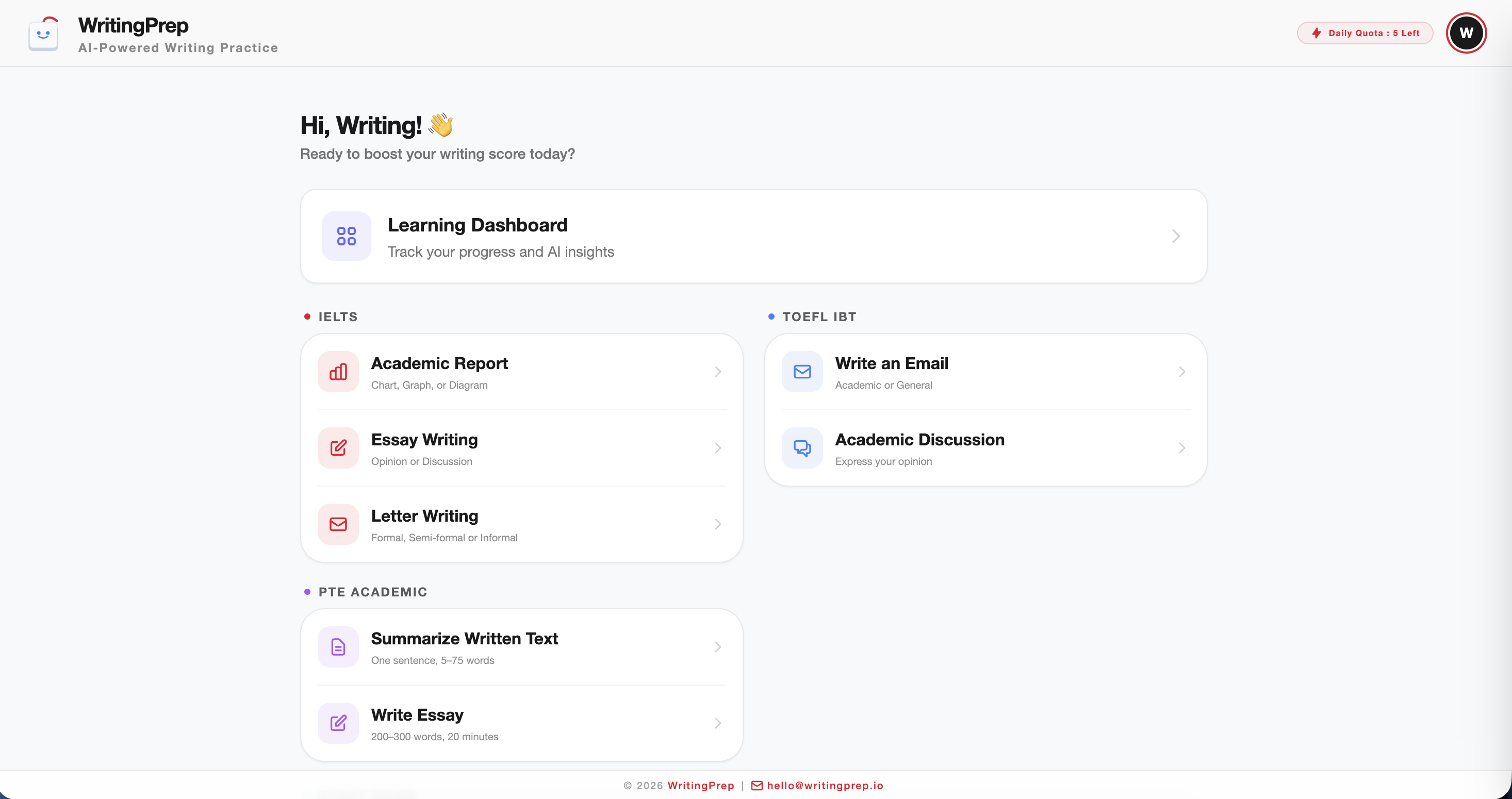
Writing Workspace Dashboard
-
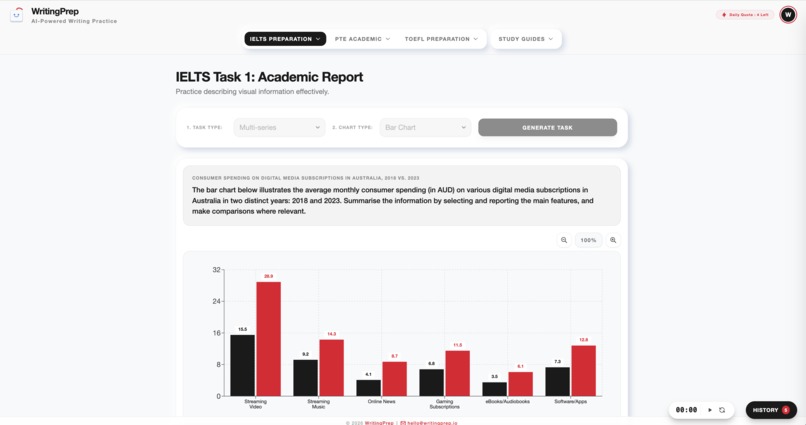
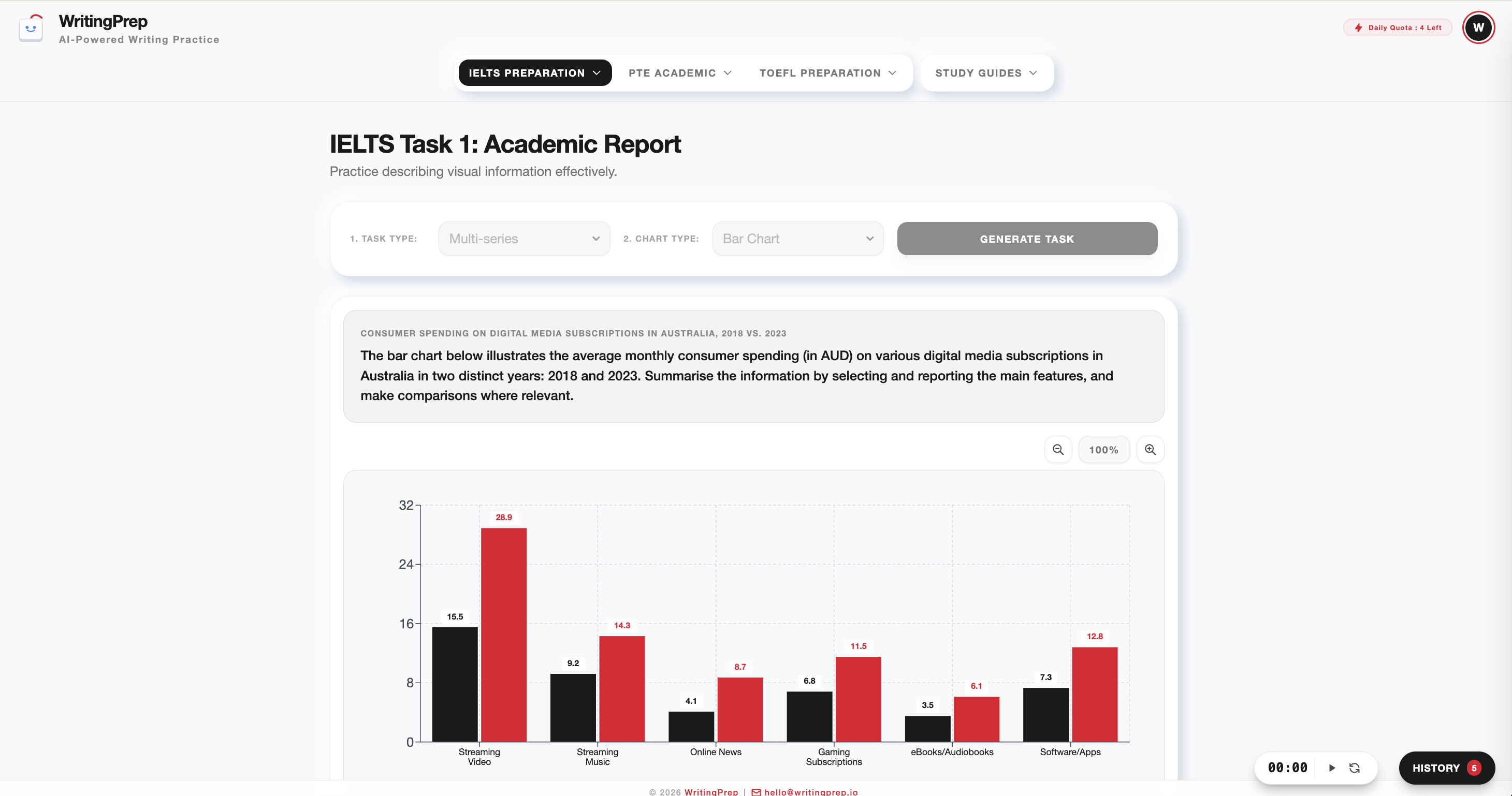
Writing Task
-
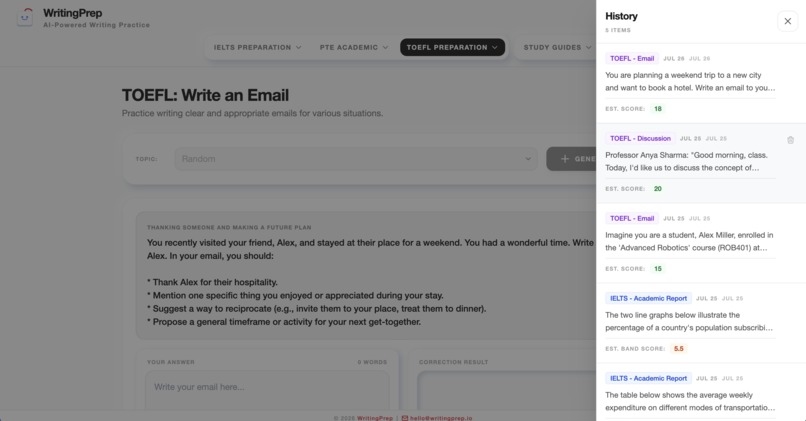
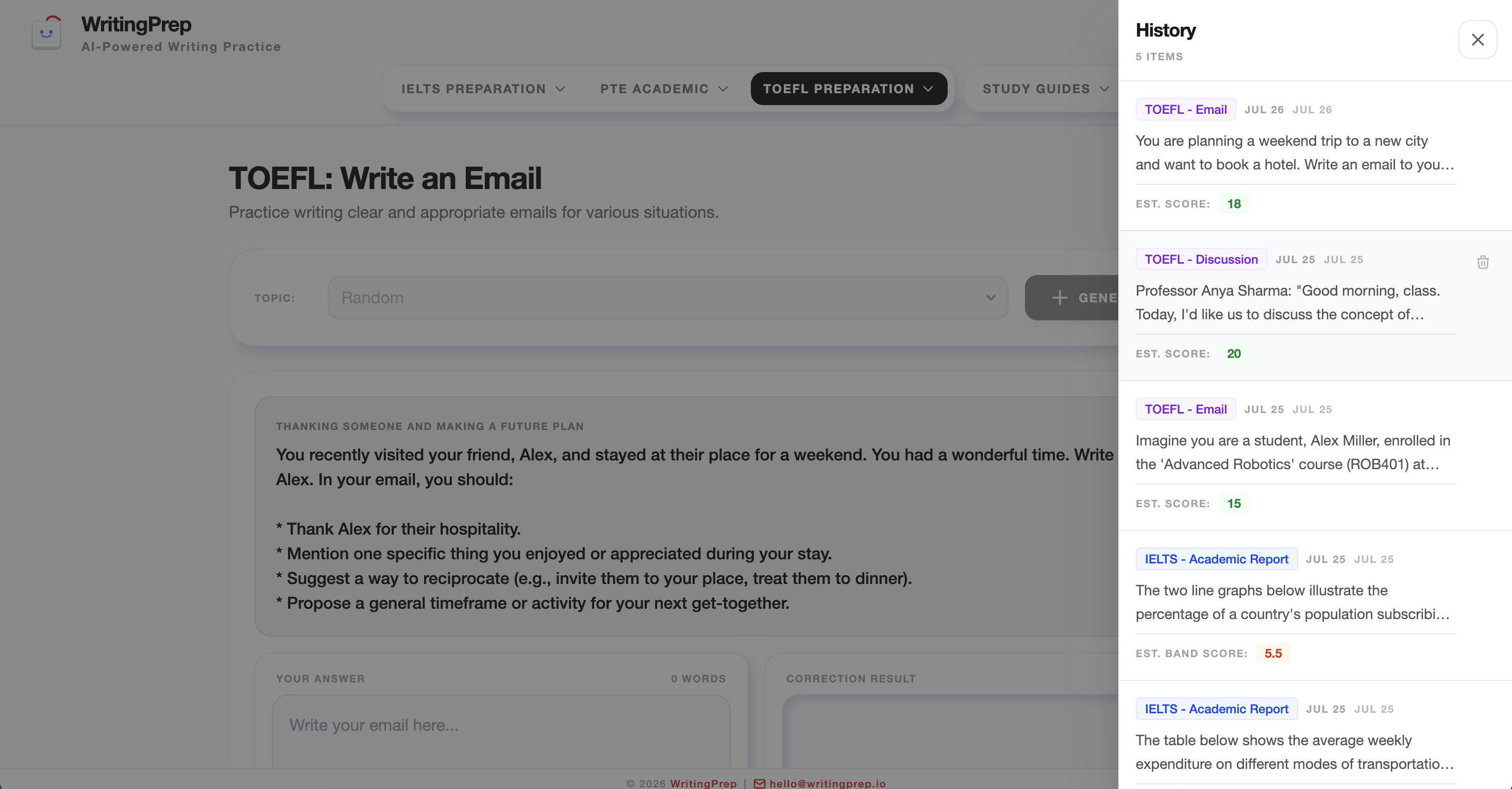
User History
-
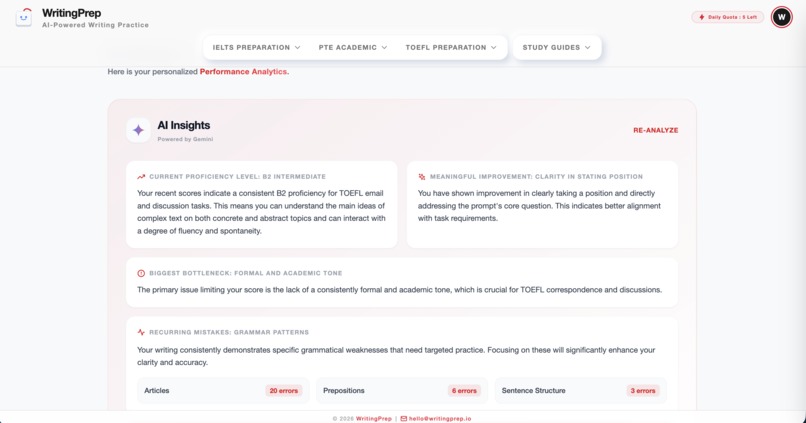
AI Performance Insights
-
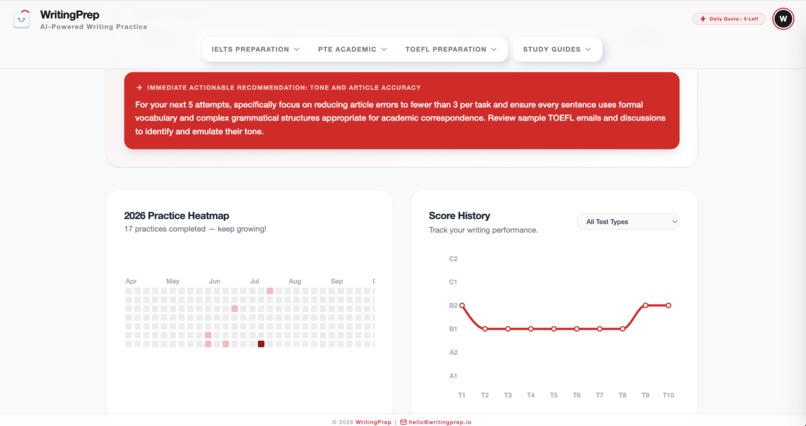
User Score History
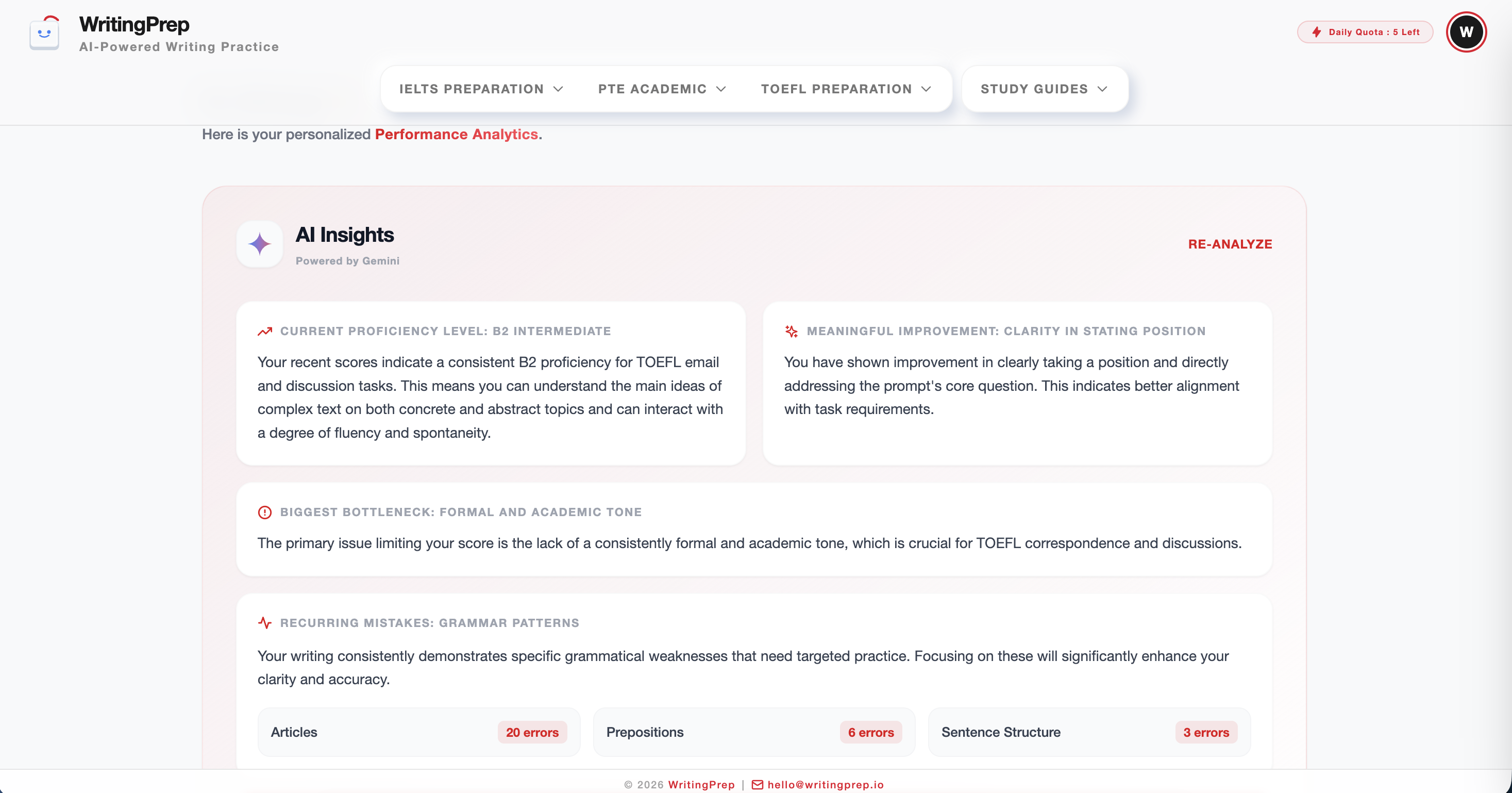
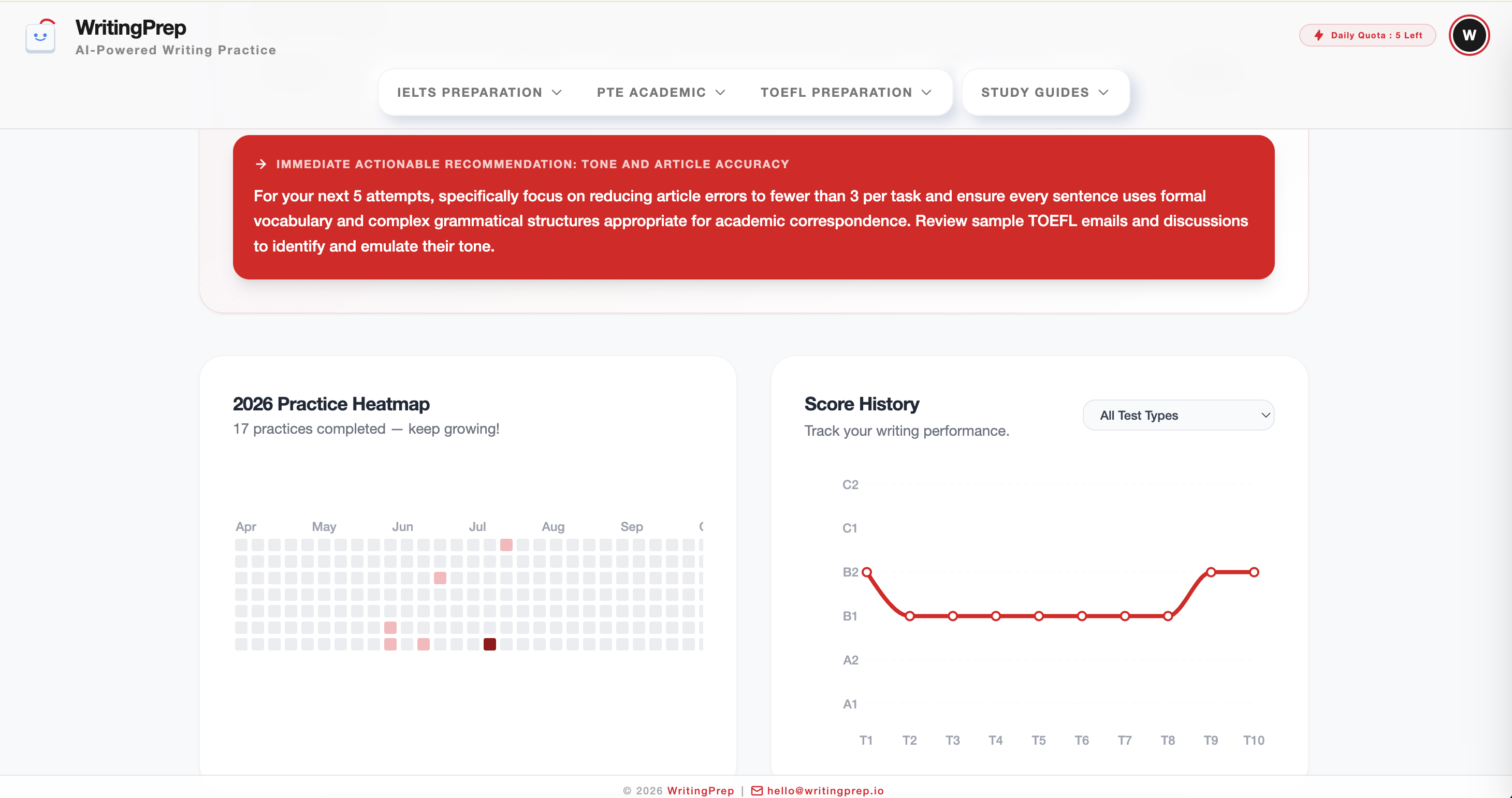
Inspiration
Improving English writing is difficult, but for many learners, the stakes are much higher than simply getting a better score.
Strong English writing can affect access to scholarships, university admissions, international careers, and global opportunities. Yet high-quality writing support is not equally accessible to everyone.
Traditional English writing tutoring is often expensive and concentrated in major cities, making personalized guidance difficult to access for learners in smaller cities, rural areas, or countries with limited access to qualified teachers.
At the same time, many learners practice writing by completing an essay, receiving a score or a list of corrections, and then moving on to the next task. They may know that their writing needs improvement, but often do not know why they keep making the same mistakes, what skill they should focus on, or what they should practice next.
This creates two problems at once:
Access: high-quality personalized writing guidance is difficult to access.
Learning: existing practice often provides feedback without creating a continuous path for improvement.
I wanted to build a system that could make personalized English writing support more accessible while turning every writing session into part of a larger learning journey.
WritingPrep was built around a simple idea:
Don't just help learners write a better answer. Help them become better writers.
What it does
WritingPrep is an AI tutor for English writing that helps learners practice IELTS, TOEFL, PTE, and academic writing.
Learners write their own responses and receive AI-powered feedback that helps them understand their strengths, weaknesses, and areas for improvement.
WritingPrep then uses their writing performance and practice history to make the learning experience more personalized. Recurring weaknesses can be identified over time, allowing the system to recommend what the learner should focus on and practice next.
The core learning loop is:
Practice → Feedback → Learn → Recommend → Practice Again
This turns individual writing exercises into a continuous learning process.
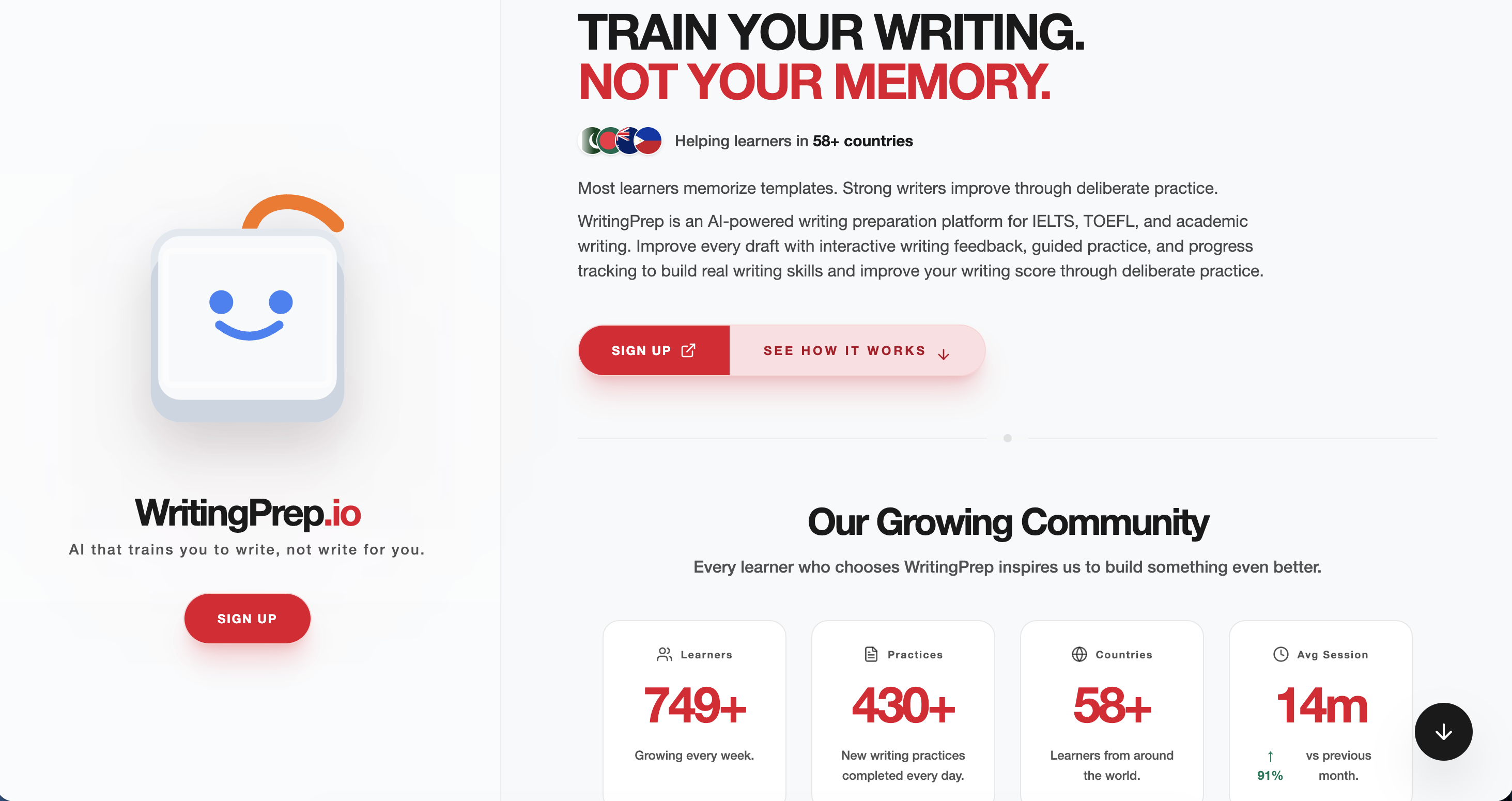
WritingPrep has already reached 700+ users, 400+ writing practices, and learners across 58+ countries. During the Hackathon period, the platform acquired approximately 740 users organically.
How we built it
WritingPrep uses Gemini 2.5 Flash for its core AI writing analysis and feedback workflows.
We used Vertex AI and Google AI Studio to develop and work with Gemini-powered interactions, alongside other Google technologies used in the production application.
The system analyzes learner submissions, generates structured feedback, identifies strengths and weaknesses, and uses historical performance to support personalized recommendations.
We also built AI-assisted workflows for keyword research, content creation, blog publishing, and social media distribution, allowing a small operation to continuously create and distribute educational content.
Challenges we ran into
The hardest challenge was not getting an AI model to generate feedback. It was deciding how that feedback should influence the learner's next step.
A one-time AI evaluation can tell a learner what is wrong. A useful learning system needs to understand recurring weaknesses, provide relevant practice, and help the learner make measurable progress over time.
We also had to balance personalization with simplicity. The system needs enough historical context to make useful recommendations without overwhelming the learner.
Finally, we built and operated the product as a solo founder, which meant keeping both development and AI operating costs extremely lean while continuously improving the product based on real user behavior.
Accomplishments that we're proud of
WritingPrep grew into a production product used by learners around the world.
During the Hackathon period, the platform grew from 0 users to more than 700 users and accumulated more than 400 writing practices.
We achieved this primarily through organic distribution, without paid marketing.
The product also operates with a very lean AI cost structure. During the Hackathon period, direct AI/token costs were approximately $1.12, with an average cost of around $0.04 per writing cycle.
Most importantly, we demonstrated that learners are willing to use an AI-powered writing practice workflow repeatedly in a real production environment.
What we learned
We learned that building with generative AI is not simply about choosing a powerful model.
The bigger challenge is designing the learning system around the model.
A good AI response can be useful once. A good learning system should become more useful as it learns more about the learner.
This led us to think more deeply about adaptive learning, writing assessment, historical performance, targeted practice, and how AI can turn individual writing sessions into a continuous learning journey.
We also learned that distribution matters as much as product development. A focused niche, combined with organic communities, search, content, and social distribution, can create meaningful early traction with very limited resources.
What's next for WritingPrep
Our next goal is to evolve WritingPrep from an AI writing practice platform into a deeper adaptive learning system for English writing.
We plan to build:
- Personalized learning paths based on writing performance history
- Targeted practice for specific learner weaknesses
- Progress and mastery tracking
- Gamification that supports meaningful learning behavior
- Teacher accounts and student performance dashboards
- A teacher-led B2B2C distribution model
- Subscription and payment infrastructure
The long-term vision is to make English writing development more personalized, measurable, and accessible, so that high-quality writing support is not limited by where a learner lives or how much they can afford, while building a sustainable AI-native education business.


Log in or sign up for Devpost to join the conversation.