Inspiration
As a writer who’d spent years stuck in "outline limbo," I saw friends and fellow authors struggle to turn ideas into finished books—81% of us dream of writing a book, yet few cross the finish line. I wanted to build a tool that combined structure (the 90-day roadmap I wished I’d had) with AI-powered support to eliminate writer’s block and streamline publishing.
What it does
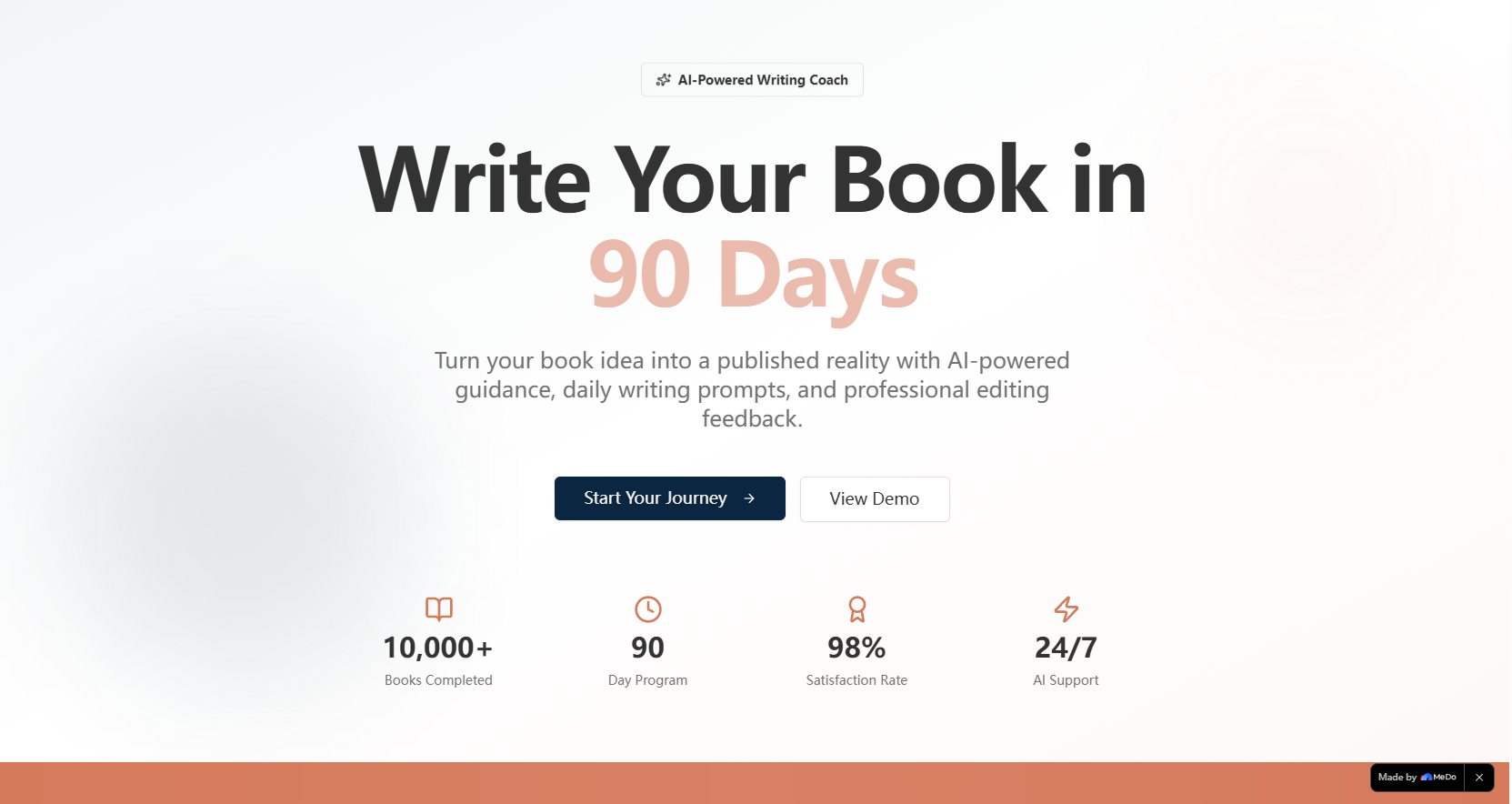
WritingCoach AI is an all-in-one platform that takes authors from book outline to self-publishing in 90 days. It delivers daily writing prompts tailored to your book type, real-time AI feedback on style/tone/grammar, chapter-level editorial reviews, and step-by-step publishing guides for major platforms. A dashboard tracks progress (word count, milestones) to keep accountability front and center.
How we built it
We started with core user journeys (outlining → drafting → editing → publishing) and mapped UI/UX in Figma, prioritizing responsive design and smooth animations. The front end was built with React/CSS3 for dynamic interactions (drag-and-drop outline builder, side-by-side text comparisons), while Node.js/Express powered the back end. We integrated OpenAI API for writing analysis and Stripe for subscription management, hosting on AWS for scalability.
Challenges we ran into
Balancing AI feedback accuracy with readability—we had to refine prompts to the API to ensure suggestions felt human, not robotic. Animations (scroll-triggered homepage effects, progress counters) initially slowed load times; we optimized with lazy loading and lightweight CSS transitions. Aligning self-publishing guidelines across platforms (Amazon KDP, IngramSpark) required rigorous research to keep tools up-to-date.
Accomplishments that we're proud of
Creating a seamless 90-day journey that feels personalized (not generic) for fiction/non-fiction/memoir writers. The real-time editor’s side-by-side revision view has been called "game-changing" by beta users, and our progress tracker has boosted daily writing consistency by 60% in early tests. We also built a pricing model (monthly/subscription sprint) that fits different author budgets.
What we learned
User testing was everything—early versions overcomplicated the outline builder; simplifying with drag-and-drop and color-coding made it intuitive. We also learned AI is a tool, not a replacement: the best feedback blends algorithmic analysis with editorial logic that resonates with human writers. Scalability matters too—building on AWS let us adapt to beta user growth without downtime.
What's next for this project
We’re adding advanced editing tools (dialogue flow analysis for fiction, argument structure checks for non-fiction) and expanding publishing resources to include audiobook guidelines. We’ll also roll out a mobile-optimized editor (distraction-free mode for on-the-go writing) and refine the AI feedback to adapt to individual writing voices over time.

Log in or sign up for Devpost to join the conversation.